Baring My Writer’s Soul – Part 1

untitled (5)“Every secret of a writer’s soul, every experience of his life, every quality of his mind is written large in his works.”  Virginia Woolf

I’m not an inspirational author, but I do find that there is a large amount of room in my writing for inspiration. Most specifically, I’m looking for the kind of inspiration that comes from giving my writing life over to God.

Recently, I’ve been discouraged with trying to balance my non-writing life with my writing life. Writing became a chore, and I lost the joy of creating. Still, I pushed myself to write because I believed I absolutely had to. Or maybe I didn’t.

There are a lot of people in life who will gladly define for you what it means to be a real writer. I’m tired of trying to force myself into their labels and definitions much the same as I’m tired of trying to force my writing into their preferred methods and styles. I needed to find what worked best for my life and my writing.

When I stepped back and prayed, the miraculous occurred. The return of my happiness was the first, most noticeable change. Second was the disappearance of the guilt I experienced for not writing and/or maintaining my author platform every minute of the day. In fact, I haven’t written for two days, and I finally spied my writing muse peeking around the corner to see if it’s safe for her and my enthusiasm to return.  Keep in mind I’m no quitter; I just needed a break.

Then I reprioritized my life into God first, family second, work third which led to harmony. I reduced the real distraction of social media and welcomed back my responsibilities of homemaking.  That last point may sound old fashioned to some people, but by completing my family duties, I cleared my mind to focus when I needed to write.

Lastly, I’m working on ridding my mindset of the lie that I’m racing against some unknown, unseen deadline to be successful or die in unfulfilled misery. When I did that, my overbearing sense of competitiveness and envy withered. I realized that success and happiness are not the same things, and they rarely go hand in hand.

By allowing myself to step away, I’ve gained a new perspective on writing and life in general. I already am a successful writer, even if I just write for myself, because I am a happy writer. How do I know I’m on the right track? Since these revelations came to me over the past few days, I received encouragement in the form of Tweets, posts, and blog articles such as the one by Jennifer Slattery, When Discouragement Swallows Your Strength, via Castle Gate Press.

It could be a coincidence, but coincidence is God’s way of letting us know He’s still in charge.

Write Happy!

Why You Should Be Writing Short Stories

Sometimes the attitudes toward various aspects of writing boggle my mind. The two most recent are short stories are not worthy of our attention and the omniscient point of view has fallen out of favor. No sooner will I come across one of these narrow-minded statements, I’ll discover someone being recognized for doing them brilliantly. The same people who make these statements will then laud said brilliant person, and the rest of us flock to be like them. Really?

Today, I’m going to focus on the short story issue. I cannot image chucking any form of writing because the proverbial they have declared it no longer fashionable. What is this, writing high school where we all want to be in the popular clique?

images (3)I am bothered by the fact that frivolous trends, like those that, in my opinion derived from my perspective, define fashion, would also dictate the world of writing. Are we going to allow ourselves to be misguided and limited by believing that everybody should be writing in the same style and format? Or am I wrong in believing that writers are above this?

True, we can grow in our chosen art form, but it would be to our detriment to forget, abandon, or leave untried other styles and forms of writing. There are many reasons why the short story should be explored by the novelist and poet. In turn, writers of short stories will benefit from attempting a novel or poetry. Perhaps this stems from my being a proponent of cross training in the work place or the fact that short stories are where I first tried my hand at writing.

In any case, I hope you enjoy the following posts on why you should be writing short stories. Your feedback on these articles, as well as critiques of my own writing under the Read & Relax tab of my blog, is most welcome.

An Argument for Writing Short Stories

The Power of the Short Story

A Clean Sweep of Bad Words

images89FPFS5WVery, Really, Suddenly, Amazing, Awesome, That, Started:  what do these words have in common?  They should be avoided when writing.
This isn’t something I’d be too concerned with during a first draft, but when you go back to edit all the bad writing, these are the words to remove.  We’ve all slipped them in from time to time because they’re overused in every day language.

After reading the post from Writer’s Circle, I recalled a passage where I used suddenly.  It had been bothering me, but I couldn’t come up a worthwhile replacement word or phrase indicating the action.  As soon as I finished reading, a workable solution presented itself.  Some time away from my manuscript and this gentle reminder spurred my creativity to stretch beyond the commonplace.

One place I allow myself some leeway on using the seven, above-listed words is when writing dialog.  Working in the court reporting industry taught me that even educated people don’t speak as well as they’d like to believe.  Dialog sounds more realistic if is isn’t as perfect as prose.

I have noticed, however, that since I started writing, I make an effort to keep these words out of my conversation.  I’d be lying if I said I never used one , but I can’t put everyone on pause and go back to clean up what I said.  Until then, I’ll do my best to be very careful… Oops…

Also, don’t replace one bad word with another poor choice.  I discovered that I replaced very with extremely much too often when speaking. What sounded good to my ear prompted yet another scan of my manuscript to ensure that I hadn’t done the same thing in my writing.  I found five instances, and I’m currently in the process of editing them.

Another great thing about cleaning these words out of your writing is that it’s the first, small step to the editing process which often feels overwhelming.  Getting rid of them provides a building block to better editing which in turn means better writing.

“Very” and Other Useless Words to Erase Forever

Slip That Leash

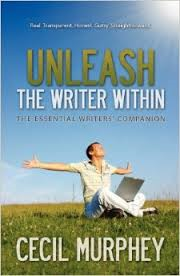
untitled (6)Unleash The Writer Within by Cecil Murphy is a relaxed and encouraging read. It’s an easy commitment that you’ll be able to finish in a few days.

The chapter titles make for a quick reference guide, directing you to different areas of your writing that you may need to work on. I could see this book becoming a handy tool that a writer might revisit as needed.

Each chapter ends with a motivational saying that might seem trite at first but are the very words often bandied about many writing websites, Facebook, and Twitter. They prove to be little jewels of wisdom, perfect for lifting yourself out of the writing doldrums.

When you need to step away from writing for a few days due to writer’s block, reading this book would be a good use of your time to help free your inner muse.

Wardrobe Selection

untitled (6)In yesterday’s blog post, When the Clothes Really Do Make the Man, I provided a link to a website for excellent information regarding vintage clothing.

Today’s trip down Research Road stops at a post by Liz Michalski on Writer Unboxed. In her article, Clothing Your Characters, Liz offers insight into why the clothing you choose for your character is important in how it relates to character development.

After reading Liz’s article, I stepped back for a moment to see how well I portrayed clothing in my novel, The Secrets of Dr. John Welles. There were a couple of scenes where the clothing my characters wore was important to the story, however, I may use the tips Liz suggested to create a more tactile feel to other parts of my story.

The Ever-Evolving Art of Writing

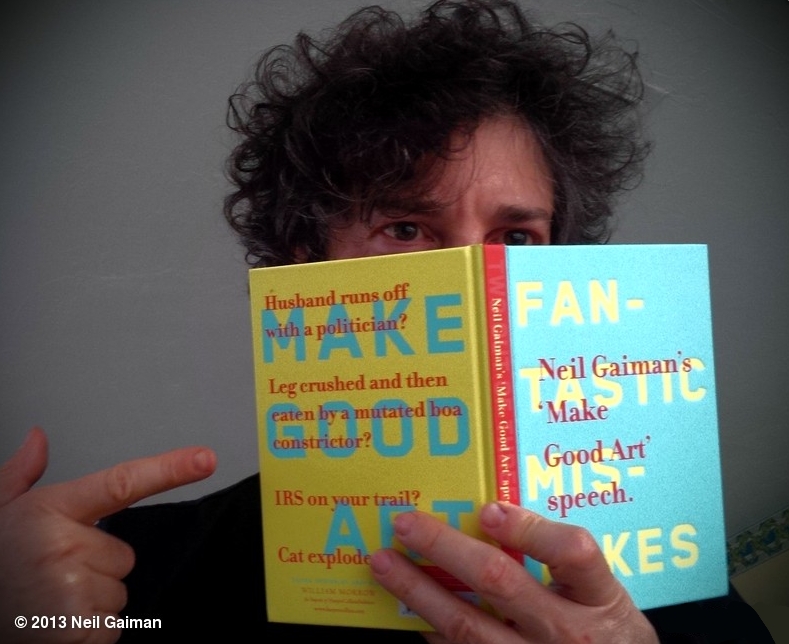
I remember the moment I understood that my writing is art. It came after watching a YouTube video of Neil Gaiman give a speech to a graduating class. Prior to that, I believed art was created by masters who worked a lifetime producing museum quality pieces. What a thrill to know that I am creating art.

makegoodart_gaimanBut my discoveries didn’t stop there. As I set out to, per Neil’s advice, make good art, I found that what I wrote kept changing. Fortunately, it changed for the better. I learned some things that I’ll definitely employ and other things that I’m sure will not work for me. One thing I came across, and have blogged about before, is pantsing versus outlining.

Let me clarify: I hate labels. Once you label something, you’re obligated to define it. After you define it, you must maintain it. This leads to the messy business of judging someone who doesn’t agree with your label. That causes more labeling of those who aren’t like you.

What I’m saying is, while I still adhere closer to the pantser end of the spectrum, by the end of my novel, I discovered I’m somewhat of an outliner, too. Go ahead and create a label for that, if you dare.

My outlines probably don’t conform to what one might find in a writing workbook or to those created by other authors. However, I have my color-coded, multi-tabbed spreadsheet of information created so that I don’t to forget all the wonderful ideas that flooded my head when I first decided to write a novel. Unlike traditional outliners, my ideas aren’t all solidified prior to the beginning of my writing; I like to surprise myself, leave a little wiggle room, add some things and remove others.

So, maybe I’ve been producing something a little closer to an outline than I originally thought? I can think of two outliners who are probably happy-dancing right now.

I will never judge anyone for the way in which they choose to create their work of art. That would be like criticizing someone for being a hands-on learner while you’re a book learner. In return, I’ll ask the same of everyone else toward me. At the end of the day, we’re all artists.

Today, I’m stocking my Writing Toolbox with a piece from NY Book Editors called Planning to Outline You Novel? Don’t. This one tips the scales toward pantsing. Whatever style you choose to create your novel, just remember that it has to meets your needs.

You Keep Writing That Word…

images (3)Three little words that I see misused quite frequently are yea, yay, and yeah. Darn it, if they aren’t so similar that you may need to pause before employing one in your writing. Luckily for Tweeters and Facebookers everywhere, I’m here to help.

Yea – an archaic, formal, affirmative answer. Think King James Version of the Bible. I suspect this is rarely the word intended.

“Yea, though I walk through the valley of the shadow of death…”

Yay – an informal exclamation expressing triumph, encouragement, approval.

“Yay! You did it Robert!”

Yeah – an informal, casual variant of the word yes. I encounter this most often with teenagers.

“Yeah, pizza for dinner is cool with me.”

The Standards of Prose – Realistic or Ridiculous?

imagesWho gets to decide what makes something good? Or great? I’ve often asked this question about art, books, and movies especially after I’ve read a review.

Does a critic have to possess a degree in the field they are critiquing? Must they successfully produce vast quantities of work in said field before they qualify as worthy to deliver an opinion? Or does simply earning a lot of money doing what they enjoy make them an expert in the field? And, most importantly, do we listen without question when they cast their vote for yea or nay?

These questions have been on my mind as I edited the fourth draft of my novel, The Secrets of Dr. John Welles. Admittedly, I have been (WARNING: cliché ahead) tying myself up in knots trying to predict what the agents I will query, the publishers they will solicit, and any potential readers may want out of my novel. Along the way, I may have even foolishly surrendered what I wanted from my book in my quest for perfection.

Recently, I tortured myself with chapter one rewrites until I met with my level-headed, best friend who talked me through my dilemma and put me back on track. Suddenly, writing was fun again.

But I’d be lying if I said I didn’t have a pea under the mattress of my brain, niggling me with doubts and fears. I reread the first lines, paragraphs, and pages of my favorite books, trying, without copying, to capture the essence of what made them great according to my perception of greatness.

About this time, I came across a brilliant essay written by Daniel Wallace titled Sentence Anxiety. Mr. Wallace eloquently stated exactly how I feel about the standards of prose to which writers must aspire if they want to be considered real writers and/or great writers. I enjoyed the entire essay, but I believe the following paragraph, my favorite, contains the spirit of the piece:

I suspect that most common readers — people who read novels but are not professionally connected to literature — simply don’t read like this. Not only do such readers lack the stylistic precision to tell actual bad writing from, say, Nabokov or Joyce amusing themselves with marginally overblown prose, such readers do not approach books with the professional reader’s exhaustion, his frantic need for newness. Few common readers, I humbly posit, read the opening pages of Harry Potter and the Philosopher’s Stone and cry, “Oh, God, not another school-based bildungsroman!”

After reading the complete article, I would love to hear your opinion on the subject.  In the meantime, I’m going to continue putting all of my efforts into creating my novel. My goal is to not only write good and great sentences, but to write an enjoyable novel that readers will find hard to put down, a book that they will recommend to their friends and family, and a story that will stay with them long after its conclusion.

I’ll Take Theme for $1000, Alex

I'll Take ThemeThe continued editing of my novel has been an equally wonderful and painful experience. One of the points I wanted to make sure I had cinched up was my story’s theme. It was time to revisit one of my favorite posts by writing guru, K.M. Weiland. Then I realized that I should probably share this one in my Writing Toolbox.

What’s the Difference Between Your Story’s Theme and Its Message? posted on December 14, 2014, by K.M. Weiland, Helping Writers Become Authors.

Staring Down the Barrel of Chapter One

Staring Down the Barrel of Chapter OneI have heard that the first chapter of a novel is the most rewritten chapter of all. I have also heard this is because everything that we want our novel to be and everything that it should be comes spooling out of those first words, sentences, and paragraphs. If the groundwork for the rest of the book isn’t compellingly laid out for our potential readers, and if our readers aren’t hooked by our initial efforts, our novel is doomed. No pressure there.

For the past week, I have been staring at the pages of the first chapter in my novel, The Secrets of Dr. John Welles. Based on the paragraph above, you can probably guess what my current goal is. Still, I refuse to force my story into an outline or someone else’s expectations and/or opinions of what my novel, as a whole, should be. I will, however, accept advice that helps me tell my story the way I know it needs to be told.

Today, I’m stocking my Writing Toolbox with two pieces of writing advice relevant to my situation. The first comes from Jacob M. Appel’s March 29, 2011, post for Writer’s Digest, 10 Ways to Start Your Story Better. I’ll be employing a combination of Mr. Appel’s suggestions to refine the essence of my first chapter.

The second, more recent piece of writing advice is from K.M. Weiland, Most Common Writing Mistakes, Pt. 38: Irrelevant Book Endings. I’m exploring the end of my novel to ensure that the beginning of my book set up my desired ending. If not, a chapter one rewrite and restructure may be in order.

Somewhere, an outliner is screaming, “You could have avoided this if you’d only outlined to begin with.” That may be true, but I enjoy exploring the rabbit trails too much. It’s where I often receive my next piece of writing inspiration, and I’m certainly not interested in turning off the creative supply outlet.