Handling Those Pesky Info Dumps

untitled (6)Recent comments from a beta reader generated concern regarding two passages in my novel, The Secrets of Dr. John Welles. In her insightful critique, she tactfully suggested that the two aforementioned passages might come across as info dumps.

I realized this before I sent my novel out for the initial round of beta reading. The offending paragraphs were pared back considerably and again upon return. Still, a round-two reader thought them a bit excessive.

I decided to go in search of advice on how to handle info dumps and to discover whether or not they are the evil creatures we’ve been led to believe. The second part of this quest was in response to the fact that I’ve read brilliant fiction by well-known and new authors who info dumped to their heart’s content.

Author Jami Gold supplied the guidance I was looking for as well as a remedy in her blog post, Four Tips for Fixing the Infamous “Info Dump. What Ms. Gold suggested applies to all genres. I recommend using the tips as questions to ask yourself, then honestly answering them, to see if you truly wrote an info dump or not.

The questions and answers helped me to focus on what needed to be rewritten or left alone. Editing became much less daunting, and I didn’t feel as if I had to cut crucial information from my story. Thanks again to Jami Gold for helping to stock my Writing Toolbox.images
Envy vs. Jealousy

Envy vs. Jealousy

Today’s Weight of Words post serves to clarify the difference between envy and jealousy. Too many times to count, and yet I cringe every single time, I have seen these words used interchangeably.

The definition of envy is to want what someone else has and resenting them for having it. Perhaps your best friend shows up for lunch in the pair of shoes you’ve had your eye on for months. You want to be happy for her, but you’re more likely to feel envy. You want the shoes and, if pressed to admit, you dislike the fact that she owns them before you.

Jealously is the sensation you register when you think someone’s trying to take what’s yours. You’re at a party with your new sweetheart, and although you love the attention you’re receiving, you’re also insecure about the fact that so many people are flirting with your new love interest. You begin to wonder if they have the ability to take this person away from you. This fear of loss leads to jealousy.

Now, young writing padawans, go forth and use these words correctly.

What Can You Show Me?

What Can You Show Me

Some day, I want someone to tell me where the advice Show, Don’t Tell came from.  I’m pretty sure all during my childhood, I never once said, “Mommy, show me a story.”  Until then, I’ll dodge the flack I receive for that comment and do my best to conform to the rules.

With that being said, I’m stocking my Writing Toolbox with the post Show, Don’t Tell: Revealing True Emotion In Dialogue by Angela Ackerman of Writers Helping Writers.  Ms. Ackerman supplies five very helpful tips on how to do this.  She even goes one better when she responds to the same question asked by another follower and myself.  Her example of how to employ her suggestions are detailed yet easily understood.

I believe we can all benefit from this.

Beta Reading Etiquette

Beta Reading Etiquette

Today’s post is in response to a request I made of one of my favorite writing gurus, K.M. Weiland.  No big surprise there as I am always stocking my Writing Toolbox with posts from her site that I find extremely helpful.  As I said before, I may not always have the advice myself, but I do know where to find good advice when I need it.

That being said, I hope you enjoy K.M. Weiland’s blog post, A Quick Guide to Beta Reader Etiquette.

Strong, Silent, and Well Written

Strong, Silent and Well WrittenToday’s addition to my Writing Toolbox goes into the Character Development drawer.  The post I chose to share is one of my favorites because it uses Major Richard Winters of Band of Brothers fame as the perfect example of the strong and silent character.

I have to laugh because yet again, K.M. Weiland is responsible for this brilliant piece of advice.  I forgot that detail as I sifted through my boards on Pinterest while deciding which pin to use.  Ms. Weiland is either going to be flattered or think I’m the biggest suck up in the history of sucking up.  I’m hoping for the first option.

I hope you find this advice as helpful as I did.  Enjoy!

How to Write Strong and Silent Characters

Keep Those Emotions in Check

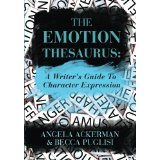
51j0JxV-MZL._AA160_Today I am stocking my Writing Toolbox with a book recommendation.  I first came across The Emotion Thesaurus: A Writer’s Guide to Character Expression when I stumbled across the authors’ website, Writers Helping Writers.  This was during the days when my own author platform was being created, and I clicked on and followed anything and everything that looked as if it might be valuable.  The point being:  I didn’t give the book much of a glance.

Of course, posts from the site kept leading me back to The Emotion Thesaurus as well as mentions on other writing blogs.  I checked out the book on Amazon, and I decided I must have it.  And by must have it, I mean I asked my local library to purchase it.

The simplicity of the book is brilliant.  Ms. Ackerman and Ms. Puglisi did a wonderful job explaining how to write emotional responses well.  The book includes a long list of emotions with examples of physical signals, internal sensations, mental responses, cues of acute or long-term confidence with other emotions to which the original one may escalate, and cues of repressed desire.  As well done as all of the above-mentioned features are, what I liked best about the book was the authors’ admission that their book is a launching point.

The Emotion Thesaurus is meant to help each and every one of us writer better, not to copy verbatim from the list of emotional responses.  This simple book gently pushes and guides one to think beyond the usual, clichéd responses.  It presents one of my favorite things in writing:  malleable rules.

I hope you find this book as helpful as I did.

Character Study Questions

Character Study Questions

I promise there is no pop quiz with the questions featured in today’s post.  I’m simply sharing with you that with which I have chosen to stock my Writing Toolbox.  The Writer’s Digest post featuring Brenda Janowitz’s article, “Novel Writing: 10 Questions You Need to Ask Your Characters,” provides great information.

Depending on your writing style, Outliner or Pantser, you’ll find Ms. Janowitz’s character study helpful.  Whether employing it at the beginning of your writing process or using it to relieve writer’s block, the simple questions presented create a foundational benefit.

Happy Writing!

The Terror of Querying

The Terror of Querying

I don’t know about you, but the idea of querying an agent terrifies me. I have two opinions of this process based on various articles I’ve read.

One: As long as Starbuck’s doesn’t mess up the coffee order for the assistant to your chosen agent, your manuscript might have a chance of landing in said agent’s hands.

Translation: As long as everyone is having a good day, your manuscript might be smiled upon.

Two: Agents are fearsome gatekeepers to the world of fulfilled dreams, and I’m standing outside the gate.

That one is pretty clear.

Today I’m stocking my Writing Toolbox with a blog post from Writers in the Storm guest blogger, Julie Glover. Her post, “Are You Ready to Query,” posed questions to me that I hadn’t seriously considered before. What I had been doing is letting the answers jumble around my brain without pinning them down because I felt foolish about them. Now I think I may have been on to something.

Admittedly, I need to perfect my answer to question number one. Yes, I know what my story is about, but do I communicate that well?

To questions number two and three, I have a combined answer. I used to play a game where I fantasized about what critics would say regarding my brilliant novel. It went something like this:

If Wally Lamb and Billie Letts had a child and Isabelle Allende was her nanny, that author would be HL Gibson.

Grandiose, isn’t it? And yet, I believe this game answers the questions about writing voice and comparative titles. I consider the above-mentioned authors to be some of the best storytellers on Earth, and this is the role I want to achieve with my writing. So now I have published authors and titles to which I can compare myself and my novel.

As for voice, it’s all about the storytelling for me. My style is easy and familiar. It reads like the voice of an older relative relating family tales and history, the stories you grew up listening to at every family get together, and the ones you now find yourself telling the next generation.

As for question four, I have feedback from several beta readers, and I have completed two rounds of edits. There are beta readers waiting in the wings to assist me after I complete round three edits. A daunting process for sure, but after reading Ms. Glover’s post, I’m encouraged that I’m on the right track.

Writing Inspiration

This morning, I seriously entertained the thought of chucking it all and applying at the local grocery store.  This writing/author thing is hard.  The thought of disconnecting from social media, abandoning my author platform and potential audience, and leaving behind the fear that comes from staring at a blinking cursor on a blank page sounded wonderful to me.  I realized I needed more encouragement than Mom or my husband telling me I could do it.

Thank you Anne Leigh Parrish for coming to the rescue.  What it Takes to be a Writer was the kick in the pants I needed to go on.  Mrs. Parrish didn’t candy coat the fact that writing is hard.  Instead, she offered ways to overcome the nagging doubts.

In the same vein of thought, I would direct you to Neil Gaiman’s speech Make Good Art.  I usually think of art as a painting or sculpture in a museum or gallery, but I needed to change my perspective about that.  Anything we have created, including writing, is art.  No matter how long it takes or how many times we mess up, keeping pressing forward.

Enjoy!

Tackling Chapter Breaks

Ah, the chapter breaks. How do we write them in such a way as to keep the reader hooked? Admittedly, I like a cliff hanger as long as it doesn’t come across like the Friday episode of a soap opera.

The advice in 4 Ideas for Ending Book Chapters So Readers Will Kill to Know What Happens Next is another helpful tool for my writing toolbox. Not surprisingly, it’s by K.M. Weiland. The four ideas presented in her post are subtle changes intended to keep the reader desiring more without the cheesy cliffhanger effect.

Enjoy!