Why WVU & Other Universities Need Creative Writing Programs

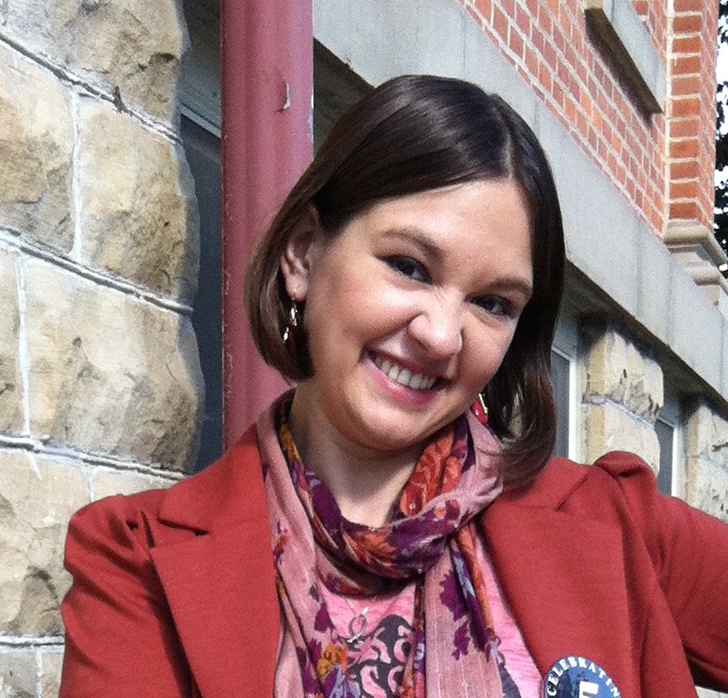
Please enjoy this guest post from Kori Frazier Morgan of Inklings Creative Strategies.

I had planned this week to talk about how to revise your writing through the lens of your reader. But sometimes, there are things that are more important than writing advice.

This is one of those times.

I am a graduate of the Master of Fine Arts program in creative writing at West Virginia University. On Friday afternoon, our community of alumni was slammed with the news that WVU plans to eliminate 32 programs, most of which are at the graduate level.

This is part of what they call their “Academic Transformation Initiative,” the goal of which is to “rethink academics for the future.” Led by WVU President Gordon Gee, the plan for accomplishing this is to “restate our relevance to current and future students and their families, stake our claim as a leader in innovative and purposeful research, and be ready and willing to adapt to an ever-changing landscape.”

The program I graduated from—which laid the foundation for my current work in arts ministry, author services, and independent publishing—is on the chopping block.

I graduated 13 years ago, but while these changes don’t immediately impact me, they do impact not just people I care about who have become friends, mentors, and encouragers even after I left, but current students and even the state of West Virginia as a whole.

As a result, the past few days have left me feeling unsettled and sick.

These people may lose their jobs.

Students may lose their chance to complete courses of study and take classes that may get canceled.

Most of all, my mentors who worked so hard to build something special may see it taken away.

The worst part is that there is no logic to it at all. The English department, as well as the World Languages and Literature department, which also stands to be eliminated, make WVU money. Information from the WVU Provost’s office shows that the two programs combined make the university over $3 million per year.

WVU is trying to reframe itself as “more relevant” by focusing on STEM programs. But by doing this, they are going to alienate students who want to pursue the liberal arts.

Also, we’re talking about West Virginia, which doesn’t have a lot of options for state education. If this were happening here in Ohio, say, at Ohio State, students could say, “Oh, okay, I’ll just go to Kent State/OU/Akron U.”

West Virginia students can’t do that. If they want to study foreign languages, literature, or creative writing, they will have to go to private schools or go out of state. And many of them won’t be able to afford that.

The stakes for this are high, and there is a lot more I could talk about regarding the damage this alleged “transformation” stands to cause.

But this is a writing blog, and I assume that many of you are wondering when I’m going to talk about something that’s directly relevant to you.

So, let’s talk about writing. Here are five reasons why creative writing programs are vital to the academic community and maybe even you as a writer.
Fostering & Discovering Creative Expression

I’ll never forget receiving the letter that I’d been accepted to WVU. I remember sitting in front of my computer in the apartment where I lived during my senior year of college drinking coffee with whipped cream on it and accidentally getting it on my face. After cleaning it off, I decided to go check my mail.

And there it was—an envelope emblazoned with the iconic “Flying WV” logo.

It was like getting my Hogwarts letter. I screamed and screamed. When I called my mom, she thought someone had died.

I was ready for the challenging experience of graduate school, but what I wasn’t prepared for was the discovery of how little I actually knew about creative writing. I was surrounded by students who seemed to know so much more than me and spent the first semester mostly feeling intimidated.

But gradually, as students and professors encouraged me to find my true voice and subject matter, I came out of my shell of insecurity. Having my work critiqued became an opportunity for growth rather than a chance of humiliation.

Most importantly, I discovered that my professors cared not just about my writing becoming the best it could be, but also about helping me reach my full creative potential.

Does that sound familiar to you? It should. Because Inkling Creative Strategies’ mission statement is to help writers reach their full creative potential so they can impact and inspire readers.

I learned that from the MFA program.

I recognize that graduate school in creative writing isn’t the right path for all authors. But those like me who desperately need guidance and community deserve a place to thrive and discover who they are.

In the process, it’s not just the students in the program who benefit. It’s the whole university community, which is impacted by the culture of its students.

Cultivating a Thriving Literary Community

Summer was my favorite time of year in the MFA program. I was usually taking an elective course amid the quiet campus and was busy writing, reading, and hanging out with my friends at my apartment complex.

But the best part of all was late July, when writers from all over the region and even outside of it would descend on campus for the West Virginia Writer’s Workshop. It was a four-day conference put on by the MFA program, which also brought renowned authors to WVU to teach and run workshops with attendees.

I had first learned about the MFA program by attending the conference, so it was special for that personal reason. But there was something magical about being with like-minded creative people, discussing our work together and listening to the wisdom of guest writers as they spoke about their craft and read their own work.

It was everything I normally loved about writing workshops crammed into four exciting days.

The MFA program kept this culture moving throughout the year, too. There were exclusive workshops with renowned authors, special presentations and readings from guest writers, and open mic nights with MFA students at a local coffee house and art gallery.

MFA programs bring budding writers up close and personal with the creative profession. It’s a hands-on laboratory where they get to collaborate with, learn from, and celebrate the community they have with professors, authors, and students.
Nurturing Critical Thinking and Analytical Skills

If WVU wants to be relevant to the future, this is the point where they most need to listen up.

Our society is desperately in need of people in all professions who can think critically, identify problems, and generate solutions that will bring change and make things run more efficiently.

Creative writing does this.

When you write a story, essay, or poem, you have decisions to make. You create a character, start with a phrase or image that attracts you, or recall a personal experience you feel compelled to write about.

Then you have to develop that character and put them in some kind of setting with a conflict. You have to choose when to break lines in a poem, which words to cut, and create imagery that will make it concrete for readers. You have to figure out how to take something very immediate that happened to you and make it relevant to the reader.

All of this requires you to think critically about your own work, analyze the problems it has, and determine how to solve them.

It isn’t even just about your own work. It’s about your fellow writers’ work, too. That’s what workshops are—you get to share what you’re working on, see how it’s currently hitting readers, and then find ways to make their experience better.

People mistakenly think that a creative writing program is just about people sitting in a circle around a campfire singing “Kumbaya.” In reality, it’s a deeply analytical act of detaching yourself from your creative work and understanding how it can best do its work in your reader.

Preparing Students for Professional Success

One thing about being an English major is that you always have to be prepared for someone to crinkle up their nose, raise their eyebrows, and say . . .

“So . . . what are you going to do with that?”

When I was in college, this made me really mad. But gradually, I discovered that these people weren’t trying to be malicious. Because creative writing doesn’t have a specific career track attached to it, they genuinely didn’t know what to think.

Creative writing degrees such as MFAs actually offer untold opportunities to succeed professionally. In the time since I graduated, I’ve held the following careers:

  • College instructor of composition, communications, public speaking, creative writing, and professional writing
  • Content creator for educational projects from Shmoop.com, The Economist, and McGraw-Hill
  • GRE verbal component tutor
  • Copywriter
  • Content specialist
  • Independent author of two books
  • Creator of an independent publishing imprint
  • Entrepreneur

It would be easy to look at that list and think, “Well, not many of those careers are directly related to creative writing.” I beg to differ.

As I mentioned earlier, creative writing is critical and analytical work. In fact, it’s next-level critical work because you’re creating something out of just words, observations, and experiences.

There are no directives, no standard operating procedures, and no direct supervisors—not even your professors.

I’ve found that since I’ve experienced so many strategies and moving parts to storytelling, tasks like content creation and copywriting are actually pretty easy.

No one should ever brush off a creative writing degree because of assumptions that the only job available is to sit in a tower somewhere and write a novel.

Yet, that’s what West Virginia University seems to be doing.

I know this blog post probably exhausts you and you wish I’d just talk about character development or something.

But without my MFA, you aren’t even reading it, because Inkling Creative Strategies wouldn’t exist.
Want to Support the WVU Creative Writing Program?

If this post has grabbed your attention, there are a couple of things you can do to fight for the WVU MFA program and creative arts education in general.

The most important thing you can do is write to the powers that be. They are:

Mary Anne Reed, Provost – maryanne.reed@wvu.edu

Mark Gavin, Associate Provost -mark.gavin@wvu.edu

Tracy Morris, Associate Provost – tracy.morris@mail.wvu.edu

President Gordon Gee – Gordon.Gee@mail.WVU.edu

You can also sign this petition and help generate awareness in that manner. Thank you.

The Artist’s Corner – Visionary Editor, Kori Frazier Morgan

Prior to meeting Kori Frazier Morgan, I heard her name mentioned several times by fellow writer, Don Ake. Then I had the pleasure of hearing her speak at the writing group Don facilitates, The Write Stuff. She was quite professional and pleasant. I, however, wasn’t in the right place to receive what she talked about. Finally, at the annual Christmas party hosted by The Write Stuff, Don insisted that I sit down next to Kori and talk with her. He even cleared a chair beside her so we could speak uninterrupted face to face. Well, all I know is that I can only avoid so many divine appointments before the lightning bolt successfully strikes through my thick skull. Kori was exactly what my novel needed, and I am so thankful to God for her. She’s also what I needed, and she came along at just the right time. Take a moment to meet this marvelous woman through her interview.

Welcome to the Artist’s Corner. Tell me a little bit about yourself.

I’m Kori Frazier Morgan. I grew up in Kent, Ohio and now live in rural northeast Ohio with my husband, Curtis, who is a machinist and craftsman. We have three pets—two cats, Anastasia and Moe, and Gus, a basset/beagle mix. I hold a B.A. in creative writing and professional writing from Ohio Northern University and a Master of Fine Arts in fiction writing from West Virginia University. Aside from reading and writing, I enjoy long-distance cycling, watching movies, seeing live theatre, and listening to vinyl.

How did your work experience contribute to your desire to write?

I have been blessed to pretty much work in some area of the writing field since graduating from college in 2007. I have created educational content, taught writing classes, and worked as a copywriter and content developer. Even when I worked in retail, it was at a bookstore, so I was still operating within the writing world. All my jobs have helped me get better at writing and learn new things.

Have you always wanted to be a writer? When did you develop your love of writing?

I have enjoyed making up stories and writing them down since I was a kid, but I didn’t start to really think seriously about writing as a career until eighth grade, when I found out that creative writing was something you could study in college. Up until then, I just thought it was a cool hobby. I was blessed to have some wonderful teachers in middle school and high school who helped me develop my talents. I worked on the newspaper staff, took acting and communications classes, and loved being in AP English and history courses, where writing essays was a big part of the class.

Have you ever worked as a freelance writer?

All the time. Every day. In 2012, I left academia to pursue freelance writing full time. I returned to the classroom for a few years to teach at a career college and later worked in marketing, but I can’t say I’ve ever totally left the freelance world. Now I run a small business (more on that later) and freelancing is a big part of my life.

What genre do you write?

I have primarily written fiction in the past, but I am now working on a collection of flash nonfiction essays. I also run a weekly blog, Creativity Matters, as part of my business, Inkling Creative Strategies.

To which writing communities do you belong?

I am a member of The Habit, a worldwide community of Christian writers. We work together to study writing, encourage each other, and help each other to become proficient in our craft. The fellowship at The Habit is extraordinary. People care not just about helping you write excellent work, but about you as an individual. We take writing classes, share our writing on a forum, and have virtual writing time on Zoom, where we hang out and work on our projects.

More in our immediate area, I’m part of A Writer’s Life NEO and The Write Stuff, groups based in the Akron/Canton area that meet monthly to critique members’ work. You can either bring something to share or just read and comment. It’s a very low-key, informal way to get some feedback on your writing and The Write Stuff goes out to eat afterward.

Who or what influences your writing?

I am a big fan of music and film. I listen to music while I write and try to put together playlists that help shape what I’m working on. My novel-in-stories, The Goodbye-Love Generation, is heavily based on my dad’s experiences as a member of the Northeast Ohio music scene around the time of the Kent State shootings in 1970, and I have a whole Spotify playlist devoted to the songs that are in the background of the story. When I’m not writing, I enjoy listening to everything from classical to classic country to hymns to Metallica.

My favorite movie is The Shawshank Redemption, which I’ve seen an obscene number of times. I think it is the perfect film for writers to study to learn about narration, character development, foreshadowing, and just how to deliver a satisfying story in general.

How have your favorite authors and/or books shaped your writing?

My favorite author is Flannery O’Connor, and my favorite book is her novel, Wise Blood. I love that she is a Christian author who is not afraid to look at the darkness of the human heart. All of her characters have to face the question of what we are to do with Jesus Christ and His death and resurrection on our behalf, but she does so in a way that resists sentimentality. Many of the stories conclude in a way that is open-ended, leaving room to speculate about what their answer might be. I’m not sure exactly how her work has directly impacted my writing. I just know it has.

What’s your dream goal as a writer?

I want my books to get to as many people as possible whose lives will be impacted by them.

Which authors/genres do you enjoy reading?

I like literary fiction, memoir, and books about theology and spirituality that will help me grow in my faith. I also love studying the Bible. It is God’s inspired Word and contains everything I need to learn more about Him and receive His direction for my life.

What are you reading right now?

I am reading The Door on Half-Bald Hill, a novel by Helena Sorensen. Helena is a member of The Rabbit Room, an organization I support that provides encouragement and edification for Christian artists of all kinds.

What have you published and where?

I have published two books: Bone China Girls, a poetry chapbook, and The Goodbye-Love Generation, both through my independent imprint, Bezalel Media. Numerous individual pieces have also appeared in literary journals such as Shenandoah, SN Review, Switchback, Rubbertop Review, Blanket Sea, Up the Staircase Quarterly, and more.

Describe your journey to publication.

I have been writing professionally for more than 15 years, and the landscape of publishing has changed tremendously in that time. I am an independent author and do the majority of the work to publish and promote my work. During my MFA program in the late ‘00s, we were told that self-publishing was not a legitimate way to publishing a book and that going that route would destroy your credibility. As a result, even as time passed and it became more accepted and prevalent, I was reluctant to pursue publishing my own work.

Things changed after my chapbook, Bone China Girls, was still being rejected after five years. The book recounts the true story of the tragic death of a sixteen-year-old girl in the mid-’60s at the hands of teens and children in her neighborhood, and I felt that it commented on issues such as sexual abuse, bullying, and violence against women that were widely discussed and that I could provide insight into. I decided to publish the chapbook myself because I saw it as an urgent matter. The book’s message was important, and I simply couldn’t wait around for the gatekeepers to tell me I could share it.

I am an independent author and I enjoy publishing my own books. As a marketer and editor with a desktop publishing background, I have the majority of the skills necessary to do the work on my own. I would certainly not recommend this path to everyone—there are some truly hideous books out there that have resulted from authors taking on the responsibility when they are not equipped to handle being the entirety of their publication team. You have to be able to do it professionally in order to be taken seriously.

Have you faced any challenges with writing and/or publishing?

I have struggled with superimposing my own will on my work—trying to make my writing do something that, within the context of a particular project, it is simply not able to do. The Goodbye-Love Generation was like this. I had an agent turn it down when I was finishing grad school because it was a novel composed of short stories and not a traditional novel. As a result, I assumed there was something wrong with that format and spent ten years trying to make it work as a novel or abandoning it for periods of time because I was so frustrated.

Eventually, I realized that I had it right the first time. It was supposed to be a collection of interconnected stories. The fragmented nature of the story fits the characters’ own fragmented perception of the world and themselves. No other format would work to tell this story. Instead of just working with what I had, I let one person’s opinion dictate what I did with my book for ten years. You have to believe in your vision for your writing even if it isn’t what the powers that be seem to want.

Are there any comparative titles to your work(s)?

I am a big fan of two other authors who have written fiction about the Kent State tragedy. Sabrina Fedel has a book called Leaving Kent State that addresses the year leading up to the shootings from the perspective of a high school senior dealing with a friend who returns from Vietnam with PTSD and a debilitating injury. I was also thrilled to receive an endorsement for my book from the fabulous Rita Dragonette, whose novel The Fourteenth of September impacted my revisions. The book is about a college student in the ROTC nursing program who secretly becomes involved with an anti-war group on campus and is caught between her family’s traditional conservative values and her growing feelings that the Vietnam War is wrong.

Describe your research process.

I like to get immersed in places. When I was researching The Goodbye-Love Generation, I felt it was necessary to get the reader out of Kent for some of the stories and move away from the politically charged narrative of the shootings. I can’t remember exactly how it happened, but some thread or another of my Google searching led me to Chippewa Lake Park, a now-defunct amusement park that played an active role in giving local musicians exposure back in the ‘60s and ‘70s. It found its way into two stories in the book. That wasn’t something I planned on, but I think it brought an element of innocence to a story that is otherwise very violent and full of loss.

I also wrote some of the book at a cafe in downtown Kent across the street from the former site of J.B.’s, the bar where my fictional band, The Purple Orange, performs in the book. Downtown Kent is very different now than it was in the ‘70s but being able to imagine the characters there really informed how I described the setting.

Tell me about your newest business venture.

Inkling Creative Strategies is an author services company that offers editing, project development, consulting, typesetting and interior book design, mentorship, and more. My inspiration is the Inklings, the writing society that J.R.R. Tolkien, C.S. Lewis, and other writers at Oxford started to encourage each other in their work. My goal is to help writers reach their full creative potential so they can impact and inspire readers. We have been in operation for almost two years, and in that time, authors have released books, completed manuscripts, developed short stories, and started blogs. It’s been awesome to see how it’s developed!

Where can one find you on the Internet?

You can visit my website to learn more about Inkling Creative Strategies. On my website, I offer free writing tools, including workbooks and checklists, as well as the opportunity to schedule a free Zoom consultation.

For more information about my book, visit The Goodbye-Love Generation.

You can also find me on Instagram @inklingcreativestrategies.

What advice can you offer for someone seeking an editor?

I think an ideal editor balances being knowledgeable about the English language and creative writing with understanding the author’s vision. It isn’t about being correct all the time—it’s about collaborating with the writer to make their work exactly what they want it to be. Editing has to be an ego-free process, and you can’t be married to the rules. You need to show the author grace in terms of helping them execute their ideas. I would strongly advise writers to not take on an editor who is rigid and not willing to collaborate.

What’s your dream job as an editor?

I would love to see an author I work with just totally blow up with their work—get tons of readers and attention, and maybe even become a hit nationally. Not because Inkling might get some credit for that, or that even I would, but because I would have accomplished my mission of helping someone reach their full creative potential.

Where do you see yourself in the world of writing in ten years?

I would love to see Inkling grow enough that I can partner with other editors who share my vision. I also, of course, hope that I will continue to write and publish work that will make an impact on readers, whatever that looks like. I also fantasize about The Goodbye-Love Generation being made into an Amazon or Netflix limited series.

Those are great goals and dreams. Wishing you all the best in your pursuits!