Riding the Belair Bullet

1398463924000--DERBY-1935-OMAHA-IA secret, three-day bachelor party that includes a trip to Kentucky to watch the Derby is just what John Welles and Claude Willoughby have in mind for their best friend, Sam Feldman. They believe they’ve given the bride-to-be and Sam’s mother the slip, but the ladies are on to them.

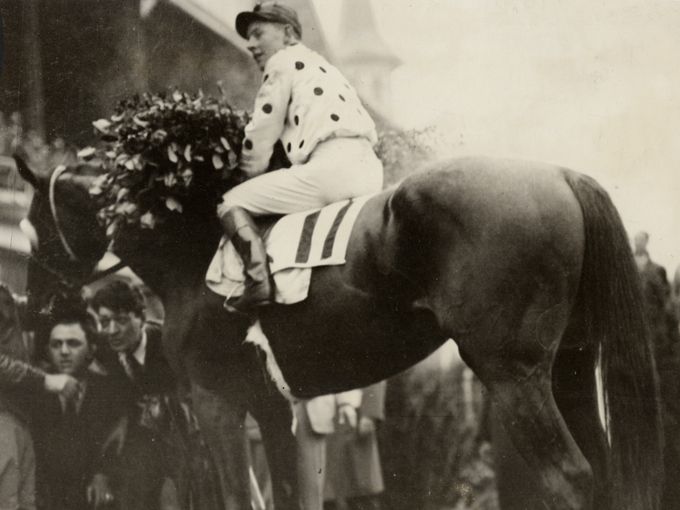
Claude, whose father used to breed races horses in Kentucky, undoubtedly suggested their entertainment. Even though the three friends don’t gamble, they are excited about the opportunity to attend the running of the Kentucky Derby. Unbeknownst to the trio, they picked a good year to go. In 1935, the thoroughbred racehorse, Omaha, owned and bred by William Woodward Sr., owner of Belair Mansion and Belair Stud Farm, was on his way to winning the Triple Crown starting with his performance at the Kentucky Derby.

Of course, horses don’t get to the finish line by themselves. The year Omaha won the Kentucky Derby, jockey William “Willie/Smokey” Saunders was aboard for the ride.

Saunders learned to ride in Alberta, Canada, and Montana. He earned his first win at Tanforan Racetrack in northern California on April 14, 1932, and was tutored in riding by the famous jockey, George “The Iceman” Wolfe of Seabiscuit fame.

The outbreak of World War II, as well as weight problems, interrupted Saunders’ career. He joined the Army, serving in the Pacific theater for four years. During his service, he contracted malaria which led to considerable weight loss, a silver lining to an unpleasant condition for the jockey who returned to racing when the war ended.

Saunders finished his career as a jockey in 1950, and he served as a racing official at various tracks in New Jersey, Florida, and Illinois. He worked as a trainer then as a placing judge. His final honor in the world of horse racing came in 1976 when he was inducted into the Canadian Horse Racing Hall of Fame.1398463924006--SCHAEFFER-AND-SAUND
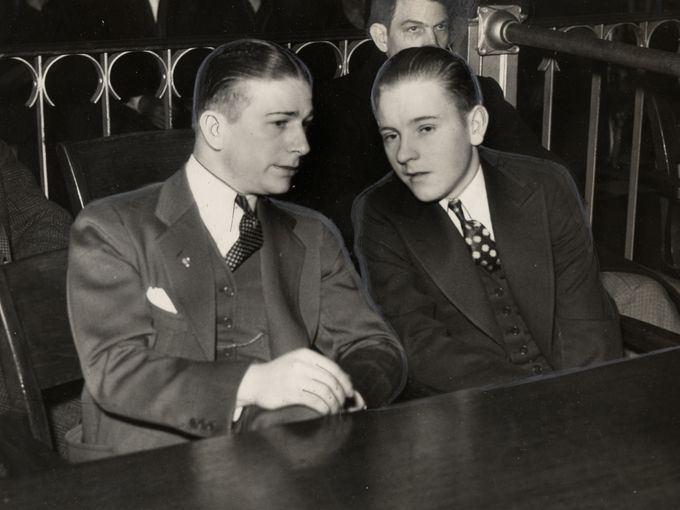
Unfortunately for Saunders, the same year he won the Triple Crown, media attention of the less desirable sort also followed him. In October of 1935, Saunders faced the accusation of accessory to murder of Mrs. Evelyn Sliwinski.

The case cast a bad light on Saunders riding career, and he never rode in another Kentucky Derby. His final days were spent in Florida where he died of cancer at the age of seventy one.


Welcome Home, Dr. Welles

I’d like to share one piece of inspiration to which I returned repeatedly while writing my novel, The Secrets of Dr. John Welles.

Welcome Home, Dr. WellesThe Lark Ascending, by Ralph Vaughn Williams, is an exquisitely beautiful and haunting piece of music that perfectly captures the joy of returning from war and the pain of what had to be endured.  I believe it was nothing short of Divine coincidence that this piece played while I attempted to write what my main character, John Welles, would have experienced as he returned from the European theater of World War II.

John’s participation in the war was brief due to a horrific tragedy that leaves him scarred both physically and emotionally.  Nothing could have prepared him for the burden he must bear; he alone is responsible for the terrible secret.  His one wish is to escape the pain he caused by seeking refuge with his family.  Unfortunately, the memories at home plague him every bit as much, if not more, than his time in the war.

English poet George Meredith’s 122-line poem, also titled The Lark Ascending, was the inspiration for Williams’s musical work.  The poem is a hymn to the skylark and his song.  I admit that I’m no poet and certainly not qualified to decide what makes good poetry.  However, I am pleased that Meredith’s poem led to the creation of music that led to the writing of one of my favorite scenes in my novel.

Please take a pause in your busy day to listen to The Lark Ascending above and read The Lark Ascending below.  Enjoy!

The Lark Ascending, George Meredith (1828 – 1909)

A Wish for Snow

forest-287807_1280

I wrote the following flash fiction based on the picture to the left.  I immediately thought of Band of Brothers and decided to write my story from the German point of view.  It was also based on an account my husband, William, mentioned.  He watched a documentary where several members of Easy Company met with their former German enemies, all of them very old men by that time.  The soldiers of E Company asked their German counterparts why they didn’t overrun the American position.  The Americans admitted they were fewer in number and without supplies.  The Germans’ response was that they knew the “Eagle Heads” were over there.  So impressive was the reputation of the 101st Airborne Division that the German soldiers were hesitant to attack.

I post this in honor of Veterans Day.  God Bless every member of the American Armed Forces, both retired and currently serving.

A Wish for Snow

Private Franz Stieber refuses to open his eyes. He huddles in a machine gun nest in the Ardennes with three other soldiers, trying his best to fend off the bitter cold. He can hear two of them, Emil and Poldi, blowing on their hands to keep warm. The fourth, Corporal Kneller, kicks Franz’s boots.

“I know you’re awake, Stieber. Get up,” he orders.

The otherwise peaceful morning is disrupted by the corporal’s constant litany of barked orders. One would think the man a General the way he swaggers around regaling them with heroic war stories. No one has ever witnessed one of his deeds. They laugh behind his back, wishing an American sniper would take him out.

Franz opens his eyes to pale winter sunshine piercing a blanket of thick fog. What would normally be a welcome respite from the gloom of overcast days is a curse to the German troops hunkered down in the Ardennes. He has yet to decide if waking each morning is a blessing or a curse.

For weeks they’ve been fighting over this God-forsaken stretch of land. Much to the German Army’s shame, little headway has been made in this particular battle. For just over the rise, just across the open field, just through the bomb-blackened trunks of splintered pines are the Eagle Heads, formally known as the 101st Airborne Division.

No amount of shelling or machine gun fire can unearth these demon warriors. Their ranks never seem to diminish, their spirits never flag. Now, with the advent of a sunny day, Franz is sure they will be given the order to attack the American Army’s position

“I will storm their ranks, kill one of their officers, and cut out his heart for a trophy,” the Corporal brags around a mouthful of brown bread and cold coffee.

Emil and Poldi stare in disbelief as Franz spits at the Corporal’s feet.

“No, fool, you won’t. You’ll be lucky to not piss yourself at the order to charge,” he says.

He turns away, unwilling to meet Corporal Kneller’s eyes. Giving him the attention he craves only encourages him, and his youthful bravado will get them all killed. Franz steels himself, expecting to be shot for insubordination once Kneller recovers from embarrassment. The cowed Corporal simply shoves the rest of his bread into his mouth.

As they finish their meager breakfast, the sun retreats behind a mantle of clouds. Franz breathes a sigh of relief as snow begins to fall. There will be no offensive, only more shelling. Today he will not die in the Eagle’s talons.