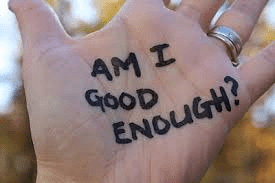
 Allow me to preface today’s post with a nod to Heather Sellers’ book, Page After Page. As I mentioned in an earlier Baring My Writer’s Soul post, this is about blogging my experience. I truly hope you find something here that appeals to you; however, I strongly suggest that you do yourself the favor of reading Ms. Sellers’ book. Believe me when I say that you don’t want to miss one word of her valuable insight.
With that being said, the following lists are a writing exercise from Page After Page. The simple task jumpstarted my writing when I stalled due to resistance and, I recently discovered, boredom. (Boredom and Burnout: What To Do When Artistic Work Stops Being Fun by David J. Rogers) Even if it’s just a blog post, at least I’m productively writing.
The qualities of my ideal writing guidebook (what is covered):
- Large, easily referenced grammar and punctuation section with examples
- Daily writing exercises
- Visual writing prompts
- “How to” quality to the book, instructional without being preachy or stringent with rules
- Info packed, fast paced
The qualities of my ideal writing class (what I learn):
- How to write a query letter
- Order of items in an e-mail to an agent, what is attached, what goes in the body of the e-mail
- Standards of punctuation, grammar, when to italicize, underline, quote
- How to write in deep POV (my most evil nemesis)
- The art of good story telling (which I’m currently exploring in Steven James’ book, Story Trumps Structure)
- How to write in the present tense when something occurred in the past
- Writing a great first chapter (Again, Story Trumps Structure)
- The best way to conduct research
- Answer the question, “Does every story written these days have to follow an outline with nine-point structure, character arcs, pinches, plot points, etc., etc.?”
My best student-like qualities (who am I when I’m learning, my attitudes when I’m loving the act of learning, what do I look like, what do I wear, what do I have in the palm of my hand):
- Detail oriented
- Takes fabulous notes
- Studies diligently, thoroughly
- Combines book learning/reading with a hands-on experience, admittedly a bit more on the bookish end
- Listens well
- Questions endlessly because I like to get things right the first time
- Loves to learn when it’s interesting, must apply more effort when it’s not
- Wears casual clothing
- Writes information (usually on a McDonald’s napkin unless I’m in a formal setting) but will use my laptop if the info comes fast (I type well!)
- Enthusiastic, passionate
- Loves to be hooked from the first moment of instruction
As expected with me, the completion of this task prompted more self-analysis leading to admissions and questions:
- I discovered that I’m afraid to tell people I’m a writer because I believe if I don’t produce quickly, I’ll be viewed as a failure.
- I feel pressured to publish soon, but I don’t want to crank out garbage.
- Certain people I’ve engaged in life resent when I do something that they perceive as getting ahead of them, being more successful, so I downplay my achievements.
- Other than the occasional, “That’s nice,” I don’t feel as if anyone supports my writing.
- Money factors in to my writing heavily. I make very little working as a substitute at the library, and I feel the pressure to bring in a paycheck especially with the economy the way it is.
- Is my writing a selfish hobby or a real career?
- I don’t really feel as if I have a writing ally, no connectivity in the writing world or to another writer.
- Have I started too late in life to make a go at writing?
- What do I do when there is no money for writing classes, retreats, programs, conferences?
These are the thoughts that usually accompany me as I sit down to write. Unfortunately, they influence my writing habits. I know that most of them are ridiculous self-doubts, so when they arise, I remember to acknowledge them quickly, and then press on with my writing.
Write Happy!
 I want to write. I want to be published. So why did I let the process of writing terrify me into a near-catatonic state? Good question. The answer is that I treated my writing and/or writing time like an obligation rather than a reward. I ignored the clues that writing can be a scary and lonely process, I let it intimidate and frighten me, and I pushed it aside where it grew into a monster. Bad move on my part.

 hl gibson, author