Order in the Court

One of my favorite peripheral characters in my novel, The Tedescos, is Officer Ted Conley. Lieutenant Conley first makes a casual appearance in a chapter where I mention him as a friend who is visiting Joe Tedesco’s bowling alley. Ted and Joe are high school football buddies who stayed in touch after graduation.

It’s probably because I grew up around cops—my dad served twenty five years as a police officer—that I subconsciously chose the profession. But then I realized how handy it was to have a cop on the scene especially with a family like the Tedescos whose escapades sometimes require the compassionate arm of the law. For this reason, Officer Ted Conley makes several more appearances in my novel as both friend and policeman.

I didn’t pin down exactly where the Tedescos live right off the bat because I want my readers to relate to them as members of their own family and/or as friends. Really, where they live isn’t as important as what goes on between them. But I mention their locale every now and then as well as drop in clues.

One such hint came from my own memories of visiting my dad at work. The police station where my dad worked is located next to the courthouse, and in front of the courthouse are two amazing lion sculptures. They are the stuff of childhood fantasy, and more than once I imagined them coming alive. They made such an impression on me as a kid that is seemed natural to have Officer Conley waiting in front of one of the lion statues to be picked up by Joe for poker night.

While the history of the courthouse is quite interesting, this blog post focuses on the lions. After the original courthouse was demolished in 1905, a new one was completed in 1908. The new building was designed in the Second Renaissance Revival style of architecture and included two male statues and two lion statues.

The two seated males, one with a scroll and the other with a sheathed sword, represent law and justice. The two carved male lions are symbols of the law’s majesty and are sculpted of Salem Limestone (commercially known as Indiana Limestone). The lions, mirror images of each other, flank the courthouse sidewalk with one facing northwest and the other facing southwest. The lions rest on their hind legs with their front legs outstretched and mouths open slightly to reveal their teeth. The pair has impressively large manes, and their tails curl around and up to rest on their backs. They are placed on limestone plinths which set on mortared sandstone bases.

The lion sculptures cost $1,160 in 1908 which, according to an inflation calculator, would be $32,127.49 in 2017. In order to position the lions without cracking the stone base blocks, large blocks of ice were placed between the lions and the stone bases. As the ice slowly melted, the lions gently came to rest on their stone bases.

The only information I could find about the sculptor was a snippet by someone commenting on another website. Supposedly, August Blepp, a master stonecutter, is responsible for the carved lions guarding the courthouse. I shall continue to search for any details regarding the sculptor and update this post as needed.

Perhaps you noticed that I still have not mentioned the location of the lions or the county in which they and the courthouse reside. I enjoy a little mystery, and I’d rather these details be revealed within my published novel. Until then, I’ve provided a picture clue of one of the lions.

Happy hunting!

Southern Fried Solution

Joe Tedesco has a big heart, and he can see that his wife, Shirley, could use some cheering up for Mother’s Day. So, he pulls out all the stops when planning Shirley’s Mother’s Day celebration. Joe also has a big appetite, and the lure of a home-cooked meal is more than he can ignore. This is why the Tedesco Family will be attending church with their friends, Smiley and Charlene Roberts, on Mother’s Day. The Baptist church where Smiley and Charlene are members is hosting a meal in honor of mothers, and the dishes the men will prepare are the recipes their wives and mothers use. For Joe, this translates into culinary heaven. But really, the day is all about Shirley.

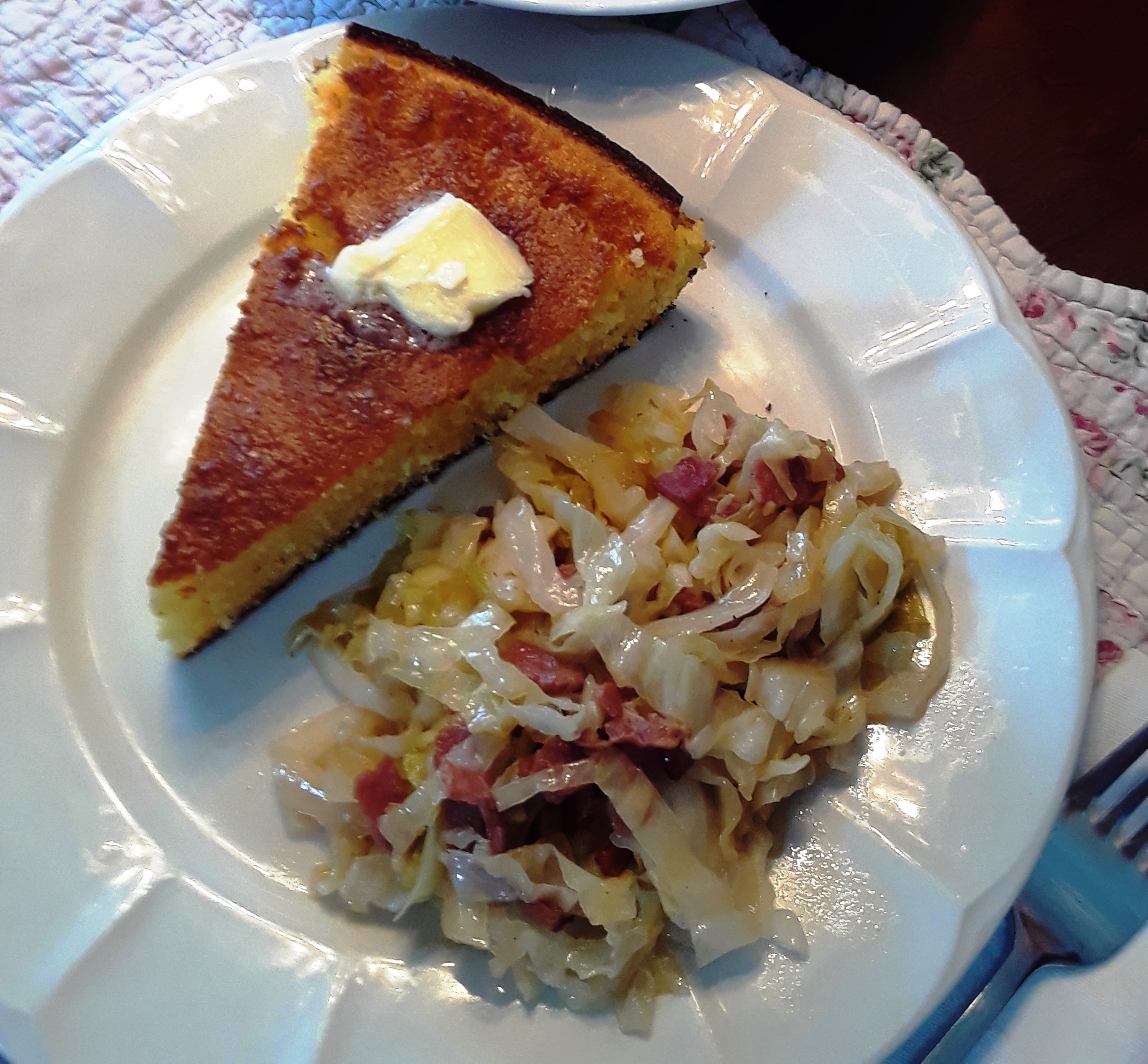
The following recipe is the one I had in mind for the above-mentioned scene in my novel, The Tedescos. This recipe is a meal unto itself, but when paired with other Southern favorites, then Joe is right in believing it’s ecstasy for the taste buds.

Southern Fried Cabbage

6 – 10 bacon slices

4 T butter

1 medium sweet onion, chopped

2 cloves garlic, minced

1 large head of cabbage, sliced or chopped

2 T Worchester sauce

3 T apple cider vinegar

2 T brown –OR– raw sugar

½ t hot Hungarian paprika –OR– ½ t Cajun seasoning

Sea salt

Black pepper (I used quad-colored peppercorns)

1 t crushed red pepper flakes (optional)

Side Note: I used an 8-oz. package of Applegate uncured turkey bacon for this recipe which produced less fat. You will need to increase the butter to 6 T to take the place of the bacon drippings should you choose to do the same.

Slice or chop cabbage, taking care to remove any ribs and the core, and set aside.

Stack the bacon slices and cut them into strips across the width. In a large skillet over medium heat, sauté the bacon until brown and crisp. Set the cooked bacon aside and reserve 2 T of drippings.

Add the butter to the reserved bacon drippings in the skillet. Add the onion and garlic and cook until the onion turns translucent. Add the Worchester sauce, apple cider vinegar, and sugar. Stir gently and allow the onions to caramelize slowly and the liquid to thicken as it cooks off. Return the bacon to the skillet and stir gently.

Add the cabbage and season with salt, pepper, and hot Hungarian paprika ­–OR– Cajun seasoning. Cover and allow the cabbage to cook down about half way. When the cabbage has begun to wilt, stir the mixture. Return the cover to the skillet and continue cooking until the cabbage is tender.

Remove the lid from the skillet to allow the excess liquid to cook off. Stir gently to coat the cabbage and keep it from burning. Sprinkle with red pepper flakes if using. Transfer to a serving bowl and enjoy!

Quotation Station

Shabbat Shalom to all my family and friends.

May your weekend be peaceful and productive.

It always amazes me how much art crosses over. Enjoy my thoughts on the similarities between photography and writing in my post, A Snapshot of Writing.

True Grit

Memory Makers Masquerading as Cats

I love blog posts about the magic of ordinary days. You know the ones that expound upon the grit in our daily lives as if it’s some sort of fairy dust sprinkled over us that makes everything perfect and wonderful. This blog post is about the true nature of grit.

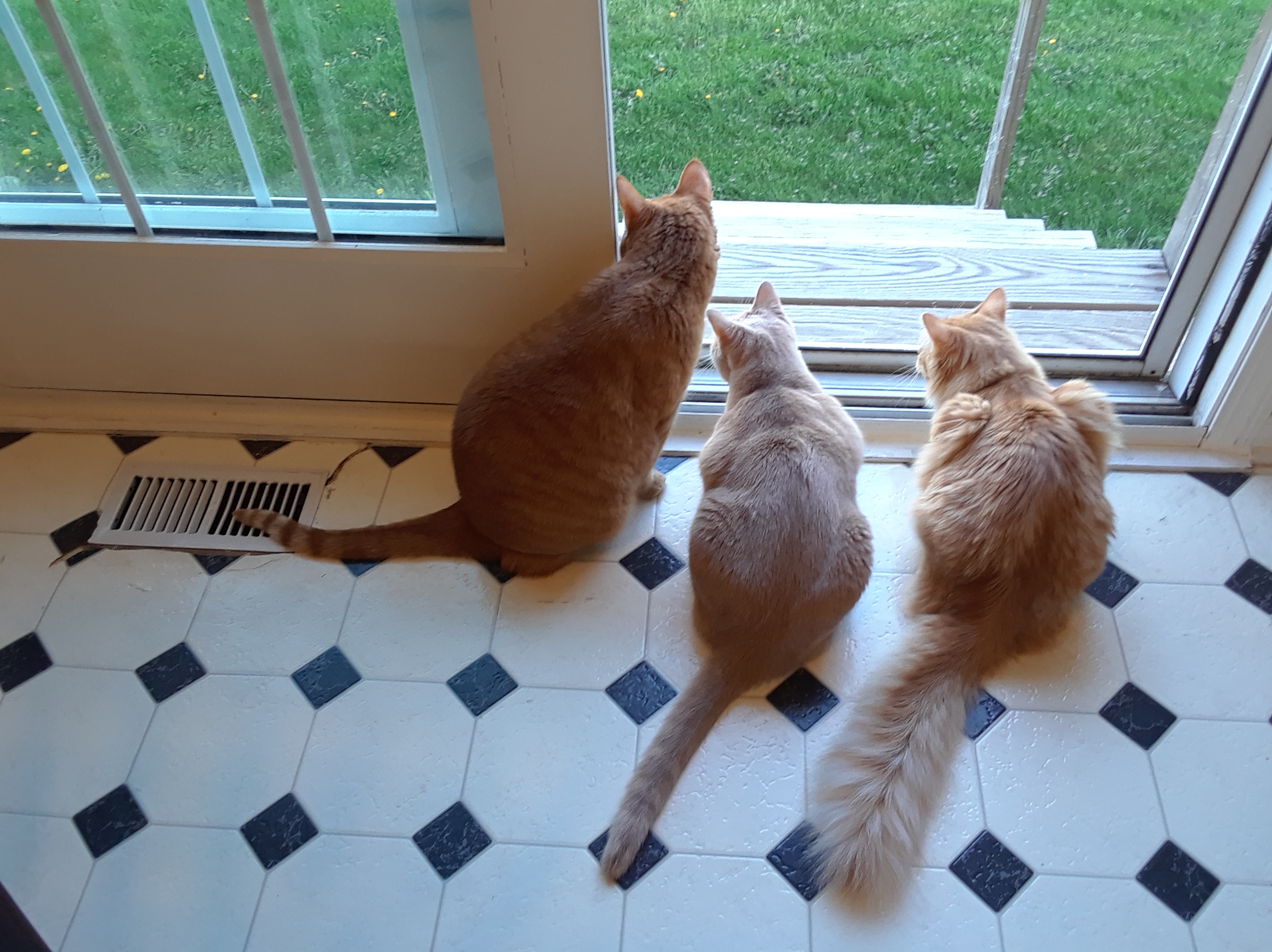
If you have ever owned cats or know anything about their personalities, you know they are thieving, little devils. They develop weird passions for things like pens, pencils, Q-tips, etc. Basically, anything they can swipe off a table, out of a cubby in a bathroom cabinet, or from the trash. My three cats (Henry, Simon, and Freddie) crave pencils especially if I’ve placed an eraser cap on the end. They usually chew off the eraser that comes with a pencil (I have found gnarled pieces of metal left as evidence of their handiwork) necessitating the addition of an eraser cap. I believe they work in concert to ensure this happens, and then they celebrate by waiting until I go to bed to work the pencil out of the jar in the living room, the wire spiral of my notebook, or from the side of my laptop cooling station.

Looking for one of my lost pencils is what prompted this blog post. I was on my hands and knees in the kitchen with the three offenders watching my progress as I laid my head parallel to the floor to peer beneath the printer table. I spied a popcorn kernel, and my mind flooded with memories of teaching Joshua how to make popcorn on the stove. I retrieved the kernel and sat back on my knees as I recalled what a great day that was and how many more like it we’ve had since. But I didn’t find the pencil.

I looked into the corners of the fireplace mantel also in the kitchen. A two by three piece of grey Lego was wedged behind the antique wood. It has been years since my kid played with Legos. He started by building every kit according to instructions, but his best creations were those he made up without the benefit of a pattern. The Titanic with a removable panel to simulate destruction by an iceberg, the Iron Giant, a mask similar to that worn by General Grievous, an M1 Garand that ejected the clip, a three-level ship longer than my kitchen table, and a working crossbow were among my favorites. Still no pencil.

Under the stove I found a cap from a bottle of Leinenkugel’s Summer Shandy. How my cats managed to get the bottle cap was beyond me, but its discovery prompted the memory of a wonderful, teen-free evening spent with my husband. The night was outrageously hot and the light beverage tasted delicious and refreshing. Husband and I felt like newly-weds again as we whiled away hours in each other’s company doing absolutely nothing and loving every moment. Again, no pencil.

I crawled all over the house looking for my pencil. I could have simply used another one, but it was a matter of principle now. The cats trailed me with mild interest, and I swear they nodded their heads toward their litterbox as if suggesting I look there. Little creeps.

Every room received a thorough search, and along the way tidbits of stuff located beneath furniture or in corners prompted memories of the past twenty five years. At times I fretted over scuffed baseboards and the scars of puppy-chewed carpet, a house that looks quite “lived in” and the realization that I need to sweep more often than I already do! (A wise friend once said, “If you have pets, you’re going to have pet hair.”) But every inch of every room in our home offered up life that was and still is sound and stable. I cast a glance at my cats who sat just out of reach watching me. Their smug faces seemed to say, “You’re welcome.”

I eventually found my pencil inside the cooling station where a clumsy paw had pushed it in an effort to snag it off the table. I threaten to beat their hides every time one of my pencils goes missing, but I have to admit the process of looking for it adds to my memories most positively. Someday—hopefully not in the near future—my broken heart will reminisce Henry, Simon, and Freddie, and I’ll be most appreciative for the days they decided to steal my pencils.

Mockingbird Calling

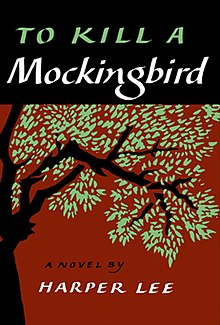
As a teenager, there are so many things that one doesn’t appreciate. My ninth grade Honors English teacher assigned the book, To Kill a Mockingbird, as part of our reading for the year, and we didn’t question it. I wondered who this man, Harper Lee, was and what sort of book this dead man had written. While my teacher, Mrs. Kraft, quickly corrected our wrong assumption about Harper Lee’s gender, she didn’t mention that the authoress was still alive. It was a small oversight, and being teenagers, we were either too disinterested or too lazy to care. I ended up loving the book so much that I read it a couple more times throughout my life.

Fast forward to the release of Go Set a Watchman. By then I was writing and seeking publication, and if there is one thing I’ve learned as a writer it’s that I would never want my first draft of anything published for the entire world to read. The idea was horrifying, and since I had heard that Go Set a Watchman was Harper Lee’s first draft, I refused to read it in honor of her. Still, the point I made at the beginning of this post didn’t hit home with me.

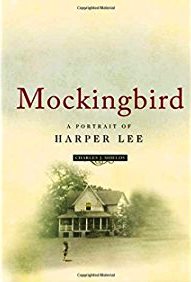
It wasn’t until I read Charles J. Shields’s Mockingbird: a Portrait of Harper Lee that one particular fact become apparent. Harper Lee had still been alive in 1984 when I read her iconic novel for the first time. At least this time I had a better understanding of who she was and how much of herself and her life she had written into her novel.

I’ll provide you with my impressions of Nelle Harper Lee rather than bore you with facts. At first I wasn’t sure I liked this brash person who didn’t seem to recognize or understand boundaries in other people’s lives. In situations where most people would be embarrassed by such behavior, it appeared that Nelle didn’t have the good sense to be ashamed. What I thought of as her complete lack of social skills made me wonder if she was autistic, and I absolutely do not say that as a thoughtless insult. On the contrary, Nelle’s haphazard navigation of life touched my mother’s heart, and I wondered if she had anyone who truly understood her.

Adding to my concern was Nelle’s mother’s mental illness, and I wondered if the lack of maternal guidance toward her late-in-life daughter also affected the formation of Nelle’s personality. Alice Lee, the oldest sibling, and A. C. Lee, Nelle’s father, certainly filled any void in her life. According to Shields’s account, they presented a resilient style of parenting that I don’t believe the sensitive artist within Nelle was strong enough to withstand. Support for her chosen career came reluctantly, and only after her success with To Kill a Mockingbird did they come on board.

Then the pendulum would swing in the other direction, and a soft, caring Nelle appeared. She was still outspoken but also attentive to other people often to her own detriment. Her close friend, Truman Capote, benefited the most from this side of Nelle. He took advantage of her gentle nature when he employed her as his “assistant researchist” during the writing of In Cold Blood. A bare mention that had to be shared with Capote’s lover was all Nelle received for the extensive work she did. Along with Capote badmouthing Nelle on several occasions and his obvious envy of her success, it’s no wonder their relationship became strained.

I believe the pressure to live up to the success of To Kill a Mockingbird overwhelmed Nelle. I also believe that as much as she wanted to be a writer, she only had one novel in her, and this is absolutely fine. She could have been quite happy for years writing articles for newspapers or short stories for magazines, and if the idea for a novel came along, she could have penned it free from the burden of living up to her prior achievement. But the public and her family wanted more. The public wanted another book they could sink their teeth into, and for some reason I never truly understood, her family wanted her back home in Alabama at least six months out of the year. The tug of war on Nelle, both internally and externally, did little to encourage her writing. A second novel never came to light, and after ten years the bloom of her success from To Kill a Mockingbird had faded.

For the remainder of her life, Nelle viciously guarded her novel and characters, not so much as allowing a cookbook named after Calpurnia to be published. She basked in the waning glow of her novel, occasionally enjoying a resurgence of celebrity with anniversaries of the novel or when someone wrote an article about her or her famous book. Otherwise, she led a reclusive life to the degree that no one could ever convince me she wanted or approved the publication of Go Set a Watchman.

So do I have a clearer picture of Harper Lee? Actually, without her memoirs or at least a book of her personal correspondence, I’m left with more questions. I would have loved to speak with her, to wrestle her out of her insecurities, or at least understand where she was coming from. I believe we could have been friends.

– – – – –

The copy of Mockingbird: a Portrait of Harper Lee that I read was published prior to Nelle Harper Lee’s death. I do not know how the revised and updated copy reads, or whether it supplies further insight into the authoress or the publication of Go Set a Watchman. Quite frankly, I enjoy the mystique surrounding this simple woman, and I don’t feel as if I need to know more.

Pretty Fly for a Seasoned Fry

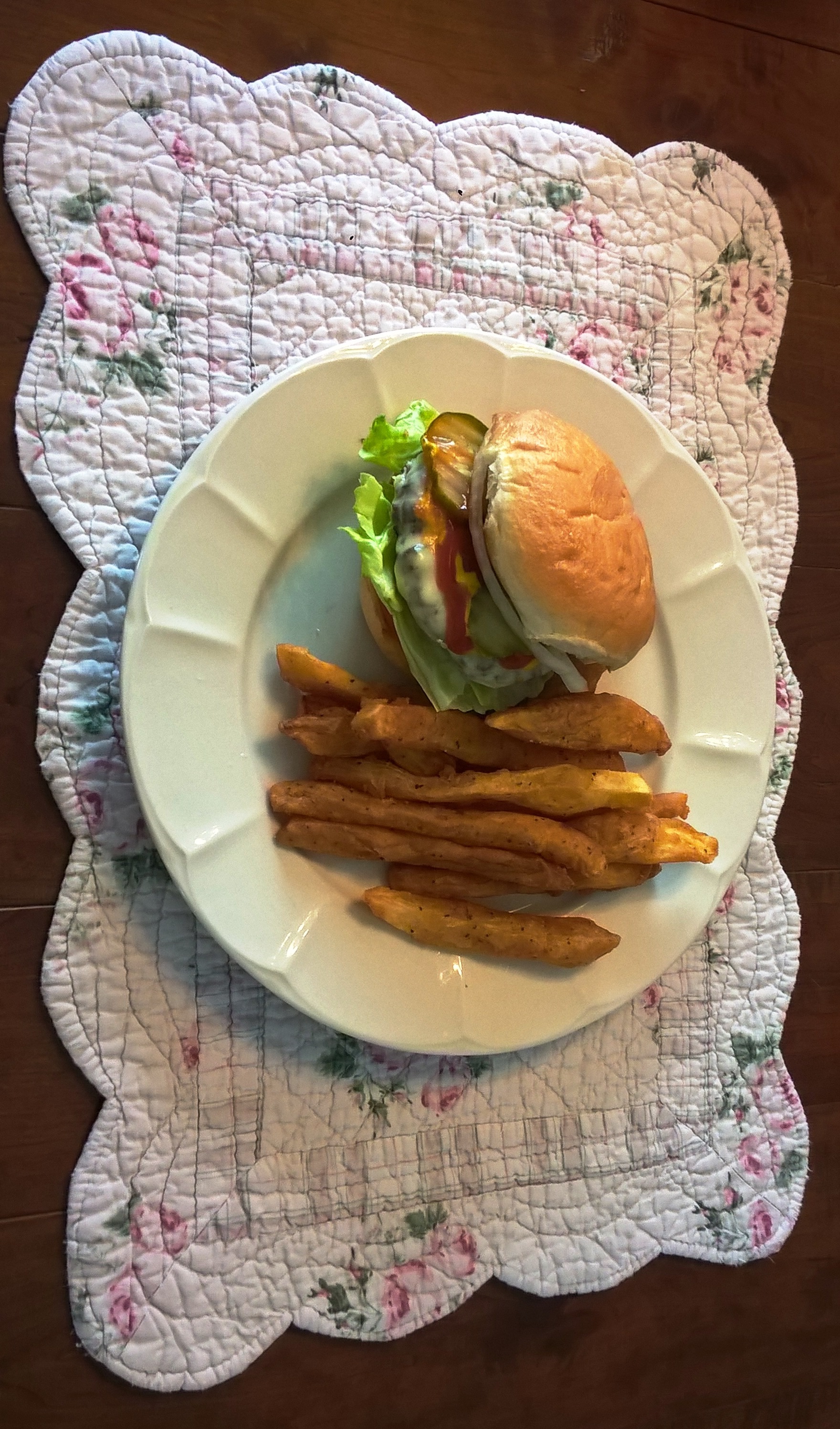
What’s a hamburger without French fries? This is no doubt a question Joe Tedesco would ask anyone who tried to serve the popular sandwich without it’s equally famous side. It’s also a question Joe did not have to ask Charlie Rollins and Graham Silver when he attended their party. The pair knew enough about their unofficial guest of honor to know plenty of fries had better be on the menu if hamburgers were anywhere nearby. They went one better and offered seasoned fries unlike anything Joe had ever tasted.

The following recipe is the one I came up with for the above-mentioned scene. Even though Joe never had the chance to try the delicious fries, I hope you’ll enjoy them as much as my family did.

Seasoned French Fries

Eight large russet potatoes

1 ½ c all-purpose flour

1 ½ t garlic powder

1 ½ t onion powder

1 ½ t ground cayenne pepper

1 ½ t sea salt

1 ½ t black pepper (I used a coarse grind)

1 ½ t paprika

Peanut oil for frying

¾ c water, more as needed

Combine the flour, garlic powder, onion powder, cayenne pepper, salt, black pepper, and paprika with a whisk, mixing well. Set aside.

Wash and peel the potatoes. Place whole peeled potatoes in a bowl of salted cold water to keep them from turning gray. Remove one potato at a time and cut it in half lengthwise. Lay the flat side down, and cut the potato in half horizontally so you end up with a top half directly over a bottom half. Keep the halves together and cut them into ¼ inch strips. Do the same with the other half of the potato. Proceed in this fashion until all the potatoes have been cut into strips. Return the cut pieces of potato to the cold water while working on whole potatoes. Once all the potatoes have been cut into strips, drain them in a colander and rinse the cut potatoes with fresh cold water to remove excess starch. Pat the cut potatoes dry with a paper towel.

I used a heavy pot on the stove to heat my peanut oil and a candy thermometer to maintain exact heat. Heat the peanut oil to 350° F.

Add the ¾ c of water to the seasoned flour and whisk. Add more water in ¼ c increments and whisk until you have a thin batter. Place two large handfuls of potato slices in the batter and toss to cover. Excess batter will drop off when transferring the potatoes, but don’t shake off so much that your potatoes are thinly battered. Carefully place the battered potato slices in the hot peanut oil a few at a time until the surface of the oil is covered. An Asian strainer with handle is perfect for the task.

The temperature of the oil will drop a little with the addition of the cold potatoes. Maintaining 350° F will result in well-cooked, crispy fries. You may need to separate the fries as they cook to prevent sticking. When the batter turns a deep gold (approximately 10 – 12 minutes), the fries are finished cooking. Use the Asian strainer to remove the potatoes from the oil and drain them in a large bowl lined with paper towels. It is most important that the peanut oil returns to 350° before adding another batch of battered potatoes. When it does, proceed with the frying process until all the potato slices are cooked.

You may salt to taste if needed. The flavor of the seasoned batter becomes more evident once the fries have cooled to a temperature at which one can eat them without burning fingers or mouth.

Enjoy!

Quotation Station

Shabbat Shalom! May your weekend be peaceful and productive.

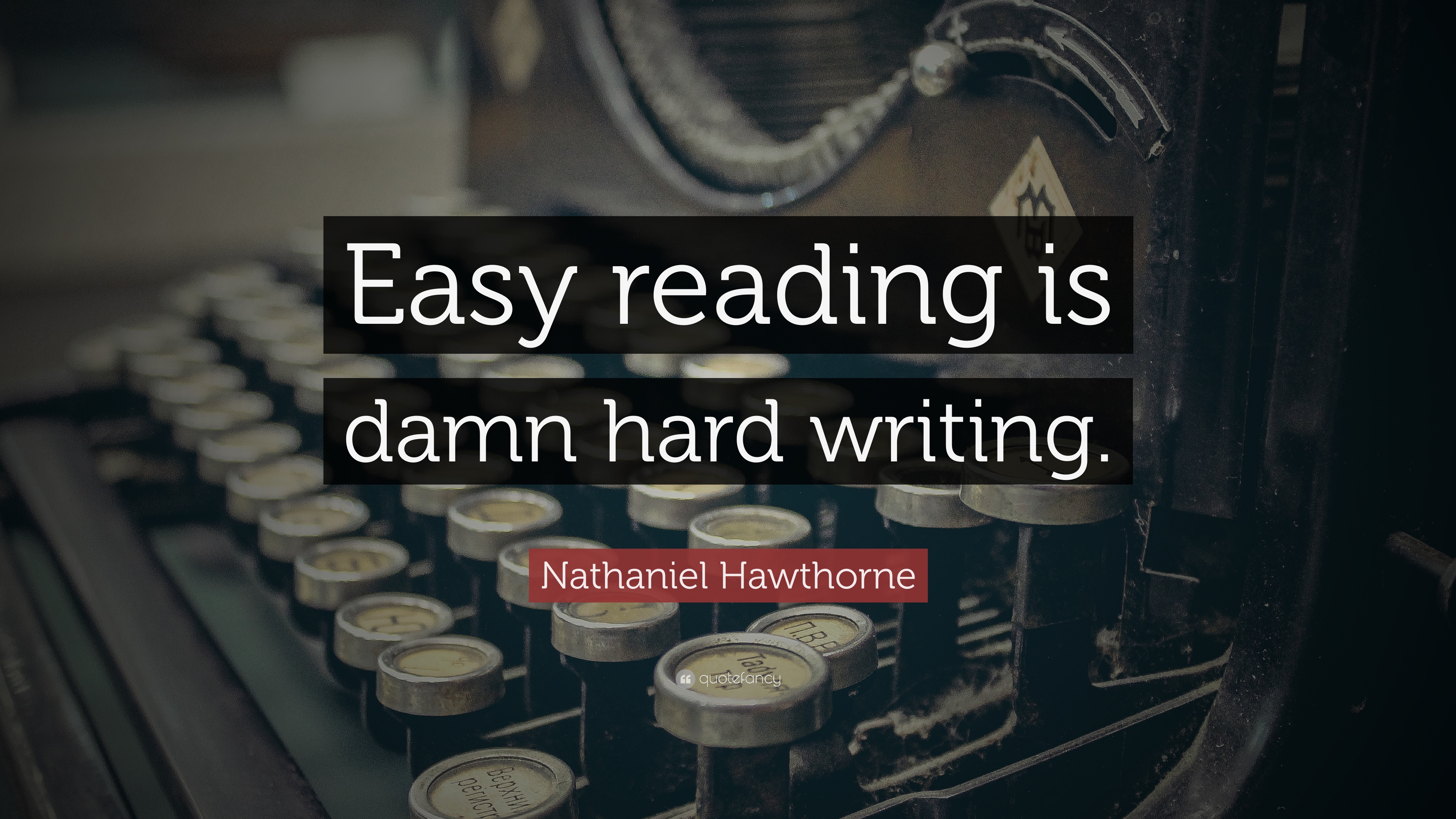
You said it, Nate! Remember, if you’re enjoying the book your holding, an author somewhere labored day and night to give it to you.

Collecting the Masses

As I was typing a blog post last week, a tiny red flag flew up the mast in the back of my mind. I ignored it and pressed on toward my writing goal for the day. Fortunately, that small warning kept popping up as I went about business. I don’t know why my mind settled on the word hoard (or was it horde), but I knew I had used it recently only I couldn’t remember where. Making matters worse, after double checking definitions, I realized I had chosen the wrong one.

For two days, I skimmed my memory for how I meant to use it, and that helped me track down the scheduled blog post. Much to my relief, it hadn’t posted yet.

I had chosen hoard when what I meant was horde. Word had completely failed me when it produced neither red, blue, or green squiggles beneath the offending version to prevent my error. The next time I receive a survey from Microsoft during an update, I’m going to request purple squiggles for homonyms, homophones, and homographs. But I digress.

Hoard, the noun, means:

*a stock or store of money or valued objects, typically one that is secret or carefully guarded

“Smaug stood guard over his hoard of treasure.”

*an ancient store of coins or other valuable artifacts

“The search for a hammer resulted in the discovery of the largest hoard of Roman gold coins.”

*an amassed store of useful information or facts, retained for future use

“The NSA has a hoard of stored information about my activities.”

Hoard, the verb, means:

*amass (money or valued objects) and hide or store away

“She hoarded shoes worse than Imelda Marcos.”

*reserve in the mind for future use

“She hoarded every insult against her and plotted her revenge.”

And then there is horde, only a noun and the version I meant to use.

*a large group of people (derogatory)

“The Mongol horde invaded China.”

*a loosely-knit, small social group typically consisting of about five families (Anthropology)

A horde of peasants had lived about five miles outside of the village.