Every Day Should Be Sundae

Not everything I read is in my favorite genre, historical fiction. Last week, while checking out a patron at the library, I happened upon a wonderful book called No-Churn Ice Cream by Leslie Bilderback. I didn’t have the opportunity to glance at the recipes, but the no-churn aspect caught my eye. I don’t own an ice cream maker and have no plan to buy one in the near future. I’ve also heard that the salt required for the freezing process with a machine can be costly. So, I placed a hold on the next available copy and waited.51G5hIs8XuL._SX258_BO1,204,203,200_

I’m such a skeptic that while I waited, I convinced myself that homemade ice cream would still be costly and that there is no possible way to make it without an investment in some sort of machinery. I am so glad I was completely wrong.

The ice cream recipes featured in Ms. Bilderback’s book are simple, elegant, and even without having made one yet, I’m sure they are delicious. They range from the basic vanilla and chocolate to the adventurous strawberry-rhubarb, pineapple-pepper, and lavender. The book also features sorbet and gelato in unique combinations.

My favorite part of the book is the ingredient list. You won’t be scouring the Internet for bizarre items available at an outrageous price from countries you’ve never heard of. This fact only strengthened my need to own this particular book.

If you love ice cream, and who doesn’t, No-Churn Ice Cream should be the next book you check out or purchase.

Night Flight

9c019efa-62b4-49a3-8d25-06bde493c6e7The rhythmic drumming of hooves from a single horse is followed within thirty seconds by the chaotic stampede of many horses. Branches slap the riders’ faces as they race beneath the low branches in pursuit of a lone horseman.

The forest reverberates with the sound of man and beast: leather saddles creaking, hilted swords rattling, shouts from the pursuers, and powerful blasts of breath from their steeds. All of it fading, fading into the distance as the last of the leaves disturbed from the branches glide silently to the ground, touching earth without so much as a sigh.

Belsante leans her whole body against the wet bark of the tree behind which she hides; her dress draws the moisture like a man dying of thirst. She presses her palms and cheek into the bark until it imprints her skin, but still she does not move. The rasp of her breath, steel against whetstone, swells and recedes in her ears.

Theobald left her with the promise of return and a scrap of cloth, the corners cross-tied into a knot, wherein he had placed a chunk of bread and a leather flask of wine. He barely had time to kiss her goodbye before he mounted his stallion, Saracen, and led her father’s retainers away from her hiding place.

They agreed that Belsante should make her way to the very abbey where her father planned to have her imprisoned upon learning of her desire to marry Theobald, a mere merchant’s son. It’s not that Belsante isn’t devout toward her faith or unwilling to attend the needs of the poor; she simply wants to marry the man with whom she had fallen in love and not the aging Duke her father had chosen for her. Furthermore, her father would never think to look for her there.

The Abbess, a kind woman with a progressive mind, doesn’t believe in making a girl serve against her will, no matter how generous the endowment from said girl’s father. The young lovers trust her to help in their plan to escape France. Where they’ll go and how they’ll make a living afterward is anyone’s guess. Theobald had proposed selling Saracen, the only thing of value he possesses, but the couple doesn’t know how to go about doing so without attracting attention.

When she can no longer hear the sound of hooves hammering the ground, Belsante peeks around the tree trunk. Twilight and mist dim the woods; she will need to hurry if she wants to reach the abbey before she is caught. The threat of wolves hastens her steps.

The young girl travels throughout the night, and as dawn approaches the horizon, she sees the walls of the abbey on the edge of town. She also sees her father’s men leading Saracen, his mouth flecked with foam, his sweat-glistened sides heaving. Theobald does not sit astride the majestic, black horse who limps as he walks.

Belsante cannot hear the conversation between her father’s men and the Abbess, but she can tell from the determined shake of the Abbess’ head that she is aware of the night’s events. With much hand gesturing, the elderly woman encourages the men to leave, convincing them that Belsante is not within the walls of the abbey.

Again, the distraught girl must hide among the trees until the men leave. She emerges to see the Abbess waiting for her; a gentle beckoning draws Belsante from the woods. The Abbess’ arms are open, and the weary girl falls into them, weeping.

“His mount threw a shoe. They overtook Theobald before he could escape,” the Abbess says.

“They rode him down like a dog,” Belsante cries, her voice anguished.

“What will you do, my child?”

Belsante lifts her tear-streaked face from the Abbess’ ample bosom.

“Do you know where they have laid my love?”

“His body has been returned to his family. He will be interred in the cemetery of the town where they reside.”

Steel stronger than any blade enters Belsante’s body as she stands before the Abbess, shoulders rigid, head held high.

“I will take holy orders. My life will be given to serve those among whom Theobald lived.”

The Abbess’ eyes look down and away; she knows the impetuousness of young women often fades once the hardships of life in the abbey become apparent. When she looks into Belsante’s face, she observes strength born of loss. The old woman nods her head in agreement.

“Welcome, my child.”

Get It Write the First Time…Oops…

mountain-peak-landscapes-wallpaper-53cb399969af2

I just about fall out of my chair laughing when I see “peeked my interest” or “peaked my interest.” This usually happens on places like Facebook or Twitter because people don’t seem too concerned with the editorial process on social media. When this slips into a book, I just about have a fit. If I was in charge, this type of offense would have me storming into an editor’s office with a pink slip.

Now I don’t mean to sound snooty; I admit to using my Google search bar as a spell checker. I also admit to the occasional mistake in a blog or Facebook post and Twitter tweet. I grind my teeth when this happens.

Still, if you’re going to employ a phrase, please take the time to double check the wording and etymology of phrase to ensure that you’re using it correctly. The following link explains the difference and appropriate use of pique, peak, and peek. I found it to be most useful with tips on how to remember which \ˈpēk\ is correct for your sentence.

Baring My Writer’s Soul – Part 9

In Page After Page, Heather Sellers recommends using a journal to jump start and sustain a healthy writing life. Honestly, at this stage of my life, a blank journal staring back at me sounds like another obligation that I must keep. This tells me that I need to go back and reread some of the earlier chapters and my own blog posts about freeing myself and my writing from self-imposed restrictions.

I don’t know why I allow myself to become so wrapped up in the “what I should be doing” to the point that I overwhelm myself and actually get nothing done because there is too much to do. The flood we experienced last week and piles of stuff rescued from our basement add to my distress.

if-mommaBut a year from now, when the basement is back in order, will I still be bogging myself down in the usual way or will I have learned my lesson? I say, “When the kiddo returns to school in August, I’ll be free to write again. When his Eagle project is complete, I’ll write. When the Fourth of July picnic is past, I’ll be able to write. When I’ve reciprocated Shabbat dinners to those who invited me, I’ll have free time to write.” The garden that needs weeded, the husband fretting over his job and the insurance claim, my cat who was injured during the flood: it all sucks my joy, and I don’t write. Factor in the condition of our society, self-doubts about ever being published, and the ever-present lack of funds, and I admit there are days when I believe I’m going to lose my mind.

So why would I add a journal to this? Do I need one more thing demanding my attention, waiting to be filled up by what I have to offer? Well, I’ll do it because journaling is for me and me alone. Self-doubt rears its ugly head and says, “That sounds so selfish. You should fold laundry and dust; it’s what good homemakers do.”

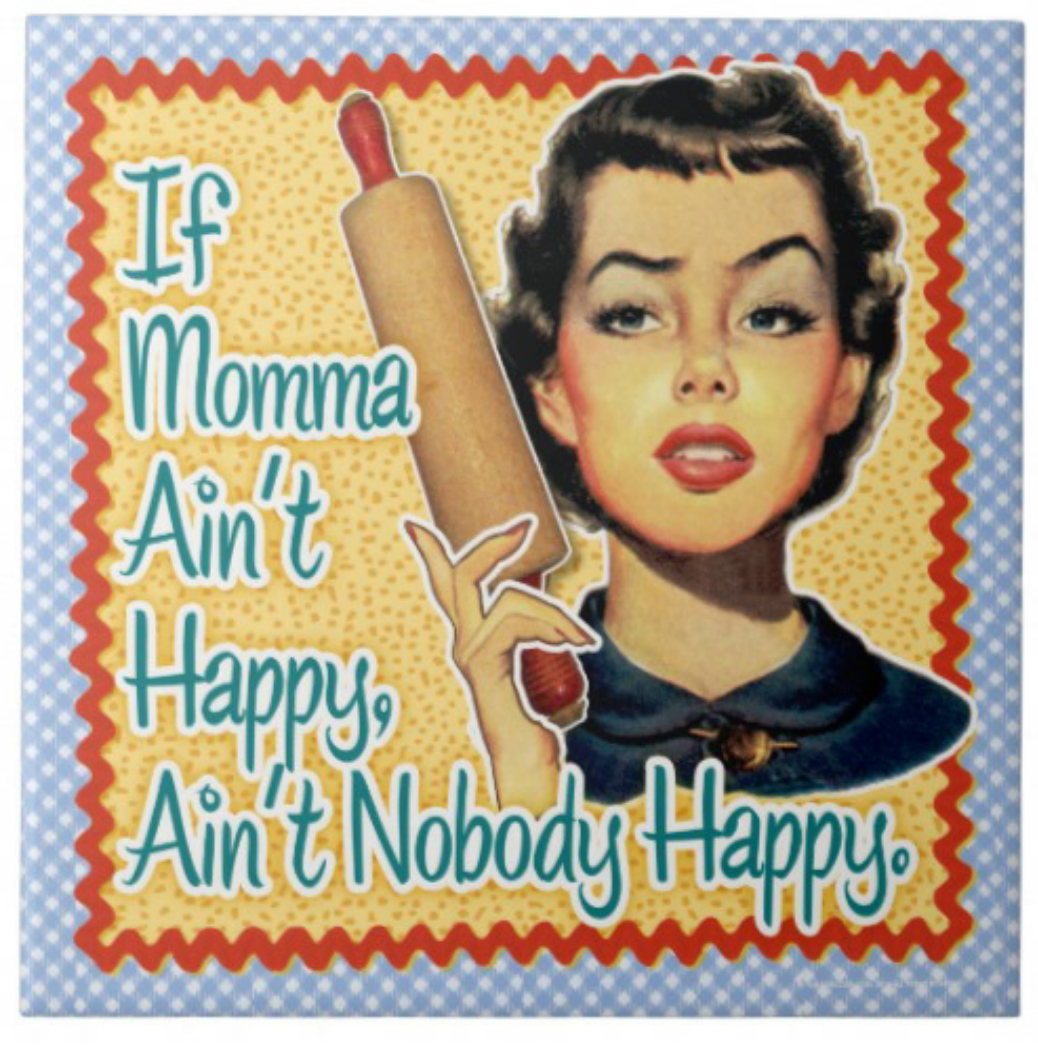
That’s true; but I’m tired of living in this jail. I’m going to remind self-doubt that if Momma ain’t happy, ain’t nobody happy. And right now, Momma ain’t happy.

If for no other reason than to vent, I’m going to write in a journal. My plan is to fill it with things that make me happy: writing, sketches, quotes, pictures, recipes, scripture, lists of blessings, and whatever comes to mind. I won’t try to organize or control it, but I also won’t allow it to control me. The whole point of my journal will be an exercise in freedom: freedom to write, create, invent, express, explore, enjoy, return to life, to live and not just exist.

The purpose of blogging about my experience with writing is to hopefully keep other writers from falling into the same traps I created for myself.  It’s also meant to show writers that he or she is not alone even when we all have a tendency to end up here by our own hand!  Still, I want to encourage you with what I have learned.  Nerdy Girl Supplies offers gorgeous, affordable journals in the Notebooks & Stationery section of the site for you to capture all of your brilliant ideas.  Head on over and treat yourself to a journal or sketchbook; it’s time to go forth and create.

Write Happy!

Simply Walking

Blue-white diamond sunlight filters through the meager canopy of branches. Wet leaves dampen the sound of Rachel’s footfalls and cling to her bare feet. Her arms embrace each other, hands rubbing away her shivers and prickled flesh. The salt trails of her tears dry on her face leaving her skin taut.

5077bd7e-718c-42b8-b79a-0092083d321eStars littered the sky when she walked away from the house full of grief-stricken people; so many family members and friends sitting shiva for her parents. Her little brother, Bartholomew, huddled in an overstuffed armchair in the corner of her grandparents’ living room. His wide eyes searched the room for the hugs and kisses that never came. Eventually, he fell asleep.

The forest stands in stark contrast to the house she left. In the stillness of the woods she can hear her own heartbeat, her own breathing, and the rhythmic sounds soothe her. If she had brought Bartholomew, he would have peppered her with the endless questions of a five year-old. “Are Mom and Dad in Heaven? Who will we live with? What color was the truck that hit them? Was our car wrecked? Why aren’t you wearing any shoes, Rachel?”

And like she has done for the past five days since her parents were killed en route to the pediatrics conference in Florida, she would say, “Yes, Bartholomew, they are in Heaven. We will stay with Nana and Papa. It wasn’t a truck; it was an RV. We’ll get a new car in two years when I’m old enough to drive.”

As for the last question, she would have encouraged him to remove his socks and dress shoes, to feel the cool earth beneath his tender feet if only to distract him from his sadness. But he isn’t with her, and her sorrow hangs heavy in the dewy morning air.

Queen of the Castle

Bread, soap, butter, toilet paper, toothpaste, milk, towels. What do these household items have in common? They are just a few of the things my two boys have left me stranded without. And when I say two boys, I mean my husband and teenaged son.

As the only woman in the house, I do enjoy large amounts of freedom to reign supreme in the areas of home décor, garden landscaping, and the general running of our humble abode. I fancy myself an attentive monarch, making sure my fellow dwellers enjoy a clean home, delicious food, and entertaining family activities.

Unfortunately, those with whom I share my little queendom don’t always acknowledge me with the respect and consideration I deserve. Take, for example, my son who never replaces anything when he’s used the last of it. Only after I had washed my hair and was groping for the soap where it should have been, did I realize that he hadn’t replaced it with a fresh bar.

I’m pretty sure I muttered something like, “The next person who strands me in the shower without soap gets shanked in his sleep.” Admittedly, not my finest moment, but in my defense, I had to leave the comfort of my toasty shower, traipse across the slippery bathroom floor, walk across the carpeted hallway, and dig for a bar of soap in the back of the cupboard.

tumblr_mtv35a9l7r1ssd4pjo1_500Then there is my darling husband of twenty two years who should know by now how vexing I find it when he leaves bag after bag of bread heels jammed in the back of the refrigerator because he doesn’t like using them. The last conversation we had on the subject went as follows:

“William, when a woman sees that there are four slices of bread left, two heels and two inside pieces, she uses one of each, one heel and one inside piece, and she knows to turn the heel inside to make the sandwich more palatable, and she does this so that no one person is left using both of the heels for their sandwich, whereas a man sees four slices of bread left and immediately grabs the two inside pieces, which are still soft, and uses them to make a sandwich without ever once considering that the next person to come along will be forced to use both of the heels for a thick, bready sandwich,” I said without breath or pause.

After ten seconds of silence, he replied, “You whipped that off way too quickly. You worked around lawyers for far too long.”

But it isn’t just the things they leave me without. It’s the little things they leave behind for me to pick up such as bread crumbs and milk dribbles on the countertops, glasses on the kitchen table, and, the one that really flips my trigger, fuzz from the pockets of their jeans when they pull out keys or other items.

I once watched William drop a piece of jean fuzz on the floor. He didn’t see it at first, so I decided to leave it where it fell and observe what he did about it when he finally noticed. He stepped around the offending mat of fabric fibers on the first pass.

Then William had cause to walk past the same piece of dark blue fuzz on our white carpet; still nothing. The third time he walked by, he looked at it as he passed, his head swiveling a good 180°, and still he did not take the three seconds required to stop, bend, and pick up the quarter-sized wad of fuzz. Exasperated bellowing in the form of a complaint emanated from where I sat at the kitchen table. William just laughed and said, “I thought you’d get it when you swept.”

So while I imagine that I am the Queen of Gibson Castle, more often than not, I feel like the chambermaid.

Watching, Waiting

0cb3d7c0-6e1e-494d-9835-e17446c0ebca

I hover in the massive cloud, watching the man whose life had been entrusted to me. He doesn’t believe in me, but then he doesn’t believe in the One who sent me.   This fact does not have an impact upon my mission, although it grieves me terribly.

Before I have the opportunity to settle in and observe, I sense my fellow messenger, Tefilah, passing on his way to the Throne Room. He carries a sacred prayer box constructed of wood taken from a tree to which Humans no longer have access. Tefilah pauses beside me; I can tell he wants to talk.

“Delivering prayers to the King, my friend?”

“Many more requests these days. I think Humans have forgotten how to give thanks.”

I nod in agreement and to indicate the Human I am watching. Tefilah looks where directed.

“How long have you been guiding this one, Merea?”

“Since his birth, but I’m not guiding, not even influencing in any way. The Creator was precise in his instruction when He said to simply make sure this one fulfills his purpose.”

Telifah draws back for a moment, as if he knows he should complete his task but desires more information.

“Who is he, Merea?”

“The one who will broker peace between the Creator’s Chosen People and the World.”

No–I can’t believe it. You’ve been given the assignment of watching the False Peacemaker? But you’re just a–”

Tefilah looks stricken over his blunder, but my laughter moves the cloud around us, allowing shafts of light to reach the Human beneath the tree. The Man mistakes my mirth for a change in the weather.

“Fear not, my friend. I know I’m just a choir angel, but this man was just a teacher when he started. Look how far his ambitious writings have brought him; the whole world listens to what this Man says. I have followed him for forty five of his years through every church, cathedral, temple, synagogue, shrine, and mosque across every continent as he looked for ways to thwart the Master. He thought he was seeking, but his heart…”

“Already hardened,” Tefilah finishes for me. “Does Michael know?”

“Michael is the one who ushered me into the Ruler’s presence when I received my assignment.”

“Why isn’t Michael overseeing this task?”

“He’s busy battling…”

Neither of us is willing to say the name of that Fallen Angel.

“I worry, Merea, that your task will not be easy. We both know how this ends.”

Tefilah points to the vile form of Tsalmaveth moving like an oily shadow, lingering among the branches of the tree under which my charge stands, waiting to descend upon him during a moment of confusion or distraction and hasten in the Fallen One’s plan before it is time.

“That demon is nothing more than a minor irritation. I’ve already run him off ten times in this moon/sun cycle.”

“Still, Merea; don’t underestimate his power.”

“Do you really think Tsalmaveth has the ability to deny our Sovereign His due glory?”

“Of course not. It’s you I worry about.”

“I admit that as our battle grows in intensity, I sometimes wish Michael would take over my obligation. But, I also know that the Maker would not have given me this task if I wasn’t capable of completing it.”

Tefilah moves closer, reassuring me with his strength and presence.

“I wish more Humans had your faith, Merea. It would make our job so much easier if they just relied on the King the way you do.”

Tefilah leaves me, but I know I’m not alone. None of us, whether Human or Spirit, can ever be out of the Holy Presence. I take comfort in this fact, for even as I recall it, I sense a change in my Human. I do not possess the ability to see into Men’s hearts, but I can witness the alteration to their countenance, the look that comes into their eyes, when a decision has been made.

The time has come. I honestly did not think it would be this soon, but I haven’t a moment to spare. I gather my wits about me, my sword, and my shield. I feel the growing darkness even as the clouds split and Michael leads the Heavenly Host forward to guide me back to Heaven. Our final battle is just beginning.

Lesson Learned

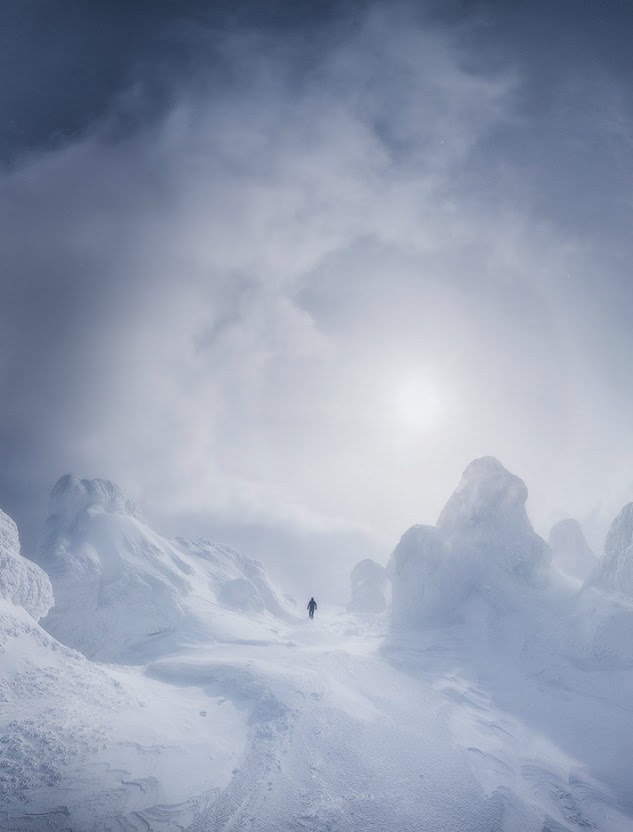
The White Silence - Photography by Daniel Kordan www.korzhonov.ru Otorten mountain, North Ural expedition. This mountain located very near to the Dead Men MountainJust don’t walk away from the group. How foolish to disregard the common knowledge every school child learns on their first field trip as they stand in pairs, lining up for the bus, wearing color-coded tags matching the one worn by their bathroom buddy.

He forces himself to stop thinking about the bathroom again. Gary would give anything right now to strip down and relieve himself, but exposing his skin to the biting wind would probably quell the urge to go anyhow. He chuckles at the only funny thing about his current situation.

With shrugged shoulders and head down, he presses on toward an unknown destination. Every labored step should take him closer to base camp. Damn this snow sucking at his legs, dragging him deeper and deeper.

Another pause to examine his surroundings reveals an unforgiving landscape that looks the same in every direction. The breath of cold air crystalizes in his mouth and sears his lungs. The dark glasses he wears are no longer sufficient against the knives of sunlight off snow. Pain hammers his temples, his eyes flood with tears, and he swears he can hear a sound like the strain of violin strings being misused. Panic swells in his throat like bile, but he swallows it and marches on.

He knew he was the Christa McAuliffe of the group. What business did a linguist from Manchester, England, have traipsing around a polar expedition when all his life he eschewed the very idea of camping? Days spent reading ancient texts and lecturing at prestigious universities formed the core of his existence.

His presence had been secured by winning an online contest. He knew he’d win even as he manipulated the English of his 500-word essay, fashioning a convincing reason why he was essential for the mission. Persian or Tamil would have made for a more interesting read. There certainly isn’t anyone in this godforsaken wasteland that requires the expertise of a linguist. Even the Russian chemist among the group speaks a decent form of English gleaned from YouTube and vintage MTV.

How arrogant he had been to believe that studying ancient languages had actually taken him somewhere no one else had ever been. He’d never set foot in any of the countries that gave rise to his beloved languages, never ventured beyond the stone buildings on campus. And why should he when his ego assumed there wasn’t anything anyone could teach him that he didn’t already know?

Nightfall slowly drapes her cloak across the sky, but he cannot tell; he is snow blinded. The falling temperature penetrates the wolverine lining of his gloves and boots, needling his fingers and toes. He no longer feels warmed by thoughts of home, school, or survival. Did he step away to prove that he could find his way back? He isn’t a risk taker. Never once did he desire to jump from a bridge tied only by a bungee cord around his ankles. Not even skydiving with a professional could lure him from the safety of Mother Earth. He laughs at fools who swim with sharks. Who’s laughing now?

Gary is the child tempted to see what happens when you stick a metal hairpin in an electrical outlet. The shock is not at all what he expected. He travels without the benefit of map or compass in a land he does not know and cannot navigate. Nothing in his education or experience prepares him for the classroom of life. Just don’t walk away from the group. Well, lesson learned.

To Struggle With Forgiveness

31holocaust-xlarge

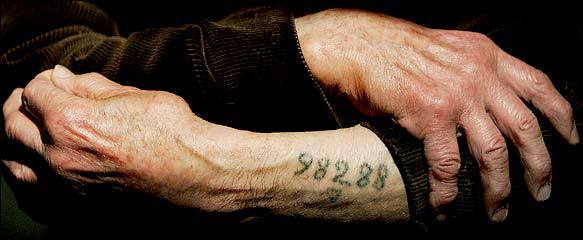
In a previous blog post involving my protagonist, Dr. John Welles, and his two Jewish friends, Reuben and Hannah Wise, I mentioned that the three were divided on the issue of forgiveness as it related to the Holocaust. For reasons that I’ll save for the publication of my novel, The Secrets of Dr. John Welles, each of them comes to the table with a different perspective on how the situation should be handled.

When I first wrote the storyline involving the Wises and Dr. Welles, everyone ended up forgiving everyone else with hugs and smiles all around. I admit that I wrote these scenes fast and furiously for NaNoWriMo without having done my research and because I wasn’t sure what direction I wanted the storyline to take.

Then two of my aunts attended a program on women Holocaust survivors and brought me some information on the subject. After reading the materials they gave me, I knew the scenes I wrote concerning the Wises and Dr. Welles were completely inaccurate, and therefore, unbelievable. I had to step back for a moment to analyze where my perspective of forgiveness came from and examine my knowledge of the Holocaust.

Everything I learned about the Holocaust came during my school years, and I can tell you that for the purposes of writing a novel, the knowledge was slim compared to what I found when I conducted my research. I realized I was too far removed from the facts because I was too young to have experienced it firsthand and didn’t have a relative who either perished or survived the concentration camps. My original scenes were trashed, and I set about rewriting the story.

Once the details of time and place were corrected, I worked on an aspect of my story that took me by surprise: the concept of forgiveness as understood by Jewish people who practice Judaism. My experience with forgiveness as I was taught might have influenced Dr. Welles but would seem ridiculous to Reuben and Hannah Wise. By applying my faith based instruction to the overall story, I denied my Jewish characters a single ounce of reality.

The questions that kept going through my head, those that drove my characters, included 1) Do we forgive but not forget? 2) Can only God truly forgive? 3) Must the perpetrators of the crime repent and ask for forgiveness before it can be bestowed? 4) If the criminals are dead, can forgiveness take place? 5) Should we forgive no matter what for every offense committed against us?

There are many articles on the internet about forgiveness written from many different perspectives. I chose to draw on those based in Christianity and Judaism when writing my novel and peppered the views found there with heavy dashes of my characters’ own attitudes and viewpoints.

The following article, “Can You Forgive Hitler?” written by Stewart Ain, September 22, 2006, for The Jewish Week, is the article that helped me the most when deciding how to have my characters react to the difficult questions and trying situation with which they struggled.

It’s easy to say what I would do until faced with the death of my loved ones at the hands of evil people. Still, I wonder about Holocaust survivors who do forgive and maintain their faith regardless of the hell they endured versus those who refuse to forgive and lose their faith because of the hell they endured. It scares me to know that because of the condition of our world today, many are challenged with these same questions.

By Bread Alone

1433270193628Forgiveness is a tricky concept. It is easily applied to a situation when the transgression is minor. A forgotten birthday, a word misspoken in haste, a misunderstanding of perceptions; forgiveness is willingly doled out in each of these instances.

But what about the attempted genocide of an entire people? Or searching one’s own soul in an effort to release a lifetime of guilt? Who is responsible to bestow forgiveness to the offenders when these are the circumstances? Man and/or God?

These are the questions that trouble the minds of Reuben and Hannah Wise and Dr. John Welles after they dine together one January evening in 1955. All three are divided in their opinions concerning the particular events that generated their questions. While they remain polite toward each other, a wedge has been driven into their friendship, especially between Hannah and John.

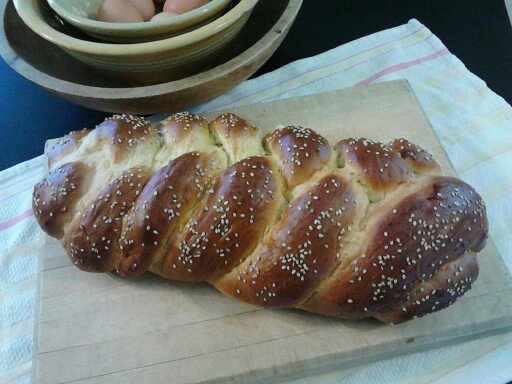
I chose to have Reuben serve challah bread during the Shabbat meal to which he and Hannah invited John for two reasons. For one, challah is traditionally served during the observation of Shabbat. More importantly, though, the presence of bread during this significant meal drew attention to the many references of bread in the Bible as well as underscored the differences between the Wises and Dr. Welles.

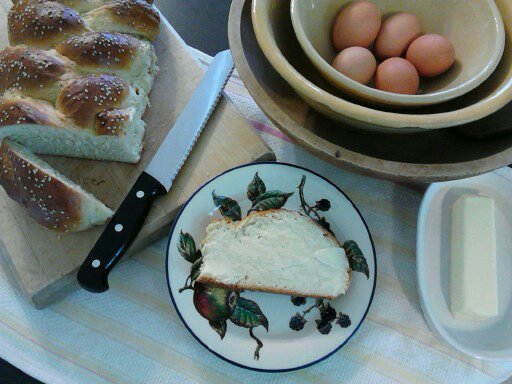
The following recipe is the one I had in mind for the challah Reuben made in my novel, The Secrets of Dr. John Welles. I hope you will enjoy this lightly sweet, rich, and delicious bread with your meals.

Reuben Wise’s Challah Bread

1 ½ cups warm water

2 tablespoon yeast

½ cup olive oil

½ cup sugar (or honey) (I used raw sugar)

3 eggs (2 for the recipe and 1 for the wash)

1/2 teaspoon salt

6 cups flour (slightly packed)

In a Kitchen Aid mixer add 1 ½ cups lukewarm water and 2 tablespoons yeast. Mix gently and allow the yeast to foam.

Add ½ cup sugar (or honey), ½ cup olive oil, 2 eggs, and ½ teaspoon salt. Mix well, approximately one minute or so. Add the six cups of flour one at a time and mix thoroughly with a bread hook. You may need to add ½ cup of flour if the dough is very sticky.

Remove from the mixing bowl and divide the dough into two halves. Divide each half into four pieces and roll each piece to about 12 – 14 inches in length. Braid the pieces of dough. (You can find instructions for braiding challah on the internet. I chose a four-strand braid for my bread.)

Brush each braided loaf with an egg wash (beaten egg with a little water to thin it). Place the braided loaves on a non-stick cookie sheet with parchment paper or a cooking mat on it and sprinkle liberally with poppy seeds, sesame seeds, or slivered almonds. Let the loaves rise until about 1/3 larger in size.

Preheat the oven to 350 degrees.  Bake the loaves for 23 – 25 minutes. Loaves should be golden and firm when finished.

This recipe can also be mixed and kneaded by hand.

1433270494920

The traditional blessing over the bread as spoken by Reuben Wise:

HAMOTZI – Blessing Over the Bread

Baruch Atah Adonai, Eloheinu Melech ha-olam, Ha-motzi lechem min ha-aretz.

hamotzi_0

Blessed are You, O Lord our God, King of the universe,

who brings forth bread from the earth.