Baring My Writer’s Soul – Part 9

In Page After Page, Heather Sellers recommends using a journal to jump start and sustain a healthy writing life. Honestly, at this stage of my life, a blank journal staring back at me sounds like another obligation that I must keep. This tells me that I need to go back and reread some of the earlier chapters and my own blog posts about freeing myself and my writing from self-imposed restrictions.

I don’t know why I allow myself to become so wrapped up in the “what I should be doing” to the point that I overwhelm myself and actually get nothing done because there is too much to do. The flood we experienced last week and piles of stuff rescued from our basement add to my distress.
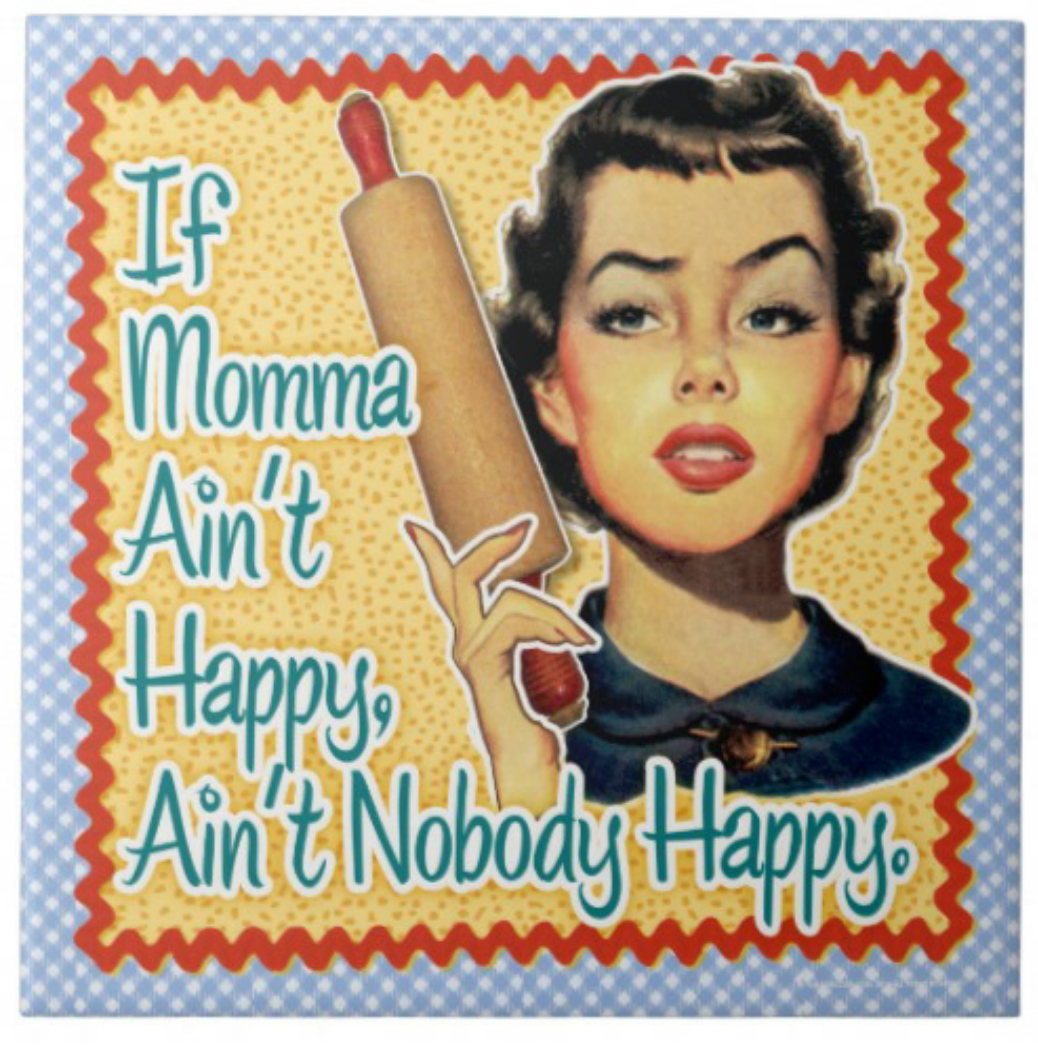
if-mommaBut a year from now, when the basement is back in order, will I still be bogging myself down in the usual way or will I have learned my lesson? I say, “When the kiddo returns to school in August, I’ll be free to write again. When his Eagle project is complete, I’ll write. When the Fourth of July picnic is past, I’ll be able to write. When I’ve reciprocated Shabbat dinners to those who invited me, I’ll have free time to write.” The garden that needs weeded, the husband fretting over his job and the insurance claim, my cat who was injured during the flood: it all sucks my joy, and I don’t write. Factor in the condition of our society, self-doubts about ever being published, and the ever-present lack of funds, and I admit there are days when I believe I’m going to lose my mind.

So why would I add a journal to this? Do I need one more thing demanding my attention, waiting to be filled up by what I have to offer? Well, I’ll do it because journaling is for me and me alone. Self-doubt rears its ugly head and says, “That sounds so selfish. You should fold laundry and dust; it’s what good homemakers do.”

That’s true; but I’m tired of living in this jail. I’m going to remind self-doubt that if Momma ain’t happy, ain’t nobody happy. And right now, Momma ain’t happy.

If for no other reason than to vent, I’m going to write in a journal. My plan is to fill it with things that make me happy: writing, sketches, quotes, pictures, recipes, scripture, lists of blessings, and whatever comes to mind. I won’t try to organize or control it, but I also won’t allow it to control me. The whole point of my journal will be an exercise in freedom: freedom to write, create, invent, express, explore, enjoy, return to life, to live and not just exist.

The purpose of blogging about my experience with writing is to hopefully keep other writers from falling into the same traps I created for myself.  It’s also meant to show writers that he or she is not alone even when we all have a tendency to end up here by our own hand!  Still, I want to encourage you with what I have learned.  Nerdy Girl Supplies offers gorgeous, affordable journals in the Notebooks & Stationery section of the site for you to capture all of your brilliant ideas.  Head on over and treat yourself to a journal or sketchbook; it’s time to go forth and create.

Write Happy!

Description-A Writer’s Friend or Foe?

dearada_typepad_com_dear_ada_images_2008_01_15_experience_261_artFellow author Mark Tilbury tossed out a question that is often on my mind as a reader and writer. In his post, Have Books Lost Something With Their Lack of Description, Mark asks us our opinion on today’s style of writing.

We’ve all encountered the “massive blocks of descriptive prose” to which Mark refers. Sometimes they truly are too long, too irrelevant to the story, too purple, etc., etc. I have skimmed such passages in search of the storyline and/or dialog that would put me back in the story.

However, because we’re all friends and adults here, I’m going to say that I disagree with the notion that description is informative but unnecessary. I hear all the time that the reader shouldn’t be led around by the nose; he/she should be given the opportunity to imagine the story. As an avid reader, I can honestly say that I have never felt this way about descriptive writing. On the contrary, my imagination was enhanced and grew because of the description I read including that written about journeys and the passage of time.

The key is that writers need to learn the perfect balance between too much and enough, the fine line between well-written, well-placed prose versus that which is encumbering, unnecessary. This seems like a daunting task, but I believe it can be achieved by not reducing writing to a formulaic method. In doing so, authors will elevate writing back to the level of artistic recognition it deserves.

85806_Ashford_1_122_526lo_122_526loI have never read Stephen King’s book, On Writing, but I would have to agree that abundant description about a character’s acne would be tedious. If that acne-plagued character traveled by canal boat from Pennsylvania to Ohio, then I would love the benefit of description. I would look forward to a word picture painted by the author that draws me in to the sounds, smells, and sights of the trip. It would be a perfect place to introduce traveling companions, a time for the protagonist to reflect, an opportunity to build the tension that so deliciously moves the story forward.

Even if none of the above-mentioned suggestions occur, as a reader I would still enjoy the mental images of traveling with the character, and I believe an important part of the writing would be lost if these well-written descriptions didn’t occur. As Mark mentioned in his post, they are an art form unto themselves. Like all art, value thereof still resides in the eye of the beholder, or in this case, the reader. Well-written description can exist purely for the sake of entertainment.

I have to wonder if writing hasn’t gone the way of food preparation in that we no longer know how to linger over a book in the same way that we forego multiple course meals and choose to patronize fast-food restaurants. I read because I enjoy the slower pace, and while there is a place in my fa9bbdedb5103e7f31a0893eff84ed56reading diet for the occasional literary Big Mac, more often than not, I opt for the balanced meal of description, dialog, prose, and narrative.

Now I don’t want to start a fight with screenwriters because I truly do appreciate their craft. However, using what worked in an action-packed movie and applying it to writing has resulted in fast-paced novels written with the singular hope of being turned into a movie. This has diminished writing for some of us. This influence has led to the removal of poetry and painting (mental images) from writing resulting in flat, hollows stories. Let movies be movies, appreciate them for all that they are; and let books be books, treasures not to be rushed through.

Baring My Writer’s Soul – Part 8

What do you do when you’re write blocked? You quit. It’s okay; I absolve you and give you permission to stop. In fact, I offer this advice to anyone who is creatively stumped.

Here’s the key to getting yourself past the place of frustration so bad it hurts: Quitting and giving up are NOT the same thing. When you quit something, you have stopped for a set amount of time that is up to you to determine. For example, when you quit smoking, hopefully you’ve chosen to do so forever. But, when you quit writing, you’ve done it with the understanding that you’ll return some day when the mood strikes you, the muse returns, the distractions are handled, etc., etc.

Giving up is more dangerous. To give up is to abandon all hope, and the journey back is a much more difficult struggle. It’s not impossible, but it takes a lot of soul searching and the right sort of people in your life to encourage you in the way you need to be encouraged. Giving up usually means you’ve hit rock bottom.

165083-425x283-writing-promptsNow, I don’t mean to scare you with this, because even when you’ve hit rock bottom, the rock at the bottom makes a fabulous foundation from which to plant your feet, bend your knees, and spring upward toward the light again.

The point of this explanation is to keep you from reaching Giving Up by enjoying the freedom of Quitting. Recognizing the signs that you’re struggling in your creative life is the first step to keeping you from nose diving into the despair.

I know this because I’ve been there, and if I can keep one person from experiencing the awful feeling of “I have nothing left to give,” then with tears in my eyes I can say what I went through was worth it. (SIDE NOTE: I’ll probably be embarrassed beyond words when this post publishes because I’m not the opening up type, and this is my deepest secret revealed in my Writer’s Soul series so far!)

The first thing I would suggest based on what I’ve learned from Heather Seller’s book, Page After Page, is to simplify. In my case, all I need to write is a pen or pencil and some paper. I have fought the simplicity of this suggestion, which is what landed me in a heap of trouble, by lamenting everything I don’t have. Mrs. Sellers kindly pointed out what I do have: Pen or pencil, paper, the desire to write, knowledge of the things I want to write about.

You’ve probably heard it said, “Write what you know,” which is countered by, “Write what you want to know about.” Mrs. Sellers goes one better and says, “Write what other people want to know about you.” (Paraphrased from several paragraphs in Chapter Four of Page After Page.)

My goodness, how liberating. This means that you have an interesting tale to tell, and it should be written in detail as only you can tell it. Stop believing that it’s boring or won’t measure up to some arbitrary standard and, to borrow a line from Nike, Just Do It! Write what you want to write. Write what you want to read. Do it now without over analyzing.

Write Happy!

Baring My Writer’s Soul – Part 7

I’ve really been off my game for the past three weeks. Instead of being a sweetheart and manifesting itself as the lover in the center or the lover on the side, my writing became the school yard bully. (See Page After Page, Heather Sellers.) I could explain that sentence, but it would take way too long. Again, for your own benefit, read the book!

Facepalm GirlI want to write. I want to be published. So why did I let the process of writing terrify me into a near-catatonic state? Good question. The answer is that I treated my writing and/or writing time like an obligation rather than a reward. I ignored the clues that writing can be a scary and lonely process, I let it intimidate and frighten me, and I pushed it aside where it grew into a monster. Bad move on my part.

Writing should be enjoyable. I made the mistake of trying to force my writing life into an unrealistic schedule, treating it like a job. I don’t know about you, but I hate having to go to work. On the other hand, I love to sneak away with a friend to idle away the hours producing fun. It’s not that I don’t want to write; I don’t want my writing to feel like work.

Then I bored myself with writing projects that weren’t actual writing, and I put busy work first. Now don’t get me wrong; I balance my priorities, but I’m learning to do it in a way that allows them to walk hand and hand with my dreams. This way, everybody is happy including me.

There will be days when my writing takes front and center place in my life, but there will also be days when it sits patiently on the side waiting for me to return. And that’s okay because absence makes the heart grow fonder and the muse grow productive. Understanding this has returned me to the pleasure of writing.

Write Happy!

Baring My Writer’s Soul – Part 5

untitled (5)Allow me to preface today’s post with a nod to Heather Sellers’ book, Page After Page. As I mentioned in an earlier Baring My Writer’s Soul post, this is about blogging my experience. I truly hope you find something here that appeals to you; however, I strongly suggest that you do yourself the favor of reading Ms. Sellers’ book. Believe me when I say that you don’t want to miss one word of her valuable insight.

With that being said, the following lists are a writing exercise from Page After Page. The simple task jumpstarted my writing when I stalled due to resistance and, I recently discovered, boredom. (Boredom and Burnout: What To Do When Artistic Work Stops Being Fun by David J. Rogers) Even if it’s just a blog post, at least I’m productively writing.

The qualities of my ideal writing guidebook (what is covered):

  • Large, easily referenced grammar and punctuation section with examples
  • Daily writing exercises
  • Visual writing prompts
  • “How to” quality to the book, instructional without being preachy or stringent with rules
  • Info packed, fast paced

The qualities of my ideal writing class (what I learn):

  • How to write a query letter
  • Order of items in an e-mail to an agent, what is attached, what goes in the body of the e-mail
  • Standards of punctuation, grammar, when to italicize, underline, quote
  • How to write in deep POV (my most evil nemesis)
  • The art of good story telling (which I’m currently exploring in Steven James’ book, Story Trumps Structure)
  • How to write in the present tense when something occurred in the past
  • Writing a great first chapter (Again, Story Trumps Structure)
  • The best way to conduct research
  • Answer the question, “Does every story written these days have to follow an outline with nine-point structure, character arcs, pinches, plot points, etc., etc.?”

My best student-like qualities (who am I when I’m learning, my attitudes when I’m loving the act of learning, what do I look like, what do I wear, what do I have in the palm of my hand):

  • Detail oriented
  • Takes fabulous notes
  • Studies diligently, thoroughly
  • Combines book learning/reading with a hands-on experience, admittedly a bit more on the bookish end
  • Listens well
  • Questions endlessly because I like to get things right the first time
  • Loves to learn when it’s interesting, must apply more effort when it’s not
  • Wears casual clothing
  • Writes information (usually on a McDonald’s napkin unless I’m in a formal setting) but will use my laptop if the info comes fast (I type well!)
  • Enthusiastic, passionate
  • Loves to be hooked from the first moment of instruction

As expected with me, the completion of this task prompted more self-analysis leading to admissions and questions:

  • I discovered that I’m afraid to tell people I’m a writer because I believe if I don’t produce quickly, I’ll be viewed as a failure.
  • I feel pressured to publish soon, but I don’t want to crank out garbage.
  • Certain people I’ve engaged in life resent when I do something that they perceive as getting ahead of them, being more successful, so I downplay my achievements.
  • Other than the occasional, “That’s nice,” I don’t feel as if anyone supports my writing.
  • Money factors in to my writing heavily. I make very little working as a substitute at the library, and I feel the pressure to bring in a paycheck especially with the economy the way it is.
  • Is my writing a selfish hobby or a real career?
  • I don’t really feel as if I have a writing ally, no connectivity in the writing world or to another writer.
  • Have I started too late in life to make a go at writing?
  • What do I do when there is no money for writing classes, retreats, programs, conferences?

These are the thoughts that usually accompany me as I sit down to write. Unfortunately, they influence my writing habits. I know that most of them are ridiculous self-doubts, so when they arise, I remember to acknowledge them quickly, and then press on with my writing.

Write Happy!

Baring My Writer’s Soul – Part 1

untitled (5)“Every secret of a writer’s soul, every experience of his life, every quality of his mind is written large in his works.”  Virginia Woolf

I’m not an inspirational author, but I do find that there is a large amount of room in my writing for inspiration. Most specifically, I’m looking for the kind of inspiration that comes from giving my writing life over to God.

Recently, I’ve been discouraged with trying to balance my non-writing life with my writing life. Writing became a chore, and I lost the joy of creating. Still, I pushed myself to write because I believed I absolutely had to. Or maybe I didn’t.

There are a lot of people in life who will gladly define for you what it means to be a real writer. I’m tired of trying to force myself into their labels and definitions much the same as I’m tired of trying to force my writing into their preferred methods and styles. I needed to find what worked best for my life and my writing.

When I stepped back and prayed, the miraculous occurred. The return of my happiness was the first, most noticeable change. Second was the disappearance of the guilt I experienced for not writing and/or maintaining my author platform every minute of the day. In fact, I haven’t written for two days, and I finally spied my writing muse peeking around the corner to see if it’s safe for her and my enthusiasm to return.  Keep in mind I’m no quitter; I just needed a break.

Then I reprioritized my life into God first, family second, work third which led to harmony. I reduced the real distraction of social media and welcomed back my responsibilities of homemaking.  That last point may sound old fashioned to some people, but by completing my family duties, I cleared my mind to focus when I needed to write.

Lastly, I’m working on ridding my mindset of the lie that I’m racing against some unknown, unseen deadline to be successful or die in unfulfilled misery. When I did that, my overbearing sense of competitiveness and envy withered. I realized that success and happiness are not the same things, and they rarely go hand in hand.

By allowing myself to step away, I’ve gained a new perspective on writing and life in general. I already am a successful writer, even if I just write for myself, because I am a happy writer. How do I know I’m on the right track? Since these revelations came to me over the past few days, I received encouragement in the form of Tweets, posts, and blog articles such as the one by Jennifer Slattery, When Discouragement Swallows Your Strength, via Castle Gate Press.

It could be a coincidence, but coincidence is God’s way of letting us know He’s still in charge.

Write Happy!

A Clean Sweep of Bad Words

images89FPFS5WVery, Really, Suddenly, Amazing, Awesome, That, Started:  what do these words have in common?  They should be avoided when writing.
This isn’t something I’d be too concerned with during a first draft, but when you go back to edit all the bad writing, these are the words to remove.  We’ve all slipped them in from time to time because they’re overused in every day language.

After reading the post from Writer’s Circle, I recalled a passage where I used suddenly.  It had been bothering me, but I couldn’t come up a worthwhile replacement word or phrase indicating the action.  As soon as I finished reading, a workable solution presented itself.  Some time away from my manuscript and this gentle reminder spurred my creativity to stretch beyond the commonplace.

One place I allow myself some leeway on using the seven, above-listed words is when writing dialog.  Working in the court reporting industry taught me that even educated people don’t speak as well as they’d like to believe.  Dialog sounds more realistic if is isn’t as perfect as prose.

I have noticed, however, that since I started writing, I make an effort to keep these words out of my conversation.  I’d be lying if I said I never used one , but I can’t put everyone on pause and go back to clean up what I said.  Until then, I’ll do my best to be very careful… Oops…

Also, don’t replace one bad word with another poor choice.  I discovered that I replaced very with extremely much too often when speaking. What sounded good to my ear prompted yet another scan of my manuscript to ensure that I hadn’t done the same thing in my writing.  I found five instances, and I’m currently in the process of editing them.

Another great thing about cleaning these words out of your writing is that it’s the first, small step to the editing process which often feels overwhelming.  Getting rid of them provides a building block to better editing which in turn means better writing.

“Very” and Other Useless Words to Erase Forever

Slip That Leash

untitled (6)Unleash The Writer Within by Cecil Murphy is a relaxed and encouraging read. It’s an easy commitment that you’ll be able to finish in a few days.

The chapter titles make for a quick reference guide, directing you to different areas of your writing that you may need to work on. I could see this book becoming a handy tool that a writer might revisit as needed.

Each chapter ends with a motivational saying that might seem trite at first but are the very words often bandied about many writing websites, Facebook, and Twitter. They prove to be little jewels of wisdom, perfect for lifting yourself out of the writing doldrums.

When you need to step away from writing for a few days due to writer’s block, reading this book would be a good use of your time to help free your inner muse.

Wardrobe Selection

untitled (6)In yesterday’s blog post, When the Clothes Really Do Make the Man, I provided a link to a website for excellent information regarding vintage clothing.

Today’s trip down Research Road stops at a post by Liz Michalski on Writer Unboxed. In her article, Clothing Your Characters, Liz offers insight into why the clothing you choose for your character is important in how it relates to character development.

After reading Liz’s article, I stepped back for a moment to see how well I portrayed clothing in my novel, The Secrets of Dr. John Welles. There were a couple of scenes where the clothing my characters wore was important to the story, however, I may use the tips Liz suggested to create a more tactile feel to other parts of my story.

The Ever-Evolving Art of Writing

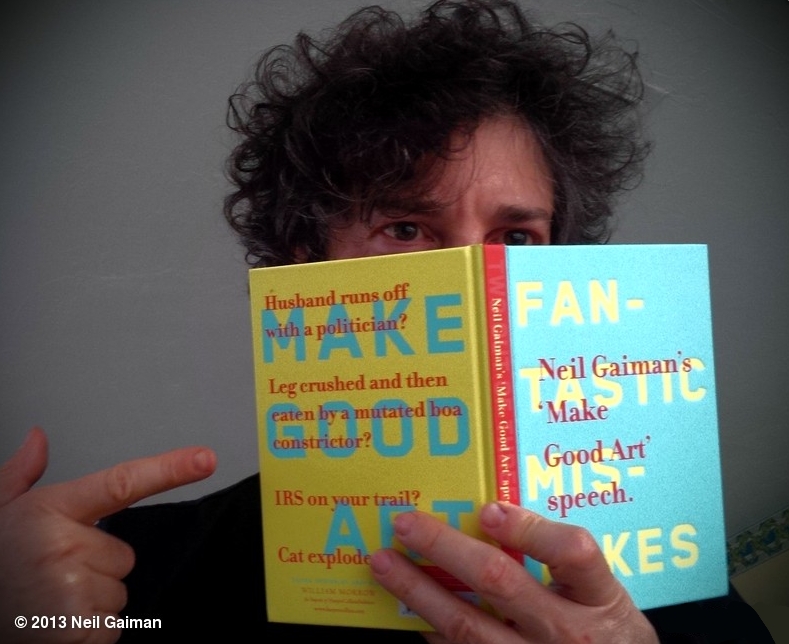
I remember the moment I understood that my writing is art. It came after watching a YouTube video of Neil Gaiman give a speech to a graduating class. Prior to that, I believed art was created by masters who worked a lifetime producing museum quality pieces. What a thrill to know that I am creating art.

makegoodart_gaimanBut my discoveries didn’t stop there. As I set out to, per Neil’s advice, make good art, I found that what I wrote kept changing. Fortunately, it changed for the better. I learned some things that I’ll definitely employ and other things that I’m sure will not work for me. One thing I came across, and have blogged about before, is pantsing versus outlining.

Let me clarify: I hate labels. Once you label something, you’re obligated to define it. After you define it, you must maintain it. This leads to the messy business of judging someone who doesn’t agree with your label. That causes more labeling of those who aren’t like you.

What I’m saying is, while I still adhere closer to the pantser end of the spectrum, by the end of my novel, I discovered I’m somewhat of an outliner, too. Go ahead and create a label for that, if you dare.

My outlines probably don’t conform to what one might find in a writing workbook or to those created by other authors. However, I have my color-coded, multi-tabbed spreadsheet of information created so that I don’t to forget all the wonderful ideas that flooded my head when I first decided to write a novel. Unlike traditional outliners, my ideas aren’t all solidified prior to the beginning of my writing; I like to surprise myself, leave a little wiggle room, add some things and remove others.

So, maybe I’ve been producing something a little closer to an outline than I originally thought? I can think of two outliners who are probably happy-dancing right now.

I will never judge anyone for the way in which they choose to create their work of art. That would be like criticizing someone for being a hands-on learner while you’re a book learner. In return, I’ll ask the same of everyone else toward me. At the end of the day, we’re all artists.

Today, I’m stocking my Writing Toolbox with a piece from NY Book Editors called Planning to Outline You Novel? Don’t. This one tips the scales toward pantsing. Whatever style you choose to create your novel, just remember that it has to meets your needs.