
Read This Quickly

read-this-quicklyIn junior high school I had a wonderful English teacher who I remember for her out-of-the-box red hair and amazing blue eyes. I don’t believe colored contacts had been invented yet, so despite the hair, she gets a ten for those eyes.
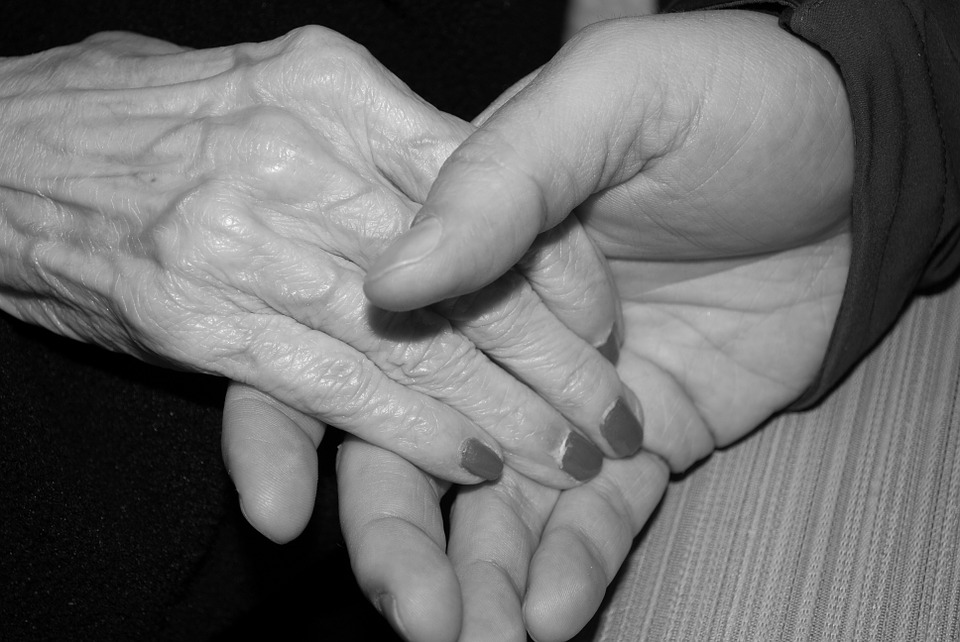
There are actually many great things I remember about her, except her name, and one of those things is how and when to use –ly when writing and speaking. Mrs. What’s Her Name always used the example of “I feel badly,” and then she would pretend to touch stuff on her desk as if she’d been on a three-day drunk. It was hilarious, and it got the point across.

So, today’s The Weight of Words is devoted to Mrs. Boy I Wish I Could Remember Her Name and what a little –ly can do, or not do, for your writing.

Let’s start at that point when you’re wondering whether or not to add an –ly to your word by taking a moment to refresh on adjectives and adverbs. Adjectives describe nouns and pronouns. They may come before the word they describe: “That is an adorable kitten.” Adjectives may also follow the word they describe: “That kitten is adorable.” Adverbs modify adjectives, verbs, and other adverbs. If an adverb answers how and can have an –ly attached to it, place it there.

Examples:

She walks quickly.

We sang poorly.

He moves fast.

But wait, you say…there’s no –ly on fast in that last sentence. You are correct: Fast may be either an adjective or an adverb. In this example, fast answers how she thinks. Besides, there is no such word as fastly.

As for comparing, don’t drop the –ly, simply add more or less to your sentence.

Example:

Earl speaks more loudly than Joe.

Now for a tricky rule courtesy of our peculiar English grammar: if the verb is one of these four senses—taste, smell, look, feel—don’t ask how. Instead, ask if the sense verb is used actively. If so, attach the –ly. If the sense verb is not used actively, which is more common, don’t attach –ly.

Examples:

Perfume smells sweet. Does perfume actively smell with a nose? No, so no –ly.

The dog looked angry. Is the dog actively looking with its eyes? No, only its appearance is being described. So, no –ly.

She feels bad about the news. She is not feeling with fingers, so no –ly.

She feels badly since burning her fingers. She feels with her fingers here, so the adverb (–ly form) is used.

That last ridiculous sentence is in honor of Mrs. If Only I Could Remember Her Name.

Too Tired to Rest

too-tired-to-restThe reel of unseen dreams flickers her eyelids as the man who has slipped into her room watches. A crescent smile glides across his face like a canoe trailed by ripples of worry. Deep within her consciousness, she senses his presence, and the blue eyes marred by clouds of age slowly open.

“Hello, Grandma.”

One, two, three seconds pass as recognition surfaces. Her face, soft as worn flannel, bunches around her eyes and mouth.

“Hello, Freddy.”

Her equally soft hand pats his sandpaper chin.

“I know I haven’t been to visit you as often as I should, but…”

“No apologies, sweet boy. You’re here now.”

“I came to spend Shabbat with you, Gram.”

The old soul leans forward in her bed, peers out the window.

“Seems a little early yet,” she says.

“Well, Mom says you’re asleep by seven, and the summer sun sets so late.”

“Cheeky devil,” she chuckles, again patting his face. “Go ahead and light the candles. Fetch my shawl from the drawer—no, that one, Freddy, the next one down—and I’ll say the blessing.”

Fred complies with her request, draping dark blue silk around her head and shoulders. Daylight blasts hot and bright through the windows of her room in the nursing home; her white crowned head swathed in navy gives the appearance of the moon in the night sky. He lights two candles in cut glass holders, and the sun withdraws its spears behind linty clouds.

Elsa Cohen breaths as deeply as her ravaged lungs will allow; she wheezes like a broken bellows, drawing withered hands above the dancing flames, the ancient prayer she recites flowing like new wine. When she finishes, she looks up into her grandson’s drum-tight face.

“Why so troubled, Freddy?”

“I don’t know, Gram. I’ve been feeling kind of…melancholy lately?”

“Are you asking me?”

“Well, no.”

Elsa pushes the shawl off her head, smooths the fabric around her shoulders.

“It’s just that, I haven’t been keeping Shabbat lately either, Gram.”

“I see.”

“Do you?”

“No, that’s just what people say when they’re giving you time to collect your thoughts and tell what’s on your mind. Spill it, Freddy.”

“Oh…uh, well, I haven’t been keeping Shabbat because…because it’s really hard to do in today’s society, you know? I mean, living in America and all, well, people don’t stop, like, working and stuff at sundown on Friday until sundown Saturday.”

“Oh gosh, people don’t even stop on Sunday anymore either.”

“That’s true.”

“I remember when you were little that gas stations and stores were closed on Sunday, and all the good people went to church, and everyone rested.”

“We live in a ‘round the clock kind of world these days, Gram.”

“That we do. How’s that working for you, Freddy?”

“What do you mean?”

“When you visited three months ago—”

“Ouch.”

Elsa waves him to silence.

“You said you and Margaret were so exhausted with long hours at work, running errands, shuttling the kids from here to there.”

“Well, I don’t see how taking a whole day off to do nothing is going to help any of that, Gram. Wouldn’t that just put us more behind?”

“Do more on the other six days. Totally run yourself into the ground. Or you could save up all your Shabbats until retirement and lay around doing nothing for ten years.”

“Gram, be serious.”

The old woman chuckles until she coughs. Fred leans her forward and delivers firm pats to her back. Her nightgown is a floral landscape across the sharp ridges of her shoulders. Once settled against her pillows, she continues.

“You have to decide for yourself, Freddy, why you do or don’t do these things.”

“Wouldn’t it be easier if you just told me what to do?”

“What fun would there be in that? Besides, there’s no guarantee you’d do it just because I say so.”

“It was so much easier when Grandpa was alive. We all met for dinner at your house and followed his lead.”

“Fredrick—Shabbat hasn’t gone by the wayside just because your grandfather died. Everything that is good about it is still with us. My goodness, dear boy, for one so educated, you sure are stupid.”

Fred can’t keep from laughing at his little grandmother’s spoon-blunt words cutting him sharply.

“Okay, Gram, I get it.”

“Are you sure? Because I could spell it out for you. Use pictures and small words.”

He kisses her forehead like she is his child.

“I love you, Gram.”

“I know, Freddy. Now take that box of candy over there your mother sent me—she knows I can’t chew caramel and nuts anymore—and go home to your family. Rest, my boy.”

Elsa snuggles into the blankets her grandson pulls up over her chin. Her eyes flicker as the dream scenes resume, and she is asleep before he crosses the room to leave.

Being Strong for Melinda

trial-or-tribulationSharon and Robert have spent many dark and lonely hours, separated from each other, asking for the things they believed were right and good. Too many times they listened to doctors whose explanations left them staring and openmouthed, their minds weighted down with things they struggled to comprehend.

Endless dashes to the hospital turned into a permanent stay for their only child. She looks like a little caterpillar cocooned in blankets, bandages, and wires from a host of monitors. Robert calls her his baby bug waiting to emerge with new wings.

Prayer requests make the round on social media. Praise reports are given when their daughter rallies. Many drop off when her condition lags. The weak and faithless have no explanation for this decline. They cannot explain why they couldn’t get Melinda healed, make excuses for God as if He needed them. All of it wears on Sharon and Robert until they pray for release for their beloved child because that must be what God wants for her, right?

With heavy hearts, tears amassing in their eyes, they claim they are willing to accept this for their baby girl. Each buries a duplicitous heart beneath stoic faces and solemn nods of the head. They just want to quit, for this to be over. They never speak of it anymore. In fact, they’ve stopped talking to each other at all. The constant company of the Women’s Bible Study Group and Men’s Fellowship doesn’t allow for much private conversation between them. Such good people, these men and women, who stay with Sharon and Robert 24/7, praying audibly non-stop.

Sharon slips away to the ladies’ room. She does not turn on the light, locks the door. The sound of breathing in the dark room scares her for a second, but whatever harm might be done to her by the owner of the breathing is preferable to what is going on with Melinda. Especially if it ends her.

“Sharon?”

She jumps and laughs wildly.

“Robert? What on earth are you doing in the ladies’ room?”

“It’s the only place the guys from church wouldn’t think to look for me.”

More deranged laughter, shared, from the emotionally and physically drained parents. Robert sighs but does not reach for his wife. Neither move to turn on the light.

“I’m so tired, Shar.”

“You, too?”

Robert’s voice dips and rises uncontrollably.

“I just want this…I just want…”

“I know, dear. Me, too.”

Their hands meet in the darkness, instinct guiding their palms and fingers into place. But they do not draw closer to each other.

“I want to quit, Shar. No—I have to quit. I’m done. I’m finished, and I got nothing left.” He pauses to draw a deep breath. “I was in here working up the nerve to tell you.”

“Rob, that’s why I came in here.”

“Why didn’t you say something?”

“When, Robert? Between entertaining and performing for the people from church—God knows I love them, but I really just need them to go home—to holding in my emotions every time the doctors tell us Melinda isn’t progressing as they’d hoped? You won’t even meet my eyes anymore.”

“I know. I’m sorry. But I was afraid if I looked at you, you’d see how scared I am—”

“—I’m scared, too—”

“—but I don’t have any answers for you, Shar. You know, I’m supposed to be the strong one and all that.”

“Don’t be ridiculous, honey. I never expected solutions to this. Not from you, anyhow.”

“Well, that’s a relief.”

“Is it? Because we’re off the hook, but I suspect we wanted our prayers answered in a specific way we’re too afraid to admit.”

“Can I turn on the light?”

Robert flips the switch before she consents setting off a round of watery-eyed blinking.

“Well, that’s better,” he jokes.

They step closer and melt into an embrace. Sharon cries against his shoulder as he runs his hand over her hair.

“I’m not really okay with losing Melinda,” his wife says.

“I know.”

“I feel so guilty for saying that. Like I’m less of a…”

“I understand, Shar. Really, I do.”

“So, now what?”

“Now we quit pretending. We’ve got to.”

“Agreed.”

“And if Melinda…if she…”

“Dies.”

“Yes, if…then we’ll figure it out together. Just the two of us.”

“But it doesn’t have to be just you and me, Rob.”

“I know. I meant all the church crowd.”

“They mean well—and quite a few have been helpful. Sincere.”

“That’s true. But when this is over, whatever over may be, it’s just you and me, and you and God, and me and God to work through this.”

It’s Sharon’s turn to sigh.

“Is this where we were supposed to be all along, Rob?”

“You mean if we hadn’t let all the hoopla get in our way?”

“Yes,” she chuckles. “Just trusting. Shutting up and trusting that God’s got this under control.”

“That’s a hard and scary place to be.”

Sharon nods and leans her forehead against Robert’s.

“I can’t promise I won’t be sad,” he whispers.

“You wouldn’t be human if you weren’t. Just don’t be afraid.”

“I’ll try, Shar. For you.”

“No, babe. For you.”

All the prayers they cannot speak radiate between them. A knock on the restroom door precedes, “Sharon—come quick. The doctors have been looking all over for you. Sharon?”

Melinda’s parents, raw and exposed, striped down to the soul, brace each other with hands to the shoulders.

“I don’t know where they are,” says the muffled voice on the other side of the door.

“Well we have to find them now. They need to know Melinda has opened her eyes and asked for them,” a male voice joins in.

Gasps of shock from the people on the outside are lost in bursts of laughter and tears of relief from Robert and Sharon within.