Baring My Writer’s Soul – Part 12

Writer's Soul 12Today’s Writer’s Soul blog post is going to be a bit like tap dancing on a landmine.  Per the suggestion in Page After Page, I’m going to explore my parent’s influence on my writing life. When I first read the exercise, I thought to myself, “There isn’t enough red wine in the entire world to make me do this, especially when both parents follow my blog.” Yet here we are.

I don’t believe either of my parents ever aspired to be writers, although I do remember mom jotting down an occasional poem during my childhood. That’s okay because neither resisted the idea of writing or being an artist of any kind.

The funny thing is I don’t really consider either of them to be readers. Well, not on the same level that I hoard and consume books anyway. Mom admits that she came to pleasure reading as an adult when she read The Wind in the Willows. This still surprises me because she was always reading to me and my brother when we were little. In fact, I credit Mom with instilling in me a love for books as I mentioned before.  (My Love Affair With Books)

I only remember my Dad reading Garrison Keillor’s Lake Wobegon Days and John Irving’s The World According to Garp. Otherwise, my only memories of Dad reading were the gigantic manuals and/or books he studied when testing to make rank on the police force.

To what degree did my parents influence my writing? Mom is extremely creative in areas of decorating, cooking, hosting, and crafting. Perhaps I’m drawing on these genes when I write. From Dad I learned that whatever I do should be done well and completed. I mention the completion aspect because he has always complained that Mom has thousands of dollars of unfinished crafts and too many tea sets. I think Dad doesn’t understand that creativity is ongoing.

Both of my parents are hard workers, and while Dad would probably say that he did what he wanted to in life, Mom would wistfully admit that there were things she would have liked to have done and didn’t. I know she wanted to own a bed and breakfast or tearoom.  Her dreaming is what prompts me to keep writing even when things seem hopeless and the self-doubts arise. Dad’s successful career causes me to worry about making money at writing. I believe this stems from the fact that he conveyed to me and my brother the need to get jobs that supported ourselves but didn’t necessarily allow us to follow our dreams. This is the type of influence one would expect from a provider.

With these perspectives on working and following dreams in mind, I am better able to understand why I vacillate between the thoughts of “Will I make any money at this or am I just chasing a pipe dream” and “I really want to write and be published more than any other creative endeavor.” There’s a lot of pressure that comes with such thoughts, but as an adult, I’ll own them.

If Mom and Dad aren’t the driving force behind my writing, who is? The first people to come to mind are the countless writers behind the Little Golden Books Mom bought for me. Laura Ingalls Wilder, Judy Blume, and L.M. Montgomery float to the surface of my memory. I could go on forever listing all of the authors and books I discovered through the years, but I’ll just say that my love of writing was birthed from my love of reading an excellent story.

What makes a great story? Great words. I admit, I’ve been caught reading with my lips moving, but if people would step closer and lean in, they would hear me reading softly to myself. When a passage is well written, it begs to be read aloud. My friend, Eleni Byrnes, would understand my obsession with words. She keeps a notebook of words she likes as she comes across them. It’s why she writes so well.

So, I’ll start with Eleni in my writing family tree and make her a sister. I’ll add Billie Letts and Wally Lamb as grandparents because they are excellent story tellers, and I’m all about the story. Isabel Allende will be my exotic aunt, and David Mitchell and David Liss my quirky cousins. Tim Gautreaux and Charles Frazier are favorite uncles.

Again, there are too many brilliant authors who have influenced my writing, so I’ll direct you to my Authors I Admire board on Pinterest and Goodreads to see who they are. Together, they make up my writing family tree and neighborhood.

I encourage everyone to explore who influences their writing or chosen art form. You’ll discover an extended family you never even knew you had.

Write Happy!

Woman in Gold – Movie Review

I’m not a fan of Ryan Reynolds especially after watching the disaster that was The Green Lantern and some piece of tripe he starred in with Jason Bateman. In fact, I don’t care for his acting at all, and I’m being generous when I call it acting. Helen Mirren, on the other hand, is brilliant, fabulous, and classy even if the movie she stars in is horrible and disintegrates around her.

When I saw that Ryan Reynolds had been graciously cast opposite Helen Mirren in the movie Woman in Gold, I cringed wondering if even she could carry the dead weight of Reynold’s flat acting and bleating voice. I was pleasantly surprised to discover that she didn’t have to.

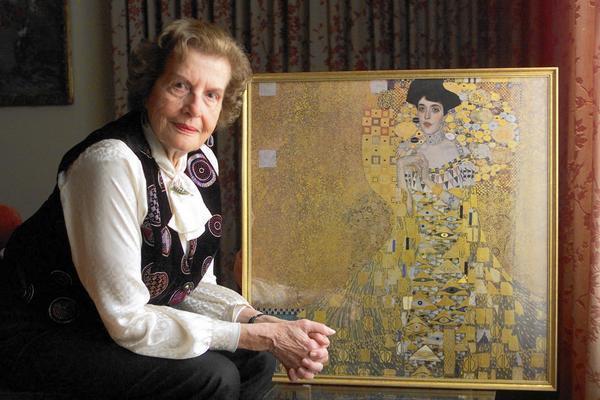
Woman in GoldWoman in Gold tells the story of Maria Altmann, a young Jewish woman who fled Austria with her husband during World War II. Sixty years after her forced exile, Maria seeks the help of Attorney Randy Schoenberg to reclaim the famous Gustav Klimt painting of her aunt, Adele Bloch-Bauer. Maria and Randy take the battle all the way to the US Supreme Court with a slowly building intensity that often left me clenching my teeth as I awaited the outcome of each painful step. I won’t spoil the ending, but rather, I’ll say this is one movie that should not be missed.

What I will focus on is the impression the movie left upon me. It is hard to imagine a regime so evil that it would perfect the practice of hatred to the level that the Nazis did. And yet, one can hardly turn on the news or surf the Internet without seeing this same type of barbarism taking place today all over the world. God forgive us that we are allowing it to happen again.

Equally chilling is the arrogance and indifference with which these acts of terror are met. Of course, it is absolutely criminal that personal property is stolen, but more important are the lives that are being destroyed. As Helen Mirren portraying Maria Altmann said regarding the restitution of the stolen art, it will not bring them back. Still, it is a small step toward acknowledging and righting the wrongs committed.

Then the problem becomes how do we stop the crimes that are occurring now as we make restitution for the past while preventing the evil from raising its ugly head in our future? I believe the answer lies within each person on a daily basis. What will you chose to do today? Acts of good or deeds of evil?

Woman in Gold 2

A Pigeon and a Boy by Meir Shalev

A Pigeon and A Boy

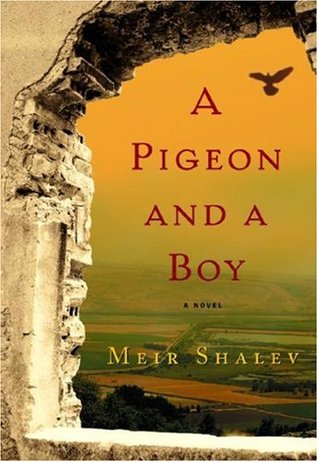
A Pigeon and a Boy by Meir Shalev tells the tale of a young pigeon handler who was a member of the Palmach and participated in Israel’s 1948 War of Independence. Intertwined with the tale is the story of Yair Mendelsohn, a middle-aged, present day Israeli tour guide. Yair is familiar with the pigeon handler’s story but seeks a deeper meaning to the story as it relates to his own identity.

Shalev included just enough history and explanation on the war and pigeon handling to ground the story without bogging it down. His multi-layered characters are well developed and complex without being tedious. You will feel as if you’re parting with old friends once you finish reading.

The novel includes a light mystery, some humor, and realistic romance. The overall conclusion is heartrending yet satisfying. I highly recommend reading A Pigeon and a Boy.

Sounds Travels for Your Mind

UnearthedI’m a huge fan of television and movie music, so a couple of years ago I surfed YouTube in search of the theme from the show, Cold Case. I had become a fan of the reruns and the song used for the opening credits. My hope was to find a video of the song, uploaded by another fan, that I could add to my list of favorites. What I discovered was even better.

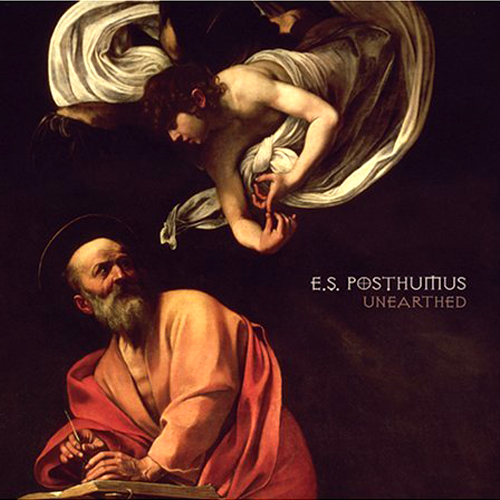
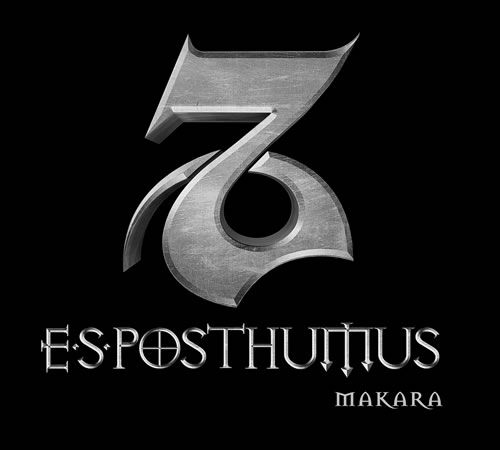
E.S. Posthumus is the name of the group responsible for the ethereal music used as the Cold Case theme. The actual title of the song is “Nara,” and it is featured on the 2001 album, Unearthed.

Helmut and Franz Von Lichten are the brilliant creators behind the music. The group hasn’t been active since 2010 due to the passing of Franz Von Lichten, but what they left behind is remarkable.

Their music has been listed in the genres orchestral, ambient, modern classical, and symphonic rock. All are accurate. If you’ve never experienced E.S. Posthumus, I recommend starting with their first album, Unearthed. The tracks are titled after ancient cities no longer in existence and have been featured in movie trailers and television shows.

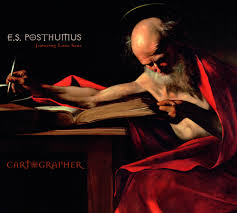
Cartographer, their second album, is a two-disc collection featuring vocals by Luna Sans. All pieces are stories telling a fantasy tale about the imagined creators behind the ancient “Piri Reis” map discovered in Constantinople. The made up language sung by Sans is beautiful and haunting.

The third and final album, Makara, seemed the most different to me with pieces that are intense and power driven. I find it great for driving or housework because of the high energy quality whereas Unearthed and Cartographer are more suited to writing for all for the inspiration they lend.

Whichever album you start with, I highly recommend listening to all three. They are timeless classics one will return to again and again.


Lest We Forget

While researching World War II for several chapters of my novel, The Secrets of Dr. John Welles, I came across three books I’d like to share as beneficial reference materials.


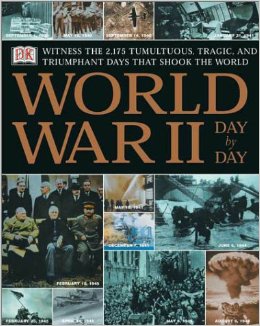
World War II DK PublishingWorld War II Day by Day, published by DK, is a collaborative effort by several former military personnel, researchers, and lecturers. The information is presented as news clippings from the various countries involved with or affected by World War II and the events leading up to it. A small calendar appears on each page and the days and weeks during which the events took place are highlighted. This allows one to isolate a particular event much easier. The book is replete with pictures, maps, and posters from the era. The numerical cross reference, timeline, and Who’s Who section lend ease to fact checking.


Campaigns of World War II

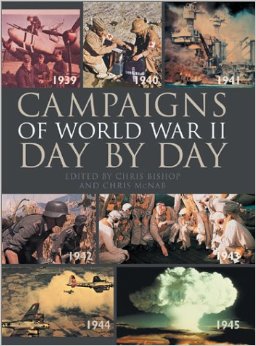
Campaigns of World War II Day by Day, edited by Chris Bishop and Chris McNab, is similar to the above-mentioned book but is laid out slightly different. The various campaigns are broken down into sections depending in which theater they occurred, whether European, Pacific, or African. Within each section, the daily and sometimes hourly timeline is most thorough. There are more maps in this book indicating troop movements as well as a focus on military weaponry, vehicles, and aircraft for the era.


World War II Donald Summerville

World War II Day by Day, written by Donald Summerville, presents many of the features mentioned in the first two books. This book is broken down into yearly sections with daily or monthly events listed within. The country in which each event took place is presented in boldface. The book concludes with a post war section.

I found each book to be extremely interesting, but together they presented a wealth of information I could check and cross check for accuracy. History buffs, reenactors, students, and writers alike will appreciate reading these books whether for enjoyment or research.

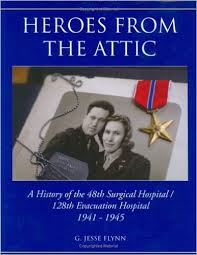
Heroes From the Attic by G. Jesse Flynn

Heroes From the AtticOne of my favorite books, and a feather in the cap of my private library, is Heroes From the Attic by G. Jesse Flynn. I first learned about the book while interviewing participants from the Conneaut D-Day Reenactment this past August. Lisa Merzke, who portrayed a nurse, suggested the book because it explained in detail about the creation of the first MASH unit, the 48th Surgical Hospital, which was later reworked into the 128th Evacuation Hospital.

I obtained an excellent copy of the book and was thrilled to discover the author’s signature in the front cover. Although the inscription isn’t addressed to me, I couldn’t have been more pleased that I owned a signed copy.

Mr. Flynn was prompted to write the history of the 48th/128th upon learning about his parent’s involvement with its formation. Through interviews, letters, diaries, and pictures, Mr. Flynn has constructed a thoroughly detailed accounting that answered my specific questions with such precision that at times I believed the book had been written for me.

As well written as the history is, what truly endeared me to this book were the personal accounts of the members of the 48th/128th. Through the letters of Nurse Lt. Margaret Hornback, the diary of Dr. Leonard Schwade, and individual testimonies of various other members, one gets a true sense of what these brave men and women experienced and how they felt about it.  In an event that, God willing, we never allow to be repeated, members of the 48th/128th often learned on the job but never missed a beat, and they set the high standard of quality by which other units were formed and trained.

I am forever grateful to the doctors, nurses, and enlisted men of the 48th/128thfor their selfless sacrifice. I also thank Mr. Flynn for collecting and recording their amazing history so that it will never be forgotten. Their stories and information helped me to accurately place my protagonist in the European Theater of World War II, and I hope they will graciously indulge my boldness in assigning Dr. John Welles to their most successful and exemplary unit.

Every Day Should Be Sundae

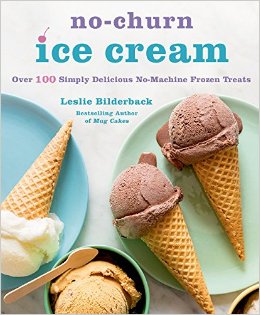
Not everything I read is in my favorite genre, historical fiction. Last week, while checking out a patron at the library, I happened upon a wonderful book called No-Churn Ice Cream by Leslie Bilderback. I didn’t have the opportunity to glance at the recipes, but the no-churn aspect caught my eye. I don’t own an ice cream maker and have no plan to buy one in the near future. I’ve also heard that the salt required for the freezing process with a machine can be costly. So, I placed a hold on the next available copy and waited.51G5hIs8XuL._SX258_BO1,204,203,200_

I’m such a skeptic that while I waited, I convinced myself that homemade ice cream would still be costly and that there is no possible way to make it without an investment in some sort of machinery. I am so glad I was completely wrong.

The ice cream recipes featured in Ms. Bilderback’s book are simple, elegant, and even without having made one yet, I’m sure they are delicious. They range from the basic vanilla and chocolate to the adventurous strawberry-rhubarb, pineapple-pepper, and lavender. The book also features sorbet and gelato in unique combinations.

My favorite part of the book is the ingredient list. You won’t be scouring the Internet for bizarre items available at an outrageous price from countries you’ve never heard of. This fact only strengthened my need to own this particular book.

If you love ice cream, and who doesn’t, No-Churn Ice Cream should be the next book you check out or purchase.

The Homesman – Movie Review

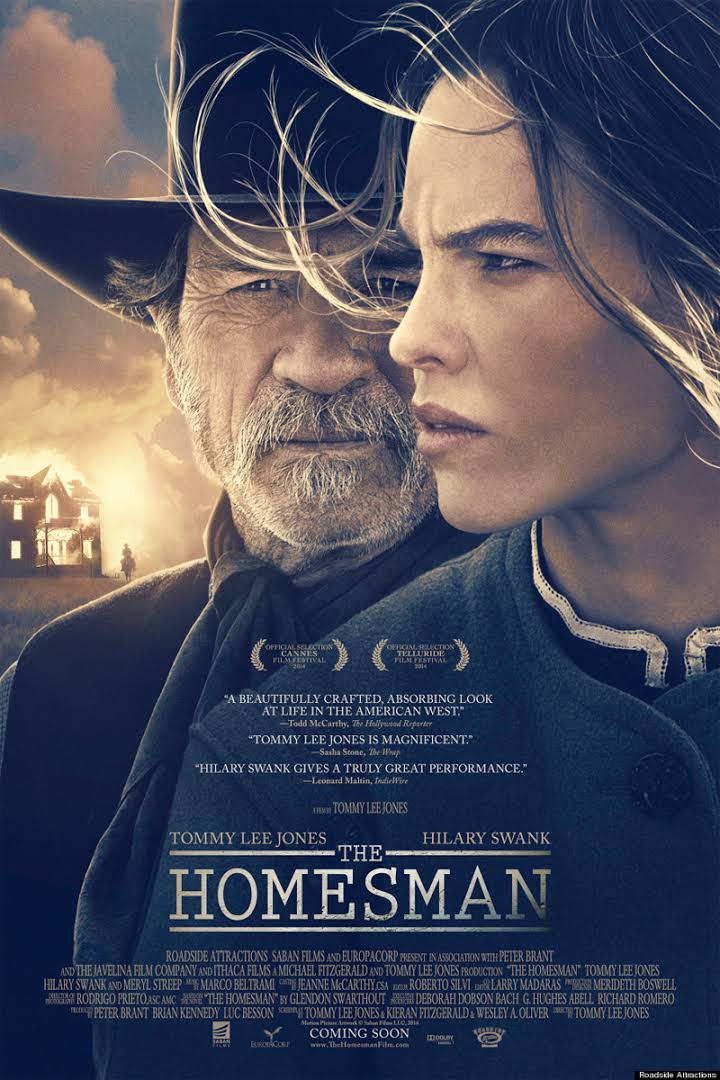
images (3)One of the best movies I have seen in a long time is The Homesman, directed by Tommy Lee Jones. Mr. Jones stars as George Briggs, a claim jumper saved by pious spinster, Mary Bee Cuddy, played by Hilary Swank. The performance of these two Oscar-winning actors is brilliant as they draw you in to the stark reality of life in the 1850s American West.

In return for sparing his life from hanging, Briggs is pressed into service as a homesman by Mary Bee. A homesman is someone who accompanies people back home when they become too ill to survive life on the plains. In the case of three women who have experienced hardships beyond their endurance, severe mental illness necessitates removal from their families.

There are harsh and disturbing images in the movie, but in the hands of a director like Tommy Lee Jones, they don’t come across as cheap, shock value scenes. Factor in an all-star cast of characters in fabulous cameos, an unexpected mid-movie twist, and visually appealing cinematography and The Homesman presents the makings of a classic film.

I don’t want to start a firestorm debate on book versus movie; however, I’m anxious to see if the novel lives up to the quality of the movie. I researched the novel and author and was pleasantly surprised to find that Glendon Swarthout is also the author of the novel, The Shootist, which inspired the 1976 movie and is best known for being John Wayne’s last film. Admittedly, I’ve never read a western, but I am interested to give Mr. Swarthout’s The Homesman a try if for no other reason than to see how closely the movie follows the storyline.

Let us not forget Marco Beltrami’s beautiful yet haunting musical score which perfectly matches the scenes from the movie. If movie music allows you to recall and relive the scenes as if you were watching them all over again, I believe the score deserves the mark of excellence. Marco Beltrami achieves this with a score that is powerfully subtle, always blending with the scenes rather than jarring you out of them, and certainly memorable.

Whether or not you are a fan of the western, I believe you will find The Homesman an enjoyable movie not to be missed.

The Martian by Andy Weir

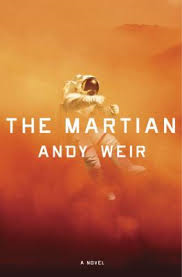
The Martian by Andy Weir is an enjoyable read. I’m not sure it was the best choice in books as I was still coming down from my high after Night Train to Lisbon, but light reads are good for balancing out the heavy stuff.

Written mostly as journal entries by abandoned astronaut, Mark Watney, the endless explanations on the necessary procedures conducted to survive life on Mars were tedious. I often felt as if I was reading an article from National Geographic or a really interesting survival manual. I skimmed a few descriptions until I found the story again.

Andy Weir has proven that he knows his technical stuff, but he delivers it inelegantly and without passion. I don’t need to know exactly how many molecules of various elements are produced when splitting hydrazine nor do I need to know how much power is required to do so. All I need to know is that it’s dangerous. Besides, how many of us could actually refute the science?

untitled (5)The diary entries came across as mild locker room humor mixed with surfer dude attitude and undermined any real tension in the plot. We’re told this is how Mark Watney deals with stressful situations. A more professional approach on the part of the main character with less “ugh, whee, yay, and boo” in his responses would have gone a long way to making me believe in the seriousness of the situation and that he was a highly educated person suitable for space travel.

We’ve been here before with Apollo 13, Castaway, and mostly recently, Gravity. Even Robinson Crusoe was a survivor story. The Martian lacks in respect to these stories because beyond saving Mark, there is no human side to the story. There is no wife or girlfriend waiting on Earth, no foul play to his situation that he needs to discover, not even a friend to whom he needs to make an apology for having spoken harshly. In short, there’s not much in the way of human interest for Mark Watney.

The second way in which The Martian differs greatly from these stories is that it’s pure fantasy. Obviously Apollo 13 is real and the other tales could actually happen. Travel to Mars and/or survival on Mars is still pretend. I find it’s easier to relive historical tragedies than get caught up in the drama of make believe. But that’s just me.

The story was mildly predictable in terms of the sequence of trials and tribulations Mark had to endure on Mars. No sooner would he triumph, I’d turn the page and right on cue the next crisis would appear. The constant up and down was interesting but not as suspenseful as everyone is claiming. This is most evident when thirty pages into the book, Mark wonders if he’s going to blow himself up undertaking an experiment. With about 92% of the book left to go, I’m pretty sure he’s not going to die. Result: zero tension.

Still, Andy Weir’s book is fun. If you’ve worked your way through all your DVDs of Star Wars, Star Trek, and Dr. Who, I recommend reading The Martian. If you’re not a reader, you can wait for the movie which, according to IMDB, is due out in November, 2015.

Night Train to Lisbon by Pascal Mercier

imagesURRVLO8TToday I finished reading one of the best examples of literary fiction I have read to date. Night Train to Lisbon by Pascal Mercier, pseudonym for author Peter Bieri, follows the story of Swiss language professor, Raimund Gregorius.

An unusual encounter with a beautiful Portuguese woman is the catalyst for Gregorius’ journey to Lisbon. His roadmap is a book by Amadeu de Prado called The Goldsmith of Words. So elegantly written are the passages of this fictional book that many have gone in search of it as well as its equally fictional author.

With Prado’s words guiding him, Gregorius delves deeper into the mystery surrounding the life of the enigmatic author, doctor, and resistance fighter during Salazar’s dictatorship. He meets friends and relatives of Prado who piece by piece put together a picture of who Amadeu Prado was.

Upon conclusion of the novel, I felt as if I was leaving old friends behind. Traveling with Gregorius from his mundane existence in Bern to the rediscovery of life in Lisbon proved to be extremely satisfying. The philosophical questions posed in the book are not for the timid or easily offended. Still, I would highly recommend Night Train to Lisbon as an extremely worthy read.