The Sweetest Libation This Side of Heaven

Bourbon whiskey plays an important role in the life of my protagonist, Dr. John Welles. Bourbon is the souvenir of choice for John and his two best friends, Sam Feldman and Claude Willoughby, as they spend a bachelors’ weekend in Kentucky watching the Derby and celebrating Sam’s upcoming marriage. Later in my novel, John employs the contents of this special bottle of bourbon to drown the guilt he endures for his part in a secret cover up regarding the death of a child.

a3f4b1eaa0a14348aa91ede804788043_adf390df7753413c870a7e4655fcf9bd_headerI chose bourbon as John’s drink of choice after a trip to Kentucky with my brother and sister-in-law in 2010. They completed the Kentucky Bourbon Trail the year before and knew which distilleries we would enjoy visiting. Woodford Reserve, Wild Turkey, Heaven Hill, and Maker’s Mark rounded out our initial bourbon experience.

I loved every minute of it. From the heady aroma emanating from the enormous vats of sour mash, to the dusty, blackened rickhouses, to the generous samples imbibed in the tasting rooms, our tour was an education steeped in the warm glow of bourbon. While I’m partial to Elijah Craig 18 Year-Old Single Barrel, Parker’s Heritage Fifth Edition Cognac Barrel Finish, Woodford Reserve, and Wild Turkey Kentucky Spirit, we’ve also discovered several other bourbons worthy of purchase. Don’t miss Willet Pot Still Reserve or 1792 Ridgemont Reserve.

The history of bourbon is as rich as the copper color of the drink itself. Baptist preacher Elijah Craig has been credited for the invention of bourbon whiskey although the tale may be a little on the tall side. We were told during one distillery tour that the charred oak barrels used in making bourbon whiskey came about as the result of an accident in which the barrels were burned. Preacher Craig, either too poor or too cheap to replace the barrels, used them anyhow and bourbon first received its signature color.

Whether or not this is true, bourbon whiskey is an all-American beverage. Strict requirements must be met before the whiskey can be labeled and advertised as bourbon. The Federal Standards of Identity for Distilled Spirits state that bourbon made for U.S. consumption must be 1) Produced in the United States, 2) Made from a grain mixture that is at least 51% corn, 3) Aged in new, charred oak barrels, 4) Distilled to no more than 160 (US) proof, 5) Entered into the barrel for aging at no more than 125 proof, and 6) Bottled at 80 proof or more.

Impressive standards for an impressive drink.

Description-A Writer’s Friend or Foe?

dearada_typepad_com_dear_ada_images_2008_01_15_experience_261_artFellow author Mark Tilbury tossed out a question that is often on my mind as a reader and writer. In his post, Have Books Lost Something With Their Lack of Description, Mark asks us our opinion on today’s style of writing.

We’ve all encountered the “massive blocks of descriptive prose” to which Mark refers. Sometimes they truly are too long, too irrelevant to the story, too purple, etc., etc. I have skimmed such passages in search of the storyline and/or dialog that would put me back in the story.

However, because we’re all friends and adults here, I’m going to say that I disagree with the notion that description is informative but unnecessary. I hear all the time that the reader shouldn’t be led around by the nose; he/she should be given the opportunity to imagine the story. As an avid reader, I can honestly say that I have never felt this way about descriptive writing. On the contrary, my imagination was enhanced and grew because of the description I read including that written about journeys and the passage of time.

The key is that writers need to learn the perfect balance between too much and enough, the fine line between well-written, well-placed prose versus that which is encumbering, unnecessary. This seems like a daunting task, but I believe it can be achieved by not reducing writing to a formulaic method. In doing so, authors will elevate writing back to the level of artistic recognition it deserves.

85806_Ashford_1_122_526lo_122_526loI have never read Stephen King’s book, On Writing, but I would have to agree that abundant description about a character’s acne would be tedious. If that acne-plagued character traveled by canal boat from Pennsylvania to Ohio, then I would love the benefit of description. I would look forward to a word picture painted by the author that draws me in to the sounds, smells, and sights of the trip. It would be a perfect place to introduce traveling companions, a time for the protagonist to reflect, an opportunity to build the tension that so deliciously moves the story forward.

Even if none of the above-mentioned suggestions occur, as a reader I would still enjoy the mental images of traveling with the character, and I believe an important part of the writing would be lost if these well-written descriptions didn’t occur. As Mark mentioned in his post, they are an art form unto themselves. Like all art, value thereof still resides in the eye of the beholder, or in this case, the reader. Well-written description can exist purely for the sake of entertainment.

I have to wonder if writing hasn’t gone the way of food preparation in that we no longer know how to linger over a book in the same way that we forego multiple course meals and choose to patronize fast-food restaurants. I read because I enjoy the slower pace, and while there is a place in my fa9bbdedb5103e7f31a0893eff84ed56reading diet for the occasional literary Big Mac, more often than not, I opt for the balanced meal of description, dialog, prose, and narrative.

Now I don’t want to start a fight with screenwriters because I truly do appreciate their craft. However, using what worked in an action-packed movie and applying it to writing has resulted in fast-paced novels written with the singular hope of being turned into a movie. This has diminished writing for some of us. This influence has led to the removal of poetry and painting (mental images) from writing resulting in flat, hollows stories. Let movies be movies, appreciate them for all that they are; and let books be books, treasures not to be rushed through.

The Bitter Truth

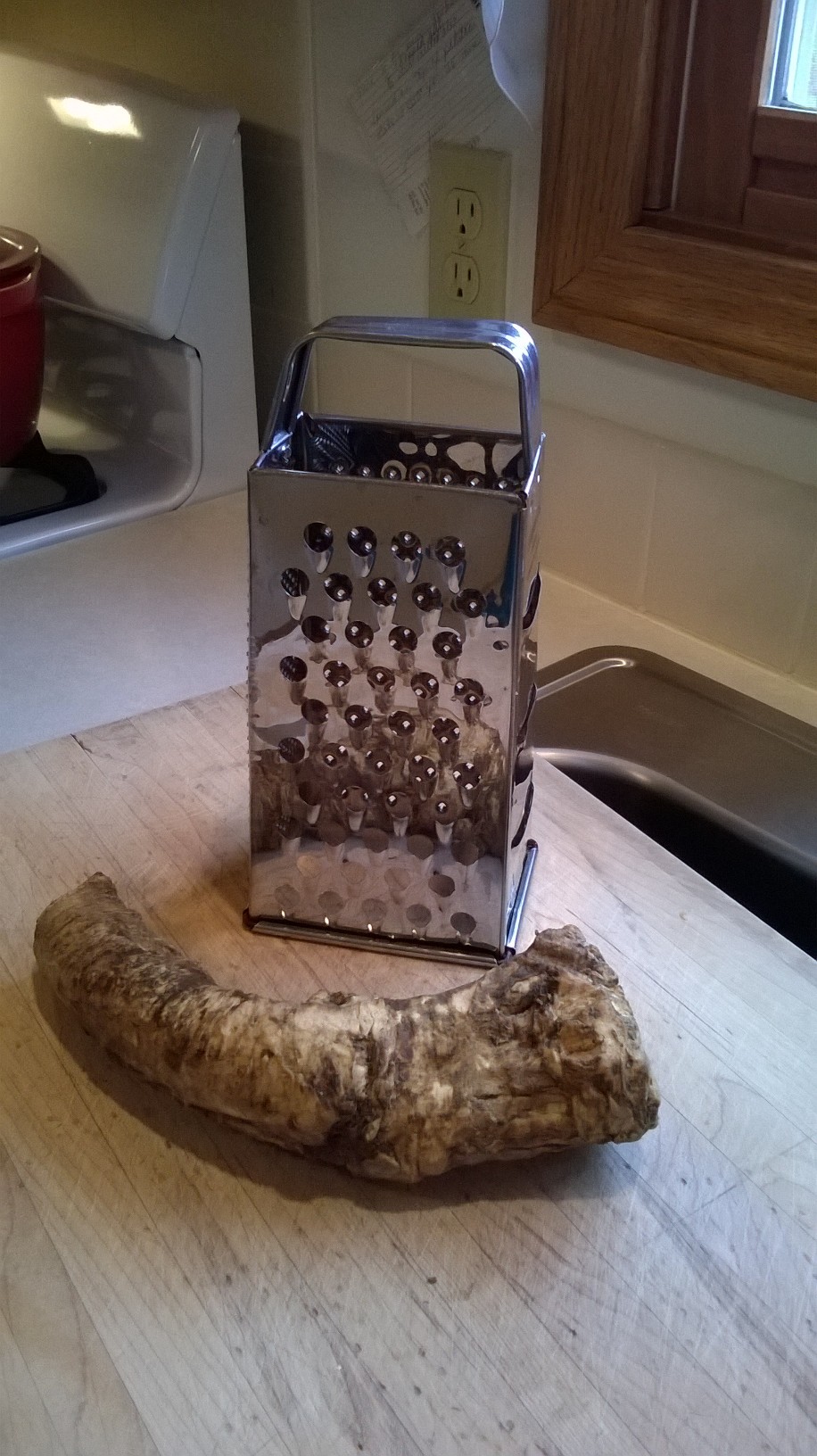
Horseradish and GraterWhen I first chose the meal my protagonist, John Welles, would enjoy with Reuben and Hannah Wise, I flinched at including horseradish sauce. A website on authentic Jewish cooking suggested the pungent condiment as a topping for the salmon patties I had Hannah serving.

I hate horseradish. My earliest memory of it involves cocktail sauce served at a seafood restaurant called Arthur Treacher’s that went out of business in our area years ago. My aunt was pumping the sauce out of a dispenser into little paper cups when one hefty pump spewed the offending sauce all over my shirt. I was mortified, and I guess my face showed as much because my aunt busted up laughing even as she wiped me off with paper napkins.

To this day I can sniff out horseradish in any meal even as someone is setting the plate down in front of me. I was sure I wouldn’t include it in my Edible Fiction posts featuring food from my novel, The Secrets of Dr. John Welles. Until my mom made fresh horseradish sauce.

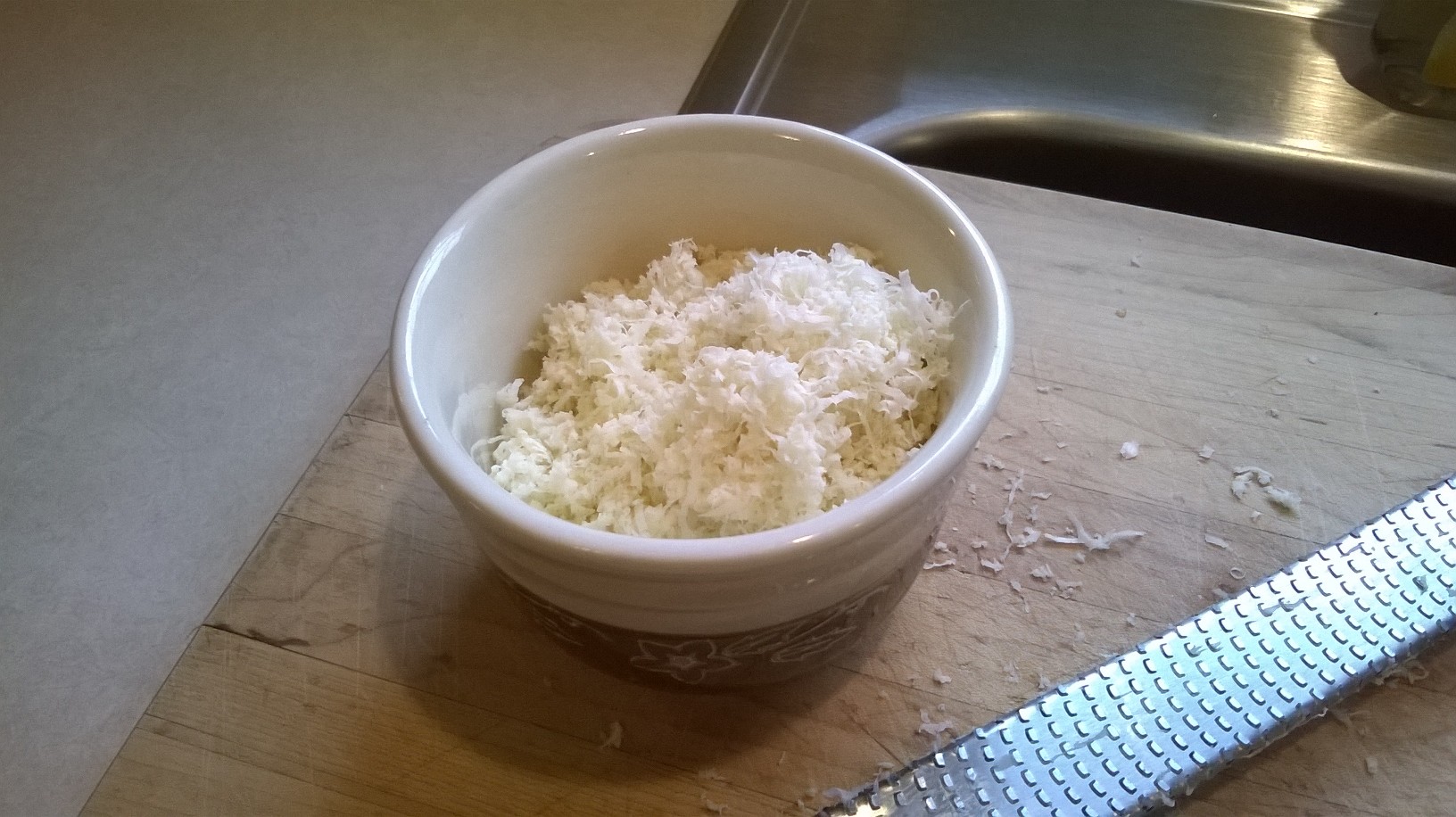
Homemade horseradish sauce is a whole different creature. The key, as I discovered, was to grate the horseradish fresh instead of using the jarredHorseradish Grated stuff. Freshly grated horseradish is zesty like radishes; it actually has flavor. Unlike the jarred stuff, which is bitter without much flavor at all, fresh horseradish tastes like peppery herbs.

As for recipes, there are thousands to be found for homemade horseradish sauce. I imagine Hannah would have mixed her freshly grated horseradish into a quality mayonnaise with a little salt and pepper to taste. Sour cream or crème fraiche is another suggestion as is the inclusion of white wine vinegar, chives, and Dijon mustard. You really can’t mess up the recipe; it’s just a matter of tasting as you create until you achieve the flavor you’re looking for.

The following is a basic recipe that provides a great jumping off point.

Horseradish Sauce

4 ounces of freshly grated horseradish root

1 ½ cups of mayonnaise

Salt and pepper to taste

Peel and grate the horseradish root. Stir into the mayonnaise and season with salt and pepper.

Baring My Writer’s Soul – Part 8

What do you do when you’re write blocked? You quit. It’s okay; I absolve you and give you permission to stop. In fact, I offer this advice to anyone who is creatively stumped.

Here’s the key to getting yourself past the place of frustration so bad it hurts: Quitting and giving up are NOT the same thing. When you quit something, you have stopped for a set amount of time that is up to you to determine. For example, when you quit smoking, hopefully you’ve chosen to do so forever. But, when you quit writing, you’ve done it with the understanding that you’ll return some day when the mood strikes you, the muse returns, the distractions are handled, etc., etc.

Giving up is more dangerous. To give up is to abandon all hope, and the journey back is a much more difficult struggle. It’s not impossible, but it takes a lot of soul searching and the right sort of people in your life to encourage you in the way you need to be encouraged. Giving up usually means you’ve hit rock bottom.

165083-425x283-writing-promptsNow, I don’t mean to scare you with this, because even when you’ve hit rock bottom, the rock at the bottom makes a fabulous foundation from which to plant your feet, bend your knees, and spring upward toward the light again.

The point of this explanation is to keep you from reaching Giving Up by enjoying the freedom of Quitting. Recognizing the signs that you’re struggling in your creative life is the first step to keeping you from nose diving into the despair.

I know this because I’ve been there, and if I can keep one person from experiencing the awful feeling of “I have nothing left to give,” then with tears in my eyes I can say what I went through was worth it. (SIDE NOTE: I’ll probably be embarrassed beyond words when this post publishes because I’m not the opening up type, and this is my deepest secret revealed in my Writer’s Soul series so far!)

The first thing I would suggest based on what I’ve learned from Heather Seller’s book, Page After Page, is to simplify. In my case, all I need to write is a pen or pencil and some paper. I have fought the simplicity of this suggestion, which is what landed me in a heap of trouble, by lamenting everything I don’t have. Mrs. Sellers kindly pointed out what I do have: Pen or pencil, paper, the desire to write, knowledge of the things I want to write about.

You’ve probably heard it said, “Write what you know,” which is countered by, “Write what you want to know about.” Mrs. Sellers goes one better and says, “Write what other people want to know about you.” (Paraphrased from several paragraphs in Chapter Four of Page After Page.)

My goodness, how liberating. This means that you have an interesting tale to tell, and it should be written in detail as only you can tell it. Stop believing that it’s boring or won’t measure up to some arbitrary standard and, to borrow a line from Nike, Just Do It! Write what you want to write. Write what you want to read. Do it now without over analyzing.

Write Happy!

Baring My Writer’s Soul – Part 7

I’ve really been off my game for the past three weeks. Instead of being a sweetheart and manifesting itself as the lover in the center or the lover on the side, my writing became the school yard bully. (See Page After Page, Heather Sellers.) I could explain that sentence, but it would take way too long. Again, for your own benefit, read the book!

Facepalm GirlI want to write. I want to be published. So why did I let the process of writing terrify me into a near-catatonic state? Good question. The answer is that I treated my writing and/or writing time like an obligation rather than a reward. I ignored the clues that writing can be a scary and lonely process, I let it intimidate and frighten me, and I pushed it aside where it grew into a monster. Bad move on my part.

Writing should be enjoyable. I made the mistake of trying to force my writing life into an unrealistic schedule, treating it like a job. I don’t know about you, but I hate having to go to work. On the other hand, I love to sneak away with a friend to idle away the hours producing fun. It’s not that I don’t want to write; I don’t want my writing to feel like work.

Then I bored myself with writing projects that weren’t actual writing, and I put busy work first. Now don’t get me wrong; I balance my priorities, but I’m learning to do it in a way that allows them to walk hand and hand with my dreams. This way, everybody is happy including me.

There will be days when my writing takes front and center place in my life, but there will also be days when it sits patiently on the side waiting for me to return. And that’s okay because absence makes the heart grow fonder and the muse grow productive. Understanding this has returned me to the pleasure of writing.

Write Happy!

Recycling Before Recycling Was Cool

25bcf1fd2283ff81a59233bb01a448faDetails, details. They really can make or break a piece of writing. Too many and the passage is bogged down, too few and the reader will visualize what they choose, too gaudy and you’ll be accused of purple prose. But if you can capture a scene with the right amount of description formed by carefully chosen words, you will achieve Olympic writing gold. We’ve all experienced that moment when we sit back in open-mouthed awe of a perfectly crafted sentence that conveys exactly what we meant to say.

I recently experienced this during my fifth round of editing on my novel, The Secrets of Dr. John Welles. I needed to show the quaint but tidy lifestyle Lyla Welles maintained in her home. Her husband, John, is a farmer, and while the family does well enough, there isn’t money for frivolous luxuries such as lace curtains.

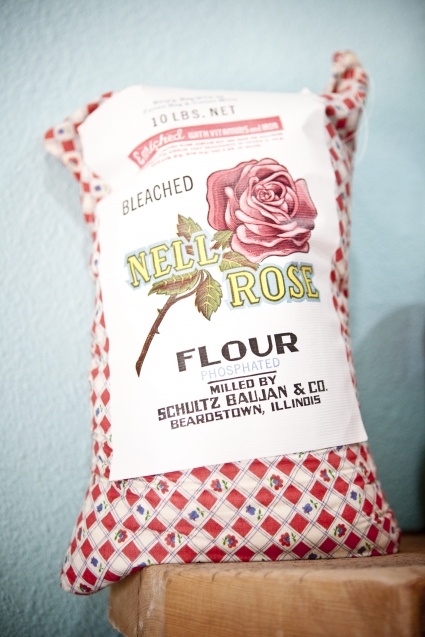
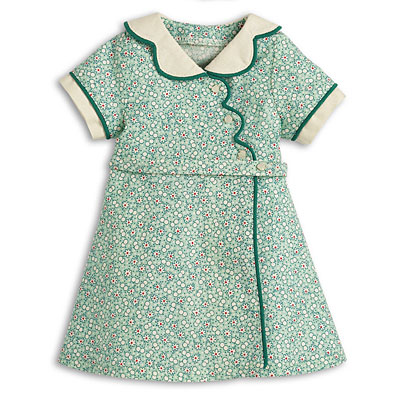
When I described what I wanted for the scene, my mother suggested feed sack curtains. Images of stained, coarse fabric crudely stitched togetherfeedsack-dress came to mind. Mother informed me that they were quite pretty and, in fact, feed sack was used to make dresses for little girls, tea towels, and aprons. I had to go in search of the fabric that could be used for such items while baring a name more plain than homespun. What I found prompted this post.

Ingenious women of low income reused the fabric from feed sacks for undergarments, curtains, pillowcases, etc. Initially, the fabric was white and without pattern. A company logo, which had to be scrubbed out or strategically placed on the homemade item, was the only ornamentation. These plain white feed sacks were probably what Lyla Welles would have used during the time period for the above-mentioned scene. I imagine her hand lovingly embroidering a simple pattern or trimming the edges.

It wasn’t until the 1920s that patterned feed sack became popular as a marketing tool. Women chose the products they purchased depending on the pattern on the feed sack fabric. Contests were held to design prints and artists were consulted to make them more appealing.untitled (5)

The following link from the Buchanan County, Iowa Historical Society provides a complete history on the evolution, popularity, and history of feed sack fabric. I recommend utilizing Google to see a myriad of garments and household items made from the repurposed fabric. There are even Pinterest boards and quilting forums dedicated to the humble feed sack.

The Homesman – Movie Review

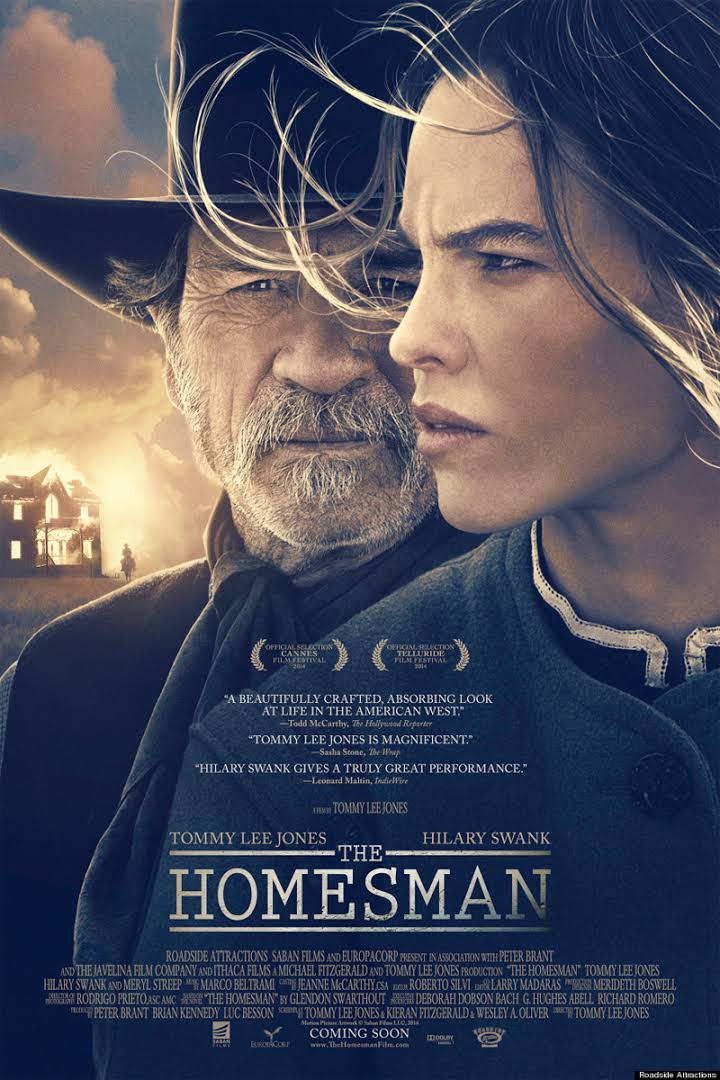
images (3)One of the best movies I have seen in a long time is The Homesman, directed by Tommy Lee Jones. Mr. Jones stars as George Briggs, a claim jumper saved by pious spinster, Mary Bee Cuddy, played by Hilary Swank. The performance of these two Oscar-winning actors is brilliant as they draw you in to the stark reality of life in the 1850s American West.

In return for sparing his life from hanging, Briggs is pressed into service as a homesman by Mary Bee. A homesman is someone who accompanies people back home when they become too ill to survive life on the plains. In the case of three women who have experienced hardships beyond their endurance, severe mental illness necessitates removal from their families.

There are harsh and disturbing images in the movie, but in the hands of a director like Tommy Lee Jones, they don’t come across as cheap, shock value scenes. Factor in an all-star cast of characters in fabulous cameos, an unexpected mid-movie twist, and visually appealing cinematography and The Homesman presents the makings of a classic film.

I don’t want to start a firestorm debate on book versus movie; however, I’m anxious to see if the novel lives up to the quality of the movie. I researched the novel and author and was pleasantly surprised to find that Glendon Swarthout is also the author of the novel, The Shootist, which inspired the 1976 movie and is best known for being John Wayne’s last film. Admittedly, I’ve never read a western, but I am interested to give Mr. Swarthout’s The Homesman a try if for no other reason than to see how closely the movie follows the storyline.

Let us not forget Marco Beltrami’s beautiful yet haunting musical score which perfectly matches the scenes from the movie. If movie music allows you to recall and relive the scenes as if you were watching them all over again, I believe the score deserves the mark of excellence. Marco Beltrami achieves this with a score that is powerfully subtle, always blending with the scenes rather than jarring you out of them, and certainly memorable.

Whether or not you are a fan of the western, I believe you will find The Homesman an enjoyable movie not to be missed.

Baring My Writer’s Soul – Part 6

untitled (8)I struggled a bit with chapter two of Page After Page because I couldn’t relate to the exact experiences Heather Sellers presented, and her advice seemed to contradict other things I’ve been told, most specifically regarding social media. While she didn’t address social media directly, what she proposed would require a noticeable change in how I handled the various aspects of my author platform.

Rather than allow my resistance to flare, I decided to go forward with closing the gap between my writing life and the rest of my life because I am a writer, plain and simple, whether or not I’m published, all the time, period. I’ll do this by drawing on all the positive writing and reading experiences, thus quelling my fears and doubts. This will be an ongoing process for me. At least I know how to seek out and find quality input.

As for conserving my energy to write, that’s going to require a step back from social media. What an unusual request when we live in an era that is all about social media. How can I build/grow/maintain my author platform if I’m not tweeting, posting, honking, and tooting my own horn, shouting, “Hey, look at me! See what I’m writing?” Whose advice do I take?

Let’s consider the point Ms. Sellers makes when she says that talking about writing all the time means you aren’t actually writing. That’s true. Then there are all the stats on social media to gauge how well we’re liked, or not, which can really make or break one’s confidence. I decided to trust Ms. Sellers and withdrew to a safe distance.

The first couple of days felt as if I didn’t have anything to do. I picked up my pen and wrote, and I listened to the voices of the characters in the book I’m reading, and I treated myself to two new writing books, and I read, and I wrote, and I scratched out what I had written, and I listened to the instruction presented in my new writing books, and I wrote some more.

The best part is I don’t have to tell you what I’m writing; that’s for me. What I will share with you is that Page After Page, Story Trumps Structure, and Fiction Writing Master Class have been phenomenal in breaking through my resistance and writer’s block.

The positive momentum kept me moving forward. In addition to my writing group, I joined a book group online and at the library, and I will be attending two “Meet Your Local Author” events. I know this is going to further enhance my writing because I’m all about the tactile experience.

Never fear, though. I shall not abandon my blog. I’m just tweaking the focus to build a community of reading, writing, interactive friends whose presence in my life goes far beyond that of just follower.

Write Happy!

Baring My Writer’s Soul – Part 5

untitled (5)Allow me to preface today’s post with a nod to Heather Sellers’ book, Page After Page. As I mentioned in an earlier Baring My Writer’s Soul post, this is about blogging my experience. I truly hope you find something here that appeals to you; however, I strongly suggest that you do yourself the favor of reading Ms. Sellers’ book. Believe me when I say that you don’t want to miss one word of her valuable insight.

With that being said, the following lists are a writing exercise from Page After Page. The simple task jumpstarted my writing when I stalled due to resistance and, I recently discovered, boredom. (Boredom and Burnout: What To Do When Artistic Work Stops Being Fun by David J. Rogers) Even if it’s just a blog post, at least I’m productively writing.

The qualities of my ideal writing guidebook (what is covered):

  • Large, easily referenced grammar and punctuation section with examples
  • Daily writing exercises
  • Visual writing prompts
  • “How to” quality to the book, instructional without being preachy or stringent with rules
  • Info packed, fast paced

The qualities of my ideal writing class (what I learn):

  • How to write a query letter
  • Order of items in an e-mail to an agent, what is attached, what goes in the body of the e-mail
  • Standards of punctuation, grammar, when to italicize, underline, quote
  • How to write in deep POV (my most evil nemesis)
  • The art of good story telling (which I’m currently exploring in Steven James’ book, Story Trumps Structure)
  • How to write in the present tense when something occurred in the past
  • Writing a great first chapter (Again, Story Trumps Structure)
  • The best way to conduct research
  • Answer the question, “Does every story written these days have to follow an outline with nine-point structure, character arcs, pinches, plot points, etc., etc.?”

My best student-like qualities (who am I when I’m learning, my attitudes when I’m loving the act of learning, what do I look like, what do I wear, what do I have in the palm of my hand):

  • Detail oriented
  • Takes fabulous notes
  • Studies diligently, thoroughly
  • Combines book learning/reading with a hands-on experience, admittedly a bit more on the bookish end
  • Listens well
  • Questions endlessly because I like to get things right the first time
  • Loves to learn when it’s interesting, must apply more effort when it’s not
  • Wears casual clothing
  • Writes information (usually on a McDonald’s napkin unless I’m in a formal setting) but will use my laptop if the info comes fast (I type well!)
  • Enthusiastic, passionate
  • Loves to be hooked from the first moment of instruction

As expected with me, the completion of this task prompted more self-analysis leading to admissions and questions:

  • I discovered that I’m afraid to tell people I’m a writer because I believe if I don’t produce quickly, I’ll be viewed as a failure.
  • I feel pressured to publish soon, but I don’t want to crank out garbage.
  • Certain people I’ve engaged in life resent when I do something that they perceive as getting ahead of them, being more successful, so I downplay my achievements.
  • Other than the occasional, “That’s nice,” I don’t feel as if anyone supports my writing.
  • Money factors in to my writing heavily. I make very little working as a substitute at the library, and I feel the pressure to bring in a paycheck especially with the economy the way it is.
  • Is my writing a selfish hobby or a real career?
  • I don’t really feel as if I have a writing ally, no connectivity in the writing world or to another writer.
  • Have I started too late in life to make a go at writing?
  • What do I do when there is no money for writing classes, retreats, programs, conferences?

These are the thoughts that usually accompany me as I sit down to write. Unfortunately, they influence my writing habits. I know that most of them are ridiculous self-doubts, so when they arise, I remember to acknowledge them quickly, and then press on with my writing.

Write Happy!

Going For the Gold

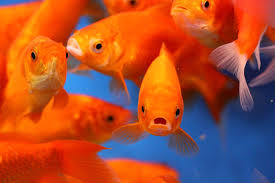
imagesGCJIQJEDI was an avid keeper of goldfish as a child, but I suspect every child passes through this phase at least once. For me, goldfish provided the opportunity to prove myself responsible. They were the first step toward securing a more serious pet such as a cat, a dog, or to fulfill my wildest dreams, a horse

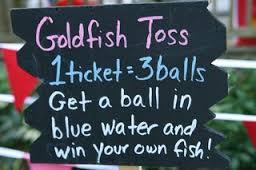
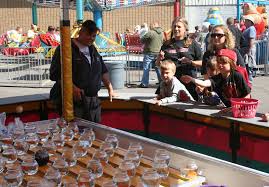
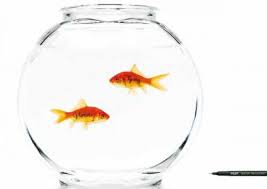
My piscine experience began with a traumatized little specimen won at a carnival. I believe I landed a Ping-Pong ball in the narrow mouth of the perfectly round bowl from which my prize desperately tried to escape. As he waited for me to hone my skill to victory, he pinged his nose against the circumference of the bowl looking for the fissure that would allow him to swim free.

Several goldfish were procured in this manner, and like each of their predecessors, they usually succumbed within a week. About this time, I discovered the goldfish tank at the local grocery store, Acme Click’s. This was during the era when they had a wonderful pet department, toys, clothing, and home goods.

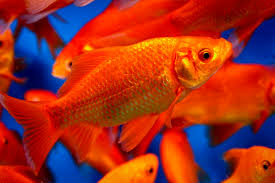
In my youthful ignorance, I failed to understand that I viewed a tank full of feeders doomed to end up in the belly of a larger fish. I saw a pet lover’s bonanza of tangerine, carrot, and marmalade colored fish just waiting to be owned by me. I pinpointed the goldfish that caught my interest and followed him around the tank with my eyes, never once losing sight of him.

imagesZ2SSZUHOThe perfect name always presented itself upon the purchase of my latest aquatic pet, names that usually determined the gender depending on what I’d chosen. It would be years before I would learn how to sex a fish, and even then, it proved to be tricky. Other than Coral and Muffy, I don’t recall what I named any of my goldfish.

What I do remember was the clerk’s frustration as she tried to net my specific fish from a tank of hundreds, possibly thousands, that all looked alike. Her minor annoyance paled in comparison to my desire to rescue the goldfish I knew I was destined to own.

“Is it this one?”

“No, it’s that one right there,” I said pointing him out even though I had turned my head to watch the girl’s pathetic efforts, all the while thinking just get back in there and listen to my directions as I guide you toward my fish. Because of children like me, today’s breeder tanks bear signs stating, “Unable to net specific fish.”

Sometimes, I didn’t even have a bowl for my goldfish. A plastic margarine tub provided living space for one goldfish I won in Tennessee while visiting my great aunt and uncle. I floated little yellow flowers on the surface of the water and enjoyed watching him nibble at them. images7Y98O0LRWithout the benefit of a lid, I held the bowl on my lap for the long trip home to Ohio. As water swayed precariously close to the edge, my father constantly reminded me to not let it spill on the seats of our Cadillac, and I fretted the whole time worrying that my goldfish wouldn’t make it home alive.

My panic increased when a broken fan felt disabled our car late into the evening just outside of Akron. My Uncle Howard had to retrieve us for the last short portion of the drive home. I thought for sure my goldfish would be left behind to spend a chilly night in the car, but my mother allowed me to bring him as we crammed five abreast into the cab of Uncle Howard’s truck.

One year, I secretly campaigned for a goldfish when my Aunt Ann asked me what I wanted for my birthday. My mother absolutely could not refuse goldfish given as a present, of this I was sure. My Aunt Ann, a parent herself, knew better. Much to my chagrin, she asked Mom right in front of me if it would be all right for her to give me a goldfish. I thought her tactics a little unfair as I recalled her own daughter, my cousin Lisa, used to have two lovely goldfish named Sonny and Cher that swam in a bowl on Lisa’s dresser. I used to sneak into her room to watch them swim, coveting the fish with superstar names.

images3HVUBDWIIt all worked out in the end when Mom called me home from playing Barbie dolls with my best friend. As I ran up the driveway, I spied Aunt Ann and Uncle Howard’s car parked there. I had actually forgotten my request until I burst through the side door and saw my aunt and uncle sitting at the kitchen table with a bowl, net, fish food, and two brand new goldfish flitting around the clear, plastic bag. Good ole Aunt Ann; she came through for me.

The sensation of owning a pet as a child is hard to describe. It probably had something to do with overcoming my father’s resistance to having animals, a fact which perplexed me because he grew up around pets even if they weren’t his. I would have gladly compromised and kept my furrier acquisitions outside, but until then, I kept my aquatic ones in my room. Evidence of their lives appeared as pine twig crosses staked beneath the tree in our backyard, fastened with bent nails pilfered from Dad’s toolbox, marking the graves of each dearly departed goldfish. He insisted I keep them to the area where the pine needles fell so he wouldn’t mow over them. One summer, the sad reminders of lost lives encircled the entire base of the pine tree.

imagesHSSVGSFLMy services as funeral director were pushed to the limit as I scrounged my jewelry box and top dresser drawer for earring and necklace boxes in which to bury my beloved goldfish. Their dulled bodies with cloudy, vacant eyes were gently placed between the layers of cotton before I sealed the box with tape. As I walked to the garage to look for my mother’s hand trowel, she called from the window, “Make sure you bury it deep enough so the cats don’t get it.”

Decades have passed since I last owned a goldfish. I turned to bettas as an adult, and my fish hobby exploded to twenty one tanks of rainbow-colored, freshwater, egg laying fish that I bred and enjoyed for years. I even joined the Greater Akron Aquarium Society and participated in fish auctions always as a buyer. Never once during my adult fishkeeping days did I select a goldfish for my tanks, not even the lionheads or fantails. I grew beyond the humble goldfish in favor of killies, gobies, and tetras. I even succeeded in acquiring many pets of the four-legged, furry variety just short of a horse. Riding lessons were as close as I came. Still, I will never forget the role the always popular, readily abundant goldfish played in my initial love of animals.