Baring My Writer’s Soul – Part 4

In answer to the question in my last post, “Why am I not learning?” I discovered an answer that is not at all surprising: resistance.

I think I always knew this was my problem, but I hated to admit it. I created a vicious circle in my head that started with fear-born resistance to what I thought should happen versus what actually does happen when I write and/or learn to write. The fear/resistance combination kept me from learning from my new chosen method. There was nothing left for me to do but shut down and stop writing. I tried to claim writer’s block, but even I knew this wasn’t true.
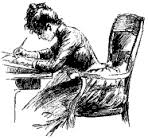
images4GQIRHHZSo how do I reduce the resistance in my life? First of all, expect that it is going to occur in the form of doubts and ego which leads to comparison to other writers. By acknowledging this fact, I’ve already begun to address the issue, and that’s exactly what I want. Second, by dealing with the first concern, I’ll be able to tackle the fear of change which I often perceive as a threat to myself.

I already know doubts, ego, and comparison are counterproductive, so I must quickly recognize this yet again, and press on. Address my good intentions, per Heather Sellers the evil twin of resistance, and press on. Don’t over think the process, and press on. Let go, let down, relax, and write.

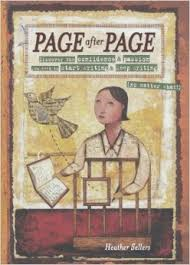
Page After Page advises that I learn to listen to my mind without getting sucked back in to all the negativity mentioned above. Just because I do this once doesn’t mean it won’t rear its ugly head again, but when it does, I’ll be ready for it, and that knowledge is very liberating.

Naturally, this self-analysis generated more questions for me.

  1. If I’m not receiving quality instruction, does that translate into resistance on my part?
  2. Are instruction and critiquing/criticism the same thing?
  3. If I don’t rewrite based on someone’s opinion, does that mean I’m resistant?

While I don’t plan on addressing these questions in future posts, I put them out there to see if other writers/authors struggle with these issues. I’d love to receive your feedback on them.

Write Happy!

What Would You Give to Have That?

imagesI recently wrote a blog post on the unusual things people say.  We grow up hearing odd turns of phrase and use them as an adult never questioning where they came from or what they mean.  We’ve said them all our lives and understand them perfectly.  Southerners, Northerners, people from other countries–we all have our quirky expressions that we employ without hesitation assuming everyone in our hearing vicinity will know what we mean.

While researching the origins of the phrases used in my family, I came across the following question and answer regarding the giving of one’s eye teeth for something. I use this one quite frequently and never gave it much thought.

The question was stated in such a way as to make me laugh. The answer proved informative. I had no idea this phrase dated back so far.

I would love to know the crazy sayings peculiar to your family or locale that you grew up hearing and/or saying.  As a writer, I’m always looking for unique ways to state something without sounding clichéd.  I believe it adds flavor to the story and strengthens a character’s voice.

Enjoy!

Jim the Boy – Book Review

I am concerned that many readers, and not a few writers, have lost the ability to enjoy a story that exists purely to entertain. That unless a novel is outlined with on cue plot twists, pinches, and character arcs, the reader will dismiss the story as worthless. The only reprieve some books receive is to be classified as literary fiction.  Yet even this term will drive some readers away with the expectation of highbrow prose not easily understood. I blame this last fact on the current confusion that exists when we are expected to force every book into a specific genre.

Prologues, we are told, are anathema. One-sided conversation between characters is labeled an info dump. On and on the criticism toward books who stray from the above-mentioned criteria flows from reviewers, and again, I worry that excellent literature is being ignored or cast aside in favor of the high-tension, action-packed, reads-like-a-movie novel.

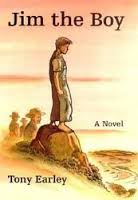
untitled (5)Sit down and let me tell you a story. Be still, and without interruption allow yourself to be drawn into the world of ten year-old Jim Glass, his widowed mother, and his three unmarried uncles. Set aside your technology, your resistance to everything you believe this story isn’t, and your expectations for a dystopian universe where children kill each other to survive. Slip back to a simpler time that existed during a difficult era, the Depression, and get a feel for what true social interaction means.

Live for a year with Jim’s family in Aliceville, a town that has been wired for electricity for years but has yet to receive the blessing of lights after dark. Attend the brand new school on the hill with Jim and be afraid that the converging of kids from all the closed one room school houses presents the terrifying and thrilling opportunity to make new friends. Enjoy the push and pull relationship between Jim and his best friend, Penn Carson, as they vie for playground supremacy. Listen to the family history, tall tales, and ghost stories told by the adults in Jim’s life.

If you can do this, long before you reach the last page of Tony Earley’s novel, Jim the Boy, you’ll have made lifelong friends, and you’ll feel as if you’re among kin. Or, sadly, you may dismiss the story as merely charming, quaint, and anticlimactic. That’s okay, too; no one will judge you for it because you probably won’t even realize you let a treasure slip through your fingers.

For readers who enjoyed Ivan Doig’s The Whistling Season and John Grisham’s A Painted House, I highly recommend Tony Earley’s novel, Jim the Boy.

Baring My Writer’s Soul – Part 3

imagesV0ZD86UPMy previous posts established the fact that I was frustrated with my writing and needed a new approach. Guilt over breaking writing rules and procedures threatened to kill my passion. Desperate for a change, I sought help from Heather Sellers’ book, Page After Page.

At this point, I should confess that I usually don’t read books on writing; they are boring. Page After Page is the first writing book that didn’t lecture me. Rather, the book engages the reader as if providing one-on-one instruction.

But enough gushing. The book also makes promises in the introduction, and I am a stickler for making authors fulfill their promises. By the end of the book, I am promised the ability to develop and sharpen writing tricks that will help me stay in my writing chair and get me there in the first place.

Heather Sellers included a quote from Natalie Goldberg’s book, Writing Down the Bones, which states “to do writing practice means to deal ultimately with your whole life.” I like this advice because 1.) I didn’t realize that an unbalanced life would negatively affect my writings, and 2.) This is exactly my request.

The first step in dealing with my life as a whole involves the process of learning how to learn from any class, any teacher, and any situation. It sounds simple enough until I step back and address, “Why am I not learning?”

Ask yourself this question, be honest, and see what you come up with. My own answers, while obviously detrimental, weren’t all that surprising.

Until next time, Write Happy!

Parlez Vous West Virginia?

Have you ever wondered as a child where all those weird things adults would say actually came from? I’m speaking of the oddities my mother and grandmother used to express which I later labeled West Virginia-isms after their home state. Things like dead in Hell with your back broke and this life, the next, and the ironworks. What do they mean?

Then there are two not suitable to be publicly blogged, but I will e-mail them to you upon your request. Everyone should have the opportunity to experience them at least once in his or her life.

Taken out of context, these phrases are rather odd. Having grown up with them, I understand that to be dead in Hell with your back broke is worse than your current situation so shut up and quit complaining.

“I don’t like cleaning the cat box.”

“Well, you could be dead in Hell with your back broke.”

On the other hand, it could be preferable to your current situation.

“I’d rather be dead in Hell with my back broke than stay at this party one minute longer.”

If you think it’s bad now, there’s this life, the next, and the ironworks. Things are pretty hopeless when you reach this state.

“Dang, I hate my job.”

“I know, but there’s this life, the next, and the ironworks.”

Not everything filtering down through the generations of my family was negative. My grandfather used to say something was prettier than a speckled dog under a red wagon. Hmmm…they were poor and lived during a simpler time. Maybe that’s the prettiest thing he had to compare.untitled (4)

I came across a saying close to this but was unable to determine the origin of the similar expression prettier than a specked pup in springtime. Locale probably determined which one you used, and I wouldn’t be surprised to learn they came from yet another comparable phrase.

I’m not crediting my family or West Virginia for the creation of these colorful sayings, but I can appreciate how realistic they make dialog sound when reading or writing. You can’t help but speak them with a slightly southern accent. Go ahead and try; I dare you.

The great thing about them is that no editor could ever claim they are clichéd!

Understanding Prudence

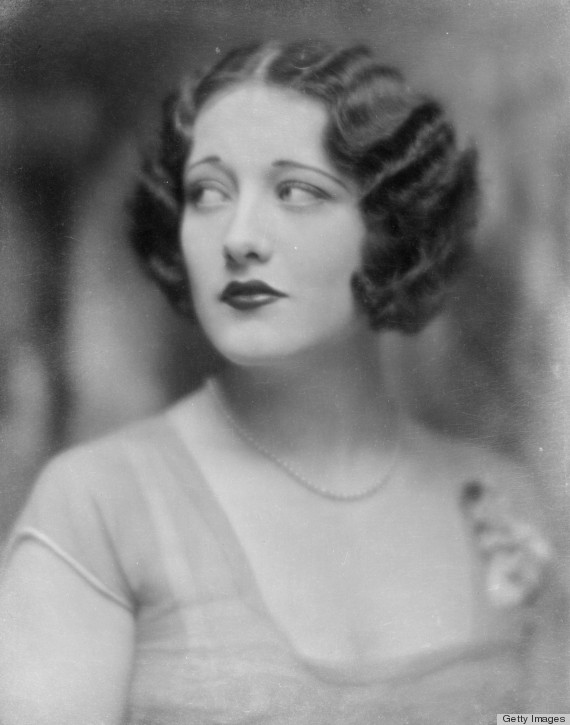
Joan CrawfordI devoted chapter seven of my novel, The Secrets of Dr. John Welles, to developing the character of Prudence Welles Mayfield. Unfortunately, her interesting backstory didn’t move the rest of the plot forward. I struggled with cutting what became known as Chapter Prudence because I really like her, and the writing was good. In the end, I discarded it in favor of keeping the story focused on my protagonist alone.

The following account details Prudence as a child and young woman. There are a few references to things that occur later in my novel, tidbits that I dealt with in others ways upon removal of this chapter, but nothing so confusing that you won’t be able to understand what’s going on.

Although her backstory went by the wayside, Prudence herself did not. She is very much an influential presence in the life of the nephew, John Welles. I hope reading about her youthful adventures, and the following character sketch, give you a better perspective into the personality of Prudence.

Chapter Prudence

You believe you already know Prudence; she’s the stunning woman with an expensive, tailored wardrobe you would give your eye teeth to own. You would probably label her an arm ornament until she opens her mouth, and you realize an intelligent, well-spoken woman resides in the beautiful package. Suddenly, you want her as your friend.

You will find Prudence with drink in hand at the center of every social engagement, commanding her audience with a stellar personality, smoking long before it was fashionable for women to do so. She’s a lady to the core, despite what society may think about her, and would sooner burn her shoe collection than be caught drunk in public.

Don’t be fooled by Prudence, though. The petit woman isn’t afraid to speak her mind and can back down the most assertive man. Other women, especially those vying for a place in her beloved nephew’s life, are her particular kryptonite.

From the outside, it looks as if Prudence has a charmed life. She has plenty of money, secured by a good head for business, so she and John want for nothing. Her life is full of quality items from the home she lives in, the car she drives, the vacations she takes. Yet closer inspection would reveal sadness in Prudence kept hidden from the world. Her care of John, while altruistic on the surface, also services to satisfy her need for penance and motherhood.

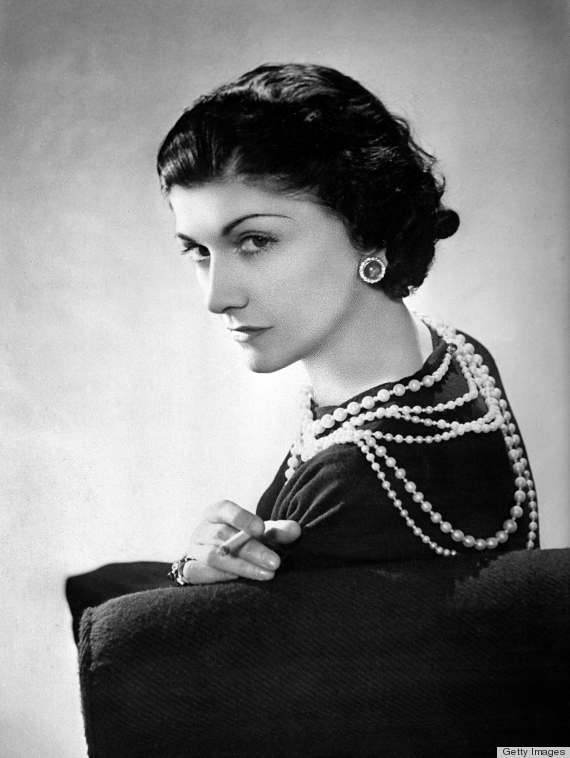
Still, she isn’t the type to sit around mourning an unfortunate circumstance. She is proactive in her own restless life and will seek satisfaction until she has secured it instead of waiting around for a man to provide it.Coco Chanel, French couturier. Paris, 1936 LIP-283

For all her forthrightness, Prudence can still be wounded at heart. As much as she loves John, it is he who most often draws the line on her outrageous behavior especially in regards to her creative honesty. She’ll never let on that she feels the sting of his rebuke, and if pressed, Prudence would admit that her nephew is a positive influence in her life.

The pictures of Joan Crawford and Coco Chanel capture the essence of Prudence as I envisioned her.

Baring My Writer’s Soul – Part 2

untitled (8)Many thanks to my Twitter friend, Lucy Flint @flintily, for mentioning the book Page After Page by Heather Sellers. I immediately checked it out based on her recommendation, but after reading two chapters, I had to order my own copy from AbeBooks.

The excruciating wait for my book to arrive was lessened by the brilliant idea that popped into my head:   why not blog about my personal experience while reading the book? Immediately, self-doubts arose which was kind of funny because chapter one addresses this issue.

Page After Page is short, action-packed, conversational, “how to” in its voice without being preachy, and applicable to writing as well as other endeavors in life.

I’m inviting you to come on this journey with me, but you do not have to feel obligated to do so. In reading Page After Page, I’m learning from Heather Sellers’ process and picking up useful, relevant information and instruction that meets my writing needs.

If you find something that resonates with you, run with it. If not, don’t feel discouraged; what you’re looking for may be in the next post, by me or someone else, or a different writing book.

Write Happy!

Baring My Writer’s Soul – Part 1

untitled (5)“Every secret of a writer’s soul, every experience of his life, every quality of his mind is written large in his works.”  Virginia Woolf

I’m not an inspirational author, but I do find that there is a large amount of room in my writing for inspiration. Most specifically, I’m looking for the kind of inspiration that comes from giving my writing life over to God.

Recently, I’ve been discouraged with trying to balance my non-writing life with my writing life. Writing became a chore, and I lost the joy of creating. Still, I pushed myself to write because I believed I absolutely had to. Or maybe I didn’t.

There are a lot of people in life who will gladly define for you what it means to be a real writer. I’m tired of trying to force myself into their labels and definitions much the same as I’m tired of trying to force my writing into their preferred methods and styles. I needed to find what worked best for my life and my writing.

When I stepped back and prayed, the miraculous occurred. The return of my happiness was the first, most noticeable change. Second was the disappearance of the guilt I experienced for not writing and/or maintaining my author platform every minute of the day. In fact, I haven’t written for two days, and I finally spied my writing muse peeking around the corner to see if it’s safe for her and my enthusiasm to return.  Keep in mind I’m no quitter; I just needed a break.

Then I reprioritized my life into God first, family second, work third which led to harmony. I reduced the real distraction of social media and welcomed back my responsibilities of homemaking.  That last point may sound old fashioned to some people, but by completing my family duties, I cleared my mind to focus when I needed to write.

Lastly, I’m working on ridding my mindset of the lie that I’m racing against some unknown, unseen deadline to be successful or die in unfulfilled misery. When I did that, my overbearing sense of competitiveness and envy withered. I realized that success and happiness are not the same things, and they rarely go hand in hand.

By allowing myself to step away, I’ve gained a new perspective on writing and life in general. I already am a successful writer, even if I just write for myself, because I am a happy writer. How do I know I’m on the right track? Since these revelations came to me over the past few days, I received encouragement in the form of Tweets, posts, and blog articles such as the one by Jennifer Slattery, When Discouragement Swallows Your Strength, via Castle Gate Press.

It could be a coincidence, but coincidence is God’s way of letting us know He’s still in charge.

Write Happy!

Riding the Belair Bullet

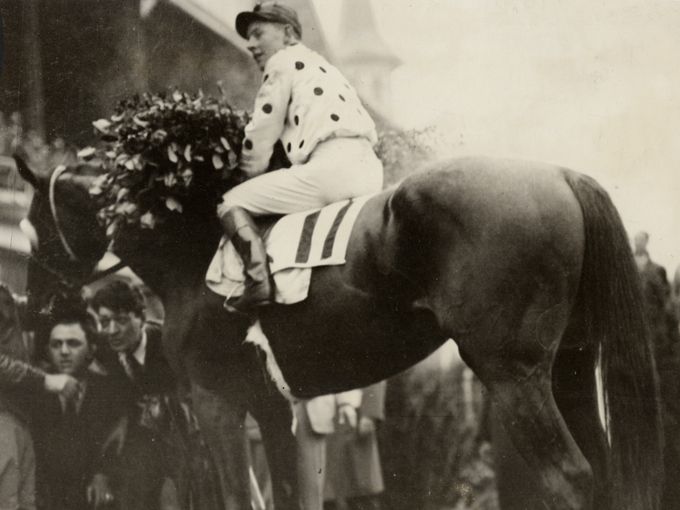
1398463924000--DERBY-1935-OMAHA-IA secret, three-day bachelor party that includes a trip to Kentucky to watch the Derby is just what John Welles and Claude Willoughby have in mind for their best friend, Sam Feldman. They believe they’ve given the bride-to-be and Sam’s mother the slip, but the ladies are on to them.

Claude, whose father used to breed races horses in Kentucky, undoubtedly suggested their entertainment. Even though the three friends don’t gamble, they are excited about the opportunity to attend the running of the Kentucky Derby. Unbeknownst to the trio, they picked a good year to go. In 1935, the thoroughbred racehorse, Omaha, owned and bred by William Woodward Sr., owner of Belair Mansion and Belair Stud Farm, was on his way to winning the Triple Crown starting with his performance at the Kentucky Derby.

Of course, horses don’t get to the finish line by themselves. The year Omaha won the Kentucky Derby, jockey William “Willie/Smokey” Saunders was aboard for the ride.

Saunders learned to ride in Alberta, Canada, and Montana. He earned his first win at Tanforan Racetrack in northern California on April 14, 1932, and was tutored in riding by the famous jockey, George “The Iceman” Wolfe of Seabiscuit fame.

The outbreak of World War II, as well as weight problems, interrupted Saunders’ career. He joined the Army, serving in the Pacific theater for four years. During his service, he contracted malaria which led to considerable weight loss, a silver lining to an unpleasant condition for the jockey who returned to racing when the war ended.

Saunders finished his career as a jockey in 1950, and he served as a racing official at various tracks in New Jersey, Florida, and Illinois. He worked as a trainer then as a placing judge. His final honor in the world of horse racing came in 1976 when he was inducted into the Canadian Horse Racing Hall of Fame.1398463924006--SCHAEFFER-AND-SAUND

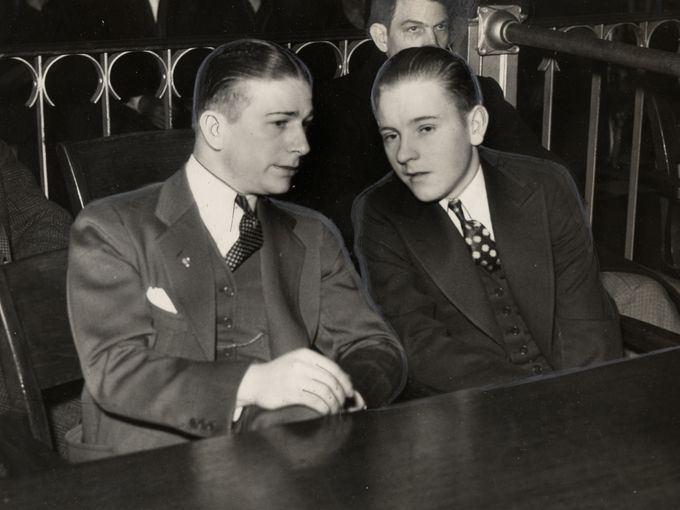
Unfortunately for Saunders, the same year he won the Triple Crown, media attention of the less desirable sort also followed him. In October of 1935, Saunders faced the accusation of accessory to murder of Mrs. Evelyn Sliwinski.

The case cast a bad light on Saunders riding career, and he never rode in another Kentucky Derby. His final days were spent in Florida where he died of cancer at the age of seventy one.

Why You Should Be Writing Short Stories

Sometimes the attitudes toward various aspects of writing boggle my mind. The two most recent are short stories are not worthy of our attention and the omniscient point of view has fallen out of favor. No sooner will I come across one of these narrow-minded statements, I’ll discover someone being recognized for doing them brilliantly. The same people who make these statements will then laud said brilliant person, and the rest of us flock to be like them. Really?

Today, I’m going to focus on the short story issue. I cannot image chucking any form of writing because the proverbial they have declared it no longer fashionable. What is this, writing high school where we all want to be in the popular clique?

images (3)I am bothered by the fact that frivolous trends, like those that, in my opinion derived from my perspective, define fashion, would also dictate the world of writing. Are we going to allow ourselves to be misguided and limited by believing that everybody should be writing in the same style and format? Or am I wrong in believing that writers are above this?

True, we can grow in our chosen art form, but it would be to our detriment to forget, abandon, or leave untried other styles and forms of writing. There are many reasons why the short story should be explored by the novelist and poet. In turn, writers of short stories will benefit from attempting a novel or poetry. Perhaps this stems from my being a proponent of cross training in the work place or the fact that short stories are where I first tried my hand at writing.

In any case, I hope you enjoy the following posts on why you should be writing short stories. Your feedback on these articles, as well as critiques of my own writing under the Read & Relax tab of my blog, is most welcome.

An Argument for Writing Short Stories

The Power of the Short Story