Tackling Chapter Breaks

Ah, the chapter breaks. How do we write them in such a way as to keep the reader hooked? Admittedly, I like a cliff hanger as long as it doesn’t come across like the Friday episode of a soap opera.

The advice in 4 Ideas for Ending Book Chapters So Readers Will Kill to Know What Happens Next is another helpful tool for my writing toolbox. Not surprisingly, it’s by K.M. Weiland. The four ideas presented in her post are subtle changes intended to keep the reader desiring more without the cheesy cliffhanger effect.

Enjoy!

To NaNoWriMo, or not to NaNoWriMo, that is the question

I first heard about NaNoWriMo two years ago from my friend who heads our Writer’s Group. The idea of writing 50,000 words (an entire novel) in thirty days was both exciting and terrifying. As luck would have it, I had been kicking around an idea for a great novel. NaNoWriMo seemed like a good way to get the story out of my head and onto paper.

Before NaNoWriMo, I wrote short stories and children’s stories of picture book length. I had never heard of outlining a novel which might have been helpful for my first NaNoWriMo experience. Undaunted, I began writing near the end of the book leading up to the scene that was the catalyst for the whole novel. That’s when I realized I needed to go back to my character’s beginning. My first experience with NaNoWriMo was a jumbled mess.

I reached my goal of 50,000 words but didn’t have a complete novel. There was more to the story than I originally thought. The rest of the year was spent creating those portions while editing and chucking large sections of what I wrote for NaNoWriMo. I began to wonder if my November efforts had all been for naught when NaNoWriMo rolled around again. What to do?

I cheated again. I used the 50,000-word goal to keep writing new stuff my novel needed and editing what I had written last year. Perhaps the Deities of NaNoWriMo would smack my fingers with a ruler for this, but I justify what I did with the explanation that at least I wrote.

This year marks the third NaNoWriMo since I first participated. I didn’t join. I also didn’t use it as a motivational tool for rewrites and editing. I let myself off the hook with the understanding that my schedule and novel were in different places than what NaNoWriMo required. In short, I didn’t have the time and there wasn’t anything new to write or edit to meet the word count. I also didn’t want to start another novel when I already had one under way.  I’m not sorry for having tried NaNoWriMo, and I’ll probably do it again. In the meantime, I shall continue working on my second round of editing and looking for beta readers.

If you’re trying to decide whether or not NaNoWriMo is for you, consider the following article by Christopher Shultz. He’s much more eloquent in his explanation of what one needs to consider before jumping feet first into NaNoWriMo without knowing what it’s all about. I agree with his opinion that one should make NaNoWriMo work for him/her and that it isn’t a ‘must’ or ‘mustn’t’ situation in the life of a writer.

The Grand Budapest Hotel – Movie Review

MV5BMzM5NjUxOTEyMl5BMl5BanBnXkFtZTgwNjEyMDM0MDE@._V1_SX214_AL_I admit I am not a movie buff. I don’t know directors or writers, I don’t leave comments on cinematography or storyline on IMDB, and I don’t watch the Oscars. Most of the movies I watch are because my son or husband wanted to see them. In fact, I can’t remember the last time I saw a movie at the theater. I wait until they come out on DVD and borrow them from the library.

I’m not telling you this because I’m criticizing movies or film buffs in any way. Rather, it’s so I don’t embarrass myself when I try to review The Grand Budapest Hotel.

My faith in Ralph Fiennes as an actor was reaffirmed in this movie. He hadn’t impressed me lately, not that I believe for a minute that Mr. Fiennes lives to do so. In Skyfall, his character was stodgy at best, his acting flat. As Gustave H, I fell in love with him again.  Although his character is scandalous in every way possible, you can’t help but be charmed by him.

There are plenty of other well-known actors and actresses in the movie as well.  Whether in main roles or bit parts, they all do a wonderful job portraying their character.

This movie was laugh-out-loud funny, macabre, melancholy, sweet, and twisted. In my opinion, some of the best lines in film occur in this movie. The CGI used was an old-fashioned technique, I looked this up out of interest, but the effect only adds to the charm of the movie.

I did ask a film-fanatic friend if it was just me or was this movie similar in feel to The Darjeeling Limited and The Life Aquatic with Steve Zissou?  She confirmed my suspicion by pointing out that Wes Anderson directed both.  I had to laugh at myself even though I was kind of proud for noticing.

I’m sure better reviews exist. You wouldn’t have to search very hard to find one. All I know is, when I see a movie I enjoy as much as The Grand Budapest Hotel, I like to share it.

A Wish for Snow

forest-287807_1280

I wrote the following flash fiction based on the picture to the left.  I immediately thought of Band of Brothers and decided to write my story from the German point of view.  It was also based on an account my husband, William, mentioned.  He watched a documentary where several members of Easy Company met with their former German enemies, all of them very old men by that time.  The soldiers of E Company asked their German counterparts why they didn’t overrun the American position.  The Americans admitted they were fewer in number and without supplies.  The Germans’ response was that they knew the “Eagle Heads” were over there.  So impressive was the reputation of the 101st Airborne Division that the German soldiers were hesitant to attack.

I post this in honor of Veterans Day.  God Bless every member of the American Armed Forces, both retired and currently serving.

A Wish for Snow

Private Franz Stieber refuses to open his eyes. He huddles in a machine gun nest in the Ardennes with three other soldiers, trying his best to fend off the bitter cold. He can hear two of them, Emil and Poldi, blowing on their hands to keep warm. The fourth, Corporal Kneller, kicks Franz’s boots.

“I know you’re awake, Stieber. Get up,” he orders.

The otherwise peaceful morning is disrupted by the corporal’s constant litany of barked orders. One would think the man a General the way he swaggers around regaling them with heroic war stories. No one has ever witnessed one of his deeds. They laugh behind his back, wishing an American sniper would take him out.

Franz opens his eyes to pale winter sunshine piercing a blanket of thick fog. What would normally be a welcome respite from the gloom of overcast days is a curse to the German troops hunkered down in the Ardennes. He has yet to decide if waking each morning is a blessing or a curse.

For weeks they’ve been fighting over this God-forsaken stretch of land. Much to the German Army’s shame, little headway has been made in this particular battle. For just over the rise, just across the open field, just through the bomb-blackened trunks of splintered pines are the Eagle Heads, formally known as the 101st Airborne Division.

No amount of shelling or machine gun fire can unearth these demon warriors. Their ranks never seem to diminish, their spirits never flag. Now, with the advent of a sunny day, Franz is sure they will be given the order to attack the American Army’s position

“I will storm their ranks, kill one of their officers, and cut out his heart for a trophy,” the Corporal brags around a mouthful of brown bread and cold coffee.

Emil and Poldi stare in disbelief as Franz spits at the Corporal’s feet.

“No, fool, you won’t. You’ll be lucky to not piss yourself at the order to charge,” he says.

He turns away, unwilling to meet Corporal Kneller’s eyes. Giving him the attention he craves only encourages him, and his youthful bravado will get them all killed. Franz steels himself, expecting to be shot for insubordination once Kneller recovers from embarrassment. The cowed Corporal simply shoves the rest of his bread into his mouth.

As they finish their meager breakfast, the sun retreats behind a mantle of clouds. Franz breathes a sigh of relief as snow begins to fall. There will be no offensive, only more shelling. Today he will not die in the Eagle’s talons.


Blood-Red Pencil: Things That Drive An Editor Crazy

Today’s advice comes from The Blood-Red Pencil, a weblog hosted by a team of editors.  The post I’m sharing was written specifically by Maryann Miller, author and freelance editor.  Her post originally ran October 7, 2008.  I know you’ll find her advice is every bit as relevant today.  Enjoy! 

Blood-Red Pencil: Things That Drive An Editor Crazy.

Are You a Pantser?

There is much debate on which way to write a novel: Outline/Plot vs. Pantsing. Those who fall on one side or the other can provide plenty of evidence to support their chosen method of writing that shows why their way is best. So far, I’ve never seen the conversation turn into an argument. The discussion usually ends with one side giving the other a sideways, narrow-eyed, head-tipping look of pity for not seeing the error of their ways. It’s actually quite funny.

I find this debate always surfaces shortly before NaNoWriMo starts. Janalyn Voigt of Live Write Breathe offers advice for those who might consider giving pantsing a try. In my opinion, the points mentioned are only the beginning of pantsing. Since it’s not a formal writing style, I can’t imagine too many rules actually exist. Admittedly, I’ll be looking for them. Guidelines, however, probably abound.

I believe I fall closer to the pantsing end of the writing spectrum but well short of insisting it is the only way to write. I’m not against outlining, but like most things in my life, I never limit myself to one of anything. I have outlined scenes for my novels to use during the editing process and when research needed to be conducted. Otherwise, I write by the seat of my pants.

So, whether you outline/plot or pants it, I hope you enjoy Mrs. Voigt’s suggestions from her blog post Pantsing: Writing by the Seat of Your Pants.

  1. Quiet your inner editor. Without stopping to edit, you’ll complete your manuscript more quickly. Speed is important because you’ll be carrying a lot of details in your head. The longer it takes you to write the story, the harder it will be to remember them all.
  1. Write in marathons. Rather than writing at a steady pace, clearing as much uninterrupted time as possible facilitates your writing the first draft quickly. This prevents the disruption to your focus that even a small interruption can bring.
  1. Don’t let the story go cold. Sometimes you can’t avoid being called away to work on other projects, but afterwards it can be very difficult to pick up the story thread.
  1. Try to have at least some research done in advance. You probably won’t know everything you’ll need to research at this point, but the need to stop and research can throw off a writing sprint. Guarding against that happening as much as possible is a good idea.
  1. Don’t stop for research that won’t determine the plot direction. Only stop to research vital information. Bold print passages you need to check and do the research on the second pass.
  1. When you get stuck, skip to the next scene, if possible. Mark the uncompleted scene or passage to fix in your second pass.
  1. Jot things to fix on a notepad or on the first page of the manuscript. Write a quick reminder of what needs fixing while you’re immersed in the creative process and you’ll thank yourself during the editing process.


Semi-Precious Stones

asia-199944_1280The following flash fiction was based on the picture above.  I wrote this for a writing circle to which I belong.  I hope you enjoy it.

Semi-Precious Stones

Edie sat on the edge of the bridge, her bare toes pointed, stretched toward the turquoise water below. Grit from the ancient stones ground into her thighs and palms as she arched her back, daring to reach for the glass-like surface. She didn’t really want to fall in; she just wanted Stephen to save her.

She felt suffocated since their engagement. Relatives, friends, and co-workers pressed her for a wedding date, asked her if she was already pregnant. How rude. If left to their own devices, she and Stephen would have lived for several years in a state of pre-wedded bliss. Their post-college days would have remained uninterrupted. The sapphire on the fourth finger of her left hand ruined that dream.

It’s not that she didn’t love Stephen; she adored him. Edie wanted to spend every single moment of their life together seeking new adventures. What she didn’t want was to have it orchestrated by the desires of everyone else. She seriously considered jumping in.

“You’re too good a swimmer to drown,” Stephen said, kneeling beside her on the bridge.

“How about if I just chuck my sandals?” Edie replied.

“Would that make you feel better?”

“Not really.”

“Throw the ring in.”

Edie’s mouth froze in unspoken response. Her brown eyes sparkled with mischief.

“Go ahead,” Stephen encouraged. “Free us both.”

The reflection of peridot-colored leaves rippled as the engagement ring fell into the water. Concentric circles of blessing drifted outward from the point of entry as Edie and Stephen watched. After a few moments, the surface of the lake stilled.

At first, their bodies shook with silent amusement. When Stephen snorted, Edie couldn’t contain her mirth.

“Your mother is going to kill me,” she said through laughter and tears.

“Will you still marry me someday?” he asked.

“Only if you propose with that ring.”

Stephen stood, then helped Edie to her feet.

“At least I’ll know right where to find it.”

Advice on Character Description

Nine times out of ten, when I find a piece of good writing advice on the Internet, the link directs me to K.M. Weiland’s website, Helping Writers Become Authors. And just as many times, I’m in agreement with what she has to say.

Like a carpenter stocking his toolbox with quality tools, my goal is to fill up my Writing Toolbox with valuable advice, tips, suggestions, etc. In turn, I want to share what I found with people who are seeking assistance with their own writing.

Most of the posts I put in my Writing Toolbox have been created by the owners of the sites to which I link. I will always indicate the website/blog name and owner (if known). When I create the post on my own, I’ll let you know.

So, with that being said, it is my very great privilege to share K.M. Weiland’s advice on ‘4 Ways to Make Readers Instantly Loathe Your Character Descriptions.’

The Trip to Bountiful

Geraldine Page

Geraldine Page

The Trip to Bountiful starring Geraldine Page is one of the best movies ever made. It’s based on Horton Foote’s play which originally aired on NBC in 1953 before being produced for Broadway.

The story follows Carrie Watts, an elderly woman living with her weak-willed son, Ludie, and his self-centered wife, Jessie Mae. All Carrie wants before she leaves this earth is to see her beloved hometown, Bountiful, one last time. Although she’s strong in spirit, she’s too frail in heart and body to safely make the trip alone.

Her days are spent cooped up in a little apartment in Houston, Texas, singing hymns and trying to stay out of Jessie Mae’s way. Their verbal sparring is the result of different desires. Carrie wants to live in the past when life was simpler while her daughter-in-law yearns for materials things in a modern world. When Carrie can no longer wait, she sneaks away to Bountiful for the trip of a lifetime.

While most everyone will agree that remakes are rarely as good as the original, Cicely Tyson has undertaken to recreate the magic of the original Trip to Bountiful movie. She started out on Broadway, but I’m pleased to say the version including her performance, which appeared on Lifetime, is on also DVD.

Regardless of which version you choose to watch first, you won’t be disappointed. I strongly recommend you take the time to watch both. The strength of desire portrayed by Mrs. Page and Mrs. Tyson is overwhelming. You’ll be rooting for Carrie Watts and humming hymns long after the movie has ended.

Cicely Tyson

Cicely Tyson

The Spice of Life – Gingerbread & Girlfriends

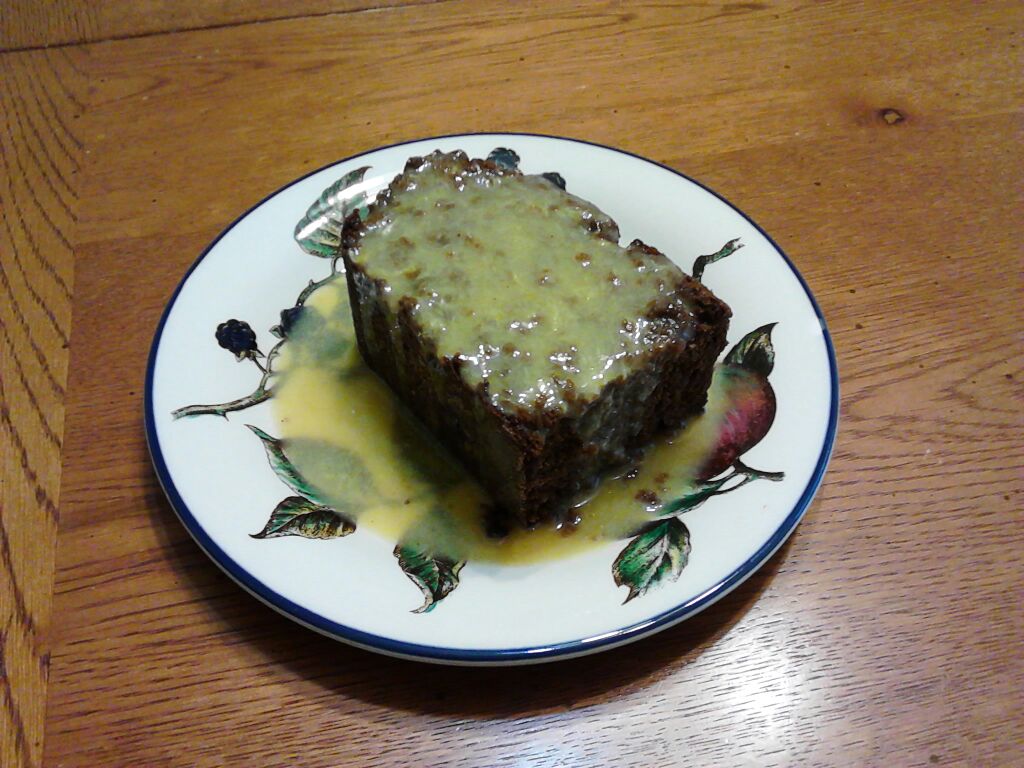
Gingerbread with Lemon SauceThe year is 1928. John Welles and his Aunt Prudence are having gingerbread with lemon sauce one evening when she brings up the very touchy subject of Miss Garland Griffin. Garland and John attend the University of Maryland. The two are in constant competition for the top spot in the grade standings. Their rivalry takes on a sharp edge.

Prudence presses John into admitting he has a more personal interest in the young woman by reminding him of comments he’s made regarding Garland’s beauty. Her attempts to draw him out only serve to frustrate him until the two are snapping at each other.

All is not lost despite Prudence’s often bungled attempts at parenting. She and John are close enough that they manage to work through their spats even if he’s the one who has to act more like the adult. John loves his sulky aunt, and in the end, he turns to her for advice.

The following recipe is the one I had in mind when I wrote the scene above. Prudence and John don’t always see eye to eye, but like sweet gingerbread and tangy lemon sauce, their personalities complement each other.

Gingerbread

½ c sugar

½ c butter

1 egg

1 c molasses

2 ½ cups all-purpose flour

1 ½ t baking soda

1 t ground cinnamon

1 t ground ginger

½ t ground cloves

½ t salt

1 c hot water

Preheat oven to 350 degrees F (175 degrees C). Grease and flour a 9-inch square pan. In a large bowl, cream together the sugar and butter. Beat in the egg, and mix in the molasses. In a bowl, sift together the flour, baking soda, salt, cinnamon, ginger, and cloves. Blend into the creamed mixture. Stir in the hot water. Pour into the prepared pan. Bake 1 hour in the preheated oven, until a knife inserted in the center comes out clean. Allow to cool in pan before serving.

Lemon Sauce

½ c sugar

2 t cornstarch

Dash of salt

Dash of nutmeg

1 c water

2 egg yolks, beaten

2 T butter

2 T lemon juice

½ t grated lemon peel

1 t lemon extract

Combine sugar, cornstarch, salt, nutmeg, and water in a saucepan, stir until smooth. Cook and stir over medium-high heat until thickened and bubbly. Reduce heat, cook and stir 2 minutes longer. Remove from heat.

Stir a small amount of hot filling into egg yolks, return all to pan, stirring constantly. Bring to a gentle boil. Cook and stir 2 minutes longer. Remove from heat. Gently stir in butter, lemon juice, lemon peel, and lemon extract. Serve warm with gingerbread. Refrigerate leftover sauce.