Celebration at Realm Cental

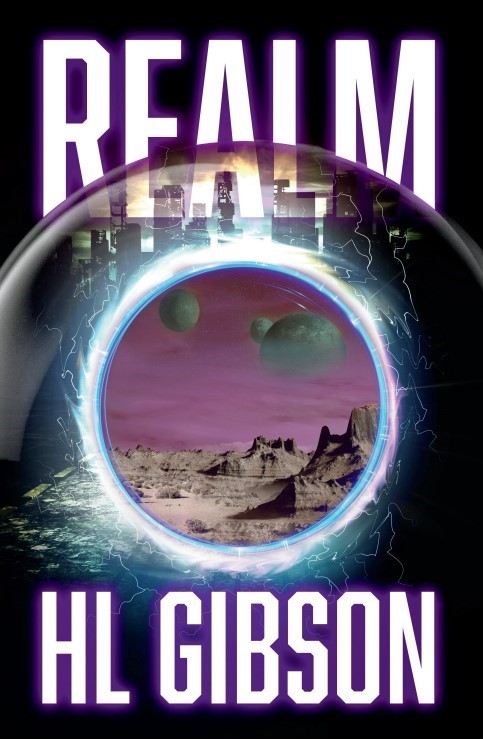
Exactly one year ago today, I gathered with family and friends to celebrate the launch of my first novel, Realm.

When the idea for Realm first came to me, I held the concept loosely because it had a sci-fi element, and I didn’t write sci-fi. But I mentioned the story to my mother and expounded on some plots points and character construction that I thought would make the tale interesting, and she was hooked. She encouraged me to begin writing, at least to see where it would take me.

And, since I didn’t have another story swirling around my brain, demanding to be brought to life, I set to work. I’ve mentioned before that I’m a plotting-panster, so without an outline, I pounded away at the laptop, and Realm began to take shape.

I credit everything that Realm is to Adonai alone because, as I said, I didn’t know what the story was going to be until I typed it. Even though I had a few plot points and characters, Realm literally unfolded every time I sat down to work on it.

The story was going well until I reached a point where I had to decide what kind of story, exactly, Realm was going to be. There were elements of science, but as my brilliant beta reader soon discovered, it wasn’t about the science. I wasn’t interested in creating an alien aspect for my novel even though it was set far in the future. Clearly, Realm isn’t true sci-fi or science fantasy.

There are some people my protagonist meets who aren’t humans, and he meets them when he’s not on Earth. Still, those points weren’t the crux of my story. So, what kind of book is Realm? Into which genre should it be placed?

The deciding factor for Realm happened when I needed to build a world for these special people. However, more than their world or their physical appearance, I realized it was extremely important to define the way these off-worlders led their lives. And that’s when it hit me.

Why shouldn’t the Realmers believe in the one and only living God?

I’ve read a couple books that attempted to create a new belief system or borrow tenets of true faith and blend it with their own creations, and in both cases, it was done quite poorly and to the point of distraction. I didn’t want that for Realm.

So, I set about forging a relationship between the Realmers and the One who, in their language, they call the Liabish Tag, or Infinite One. And that’s when the writing really began to flow!

I always wanted Realm to glorify HaShem alone. That was my goal for publishing, and that is why Realm is the success it is even though its genre isn’t one hundred percent accurately depicted by the labels I was required to attach to it for the sake of marketing. Realm is the type of book that must be experienced, and then I leave it up to the individual to decide what genre they read.

It may seem strange to some people to use fiction as a mode of conveyance for El Elyon’s truths, but words have long been a favorite medium of El Shaddai, and I’m humbled and honored that He bestowed upon me the ability to imitate Him in my creative endeavors by also using words. Think parables, if you’re still not convinced.

Last year, I chose to launch Realm after Pesach because I didn’t want anything to distract my loved ones from keeping one of Adonai’s most holy moedim, i.e., appointed times. This year, I’m privileged to be celebrating the one-year anniversary of Realm in the week leading up to Passover. Baruch HaShem for His perfect timing yet again.

This past year, I’ve enjoyed the book signings I was blessed to attend, but even more, the friendships that were established because I stepped out in faith, turned everything over to God, and wrote a book that glorified my Savior.

Haven’t traveled through the Realm yet? Fear not, dear readers. It’s never too late to become a Realmer. Come join us! We’re a good bunch of people all on the same journey toward a glorious conclusion.

Baruch haba b’Shem Adonai!

With much love,

HL Gibson

And I Shine for You

As I prayed the Psalms today, I also read my notes from past years of study. The timelessness of Torah and its applicability in every generation has long fascinated me, so I wasn’t surprised that Psalm 33 is still relevant to the situation going on in the world today.

My translation of verse one starts “Rejoice in ADONAI . . .” but a slightly better translation would be “Shout for joy . . .” because the Hebrew behind the English expresses a sense of awe and crying out. Strangely, the same Hebrew word can be used to convey grief and to shine, as in stars, a lamp, or Lucifer. So, the verse begs the question: for whom are you shining?

Side Note: Hebrew is an amazing, multi-layered language that speaks Adonai’s truth from the very letters that comprise the words, so if you haven’t already learned Hebrew, do yourself the favor and start now.

Verse two begins with “Praise . . .” and most people understand that concept to some degree. The mistake that is often made is believing that we are conducting praise by simply saying, “Praise the Lord.” But that is only the command, not the action.

Praise comes from the Hebrew halal, to reflect, thus when we praise God, we reflect back to Him all that he has given us, and we rehearse His attributes while expressing gratitude.

In verse three, we read the first use of the word song, shir in Hebrew, in the body of a Psalm. The word also means poem, which doesn’t surprise me because the rhythm of a poem lends to its musicality and is similar to how song lyrics are constructed. Try singing the Psalms and reading song lyrics. The exercise is quite satisfying and lends new insights to both.

At the end of verse three, “shouts of joy” are mentioned, and the Hebrew word teruah, loud shouts, is employed. This pointed me directly to Yom Teruah, but that’s subject matter for another post. Feel free to investigate!

Verse four answers the question of why a believer sings. I’m going to present a better translation of the verse than what I have. “For the word of ADONAI is upright/straight, and all His works are faithfulness.” I know the last word doesn’t read very smoothly, but it will help make my point.

Torah, i.e., the “word of ADONAI” is the straightest path you will ever walk in your life. That is a fact, and it will never change. The beauty of verse four is the Hebrew word emunah, often translated as faith, but a better translation would be faithfulness. Faith is an intellectual exercise, but it needs to get out of our head and become something we do. Faithfulness is the structuring of our lives in such a way that what we do reflects what we believe. My point is that HaShem’s works are how He structured everything for us via His word, i.e., Torah. He did it for us, He is doing it for us, and He will do it for us.

In verse five, we read a stunning example of the balance God presents to us. “He loves righteousness and justice . . .” The Hebrew, tzedakah, is what is translated as righteousness, knowing right principles. Mishpat, the Hebrew behind justice, speaks to the application. Again, we see a dual process that requires thought and action, and that requires balance, which is foundational to our lives.

The end of verse five mentions how the earth is full of Adonai’s grace. You may safely read that as “and always has been.” Grace did not begin with HaMashiach’s appearance. HaShem’s grace is all over the Tanakh.

Verses six and seven are beautiful words of praise to God, but a breakdown of seven reveals another incredible example of the balance Adonai wants for humanity. We read imagery of HaShem collecting “the sea waters together in a heap,” which is a reference to oceans and lakes. That’s a very physical image.

But then we read “He puts the deeps in storehouses.” That would be clouds, which are a picture of the spiritual. Think about clouds: they’re beyond our reach unless we make considerable effort. In other words, you don’t walk outside, jump up, and touch clouds. You can, however, fly through them, and sometimes, they come down to us as fog and mist.

The point that’s being made by the picture is one of ebb and flow. Oceans and lakes evaporate and go up into the clouds. Clouds store the water until it returns to earth as rain, snow, etc. It’s cyclical, balanced, and exactly how we should be in relation to Adonai.

The words of verse eight, “Let all the earth fear ADONAI!” will trip up many people. It’s not fear in the same sense of being afraid of physical harm or frightened by something scary. Rather, it’s a respectful awe that should affect our behavior because we don’t want to disappoint God, the ultimate example of a great parent.

ADONAI brings to nothing the counsel/plans of the nations, He foils the plans/thoughts of the peoples.” So reads verse ten, and from this I take great comfort that Israel will never be moved by all the wicked schemes of those who brazenly reached out their hands to touch the throne of Adonai. To have the audacity to poke their finger in the pupil of His eye.

Verse eleven reminds us again that ADONAI is eternal, beyond space and time. Verse twelve reassures us that Israel is secure. Thirteen through fifteen remind us that, like a good parent, Hashem always has His eyes on us. Disregard that truth at your own peril.

There are subtle questions in verses sixteen and seventeen. In whom or what do you place your faith? Whether or not you know it and accept it, you are a warrior. How are you conducting battle every moment of your life? What is the source of your strength? How do you process the victories and defeats? The questions are for Israel and for every individual across the world.

In verse eighteen, we are gently directed back to verse eight as a reminder. “ADONAI’S eyes watch over those who fear Him . . .” means that He will provide us with guidance because we’re waiting for His grace. (There’s that word again! I cannot stress enough that grace is not a new concept.)

Within verse nineteen is the promise of deliverance for our souls from death. Some translations render that as “rescue them from death,” but that leads many to believe they’ll never suffer anything that leads to death thus making them actually fear death when trials and tribulations come. Read this verse through the lens of salvation for your soul because—NEWS FLASH—everyone dies.

Everyone up to this point, including believers, has died. It is forbidden to fear death (or anything), and we’re told as much when Scripture repeatedly tells us to “fear not” and fear only Adonai. It’s a difficult concept to embrace, but it is extremely liberating when you finally do. In fact, you’ll enjoy life to its fullest once you wrap your brain around this truth.

The last line about famine intrigues me considering the first part of the verse, which speaks about death. Literally, physically, famine can lead to death. Read the verse with spiritual food in mind, and although our bodies may perish, our souls will forever be fed if we know where to go to receive the food and actually do so! In that way, famine will never touch you.

The most beautiful conclusion, and yet not an ending but rather a jumping off point, is written in verses twenty through twenty-two. Actively waiting for ADONAI should be the exercise of all Israel. God knows Israel needs Him right now more than ever. My prayer is that all Israel will come to know this. I pray all humanity will as well.

True joy, and true shalom as well, resides in our hearts “because we trust in His holy name.” Again, that’s not just head-faith and/or believing that God exists. In the Hebrew mindset, a person’s name is his character, and the same is true of Adonai. It means we’re to believe in who He is based on what He does. The being and doing are the same and in perfect balance. ADONAI is His name/character, not just what He’s called.

To experience His mercy, put your hope in Him and Him alone. Look to the last three verses of Psalm 33 if you need help answering the questions in verses sixteen and seventeen.

Shalom aleichem!

PS – ADONAI in this essay represents God’s ineffable name, the Yod-the Hey-the Vav-the Hey.

Quotation Station

Shabbat Shalom to all those who have labored to enter His rest!

“Work is a blessing. God has so arranged the world that work is necessary. It is the joy of work well done that enables us to enjoy rest.” ~Elisabeth Elliot

Quotation Station

Shabbat Shalom to all those fighting to secure the peace of Jerusalem!

I am the Lord your God; follow my decrees and be careful to keep my laws. Keep my Shabbats holy, that they may be a sign between us. Then you will know that I am the Lord your God.

~Ezekiel 20:19 – 20

Quotation Station

Shabbat Shalom to all those

praying for peace!

May He who blessed our fathers, Avraham, Yitzchak, and Yaakov bless the soldiers of the Israel Defense Forces, in their standing guard upon our land and the cities of our God on land, in the air, and in the sea.

May the Lord give our enemies that rise against us plagues in front of them.

May the Holy One, blessed be He, guard and rescue our soldiers from all trouble and distress and from all affliction and illness; and send blessing and success in all the work of their hands.

May He crush those that hate us below them and crown them with the crown of salvation and with the wreath of victory.

And through them let the verse be fulfilled (Deuteronomy 20:4),

“For it is the Lord, your God, that walks with you to fight for you against your enemies to save you.”

And let us say, Amen.

The Thing About Candles

How do you make a candle last forever?

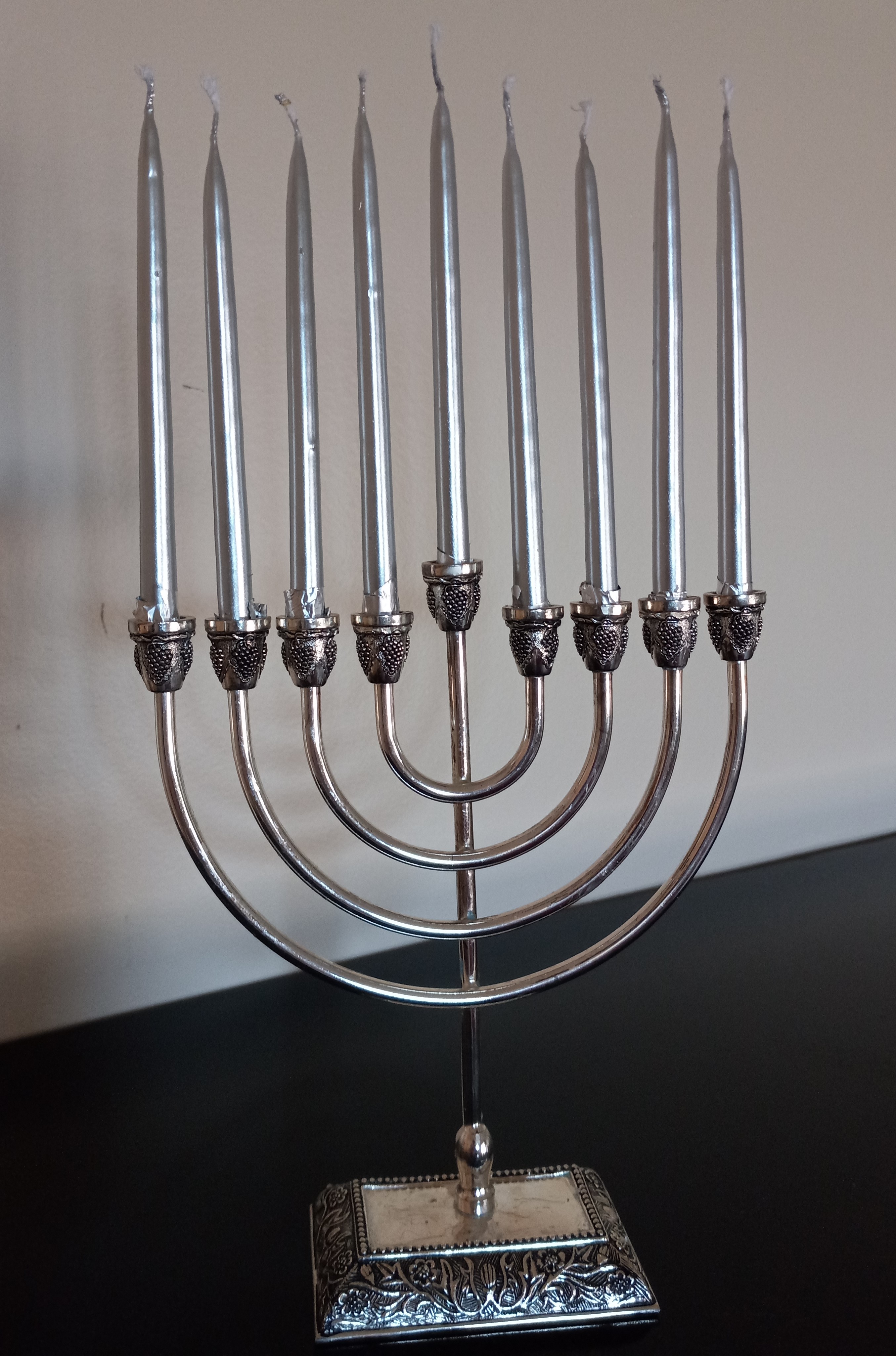
As I reflect on the past nights of Hanukkah, the first thing that comes to mind is the light. We start by lighting the shamash (servant) candle that is placed in the middle of the hanukkiah, and then we use the shamash to light the other candles. The first night, it’s just one candle and the shamash, but each night another candle is added until they total eight. What starts small grows into beauty and brilliance.

I know many menorahs and hanukkiahs are fashioned with the shamash at one end, but there’s a reason why it belongs in the middle. At most, maybe slightly raised or set in front of the other branches.

It’s all about balance.

Read Torah to see that Adonai Himself designed the menorah, and because He did, the menorah is perfect. Hanukkiahs, created with two extra branches because of the eight-night miracle of oil, followed suit.

Yes, the menorah and hanukkiah reflect light, which is a picture of HaShem, but they also represent balance, which is an equally important picture of the one and only living God. If branches on either side were lost or broken off, the menorah/hanukkiah could not stand in balance. The same is true of us, who are also pictured by the menorah/hanukkiah. If we go too far to the left (a picture of the physical) or the right (a picture of the spiritual) we will be out of balance, and everything we do diverts from Adonai’s perfect path.

That’s not to say that one side is more important than the other. However, don’t be so physically/worldly minded that you become an animal, but by the same token, don’t become so spiritually minded that you’re of no earthly good. Maintain balance.

Remember Who gave you your light!

The shamash, or servant, candle represents HaMashiach, who belongs in the center of our life so we can maintain balance. The beautiful thing about Yeshua is that His light never diminishes within us as long as we keep Adonai’s commands.

Again, in HaShem’s perfect, infallible Word, we see the Light that has been there all along, waiting for us to discover Him in this dark world. King David said as much in his Psalms, and he understood that Torah is the lamp, the Word is the Light. His direct descendant, King Yeshua, confirmed the declaration, and it is recorded by His disciple, John.

Everyday miracles.

The story of the Maccabees happened to Israel, but there are many reasons why everyone would benefit from keeping Hanukkah.

First, it is a time to rededicate yourself to Adonai. Repentance is so important to Our Father, Our King. His grace is all over Torah, and one doesn’t have to dig very hard to find it or see that He didn’t quickly invent grace for HaMashiach’s arrival. It’s been there all along.

Second, consider the miracle performed by HaShem on behalf of Israel. The simple commodity of oil was required to keep the command to light the menorah. But the oil had to be pure. We, too, in order to reflect Adonai’s Light, need to be pure. And just like the miracle of the oil, when we conduct ourselves purely, the simple things in our life extend until we realize they are blessings.

Third, Adonai’s truths are all over the story of the Maccabees and Hanukkah! I believe my favorite has always been the tremendous victory by HaShem as He used a small contingent to do so. Our Creator always works with tiny percentages and remnants from which and with whom He does amazing things.

Better than physical light.

So how does one make a candle last forever? By lighting it.

I’ve studied physical light in school, and although I’ve forgotten much about wavelengths, photons, particles required for light to travel, etc., etc., what I remember the most is that light goes on forever. What I’ve learned by studying Torah is that spiritual light possesses many of the same qualities but in a better way.

We are the candles through which HaShem’s Light shines brightly, and even one of us can scatter the darkness. But we must remain lit from within by the Servant Candle. This is accomplished by returning to the source of all Light, i.e., Torah. Get your recharge daily.

We should stand tall, shoulder to shoulder, with the other lights on Adonai’s menorah all year long. By doing so, the Light in us will attract other people to our Light. Equally important is how we may need to shine more brightly when a loved one’s flame seems to flicker or go dim. Don’t forget the necessity of shining Light to other candles.

Like a physical candle, you may have times when you feel absolutely spent. Like spiritual light, when you know where to find the fire to relight yourself, you will shine more brightly once again. That is the type of Light that continues forever.

Great things are coming.

In the past, I’ve experienced post-Hanukkah melancholy because once the eight nights were completed, I quickly found myself between the millstones of the daily grind. This year, I’m going to work harder on me to ensure that my Light stays lit.

Yes, things look hopeless in the world right now. I see the nations coming against Adonai’s people. I heard, dare I say it, that people are calling current events World War III. I’m not fazed by any of this because appearances are deceiving, people love to label everything, and Adonai is still on the throne.

The eighth night of Hanukkah begins at sundown tonight. Eight represents new life. Will you begin your life anew with us?

See you at sundown.

~The Gibsons

Not Alone in the Realm

Writing often seems like a lonely endeavor. I’ve spent a lot of time tapping away at the laptop or scribbling in a notebook. I’ve stared out the window visualizing a scene, softly speaking it aloud to hear how it sounds. I’ve walked the valley of burnout and scaled the mountain of inspiration. The writing comes fast and furiously, or the writing doesn’t come at all.

I presented myself faithfully to my writing (almost every day) even as I wanted to join friends and family in other activities. I declined invitations and didn’t issue any of my own.

I’ve been in the house alone (except for five demanding cats), but if anyone was present, I politely requested quiet, which meant I was alone in my thoughts and in the world I was creating.

As I reflect, though, I have come to realize that I was never alone at all.

There was much about writing/the writing process with which I struggled. I’m not going to detail everything here because it’s deeply personal, but the short version is that I turned everything about writing over to God. I made it my goal that all my writing and my talents would glorify God, and when I did, that’s when I understood that all the guidance I’d been praying for had occurred as I’d hoped, just not in the ways I expected. I wasn’t alone.

Then, a savvy friend, who pointed out that better critiques could be given if the beta reader was familiar with the entire work, committed to being part of my project. We traded novels from beginning to end, and what we came away with was better writing. I was not alone.

Factor in four additional beta readers, all reading the entire manuscript and all providing a different perspective. What each found polished Realm even more. Again, not alone.

Then there was my editor, whose enthusiasm for my project and sharp eye for detail, put the final polish on my novel. We met several times, e-mailed, and texted throughout the process. Amazing critiques and suggestions were offered and applied, we worked through some points to clarify what I wanted to say, and I even got to keep some things I liked without changing them. A working relationship was born, but the friendship that came from it trumped everything. Still, not alone.

Writers’ groups, friends, family, and the occasional stranger all offered encouragement and advice in person and on social media. Slowly but surely, the perceived vacuum of the writing life transformed into a community of support. And this support only intensified once Realm was published. Absolutely not alone.

And then there was everyone at BookBaby from the publishing specialist to the design team to the support staff who walked this first-time author through the process and calmed all her worries, concerns, and not a few fears. So totally not alone.

I mention all of this because if you’re considering taking the first step toward writing, please know that writing is hard. The writing life is full of highs and lows, but one thing it never need be is lonely. If you’re doing it right, you’ll be surrounded by people even when it’s just you tapping away at the laptop or scribbling in a notebook.

Tamar & Cancel Culture

I apologize for the late delivery of this blog post. Monday is usually the day I publish new material, but a nasty cold took me down earlier this week. Now I’m wondering if it wasn’t for the sake of what I discovered.

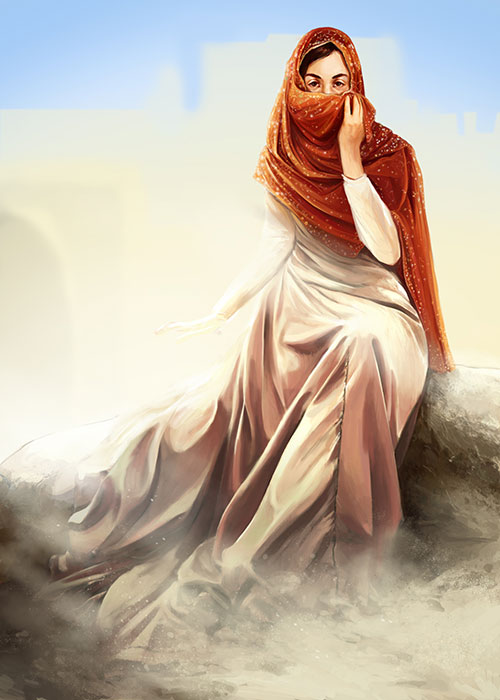
I’m studying Tamar’s story, and I’m seeing how an overwhelming lack of understanding of her tale is playing out across our world right now. You’ll want to pause and read Genesis/B’reisheet 38 if you’re not already familiar with Tamar. The short chapter is an amazing digression in a larger narrative, but it is one that must not be missed.

I would also urge you to reject the usual feminist perspective of scripture as patriarchal and misogynistic. Tamar’s story is so much more than that, and to stop here in your thinking is to do her a great injustice and miss the fact that her actions provided the opportunity for revelation, healing, and repentance.

I admit that I never truly understood Judah’s statement “She is more righteous than I” until I came across sources that delved more deeply into the text, the history, and the culture. Understanding all three is crucial to learning the lesson at hand.

One must accept that children were highly prized at the time in which Tamar’s story was written. Children were understood to be life and wealth, not burdens and inconveniences. And when I say wealth, I don’t mean that they were treated as mere property. Children were considered one of the ultimate blessings not just for the woman but for the family as a whole. This truth must be accepted, or the rest of the story breaks down.

And perhaps that’s why we are where we are today.

When a woman was denied the right and privilege to bear children, she was denied an honor to the degree of severe social shame. Yet in Tamar’s case, her shame wasn’t because she was unable to bear her own children. Something, or someone, stood in her way.

A close reading of the text reveals that Judah had no intention of giving Tamar to his youngest son for the purpose of raising up offspring for his brother, which was something that Tamar wanted for herself and her dead husband. She was trapped between Judah’s fears of losing another son and her inability to marry anyone else because she was legally bound to her brother-in-law. In her desperation, Tamar took drastic action to ensure that her husband’s name would not be lost among his brethren and that she would become a mother.

At this point, one might believe that Tamar’s efforts to gain children were what made her more righteous than Judah. She took a great risk to achieve what should have rightfully been hers. While her methods were more in keeping with her Canaanite heritage, her desire to be part of Judah’s family—a family striving to adhere to the instruction of the one and only living God—must not be casually discarded.

Both Judah and Tamar conducted themselves inappropriately. Two wrongs never make a right, and neither person in this story was perfect. But here’s where Tamar prevailed: Judah, believing his daughter-in-law was guilty of adultery, wanted her to be dealt with publicly, whereas Tamar, knowing Judah to be the one by whom she was pregnant, sent him a coded message that only he would understand, thus revealing the truth. Tamar fulfilled her duty to her dead husband, but more significantly, she spared Judah public shame.

Allow me to repeat that: Tamar spared Judah public shame.

What she did was huge, and the moral implications have reverberated throughout history for those willing to learn the lesson.

Through her understanding of shame and humiliation, Tamar had become sensitized to what Judah was about to experience if she allowed it. Again, Tamar was holding all the cards, yet she chose to act in righteousness by sparing Judah’s dignity when she withheld her words. What Tamar knew—that for which she was willing to put her life on the line—was that psychological damage can harm far worse than physical damage.

Words hurt, and once spoken, they can never be taken back.

Fast forward to today when exposing someone’s shame is considered not simply justice but righteous justice. People are applauded for conducting smear campaigns to the point of canceling another person in the eyes of a fickle society. The fact that this goes on in politics is no big surprise, although it is still unacceptable, but at the familial level, it’s nothing short of reprehensible.

Imagine airing your dirty laundry to the degree that you make millions of dollars and produce a documentary. Surely, the hurt you’ve experienced justifies you doing so, right? No, not according to God’s word. Not even if you attach the latest trending social label to it.

Tamar was on the fringe of society as a two-time childless widow, unable to remarry a man of her choice, and a foreigner. Yet instead of cashing in on her low status for the sake of gaining sympathy, she considered the other person and spared him the loss of dignity that would equate to a loss of life.

For her selfless actions, great integrity was attributed to Tamar, the outsider. She wrote herself into the most important royal lineage known to man, that of King David and ultimately, King Yeshua. She was and always will be a role model for how to conduct ourselves when someone else’s dignity is on the line.

The Artist’s Corner – Visionary Editor, Kori Frazier Morgan

Prior to meeting Kori Frazier Morgan, I heard her name mentioned several times by fellow writer, Don Ake. Then I had the pleasure of hearing her speak at the writing group Don facilitates, The Write Stuff. She was quite professional and pleasant. I, however, wasn’t in the right place to receive what she talked about. Finally, at the annual Christmas party hosted by The Write Stuff, Don insisted that I sit down next to Kori and talk with her. He even cleared a chair beside her so we could speak uninterrupted face to face. Well, all I know is that I can only avoid so many divine appointments before the lightning bolt successfully strikes through my thick skull. Kori was exactly what my novel needed, and I am so thankful to God for her. She’s also what I needed, and she came along at just the right time. Take a moment to meet this marvelous woman through her interview.

Welcome to the Artist’s Corner. Tell me a little bit about yourself.

I’m Kori Frazier Morgan. I grew up in Kent, Ohio and now live in rural northeast Ohio with my husband, Curtis, who is a machinist and craftsman. We have three pets—two cats, Anastasia and Moe, and Gus, a basset/beagle mix. I hold a B.A. in creative writing and professional writing from Ohio Northern University and a Master of Fine Arts in fiction writing from West Virginia University. Aside from reading and writing, I enjoy long-distance cycling, watching movies, seeing live theatre, and listening to vinyl.

How did your work experience contribute to your desire to write?

I have been blessed to pretty much work in some area of the writing field since graduating from college in 2007. I have created educational content, taught writing classes, and worked as a copywriter and content developer. Even when I worked in retail, it was at a bookstore, so I was still operating within the writing world. All my jobs have helped me get better at writing and learn new things.

Have you always wanted to be a writer? When did you develop your love of writing?

I have enjoyed making up stories and writing them down since I was a kid, but I didn’t start to really think seriously about writing as a career until eighth grade, when I found out that creative writing was something you could study in college. Up until then, I just thought it was a cool hobby. I was blessed to have some wonderful teachers in middle school and high school who helped me develop my talents. I worked on the newspaper staff, took acting and communications classes, and loved being in AP English and history courses, where writing essays was a big part of the class.

Have you ever worked as a freelance writer?

All the time. Every day. In 2012, I left academia to pursue freelance writing full time. I returned to the classroom for a few years to teach at a career college and later worked in marketing, but I can’t say I’ve ever totally left the freelance world. Now I run a small business (more on that later) and freelancing is a big part of my life.

What genre do you write?

I have primarily written fiction in the past, but I am now working on a collection of flash nonfiction essays. I also run a weekly blog, Creativity Matters, as part of my business, Inkling Creative Strategies.

To which writing communities do you belong?

I am a member of The Habit, a worldwide community of Christian writers. We work together to study writing, encourage each other, and help each other to become proficient in our craft. The fellowship at The Habit is extraordinary. People care not just about helping you write excellent work, but about you as an individual. We take writing classes, share our writing on a forum, and have virtual writing time on Zoom, where we hang out and work on our projects.

More in our immediate area, I’m part of A Writer’s Life NEO and The Write Stuff, groups based in the Akron/Canton area that meet monthly to critique members’ work. You can either bring something to share or just read and comment. It’s a very low-key, informal way to get some feedback on your writing and The Write Stuff goes out to eat afterward.

Who or what influences your writing?

I am a big fan of music and film. I listen to music while I write and try to put together playlists that help shape what I’m working on. My novel-in-stories, The Goodbye-Love Generation, is heavily based on my dad’s experiences as a member of the Northeast Ohio music scene around the time of the Kent State shootings in 1970, and I have a whole Spotify playlist devoted to the songs that are in the background of the story. When I’m not writing, I enjoy listening to everything from classical to classic country to hymns to Metallica.

My favorite movie is The Shawshank Redemption, which I’ve seen an obscene number of times. I think it is the perfect film for writers to study to learn about narration, character development, foreshadowing, and just how to deliver a satisfying story in general.

How have your favorite authors and/or books shaped your writing?

My favorite author is Flannery O’Connor, and my favorite book is her novel, Wise Blood. I love that she is a Christian author who is not afraid to look at the darkness of the human heart. All of her characters have to face the question of what we are to do with Jesus Christ and His death and resurrection on our behalf, but she does so in a way that resists sentimentality. Many of the stories conclude in a way that is open-ended, leaving room to speculate about what their answer might be. I’m not sure exactly how her work has directly impacted my writing. I just know it has.

What’s your dream goal as a writer?

I want my books to get to as many people as possible whose lives will be impacted by them.

Which authors/genres do you enjoy reading?

I like literary fiction, memoir, and books about theology and spirituality that will help me grow in my faith. I also love studying the Bible. It is God’s inspired Word and contains everything I need to learn more about Him and receive His direction for my life.

What are you reading right now?

I am reading The Door on Half-Bald Hill, a novel by Helena Sorensen. Helena is a member of The Rabbit Room, an organization I support that provides encouragement and edification for Christian artists of all kinds.

What have you published and where?

I have published two books: Bone China Girls, a poetry chapbook, and The Goodbye-Love Generation, both through my independent imprint, Bezalel Media. Numerous individual pieces have also appeared in literary journals such as Shenandoah, SN Review, Switchback, Rubbertop Review, Blanket Sea, Up the Staircase Quarterly, and more.

Describe your journey to publication.

I have been writing professionally for more than 15 years, and the landscape of publishing has changed tremendously in that time. I am an independent author and do the majority of the work to publish and promote my work. During my MFA program in the late ‘00s, we were told that self-publishing was not a legitimate way to publishing a book and that going that route would destroy your credibility. As a result, even as time passed and it became more accepted and prevalent, I was reluctant to pursue publishing my own work.

Things changed after my chapbook, Bone China Girls, was still being rejected after five years. The book recounts the true story of the tragic death of a sixteen-year-old girl in the mid-’60s at the hands of teens and children in her neighborhood, and I felt that it commented on issues such as sexual abuse, bullying, and violence against women that were widely discussed and that I could provide insight into. I decided to publish the chapbook myself because I saw it as an urgent matter. The book’s message was important, and I simply couldn’t wait around for the gatekeepers to tell me I could share it.

I am an independent author and I enjoy publishing my own books. As a marketer and editor with a desktop publishing background, I have the majority of the skills necessary to do the work on my own. I would certainly not recommend this path to everyone—there are some truly hideous books out there that have resulted from authors taking on the responsibility when they are not equipped to handle being the entirety of their publication team. You have to be able to do it professionally in order to be taken seriously.

Have you faced any challenges with writing and/or publishing?

I have struggled with superimposing my own will on my work—trying to make my writing do something that, within the context of a particular project, it is simply not able to do. The Goodbye-Love Generation was like this. I had an agent turn it down when I was finishing grad school because it was a novel composed of short stories and not a traditional novel. As a result, I assumed there was something wrong with that format and spent ten years trying to make it work as a novel or abandoning it for periods of time because I was so frustrated.

Eventually, I realized that I had it right the first time. It was supposed to be a collection of interconnected stories. The fragmented nature of the story fits the characters’ own fragmented perception of the world and themselves. No other format would work to tell this story. Instead of just working with what I had, I let one person’s opinion dictate what I did with my book for ten years. You have to believe in your vision for your writing even if it isn’t what the powers that be seem to want.

Are there any comparative titles to your work(s)?

I am a big fan of two other authors who have written fiction about the Kent State tragedy. Sabrina Fedel has a book called Leaving Kent State that addresses the year leading up to the shootings from the perspective of a high school senior dealing with a friend who returns from Vietnam with PTSD and a debilitating injury. I was also thrilled to receive an endorsement for my book from the fabulous Rita Dragonette, whose novel The Fourteenth of September impacted my revisions. The book is about a college student in the ROTC nursing program who secretly becomes involved with an anti-war group on campus and is caught between her family’s traditional conservative values and her growing feelings that the Vietnam War is wrong.

Describe your research process.

I like to get immersed in places. When I was researching The Goodbye-Love Generation, I felt it was necessary to get the reader out of Kent for some of the stories and move away from the politically charged narrative of the shootings. I can’t remember exactly how it happened, but some thread or another of my Google searching led me to Chippewa Lake Park, a now-defunct amusement park that played an active role in giving local musicians exposure back in the ‘60s and ‘70s. It found its way into two stories in the book. That wasn’t something I planned on, but I think it brought an element of innocence to a story that is otherwise very violent and full of loss.

I also wrote some of the book at a cafe in downtown Kent across the street from the former site of J.B.’s, the bar where my fictional band, The Purple Orange, performs in the book. Downtown Kent is very different now than it was in the ‘70s but being able to imagine the characters there really informed how I described the setting.

Tell me about your newest business venture.

Inkling Creative Strategies is an author services company that offers editing, project development, consulting, typesetting and interior book design, mentorship, and more. My inspiration is the Inklings, the writing society that J.R.R. Tolkien, C.S. Lewis, and other writers at Oxford started to encourage each other in their work. My goal is to help writers reach their full creative potential so they can impact and inspire readers. We have been in operation for almost two years, and in that time, authors have released books, completed manuscripts, developed short stories, and started blogs. It’s been awesome to see how it’s developed!

Where can one find you on the Internet?

You can visit my website to learn more about Inkling Creative Strategies. On my website, I offer free writing tools, including workbooks and checklists, as well as the opportunity to schedule a free Zoom consultation.

For more information about my book, visit The Goodbye-Love Generation.

You can also find me on Instagram @inklingcreativestrategies.

What advice can you offer for someone seeking an editor?

I think an ideal editor balances being knowledgeable about the English language and creative writing with understanding the author’s vision. It isn’t about being correct all the time—it’s about collaborating with the writer to make their work exactly what they want it to be. Editing has to be an ego-free process, and you can’t be married to the rules. You need to show the author grace in terms of helping them execute their ideas. I would strongly advise writers to not take on an editor who is rigid and not willing to collaborate.

What’s your dream job as an editor?

I would love to see an author I work with just totally blow up with their work—get tons of readers and attention, and maybe even become a hit nationally. Not because Inkling might get some credit for that, or that even I would, but because I would have accomplished my mission of helping someone reach their full creative potential.

Where do you see yourself in the world of writing in ten years?

I would love to see Inkling grow enough that I can partner with other editors who share my vision. I also, of course, hope that I will continue to write and publish work that will make an impact on readers, whatever that looks like. I also fantasize about The Goodbye-Love Generation being made into an Amazon or Netflix limited series.

Those are great goals and dreams. Wishing you all the best in your pursuits!