The Thing About Candles

How do you make a candle last forever?

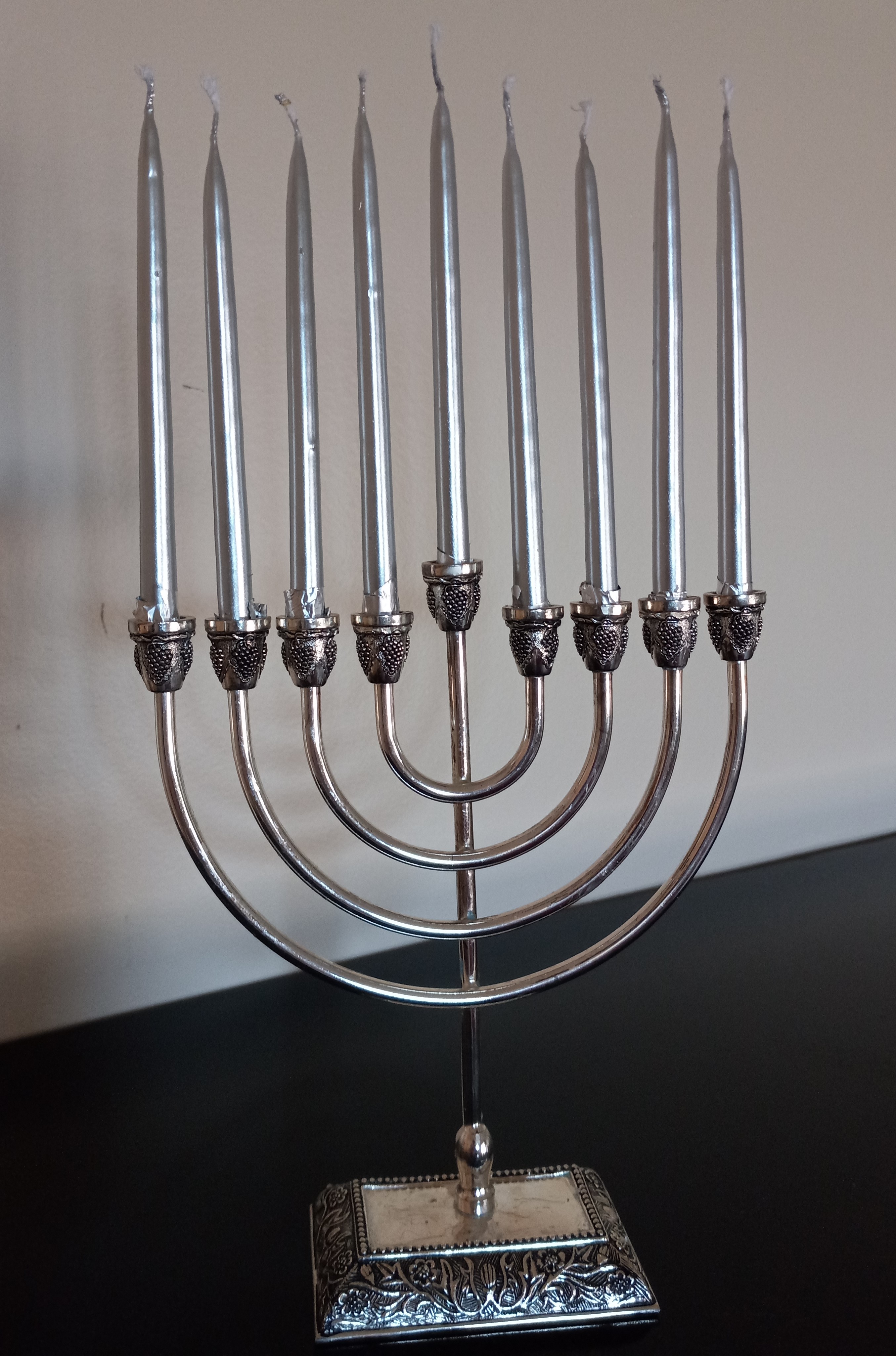
As I reflect on the past nights of Hanukkah, the first thing that comes to mind is the light. We start by lighting the shamash (servant) candle that is placed in the middle of the hanukkiah, and then we use the shamash to light the other candles. The first night, it’s just one candle and the shamash, but each night another candle is added until they total eight. What starts small grows into beauty and brilliance.

I know many menorahs and hanukkiahs are fashioned with the shamash at one end, but there’s a reason why it belongs in the middle. At most, maybe slightly raised or set in front of the other branches.

It’s all about balance.

Read Torah to see that Adonai Himself designed the menorah, and because He did, the menorah is perfect. Hanukkiahs, created with two extra branches because of the eight-night miracle of oil, followed suit.

Yes, the menorah and hanukkiah reflect light, which is a picture of HaShem, but they also represent balance, which is an equally important picture of the one and only living God. If branches on either side were lost or broken off, the menorah/hanukkiah could not stand in balance. The same is true of us, who are also pictured by the menorah/hanukkiah. If we go too far to the left (a picture of the physical) or the right (a picture of the spiritual) we will be out of balance, and everything we do diverts from Adonai’s perfect path.

That’s not to say that one side is more important than the other. However, don’t be so physically/worldly minded that you become an animal, but by the same token, don’t become so spiritually minded that you’re of no earthly good. Maintain balance.

Remember Who gave you your light!

The shamash, or servant, candle represents HaMashiach, who belongs in the center of our life so we can maintain balance. The beautiful thing about Yeshua is that His light never diminishes within us as long as we keep Adonai’s commands.

Again, in HaShem’s perfect, infallible Word, we see the Light that has been there all along, waiting for us to discover Him in this dark world. King David said as much in his Psalms, and he understood that Torah is the lamp, the Word is the Light. His direct descendant, King Yeshua, confirmed the declaration, and it is recorded by His disciple, John.

Everyday miracles.

The story of the Maccabees happened to Israel, but there are many reasons why everyone would benefit from keeping Hanukkah.

First, it is a time to rededicate yourself to Adonai. Repentance is so important to Our Father, Our King. His grace is all over Torah, and one doesn’t have to dig very hard to find it or see that He didn’t quickly invent grace for HaMashiach’s arrival. It’s been there all along.

Second, consider the miracle performed by HaShem on behalf of Israel. The simple commodity of oil was required to keep the command to light the menorah. But the oil had to be pure. We, too, in order to reflect Adonai’s Light, need to be pure. And just like the miracle of the oil, when we conduct ourselves purely, the simple things in our life extend until we realize they are blessings.

Third, Adonai’s truths are all over the story of the Maccabees and Hanukkah! I believe my favorite has always been the tremendous victory by HaShem as He used a small contingent to do so. Our Creator always works with tiny percentages and remnants from which and with whom He does amazing things.

Better than physical light.

So how does one make a candle last forever? By lighting it.

I’ve studied physical light in school, and although I’ve forgotten much about wavelengths, photons, particles required for light to travel, etc., etc., what I remember the most is that light goes on forever. What I’ve learned by studying Torah is that spiritual light possesses many of the same qualities but in a better way.

We are the candles through which HaShem’s Light shines brightly, and even one of us can scatter the darkness. But we must remain lit from within by the Servant Candle. This is accomplished by returning to the source of all Light, i.e., Torah. Get your recharge daily.

We should stand tall, shoulder to shoulder, with the other lights on Adonai’s menorah all year long. By doing so, the Light in us will attract other people to our Light. Equally important is how we may need to shine more brightly when a loved one’s flame seems to flicker or go dim. Don’t forget the necessity of shining Light to other candles.

Like a physical candle, you may have times when you feel absolutely spent. Like spiritual light, when you know where to find the fire to relight yourself, you will shine more brightly once again. That is the type of Light that continues forever.

Great things are coming.

In the past, I’ve experienced post-Hanukkah melancholy because once the eight nights were completed, I quickly found myself between the millstones of the daily grind. This year, I’m going to work harder on me to ensure that my Light stays lit.

Yes, things look hopeless in the world right now. I see the nations coming against Adonai’s people. I heard, dare I say it, that people are calling current events World War III. I’m not fazed by any of this because appearances are deceiving, people love to label everything, and Adonai is still on the throne.

The eighth night of Hanukkah begins at sundown tonight. Eight represents new life. Will you begin your life anew with us?

See you at sundown.

~The Gibsons

Holy Macaroni…and Cheese

I love the craziness that is planning for Hanukkah, especially the food.  Traditionally, fried foods are consumed as part of the commemoration of the Maccabees not having enough oil for the menorah which miraculously burned for eight nights despite the small quantity.  Why fried foods you ask?  Because it’s fried in oil.  Get the connection?

We’ve tried an all-fried or mostly fried menu in the past, and our stomachs lived to regret it.  There are, however, many delicious recipes one can make for Hanukkah that aren’t fried.  They also probably aren’t traditional, and may raise a few eyebrows, but good eating is part of what it’s all about for us, and Adonai has blessed us richly!

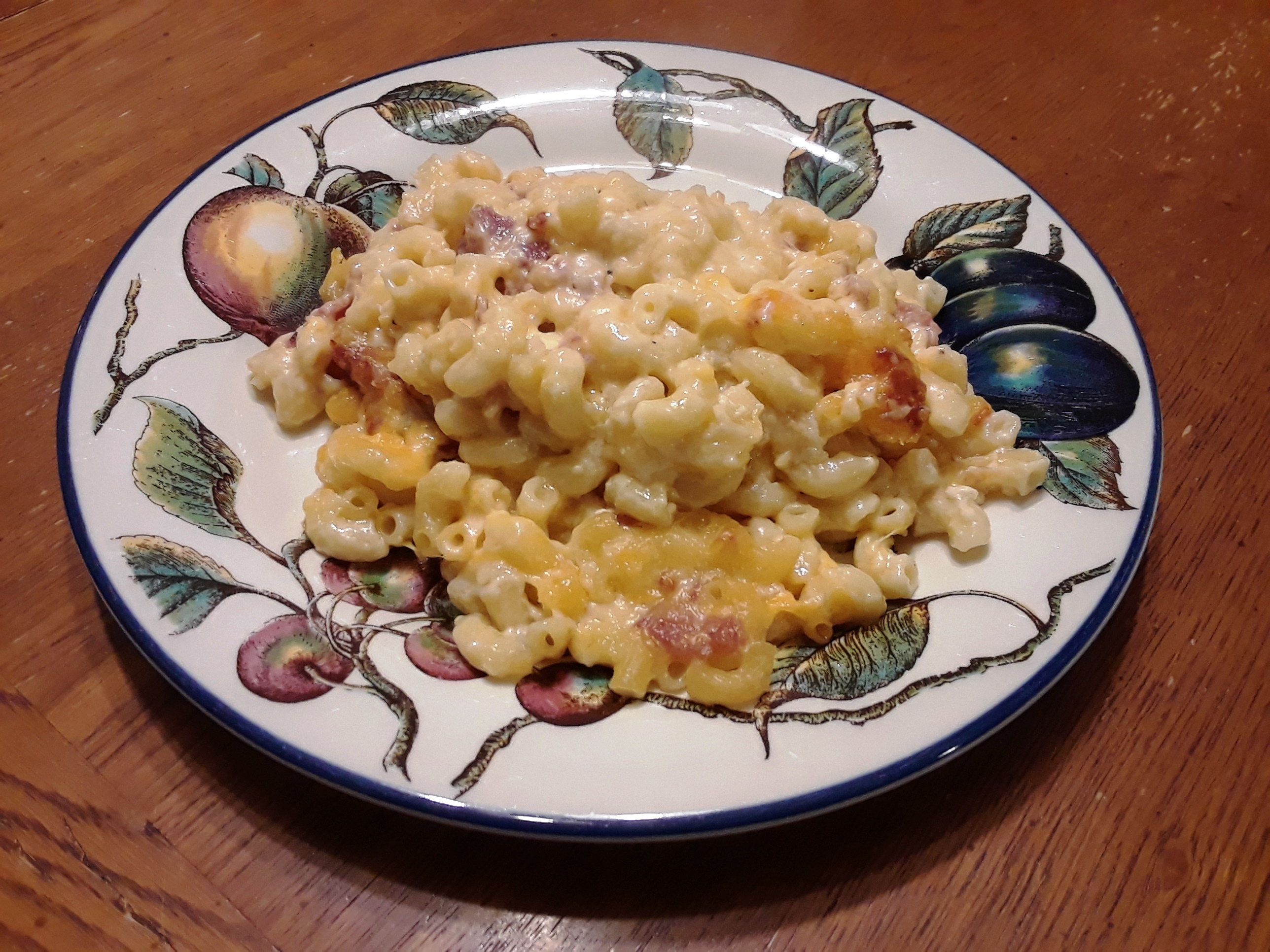
So don’t laugh when I tell you the Gibson household will be dining on my homemade macaroni and cheese for Hanukkah tonight.  It’s so rich and cheesy that it’s almost sinful.  Fear not, we pray over it before eating to counterbalance that last point.

HL’s Homemade Macaroni & Cheese

1 – 1 lb. box of elbow macaroni

½ c (1 stick) unsalted butter

½ c all-purpose flour

4 c whole milk

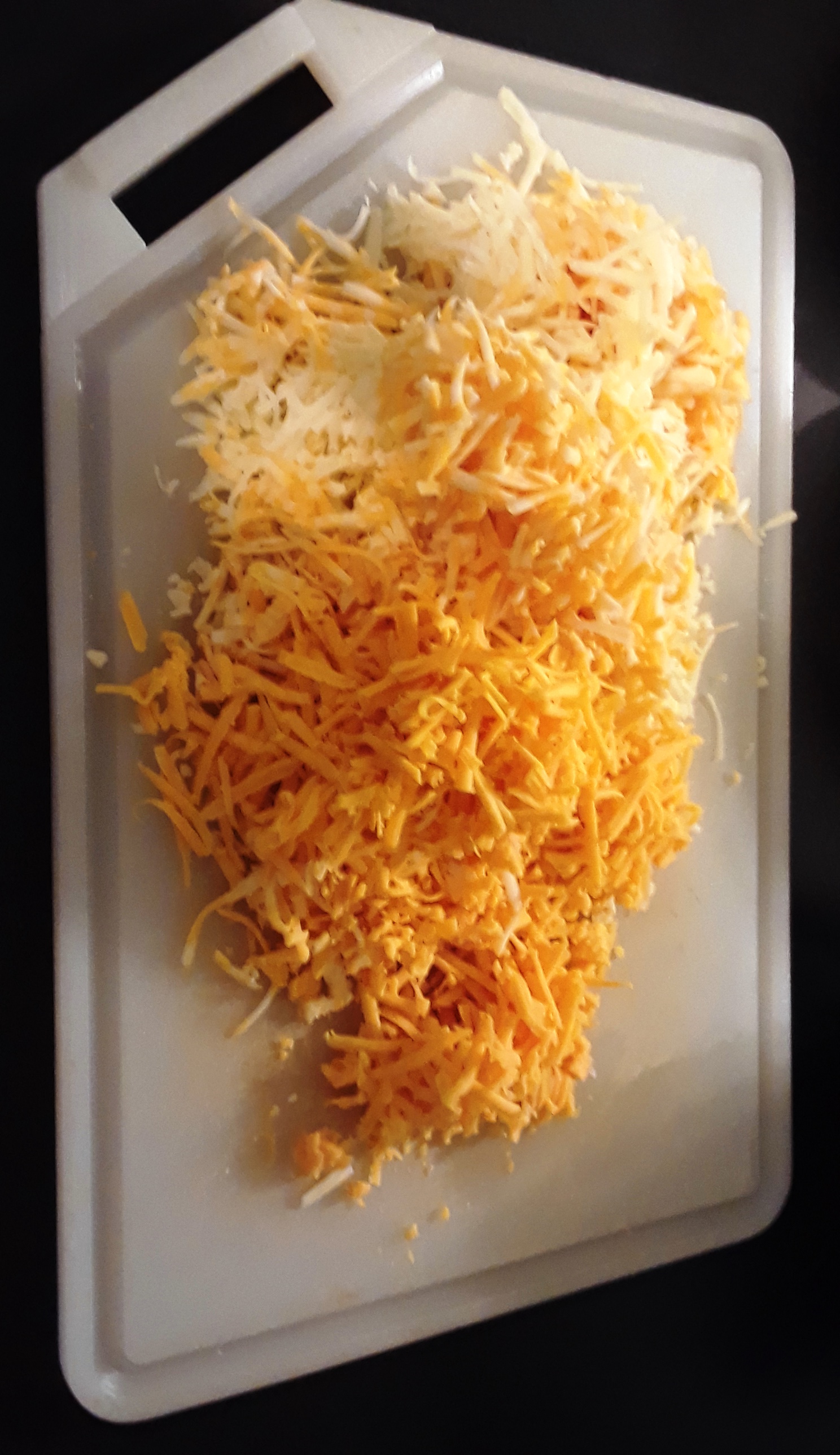
3 – 8 oz. blocks of cheese, shredded

Salt and pepper to taste

½ – 1 t dry mustard, optional

Side note:  I start with blocks of cheese over pre-shredded because it’s creamier.  The pre-shredded stuff always seems dry to me.  Also, I suspect the quantity isn’t exactly what the packaging says.  You’ll want at least six cups of cheese, however, I’ve found that a little more never hurts which is another reason I prefer blocks of cheese.

When choosing cheeses, I like to include at least one orange cheese to make it look like traditional, American mac-n-cheese.  However, an all-white version is just as tasty and visually pleasing.

Consider mild, sharp, or extra sharp orange cheddars, NY white cheddar, mozzarella, Gruyère, Swiss, Monterrey Jack, Colby-Jack, Longhorn, etc.  I know some of these are considered to be the same, but I’ve found subtle taste differences that make choosing half the fun.

Recipe:

Preheat your oven to 400°.

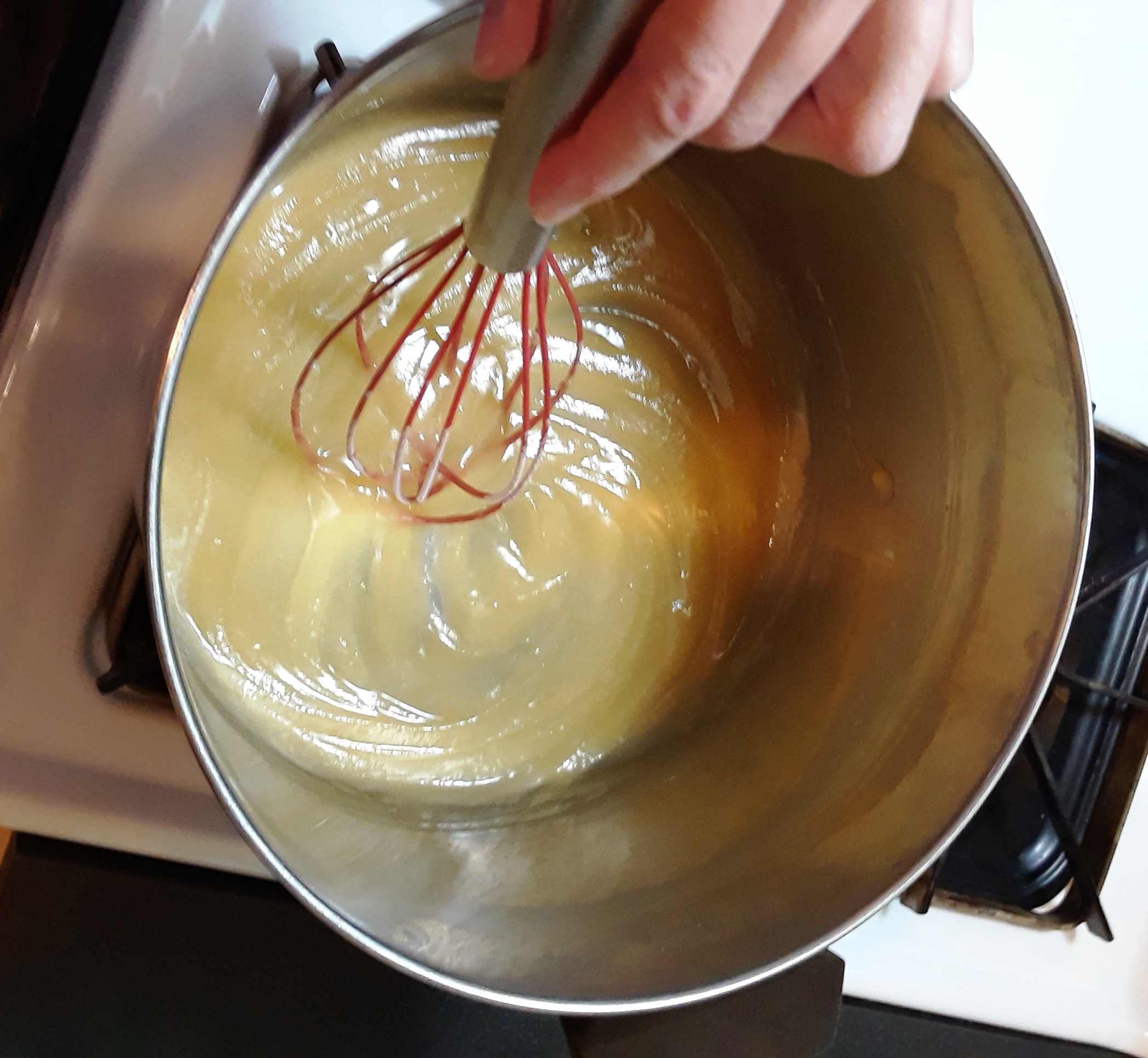
Cook the macaroni according to package instructions until al dente.  Drain thoroughly as macaroni holds a lot of water in the crook of the elbow.  While the macaroni is draining, use the hot pot you cooked it in to melt the butter over a low heat.  Add the flour and whisk until smooth.  Cook for one minute and do not let it burn.

Slowly add the milk, whisking thoroughly, and cook for another minute over medium heat.  Add all but a half cup of the cheese by handfuls, stirring after each addition.  Continue cooking until the cheese melts and becomes stringy.  Not all the cheese may melt, but this is acceptable.

Add the drained macaroni to the mixture and stir to coat.  Carefully pour the mixture into a well-greased 9 x 13 glass baking dish.  (Do not panic if it seems soupy.  The extra liquid will be absorbed and make the mac-n-cheese creamy.)  Top with the last half cup of cheese.  Bake at 400° for 25 minutes or until the cheese on the top browns and bubbles.  Let it sit for ten minutes before serving.

Options:

I’ve chosen all Italian cheeses, added ½ – 1 T of Italian seasoning, grilled chicken, and topped  with slices of provolone.

Bread crumbs tossed with parmesan cheese is also a delicious topper.

Uncured turkey bacon, cooked and diced, tastes wonderful stirred in.  We use Applegate.

Who is in Your Details?

God Is In The Details by Mauricio Raffin

God Is In The Details by Mauricio Raffin

Today’s post counts as two entries in The Weight of Words and one for Research Road. It also stresses the importance of thoroughly editing and researching your work as well as finding a good editor. We’ve all made mistakes. I have received tactful comments from followers pointing out errors I’ve made. It’s easy to correct a blog post even after the fact, but what about my novel? I don’t live in fear of discovering an error post publication…oh, wait—I do.

I can’t tell you how many times my mother has said, “What difference does it make if you’re not 100% accurate? The common reader won’t know if you’re right or wrong.” To which I explained that I would know. Then there is the historian or well-read person who may read my novel and nail me for incorrectly portrayed facts. I’m not talking about the creative license we employ when placing our fictional characters in real periods of history or an entire reimagining of historical events such as the Germans winning World War II. I’m talking about modern words and phrases ending up in the mouths of characters from an earlier century and inaccurately portrayed artifacts, architecture, places, etc. due to lazy research.

A book I finished recently had two such errors. The first was the spelling of the word carcase/carcass. About thirty years ago, I read Dorothy L. Sayers’s novel Have His Carcase. It was part of a trio of Sayers’s books gifted to people who made a donation to the local PBS station. The announcer kept mispronouncing carcase the way one would say car case. How embarrassing. Years went by before I stumbled across the spelling carcass, which, by the way, is the only spelling Word recognizes as correct. I assumed it was another instance of American English vs. British English. What I discovered after reading several definitions for both spelling variations, is that carcase is the older, often consider archaic, of the two spellings although both are acceptable. Why is this important? The author of the aforementioned book used the word in the diary of a Carthusian monk from 1535, but she spelled it carcass. As soon as my eyes fell across the word, I was jolted out of the story to ponder whether the mistake was mine or hers. True, most people would have let it go, but for historical accuracy, well, I’ll leave it up to you to decide.

Small sidebar: When I checked writing forums for the correct spelling of carcase/carcass, Dorothy L. Sayers’s novel, Have His Carcase, was referenced at least once on every site as the example for the spelling carcase.

I was much less forgiving toward the second mistake. Another character, also from 1535, mentioned seeing a nine-branched menorah used in the second temple of Israel. Did you catch that? Talk about being shocked right out of the story. All my research on the subject verified what I already knew to be true: menorahs used in the temple of Israel have seven branches. The most reliable source of this information is the Bible. I don’t doubt that the candelabra people see the most and the one with which they are familiar is the nine-branched version known as a chanukkiah used in celebration of Chanukkah. The terms are used interchangeably and incorrectly. However, the two items are absolutely not the same thing.

My thoughts on the subject ranged from disappointment toward the author to wondering if the editor was too young to care about such facts or not interested in verifying them. Several years ago a self-published author gave the advice that you should research your history to the nth degree because your readers will trust that what you have written is true. That advice is what prompted me to research my own novel in minute detail. At one point, I had a fellow author/history buff tracing World War II troop movements to ensure I had placed my protagonist with a unit that had actually ended up in a battle I needed to feature.

Perhaps I sound like a fanatic. Even Andy Weir, author of The Martian, admitted to minor mistakes pointed out by other brilliant scientists, the type of knowledge the common reader wouldn’t possess. There may even be mistakes in my own novel. I sincerely hope someone catches them before it goes to printing. Still, I cannot stress enough that the writing and research of your work in progress begins with you. Beta readers and editors are essential to the process, but there is no excuse for a lazy author.

In closing, I’ll point to the title of this post as my final comment on the importance of using the correct words/phrases and conducting research. You’ve probably heard the devil is in the details and the older, slightly more common phrase, God is in the details. The first means that mistakes are usually made in the small details of a project. Usually it is a caution to pay attention to avoid failure. The second means that attention paid to small things has big rewards, or that details are important. Who is guiding your writing efforts?