 Hello, Realmers! If you’ve been with me for the last few posts, you know I’ve stepped back from writing to undertake some serious editing. I knew for a few chapters that I needed to do so, but I was trying to finish my current WIP before I conducted any edits. I had heard or read several years ago that this was the best way to proceed so that I didn’t become bogged down in edits, which might prevent me from ever completing my WIP as I spun my wheels fretting over changes.
I am so glad I overcame my fears in that regard and didn’t take the advice.
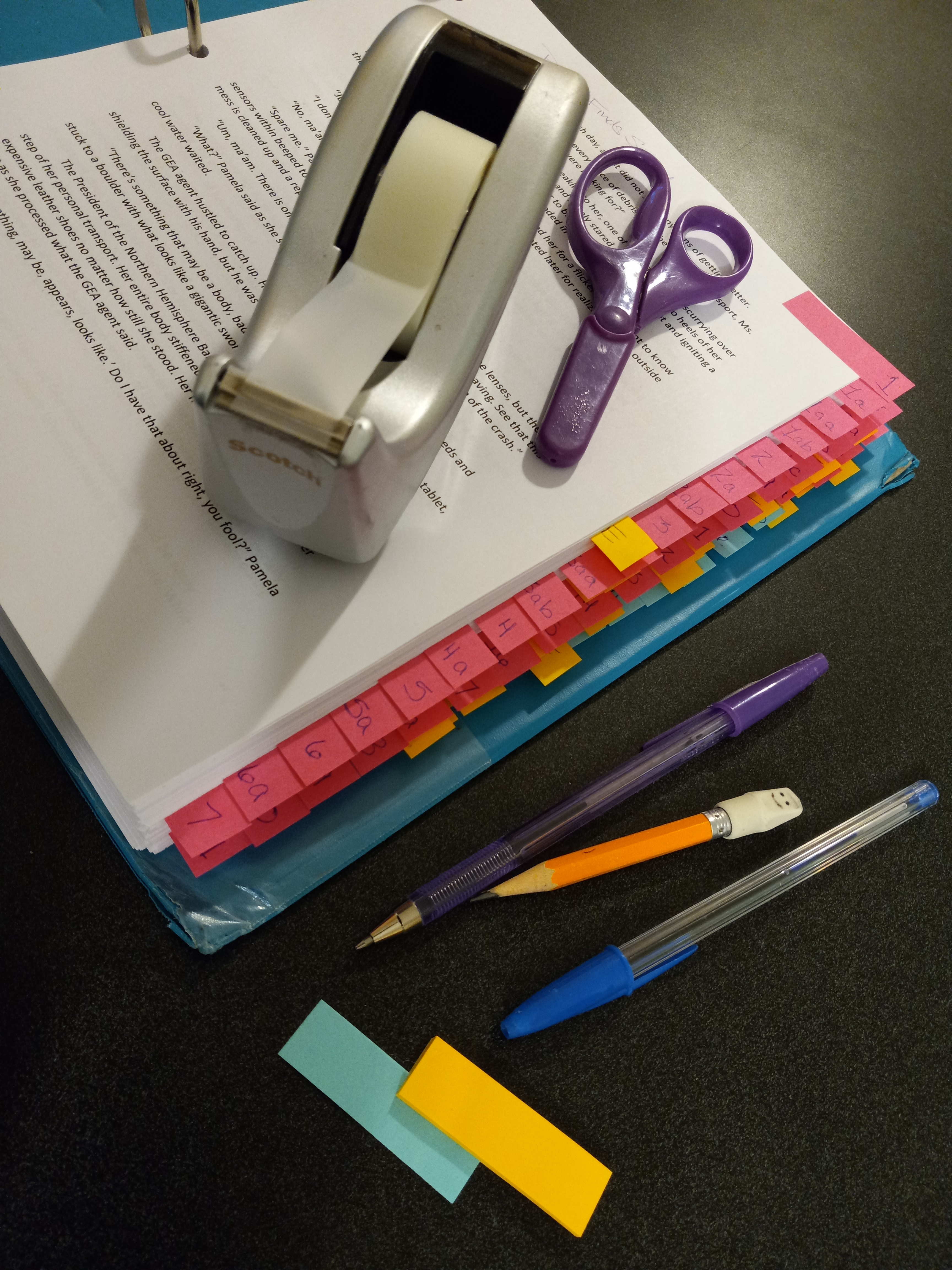
What I found as I returned to the beginning of my current WIP is a couple structural errors, which needed to be smoothed out so specific details and certain plotlines would be accounted for. There was much as the author that I knew but hadn’t been conveyed in such a way as to ensure my reader picked up on important points without me spoon feeding the story to them.
All the plotters are nodding knowingly and thinking this is why we outline our story. But if I didn’t know exactly what I wanted to write as I created my story, how could I have outlined it? And I certainly wasn’t interested in “finding my groove” as I have heard many plotters say, which to me interprets as “I write the same story over and over again, which makes plotting that with which I am familiar quite easy, and all I do is change the names to fool people into thinking it’s a new story.”
I know that sounds harsh but stick with me because I’m honestly not criticizing plotters. If plotting works for you, do it. It just doesn’t work for me because if I’m going to spend time writing, it’s going to be toward the actual WIP and not an outline that I know I’m going to change and/or from which I’ll stray anyhow. Exploring the rabbit trails is an exciting part of the writing process for me.
This entire scenario prompted me to look up a favorite quotation that has been attributed to Flannery O’Connor and goes something like “I Do Not Know What I Think Until I Read What I’m Writing.” However, and this is a sidebar to the point of my post, it appears that Flannery wasn’t the only author, or perhaps even the first author, to express that she needed to write her thoughts down and, dare I say it, edit her writing to reflect what she actually meant?
Follow the link above to find out how many other authors expressed this same sentiment regarding their writing. You might be pleasantly surprised to find out that you’re not alone. But here’s the thrust of my blog post. Do something toward your writing as often as you’re able.
If word count works for you, then set a goal and write toward it. If accountability works, then let someone know how you’re progressing so praise or guidance can be offered. Maybe writing for a set time on a set day is your thing. Great! Find whatever works to keep you writing and remember that editing is a part of this process.
The thing I would warn you against is beating yourself up when a goal isn’t met.
I like to achieve a thousand words during a writing session, but I hold that goal loosely. I have sat for an entire day and only banged out three hundred mediocre words, but I stood up from my laptop with the understanding that something was better than nothing. And there are times when I’ve had an hour while dinner cooked, and I cranked out sixteen hundred brilliant words that I couldn’t believe came from my brain.
And there are days that I don’t write at all because I need to read, relax, tend to friends and family, fulfill obligations, etc. These are also good days because I recharge my energy and refuel my thought process.
Writing is hard but writing is worth it. Will I return to my WIP today or will this blog post be the only thing I create? Right at this moment, I honestly couldn’t say. There’s a cup of tea and the desire for a nap vying for attention over the great chapter edit which surfaced last night right before bed. Fear not, Realmers, I wrote it down.








 hl gibson, author