Sweet Distractions From Life

IMG_20151010_184243495[1]Collie Mercer is the type of woman who believed that children should be protected from all that is bad in the world. This is exactly what she did for the four Welles siblings in my novel, The Secrets of Dr. John Welles.

Whether shielding them from the overly harsh discipline of their oft drunk father, news of the Great War in Europe, or details of the Flu Pandemic, Collie worked hard to ensure peace for the children she was raising.

Her tactics could be as simple and comforting as a batch of homemade molasses cookies. Of course, any of Collie’s delicious recipes supplied the distraction and reassurance her stepchildren needed as she brought them together time and again to the table as a family.

When I wrote the scene involving Collie’s molasses cookies, I had a soft cookie in mind but no recipe. I don’t care for crisp molasses cookies, and while I enjoy the chewy version, I adore the soft ones best. Thanks to my friend, Gayle Hoffman, I finally have a recipe for soft molasses cookies such as Collie would have offered that are tender, delicious, and easy to make.

Enjoy!

Gayle Hoffman’s Soft Molasses Cutout Cookies

1 c shortening (I used unsalted butter)

½ c sugar (I used raw)

½ c packed brown sugar

2 eggs

1 c dark molasses

5 ½ c flour

1 T baking soda

1 ½ t ginger

1 t cinnamon

¾ t salt

½ c water

Preheat your oven to 350°. I worked with a KitchenAid stand mixer.

Cream the shortening or butter and both sugars about five minutes. Add the eggs one at a time. Beat in the molasses.

Combine and sift the flour, baking soda, ginger, cinnamon, and salt. Add to the cream mixture by large spoonsful, mixing well and scraping down the sides of the bowl as needed. I suggest adding the water alternately with the dry mixture as the batter thickens. When completely mixed, it should be soft and pliable.

Cover or wrap the dough and refrigerate for at least three hours. This will make for easier handling and rolling.

Divide the dough into four sections and refrigerate the other three to keep the dough firm. Roll one section at a time, approximately 3/8” thick, on a surface dusted with a half flour/half powdered sugar mixture. Cut with your favorite cutter.

Bake at 350° for 10 – 11 minutes. You may need to adjust the baking time depending on how large or small your cut cookie is.  Allow to cool on a rack and dust with more powdered sugar.  An alternate topping would be to dust with sanding sugar prior to baking.  Store in an airtight container. Freezes well.

IMG_20151010_174815685[1]

Lest We Forget

While researching World War II for several chapters of my novel, The Secrets of Dr. John Welles, I came across three books I’d like to share as beneficial reference materials.


World War II DK PublishingWorld War II Day by Day, published by DK, is a collaborative effort by several former military personnel, researchers, and lecturers. The information is presented as news clippings from the various countries involved with or affected by World War II and the events leading up to it. A small calendar appears on each page and the days and weeks during which the events took place are highlighted. This allows one to isolate a particular event much easier. The book is replete with pictures, maps, and posters from the era. The numerical cross reference, timeline, and Who’s Who section lend ease to fact checking.


Campaigns of World War II

Campaigns of World War II Day by Day, edited by Chris Bishop and Chris McNab, is similar to the above-mentioned book but is laid out slightly different. The various campaigns are broken down into sections depending in which theater they occurred, whether European, Pacific, or African. Within each section, the daily and sometimes hourly timeline is most thorough. There are more maps in this book indicating troop movements as well as a focus on military weaponry, vehicles, and aircraft for the era.


World War II Donald Summerville

World War II Day by Day, written by Donald Summerville, presents many of the features mentioned in the first two books. This book is broken down into yearly sections with daily or monthly events listed within. The country in which each event took place is presented in boldface. The book concludes with a post war section.

I found each book to be extremely interesting, but together they presented a wealth of information I could check and cross check for accuracy. History buffs, reenactors, students, and writers alike will appreciate reading these books whether for enjoyment or research.

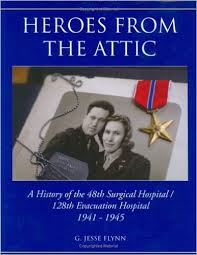
Heroes From the Attic by G. Jesse Flynn

Heroes From the AtticOne of my favorite books, and a feather in the cap of my private library, is Heroes From the Attic by G. Jesse Flynn. I first learned about the book while interviewing participants from the Conneaut D-Day Reenactment this past August. Lisa Merzke, who portrayed a nurse, suggested the book because it explained in detail about the creation of the first MASH unit, the 48th Surgical Hospital, which was later reworked into the 128th Evacuation Hospital.

I obtained an excellent copy of the book and was thrilled to discover the author’s signature in the front cover. Although the inscription isn’t addressed to me, I couldn’t have been more pleased that I owned a signed copy.

Mr. Flynn was prompted to write the history of the 48th/128th upon learning about his parent’s involvement with its formation. Through interviews, letters, diaries, and pictures, Mr. Flynn has constructed a thoroughly detailed accounting that answered my specific questions with such precision that at times I believed the book had been written for me.

As well written as the history is, what truly endeared me to this book were the personal accounts of the members of the 48th/128th. Through the letters of Nurse Lt. Margaret Hornback, the diary of Dr. Leonard Schwade, and individual testimonies of various other members, one gets a true sense of what these brave men and women experienced and how they felt about it.  In an event that, God willing, we never allow to be repeated, members of the 48th/128th often learned on the job but never missed a beat, and they set the high standard of quality by which other units were formed and trained.

I am forever grateful to the doctors, nurses, and enlisted men of the 48th/128thfor their selfless sacrifice. I also thank Mr. Flynn for collecting and recording their amazing history so that it will never be forgotten. Their stories and information helped me to accurately place my protagonist in the European Theater of World War II, and I hope they will graciously indulge my boldness in assigning Dr. John Welles to their most successful and exemplary unit.

All-American Goodbye

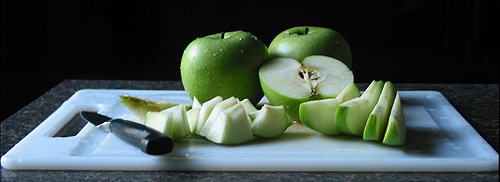
Granny Smith ApplesWithout a doubt, apple pie ranks among the top choices of best comfort food. Like the other recipes I’ve shared here (biscuits, cornbread), every family has their own version, compliments of mom or grandma, and their own opinion of exactly how authentic apple pie should taste. This humble, all-American classic, often the cornerstone of Sunday dinners, picnics, and church-hosted bake sales, is also the dessert of choice that Collie Mercer sends with her youngest child, John, as he leaves the family farm to go live with his Aunt Prudence in Baltimore.

Collie’s decision to send the pie with John is probably based on the fact that apples are a readily available fruit, and her hands could make the pie from memory. Or perhaps her choice is slightly more self-serving as she silently prays the taste of the pie that John grew up with will prompt a change of heart and return her youngest child to her.

Whatever Collie’s motivation, the following recipe is the one I had in mind for her to bake during that melancholy June in 1920. I hope you enjoy it as much as my family does and as much as John did on the day he began a new chapter in his life.

Collie Mercer’s Apple Pie

5–6 Granny Smith apples

2 c flour plus 2 T for thickening

1 t salt

1 c cold, unsalted butter, cut into dices

¼ – ½ c ice water

½ c sugar, I use raw

1 t vanilla

1 ½ t cinnamon

Allspice

4 T butter for dotting

Cinnamon or sugar for dusting

Preheat your over to 425 degrees.

Mix the two cups of flour with the salt. Toss in the cold butter and cut it into the flour/salt mixture with a pastry blender or two knives until it resembles coarse meal. Slowly work enough ice water into the dry ingredients until you can form a ball of dough, making sure it’s not too wet or too dry. Work quickly by hand to ensure that all the dry ingredients are mixed in thoroughly. Be careful not to overwork the dough or the butter will become warm and the dough will be tough. Wrap the ball of dough in plastic and place in the refrigerator for twenty minutes.

Peel and slice the Granny Smith apples to approximately ¼ inch slices. (They are an extremely firm apple and any thicker will require sautéing prior to being placed in the crust or they may not cook well during the baking process.) Toss the apples with the sugar, cinnamon, a couple of hearty dashes of allspice, vanilla, and the two tablespoons of flour. Stir to coat the apples thoroughly and set aside.

Remove the dough from the refrigerator and cut into two pieces. One piece should be slightly bigger than the other to serve as a top crust. Working on a lightly floured surface, use a rolling pin to roll out the dough enough to cover the bottom and up the sides of an eight-inch pie plate. The bottom crust can hang over the edge of the pie plate just a little. Fill the bottom crust with the seasoned apple mixture and place four tablespoon slices of butter on top of the apples. Roll the top crust larger than the diameter of the pie plate and place over the apples. Tuck the edges of the top crust beneath the edges of the bottom crust and crimp to seal. I prefer pressing with the floured tines of a fork to create an old-fashioned look.

Cut several vents in the top crust with a small, sharp paring knife to allow steam to escape. Brush the top crust with your choice of wash. I prefer a milk wash, but egg white thinned with water is also a good choice. Sprinkle liberally with cinnamon or sugar. Bake for 30 minutes. Check on the brownness of the crust and bake in five minute increments until a golden color has been achieved but no more than 45 minutes total.

Remove the pie from the oven and let stand for fifteen minutes. Serve warm with ice cream or whipped cream.

To Struggle With Forgiveness

31holocaust-xlarge

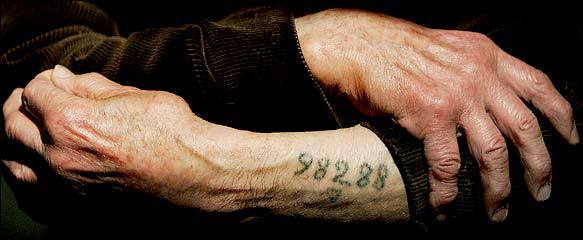
In a previous blog post involving my protagonist, Dr. John Welles, and his two Jewish friends, Reuben and Hannah Wise, I mentioned that the three were divided on the issue of forgiveness as it related to the Holocaust. For reasons that I’ll save for the publication of my novel, The Secrets of Dr. John Welles, each of them comes to the table with a different perspective on how the situation should be handled.

When I first wrote the storyline involving the Wises and Dr. Welles, everyone ended up forgiving everyone else with hugs and smiles all around. I admit that I wrote these scenes fast and furiously for NaNoWriMo without having done my research and because I wasn’t sure what direction I wanted the storyline to take.

Then two of my aunts attended a program on women Holocaust survivors and brought me some information on the subject. After reading the materials they gave me, I knew the scenes I wrote concerning the Wises and Dr. Welles were completely inaccurate, and therefore, unbelievable. I had to step back for a moment to analyze where my perspective of forgiveness came from and examine my knowledge of the Holocaust.

Everything I learned about the Holocaust came during my school years, and I can tell you that for the purposes of writing a novel, the knowledge was slim compared to what I found when I conducted my research. I realized I was too far removed from the facts because I was too young to have experienced it firsthand and didn’t have a relative who either perished or survived the concentration camps. My original scenes were trashed, and I set about rewriting the story.

Once the details of time and place were corrected, I worked on an aspect of my story that took me by surprise: the concept of forgiveness as understood by Jewish people who practice Judaism. My experience with forgiveness as I was taught might have influenced Dr. Welles but would seem ridiculous to Reuben and Hannah Wise. By applying my faith based instruction to the overall story, I denied my Jewish characters a single ounce of reality.

The questions that kept going through my head, those that drove my characters, included 1) Do we forgive but not forget? 2) Can only God truly forgive? 3) Must the perpetrators of the crime repent and ask for forgiveness before it can be bestowed? 4) If the criminals are dead, can forgiveness take place? 5) Should we forgive no matter what for every offense committed against us?

There are many articles on the internet about forgiveness written from many different perspectives. I chose to draw on those based in Christianity and Judaism when writing my novel and peppered the views found there with heavy dashes of my characters’ own attitudes and viewpoints.

The following article, “Can You Forgive Hitler?” written by Stewart Ain, September 22, 2006, for The Jewish Week, is the article that helped me the most when deciding how to have my characters react to the difficult questions and trying situation with which they struggled.

It’s easy to say what I would do until faced with the death of my loved ones at the hands of evil people. Still, I wonder about Holocaust survivors who do forgive and maintain their faith regardless of the hell they endured versus those who refuse to forgive and lose their faith because of the hell they endured. It scares me to know that because of the condition of our world today, many are challenged with these same questions.

By Bread Alone

1433270193628Forgiveness is a tricky concept. It is easily applied to a situation when the transgression is minor. A forgotten birthday, a word misspoken in haste, a misunderstanding of perceptions; forgiveness is willingly doled out in each of these instances.

But what about the attempted genocide of an entire people? Or searching one’s own soul in an effort to release a lifetime of guilt? Who is responsible to bestow forgiveness to the offenders when these are the circumstances? Man and/or God?

These are the questions that trouble the minds of Reuben and Hannah Wise and Dr. John Welles after they dine together one January evening in 1955. All three are divided in their opinions concerning the particular events that generated their questions. While they remain polite toward each other, a wedge has been driven into their friendship, especially between Hannah and John.

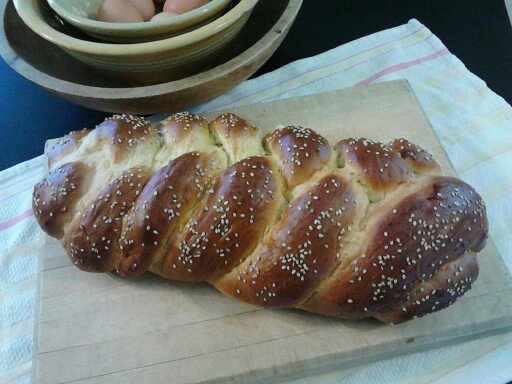
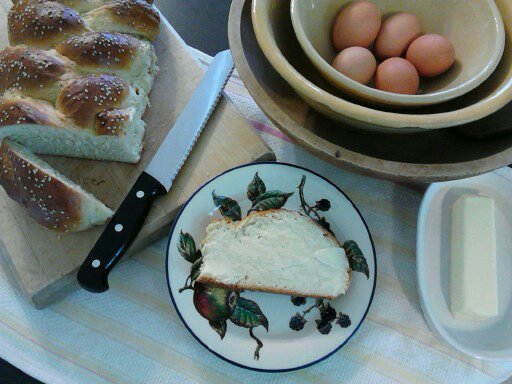
I chose to have Reuben serve challah bread during the Shabbat meal to which he and Hannah invited John for two reasons. For one, challah is traditionally served during the observation of Shabbat. More importantly, though, the presence of bread during this significant meal drew attention to the many references of bread in the Bible as well as underscored the differences between the Wises and Dr. Welles.

The following recipe is the one I had in mind for the challah Reuben made in my novel, The Secrets of Dr. John Welles. I hope you will enjoy this lightly sweet, rich, and delicious bread with your meals.

Reuben Wise’s Challah Bread

1 ½ cups warm water

2 tablespoon yeast

½ cup olive oil

½ cup sugar (or honey) (I used raw sugar)

3 eggs (2 for the recipe and 1 for the wash)

1/2 teaspoon salt

6 cups flour (slightly packed)

In a Kitchen Aid mixer add 1 ½ cups lukewarm water and 2 tablespoons yeast. Mix gently and allow the yeast to foam.

Add ½ cup sugar (or honey), ½ cup olive oil, 2 eggs, and ½ teaspoon salt. Mix well, approximately one minute or so. Add the six cups of flour one at a time and mix thoroughly with a bread hook. You may need to add ½ cup of flour if the dough is very sticky.

Remove from the mixing bowl and divide the dough into two halves. Divide each half into four pieces and roll each piece to about 12 – 14 inches in length. Braid the pieces of dough. (You can find instructions for braiding challah on the internet. I chose a four-strand braid for my bread.)

Brush each braided loaf with an egg wash (beaten egg with a little water to thin it). Place the braided loaves on a non-stick cookie sheet with parchment paper or a cooking mat on it and sprinkle liberally with poppy seeds, sesame seeds, or slivered almonds. Let the loaves rise until about 1/3 larger in size.

Preheat the oven to 350 degrees.  Bake the loaves for 23 – 25 minutes. Loaves should be golden and firm when finished.

This recipe can also be mixed and kneaded by hand.

1433270494920

The traditional blessing over the bread as spoken by Reuben Wise:

HAMOTZI – Blessing Over the Bread

Baruch Atah Adonai, Eloheinu Melech ha-olam, Ha-motzi lechem min ha-aretz.

hamotzi_0

Blessed are You, O Lord our God, King of the universe,

who brings forth bread from the earth.

The Sweetest Libation This Side of Heaven

Bourbon whiskey plays an important role in the life of my protagonist, Dr. John Welles. Bourbon is the souvenir of choice for John and his two best friends, Sam Feldman and Claude Willoughby, as they spend a bachelors’ weekend in Kentucky watching the Derby and celebrating Sam’s upcoming marriage. Later in my novel, John employs the contents of this special bottle of bourbon to drown the guilt he endures for his part in a secret cover up regarding the death of a child.

a3f4b1eaa0a14348aa91ede804788043_adf390df7753413c870a7e4655fcf9bd_headerI chose bourbon as John’s drink of choice after a trip to Kentucky with my brother and sister-in-law in 2010. They completed the Kentucky Bourbon Trail the year before and knew which distilleries we would enjoy visiting. Woodford Reserve, Wild Turkey, Heaven Hill, and Maker’s Mark rounded out our initial bourbon experience.

I loved every minute of it. From the heady aroma emanating from the enormous vats of sour mash, to the dusty, blackened rickhouses, to the generous samples imbibed in the tasting rooms, our tour was an education steeped in the warm glow of bourbon. While I’m partial to Elijah Craig 18 Year-Old Single Barrel, Parker’s Heritage Fifth Edition Cognac Barrel Finish, Woodford Reserve, and Wild Turkey Kentucky Spirit, we’ve also discovered several other bourbons worthy of purchase. Don’t miss Willet Pot Still Reserve or 1792 Ridgemont Reserve.

The history of bourbon is as rich as the copper color of the drink itself. Baptist preacher Elijah Craig has been credited for the invention of bourbon whiskey although the tale may be a little on the tall side. We were told during one distillery tour that the charred oak barrels used in making bourbon whiskey came about as the result of an accident in which the barrels were burned. Preacher Craig, either too poor or too cheap to replace the barrels, used them anyhow and bourbon first received its signature color.

Whether or not this is true, bourbon whiskey is an all-American beverage. Strict requirements must be met before the whiskey can be labeled and advertised as bourbon. The Federal Standards of Identity for Distilled Spirits state that bourbon made for U.S. consumption must be 1) Produced in the United States, 2) Made from a grain mixture that is at least 51% corn, 3) Aged in new, charred oak barrels, 4) Distilled to no more than 160 (US) proof, 5) Entered into the barrel for aging at no more than 125 proof, and 6) Bottled at 80 proof or more.

Impressive standards for an impressive drink.

The Bitter Truth

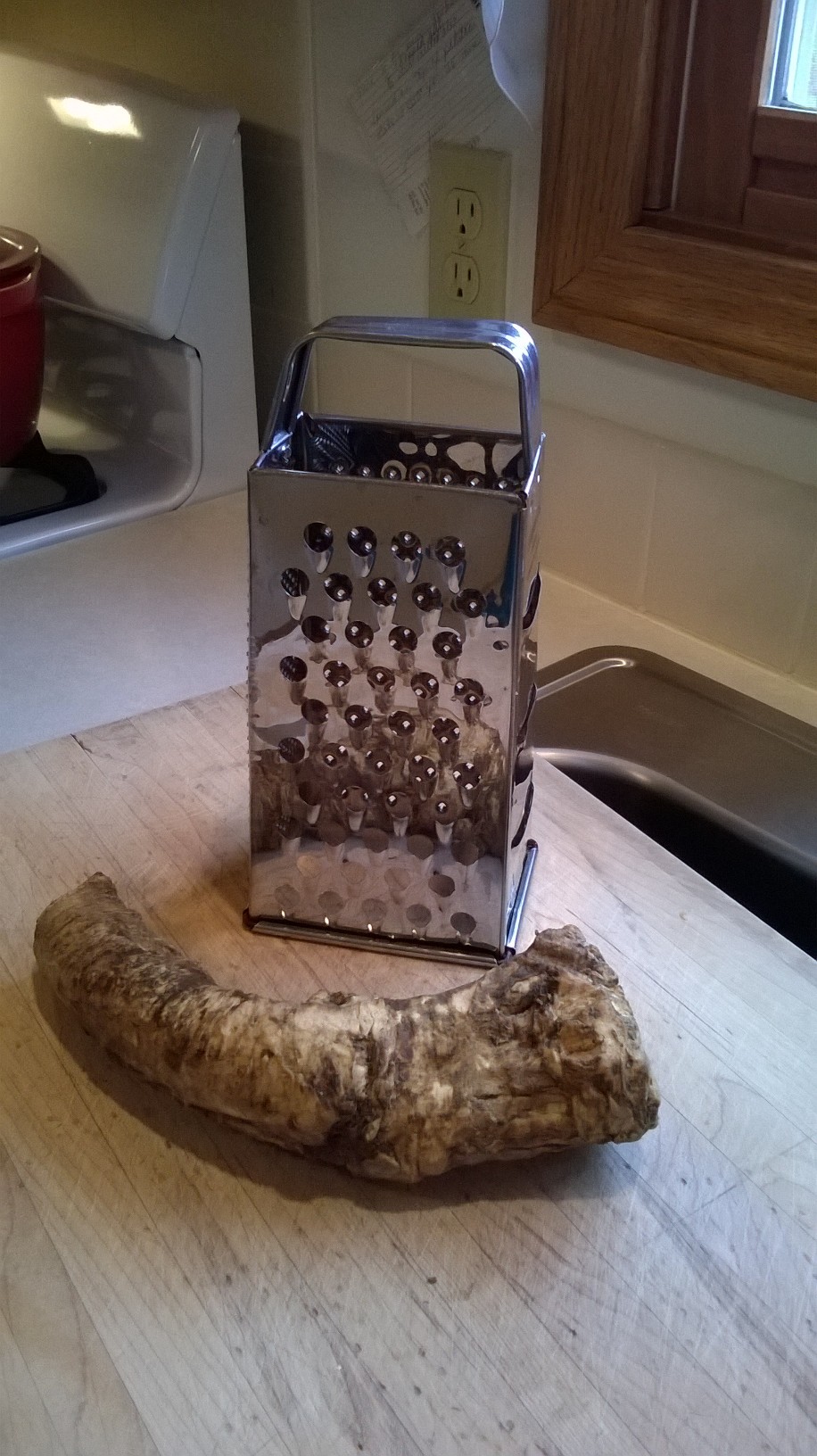
Horseradish and GraterWhen I first chose the meal my protagonist, John Welles, would enjoy with Reuben and Hannah Wise, I flinched at including horseradish sauce. A website on authentic Jewish cooking suggested the pungent condiment as a topping for the salmon patties I had Hannah serving.

I hate horseradish. My earliest memory of it involves cocktail sauce served at a seafood restaurant called Arthur Treacher’s that went out of business in our area years ago. My aunt was pumping the sauce out of a dispenser into little paper cups when one hefty pump spewed the offending sauce all over my shirt. I was mortified, and I guess my face showed as much because my aunt busted up laughing even as she wiped me off with paper napkins.

To this day I can sniff out horseradish in any meal even as someone is setting the plate down in front of me. I was sure I wouldn’t include it in my Edible Fiction posts featuring food from my novel, The Secrets of Dr. John Welles. Until my mom made fresh horseradish sauce.

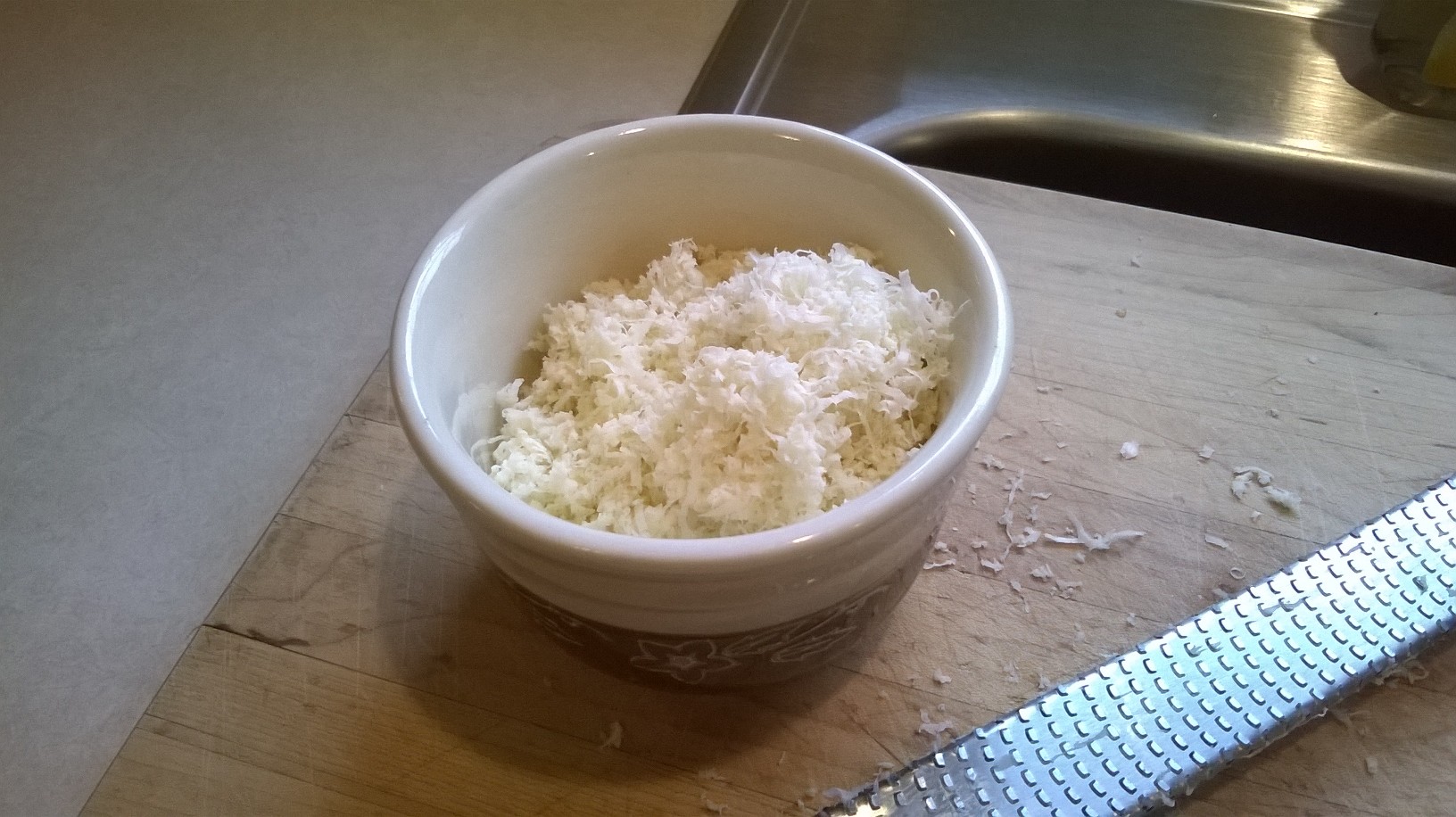
Homemade horseradish sauce is a whole different creature. The key, as I discovered, was to grate the horseradish fresh instead of using the jarredHorseradish Grated stuff. Freshly grated horseradish is zesty like radishes; it actually has flavor. Unlike the jarred stuff, which is bitter without much flavor at all, fresh horseradish tastes like peppery herbs.

As for recipes, there are thousands to be found for homemade horseradish sauce. I imagine Hannah would have mixed her freshly grated horseradish into a quality mayonnaise with a little salt and pepper to taste. Sour cream or crème fraiche is another suggestion as is the inclusion of white wine vinegar, chives, and Dijon mustard. You really can’t mess up the recipe; it’s just a matter of tasting as you create until you achieve the flavor you’re looking for.

The following is a basic recipe that provides a great jumping off point.

Horseradish Sauce

4 ounces of freshly grated horseradish root

1 ½ cups of mayonnaise

Salt and pepper to taste

Peel and grate the horseradish root. Stir into the mayonnaise and season with salt and pepper.

Recycling Before Recycling Was Cool

25bcf1fd2283ff81a59233bb01a448faDetails, details. They really can make or break a piece of writing. Too many and the passage is bogged down, too few and the reader will visualize what they choose, too gaudy and you’ll be accused of purple prose. But if you can capture a scene with the right amount of description formed by carefully chosen words, you will achieve Olympic writing gold. We’ve all experienced that moment when we sit back in open-mouthed awe of a perfectly crafted sentence that conveys exactly what we meant to say.

I recently experienced this during my fifth round of editing on my novel, The Secrets of Dr. John Welles. I needed to show the quaint but tidy lifestyle Lyla Welles maintained in her home. Her husband, John, is a farmer, and while the family does well enough, there isn’t money for frivolous luxuries such as lace curtains.

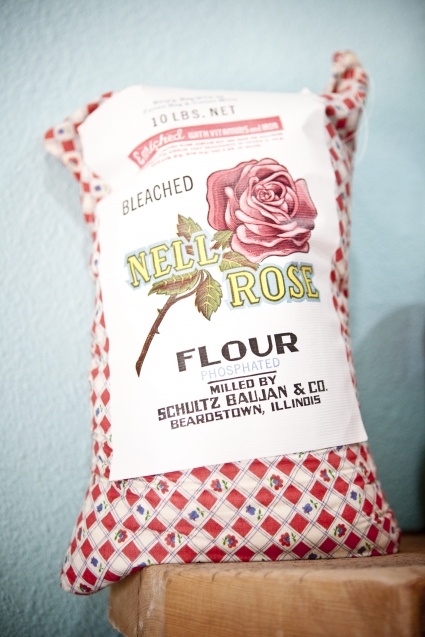
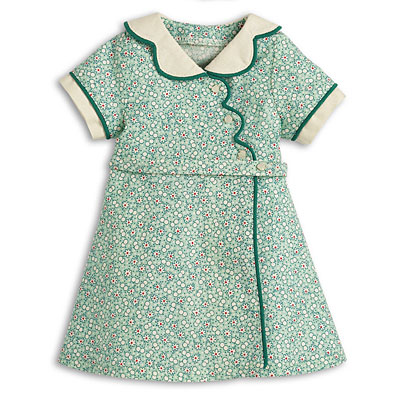
When I described what I wanted for the scene, my mother suggested feed sack curtains. Images of stained, coarse fabric crudely stitched togetherfeedsack-dress came to mind. Mother informed me that they were quite pretty and, in fact, feed sack was used to make dresses for little girls, tea towels, and aprons. I had to go in search of the fabric that could be used for such items while baring a name more plain than homespun. What I found prompted this post.

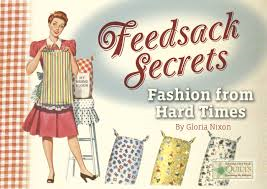
Ingenious women of low income reused the fabric from feed sacks for undergarments, curtains, pillowcases, etc. Initially, the fabric was white and without pattern. A company logo, which had to be scrubbed out or strategically placed on the homemade item, was the only ornamentation. These plain white feed sacks were probably what Lyla Welles would have used during the time period for the above-mentioned scene. I imagine her hand lovingly embroidering a simple pattern or trimming the edges.

It wasn’t until the 1920s that patterned feed sack became popular as a marketing tool. Women chose the products they purchased depending on the pattern on the feed sack fabric. Contests were held to design prints and artists were consulted to make them more appealing.untitled (5)

The following link from the Buchanan County, Iowa Historical Society provides a complete history on the evolution, popularity, and history of feed sack fabric. I recommend utilizing Google to see a myriad of garments and household items made from the repurposed fabric. There are even Pinterest boards and quilting forums dedicated to the humble feed sack.

Understanding Prudence

Joan CrawfordI devoted chapter seven of my novel, The Secrets of Dr. John Welles, to developing the character of Prudence Welles Mayfield. Unfortunately, her interesting backstory didn’t move the rest of the plot forward. I struggled with cutting what became known as Chapter Prudence because I really like her, and the writing was good. In the end, I discarded it in favor of keeping the story focused on my protagonist alone.

The following account details Prudence as a child and young woman. There are a few references to things that occur later in my novel, tidbits that I dealt with in others ways upon removal of this chapter, but nothing so confusing that you won’t be able to understand what’s going on.

Although her backstory went by the wayside, Prudence herself did not. She is very much an influential presence in the life of the nephew, John Welles. I hope reading about her youthful adventures, and the following character sketch, give you a better perspective into the personality of Prudence.

Chapter Prudence

You believe you already know Prudence; she’s the stunning woman with an expensive, tailored wardrobe you would give your eye teeth to own. You would probably label her an arm ornament until she opens her mouth, and you realize an intelligent, well-spoken woman resides in the beautiful package. Suddenly, you want her as your friend.

You will find Prudence with drink in hand at the center of every social engagement, commanding her audience with a stellar personality, smoking long before it was fashionable for women to do so. She’s a lady to the core, despite what society may think about her, and would sooner burn her shoe collection than be caught drunk in public.

Don’t be fooled by Prudence, though. The petit woman isn’t afraid to speak her mind and can back down the most assertive man. Other women, especially those vying for a place in her beloved nephew’s life, are her particular kryptonite.

From the outside, it looks as if Prudence has a charmed life. She has plenty of money, secured by a good head for business, so she and John want for nothing. Her life is full of quality items from the home she lives in, the car she drives, the vacations she takes. Yet closer inspection would reveal sadness in Prudence kept hidden from the world. Her care of John, while altruistic on the surface, also services to satisfy her need for penance and motherhood.

Still, she isn’t the type to sit around mourning an unfortunate circumstance. She is proactive in her own restless life and will seek satisfaction until she has secured it instead of waiting around for a man to provide it.Coco Chanel, French couturier. Paris, 1936 LIP-283

For all her forthrightness, Prudence can still be wounded at heart. As much as she loves John, it is he who most often draws the line on her outrageous behavior especially in regards to her creative honesty. She’ll never let on that she feels the sting of his rebuke, and if pressed, Prudence would admit that her nephew is a positive influence in her life.

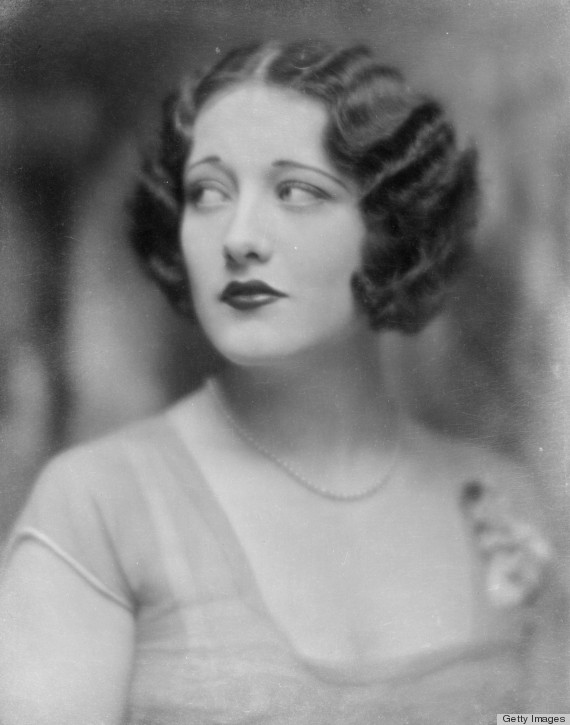
The pictures of Joan Crawford and Coco Chanel capture the essence of Prudence as I envisioned her.