Riding the Belair Bullet

1398463924000--DERBY-1935-OMAHA-IA secret, three-day bachelor party that includes a trip to Kentucky to watch the Derby is just what John Welles and Claude Willoughby have in mind for their best friend, Sam Feldman. They believe they’ve given the bride-to-be and Sam’s mother the slip, but the ladies are on to them.

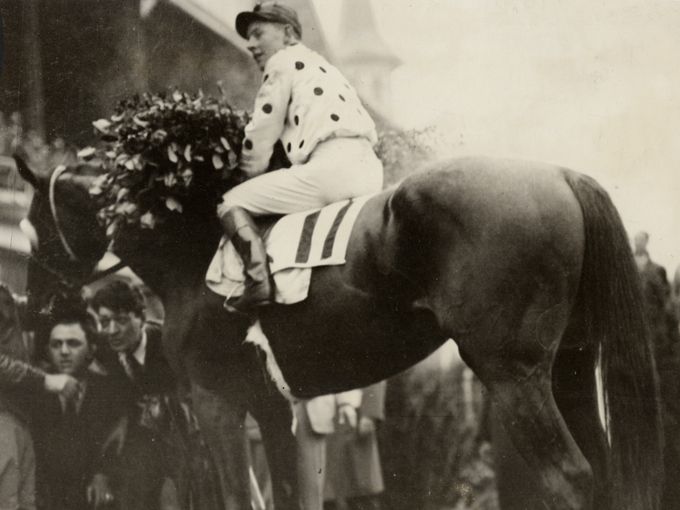
Claude, whose father used to breed races horses in Kentucky, undoubtedly suggested their entertainment. Even though the three friends don’t gamble, they are excited about the opportunity to attend the running of the Kentucky Derby. Unbeknownst to the trio, they picked a good year to go. In 1935, the thoroughbred racehorse, Omaha, owned and bred by William Woodward Sr., owner of Belair Mansion and Belair Stud Farm, was on his way to winning the Triple Crown starting with his performance at the Kentucky Derby.

Of course, horses don’t get to the finish line by themselves. The year Omaha won the Kentucky Derby, jockey William “Willie/Smokey” Saunders was aboard for the ride.

Saunders learned to ride in Alberta, Canada, and Montana. He earned his first win at Tanforan Racetrack in northern California on April 14, 1932, and was tutored in riding by the famous jockey, George “The Iceman” Wolfe of Seabiscuit fame.

The outbreak of World War II, as well as weight problems, interrupted Saunders’ career. He joined the Army, serving in the Pacific theater for four years. During his service, he contracted malaria which led to considerable weight loss, a silver lining to an unpleasant condition for the jockey who returned to racing when the war ended.

Saunders finished his career as a jockey in 1950, and he served as a racing official at various tracks in New Jersey, Florida, and Illinois. He worked as a trainer then as a placing judge. His final honor in the world of horse racing came in 1976 when he was inducted into the Canadian Horse Racing Hall of Fame.1398463924006--SCHAEFFER-AND-SAUND
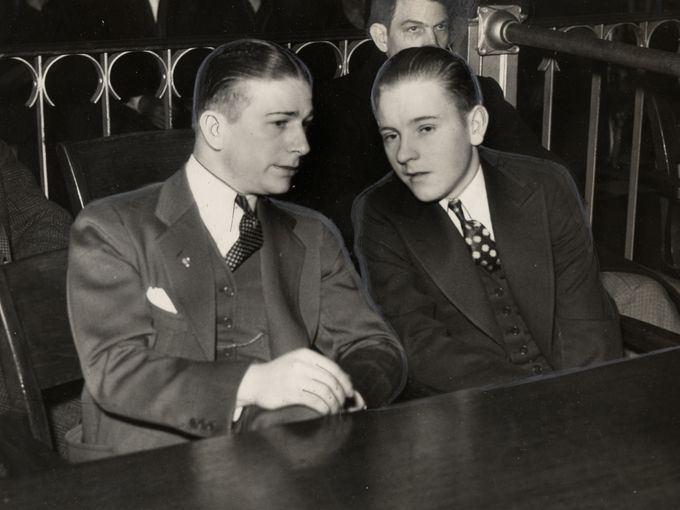
Unfortunately for Saunders, the same year he won the Triple Crown, media attention of the less desirable sort also followed him. In October of 1935, Saunders faced the accusation of accessory to murder of Mrs. Evelyn Sliwinski.

The case cast a bad light on Saunders riding career, and he never rode in another Kentucky Derby. His final days were spent in Florida where he died of cancer at the age of seventy one.

Race to the Finish Line

imagesThe year is 1935, and one of John Welles’ best friends, Sam Feldman, has just been swept off his feet by the beautiful and charming Abigail Cohen.

Gladys Feldman, Sam’s mother, orchestrated the initial meeting between her son and Abigail, called Babby. Gladys’ goal was to curtail her late-blooming son’s wild dating spree and settle him down with a good Jewish girl. Her planned work, and before the end of their first visit, Sam and Babby were in love.

Fast forward a few months to Sam’s bachelor party. John, along with his other best friend, Claude Willoughby, takes Sam on a three day bachelor’s weekend prior to his marriage to Babby. The trio sneaks off to Kentucky to watch the Derby and revel in the festivities.

The only hitch to their plans is a small white lie told to keep the women in their lives from worrying; they claim they’re going to a pediatric conference. Being the savvy women they are, Mrs. Feldman, Babby, and John’s Aunt Prudence laugh over their boys believing they’ve gotten away with their scheme.

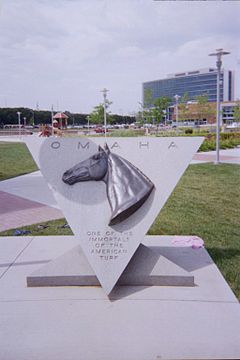
The Kentucky Derby is rich with too much history for one blog post. For this reason, I decided to start with the horse who won the Derby in 1935, Omaha. The chestnut horse with a white blaze stood at an impressive 16.3 hands high. The third horse to ever win the Triple Crown, Omaha was the son of Gallant Fox, the 1930 Triple Crown winner.

I have included footage of Omaha being ridden to victory at the Kentucky Derby by jockey, Willie Saunders, as well as a clip of all three of his Triple Crown wins.

In January of 1936, Omaha made the move to England to continue his racing career with the Ascot Gold Cup the desired goal. While he ran well in several races, he never achieved the coveted trophy.

During retirement, Omaha failed to impress as a stud horse. He was moved a couple of times before landing in Nebraska where he lived for another nine years. Upon his death in 1959, Omaha was buried at the Ak-Sar-Ben Racetrack in Omaha, Nebraska.

240px-OmahaHorseStinsonParkOmahaNE

Wardrobe Selection

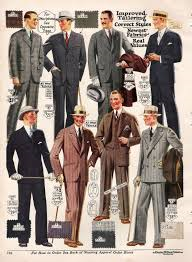
untitled (6)In yesterday’s blog post, When the Clothes Really Do Make the Man, I provided a link to a website for excellent information regarding vintage clothing.

Today’s trip down Research Road stops at a post by Liz Michalski on Writer Unboxed. In her article, Clothing Your Characters, Liz offers insight into why the clothing you choose for your character is important in how it relates to character development.

After reading Liz’s article, I stepped back for a moment to see how well I portrayed clothing in my novel, The Secrets of Dr. John Welles. There were a couple of scenes where the clothing my characters wore was important to the story, however, I may use the tips Liz suggested to create a more tactile feel to other parts of my story.

When the Clothes Really Do Make the Man

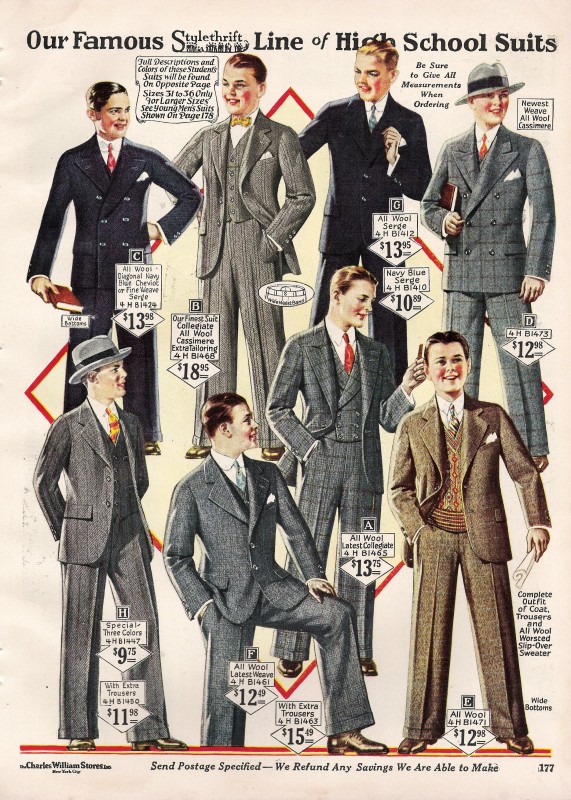
1927-boy-teens-color-pg-177-571x800While writing my novel, The Secrets of Dr. John Welles, I found that food played in to what I wrote more than what they wore. I guess that’s because I enjoy feeding real people and have a tendency to do the same with my fictional characters (Edible Fiction). However, there was one special scene that took place in June of 1925 where I needed the perfect outfit for my protagonist, John Welles.

I didn’t want to clothe my main character based on what I thought was correct or what I’d seen in movies. To be off by even a few years would have proven to be embarrassing. My goal was to create an authentic outfit, so I sought the help of someone with more fashion experience than I possess.

During my search for clothing appropriate to the time period, I came across Debbie Sessions’ website, The Vintage Dancer. Sure enough, Debbie had a section devoted to clothing from the 1920s. Fortunately for me, she went one better when she answered a personal e-mail resulting in the follow article, 1920’s Teenagers Men’s Fashion – Suit, Shoes, & Hats with Pictures.

Thank you, Debbie, for dressing John so perfectly for his high school graduation.

In For a Penny, In For a Pound


Done and cut

It is Christmas morning, December 1917, and young John Welles is celebrating with his family. Their festivities are halted for a moment when John’s often absent, always inebriated father walks into the kitchen. John and his three siblings hold their breath until their stepmother, Collie, prepares a plate of fried eggs and a cup of coffee and sends him back to wherever he spends his days.

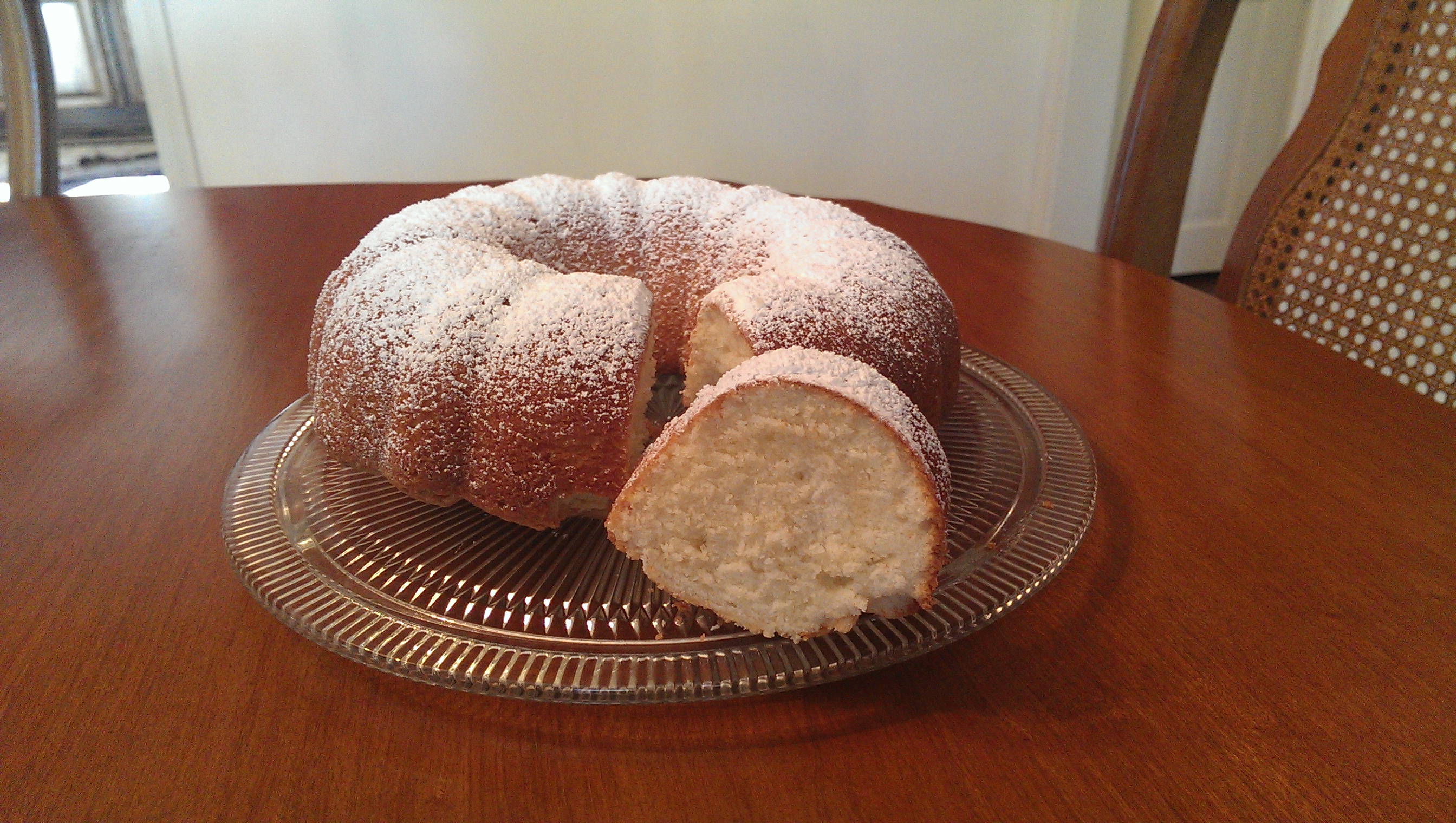
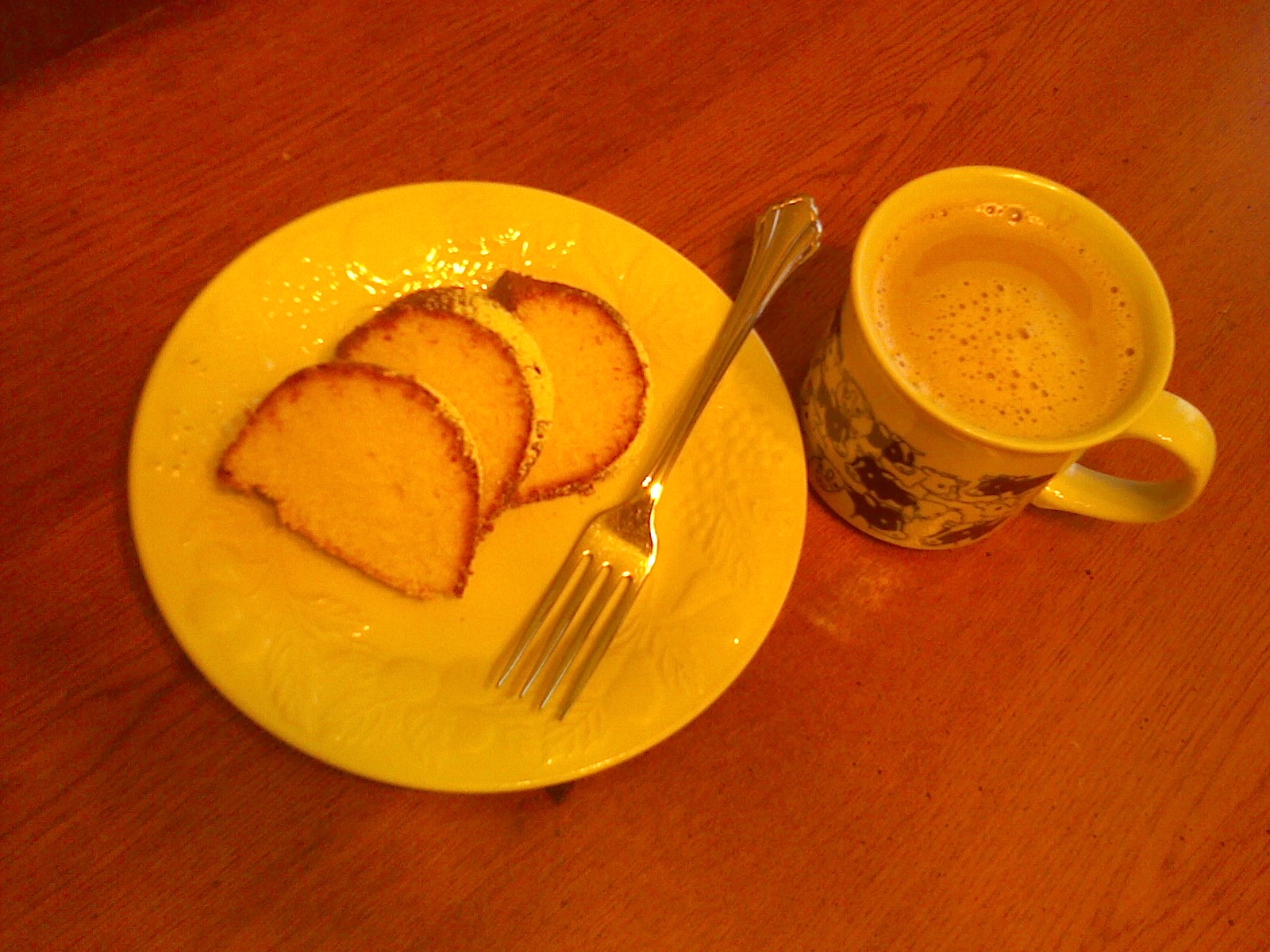
As a surprise for her stepchildren, Collie made pound cake and hot cocoa. She’s not the type to serve dessert for breakfast but makes an allowance for Christmas.

The following recipe is the one I had in mind when I wrote the scene above. I first tasted this particular pound cake at a work function. My co-worker, Cheryl Pandrea, really has the magic touch when it comes to making this recipe. The cake is rich, moist, and delicious. It’s perfect served with the cocoa recipe on my blog.

Cheryl’s Pound Cake

2 sticks of butter

3 cups of sugar

¼ teaspoon baking soda

6 eggs

16 ounces sour cream

3 cups flour

Preheat the oven to 325°

In a large bowl, cream the butter and the sugar. Add the baking soda and mix. Add the eggs two at a time and mix thoroughly after each. Add the sour cream and mix thoroughly. Gradually add the flour a half cup at a time, mixing well after each addition.

Grease and flour a bunt pan, be sure to get all the fluted edges. Bake the cake for 1 – 1 ½ hours or until golden brown. A tester inserted should come out clean.

Turn the cake out on a cooling rack. Let it cool until just warm or room temperature, then serve.

A Special Christmas Breakfast

A Special Christmas Breakfast

You Haven’t Been Cooking Again, Have You Prudence?

1424624185921October 1925 is the start of a very exciting time for John Welles; he’s beginning his pre-med studies at the University of Maryland. John’s deepest personal secret to date, the fact that he wants to study medicine, is becoming a reality.

Unfortunately, his first day is overshadowed by the rift that still exists between him and his stepmother, Collie. For three months, John hasn’t received a letter or telephone call from her. As much as he misses her presence in his life, he doesn’t know how to repair the damage.

His Aunt Prudence discerns that he’s still upset by the harsh words he exchanged with Collie, so she surprises him with a special breakfast consisting of the dishes he enjoyed as a child on the farm. John teases his aunt about her terrible cooking skills to which Prudence replies that her cook, Lucia, actually made the breakfast.

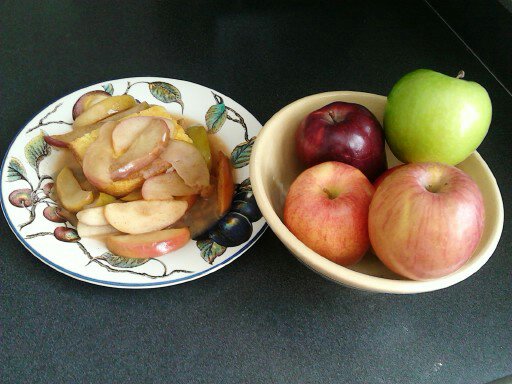
One of the breakfast menu items Prudence and Lucia serve John is fried apples. They’re delicious over biscuits, cornbread, ice cream, pancakes, or served in a bowl as a side dish. The great thing about fried apples is that you really don’t need a recipe. I’m sure recipes exist, but you’ll end up tweaking them to your tastes anyhow so just wing it from the start.1424622543744

I suggest at least two apples per person and keep in mind that people will want seconds and leftovers.  Just to be safe, make it three apples per person; they really do reheat well. We like a combination of sweet and tart apples. Any of the cooking varieties will do.

Apples

Unsalted Butter

Brown Sugar

Cinnamon

Salt, optional – add when seasoning

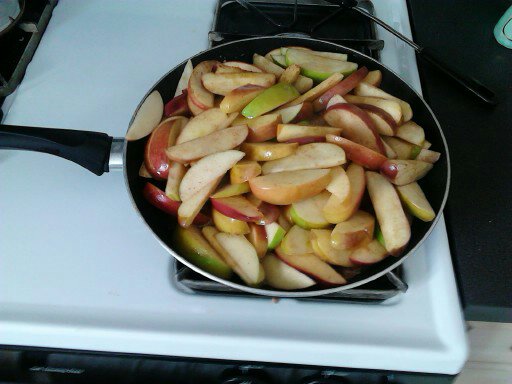
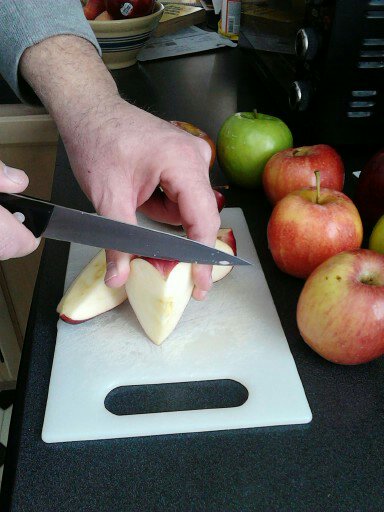
Slice each unpeeled apple in eight pieces and place in a large mixing bowl. Toss the apples with approximately a ¼ cup of brown sugar, several hearty shakes of cinnamon, and salt if using. Heat at least half a stick of butter in a very large skillet because this is one of those recipes that seem to grow as you make it. More butter means more syrup.

Transfer the spiced apple mixture to the skillet, cover, and cook the apples until they are tender but not falling apart, stirring occasionally. As they cook, the apple juice mixes with the brown sugar and cinnamon to make sticky syrup. This is where you’ll decide if you want more or less sugar, butter, and cinnamon or to add another flavor like honey or ginger. You really can’t go wrong with fried apples. Be adventurous and make the recipe your own; your family will love you for it!

Enjoy!

So easy the hubby can do it!

So easy the hubby can do it!

Open up and say, Ahh!

images (5)Despite what the government has done to healthcare, what we experience in America today is light years ahead of healthcare in the early 1900s. Consider Calvin Coolidge, Jr., the President’s son. After developing a blister on his toe while playing lawn tennis, he contracted an infection from a relatively common bacterium, Staphylococcus aureus. Within a week, the sixteen year-old was dead. Something we all take for granted today wasn’t readily available when young Calvin needed it: penicillin.

I cannot imagine what it must have been like for people whose life expectancy was 53 for men and 54 for women. Every nick, scrape, and cut had to be taken seriously, or it could lead to death. My own great-grandfather lost his life to a cut he received while working on the railroad. After blood poisoning set in, the only option was amputation. He refused to let the doctor take his leg, and the infection took his life.

Consider childbirth. Often unsanitary conditions led to a high rate of infant and mother mortality. Midwifes or female relatives or neighbors were responsible for delivering babies, especially among the poor. Having a doctor present was a luxury, and even then, life hung in the balance.

It sounds rather third-world when you read about it and not at all like America today where there’s a pill to pop for just about every illness or disease and organizations dedicated to medical research.

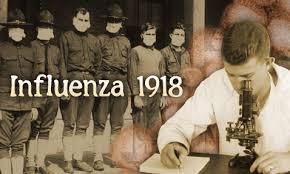
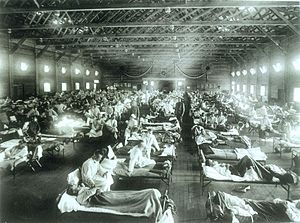
Before this post becomes too morbid, I’ll focus on the research I conducted for the one disease that threatened the lives of the characters in my 300px-CampFunstonKS-InfluenzaHospitalnovel, The Secrets of Dr. John Welles. It also occurred during the above-mentioned time period of the early 1900s.

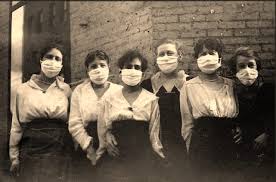
Known by the nickname Spanish Flu, the 1918 flu pandemic hit the world in two waves and reached remote places such as Pacific Islands and the Arctic. Around 500 million people were infected and 50-100 million died, 3-5% of the world’s population.

The deadly H1N1 virus attacked healthy young adults by causing an overreaction of the body’s immune system. The very young, elderly, or previously sick patients actually had a better chance of surviving because their immune system was already underperforming.

It’s also no coincidence that the flu virus thrived among the soldiers fighting in World War I. They were weakened from malnourishment and stress, and troop movements helped spread the disease. Obituaries of those who succumbed to the flu piled up next to those of soldiers who lost their lives in battle.

The Great Pandemic website provides valuable information on what is still one of the most well-known natural disasters in the world today. With all of the improvements in medicine, it’s hard to fathom something like this occurring again. Yet I wonder if we’re not living in the shadow of the flu pandemic or possibly its more lethal, mutated cousin.

images (6)

Your Old Friend, Collie Mercer

You probably already know someone like Collie Mercer. Her laughter can be heard over everyone else in the room, and it continues long after the joke is over. She’ll be wiping tears from her eyes as she quietly repeats the punchline, cackling to herself. You can’t help but love her as you laugh along.

Collie is the person who shows up first, works the hardest, and stays the longest to make sure things are completed. It would surprise her to know that people look to her for direction. She would never think of herself as being in charge; she’s just doing what needs to be done.

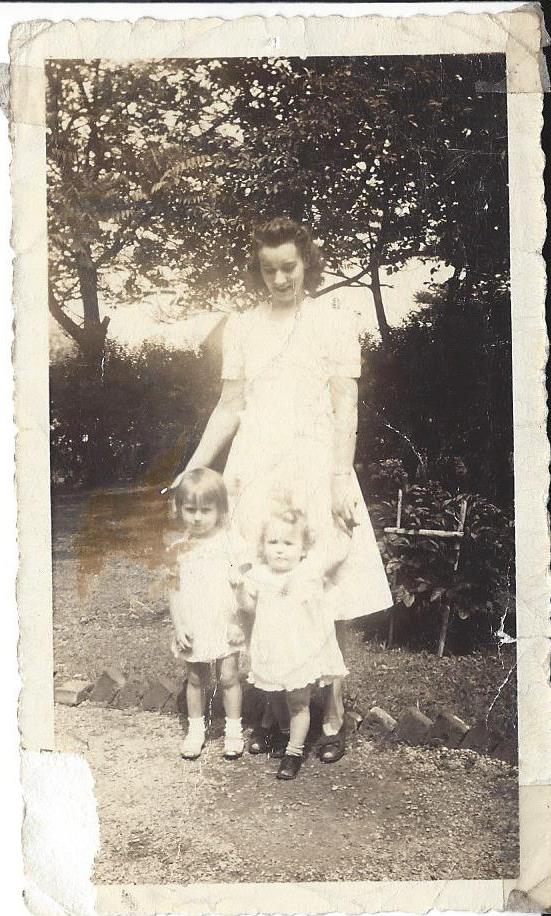
Grandma Smith Jane Deniece Dad

Before she was Grandma Smith. Pictured with my aunts, Jane and Deniece, pregnant with my dad.

At church events and community picnics, everyone scrambles to get a portion of whatever Collie brought. Her pies alone would set grown men to fighting for a piece if they didn’t already know that she always brings two.

Yet no one ever fought over Collie herself. She’s a robust woman, standing no less than five foot ten, and she’s as plain as a freshly sawn board. The truth of the matter is that she can outwork most men, putting quite a few to shame. There has never been a task to make her pause and think, “I wonder if I can do that.”

Five minutes in Collie’s presence will reveal her strong faith in God. She lives out her beliefs in front of her family and friends instead of preaching it to them, and even if someone doesn’t adhere to her faith, they know where to turn in a time of need. Prayers, food, clothing, and sometimes tough love are in ready supply when someone taps the fount of Collie’s generosity.

She’s quick to forgive except when it comes to her own mistakes. Like most people, Collie is hardest on herself. When the time comes to ask forgiveness of others, she knows how to humble herself and admit that she messed up.

You would never know that she didn’t finish her education. What she lacks in formal schooling, she makes up for in boundless practical knowledge. Although this limits the boundaries of her world, Collie never shuns the opportunity to learn new things. The only place she feels intimidated is in the presence of her worldly sister-in-law, Prudence.

Neat as a pin would be the phrase used to describe Collie. Her home and stepchildren are also spotless. She won’t tolerate tobacco or alcohol usage in her house and all animals must live in the barn including the family pets.

Collie’s influence in the lives of her stepchildren is significant. She is as firm in her love and devotion toward her family as she is her discipline of them when needed. The role of protector is one she takes quite seriously, especially toward John who never knew his birth mother. At times, she shields him too much. However, one characteristic she will never be accused of is favoritism.

At the end of the day, Collie Mercer is the kind of person you want to have as a friend. She will stand by you through the good and the bad, tell you when you’re wrong, mediate between you and another person until the situation is resolved without any hurt feelings.

For some people who will read this character sketch, Collie Mercer may sound extremely familiar. Without intentionally doing so, I created a character that is strongly based on my beloved grandma, Dorothy Smith.

More than physical appearance, Collie possesses the essence of what made my grandma a great woman. They aren’t a perfect match, but the similarities are comfortingly familiar. Perhaps I subconsciously did so because in the back of my mind, everyone should have had a chance to meet my grandma.

By the time you and Collie Mercer part ways, I guarantee you’ll be friends.

Crossing the Road with the Chicken

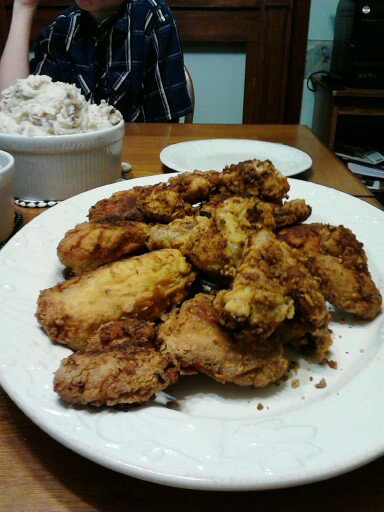
Buttermilk Fried Chicken with Mounds of Smashed Potatoes and a hungry child in the background.

Buttermilk Fried Chicken with Mounds of Smashed Potatoes and a hungry child in the background.

In June of 1920, John Welles travels with his Aunt Prudence to her house in Baltimore. It is the first time he has been away from his home on the farm. As much as he loves his family, John is desperate to escape the two tragedies that haunt him, leaving him with a painful secret.

John’s stepmother, Collie, packs a picnic lunch for him and Prudence. Buttermilk fried chicken is sure to ease the sadness John feels at his departure. Her gesture will also soften the heartbreak she experiences when her youngest child leaves home for good.

The fried chicken I imagined when I wrote this scene tastes like what my mother made during my childhood. Unfortunately, by the time I became a homemaker, frying had long since been replaced with baked or grilled skinless chicken. To make matters worse, Mom didn’t really remember how she prepared the chicken.

I called my sister-in-law because her parents host fish fries, but I discovered that she, too, possessed no talent for frying. After a good laugh, we collaborated on the following recipe. I took responsibility for the marinade, and she handled the coating. Together we monitored the frying process like a new mother watching over a sleeping baby. What we created was juicy, delicious, and not too bad for a couple of chicks learning to fry!

I hope you enjoy our recipe.

Buttermilk Fried Chicken

Chicken – 2 breasts, 2 thighs, 2 legs, 2 wings

Sea salt and freshly ground black pepper

2 cups buttermilk

2 teaspoons hot sauce

3 cloves garlic, crushed

½ teaspoons dried thyme

House of Autry Chicken Breader (I highly recommend this product; it is seasoned perfectly and deliciously)

32 oz. bottle peanut oil

Vegetable shortening

Rinse and trim the chicken pieces for excess fat, pat dry with a paper towel. Place the pieces in a baking dish and season with salt and pepper. Cover and refrigerate about an hour.

Mix the buttermilk, hot sauce, garlic, and thyme in a gallon-sized, re-sealable plastic bag. Add the chicken pieces, making sure all pieces are submerged, seal and refrigerate 2 to 4 hours, turning the bag every hour.

Remove chicken from the bag and gently shake off excess marinade. Place half of the chicken in another gallon-sized, re-sealable bag with two cups of chicken breading. Seal and shake thoroughly to coat the pieces. Remove from the bag and shake off any excess breading, set aside. Repeat with remaining pieces, adding more breading if necessary.

Fill an electric skillet with all of the peanut oil and two large spoonsful of vegetable shortening. Heat to 350° F, making sure the shortening melts completely. When the skillet reaches desired temperature, a bead of water dropped in the oil should dance across the surface.

I suggest cooking the thickest pieces first (breasts and thighs). Use tongs to carefully lower the coated chicken into the hot oil. The temperature will drop, so adjust the skillet heat as needed to maintain the correct cooking temperature.

The following indicates the number of minutes per side for each piece, with flipping in between, to ensure doneness without burning. The first five minutes per side sets the breading:

Breasts – 5, 5, 3, 3, 3

Thighs – 5, 5, 3, 3

Legs & Wings – 5, 5, 2, 2

Remove the chicken to a cooling rack lined with paper towels to drain, sprinkle with salt, and let rest a few minutes. Repeat with the remaining chicken. Serve with favorite side dishes.

The Standards of Prose – Realistic or Ridiculous?

imagesWho gets to decide what makes something good? Or great? I’ve often asked this question about art, books, and movies especially after I’ve read a review.

Does a critic have to possess a degree in the field they are critiquing? Must they successfully produce vast quantities of work in said field before they qualify as worthy to deliver an opinion? Or does simply earning a lot of money doing what they enjoy make them an expert in the field? And, most importantly, do we listen without question when they cast their vote for yea or nay?

These questions have been on my mind as I edited the fourth draft of my novel, The Secrets of Dr. John Welles. Admittedly, I have been (WARNING: cliché ahead) tying myself up in knots trying to predict what the agents I will query, the publishers they will solicit, and any potential readers may want out of my novel. Along the way, I may have even foolishly surrendered what I wanted from my book in my quest for perfection.

Recently, I tortured myself with chapter one rewrites until I met with my level-headed, best friend who talked me through my dilemma and put me back on track. Suddenly, writing was fun again.

But I’d be lying if I said I didn’t have a pea under the mattress of my brain, niggling me with doubts and fears. I reread the first lines, paragraphs, and pages of my favorite books, trying, without copying, to capture the essence of what made them great according to my perception of greatness.

About this time, I came across a brilliant essay written by Daniel Wallace titled Sentence Anxiety. Mr. Wallace eloquently stated exactly how I feel about the standards of prose to which writers must aspire if they want to be considered real writers and/or great writers. I enjoyed the entire essay, but I believe the following paragraph, my favorite, contains the spirit of the piece:

I suspect that most common readers — people who read novels but are not professionally connected to literature — simply don’t read like this. Not only do such readers lack the stylistic precision to tell actual bad writing from, say, Nabokov or Joyce amusing themselves with marginally overblown prose, such readers do not approach books with the professional reader’s exhaustion, his frantic need for newness. Few common readers, I humbly posit, read the opening pages of Harry Potter and the Philosopher’s Stone and cry, “Oh, God, not another school-based bildungsroman!”

After reading the complete article, I would love to hear your opinion on the subject.  In the meantime, I’m going to continue putting all of my efforts into creating my novel. My goal is to not only write good and great sentences, but to write an enjoyable novel that readers will find hard to put down, a book that they will recommend to their friends and family, and a story that will stay with them long after its conclusion.