And I Shine for You

As I prayed the Psalms today, I also read my notes from past years of study. The timelessness of Torah and its applicability in every generation has long fascinated me, so I wasn’t surprised that Psalm 33 is still relevant to the situation going on in the world today.

My translation of verse one starts “Rejoice in ADONAI . . .” but a slightly better translation would be “Shout for joy . . .” because the Hebrew behind the English expresses a sense of awe and crying out. Strangely, the same Hebrew word can be used to convey grief and to shine, as in stars, a lamp, or Lucifer. So, the verse begs the question: for whom are you shining?

Side Note: Hebrew is an amazing, multi-layered language that speaks Adonai’s truth from the very letters that comprise the words, so if you haven’t already learned Hebrew, do yourself the favor and start now.

Verse two begins with “Praise . . .” and most people understand that concept to some degree. The mistake that is often made is believing that we are conducting praise by simply saying, “Praise the Lord.” But that is only the command, not the action.

Praise comes from the Hebrew halal, to reflect, thus when we praise God, we reflect back to Him all that he has given us, and we rehearse His attributes while expressing gratitude.

In verse three, we read the first use of the word song, shir in Hebrew, in the body of a Psalm. The word also means poem, which doesn’t surprise me because the rhythm of a poem lends to its musicality and is similar to how song lyrics are constructed. Try singing the Psalms and reading song lyrics. The exercise is quite satisfying and lends new insights to both.

At the end of verse three, “shouts of joy” are mentioned, and the Hebrew word teruah, loud shouts, is employed. This pointed me directly to Yom Teruah, but that’s subject matter for another post. Feel free to investigate!

Verse four answers the question of why a believer sings. I’m going to present a better translation of the verse than what I have. “For the word of ADONAI is upright/straight, and all His works are faithfulness.” I know the last word doesn’t read very smoothly, but it will help make my point.

Torah, i.e., the “word of ADONAI” is the straightest path you will ever walk in your life. That is a fact, and it will never change. The beauty of verse four is the Hebrew word emunah, often translated as faith, but a better translation would be faithfulness. Faith is an intellectual exercise, but it needs to get out of our head and become something we do. Faithfulness is the structuring of our lives in such a way that what we do reflects what we believe. My point is that HaShem’s works are how He structured everything for us via His word, i.e., Torah. He did it for us, He is doing it for us, and He will do it for us.

In verse five, we read a stunning example of the balance God presents to us. “He loves righteousness and justice . . .” The Hebrew, tzedakah, is what is translated as righteousness, knowing right principles. Mishpat, the Hebrew behind justice, speaks to the application. Again, we see a dual process that requires thought and action, and that requires balance, which is foundational to our lives.

The end of verse five mentions how the earth is full of Adonai’s grace. You may safely read that as “and always has been.” Grace did not begin with HaMashiach’s appearance. HaShem’s grace is all over the Tanakh.

Verses six and seven are beautiful words of praise to God, but a breakdown of seven reveals another incredible example of the balance Adonai wants for humanity. We read imagery of HaShem collecting “the sea waters together in a heap,” which is a reference to oceans and lakes. That’s a very physical image.

But then we read “He puts the deeps in storehouses.” That would be clouds, which are a picture of the spiritual. Think about clouds: they’re beyond our reach unless we make considerable effort. In other words, you don’t walk outside, jump up, and touch clouds. You can, however, fly through them, and sometimes, they come down to us as fog and mist.

The point that’s being made by the picture is one of ebb and flow. Oceans and lakes evaporate and go up into the clouds. Clouds store the water until it returns to earth as rain, snow, etc. It’s cyclical, balanced, and exactly how we should be in relation to Adonai.

The words of verse eight, “Let all the earth fear ADONAI!” will trip up many people. It’s not fear in the same sense of being afraid of physical harm or frightened by something scary. Rather, it’s a respectful awe that should affect our behavior because we don’t want to disappoint God, the ultimate example of a great parent.

ADONAI brings to nothing the counsel/plans of the nations, He foils the plans/thoughts of the peoples.” So reads verse ten, and from this I take great comfort that Israel will never be moved by all the wicked schemes of those who brazenly reached out their hands to touch the throne of Adonai. To have the audacity to poke their finger in the pupil of His eye.

Verse eleven reminds us again that ADONAI is eternal, beyond space and time. Verse twelve reassures us that Israel is secure. Thirteen through fifteen remind us that, like a good parent, Hashem always has His eyes on us. Disregard that truth at your own peril.

There are subtle questions in verses sixteen and seventeen. In whom or what do you place your faith? Whether or not you know it and accept it, you are a warrior. How are you conducting battle every moment of your life? What is the source of your strength? How do you process the victories and defeats? The questions are for Israel and for every individual across the world.

In verse eighteen, we are gently directed back to verse eight as a reminder. “ADONAI’S eyes watch over those who fear Him . . .” means that He will provide us with guidance because we’re waiting for His grace. (There’s that word again! I cannot stress enough that grace is not a new concept.)

Within verse nineteen is the promise of deliverance for our souls from death. Some translations render that as “rescue them from death,” but that leads many to believe they’ll never suffer anything that leads to death thus making them actually fear death when trials and tribulations come. Read this verse through the lens of salvation for your soul because—NEWS FLASH—everyone dies.

Everyone up to this point, including believers, has died. It is forbidden to fear death (or anything), and we’re told as much when Scripture repeatedly tells us to “fear not” and fear only Adonai. It’s a difficult concept to embrace, but it is extremely liberating when you finally do. In fact, you’ll enjoy life to its fullest once you wrap your brain around this truth.

The last line about famine intrigues me considering the first part of the verse, which speaks about death. Literally, physically, famine can lead to death. Read the verse with spiritual food in mind, and although our bodies may perish, our souls will forever be fed if we know where to go to receive the food and actually do so! In that way, famine will never touch you.

The most beautiful conclusion, and yet not an ending but rather a jumping off point, is written in verses twenty through twenty-two. Actively waiting for ADONAI should be the exercise of all Israel. God knows Israel needs Him right now more than ever. My prayer is that all Israel will come to know this. I pray all humanity will as well.

True joy, and true shalom as well, resides in our hearts “because we trust in His holy name.” Again, that’s not just head-faith and/or believing that God exists. In the Hebrew mindset, a person’s name is his character, and the same is true of Adonai. It means we’re to believe in who He is based on what He does. The being and doing are the same and in perfect balance. ADONAI is His name/character, not just what He’s called.

To experience His mercy, put your hope in Him and Him alone. Look to the last three verses of Psalm 33 if you need help answering the questions in verses sixteen and seventeen.

Shalom aleichem!

PS – ADONAI in this essay represents God’s ineffable name, the Yod-the Hey-the Vav-the Hey.

Art Through the Ages

I have lived long enough and read widely enough to realize that in every era there are writing rules that the current generation loves to impose on writers, especially the new and up-and-coming. And I chuckle to myself.

I laugh first of all because disclaimers are given regarding writing rules and styles that came before, and there is a modicum of tolerance and/or permission granted should a writer (new or established) tiptoe toward employing one of these old relics. Warnings are also issued that you may be trying to appear clever or as a trailblazer when, in fact, you’ll just end up looking like a newbie, and nobody wants that. Right?

The second reason I’m humored is because yet again, through the lens of my gifted abilities and chosen profession, I see the striking similarities between writing and Torah observance.

Torah is timeless. In every generation, we look to see how the commands should be applied to our ever-changing lives in the moment. There are no loopholes in Torah, but there is an abundant amount of grace as we work out the commands in our lifetime.

Writing is the same. In every generation, we look to see how rules should be applied to our writing to convey our story, our message, in the best possible way.

Sadly, in Torah observance and writing, you’ll be told that certain commands/rules are old, outdated, unfashionable, and many other such detrimental remarks. I urge caution against discarding what came before, especially if doing so is simply for the sake of appeasing an audience that has lost the ability to slow down, make a significant effort to employ mental resources, and appreciate the energy that has gone into the creative process.

I suggest building on the foundation of what came before to see how it applies to your life or writing today. Specifically for writing, listen to the character who requires the long sentence to express exactly what she needs to say. And don’t reject the archaic word in the mouth of the character who uses it to pack a punch in his statement. If your climax comes at the beginning of your story, then spend the rest of the time detailing every character’s reaction to it. Or how it affected their lives. Or how it led to another inciting incident.

So, whether it’s your person or your writing, don’t be too hasty in discarding the structures of old. Instead, infuse both with life, and joy, and beauty, and balance, and growth. These elements are essential to creating a great work, whether it’s you or your writing.

Quotation Station

Sometimes, when we’re so overwhelmed by events that we cannot find the words to express the many emotions we experience throughout the day, it’s good and acceptable to consult the wisdom of those who came before us. Consider King David, a man after Adonai’s own heart, who wrote down his words and organized them into the prayers we can access today.

Many are taught the freedom of expression that comes when speaking with Adonai, and yes, it does exist. But what many are not taught is the awesome benefit of praying “the prayers” as they are recorded in the Bible and elsewhere. Imagine, people all across the world saying the same words at the same time. “But how can we actually be praying them at the same time unless we coordinated beforehand?” you ask.

Because Adonai is outside of time. Shabbat Shalom to those seeking rest and peace.

Avinu Shebashamayim

“Avinu Shebashamayim, Rock and Redeemer of Israel

Bless the State of Israel, the start of flowering of Redemption.

Shield it with Your love; spread over it the shelter of Your peace

Guide its leaders and advisors with Your light and Your truth.

Establish for them Your good counsel.

Strengthen the hands of the defenders of our Holy Land

Cause them to inherit, our G-d, deliverance

Place the crown of victory upon them

Give the land peace, and everlasting joy to its inhabitants

And visit all our Brethren of the house of Israel,

in all the lands where they are scattered,

and bring them rapidly to Zion, Your city,

and to Jerusalem, where Your name lives,

as it says in the Torah of Moses, Your servant:

‘Even if your dwelling is at the end of the sky,

G-d will congregate you from there, and bring you from there,

and will bring you toward the land that Your forefathers inherited

and you will inherit it and G-d shall benefit you

and multiply your numbers greater than your forefathers.

Then the LORD your G-d will open up your heart

and the hearts of your offspring to love the LORD your G-d

with all your heart and soul, in order that you may live.’

Unify our hearts to love and worship Your name and to keep all that is in Your Torah,

and send us the son of David, the Messiah of Your justice,

to redeem those who wait for Your salvation.

Appear with the glory and the pride of Your strength,

in front of all the inhabitants of the Universe,

and all those who have breath will say:

The G-d of Israel is the King,

and He reigns over everything.

Amen, forever.”

(Courtesy of Sefaria)

The Thing About Candles

How do you make a candle last forever?

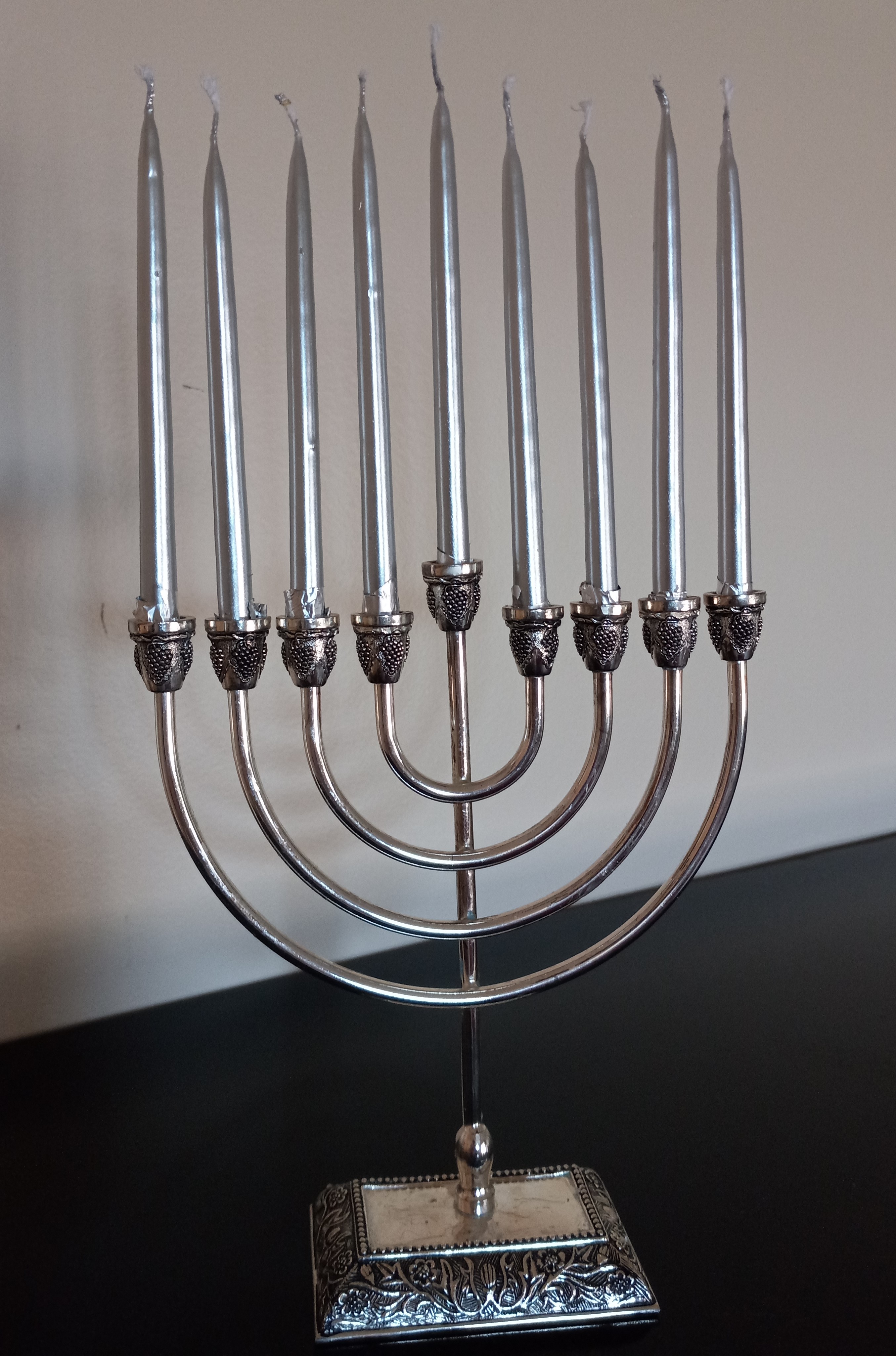
As I reflect on the past nights of Hanukkah, the first thing that comes to mind is the light. We start by lighting the shamash (servant) candle that is placed in the middle of the hanukkiah, and then we use the shamash to light the other candles. The first night, it’s just one candle and the shamash, but each night another candle is added until they total eight. What starts small grows into beauty and brilliance.

I know many menorahs and hanukkiahs are fashioned with the shamash at one end, but there’s a reason why it belongs in the middle. At most, maybe slightly raised or set in front of the other branches.

It’s all about balance.

Read Torah to see that Adonai Himself designed the menorah, and because He did, the menorah is perfect. Hanukkiahs, created with two extra branches because of the eight-night miracle of oil, followed suit.

Yes, the menorah and hanukkiah reflect light, which is a picture of HaShem, but they also represent balance, which is an equally important picture of the one and only living God. If branches on either side were lost or broken off, the menorah/hanukkiah could not stand in balance. The same is true of us, who are also pictured by the menorah/hanukkiah. If we go too far to the left (a picture of the physical) or the right (a picture of the spiritual) we will be out of balance, and everything we do diverts from Adonai’s perfect path.

That’s not to say that one side is more important than the other. However, don’t be so physically/worldly minded that you become an animal, but by the same token, don’t become so spiritually minded that you’re of no earthly good. Maintain balance.

Remember Who gave you your light!

The shamash, or servant, candle represents HaMashiach, who belongs in the center of our life so we can maintain balance. The beautiful thing about Yeshua is that His light never diminishes within us as long as we keep Adonai’s commands.

Again, in HaShem’s perfect, infallible Word, we see the Light that has been there all along, waiting for us to discover Him in this dark world. King David said as much in his Psalms, and he understood that Torah is the lamp, the Word is the Light. His direct descendant, King Yeshua, confirmed the declaration, and it is recorded by His disciple, John.

Everyday miracles.

The story of the Maccabees happened to Israel, but there are many reasons why everyone would benefit from keeping Hanukkah.

First, it is a time to rededicate yourself to Adonai. Repentance is so important to Our Father, Our King. His grace is all over Torah, and one doesn’t have to dig very hard to find it or see that He didn’t quickly invent grace for HaMashiach’s arrival. It’s been there all along.

Second, consider the miracle performed by HaShem on behalf of Israel. The simple commodity of oil was required to keep the command to light the menorah. But the oil had to be pure. We, too, in order to reflect Adonai’s Light, need to be pure. And just like the miracle of the oil, when we conduct ourselves purely, the simple things in our life extend until we realize they are blessings.

Third, Adonai’s truths are all over the story of the Maccabees and Hanukkah! I believe my favorite has always been the tremendous victory by HaShem as He used a small contingent to do so. Our Creator always works with tiny percentages and remnants from which and with whom He does amazing things.

Better than physical light.

So how does one make a candle last forever? By lighting it.

I’ve studied physical light in school, and although I’ve forgotten much about wavelengths, photons, particles required for light to travel, etc., etc., what I remember the most is that light goes on forever. What I’ve learned by studying Torah is that spiritual light possesses many of the same qualities but in a better way.

We are the candles through which HaShem’s Light shines brightly, and even one of us can scatter the darkness. But we must remain lit from within by the Servant Candle. This is accomplished by returning to the source of all Light, i.e., Torah. Get your recharge daily.

We should stand tall, shoulder to shoulder, with the other lights on Adonai’s menorah all year long. By doing so, the Light in us will attract other people to our Light. Equally important is how we may need to shine more brightly when a loved one’s flame seems to flicker or go dim. Don’t forget the necessity of shining Light to other candles.

Like a physical candle, you may have times when you feel absolutely spent. Like spiritual light, when you know where to find the fire to relight yourself, you will shine more brightly once again. That is the type of Light that continues forever.

Great things are coming.

In the past, I’ve experienced post-Hanukkah melancholy because once the eight nights were completed, I quickly found myself between the millstones of the daily grind. This year, I’m going to work harder on me to ensure that my Light stays lit.

Yes, things look hopeless in the world right now. I see the nations coming against Adonai’s people. I heard, dare I say it, that people are calling current events World War III. I’m not fazed by any of this because appearances are deceiving, people love to label everything, and Adonai is still on the throne.

The eighth night of Hanukkah begins at sundown tonight. Eight represents new life. Will you begin your life anew with us?

See you at sundown.

~The Gibsons

Coming to You Live from Hanukkah!

It’s no coincidence that during Hanukkah the Torah readings included the portions of Vayeshev and Mikketz. Of all the stories in Torah, Joseph’s most closely parallels that of Messiah.

The beginning stages are set in Vayeshev, there’s an unexpected digression in the middle of the tale that, if you miss it, will leave the story incomplete, and the portion ends on what appears to be a hopeless situation. On the other hand, we see Joseph’s fortunes take an upward turn in Mikketz and the tests of repentance, humility, and forgiveness expertly woven into the narrative.

I’ve often imagined myself as a casual observer, perhaps a maid in Joseph’s house, watching these strange events unfold. Or sometimes, when my imagination explodes, a time-traveling reporter with the powers of invisibility who inserts herself into the scene. But even as a modern-day reader of a story with which I am very familiar, I find that every time I read the tale, I am no less excited as Adonai brilliantly crafts the scene and what I lovingly call “The Big Reveal.”

Genesis 44:18, where Judah speaks, always thrills me. In that small break between verses 17 and 18 hangs the fate of Joseph’s brothers and the world. I encourage you to not rush from one verse to the other without considering everything that came before and everything that will follow. It is in such pauses that Adonai can be found.

Circle back to Joseph’s situation at the end of Yayeshev. The cupbearer may have forgotten Joseph, but Adonai did not. In another read-between-the-lines moment, HaShem is making Joseph wait. Why? We have no idea what took place during those two years, and yet . . .

How many times has HaShem made us wait for something, seemed like He was beyond reach, and our hope began to wane? There’s your answer: never give up hope because Adonai is always in the middle of your situation, whether it’s illness, financial loss, attack by genocidal maniacs, or being sold into slavery by the hands of your brothers. It’s in the waiting that we grow and mature. We don’t require the specifics of Joseph’s situation to know that this applies to us.

Unless you live as a total recluse, you know we’re living in dark days wherein the battlefronts change daily in a war that is rarely, if ever, well defined. But the Light still burns as strongly as ever, and it will not be extinguished. Again, it’s by design that we’re celebrating Hanukkah—a time of miracles, light, truth, and victory achieved by small numbers with the assistance of Adonai—right now!

The next Torah portion is Vayigash, and it reads like a reporter’s dream scoop. What a story to give a world in need! Pay attention to the important key that Joseph only revealed himself when all the brothers were present. Chew on that for a moment before rushing toward the exciting conclusion, which, in truth, is a glorious beginning.

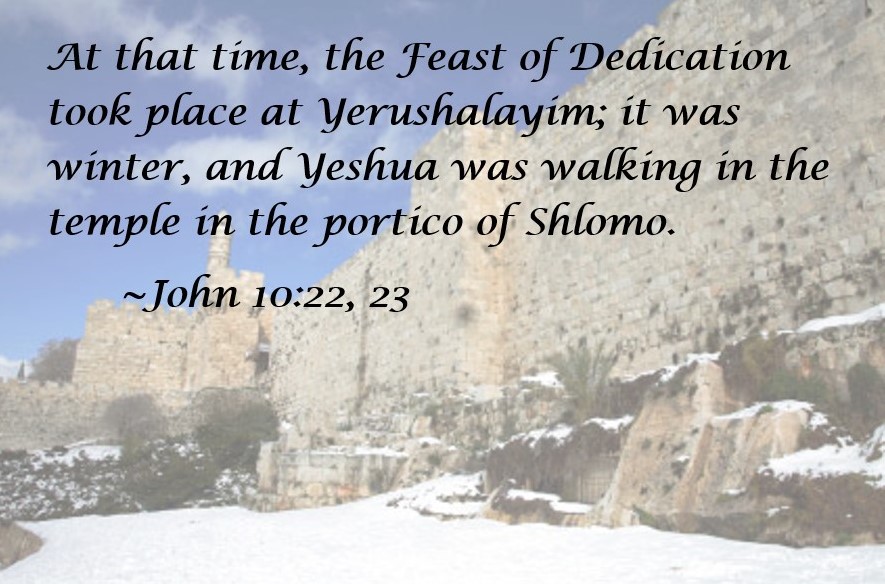
I’m praying for Israel and the world during the eight nights of Hanukkah, that sacred time when hidden things will be revealed (John 10:22 – 30), when strength in small numbers does amazing things, when Adonai’s hand is in the middle of the situation up to His elbow!

Take this time to pause, reflect, and rededicate yourself to Yeshua HaMashiach. We’ll see you at sundown for the seventh night of Hanukkah celebration. Baruch haba b’Shem Adonai!

~The Gibsons

Sukkah Lessons

My thoughts are all over the place as I download and process the past week. For this reason, my post may not read as smoothly as others, but I promise that it will be no less enjoyable.

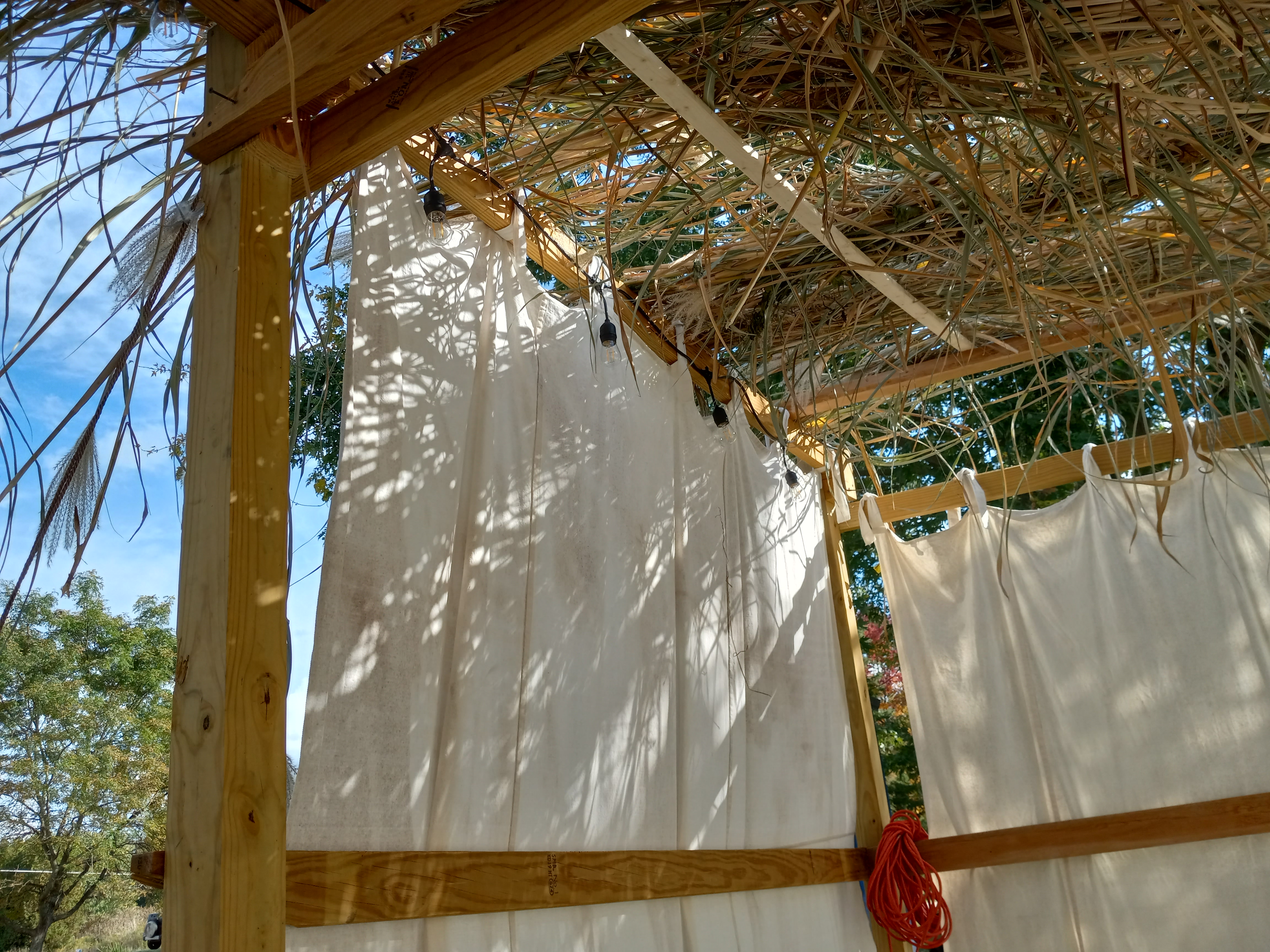
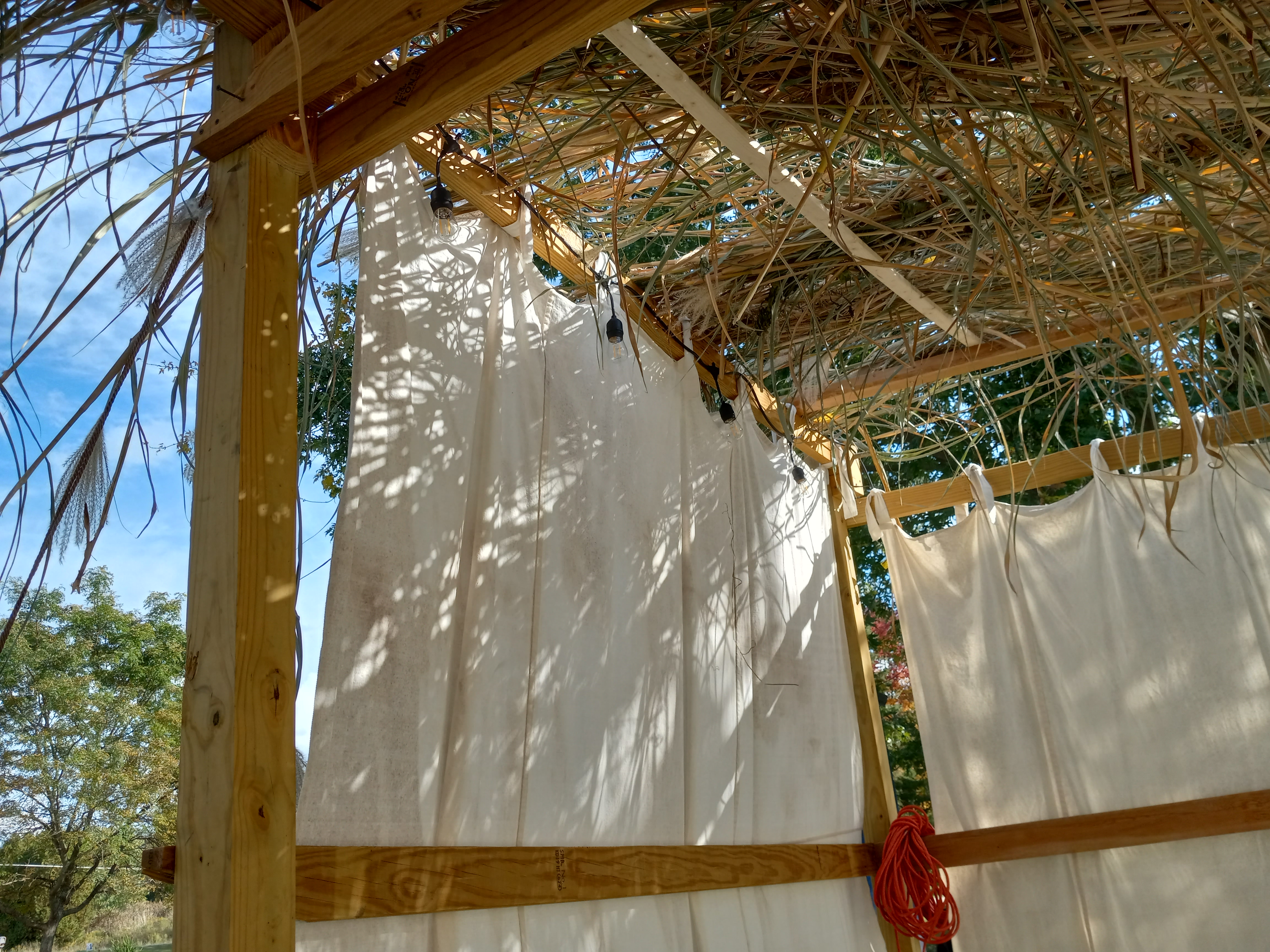
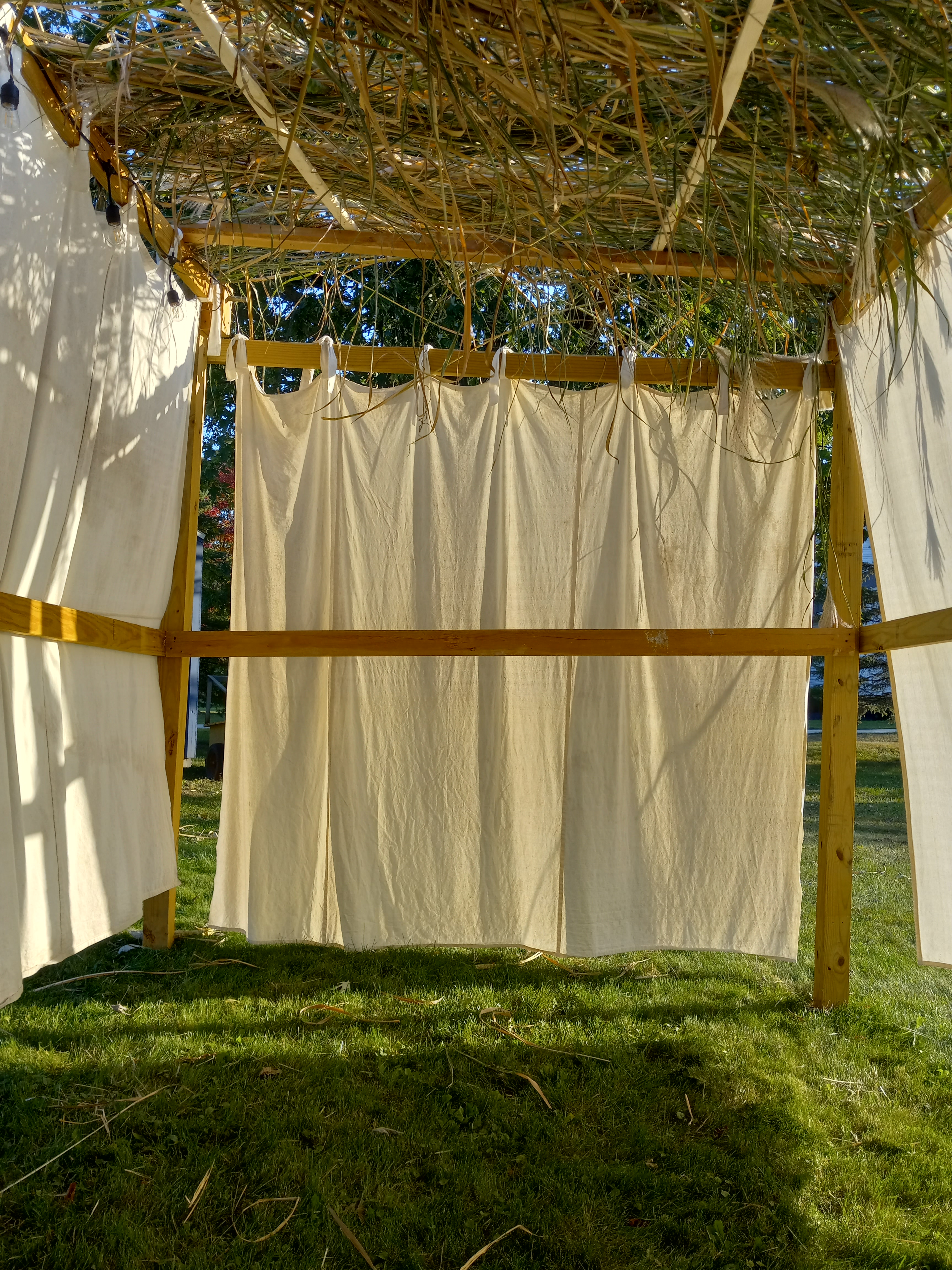
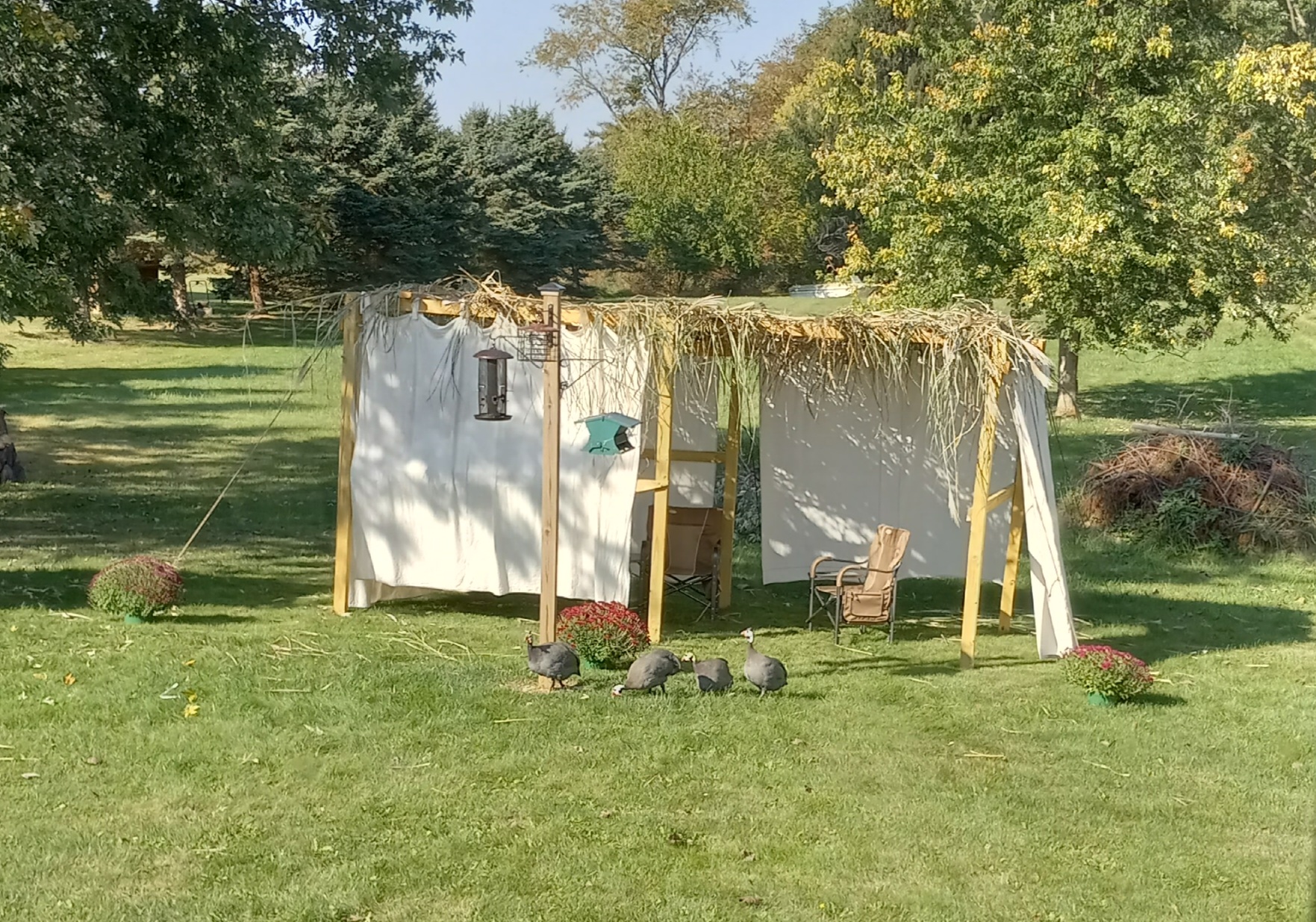
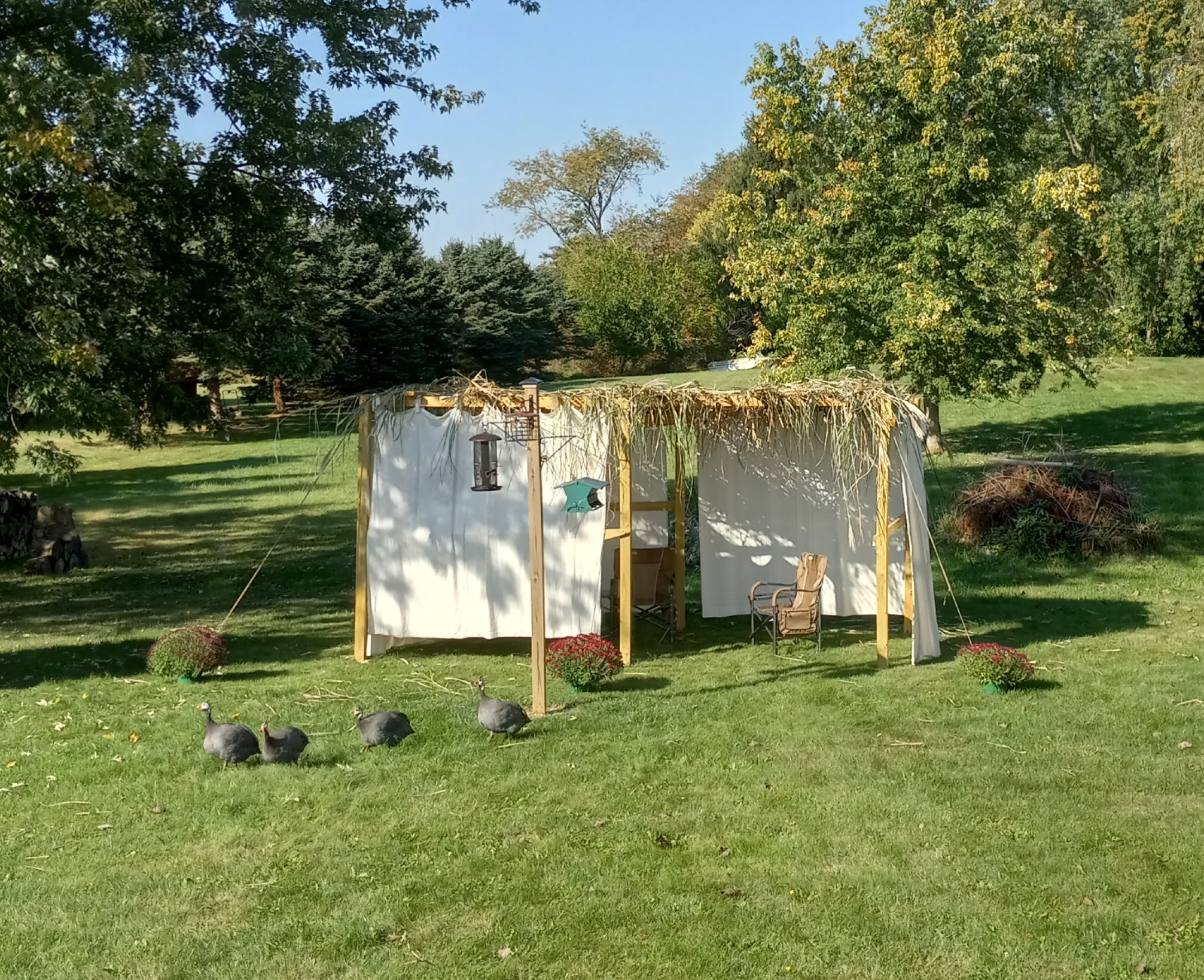
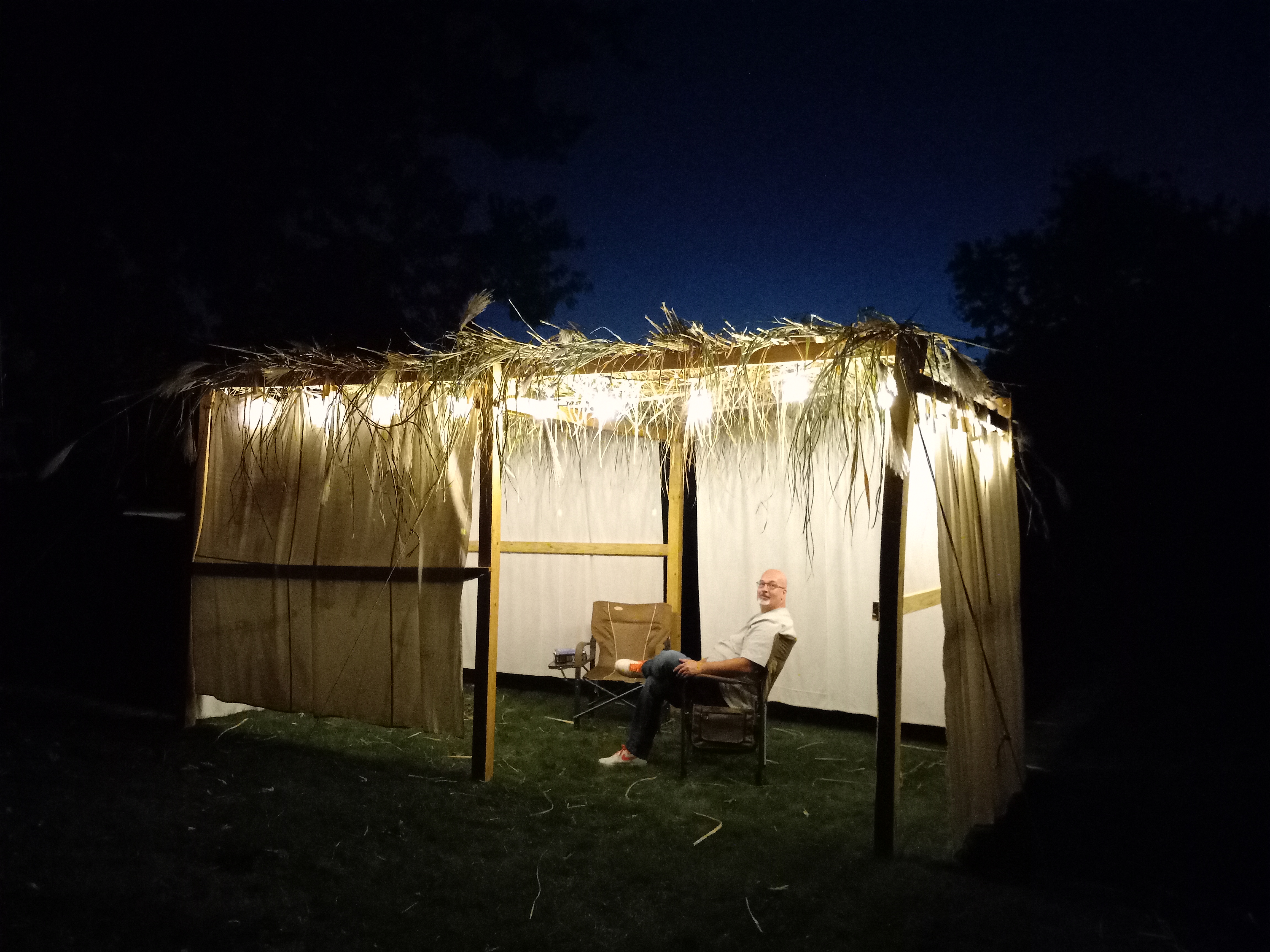
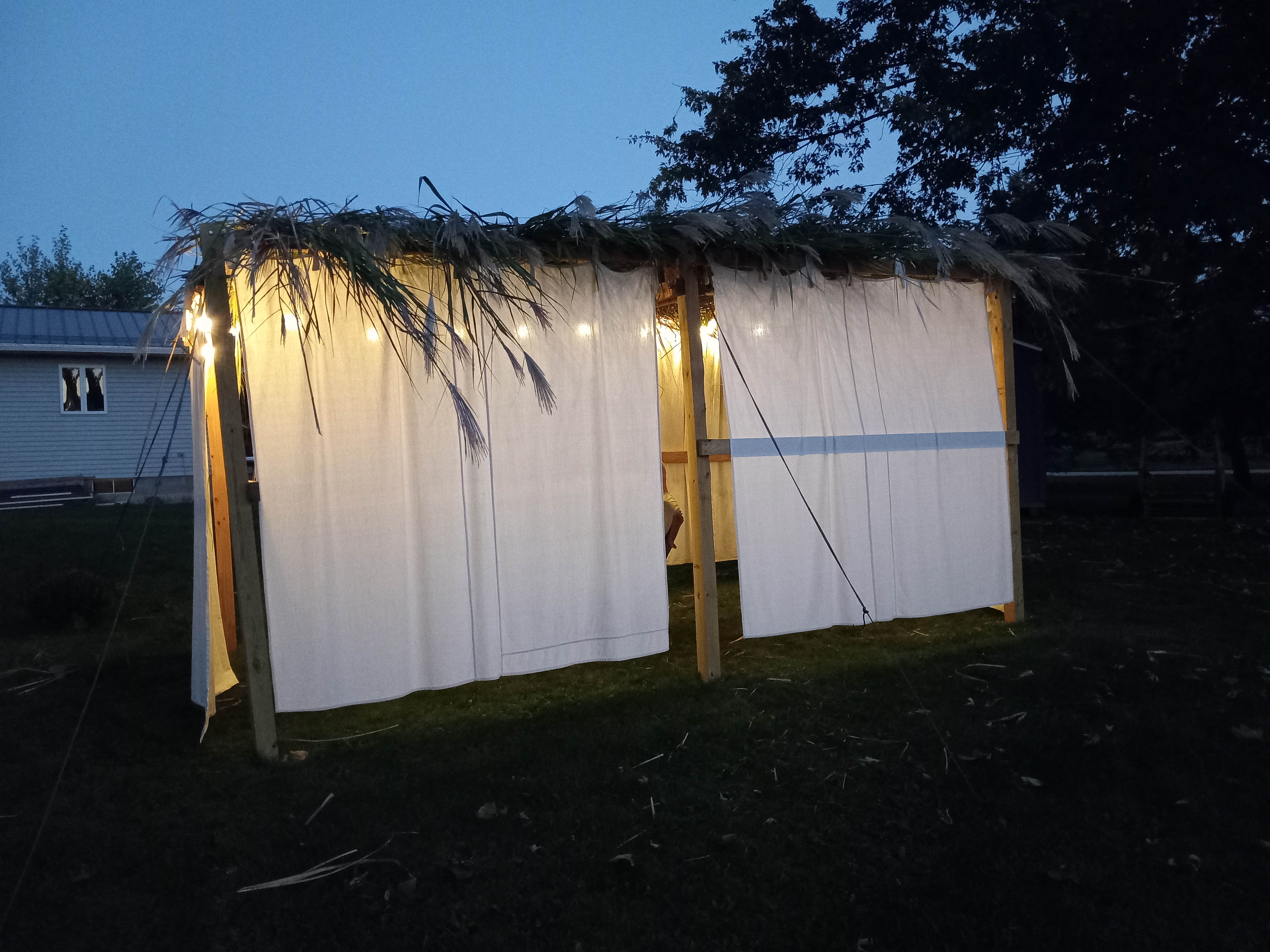
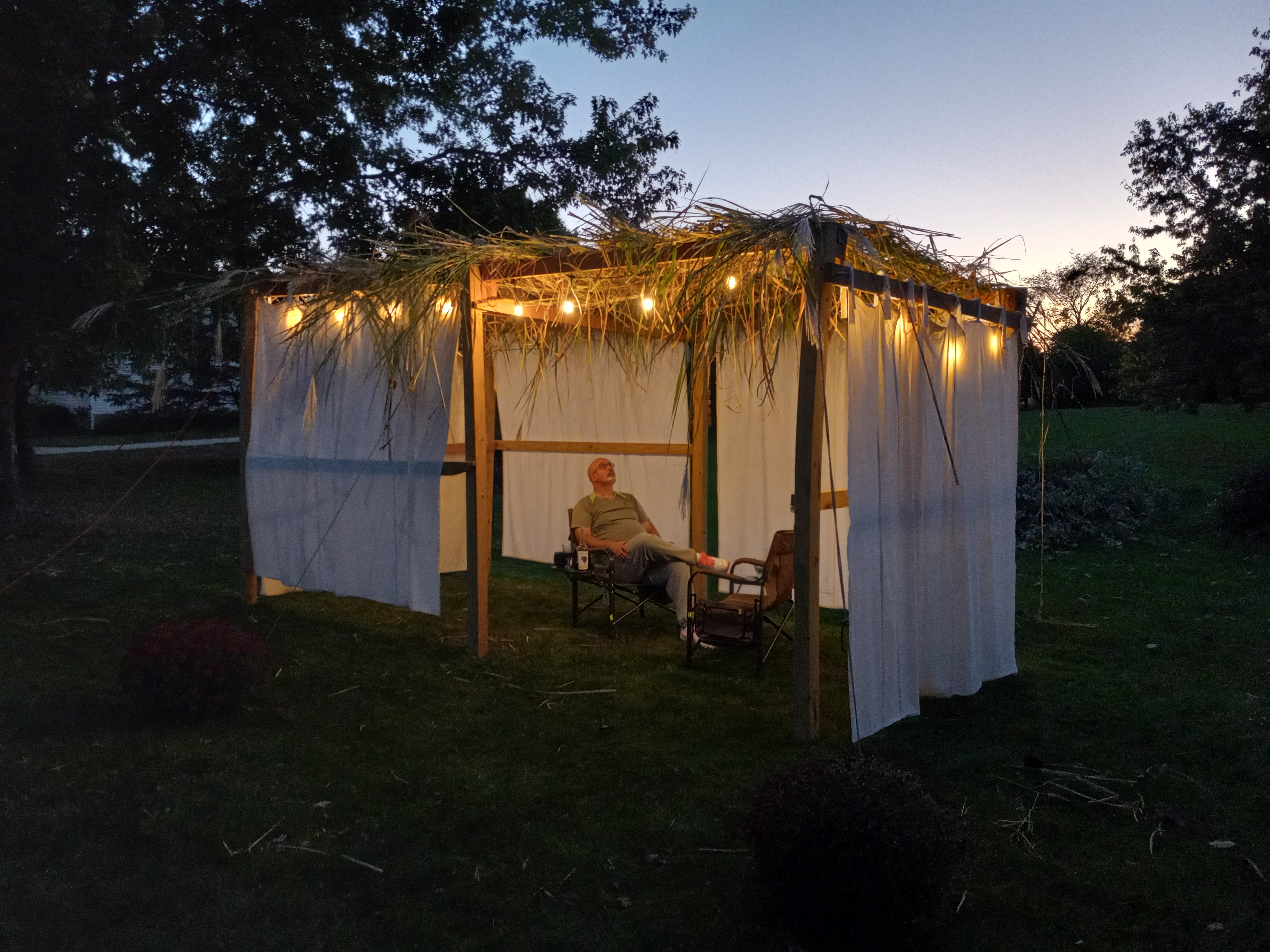
The Gibson Household celebrated Sukkot during what was an unusually warm week of October. The sunshine was amazing, and we relaxed in our sukkah during the day and long into the evening.

One theme or concept that Adonai repeatedly showed me as I sat in our little sukkah was how fragile human life is. It was a gentle reminder to walk with Adonai and not attempt to bend Him to my will. My faith was strengthened when reminded that with my life in His more than capable hands, who or what did I have to fear?

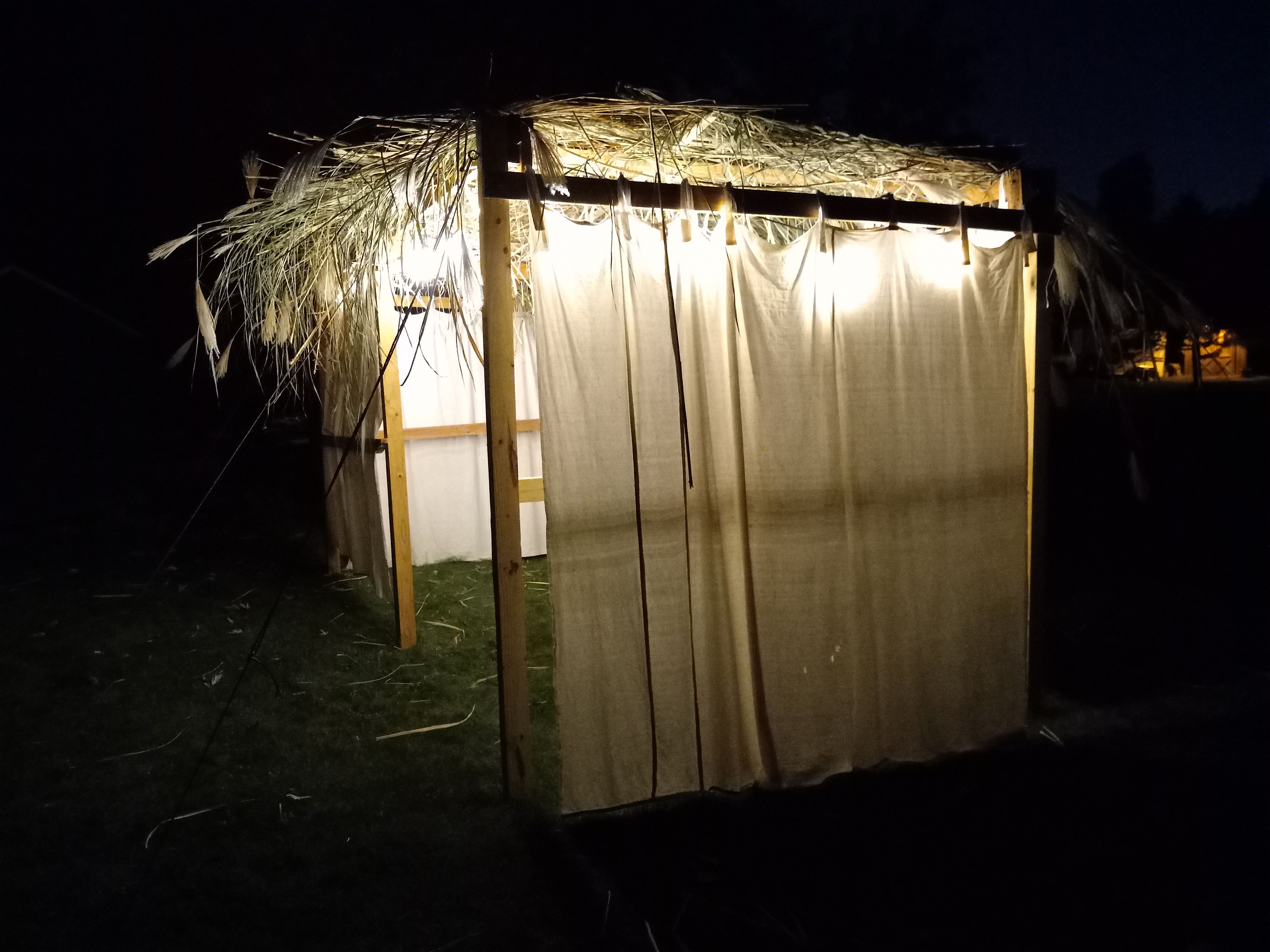
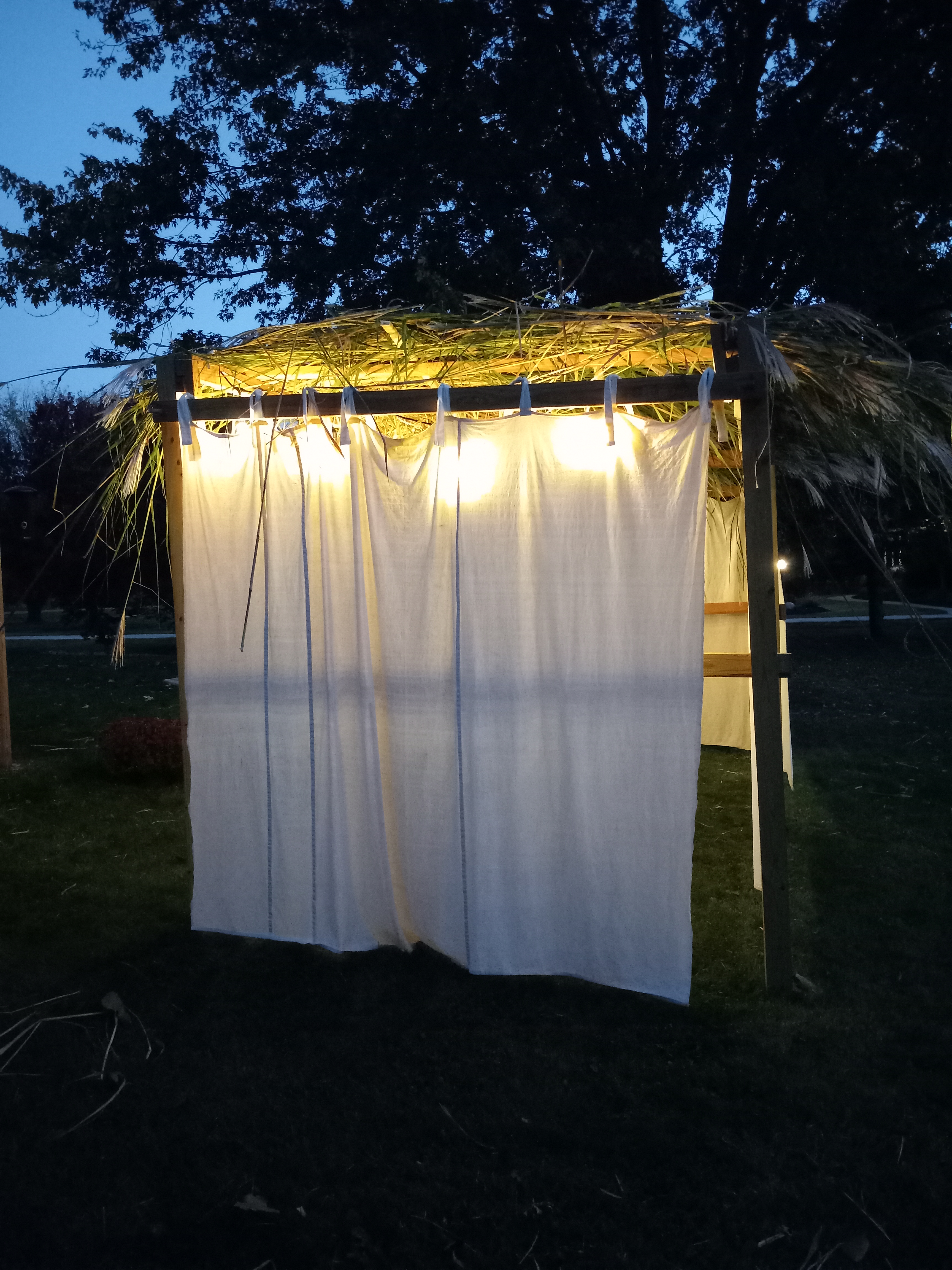
The sukkah frame we used this year is one we’ve employed for two or three years now. Admittedly, we were lazy and failed to put our sukkah up one year since the construction of this particular frame. While I won’t make excuses for myself, I am reminded that Adonai is patient with me. As long as I’m drawing breath, there is an opportunity to do better in the next moment.

I really like this frame because our son, Joshua, designed it. It’s very sturdy, and still the designer in him wants to create something more substantial. He asked if he could dig postholes, fill them with concrete, and add forms that would secure posts in place. I gently reminded him that his idea would be permanent, and one of the points of Sukkot was to remind ourselves of the temporary nature of this portion of our life. He nodded in agreement and went on to design a sturdier frame under the requirements that it must be able to be dismantled and transported not unlike the original sukkahs Israel used.

Adonai’s most poignant reminder regarding the fragility of life came late Thursday evening. I haven’t posted about this on social media because I was so stricken by what occurred that I didn’t know how to process it.

A storm—one that didn’t produce copious amounts of wind or rain—blew our sukkah right over. I was horrified because we couldn’t repair or restore anything until Friday. As Will assessed the damage and ended up dismantling our sukkah until next year, I turned my eyes from the windows every time I walked by.

I never asked Adonai why this occurred, and I don’t believe in signs or omens of ill. I was reminded of the fallen sukkah of David and how Adonai is restoring it more every day. I thought to myself how wonderful it would be if Yeshua HaMashiach returned on Shemini Atzeret or Simchat Torah.

One thing that did raise my spirits regarding our sukkah was our son’s determination to redesign it within my guidelines, and even more beautiful, his suggestion that we use a wood burner to inscribe our favorite passages of scripture into the beams.

And then, the next morning, we arrived for Shabbat services to learn that Godless cowards had attacked Israel. The enemy opened another battlefront, and believers met the onslaught fiercely in prayer. Believers are soldiers who, at any given moment, are on their knees fighting evil.

So, as the Gibson Household embarks on another cycle of life, studying Torah, preparing for the moedim, and fighting in the many warzones the enemy launches to discourage us, I’m encouraged that my fragile life is, as always, safe with Adonai.

Baruch HaShem!

Quotation Station

 Your righteousness

is eternal righteousness,

and your Torah is truth.

~ Psalm 119:142

Set them apart for holiness

by means of the truth

—your word is truth.

~ John 17:17

August – The Sunday of Summer

Hello, Realmers! I flew solo this past Shabbat preparation while making Robin Luton’s challah recipe. If you haven’t tried your hand at challah, Robin’s recipe is a great place to start and can be found as a link in my blog post My Summer Vacation by HL Gibson.

So, the first lesson I learned when making challah is to never be too busy with other stuff. Neither a well-organized list of things to do nor past bread baking experience kept me from making a crucial mistake with my challah. For next week, I’m going to eliminate any activity and errand that isn’t Shabbat specific and guard my time with Adonai. The experience reminded me that when I make mistakes, I serve a gracious God who is patient and compassionate, who wants me to learn and succeed.

The verse in Torah about man not living on bread alone instantly came to mind, and I understood the lesson that just as I need to become familiar with the challah recipe so that I don’t make mistakes, I need to become familiar with Adonai’s Word so that I don’t make mistakes. Repetition leads to familiarity and familiarity produces understanding and understanding leads to wisdom.

Other exciting things taking place during my vacation from writing include two concerts performed by the Cleveland Orchestra at Blossom Music Center, tickets courtesy of my Aunt Mary Alice. The first was Debussy followed by Sibelius. Both evenings were absolutely magical, and the hubby and I are seriously considering season tickets next year. We had forgotten how peaceful and civilized such performances are and cannot wait to attend again.

I received my new book, The Way of Life by Toby Janicki, but before I allow myself to even remove the shrink wrap, I’ve made the promise to myself to finish with my study of The Rivkah Remnant. Several friends also ordered The Way of Life, and from what they are already saying about it, I’m getting excited to read it myself, and I can see another book study on the horizon!

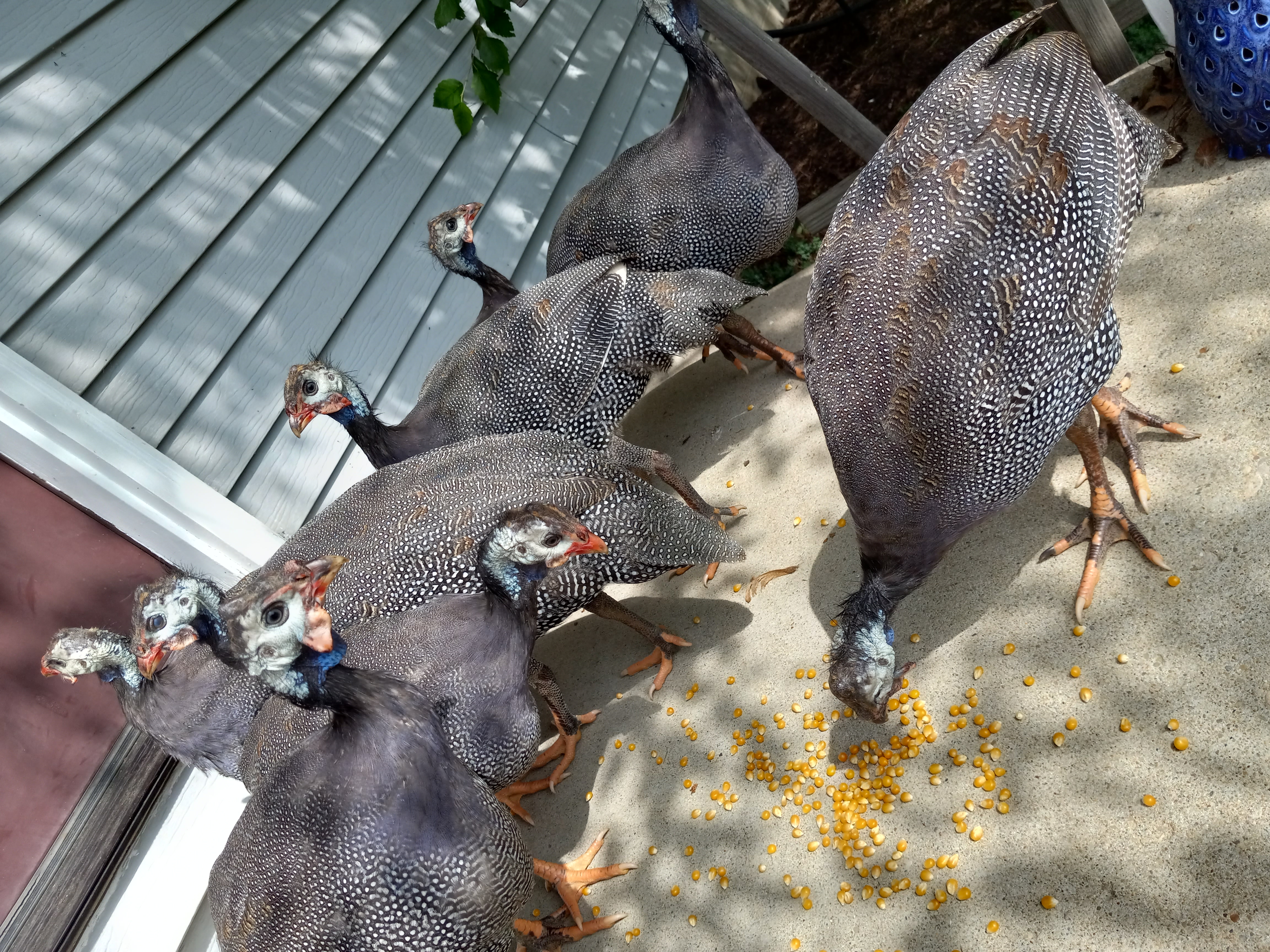
If you follow me on Facebook, you’re probably aware of my drama with stray guineafowl that are wandering in our neighborhood. There were eight originally, but one has gone missing. I’ve taken to feeding the high-strung buffoons, and while they sound like a cross between a turkey, crow, and velociraptor, they’ve captured my heart. I worry they’ll be hit on our busy road or that our neighbor’s mean dog will attack them. My goal is to secure them in some sort of pen before winter sets in. Wish me luck.

I didn’t choose the guinea life; the guinea life chose me.

More exciting news—I’m getting ready for another book signing in September! A friend who owns a florist shop/greenhouse/giftshop and bookstore agreed to host me and other local authors. The event is going to be great with food trucks, and of course, gorgeous, colorful mums for purchase in the greenhouse. This is one event you won’t want to miss.

That wraps up this week’s report. Enjoy your summer, stay cool, and remember to grab your copy of Realm. It’s not your average beach read.

Say My Name, Say My Name

After reading this week’s Torah portion, Naso, I continued my studies by reading Rabbi Jonathan Sacks’s essays found in his book series Covenant & Conversation, Numbers: The Wilderness Years. The essay What Counts? discussed the census at the beginning of the book of Numbers, B’midbar in Hebrew.

As always when reading Rabbi Sacks’s works, they are so infused with a passion for Torah and a love of Hashem that I must often remind myself that he passed on. I cannot believe this brilliant man is gone. Fortunately, and with much gratitude to Adonai, the Rabbi’s works live on.

One point Rabbi Sacks made in this essay was the importance of the individual to Hashem. He quoted one of my favorite Psalms (147:4) which says that Adonai “counts the number of the stars and calls them each by name.” He went on to say:

A name is a marker of uniqueness. Collective nouns group things together; proper names distinguish them as individuals. Only what we value do we name. God gives even the stars their names. All the more so does this apply to human beings, on whom He has set His image. When God calls, He calls our name, to which the reply is simply, “Hineni,” “Here I am.”

And that’s when it hit me.

Hebrew is an amazing language with a message for all humanity encoded into the very letters themselves. Learning to read and speak Hebrew will only enhance one’s Biblical studies, so I strongly encourage digging in as soon as possible. But this time, English came through, and not just the words but a smidgeon of punctuation, too.

What first leapt off the page at me was the fact that with the simple addition of a comma, one could render the response, “Here, I am,” or even better, “Here, I AM.” The focus is taken off the person and placed with much respect on Adonai Himself. The reply acknowledges Him by name in the same way a student might say, “Here, Mrs. Smith” when being called on by a teacher or other authority figure.

The second way I saw and understood the reply “Here I am” was as a bridge between myself and our Father, Avinu, who is also our King, Malkeinu. This perspective enabled me to see that while Adonai the King often seems to be over there because He is so vast, there is nothing else, and “in Him we live and move and exist” (CJB), Adonai the Father is also right here because He breathed into humanity, and I am a living soul. In other words, what many call the divine spark resides within me.

It’s as if Adonai said, “There I AM, here I AM, and everywhere in between I AM because where could you possibly go that I AM not?” We are in Hashem, and He is in us. Please do not hear me say that I am in any way equal to Adonai; I am merely a conduit through whom He speaks. But it is because He is in me that I, created in His image, can answer “Here I am” knowing that “here He is.”

Lastly, as Rabbi Sacks mentioned in a footnote included in the passage above, when Hashem calls our name, He often does so twice. It is done as an expression of love, an endearment. My favorite instance of this is when Yeshua spoke Martha’s name twice thus elevating this humble woman to the level of the patriarchs. But that’s a discussion for another time.

May Adonai call on you, and when He does, may you remember to simply say, “Here I am.”

Avinu, Malkeinu

(I recommend watching the link above in the Brave browser to avoid advertisements.)

~~~

Sacks, Jonathan. “What Counts?” Numbers, The Wilderness Years, First ed., Maggid Books & The Orthodox Union, New Milford, CT, 2017, pp. 76–77.

Quotation Station

A person should always engage in Torah and mitzvot, even if not for their own sake, as through it one comes to perform them for their own sake. ~ Pesachim 50b

Shabbat Shalom to all the creatives who make their best art when they imitate the Creator!