Just the Facts, Ma’am

Just the Facts, Ma'amI recently discovered a misconception regarding members of the Grammar Police that I feel compelled to correct. The Grammar Police are people who are passionate about grammar. They are not snarky, snippy know-it-alls who want to make you look bad in front of other people. I point this out for members of the Grammar Police as well. If you’re not showing tact when correcting people’s grammar, you might want to step back and reassess why you became a Grammar Policeperson in the first place.

First of all, it’s because of a love of grammar. Second, it’s based on a love for the person speaking or writing. In the event that you don’t have good feelings toward the person whose grammar is in need of correction, refer back to the first point or keep your mouth shut. Remember: there is a time and a place to correct grammar. Choose both wisely.

For those not of the Grammar Police, keep in mind that our passion for grammar does not mean that we are above correction ourselves. Any Grammar Policeperson who believes this to be so needs to turn in his or her badge immediately. Correction is where learning takes place, and who doesn’t want to learn correct grammar?

Two of my favorite grammar websites are Grammarist and Grammar Girl. Between these two, I keep quite a few mistakes out of my speech and writing. Of course, that’s not to say I haven’t made some doozies in both. No, you don’t get to know the details.

Baring My Writer’s Soul – Part 17

Writer's Soul 17If you’re like me, you have to build up to writing, ease into it. To wake up and start writing is like jumping out of bed and going to work without coffee.   There are people who can do this; God bless their perky morning souls. I approach things a little differently by creating a positive work environment and attitude for myself. This is achieved with a cup of hot tea and reading my Bible. The simple activity sets the stage for the rest of my writing day.

Then I take a few minutes to mentally organize and deep breathe. I rid myself of negative thoughts and focus on the positive. As a writer, one of the most negative things I encounter is writer’s block. I can feel the ideas in my head, but I just can’t get them out. I accomplish this by acknowledging that I’m not truly blocked. Rather, I’m giving in to fears, doubts, and insecurities. Being able to say this makes the fears, doubts, and insecurities manageable, and I can move on. Also, I stop guilting myself for what I may or may not be as a writer, and I stop playing the comparison game. Once I’ve dealt with these issues, I’m free to write.

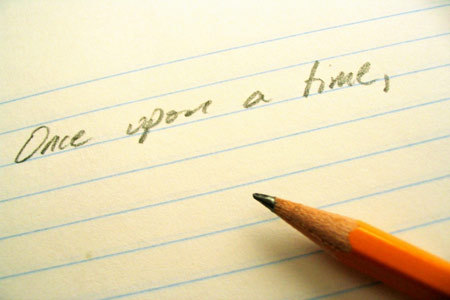
One of the most important things I’ve learned since I took up writing is to keep my equipment simple. All I need to create literary brilliance is a single subject notebook and a pencil. I choose a pencil over a pen because they make noise as they move across the paper. This light scratching is satisfying to my brain and is proof writing efforts. I see and hear my progress. Another technique that helps with this process is to sometimes write on lightly textured paper such as a sketch pad.

I write in capital letters. It took some getting used to, but by doing so, the process slows down my writing and focuses my attention at the same time. My ideas actually flow better. As new ideas pop into my head, I write them in the margins of my notebook.

One of the hardest things to conform to is a writing schedule. You would think making your own hours would be bliss, but I find as my own boss, sometimes I have the tendency to not take my writing seriously. I become lax beyond the point of flexible, and my writing suffers. When I set a schedule and stick with it, choosing the time of day that works best for me, I am more productive. Of course, I allow for emergencies in my life and some flexibility, but I don’t allow myself to get too far off the schedule I created.

As for social media, it took me a while to learn to not be controlled by it. Author platforms are good, but when you spend all your time maintaining them, you’re not writing. Not to mention the rising stats are addictive, and the minute you tell yourself you’ll only be on a minute, you’ve wasted thirty minutes playing. Remember: writers write; they don’t build reputations on what they’re going to do. Resolve this issue by scheduling the time you’ll spend maintaining your social media, and again, stick to it.

Another trick I use to nudge my writing along is the daily word goal. It’s effective, but I learned that when I write what needs to be written, completing a scene or story in fewer words, I still consider myself successful. In other words, I write until I’m finished. I’ve been surprised how long or short a handwritten portion turns out to be when typed. Coming short of the goal isn’t failure as long as I’m writing.

That’s when I reward myself with chocolate, a cup of tea or coffee, pleasure reading, napping, calling a friend, cooking, taking a walk. I warn against using social media or television as a reward because they lure one away from focusing.

Also, I do not punish myself for not meeting my writing goal. There are already too many negative thoughts bombarding my head, negative influences toward my writing from outside, and my resistance will pounce on these to keep me from writing. The goal is writing. The quantity is negotiable.

I keep one main project to work on, usually my novel, and resist the urge to put too many irons in the writing fire. However, I also maintain a notebook of other writing projects I’d like to work on in case I need to switch things up. Sometimes I need a project while waiting for a response to a research question or if my main project becomes heavy and I need a small break. Alternative writing includes journaling, blog posts, letter writing, flash fiction, and short stories. I use caution when setting aside my main writing project for a period of time, making sure it’s for a valid reason such as research, time to think and/or reflect, or major upheavals in my life. I know when I truly need a break and when I’m just sloughing off.

In short, I found what worked for me. Good writing habits take time to establish, so I never quit. I carry a notebook with me everywhere, have one in every room of my house, and write on the run. If I mess up, I start again. My resistance battles me along the way, but I am stronger. Resistance tells me these methods are weird, lame, and ineffective. I do them anyhow.

The easiest thing I do for my writing is be present. I simply put myself in a chair at the table with a pencil and paper. Then I made this process enjoyable by scouting out the best location in my home where I can be the most productive and tailored it to my needs with music, silence, windows, shade, snacks, and beverages. Sometimes I change locations to keep from stagnating.

One of my writing jump starts is to write twenty different words on index cards (the first twenty that come to mind or twenty things that interest me), turn them upside down, take one from top of stack, and free write for ten minutes. I do this for twenty days as a warm up and repeat as needed until I trust myself to jump into my writing day without assistance.

Another is my list of ten. In three minutes, I write down a list of ten things I did yesterday. In ten minutes, I free write about one of the things I did on my list. If nothing grabs me, I choose number three. A month of this particular warmup helped me set healthy routines. Keep in mind that these simple exercises are like mental stretching. No athlete competes without first stretching. True, it can be boring, it isn’t pretty, but it does massage your brain into creative mode.

I never forget good ole visual or audible writing prompts. Some of my best writing has been jumpstarted by a picture or piece of music. The funny things is, when I went looking for a pretty picture to write about or music to put me in the writing mood, I couldn’t find anything. Then there are pictures I wouldn’t have looked at twice and music that crossed my path that flashed a story through my brain so quickly I knew I had to put it down on paper. Don’t discount any source of inspiration.

Making myself accountable to others is effective for meeting my writing goals. I chose a writing buddy who will encourage me to stick to my goals and help me address why I might not be. I’m careful not to compare what I am doing to what my buddy is doing, and I don’t swap work with them. My buddy should have a different writing buddy to help manage his writing goals. In that vein of thought, choose wisely with whom you share your writing. He or she should be able to provide constructive feedback because poorly given feedback can knock you off your focus.

Based on my own personal experience, I don’t read writing books while I’m writing, especially the how to variety and those on writing style. I find them to be distracting because I try to incorporate all the wonderful new ideas I’m reading into my writing, and they don’t all fit. They don’t all belong, and they can hamper my writing if I’m not careful.

Most of what I learned about creating a writing life came from Heather Sellers’s book Page After Page. Some of it came from other inspirational sources. I’d love to hear what works for you and your writing, your process, and your thoughts on what I’ve written. Remember, feedback is what we authors live for.
A Snapshot of Writing

A Snapshot of WritingThe creation of art can be a wonderful and dreadful process at the same time. Some of the struggles I’ve encountered with my chosen art form of writing include writer’s block, doubts and fears regarding my abilities, the evil query and rejection letters, comparison, envy, impatience, and the list goes on and on. But every now and then, there are lamps along the tunnel as I travel toward the light at the end. That’s when it’s wonderful.

As an outlet for my frustration, I began to tag along with my sister-in-law when she took photographs. She’s really quite good and a patient teacher as well when I asked her questions on how she approached her shot. One of the ways she explained the process was to hand the camera to me. I declined the opportunity to even hold her camera, which looked far too technical and expensive, but in addition to being a great teacher, my sister-in-law is mildly insistent. There was no way I was getting off the hook.

So, I snapped a few pictures as she taught me what the various dials and buttons on the camera do. She talked me through the procedure, and by allowing me to make mistakes, I learned quite a bit and became addicted to photography.

Here’s where the wonderful part happened. After setting up an account on ViewBug for my photos, joining challenges, and voting on other peoples’ pictures, I earned a free tutorial on landscape photography. Even though I don’t own a camera, I watched the video with the hopes of gaining more knowledge and possibly impressing my sister-in-law.

The lesson on photography will help me hone my skill, but what truly impressed me was how much of what the instructor said could be applied to writing. For starters, new experiences are good for you. Even if you’ve been writing for a while, keep in mind that every time you start a new piece, you’re taking yourself someplace you’ve never been with a different location, characters, style, descriptions, etc. And even if you’re working on a series, you have the power to make something new happen each time. Then there is your unique perspective. You are going to see things differently than anyone else in the world, so write them from the perspective that you alone possess.

As for equipment, writers have the luxury of keeping it simple, and I strongly suggest you do. A well-sharpened pencil and single-subject, college ruled notebook is all you need to create literary brilliance. Know the basics and fundamentals of your technique. Scouting a good location is important for a writer because distractions, even in the home, will keep you from your goal. Timing is important for the same reason: determine when in your day you are the most productive and stick to the schedule. And when it comes to composition, that’s where your personal style will shine through.

So now it’s time to address your process. The instructor on the tutorial called it a mind process and used words every writer knows. He started with subject. Identify what deserves to be written. Don’t forget POV. Take a small bit of advice from a photographer, and don’t be afraid to explore multiple POVs at the same time. What it does for photography will not be lost on writing. The formula for determining exposure translates into plotting, pantsing, or a combination thereof for a writer. Again, don’t be afraid to experiment. Next, decide what you’d like to focus on. Once all of this is determined, work that composition.

When you show your photographs to other people, they don’t know what else is going on around the scene you’ve captured or how you felt when you took it. Writers can combat this issue by providing essential backstory at the appropriate time. But just like a photographer, you don’t have to show it all. Leave a little mystery, a little something to the imagination, and your reader won’t feel led around by the nose. Write about the most interesting parts because that’s where the story is, and you’ll capture a good picture. A mental picture in this case. Remember that the objective is not to capture one big picture of everything all at once, but rather a frame that tells a clear story. You are the director, you choose the content.

Don’t fall in love with the first thing you write. Investigate your characters’ surroundings and discover what else you can do with it or them. Walk through their world. Return many times with breaks in between. Take another look at your subject, and decide what else you can do with it. Then apply your creative style in a way no one else has thought of.

Add vibrant but well-written details and structure, and a sense of order will emerge. You can do this on different levels of your writing whether writing on a grand scale, intimate stories, or the minute particulars. Keep in mind that your ideal and the reality won’t always match, but don’t let this discourage you. Work with what you’re given, seek inspiration, and the great story will come.

As for filters, they apply to the writer during the editing stage. You’ll be able to filter out the bad in your own writing after you’ve set it aside for a couple months and return to it fresh. Beta readers provide some of the best filtering toward your writing goal, seeing things you didn’t, and offering advice from their own perspective.

With a few modifications, the guidelines for taking a great photograph apply to writing with stunning clarity. I mentioned this at my writer’s group and was told by a poet that this is known as the rules of the creatives. They are a set of standards that transcend one artistic form to positively influence another. Hanging with the poets a couple of times a year has already lent valuable insight to my writing. Imagine how thrilled I was to discover that my newfound hobby would as well.

There are so many artistic pursuits that crossover to supply inspiration and encouragement. Already I’m viewing the story ingredients in my mind and trying to figure a way to bake them all together so as to produce a perfect word painting. I suggest you do the same.

Tools of the Trade

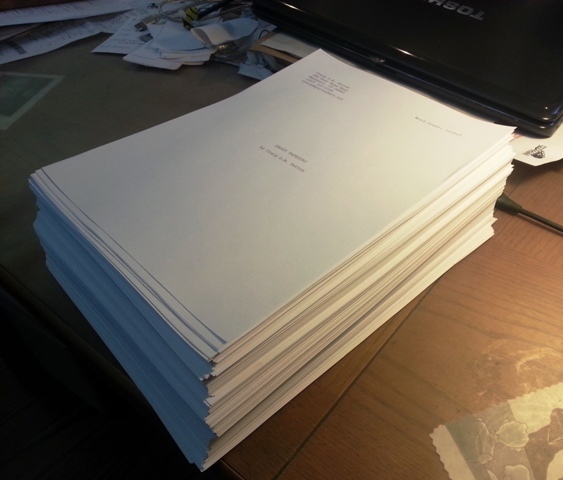
Tools of the TradeAt this month’s Critique Group, a fellow writer said that he thought he’d done everything correctly when writing his novel only to find that it had to be double spaced with one-inch margins, Times New Roman 12 point, starting a third of the way down the page—

“Wait, wait, wait,” I said when I noticed panic widening the eyes of another new member. “What you’re talking about is a manuscript submission copy.”

We had a discussion on how to write a story and touched on plotting versus pantsing, writing by hand versus typing on a laptop, etc. The first point I want to make is just write the story. As Will Shetterly said, “It is better to write a bad first draft than to write no first draft at all.” I’m also fond of “Write your first draft with your heart. Re-write with your head.” There are many such encouraging quotes, but I’m sure you understand what I’m saying. Get that story written.

With that being said, the second point and true purpose of this post is to offer another resource where new writers can find the information they require to turn their manuscripts into acceptable submission copies. I’m all about giving back the information I discovered and/or processes I learned.

These steps are for formatting a novel:

  1. Set 1″ margins on all sides.
  2. Prepare a title page with your name and contact information in the upper left-hand corner of the page (some sources say include the word count here), title in ALL CAPS about one-third of the way down the page, skip a line, followed with a novel by, skip a line, and your name.
  3. Don’t number the title page. Begin numbering (1) with the first page of the text of the manuscript, usually the introduction, prologue, or chapter one.
  4. Use a header on each page, including your last name, the title of your novel in ALL CAPS, and the page number. Remember to make the font of the header match the font of your manuscript.
  5. Start each new chapter on its own page, one-third of the way down the page.
  6. The chapter number and chapter title should be in all caps, separated by two hyphens: CHAPTER 1—THE BODY.
  7. Begin the body of the chapter four to six lines below the chapter title.
  8. Indent fives spaces for each new paragraph.
  9. Double-space the entire text.
  10. Use a standard font, 12-point type. Times New Roman, Arial, or Courier is fine.
  11. Alignment should be to the left, not justified. The right edges will not be uniform.
  12. Indicate scene breaks with a blank line and five centered dashes or number signs.
  13. End your manuscript with the five centered dashes or number signs or simply type THE END.
  14. Use 20-lb. bond paper.

The guidelines for a manuscript submission copy may vary a titch based on which websites you reference and/or who you talk to. The steps presented above are the basics and will ensure that your manuscript doesn’t get rejected because it is sloppy.

Baring My Writer’s Soul – Part 15

Two days ago I started reading a novel by an author whose previous book I enjoyed. Admittedly, I only had one book by which to judge her writing, but since I absolutely fell in love with the story, I trusted that I would like other books she wrote. The first novel I read by this particular author was set in medieval Japan, a favorite era of mine, which scored the book high marks right off the bat. I didn’t have to labor at all to find the exciting parts as the writing was excellent and the story captivated me. Again, this alone shed a positive light on the second novel even though it wasn’t about Japan.

Writer's Soul 15Many years had passed between reading the two novels, but I had high hopes for the second one. The second book started slowly with very little dialog and page long paragraphs composed of rambling sentences from multiple POVs separated only by commas. It took some effort to follow whose thoughts were being expressed. But I’m no quitter. If I could read José Saramago’s The Double which has enormous paragraphs with only periods and commas even when it’s dialog, and ended up being one of the best books I ever read, then I could finish this book.

One of the first things I checked was where in the lineup of publication this particular book stood. It’s number fourteen for the author which is quite impressive. There was a reason to keep going. If publishers believed the novel worthy of printing, then I should probably press on. I mentioned this to my husband, and it generated a question we’ve debated before. Is there a certain place in an established author’s career when no matter how mediocre the book may be it will still be published based on his or her prior success and/or reputation?

I’m tempted to read this author’s first and second books. They were published several decades ago, and I wonder how the writing may have evolved over time. Is it better, worse, different? Was the author simply trying something new, something she always wanted to do but didn’t dare attempt until she was established enough to trust that her work wouldn’t be rejected? Or does this later book reflect the change in tastes among readers?

In either case, I’m going to be fair to this author and finish the book. There have been less than five books in my lifetime that I was unable to finish. Also, I’m willing to allow an author some grace as she builds up to the pinnacle of the story. I trust that fourteen books later, this author knows how to write worthy of my attention. There are slight mysteries and questions that have been posed, and I cannot set the book down without discovering what they are.

I mention all of this to lay some groundwork for the real issue I want to discuss. It has to do with query letters, synopses, and first page or chapter critiques experienced by new authors. If the book I’m reading was a first novel, without an established reputation backing it, to be judged only on a query letter, synopsis, or first chapter, regardless of how brilliant those items may be written, it would be rejected outright.

A person simply cannot focus on a tiny glimpse of someone’s writing taken out of context and judge whether or not the entire work is worthy of publication. And yet, this is exactly what it done during pitch sessions at writing conferences and in agents’ offices on a daily basis. How much brilliant writing is bypassed because an agent, editor, or publisher wasn’t aware of all the narrative forces driving the story as it unfolds to reveal its true shape?

I fear that what I’ve termed ‘fast-food thinking’ has negatively influenced the art of writing and publication of said writing. Everything in life takes place at the speed of light so that our desires receive instant gratification. Just as quickly, we move on to seek the next tantalizing thing without ever realizing that we aren’t truly satisfied. The more we seek, the more things need to be supplied to fulfill the vicious whims of demand. And if you are the person who can do it bigger, better, faster than anyone else, you’ll probably be the one to make boat loads of money. So what if quality suffers? Well, that’s the problem I’m leading up to.

Let’s step back for a moment and analyze why this fast-paced process isn’t working. Let’s start with the writing. Great writing takes time, and if people have bought into the lie that time is money, then great literature is in more danger of becoming obsolete than even I thought possible.

There has to be a better way.

Writing is a major investment of passion and time. It doesn’t follow cookie-cutter formats and spew out copycat books, it doesn’t happen to make the writer rich, and it doesn’t exist for the express purpose of becoming a movie. Writing can be summarized for book flaps and reviews, but if that was all it took to satisfy a person, the writing wouldn’t have become a book in the first place.

It’s time to trade in ‘fast-food thinking’ for ‘stop and smell the roses reasoning.’ If anything worth having is worth waiting for, then I propose allowing this lesson in patience to be applied to how books are evaluated. Furthermore, as a society, we must no longer tolerate being spoon fed our entertainment especially where books and/or writing is concerned. Readers must also slow down and appreciate the treasures they hold in their hands when they read a book.

Of course, I’m open to suggestions on how to make this process work better, not just easier. In doing so, we’ll not only rescue writing from being destroyed, we’ll stop this process from encroaching upon other forms of art.

Write Happy!

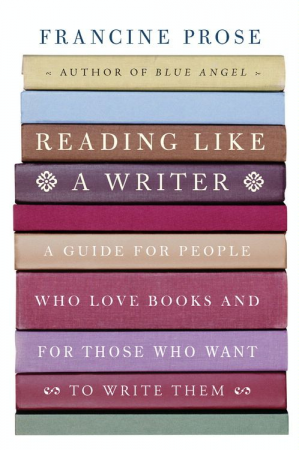
Reading Like a Writer by Francine Prose

I first spied Francine Prose’s book, Reading Like a Writer, while shelving at my former job. I sneaked a few moments to read the first few pages and Reading Like a Writerinstantly fell in love. The sentence that resonated with me, “Like most–maybe all–writers, I learned to write by writing and, by example, by reading books,” combined with, “Long before the idea of a writer’s conference was a glimmer in anyone’s eye, writers learned by reading the work of their predecessors,” confirmed for me that I had found a kindred spirit. Her passion for reading and writing and the process of learning by indulging in both was the best piece of advice I had ever heard. Mrs. Prose’s comments awakened in me what I always believed to be true: great writing is an organic process that comes from creating beyond outlines and plot-pointed structures with perfect character arcs.

Great writing begins with close reading and follows with careful consideration for every word that will become a sentence, which will become a paragraph. This isn’t to say that Mrs. Prose or I believe writing should be utter chaos without any structure, but I trust if one applied her approach to their own writing, he or she would see amazing growth in how they create characters, employ narration and dialogue, and present details and gestures.

Woven throughout the book are examples from great writers that will back up what Mrs. Prose is teaching. You don’t need to be familiar with these authors or their works to appreciate them. Another reviewer I read proclaimed his dislike for Mrs. Prose’s book because he didn’t know any of the referenced works. I suspect he thought Mrs. Prose was being pretentious; I encourage you not to be intimidated by her knowledge but rather delve into the suggested reading list as soon as possible.

Another aspect of the book that appealed to me is Mrs. Prose’s admission that while there are rules in writing for the express purpose of guiding us, rules are, essentially, meant to be broken. And if you’re brave enough to ride off the reservation of writing rules, make sure you’re breaking them brilliantly.

Regardless of your preferred writing style or approach thereof, I highly recommend reading Francine Prose’s book. I would be truly surprised if you didn’t take away something positive from the experience.

Baring My Writer’s Soul – Part 12

Writer's Soul 12Today’s Writer’s Soul blog post is going to be a bit like tap dancing on a landmine.  Per the suggestion in Page After Page, I’m going to explore my parent’s influence on my writing life. When I first read the exercise, I thought to myself, “There isn’t enough red wine in the entire world to make me do this, especially when both parents follow my blog.” Yet here we are.

I don’t believe either of my parents ever aspired to be writers, although I do remember mom jotting down an occasional poem during my childhood. That’s okay because neither resisted the idea of writing or being an artist of any kind.

The funny thing is I don’t really consider either of them to be readers. Well, not on the same level that I hoard and consume books anyway. Mom admits that she came to pleasure reading as an adult when she read The Wind in the Willows. This still surprises me because she was always reading to me and my brother when we were little. In fact, I credit Mom with instilling in me a love for books as I mentioned before.  (My Love Affair With Books)

I only remember my Dad reading Garrison Keillor’s Lake Wobegon Days and John Irving’s The World According to Garp. Otherwise, my only memories of Dad reading were the gigantic manuals and/or books he studied when testing to make rank on the police force.

To what degree did my parents influence my writing? Mom is extremely creative in areas of decorating, cooking, hosting, and crafting. Perhaps I’m drawing on these genes when I write. From Dad I learned that whatever I do should be done well and completed. I mention the completion aspect because he has always complained that Mom has thousands of dollars of unfinished crafts and too many tea sets. I think Dad doesn’t understand that creativity is ongoing.

Both of my parents are hard workers, and while Dad would probably say that he did what he wanted to in life, Mom would wistfully admit that there were things she would have liked to have done and didn’t. I know she wanted to own a bed and breakfast or tearoom.  Her dreaming is what prompts me to keep writing even when things seem hopeless and the self-doubts arise. Dad’s successful career causes me to worry about making money at writing. I believe this stems from the fact that he conveyed to me and my brother the need to get jobs that supported ourselves but didn’t necessarily allow us to follow our dreams. This is the type of influence one would expect from a provider.

With these perspectives on working and following dreams in mind, I am better able to understand why I vacillate between the thoughts of “Will I make any money at this or am I just chasing a pipe dream” and “I really want to write and be published more than any other creative endeavor.” There’s a lot of pressure that comes with such thoughts, but as an adult, I’ll own them.

If Mom and Dad aren’t the driving force behind my writing, who is? The first people to come to mind are the countless writers behind the Little Golden Books Mom bought for me. Laura Ingalls Wilder, Judy Blume, and L.M. Montgomery float to the surface of my memory. I could go on forever listing all of the authors and books I discovered through the years, but I’ll just say that my love of writing was birthed from my love of reading an excellent story.

What makes a great story? Great words. I admit, I’ve been caught reading with my lips moving, but if people would step closer and lean in, they would hear me reading softly to myself. When a passage is well written, it begs to be read aloud. My friend, Eleni Byrnes, would understand my obsession with words. She keeps a notebook of words she likes as she comes across them. It’s why she writes so well.

So, I’ll start with Eleni in my writing family tree and make her a sister. I’ll add Billie Letts and Wally Lamb as grandparents because they are excellent story tellers, and I’m all about the story. Isabel Allende will be my exotic aunt, and David Mitchell and David Liss my quirky cousins. Tim Gautreaux and Charles Frazier are favorite uncles.

Again, there are too many brilliant authors who have influenced my writing, so I’ll direct you to my Authors I Admire board on Pinterest and Goodreads to see who they are. Together, they make up my writing family tree and neighborhood.

I encourage everyone to explore who influences their writing or chosen art form. You’ll discover an extended family you never even knew you had.

Write Happy!

Baring My Writer’s Soul – Part 11

Commitment is a large part of the success we have for anything we do. This may sound obvious, but I state it yet again because we often forget this. And, as is the purpose of my Writer’s Soul series, I offer up myself as the example.

You may have noticed that I haven’t published a new blog post in a while, and I’ve been recycling some of my older posts. This is was an important step toward a commitment to my writing. How does this apply when I wasn’t writing anything new to post? Let me explain.

I have observed for some time now that I was more committed to maintaining my author platform via social media and watching my stats rise than I was to writing. I bought in to the belief that higher stats translated into success as a writer, and it was exciting to watch the numbers go up. If higher stats meant writing success, why did I have several unfinished short stories and pieces of flash fiction niggling at the back of my mind? Then there was the heavy load of guilt I experienced due to this lack of completion not to mention my growing sense of frustration.

Writer's Soul 11During this time, I was still reading Heather Seller’s book, Page After Page. It’s brilliant in its simplicity and translates well to other forms of art. Her words are so inspiring that I agreed with everything she wrote. So why wasn’t I getting anywhere with my writing?

The great thing about Page After Page is that it allows you to mentally rewind and review what you’ve read and learned. This is exactly what I did when I reread a couple chapters. Besides, I needed to regain my momentum and generate a little inspiration. I returned to chapter six, three chapters prior to where I left off reading.

The result was amazing and humbling. I picked up more useful information and re-familiarized myself with that which I remembered. I redid the exercises at the end of the chapters and felt my resistance begin to slip. Admittedly, this surprised me.

I pressed on and reread chapter seven. More aha moments were had especially when I realized that I hadn’t completed a ten-day exercise meant to jumpstart my writing. It was such an easy exercise, yet the fact that I didn’t finish brought up another round of whys.

My initial reaction was to claim that the exercise was so easy that it made it easy to dismiss. How arrogant of me! I took responsibility for my lack of action by placing markers in all of my books, saving all of my half written works, grabbing my pencil and paper, and sitting down to complete the writing exercise over the next ten days. In short, I committed.

Not surprisingly, my writer’s block and frustration lifted, my resistance melted, and my writing flourished. Go figure. By the act of simple ritual, I learned the valuable lesson of commitment. I also learned that being in agreement with what you read isn’t enough. You have to actually apply it to your writing. Or your chosen art form. Or your life.

But I was committed, a tiny portion of my mind insisted. No, I was a slave to the addiction of watching my stats rise on social media. And, while social media may be the way things are done today, I question how beneficial it is to the creation of art. Personally, I found it to be detrimental to the whole creative process. It may be a great marketing tool, but art requires a step away from the constant connectivity.

So, as fellow writer Lucy Flint is fond of saying, I extended myself some grace. I’m backing off from the hectic schedule I tried to maintain on social media to focus on my writing and reading. In slowing down, I am fulfilling my promise to myself and my readers that I will produce my very best.

Write Happy!

Encouragement vs. Insult

I believe one of the cruelest insults a person can level at someone is to refer to that person as an amateur. At one time, we were all new to whatever it was we were pursuing.

Before the advent of social media, where everything a person does is on display from day one, some people had the opportunity to hone their craft to perfection without being in the constant spotlight, thus looking professional and well established when they joined social media. Stop and think for a minute: This is only how it appears.

GiveBack_webWe may never see every person’s humble beginnings, but rest assured every person has one. Instead of resorting to insults, privately distributed constructive criticism is what the situation calls for. If you, the commenter, don’t believe you can do this, simply refrain.

I’m not suggesting we become a world of wimps who shrivel at every negative comment. Just remember to be tactful and professional with your advice. It is possible to build people up even as you’re pointing out what they did wrong.

Share both your positive and negative experiences, offer your resources, give as well as take, and let the new person stand on your shoulders until they are strong enough to stand on their own two feet. It’s amazing how great you’ll feel when you do.

This advice also applies when helping someone who has been at a particular craft for a while and may still need instruction.  Again, encourage them and watch your fellow artist thrive under your beneficial tutelage rather than recoil from your scathing remark.

I offer the example set by James Michael Kahle, master glassblower, as the standard for how one should give back to those who are new to any form of art. Whether it is glassblowing, photography, writing, or painting, Mr. Kahle’s attitude toward approaching art and teaching others is inspiring. In fact, many of the lessons he applies to his art can be applied to life in general.

Some of Mr. Kahle’s views featured in the PBS documentary about his glassblowing, Turning Fire Into Ice, include his commitment to his art, his persistence when accepting challenges, listening to your art versus popular opinion, not dwelling on a setback, and, the most impressive, giving back and/or instructing future generations for free.

The world would be a considerably better place if we all adopted Mr. Kahle’s belief that if you don’t give back then you don’t have the right to take and what would the future be if we don’t give back now?

Baring My Writer’s Soul – Part 10

Release the books and free your writing!

Release the books and free your writing!

Writing is art, and art is messy. When I realized this, my inner drill sergeant, who fears disorganization, freaked out. Then there is the side of me that yearns for the freedom that comes with creating art, to not have to worry about meeting arbitrary deadlines I’ve set for myself, to not fear the loose ends of my creative process. In short, order and chaos are at war in my brain.

Further frustrating my creative writing process is the fact that I stopped reading to devote time to my writing. Funny thing: the writing dried up.

I’ve heard it said more than once that to be a good writer you must read. That shouldn’t have been a problem for me since I own a private library and consume books the way a starving person attacks food. When I read, everything else fades into the background.

What I need to do is apply my love for books and the way I approach reading to my writing life. The problem is that I’m so structured in everything I do, my attitudes toward books and/or reading isn’t going to help my writing very much if I don’t learn to cut loose just a little.

Here’s my list of things I need to do:

  1. Read outside my favorite genre, historical fiction
  2. Quit lining up my books on shelves like obedient soldiers, take them with me everywhere
  3. Travel with a notebook to capture anything and everything that pops into my head because it may prove to be beneficial to my writing
  4. Quit deluding myself that I’ll ever have everything done all at once

And now I’m laughing at myself because my list is perfectly numbered and ordered. The important thing is that I recognize my need to lighten up, enjoy my writing, and live a peaceful life.

Write Happy!