Description-A Writer’s Friend or Foe?

dearada_typepad_com_dear_ada_images_2008_01_15_experience_261_artFellow author Mark Tilbury tossed out a question that is often on my mind as a reader and writer. In his post, Have Books Lost Something With Their Lack of Description, Mark asks us our opinion on today’s style of writing.

We’ve all encountered the “massive blocks of descriptive prose” to which Mark refers. Sometimes they truly are too long, too irrelevant to the story, too purple, etc., etc. I have skimmed such passages in search of the storyline and/or dialog that would put me back in the story.

However, because we’re all friends and adults here, I’m going to say that I disagree with the notion that description is informative but unnecessary. I hear all the time that the reader shouldn’t be led around by the nose; he/she should be given the opportunity to imagine the story. As an avid reader, I can honestly say that I have never felt this way about descriptive writing. On the contrary, my imagination was enhanced and grew because of the description I read including that written about journeys and the passage of time.

The key is that writers need to learn the perfect balance between too much and enough, the fine line between well-written, well-placed prose versus that which is encumbering, unnecessary. This seems like a daunting task, but I believe it can be achieved by not reducing writing to a formulaic method. In doing so, authors will elevate writing back to the level of artistic recognition it deserves.
85806_Ashford_1_122_526lo_122_526loI have never read Stephen King’s book, On Writing, but I would have to agree that abundant description about a character’s acne would be tedious. If that acne-plagued character traveled by canal boat from Pennsylvania to Ohio, then I would love the benefit of description. I would look forward to a word picture painted by the author that draws me in to the sounds, smells, and sights of the trip. It would be a perfect place to introduce traveling companions, a time for the protagonist to reflect, an opportunity to build the tension that so deliciously moves the story forward.

Even if none of the above-mentioned suggestions occur, as a reader I would still enjoy the mental images of traveling with the character, and I believe an important part of the writing would be lost if these well-written descriptions didn’t occur. As Mark mentioned in his post, they are an art form unto themselves. Like all art, value thereof still resides in the eye of the beholder, or in this case, the reader. Well-written description can exist purely for the sake of entertainment.

I have to wonder if writing hasn’t gone the way of food preparation in that we no longer know how to linger over a book in the same way that we forego multiple course meals and choose to patronize fast-food restaurants. I read because I enjoy the slower pace, and while there is a place in my fa9bbdedb5103e7f31a0893eff84ed56reading diet for the occasional literary Big Mac, more often than not, I opt for the balanced meal of description, dialog, prose, and narrative.
Now I don’t want to start a fight with screenwriters because I truly do appreciate their craft. However, using what worked in an action-packed movie and applying it to writing has resulted in fast-paced novels written with the singular hope of being turned into a movie. This has diminished writing for some of us. This influence has led to the removal of poetry and painting (mental images) from writing resulting in flat, hollows stories. Let movies be movies, appreciate them for all that they are; and let books be books, treasures not to be rushed through.


Baring My Writer’s Soul – Part 8

What do you do when you’re write blocked? You quit. It’s okay; I absolve you and give you permission to stop. In fact, I offer this advice to anyone who is creatively stumped.

Here’s the key to getting yourself past the place of frustration so bad it hurts: Quitting and giving up are NOT the same thing. When you quit something, you have stopped for a set amount of time that is up to you to determine. For example, when you quit smoking, hopefully you’ve chosen to do so forever. But, when you quit writing, you’ve done it with the understanding that you’ll return some day when the mood strikes you, the muse returns, the distractions are handled, etc., etc.

Giving up is more dangerous. To give up is to abandon all hope, and the journey back is a much more difficult struggle. It’s not impossible, but it takes a lot of soul searching and the right sort of people in your life to encourage you in the way you need to be encouraged. Giving up usually means you’ve hit rock bottom.

165083-425x283-writing-promptsNow, I don’t mean to scare you with this, because even when you’ve hit rock bottom, the rock at the bottom makes a fabulous foundation from which to plant your feet, bend your knees, and spring upward toward the light again.

The point of this explanation is to keep you from reaching Giving Up by enjoying the freedom of Quitting. Recognizing the signs that you’re struggling in your creative life is the first step to keeping you from nose diving into the despair.

I know this because I’ve been there, and if I can keep one person from experiencing the awful feeling of “I have nothing left to give,” then with tears in my eyes I can say what I went through was worth it. (SIDE NOTE: I’ll probably be embarrassed beyond words when this post publishes because I’m not the opening up type, and this is my deepest secret revealed in my Writer’s Soul series so far!)

The first thing I would suggest based on what I’ve learned from Heather Seller’s book, Page After Page, is to simplify. In my case, all I need to write is a pen or pencil and some paper. I have fought the simplicity of this suggestion, which is what landed me in a heap of trouble, by lamenting everything I don’t have. Mrs. Sellers kindly pointed out what I do have: Pen or pencil, paper, the desire to write, knowledge of the things I want to write about.

You’ve probably heard it said, “Write what you know,” which is countered by, “Write what you want to know about.” Mrs. Sellers goes one better and says, “Write what other people want to know about you.” (Paraphrased from several paragraphs in Chapter Four of Page After Page.)

My goodness, how liberating. This means that you have an interesting tale to tell, and it should be written in detail as only you can tell it. Stop believing that it’s boring or won’t measure up to some arbitrary standard and, to borrow a line from Nike, Just Do It! Write what you want to write. Write what you want to read. Do it now without over analyzing.

Write Happy!

Baring My Writer’s Soul – Part 7

I’ve really been off my game for the past three weeks. Instead of being a sweetheart and manifesting itself as the lover in the center or the lover on the side, my writing became the school yard bully. (See Page After Page, Heather Sellers.) I could explain that sentence, but it would take way too long. Again, for your own benefit, read the book!

Facepalm GirlI want to write. I want to be published. So why did I let the process of writing terrify me into a near-catatonic state? Good question. The answer is that I treated my writing and/or writing time like an obligation rather than a reward. I ignored the clues that writing can be a scary and lonely process, I let it intimidate and frighten me, and I pushed it aside where it grew into a monster. Bad move on my part.

Writing should be enjoyable. I made the mistake of trying to force my writing life into an unrealistic schedule, treating it like a job. I don’t know about you, but I hate having to go to work. On the other hand, I love to sneak away with a friend to idle away the hours producing fun. It’s not that I don’t want to write; I don’t want my writing to feel like work.

Then I bored myself with writing projects that weren’t actual writing, and I put busy work first. Now don’t get me wrong; I balance my priorities, but I’m learning to do it in a way that allows them to walk hand and hand with my dreams. This way, everybody is happy including me.

There will be days when my writing takes front and center place in my life, but there will also be days when it sits patiently on the side waiting for me to return. And that’s okay because absence makes the heart grow fonder and the muse grow productive. Understanding this has returned me to the pleasure of writing.

Write Happy!

Baring My Writer’s Soul – Part 6

untitled (8)I struggled a bit with chapter two of Page After Page because I couldn’t relate to the exact experiences Heather Sellers presented, and her advice seemed to contradict other things I’ve been told, most specifically regarding social media. While she didn’t address social media directly, what she proposed would require a noticeable change in how I handled the various aspects of my author platform.

Rather than allow my resistance to flare, I decided to go forward with closing the gap between my writing life and the rest of my life because I am a writer, plain and simple, whether or not I’m published, all the time, period. I’ll do this by drawing on all the positive writing and reading experiences, thus quelling my fears and doubts. This will be an ongoing process for me. At least I know how to seek out and find quality input.

As for conserving my energy to write, that’s going to require a step back from social media. What an unusual request when we live in an era that is all about social media. How can I build/grow/maintain my author platform if I’m not tweeting, posting, honking, and tooting my own horn, shouting, “Hey, look at me! See what I’m writing?” Whose advice do I take?

Let’s consider the point Ms. Sellers makes when she says that talking about writing all the time means you aren’t actually writing. That’s true. Then there are all the stats on social media to gauge how well we’re liked, or not, which can really make or break one’s confidence. I decided to trust Ms. Sellers and withdrew to a safe distance.

The first couple of days felt as if I didn’t have anything to do. I picked up my pen and wrote, and I listened to the voices of the characters in the book I’m reading, and I treated myself to two new writing books, and I read, and I wrote, and I scratched out what I had written, and I listened to the instruction presented in my new writing books, and I wrote some more.

The best part is I don’t have to tell you what I’m writing; that’s for me. What I will share with you is that Page After Page, Story Trumps Structure, and Fiction Writing Master Class have been phenomenal in breaking through my resistance and writer’s block.

The positive momentum kept me moving forward. In addition to my writing group, I joined a book group online and at the library, and I will be attending two “Meet Your Local Author” events. I know this is going to further enhance my writing because I’m all about the tactile experience.

Never fear, though. I shall not abandon my blog. I’m just tweaking the focus to build a community of reading, writing, interactive friends whose presence in my life goes far beyond that of just follower.

Write Happy!

Baring My Writer’s Soul – Part 5

untitled (5)Allow me to preface today’s post with a nod to Heather Sellers’ book, Page After Page. As I mentioned in an earlier Baring My Writer’s Soul post, this is about blogging my experience. I truly hope you find something here that appeals to you; however, I strongly suggest that you do yourself the favor of reading Ms. Sellers’ book. Believe me when I say that you don’t want to miss one word of her valuable insight.

With that being said, the following lists are a writing exercise from Page After Page. The simple task jumpstarted my writing when I stalled due to resistance and, I recently discovered, boredom. (Boredom and Burnout: What To Do When Artistic Work Stops Being Fun by David J. Rogers) Even if it’s just a blog post, at least I’m productively writing.

The qualities of my ideal writing guidebook (what is covered):

  • Large, easily referenced grammar and punctuation section with examples
  • Daily writing exercises
  • Visual writing prompts
  • “How to” quality to the book, instructional without being preachy or stringent with rules
  • Info packed, fast paced

The qualities of my ideal writing class (what I learn):

  • How to write a query letter
  • Order of items in an e-mail to an agent, what is attached, what goes in the body of the e-mail
  • Standards of punctuation, grammar, when to italicize, underline, quote
  • How to write in deep POV (my most evil nemesis)
  • The art of good story telling (which I’m currently exploring in Steven James’ book, Story Trumps Structure)
  • How to write in the present tense when something occurred in the past
  • Writing a great first chapter (Again, Story Trumps Structure)
  • The best way to conduct research
  • Answer the question, “Does every story written these days have to follow an outline with nine-point structure, character arcs, pinches, plot points, etc., etc.?”

My best student-like qualities (who am I when I’m learning, my attitudes when I’m loving the act of learning, what do I look like, what do I wear, what do I have in the palm of my hand):

  • Detail oriented
  • Takes fabulous notes
  • Studies diligently, thoroughly
  • Combines book learning/reading with a hands-on experience, admittedly a bit more on the bookish end
  • Listens well
  • Questions endlessly because I like to get things right the first time
  • Loves to learn when it’s interesting, must apply more effort when it’s not
  • Wears casual clothing
  • Writes information (usually on a McDonald’s napkin unless I’m in a formal setting) but will use my laptop if the info comes fast (I type well!)
  • Enthusiastic, passionate
  • Loves to be hooked from the first moment of instruction

As expected with me, the completion of this task prompted more self-analysis leading to admissions and questions:

  • I discovered that I’m afraid to tell people I’m a writer because I believe if I don’t produce quickly, I’ll be viewed as a failure.
  • I feel pressured to publish soon, but I don’t want to crank out garbage.
  • Certain people I’ve engaged in life resent when I do something that they perceive as getting ahead of them, being more successful, so I downplay my achievements.
  • Other than the occasional, “That’s nice,” I don’t feel as if anyone supports my writing.
  • Money factors in to my writing heavily. I make very little working as a substitute at the library, and I feel the pressure to bring in a paycheck especially with the economy the way it is.
  • Is my writing a selfish hobby or a real career?
  • I don’t really feel as if I have a writing ally, no connectivity in the writing world or to another writer.
  • Have I started too late in life to make a go at writing?
  • What do I do when there is no money for writing classes, retreats, programs, conferences?

These are the thoughts that usually accompany me as I sit down to write. Unfortunately, they influence my writing habits. I know that most of them are ridiculous self-doubts, so when they arise, I remember to acknowledge them quickly, and then press on with my writing.

Write Happy!

Baring My Writer’s Soul – Part 4

In answer to the question in my last post, “Why am I not learning?” I discovered an answer that is not at all surprising: resistance.

I think I always knew this was my problem, but I hated to admit it. I created a vicious circle in my head that started with fear-born resistance to what I thought should happen versus what actually does happen when I write and/or learn to write. The fear/resistance combination kept me from learning from my new chosen method. There was nothing left for me to do but shut down and stop writing. I tried to claim writer’s block, but even I knew this wasn’t true.

images4GQIRHHZSo how do I reduce the resistance in my life? First of all, expect that it is going to occur in the form of doubts and ego which leads to comparison to other writers. By acknowledging this fact, I’ve already begun to address the issue, and that’s exactly what I want. Second, by dealing with the first concern, I’ll be able to tackle the fear of change which I often perceive as a threat to myself.

I already know doubts, ego, and comparison are counterproductive, so I must quickly recognize this yet again, and press on. Address my good intentions, per Heather Sellers the evil twin of resistance, and press on. Don’t over think the process, and press on. Let go, let down, relax, and write.

Page After Page advises that I learn to listen to my mind without getting sucked back in to all the negativity mentioned above. Just because I do this once doesn’t mean it won’t rear its ugly head again, but when it does, I’ll be ready for it, and that knowledge is very liberating.

Naturally, this self-analysis generated more questions for me.

  1. If I’m not receiving quality instruction, does that translate into resistance on my part?
  2. Are instruction and critiquing/criticism the same thing?
  3. If I don’t rewrite based on someone’s opinion, does that mean I’m resistant?

While I don’t plan on addressing these questions in future posts, I put them out there to see if other writers/authors struggle with these issues. I’d love to receive your feedback on them.

Write Happy!

What Would You Give to Have That?

imagesI recently wrote a blog post on the unusual things people say.  We grow up hearing odd turns of phrase and use them as an adult never questioning where they came from or what they mean.  We’ve said them all our lives and understand them perfectly.  Southerners, Northerners, people from other countries–we all have our quirky expressions that we employ without hesitation assuming everyone in our hearing vicinity will know what we mean.

While researching the origins of the phrases used in my family, I came across the following question and answer regarding the giving of one’s eye teeth for something. I use this one quite frequently and never gave it much thought.

The question was stated in such a way as to make me laugh. The answer proved informative. I had no idea this phrase dated back so far.

I would love to know the crazy sayings peculiar to your family or locale that you grew up hearing and/or saying.  As a writer, I’m always looking for unique ways to state something without sounding clichéd.  I believe it adds flavor to the story and strengthens a character’s voice.

Enjoy!

Baring My Writer’s Soul – Part 3

imagesV0ZD86UPMy previous posts established the fact that I was frustrated with my writing and needed a new approach. Guilt over breaking writing rules and procedures threatened to kill my passion. Desperate for a change, I sought help from Heather Sellers’ book, Page After Page.

At this point, I should confess that I usually don’t read books on writing; they are boring. Page After Page is the first writing book that didn’t lecture me. Rather, the book engages the reader as if providing one-on-one instruction.

But enough gushing. The book also makes promises in the introduction, and I am a stickler for making authors fulfill their promises. By the end of the book, I am promised the ability to develop and sharpen writing tricks that will help me stay in my writing chair and get me there in the first place.

Heather Sellers included a quote from Natalie Goldberg’s book, Writing Down the Bones, which states “to do writing practice means to deal ultimately with your whole life.” I like this advice because 1.) I didn’t realize that an unbalanced life would negatively affect my writings, and 2.) This is exactly my request.

The first step in dealing with my life as a whole involves the process of learning how to learn from any class, any teacher, and any situation. It sounds simple enough until I step back and address, “Why am I not learning?”

Ask yourself this question, be honest, and see what you come up with. My own answers, while obviously detrimental, weren’t all that surprising.

Until next time, Write Happy!

Parlez Vous West Virginia?

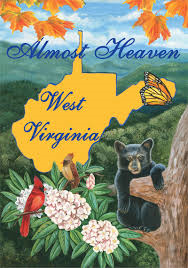
Have you ever wondered as a child where all those weird things adults would say actually came from? I’m speaking of the oddities my mother and grandmother used to express which I later labeled West Virginia-isms after their home state. Things like dead in Hell with your back broke and this life, the next, and the ironworks. What do they mean?

Then there are two not suitable to be publicly blogged, but I will e-mail them to you upon your request. Everyone should have the opportunity to experience them at least once in his or her life.

Taken out of context, these phrases are rather odd. Having grown up with them, I understand that to be dead in Hell with your back broke is worse than your current situation so shut up and quit complaining.

“I don’t like cleaning the cat box.”

“Well, you could be dead in Hell with your back broke.”

On the other hand, it could be preferable to your current situation.

“I’d rather be dead in Hell with my back broke than stay at this party one minute longer.”

If you think it’s bad now, there’s this life, the next, and the ironworks. Things are pretty hopeless when you reach this state.

“Dang, I hate my job.”

“I know, but there’s this life, the next, and the ironworks.”

Not everything filtering down through the generations of my family was negative. My grandfather used to say something was prettier than a speckled dog under a red wagon. Hmmm…they were poor and lived during a simpler time. Maybe that’s the prettiest thing he had to compare.untitled (4)

I came across a saying close to this but was unable to determine the origin of the similar expression prettier than a specked pup in springtime. Locale probably determined which one you used, and I wouldn’t be surprised to learn they came from yet another comparable phrase.

I’m not crediting my family or West Virginia for the creation of these colorful sayings, but I can appreciate how realistic they make dialog sound when reading or writing. You can’t help but speak them with a slightly southern accent. Go ahead and try; I dare you.

The great thing about them is that no editor could ever claim they are clichéd!

Baring My Writer’s Soul – Part 1

untitled (5)“Every secret of a writer’s soul, every experience of his life, every quality of his mind is written large in his works.”  Virginia Woolf

I’m not an inspirational author, but I do find that there is a large amount of room in my writing for inspiration. Most specifically, I’m looking for the kind of inspiration that comes from giving my writing life over to God.

Recently, I’ve been discouraged with trying to balance my non-writing life with my writing life. Writing became a chore, and I lost the joy of creating. Still, I pushed myself to write because I believed I absolutely had to. Or maybe I didn’t.

There are a lot of people in life who will gladly define for you what it means to be a real writer. I’m tired of trying to force myself into their labels and definitions much the same as I’m tired of trying to force my writing into their preferred methods and styles. I needed to find what worked best for my life and my writing.

When I stepped back and prayed, the miraculous occurred. The return of my happiness was the first, most noticeable change. Second was the disappearance of the guilt I experienced for not writing and/or maintaining my author platform every minute of the day. In fact, I haven’t written for two days, and I finally spied my writing muse peeking around the corner to see if it’s safe for her and my enthusiasm to return.  Keep in mind I’m no quitter; I just needed a break.

Then I reprioritized my life into God first, family second, work third which led to harmony. I reduced the real distraction of social media and welcomed back my responsibilities of homemaking.  That last point may sound old fashioned to some people, but by completing my family duties, I cleared my mind to focus when I needed to write.

Lastly, I’m working on ridding my mindset of the lie that I’m racing against some unknown, unseen deadline to be successful or die in unfulfilled misery. When I did that, my overbearing sense of competitiveness and envy withered. I realized that success and happiness are not the same things, and they rarely go hand in hand.

By allowing myself to step away, I’ve gained a new perspective on writing and life in general. I already am a successful writer, even if I just write for myself, because I am a happy writer. How do I know I’m on the right track? Since these revelations came to me over the past few days, I received encouragement in the form of Tweets, posts, and blog articles such as the one by Jennifer Slattery, When Discouragement Swallows Your Strength, via Castle Gate Press.

It could be a coincidence, but coincidence is God’s way of letting us know He’s still in charge.

Write Happy!