Tag Archives: Writing Toolbox

Read to Write
 Every year I take the Goodreads pledge to read twenty-four books. This year, I finished with sixty-one books. This is a new record for me. I’m actually going to end with sixty-two as soon as I get to the one sitting on my to-be-read stack, but I’m also kind of a stickler about not counting a book until it is absolutely finished. You never know what could occur during the course of my day to prevent me from completing it. I wouldn’t want to offend the Goodreads gods or something.
I’m sure I’ve said it on my blog before, but I’m going to say it again: if you want to write well, you must read well.
Let’s start with quantity first. Get your hands on everything you can and read it. Books, articles, newspapers (do we still have those?), fiction, non-fiction, read inside your favorite genre and outside your favorite genre. Read, read, read.
There are going to be people who tell you what the best is by labeling it classic, best seller, or some other tag to entice you. That’s fine, give it a whirl. Remember, though, that the final decision is yours on whether or not the book deserves such high and lofty praise. Keep in mind, however, that good writing can occur even if you don’t care for and/or disagree with the piece of writing (fiction or non-fiction), so analyze every aspect of what you’re reading before bringing the hammer down on a particular work.
Now let’s talk about quality. The more you read, the more you will expose yourself to the good and bad in writing. Very soon you’ll be able to discern not just what appeals to your reading tastes, but what lends to the foundation of good writing. Again, this will only occur if you crowbar yourself out of your reading rut and into the vast libraries of the world. Keep in mind that the popularity of the book/how well it was received, the money it made, shocking subject matter, being written by someone the public did not expect, and the tale being turned into a movie are not factors by which one should judge the writing.
I’m not going to include the research, data, or links to posts about how much smarter one becomes by reading, but it’s true. It just is. Your vocabulary and knowledge will increase, and at the very least, you’ll spark new interests and have something worthy to discuss with other people.
So, I challenge each of you reading this to set a goal for the quickly approaching new year and get to reading. Take a moment to let me know in the comments what you read this past year, what you loved, what you hated, and why. Word of mouth is often how I find my next great read.
Share this:

Quotation Station
Shabbat Shalom to all the writers
producing great art!
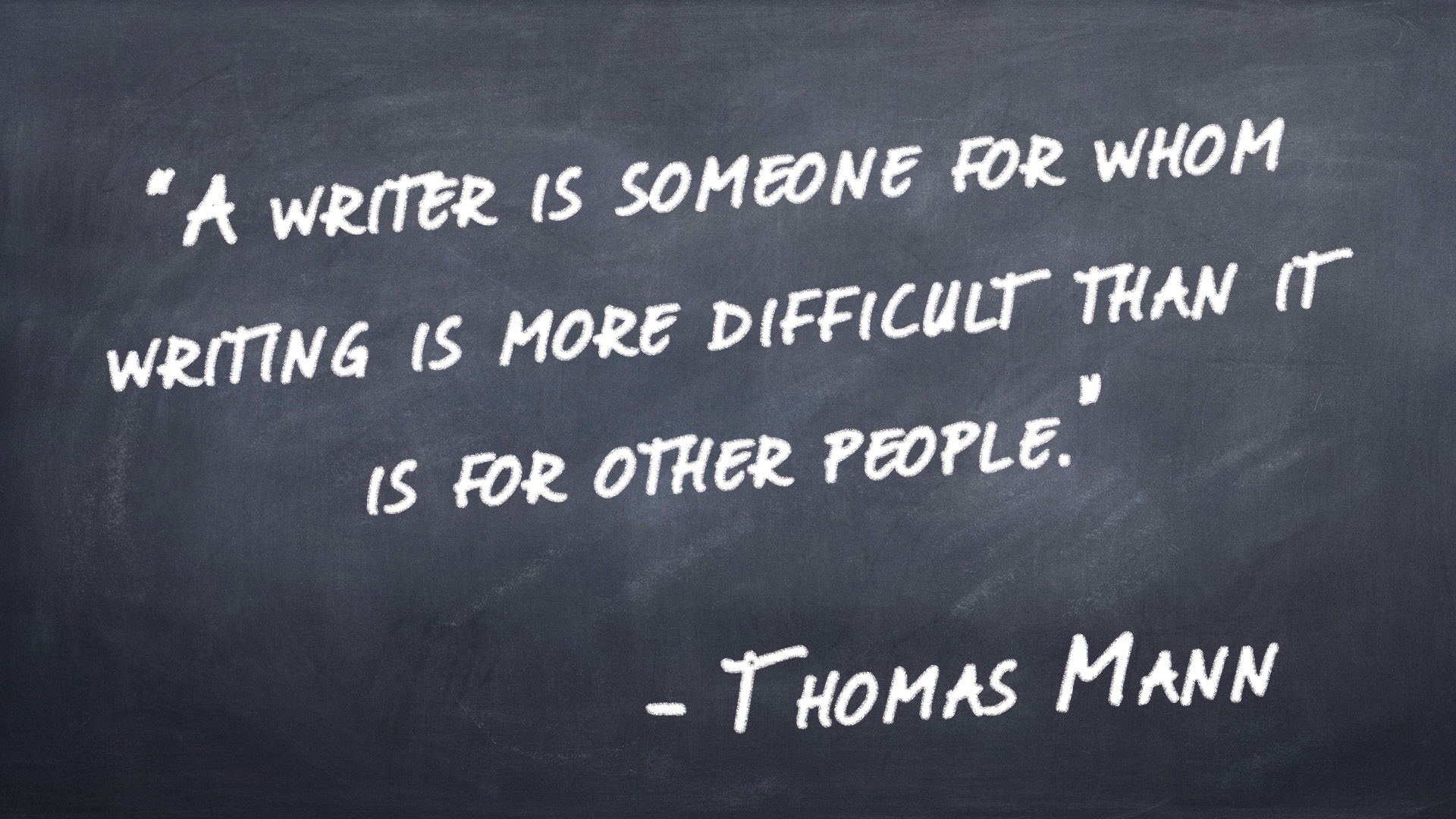
Why is this so true?
Share this:

Quotation Station
Shabbat Shalom to the visionaries!
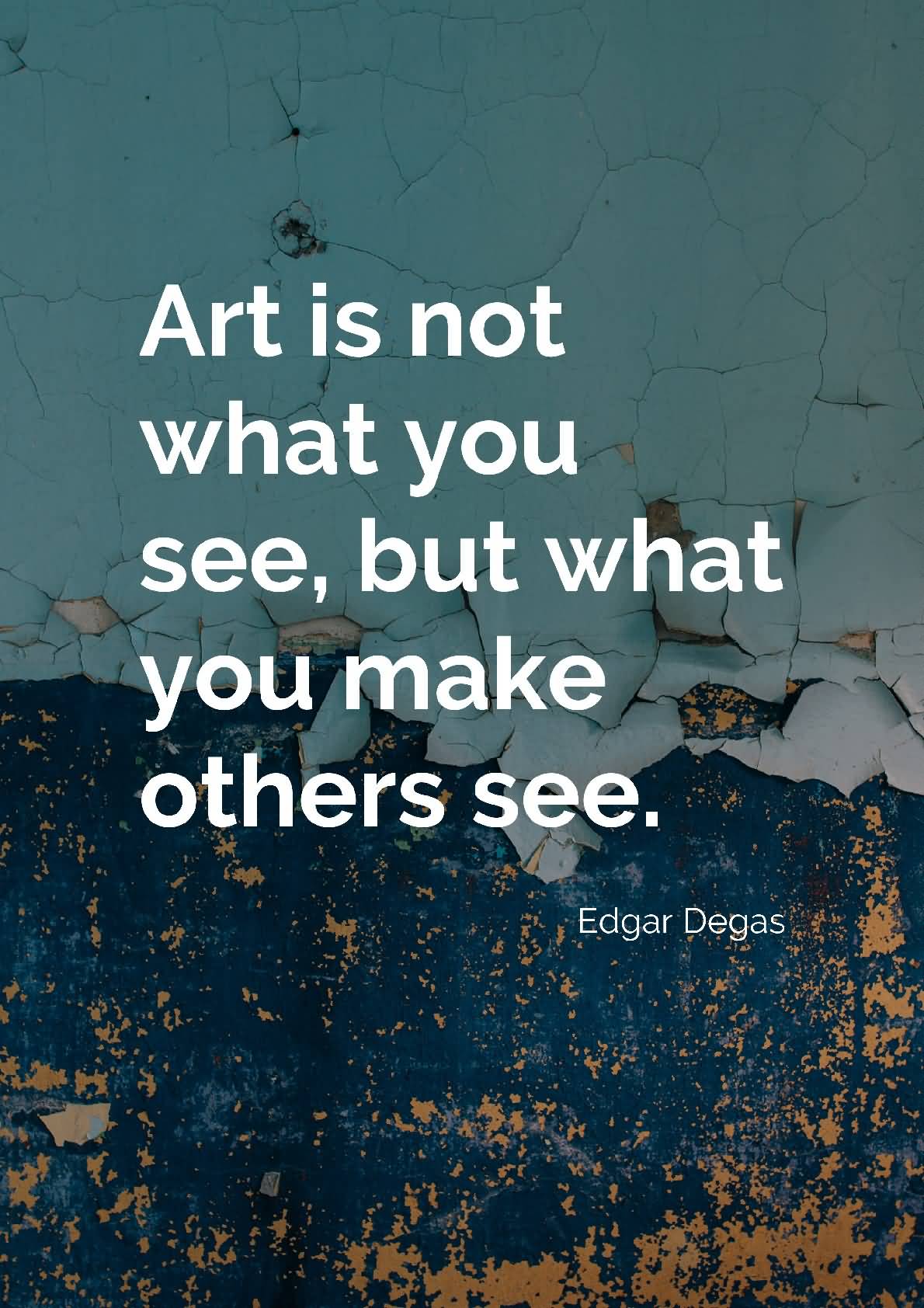
What did help others to see this past week?
Share this:

Quotation Station

What You Write is as Important as What You Write
 What you write is as important as what you write. No, that’s not a typo. It’s the beginning of something I’d like to discuss with you.
Writing inspiration comes in many ways from many different places, and if you’re like me, it never fails to arrive at a moment when you’re unable to grab a pen and paper to jot it down. Regardless of how you gain inspiration, you now have a great story idea in your head that you know in your heart must be released into the world.
The writing process usually begins with some plotting, perhaps a little research, and maybe a smidgen of editing along the way. Before you know it, you have a first draft in hand.
You love this piece of writing because it’s your creation from start to finish. When you dig in for the fine-tuning, you realize that your WIP could use something. It’s good, but it’s not great like when you first conceived it. Obviously, you don’t want to add superfluous dialog or excessive description that reads like filler. Still, there is something needed.
Hopefully, your writing journey has not led you to the dark side of writing. What I mean is the use of foul language and/or violence in any of its hideous forms as a means of ramping up your story.
One of the promises I made to myself and my readers was to realistically portray life in my writing. I don’t shy away from difficult topics. The tagline on my blog says as much: Writing Life One Word at a Time. With that being said, there are certain topics that, if written about, must be handled carefully and certain expressions that should be used judiciously and sparingly.
I remember several years ago attempting to read a novel about a violent assault on a young woman complete with some of the most callous description I’d ever read. The novel was highly acclaimed, but all I could think was Dear God . . . this very thing has happened to someone’s daughter, and here it is being written about most insensitively for use as entertainment. In addition to that book, there have been many other novels that I stopped reading because the language was so vile and added nothing to the story.
Do these scenarios happen in real life? Of course. Do people spew foul language for numerous reasons? Yes. Can a writer incorporate painful situations and extreme emotion into his/her writing without compromising quality? Absolutely. My point is that if you’re including violence and swearing simply for shock value, then your approach to writing is immature.
Another instance where writers need to exercise maturity is when writing about intimacy. I cannot tell you how many cringe-worthy sex scenes I skimmed until I could locate the storyline again. These books were often tossed aside because most people are especially bad at writing a sex scene.
Before you assume that all I read is smut, please be assured that is not true. Unfortunately, though, examples of what I’ve described slipped into otherwise terrific novels written by good writers. I have been shocked out of an engrossing storyline by such miserable scenes, and I had to wonder if the author had a moment in which he/she lapsed into poor judgment.
Is it because we live in an era where everything—no matter how vulgar, painful, or private—is made accessible that writers have allowed this into their writing? I would implore you to exercise extreme caution regarding what you set before your eyes because it becomes that which you take into your heart and mind. And there are some things that are not meant for entertainment.
To take the beautiful tool that is language, drag it through the mud, and slap it on the page for thrills is the shallow end of the writing pool. I encourage you to write deeper. Use your fiction to shed light on the complicated matters in life but do it without glorifying evil.
Share this:

Quotation Station
Shabbat Shalom to those who
say things worth saying!
How did you overcome your fears this week?
Share this:

Quotation Station
Shabbat Shalom, Sunshine!
How did you artistically nourish
yourself this week?
Share this:

Quotation Station
Shabbat Shalom
It’s amazing how many potential
writers don’t know this!
Share this:

Why You Write is as Important as What You Write
 Have you ever asked yourself why you’re writing? I’ve been seriously pursuing writing since about 2014, and there are days when this question niggles the back of my mind. I have ridden a roller coaster of emotions where my writing is concerned, changed my goals many times, sought and rejected help, entertained quitting altogether, searched my heart to determine why I tortured myself so, and kept writing all along.
Here’s what I’ve discovered.
Show me the money
I’d be lying if I said I didn’t want to earn money for my writing, and there was a time when I struggled with this even though I was able to approach my writing leisurely because my husband’s salary was more than sufficient. I didn’t have to panic that I needed to produce a living wage and therefore churn out garbage just to make some cash.
I examined the root of my overwhelming desire to make lots of money from writing, and I realized that an unrealistic dream was being sold to writers. It’s the one in which I fantasized being the next J.K. Rowling or Stephen King, dreamt about large advances and/or Hollywood knocking on my door with movie deals, and imagined that I’d be the next newly discovered writing sensation.
These types of dreams are nice, but they are the exception rather than the rule, and you need a stronger reason for writing. This isn’t compromising or settling. It’s being mature enough to understand that money alone is poor motivation for writing. I urge caution with your writing dreams and stress learning the satisfaction that comes from a job well done.
Keep in mind that if you want writing to be your only career, you’re most likely going to need another source of income until you reach your writing-for-money goal. I highly recommend starting while you’re young if you want writing to be your only career. However, don’t be discouraged if you waited until you were older. There are many circumstances that may necessitate waiting, but there are also some advantages such as wisdom, experience, and more time.
If, one day, you find yourself abundantly blessed by earning money for your writing, exercise prudence on where you allow that money to take you. I suggest investing it back into your writing and/or assisting others with their writing.
Fame is a vapor
Fame is money’s wily cousin who can lead to dangers because fame plays into one’s ego. I re-examined my objective of simply writing for the thrill of adoring fans or seeing my name on the cover of my book. This doesn’t mean that I’m against a solid fan base for a well-written book, but should I attain this level of success for my writing, I will maintain professional boundaries to ensure that my writing doesn’t succumb to my need for celebrity.
I strongly urge you to not waste your writing potential on fame. Rather, live your writing potential to its fullest. Find a method whereby you can maintain humility and focus on your craft. Again, investing in others, especially fellow writers, with your time and expertise is a great way to achieve this.
Just for the joy of it
As hard as writing is sometimes, there is a joy that comes from it. You know that moment I’m talking about, when the words are pouring out of you, and you can’t get them down fast enough? This is why I write.
I won’t pretend that I haven’t had to work for these moments, but they’re worth it because writing is a deeply satisfying way to express myself. Every word can be carefully placed and edited to perfection.
There are times I write with the intention of no one ever reading it. It’s quite liberating, and the privacy it affords removes all anxieties and invigorates my soul. It is perfectly acceptable to save my writing for me alone.
But the best lesson I learned was to write without the expectation of making any money. The willingness to share my writing without compensation as the goal produces some of my best stuff, and the joy I experience in doing so let’s me know how far I’ve come on my writing journey.
Answer the question, please
While there is more I could say on the topic of why I write, my reasons would start to overlap. What I’ve presented here are the highlights of my writing journey. Now it’s your turn to share.
So, tell me. Why are you writing?

 hl gibson, author