Shabbat Shalom to all the creatives!


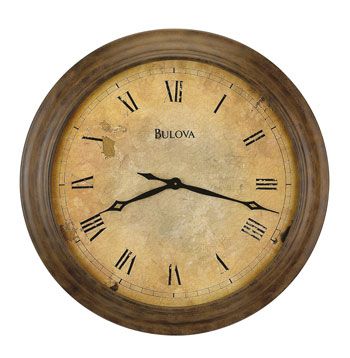 When you write is as important as what you write, but as many writers know, time is often an elusive commodity in the writing life.
I’ve read a couple of writing books that address the issue of time, and the one thing that always annoys me is that the author is writing from a place of success, i.e., he/she is financially stable enough to do nothing but write. And that’s great for him/her.
The rest of us, however, still have regular jobs as spouses and parents, not to mention careers that take us outside our homes. Of writers who comprise this group, I extend much grace to the parents, especially if their children are still young. But hear me, O Potential Writer parenting babes: those little ones won’t be little for long, so enjoy them now.
In the meantime, jot your fabulous story ideas into a notebook to be revisited upon your child’s/children’s growing independence. Right now, the best thing you can do is raise them with love and devotion. This also applies to the writer caring for elderly parents or children who will always be with you due to circumstances beyond anyone’s control. Grace and peace to you as you set aside your dream for just a little while. I promise it will be waiting for you when the time is right.
Probably everyone who reads this post is old enough to remember his/her childhood when the days seemed endless, and sometimes, they even became boring because we exhausted all the great, fun things we wanted to do. Of course, we also know that the days aren’t any shorter now.  We’re just busier with all the activities vying for our time and attention.
Gaining time at this stage of the game is a matter of prioritizing activities. I find that a calendar helps. Start by blocking off chunks of time when you’re required to complete non-writing activities (outside-the-home job, shopping, mowing, laundry, bills, cooking, etc.) and see what’s left. Analyze how well you’re doing some of these tasks and strive to do them better. Example: instead of running to the grocery store every time you need something, make a list and shop all at once. It really is that easy, and the minutes you’ll gain add up.
You’re going to have to sacrifice to make time for yourself, too. The first place you can do this is by cutting the amount of time you spend on social media. It’s crazy how much time we give to scrolling through nonsense that adds nothing of any value to our lives. Yes, it’s fun but pay attention to how long you’re actually on social media. It follows us everywhere, and like slaves, we attend every beep on our cell phones as if we absolutely must respond to that cute kitten picture or comment on the recipe for a triple-stack burger with peanut butter and jelly.
In fact, because writing is such hard work that requires a large amount of focus, you may need to separate yourself from technology for awhile until you have established good writing habits.
Giving up television is another way you can gain large amounts of time. TV has become as invasive as social media in that it’s possible to watch your favorite shows everywhere. I include the endless quantity of videos watched on YouTube in this category. Now that we live in the age of on-demand viewing, TV/YouTube/any streaming service needs to be monitored lest it continue to consume our lives.
Another time saving/time gaining measure is the ability to say, “No, thank you.” By this I mean choose what invitations you allow to take you away from your writing. This one requires some tactful maneuvering on your part, especially when the invitation is to a family function. Grandma’s 99th birthday party? Yes, you must go. Uncle Jimmy opening the pool for the season? You can miss that.
You may need to be strong with friends who don’t understand your commitment to writing. Multiple coffee dates, long phone chats, and just hanging out can chew through your writing time faster than hungry teenage boys through a pizza. Instead, schedule a dinner date with a group of friends to maintain your relationships.
So, you’ve bought back some time for yourself, but guess what? There’s still more to be had!
I find travelling with a single-subject, college-ruled, spiral-bound notebook and pen to be a lifesaver. This is especially true when I must leave the house in the middle of a fabulous writing session and I don’t want to lose the flow of the story. My husband drives and I write.
I also keep pens or pencils and notebooks around the house for the same purpose. While working in the basement, I’ve maintained the flow of my story by jotting down details in between folding t-shirts.
 Enlist the help of others toward building your writing time. Politely explain your need and work out times when you can create uninterrupted. Even fifteen minutes a day can go a long way to building your writing confidence. To minimize the amount of time it takes to get back into the groove for your next session, quickly note the next idea in your chain of thought. You can use it as a launching point rather than scrambling to remember what you intended to write next.
There’s always getting up half an hour earlier or going to bed half an hour later, but I urge caution here because sleep is so essential in our 24/7 world. Then again, if you’re at the age where you’re awake for long periods of time through the night, grab that notebook beside your bed and jot something down. Remember to be considerate of the person who may be sleeping next you to.
Make good use of the recording feature on your cell phone while walking the dog or rocking the baby to sleep. Your speaking voice will soothe both.
Ask someone to take dictation when you’re elbow deep in a sink full of dishes or while your grease-stained hands are working under the hood of your vehicle. This is a great way to get words on the page as well as draw loved ones into your writing process. Not only will they come to understand your vision, but they’ll also get to spend time with you in a way that is productive rather than interruptive.
So, you see, there are many ways to accumulate time for your writing passion. Again, writing is hard work, and one way in which you may feel as if you’re wasting your own time is when you find yourself staring at the blank page or computer screen without having produced a single word. In this instance, you’re going to have to extend yourself some grace. It happens to every writer.
 I will caution you against believing that it’s writer’s block. In truth, you haven’t found your groove yet, the muse isn’t speaking, or you’re a little unfocused. Don’t beat yourself up and don’t stop writing. Try again the next time you’ve scheduled yourself to write or the moment presents itself.


This post was going to appear a little later in my writing series, but thanks to Arthur Miller, who was in the same vein of thought as me, we’re jumping into the how of writing. You can enjoy Art’s story, and once you do, you’ll probably see why he thought how one writes is as important as where one writes.
If you haven’t figured it out yet, the how of writing has to do with the writing instrument you’ve chosen to use. You probably didn’t think it was any big deal, right? Just jot some scribbles on the page and call it a day. Sometimes, that really is how it must be. I’ll admit that many short stories were written on McDonald’s napkins with a goopy ink pen rummaged from the bottom of my mom’s purse while we drank coffee.
But that’s not what I’m talking about here. I’m going to assume you’ve done yourself the enormous favor of creating your writing environment in an effort to nurture your writing muse as she whispers to you. This is a calmer scenario where you can decide what you want to hold in your hand as you create writing gold. There are a couple approaches to this.
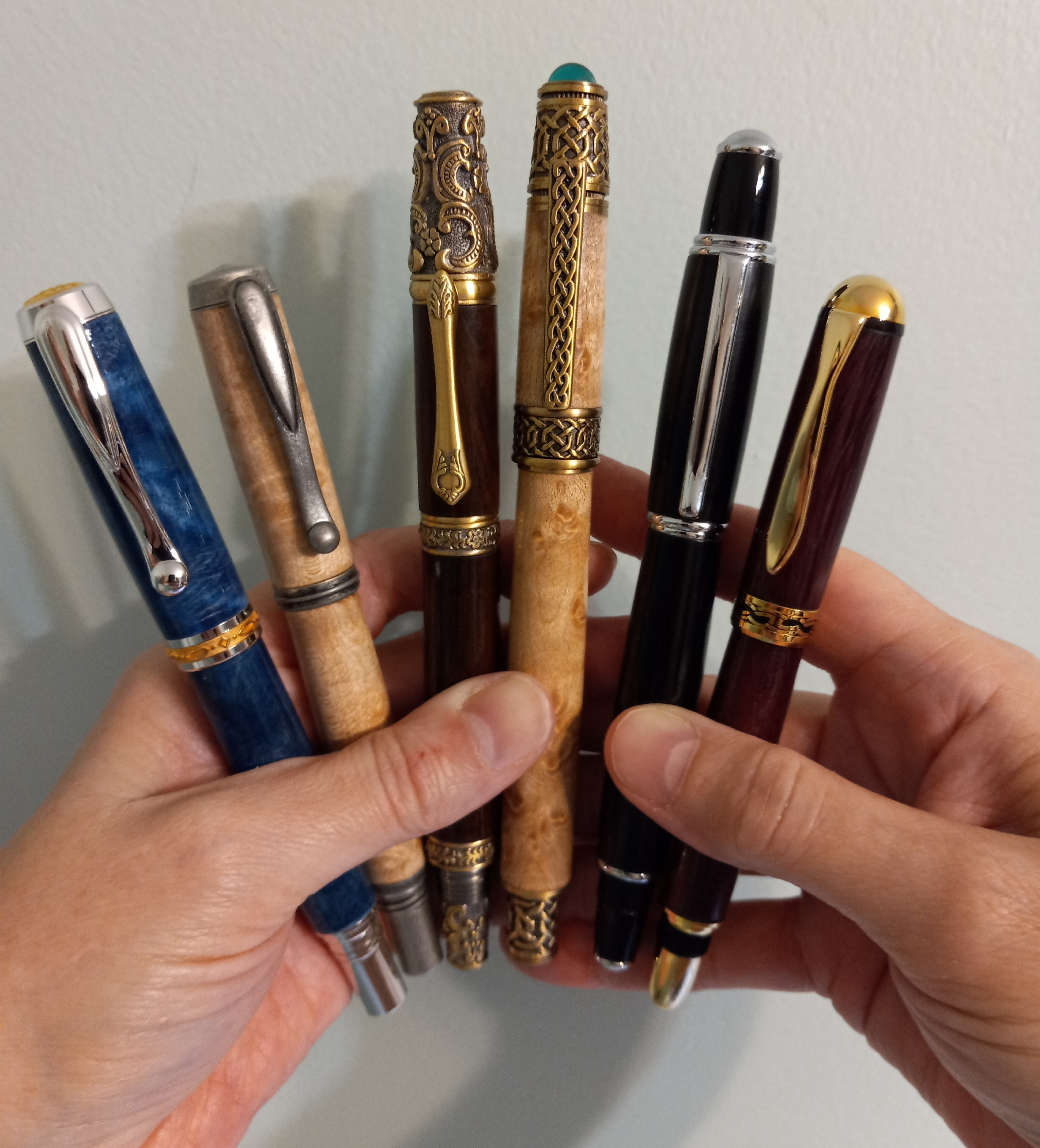 This is where my friend, Art, comes in. Art creates gorgeous fountain pens, rollerball pens, and refillable ink pens. There is something about holding one of these affordable treasures in your hand that inspires writing in ways that a Bic pen just doesn’t. I promise you’ll feel more connected to your craft because you’ll want to write something worthy of the pen! Even if you’re crossing out a portion you don’t care for, you’ll enjoy doing so with ink in your personal color preference. Don’t be surprised if you find yourself fantasizing about using your classy pen to autograph your published book.
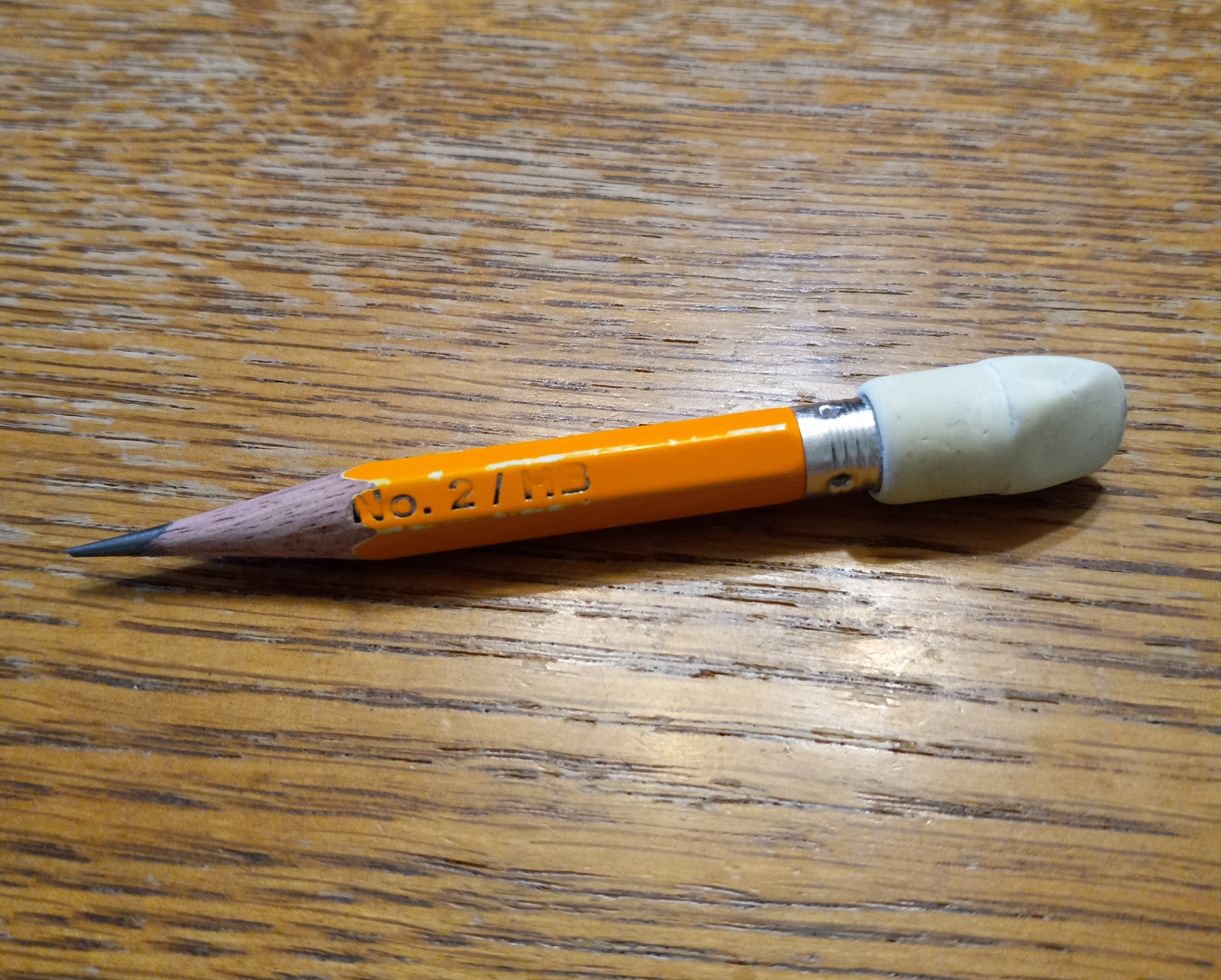 Let’s not forget the humble pencil, however. Whether you enjoy a refillable mechanical or a good ole wooden No. 2, pencils lend that forgiving quality to your writing known as the eraser. Just make that purple prose disappear for good with a couple abrasive scrubs across your paper. What’s more, use your pencil on paper that has a good tooth, i.e., a little grain to the page. The sound of a pencil scratching across gritty paper is the sound of progress being made. You’ll come to love it.
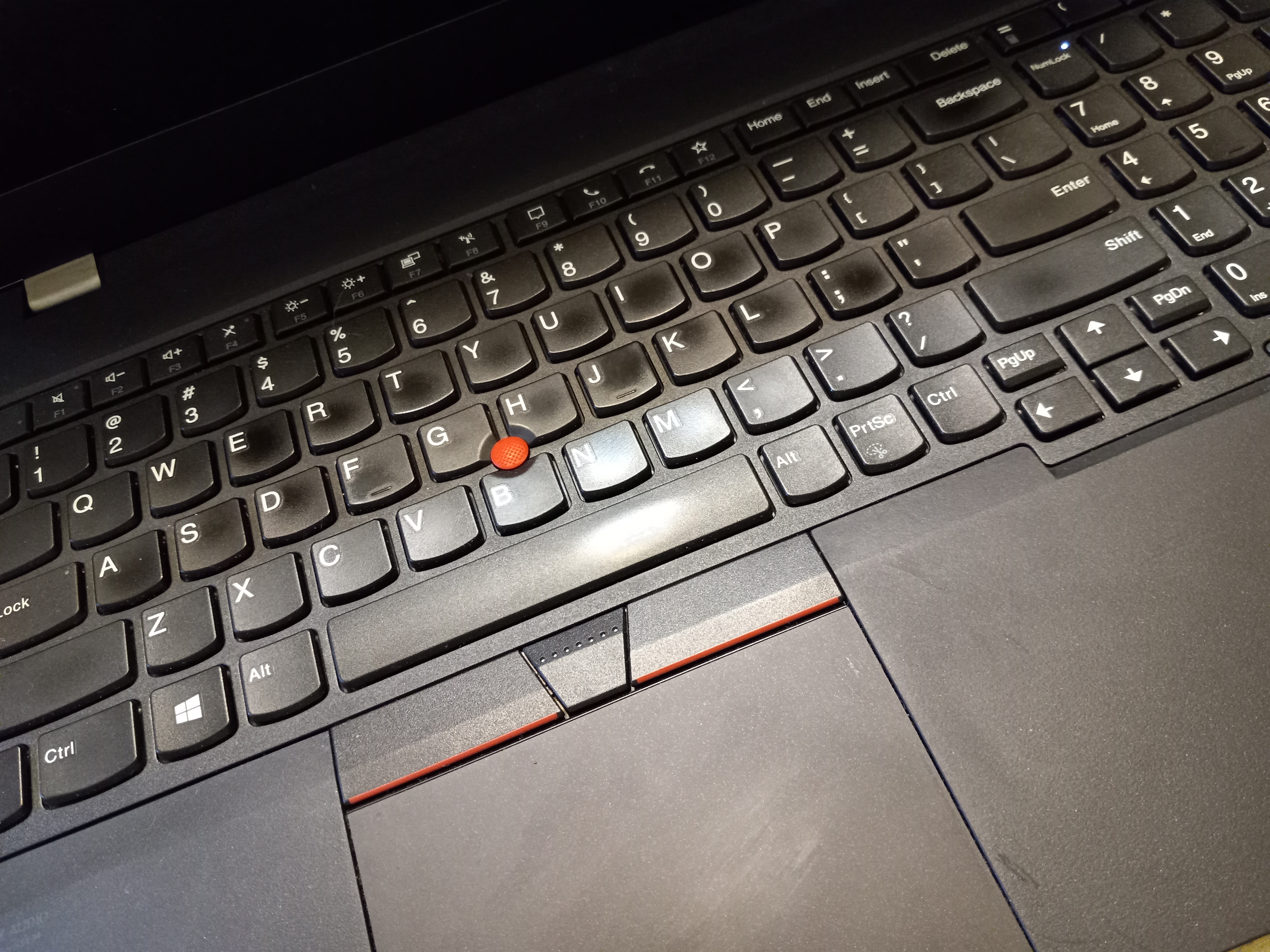 Did you notice I haven’t mentioned creating straight to a laptop? Technology has its place in the writing process but allow me to share a bit of advice. Using a pen or pencil to write will slow you down, and that’s a good thing, especially in the initial stages of your work in progress. We’re so afraid we’re going to forget a great piece of writing when, in fact, what we’ve failed to do is get our thoughts in order. Bullet point your ideas, organize them, and write in longhand or, if you truly want to sharpen your focus, print in all capital letters. This technique will help you find your groove.
Let me know in the comments which you prefer for capturing that next great piece of writing—pens or pencils.



Have you created your writing environment yet? I’m speaking to new writers who may not know how beneficial this is, and I’m speaking to established writers who may need a recharge. Writing comfort is essential to your creative process, but the definition of comfort means different things to different people. You may need to try a few combinations before you decide on one.
I strongly suggest supportive seating whether it’s the easy chair in your living room or the straight-backed wooded chair at your kitchen table. Make sure it’s seating that you can stay in for a decent length of time.
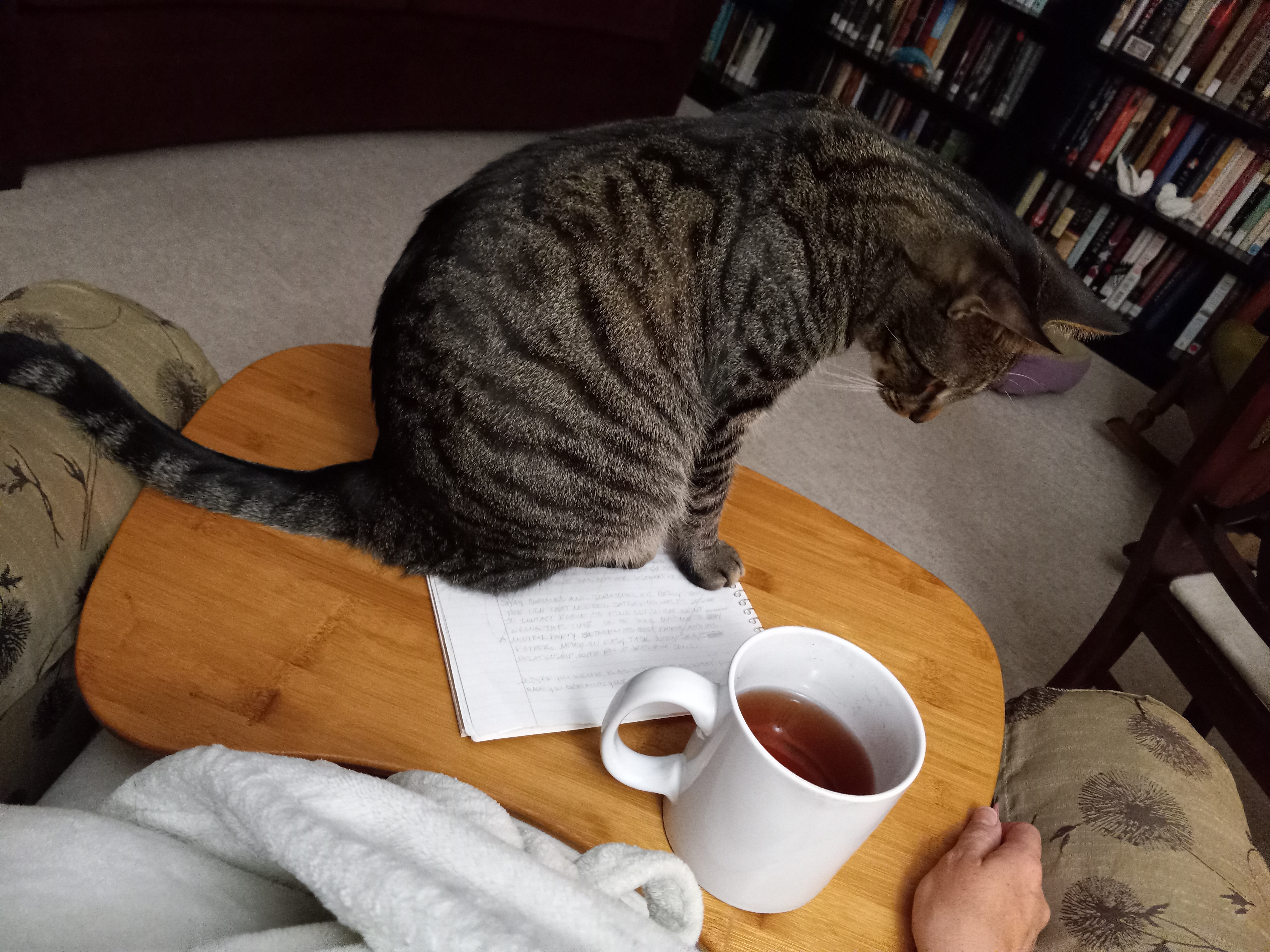
Not exactly what I had in mind, Duncan!
Writing surfaces need to be taken into consideration, too. I love my lap desk because it puts everything at the correct height, but sometimes I’d like to not have to worry about balancing it. I’m currently on the hunt for a desk that is not higher than my lap when seated. This will eliminate much of the neck and arm strain I’m experiencing. I find most tables and desks require me to reach too far forward or upward and tilt my head at an unnatural angle for my eyes to meet my laptop screen.
Don’t forget to stand and stretch after long periods of writing, an exercise more easily done in private than public places.
Eliminating distractions is crucial to your writing practice. I find the Internet and social media to be the worst diversions because they make so many seemingly harmless interruptions easily accessible, dropping them right at my fingertips. Especially articles about British royals.
On the other hand, my laptop and Bose speakers deliver an endless supply of classical music via Sirius XM as well as custom-made playlists based on characters and scenes. Music with lyrics, however, is banished because I cannot think with someone else’s words in my head, and I enjoy singing along too much. Although, when the 1812 Overture comes on, I will stop writing long enough to direct. It’s quite a sight.
As much as I love being around people, having fewer folks present when I’m writing means fewer interruptions. That does not mean I won’t stop writing to attend to friends’ and family members’ needs; service to others most definitely takes precedence. I’m talking about writing in coffee shops, which doesn’t work for me because the constant flow of people and music with lyrics requires too much of my focus to force them into the background. If you’re able to block out the cacophony or dismiss it as white noise, I say go for it.
Keep one thing in mind, though. You’ll want to write somewhere that allows you to have a restroom break without the fear of having your laptop, notebooks, and writing instruments stolen when you step away. I have had to pack up everything to hustle to the ladies’ room. It’s not the responsibility of the staff to watch your stuff. With that being said, I find libraries to be safer havens full of willing staff members who will watch over your things when you need to slip away for a potty break.
Don’ neglect the importance of good lighting when writing. While I love the ambience my Himalayan salt lamp provides, more sufficient lighting is employed to ensure I don’t strain my peepers. You may need to switch out bulbs in your home to achieve the right balance of brightness and softness. Don’t forget to take eye breaks if working on a laptop and blink often to lubricate your eyes.
If you prefer natural daylight, keep a pair of sunglasses handy even if you’re working inside and stop when the light becomes too dim. As pleasant as campfires are, they don’t provide consistent, bright light. Exercise caution there.
Keep your favorite foods/snacks close at hand to reduce the times you need to go in search of sustenance. If you choose to write at a restaurant or coffee shop, keep in mind that purchasing food and beverages is kind of expected, and that can become expensive. At home, you have access to food, but don’t fall into grazing instead of writing. I find eating a healthy meal keeps me focused, but I also like to keep a cup of tea nearby to soothe and inspire. Black licorice is my treat during and reward for a productive writing session.
Temperature is another key factor to your writing environment. There’s nothing worse than slogging through a writing session while perspiring or having your fingers cramp from the cold. Working at home puts you in charge of the thermostat while layering your clothes keeps things comfortable when writing out and about.
Again, you’ll probably need to change it up a few times until you settle into your perfect writing zone, so have fun with it. Let me know in the comments where you do our most productive writing.

 I confess, I’m a word nerd. Ever since my love of reading developed, I have been fascinated by words. More so now that I’m a writer. I admit that I still read with a dictionary, or at least my cell phone, beside me so I can look up words I don’t know. How else would one expand his/her vocabulary? One of my favorite discoveries regarding words is the second, third, or even fourth definition of a commonly used word. “Yep, she’s a nerd,” you’re thinking.
But that’s totally fine by me because I know that great words often lead to really cool phrases. Take today’s The Weight of Words example: Roger Wilco. Not just words but a name, perhaps?
I recently used this phrase in a text to my son, and I realized I had no idea from whence it came! How could that be? Well, no matter. I’ll simply conduct a little research and share my findings with you.
Per Paul Cuadrado answering the question “Where did the phrase Roger Wilco originate?” on Quora:
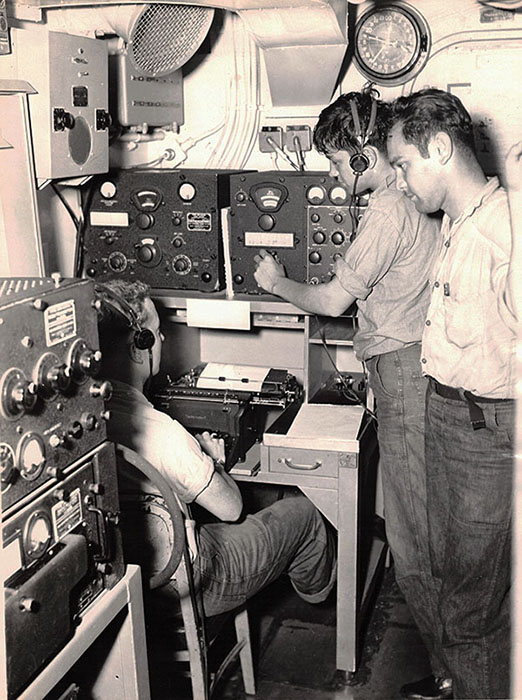
As the United States entered into World War II, communications officers decided to use a phonetic code in which a common word was used in place of a single letter. This was necessary because simply spelling out a word, a command, or a coordinate was inefficient and often unclear to the listener.
As a result, “Roger” came to represent the letter R, which was vocalized shorthand for Received or message received.
Similarly, “Wilco” is radio shorthand for “will comply” or “will cooperate.”
“What’s his expertise on the subject?” you ask. Well, check out his profile comment: 40+ years teaching English, life-long gardener, and word nerd.
And while I gave my fellow word nerd the benefit of the doubt, I also conducted a little more research.
I started by looking up the military alphabet, and at first, it seemed as if Mr. Cuadrado was a smidgen wrong because every chart I found listed the word “Romeo” for the letter R, not “Roger.” A small clue in his answer led me to dig deeper into alphabets used during World War II, and that’s when I hit upon the chart below.
It’s a bit unwieldy for this post, but the comparison of words to letters and their progression was just too interesting to abandon.
| Letter | 1957-Present | Morse Code | 1913 | 1927 | 1938 | World War II |
| A | Alfa (or Alpha) | . _ | Able | Affirmative | Affirm | Affirm (Able) |
| B | Bravo | _ . . . | Boy | Baker | Baker | Baker |
| C | Charlie | _ . _ . | Cast | Cast | Cast | Charlie |
| D | Delta | _ . . | Dog | Dog | Dog | Dog |
| E | Echo | . | Easy | Easy | Easy | Easy |
| F | Foxtrot | . . _ . | Fox | Fox | Fox | Fox |
| G | Golf | _ _ . | George | George | George | George |
| H | Hotel | . . . . | Have | Hypo | Hypo | How |
| I | India | . . | Item | Interrogatory | Int | Int (Item) |
| J | Juliett | . _ _ _ | Jig | Jig | Jig | Jig |
| K | Kilo | _ . _ | King | King | King | King |
| L | Lima | . _ . . | Love | Love | Love | Love |
| M | Mike | _ _ | Mike | Mike | Mike | Mike |
| N | November | _ . | Nan | Negative | Negat | Negat (Nan) |
| O | Oscar | _ _ _ | Oboe | Option | Option | Option (Oboe) |
| P | Papa | . _ _ . | Pup | Preparatory | Prep | Prep (Peter) |
| Q | Quebec | _ _ . _ | Quack | Quack | Queen | Queen |
| R | Romeo | . _ . | Rush | Roger | Roger | Roger |
| S | Sierra | . . . | Sail | Sail | Sail | Sugar |
| T | Tango | _ | Tare | Tare | Tare | Tare |
| U | Uniform | . . _ | Unit | Unit | Unit | Uncle |
| V | Victor | . . . _ | Vice | Vice | Victor | Victor |
| W | Whiskey | . _ _ | Watch | William | William | William |
| X | X-ray | _ . . _ | X-ray | X-ray | X-ray | X-ray |
| Y | Yankee | _ . _ _ | Yoke | Yoke | Yoke | Yoke |
| Z | Zulu | _ _ . . | Zed | Zed | Zed | Zebra |
I found the chart and the following paragraph on Military Africa. I suggest reading the entire article because I’m sure you’ll find it as interesting as I did.
In World War II, the United States military used a modified version of the Joint Army/Navy Phonetic Alphabet (JANAP). The alphabet was adopted in 1941, and in use until 1957, which was the year it was officially discontinued by the IRSA. Today the only parts of the JANAP WWII-era alphabet still in use include “Charlie,” “Mike,” “Victor” and “X-Ray.”
To wrap this up, several websites stressed that to transmit the reply “Roger” was not an agreement with the message. Rather, it was simply stating that the message had been received. Apparently, in military speak, this is an important detail. Only when “Roger Wilco” has been stated can the initiator of the conversation trust that his/her message has not only been received but will also be acted upon.
It may seem like a minor detail, but I’ll definitely keep it in mind the next time my mother asks me to do something, especially if it’s something I don’t really want to do.


I’d like to apologize to my followers for not posting anything new in about three weeks. It’s been a very strange time for me as I dealt with some health issues and the blessed busyness of the fall Appointed Times.
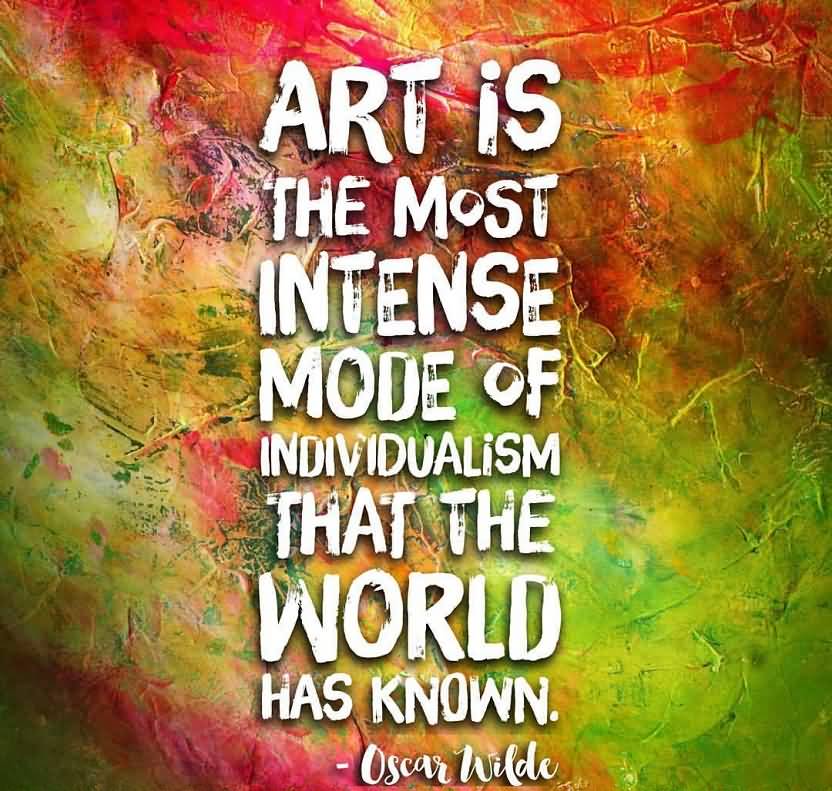
During the past weeks, one thought has been at the forefront of my mind, and I’d like to share it not only as a reminder for myself, but because someone else out there may need to hear it:

It sounds so simple on the surface, but you would be amazed how much garbage we allow to become entwined in our lives. I’ll never forget my first lesson in how the secular almost worked its way soul deep.
Please know that I’m not the type of person who looks for the bad in everything. Still, it took three tries for me to get a seemingly harmless situation out of my life.
Several years ago, I was invited to join a group with whom I shared a similar interest. It was a truly thoughtful gesture that I gladly and appreciatively accepted. Everything was great for quite a while, and the best part was that it was an all-female group, so naturally the conversation turned to lots of sharing about subjects other than our similar interest. I would have preferred more focused sessions, but since I was a fringe guest trying to fit in, I rolled with it.
But occasionally, the personal tidbits included things that were not only unrelated to our similar interest, but they were also confidences I did not want to carry for people with whom I did not share a connection beyond our purpose for attending the group. I felt very uncomfortable, and I started to see a negative theme emerging, one for which I did not have a label at the time.
And then the text that ended it all arrived one day.
It included a hashtag that literally made me flinch. It was just so unexpected that it had to have been made in jest. Just to make sure, I mentioned it to my mother because I still run things by my mom. She expressed much concern and suggested I politely bow out.
Which I didn’t because it’s my mom, and I thought she was overreacting.
So, I sat on the issue until I casually brought it up to two friends whose opinions I also trust. Their reaction was on par with a nuclear explosion. I was told—yes, told—to get out of that group for valid reasons upon which they expounded with love and not a little passion. I was stunned, and, I admit, I felt like an idiot.
But I’m so slick that I thought I’d just take a break, which I stated in the parting e-mail I sent to the other members. I said I was going to pursue other things and that my life was going in a different direction. I was wished well, and that was that.
Or so I thought.
I had every intention of rejoining the group after a couple months, and I planned on maintaining a connection via the group’s Facebook page. Adonai had other plans for me. I’d been told twice by three different people of the potential dangers, and still I thought I could fly under Adonai’s radar.
What finally got through to me was being immediately deleted from the Facebook group. While it hurt on the surface, it was the one rap on the head that made me understand in my heart that there was no foundation with what I’d been involved. I heard Adonai tell me, “I don’t want you there. You are not going back.”
I realized I’d been lying to myself about the other things I said I was going to pursue. Things of a much deeper, lasting nature. I felt so convicted that I took the different path that, for a short time, seemed as if it routed me away from my interest and, in truth, landed me right back where I longed to be with a better understanding of how to pursue my desires.
 I wish the members of the group well, and I hope they achieve real success in every aspect of their lives. I certainly bear them no ill will. There’s no reason to, especially since I can look back and see how far I’ve come by walking through the doors Adonai has opened for me instead of banging on the ones He closed.


 hl gibson, author