Too Tired to Rest

too-tired-to-restThe reel of unseen dreams flickers her eyelids as the man who has slipped into her room watches. A crescent smile glides across his face like a canoe trailed by ripples of worry. Deep within her consciousness, she senses his presence, and the blue eyes marred by clouds of age slowly open.

“Hello, Grandma.”

One, two, three seconds pass as recognition surfaces. Her face, soft as worn flannel, bunches around her eyes and mouth.

“Hello, Freddy.”

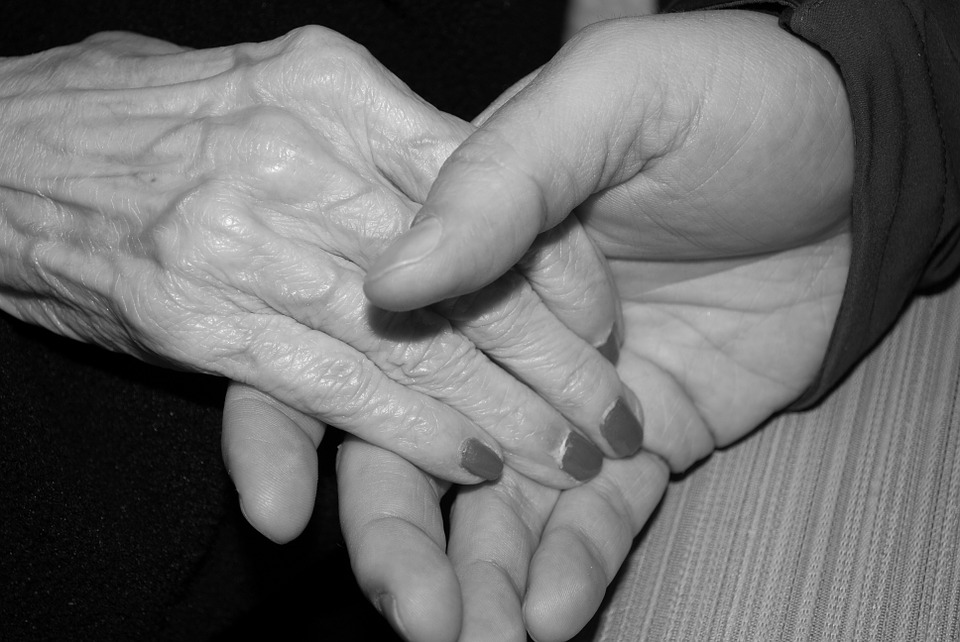
Her equally soft hand pats his sandpaper chin.

“I know I haven’t been to visit you as often as I should, but…”

“No apologies, sweet boy. You’re here now.”

“I came to spend Shabbat with you, Gram.”

The old soul leans forward in her bed, peers out the window.

“Seems a little early yet,” she says.

“Well, Mom says you’re asleep by seven, and the summer sun sets so late.”

“Cheeky devil,” she chuckles, again patting his face. “Go ahead and light the candles. Fetch my shawl from the drawer—no, that one, Freddy, the next one down—and I’ll say the blessing.”

Fred complies with her request, draping dark blue silk around her head and shoulders. Daylight blasts hot and bright through the windows of her room in the nursing home; her white crowned head swathed in navy gives the appearance of the moon in the night sky. He lights two candles in cut glass holders, and the sun withdraws its spears behind linty clouds.

Elsa Cohen breaths as deeply as her ravaged lungs will allow; she wheezes like a broken bellows, drawing withered hands above the dancing flames, the ancient prayer she recites flowing like new wine. When she finishes, she looks up into her grandson’s drum-tight face.

“Why so troubled, Freddy?”

“I don’t know, Gram. I’ve been feeling kind of…melancholy lately?”

“Are you asking me?”

“Well, no.”

Elsa pushes the shawl off her head, smooths the fabric around her shoulders.

“It’s just that, I haven’t been keeping Shabbat lately either, Gram.”

“I see.”

“Do you?”

“No, that’s just what people say when they’re giving you time to collect your thoughts and tell what’s on your mind. Spill it, Freddy.”

“Oh…uh, well, I haven’t been keeping Shabbat because…because it’s really hard to do in today’s society, you know? I mean, living in America and all, well, people don’t stop, like, working and stuff at sundown on Friday until sundown Saturday.”

“Oh gosh, people don’t even stop on Sunday anymore either.”

“That’s true.”

“I remember when you were little that gas stations and stores were closed on Sunday, and all the good people went to church, and everyone rested.”

“We live in a ‘round the clock kind of world these days, Gram.”

“That we do. How’s that working for you, Freddy?”

“What do you mean?”

“When you visited three months ago—”

“Ouch.”

Elsa waves him to silence.

“You said you and Margaret were so exhausted with long hours at work, running errands, shuttling the kids from here to there.”

“Well, I don’t see how taking a whole day off to do nothing is going to help any of that, Gram. Wouldn’t that just put us more behind?”

“Do more on the other six days. Totally run yourself into the ground. Or you could save up all your Shabbats until retirement and lay around doing nothing for ten years.”

“Gram, be serious.”

The old woman chuckles until she coughs. Fred leans her forward and delivers firm pats to her back. Her nightgown is a floral landscape across the sharp ridges of her shoulders. Once settled against her pillows, she continues.

“You have to decide for yourself, Freddy, why you do or don’t do these things.”

“Wouldn’t it be easier if you just told me what to do?”

“What fun would there be in that? Besides, there’s no guarantee you’d do it just because I say so.”

“It was so much easier when Grandpa was alive. We all met for dinner at your house and followed his lead.”

“Fredrick—Shabbat hasn’t gone by the wayside just because your grandfather died. Everything that is good about it is still with us. My goodness, dear boy, for one so educated, you sure are stupid.”

Fred can’t keep from laughing at his little grandmother’s spoon-blunt words cutting him sharply.

“Okay, Gram, I get it.”

“Are you sure? Because I could spell it out for you. Use pictures and small words.”

He kisses her forehead like she is his child.

“I love you, Gram.”

“I know, Freddy. Now take that box of candy over there your mother sent me—she knows I can’t chew caramel and nuts anymore—and go home to your family. Rest, my boy.”

Elsa snuggles into the blankets her grandson pulls up over her chin. Her eyes flicker as the dream scenes resume, and she is asleep before he crosses the room to leave.


Being Strong for Melinda

trial-or-tribulationSharon and Robert have spent many dark and lonely hours, separated from each other, asking for the things they believed were right and good. Too many times they listened to doctors whose explanations left them staring and openmouthed, their minds weighted down with things they struggled to comprehend.

Endless dashes to the hospital turned into a permanent stay for their only child. She looks like a little caterpillar cocooned in blankets, bandages, and wires from a host of monitors. Robert calls her his baby bug waiting to emerge with new wings.

Prayer requests make the round on social media. Praise reports are given when their daughter rallies. Many drop off when her condition lags. The weak and faithless have no explanation for this decline. They cannot explain why they couldn’t get Melinda healed, make excuses for God as if He needed them. All of it wears on Sharon and Robert until they pray for release for their beloved child because that must be what God wants for her, right?

With heavy hearts, tears amassing in their eyes, they claim they are willing to accept this for their baby girl. Each buries a duplicitous heart beneath stoic faces and solemn nods of the head. They just want to quit, for this to be over. They never speak of it anymore. In fact, they’ve stopped talking to each other at all. The constant company of the Women’s Bible Study Group and Men’s Fellowship doesn’t allow for much private conversation between them. Such good people, these men and women, who stay with Sharon and Robert 24/7, praying audibly non-stop.

Sharon slips away to the ladies’ room. She does not turn on the light, locks the door. The sound of breathing in the dark room scares her for a second, but whatever harm might be done to her by the owner of the breathing is preferable to what is going on with Melinda. Especially if it ends her.

“Sharon?”

She jumps and laughs wildly.

“Robert? What on earth are you doing in the ladies’ room?”

“It’s the only place the guys from church wouldn’t think to look for me.”

More deranged laughter, shared, from the emotionally and physically drained parents. Robert sighs but does not reach for his wife. Neither move to turn on the light.

“I’m so tired, Shar.”

“You, too?”

Robert’s voice dips and rises uncontrollably.

“I just want this…I just want…”

“I know, dear. Me, too.”

Their hands meet in the darkness, instinct guiding their palms and fingers into place. But they do not draw closer to each other.

“I want to quit, Shar. No—I have to quit. I’m done. I’m finished, and I got nothing left.” He pauses to draw a deep breath. “I was in here working up the nerve to tell you.”

“Rob, that’s why I came in here.”

“Why didn’t you say something?”

“When, Robert? Between entertaining and performing for the people from church—God knows I love them, but I really just need them to go home—to holding in my emotions every time the doctors tell us Melinda isn’t progressing as they’d hoped? You won’t even meet my eyes anymore.”

“I know. I’m sorry. But I was afraid if I looked at you, you’d see how scared I am—”

“—I’m scared, too—”

“—but I don’t have any answers for you, Shar. You know, I’m supposed to be the strong one and all that.”

“Don’t be ridiculous, honey. I never expected solutions to this. Not from you, anyhow.”

“Well, that’s a relief.”

“Is it? Because we’re off the hook, but I suspect we wanted our prayers answered in a specific way we’re too afraid to admit.”

“Can I turn on the light?”

Robert flips the switch before she consents setting off a round of watery-eyed blinking.

“Well, that’s better,” he jokes.

They step closer and melt into an embrace. Sharon cries against his shoulder as he runs his hand over her hair.

“I’m not really okay with losing Melinda,” his wife says.

“I know.”

“I feel so guilty for saying that. Like I’m less of a…”

“I understand, Shar. Really, I do.”

“So, now what?”

“Now we quit pretending. We’ve got to.”

“Agreed.”

“And if Melinda…if she…”

“Dies.”

“Yes, if…then we’ll figure it out together. Just the two of us.”

“But it doesn’t have to be just you and me, Rob.”

“I know. I meant all the church crowd.”

“They mean well—and quite a few have been helpful. Sincere.”

“That’s true. But when this is over, whatever over may be, it’s just you and me, and you and God, and me and God to work through this.”

It’s Sharon’s turn to sigh.

“Is this where we were supposed to be all along, Rob?”

“You mean if we hadn’t let all the hoopla get in our way?”

“Yes,” she chuckles. “Just trusting. Shutting up and trusting that God’s got this under control.”

“That’s a hard and scary place to be.”

Sharon nods and leans her forehead against Robert’s.

“I can’t promise I won’t be sad,” he whispers.

“You wouldn’t be human if you weren’t. Just don’t be afraid.”

“I’ll try, Shar. For you.”

“No, babe. For you.”

All the prayers they cannot speak radiate between them. A knock on the restroom door precedes, “Sharon—come quick. The doctors have been looking all over for you. Sharon?”

Melinda’s parents, raw and exposed, striped down to the soul, brace each other with hands to the shoulders.

“I don’t know where they are,” says the muffled voice on the other side of the door.

“Well we have to find them now. They need to know Melinda has opened her eyes and asked for them,” a male voice joins in.

Gasps of shock from the people on the outside are lost in bursts of laughter and tears of relief from Robert and Sharon within.

A First Good Day

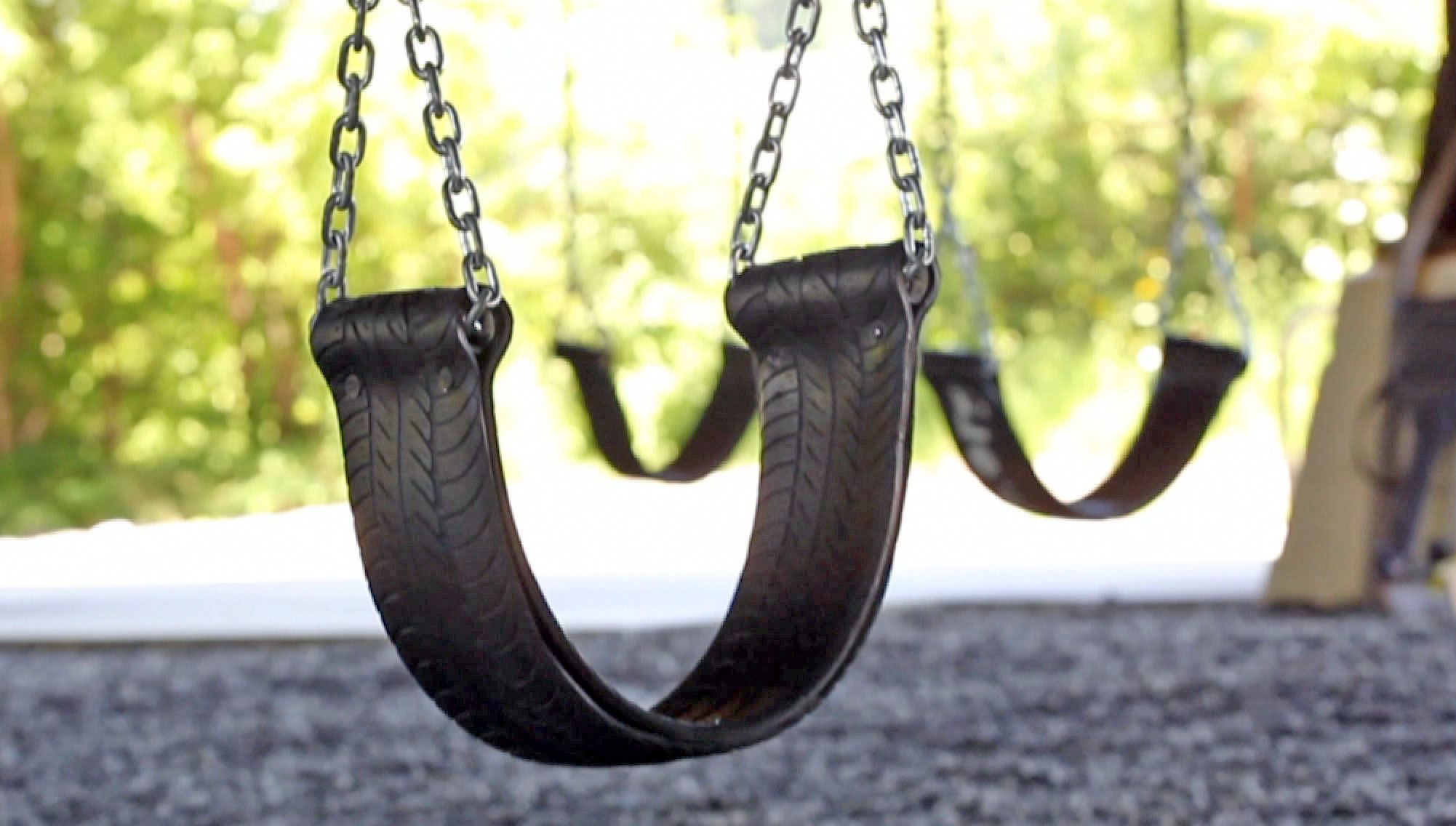
Some of the new swings are seen. A total of 11 new swings have been installed. SWINGPARK - The new swing park near the corner of East Brady and North Water Streets beneath the N. Holton St. Bridge on Wendesday, July 23, 2014, included newly designed swings that are a collaboration between the City of Milwaukee, the Brady Street BID #11, and the grassroots organization beintween (Òin betweenÓ). Beintween installed swings at the site in Fall 2012. When the swings fell into disrepair, they were removed by DPW in Fall 2013 as a safety precaution. The agencies worked together to redesign and rebuild the swings using recycled materials including rubber tires, metals and wood. A total of 11 new swings have been installed, including a set of baby swings and a metal swing that is ADA accessible. The cushioned ground beneath the swings has also been replaced with shredded rubber tires, and new lighting has been installed for a safer experience. Photo by Mike De Sisti / MDESISTI@JOURNALSENTINEL.COM

Angie sits on a swing, swaying gently and trying not to catch her skirt in the chains. Her flats are placed firmly on the shredded rubber mulch, the new favorite material to cushion falls at the playground. All around her children laugh and squeal, running from swings to slides, rock wall to climbing rope, sand box to wooden fort. Mothers cluster on benches in the shade of meager trees, some pushing a stroller with a drowsy baby back and forth, back and forth. A trickle of sweat slides between Angie’s shoulder blades.

She’s not sure where she fits in. Part of her identifies with the little girls playing house, carrying their baby dolls by the neck in the crook of their arms. They sequester themselves in the tower of the fort until the little boys invade wielding invisible lights sabers and threats of feeding the dolls to the Sarlacc. Angie has experience disrupting homes. As for the prom princess mall mavens, the only thing they have in common with Angie is the fact that they, too, have given birth.  She is smart enough to know that this alone does not make her a mother. There’s more to it. A lot more. Probably what these women sitting around the perimeter are doing. But she cannot tell what that something is.

Her eyes burn and drop to the toes of her scuffed black flats. Heat reddens her face as she imagines what these women would think if they knew how many miles she walked to wear the soles of her shoes thin, or how short her skirts were in comparison to her long navy blue one sweeping the surface of the playground. Fireworks of yellow, red, and orange flash behind Angie’s closed eyes. Sunlight caresses her cheeks with the warmth of a mother’s hands as she tilts her face upward. A woodpecker’s tap on her shoulder interrupts her solitude.

“Angie?”

“Yes, ma’am.”

Gloria Freshley stands to Angie’s right, clasping a briefcase handle in both hands. The social worker nods and gives her a head-to-toe once over.

“Very good. Remember what the judge said, okay?”

“This is not a reward for my good behavior, and the Mendenhalls are being generous by letting me see Chloe.”

“Exactly. Keep that in mind, and this will go smoothly.”

No mincing words with Gloria. Angie takes a breath to speak. Questions contort her face, but Gloria blinks slowly once in lieu of shaking her head. All the queries, arguments, and debates drift toward the thick clouds stacked across the sky.

“Here they come.”

Angie watches her three year-old daughter toddle between a man and a woman, her chubby hands held in one of their own. Their approach slows when the little girl navigates the concrete curb surrounding the playground, stops to watch the children play, and grabs a handful of sand to work between her palms. Mr. Mendenhall shares a smile with Chloe as he wipes her tiny hands with a handkerchief pulled from his back pocket. There’s something reassuring to Angie that her daughter lives with a man who still uses handkerchiefs. From beneath locks of long, brown hair, Mrs. Mendenhall’s eyes scan the playground. She’s a soldier on point acknowledging the enemy without giving herself away.

Indecision about the next twenty minutes muddles Angie’s thoughts. All she knows is that she doesn’t want to waste time thinking about her feelings. Analyzation comes later. For the next twenty minutes, earned by nineteen cocaine-free months, she will talk to Chloe and watch her play without touching her. She must remember to thank the Mendenhalls for taking care of Chloe and allowing this meeting. She must also remember to leave first. The last is her own stipulation, an old habit from her days on the streets to hide her true emotions.

Chloe staggers toward Angie who smiles at her daughter’s defiance to hold the Mendenhalls’ hands the last few yards. There are no words or expressions when Chloe totters past to explore the swings behind her mother. A bitten lip brings the taste of salt and rust; Angie’s mind scrambles to pin down a reaction to her daughter’s lack of recognition.

“Swings are her favorite,” Ted Mendenhall says to soften the blow.

“I should know that,” Angie replies.

“You do now,” Karen Mendenhall says.

The four adults sit at a picnic table. Their conversation contains praise for Chloe. No promises are given, no condemnation expressed. The offer to meet again in six months lightens the tension etched in the lines around everyone’s eyes except Chloe’s. She blows kisses over Ted Mendenhall’s shoulder as he carries her back to the car; his free hand holds his wife’s.

“That went well,” Gloria says. “I’ll call you a week before the next meeting to see where we are.”

Angie stands in the center of the playground trembling, unable to contain the smile aching her face. Suddenly, she realizes that she is the last to leave . Laughter and tears flow freely from the eighteen year-old as she enjoys the first good day she’s had in a long, long time.

Now You See Me

Thank you to my dear friend, Irfan Nabi, for supplying the amazing photo inspiration for the flash fiction below.  The moment I saw his picture, a story began to form in my head.  In this case, it’s a love story told in reverse that circles back on itself.  I hope you enjoy it.

Now You See Me

Monsoon RainsWithout looking at him, she watched him walk away. A pause in the rain provided the perfect opportunity to see his reflection slip out of her life. To watch him walk away from all they had been together. Away from her.

His words lingered in her ears. The reverberation of a church bell signaling doom. So beautiful, so mournful. She goaded him to say more just to keep him in her presence if only for a moment longer. She begged him to stop shouting, her own admissions used against her. He never would have said a word, but she could not let it go.

She confessed her insecurities to him. Her age, his youth. Her wisdom, his beauty. How could they be compatible? He never mentioned it to her. Never once broached the subject she barely kept suppressed beneath a façade soothed by external remedies. Lotion, powder, blush. Her known deception extended to the roots of her colored hair.

Love came easily to them. To him. He never saw the relaxed state of her body, the body given to her after three children and years of an unhappy marriage. She could not relax inside, and that, too, he pretended not to notice.

They dined at her apartment. He cooked for her delicacies she had only dreamt of, fed her with his hands. Nothing measured, everything given in excess. Spices and friendship blended perfectly to satisfy all hunger and thirst for life. Soulmates.

Another invitation to coffee. He called her on her cell; she wondered how he obtained her number. They talked for hours like close confidants before she even said yes. Where to meet? He knew just the place. Knew she would love it. And she did.

A chance meeting outside the building where he worked. He insisted she join him and his friend for lunch. She declined with a head tilt and a smile, and instantly missed him for some strange reason. When he caught up to her, she believed his explanation about the friend excusing himself.

Introduced by a mutual friend at a party celebrating someone’s birthday, they found themselves with glasses of champagne in hand. Standing about, chatting. Nervous laughter preceded the invitation to leave, to seek quiet and coffee. It was just coffee, but she enjoyed herself more than she had in years. His lively conversation cheered her in this country where she did not live.

She stayed with a friend already working in the country. Together they located a suitable apartment while she decided what she wanted to do with her life. Right then, all she wanted to do was breathe. Days turned into weeks turned into months.

Divorce finally prompted her to flee, to seek the freedom she craved and the happiness she deserved. She left behind grown children with the assurance to return and the promise of souvenirs. Okay, maybe grown but not mature. All three saw her off at the airport with hugs and kisses but not tears because they knew she would return to them. What could an exotic country hold for her, provide her with, when they were her very existence?

– – – – –

He turned to look at her one last time, imploring eyes willed her to lift her head. But his reflection had already slipped beyond the edge of the puddle, and she did not see.

The Party’s Over

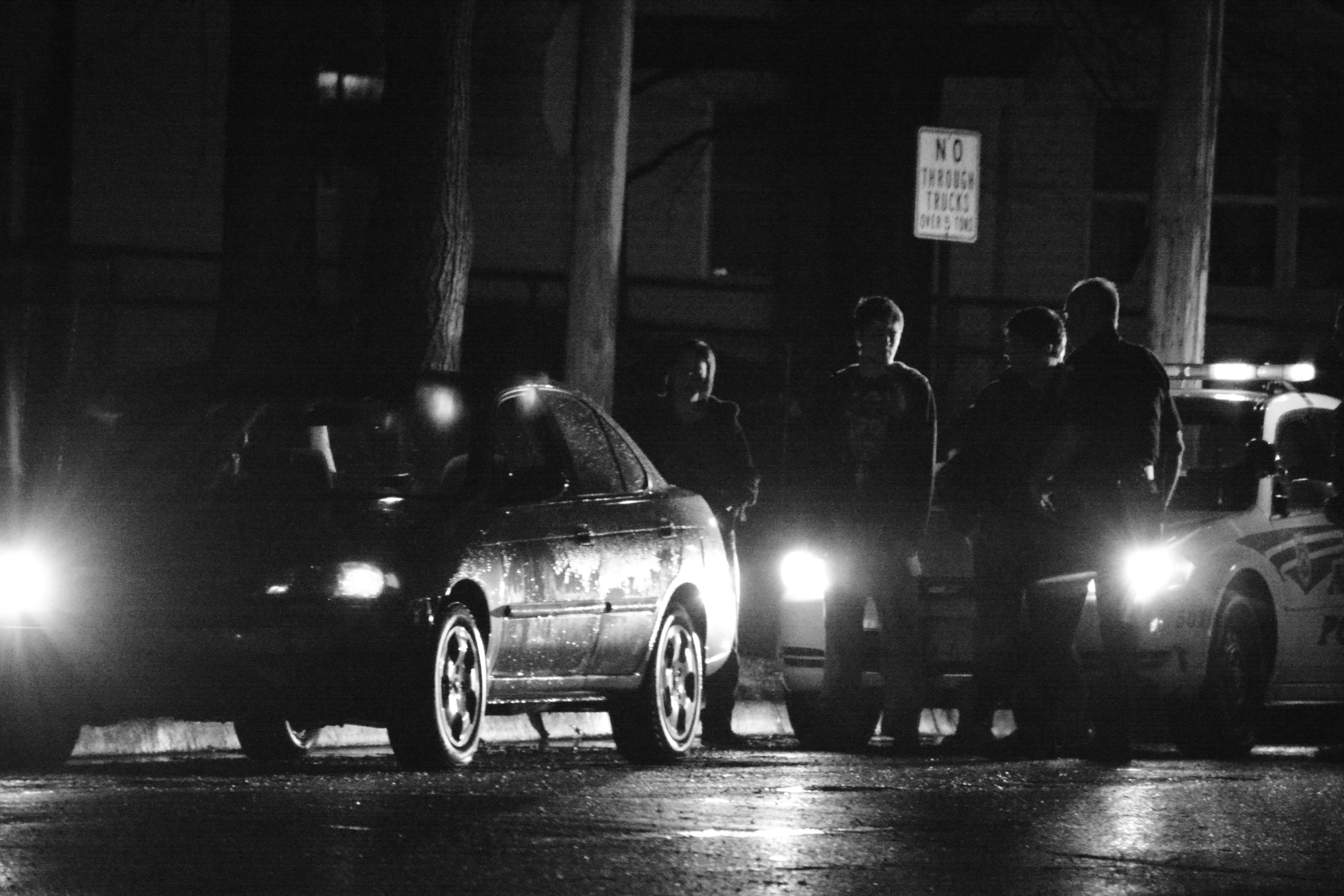
RegretDrake wished he had taken his Mom’s suggestion to wear a warmer coat. He didn’t know how long they’d be standing here while the cop gave them sobriety tests which they all ended up failing spectacularly. Devon and Tony couldn’t quit shivering beside him, and he wondered if it was from cold or fear.

He didn’t know how the cop couldn’t be cold in short sleeves. This guy wasn’t even shivering, no goosebumps on his brawny arms. Just cool and collected, so polite as he questioned the three of them about where they were coming from, what they had been doing. He sounded like Drake’s dad discussing his job at the dinner table in an even voice without much inflection, like the buddy he ran into earlier at the convenience store when he purchased that twelve pack of beer. Not at all condescending.

With hands jammed into his pockets, shoulders rounded, Drake answered yes, sir, and no, sir, with the thin veneer of false compliance barely concealing the resentment in his voice, the scowl on his face. He should be back at the party, but that idiot Tony had volunteered them to make a beer run. The party where the girl with the long mane of thick, black hair had stood beside him all night, bumping his arm every time she sipped her drink. He had wanted to rake his fingers through her hair, pull it back into a ponytail, and give it a gentle tug. The memory made him smile, and he snorted a laugh through his nose. Tony elbowed him in the side and hissed, “Quit it, man. You’re gonna piss this guy off.”

But his resentment wasn’t directed toward the cop who pulled them over for erratic driving. He just didn’t like the guilt lodged between his shoulders like an ax blade. Guilt ruined fun, and that’s all they’d been doing. Having fun. You want something to make you feel like you’ve done a good job, something to talk about at roll call tomorrow? Go check out what’s happening three blocks down, two blocks over. That’s the place to make the real bust. The place they just came from. The house where the dark-haired girl who nodded and smiled when Drake refused the joint was probably already dancing with someone else. The house with white lines on the glass coffee table.

Still, he can’t blame the cop for doing his job. Of course, he could have chosen to be a furniture mover based on the size of his biceps. One of those guys who lifts refrigerators and wardrobes by himself, strapped to his back, and not a single grunt as he walked up or down stairs. Weren’t cops supposed to be soft in the middle from driving around all day, eating doughnuts? Drake should be able to outrun this guy in his black, laced up boots that looked slightly military and weren’t meant for running like the cross trainers Drake wore. He could sprint away from this cop like a cheetah running from a wombat. Out distance him in nothing flat.

But then the cheetah would grow tired after the initial burst of speed. He would hear the steady beat of the wombat’s boots behind him closing the distance, each methodical step brining the wombat closer to the spent cheetah. Like an endurance runner. Drake shuddered, and the bright idea to run was squashed like a lightning bug in the hands of a devious five year-old. Yeah, this cop probably ran marathons.

Drake shook his head because he knew they’d messed up and were in serious, serious trouble. Something cold and wet hit his face; something more than mist but less than rain. The damp seeped into his clothes, and regret drew his chin down to his chest. Drake’s eyes stung and he wasn’t having fun anymore. He wanted to go home. He wanted the lead weight on his diaphragm that made it hard to breathe to disappear. His mouth tasted sour.

The soft glow of headlights fuzzed by the condensation reminded him of the cotton balls his mother used to remove her makeup. His mother. Drake wondered if the officer would let him call his mother so she could bring him a warmer coat.

~~~~~

Thank you to HBSmithPhotography for the picture.

Longing For Winter

Longing For Winter“I’ll wait for you right here.”

She listened as he walked through the house, the closing door indicating his departure, a long silence during which she envisioned him performing the tasks in preparation for mowing the grass, and finally the sound of the tractor rumbling awake.

Long shadows grasped at the remains of the day and sleep tempted her eyes with long, slow blinks. Neither was a match for her desire to read or reclaim her love’s presence. She hadn’t lost his company in its entirety, but as long as the days continued to lengthen with the promise of daylight, her man would be hard pressed to sit still beside her reading a book.

He came late to reading, not discovering his favorite genre until well into adulthood. Other hobbies, perfectly acceptable activities, had always led him in other directions. This, combined with his mind’s pressing need spurred on by guilt, was why he rushed to complete as many chores as possible from dawn to dusk on the weekends.

And if pressed to admit, he would confess that reading during the long hours of summer was burning precious daylight that could be spent performing all those tasks that required his attention. The list was never-ending. This was why she longed for winter.

For every day past the summer solstice, every minute of daylight lost, brought her a tiny bit closer to reclaiming her love’s presence. Summer would be bedded beneath their children’s return to school and the soft crinkle of autumn’s falling leaves. Schedule and routine would return with chill air and morning frost. The blanket of nightfall would once again shroud the days and return the husband to his wife, their time once again entwined.

Winter evenings feel shorter to the senses. Our eyes see the dark and tell our minds to go to bed unless one’s eyes are trained upon a book, and then the mind willingly travels all over the world and throughout time. The couple would be together in body, yet journeying in their separate worlds. She could hardly wait for the ritual to return.

She knew better than to press him now while there was still work to be done. She would only succeed in crushing his fragile, growing love of reading. It was also not important that he ever read as voraciously as she. What was important was their silent togetherness that began on Friday evenings and lasted until he returned to work on Monday: the time they spent reading.

Dusty and smelling of grass, he tiptoed to the shower. When he reappeared, he settled on the couch. His deep breath of satisfaction turned into a stretch and a yawn. She looked up from her book to assess his closed eyes and lolling head. He was asleep, but she was the one dreaming of early snow.

Arrogance, Confidence, Faith

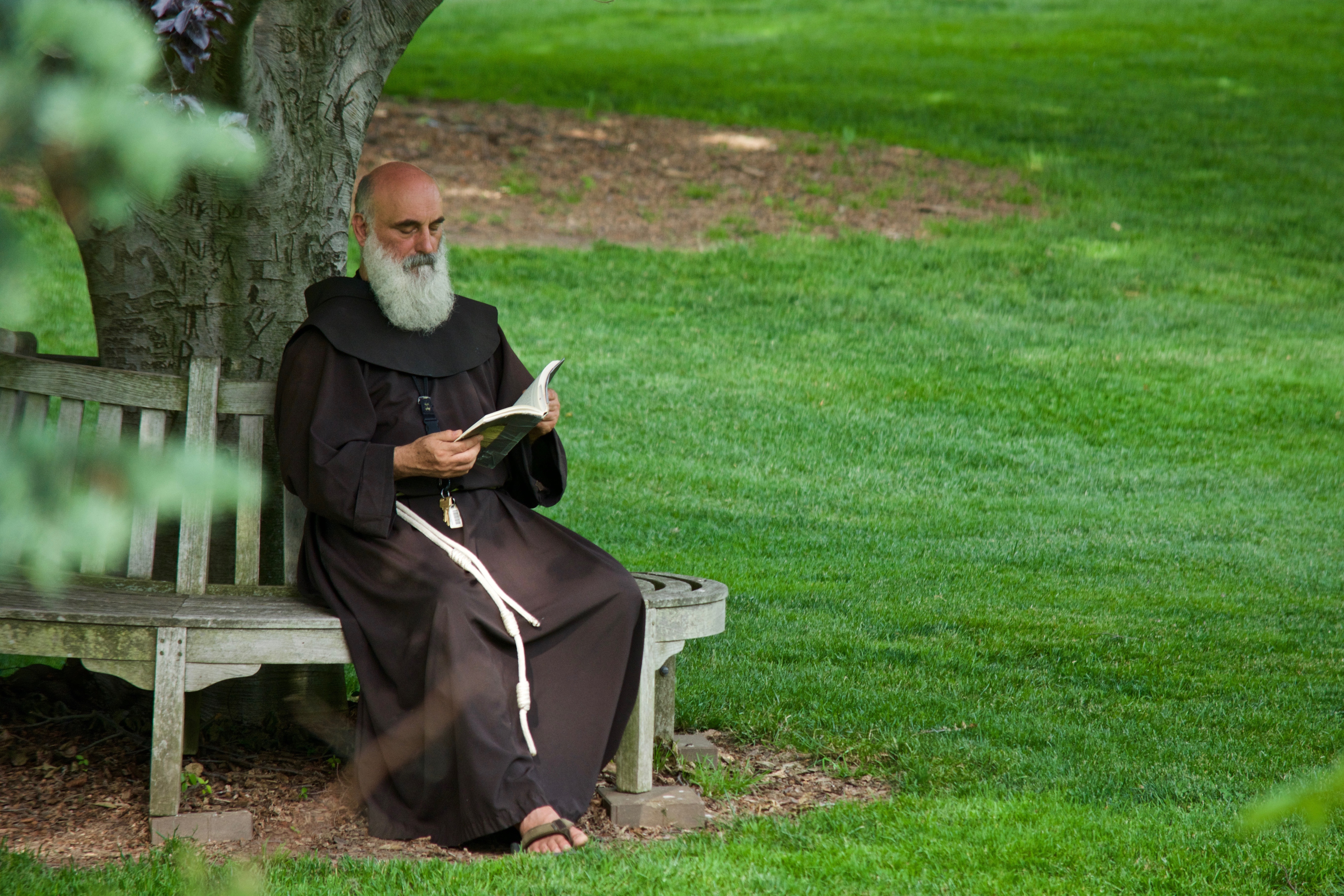
Monk 1Wade walked past the monk twice from about forty feet away. He didn’t make eye contact with the man but could tell from his stiff posture that he wished to be left alone. The park seemed like a curious place to encounter a monk until Wade thought that he probably enjoyed normal activities like regular people. What a stupid thought, he chastised himself. Normal, regular. He’s just a guy in a robe. Sure Wade wouldn’t run into him at the club, but—enough. Just go talk to the guy.

But first, Wade stood in the shade of a large oak tree and ground an old acorn cap into the grass with the heel of his boot. Casual, with hands in his pockets, he affected the pretense of seeing the monk for the first time. His performance met with tight lips and long sighs. Perhaps that’s how these religious types acted. Damn it, Wade, there you go again. Stereotyping when you really need this guy’s help.

Screw it. Wade pushed off from the oak, scuffing the sleeve of his black leather jacket. He walked toward the monk with shoulders back, head held high. When he remembered this wasn’t some dude hitting on his girlfriend, his balled fists returned to his pockets, posture relaxed, eyes searched the ground for acceptance or rejection.

“Can I sit down?”

The monk closed his magazine and rolled it in a tube. Perhaps he’d smack Wade across the nose like a bad dog.

“I don’t hear confessions.”

“Oh, that’s cool, because what I need is advice.”

Wade plopped onto the bench, squeezing the monk over, turning to observe in profile the man’s Santa beard and bald pate. A lanyard with keys and a YMCA keycard jangled as the monk repositioned on the seat. These items, together with the glossy magazine and flip flops, made Wade wonder if this guy had been a monk long enough to offer solid advice. He was old, but how much cooler it would have been if the monk had stopped at this point during his own spiritual walk, toes dusty from the journey, meditating over a prayer book. Wade recognized an ad for Chevy trucks on the tube of magazine pages.

The monk sighed again and crossed his legs, revealing calves covered in lamb’s wool. Wade grimaced but diverted his stare by reading the graffiti carved into the tree trunk behind them. His fingers grazed over Sarah and Andrew’s eternal pledge of love. His cheeks reddened as he traced a swear word. He would have preferred the monk start the conversation with bless you my child but settled for hands folded as if in prayer.

“Okay, so last week my friend, Duke, came to me, and he’s all excited and talking about this great deal he wants to share with me.”

Wade paused, testing the monk’s interest level by trying to catch his eye. The older man offered a nod and twiddled his thumbs much to Wade’s annoyance.

“Anyhow, it’s all about this opportunity to buy in to this new club they’re building downtown. You know this town is, like, primed for new business,” —the monk shrugged and raised his eyebrows— “and I have my share and then some already saved.”

The buzz of a cicada was the only sound until the monk understood it was his turn to speak.

“Yes, well, what’s your question?”

“Should I spend the money? Invest in this place?”

So it was to be a game of twenty questions. The monk seriously considered pointing the young man with a shorn head and tattoos creeping up his neck in the direction of the Catholic Church two blocks south. Surely the priest would be better suited to the task at hand. Instead he gathered his robe about him and crossed his arms, shifting his weight onto his left thigh to gain space between himself and the young man.

“Is this what you saved for?”

“Nah, the money was supposed to be for a down payment on a house. But I have almost double what I need and could easily save it again. Faster because this club’s going to make money.”

“How can you be so sure?”

“Well, Duke’s cousin has experience with this sort of thing in New York. He knows all about running and promoting these kinds of places.”

“And yet he’s here.”

“True. I never thought of that. But I’ve seen the plans for this place, and it’s going to be awesome.”

“Sounds as if you’ve already made up your mind.”

The monk titled his head, blinked slowly, hoping to signal the end of the conversation.

“That’s it? You don’t, like, have any sage advice for me or something?”

The monk’s eyes widened at Wade’s use of the word sage. That’s right, old man, I’m not illiterate. Wade bent to pick up a twig, used it to pry mud from his treads. It was time to really impress this guy.

“I even prayed about it because I’m undecided, you know, and even though I didn’t promise or nothing, my girlfriend knows that money was supposed to be for a house.”

“You prayed?”

“Yes.”

“To whom?”

“Like, God, you know? And then here you sit, so I figured you’re part of my answer or something. Of course, you weren’t the first person I consulted. That was my accountant. God, my accountant, then you.”

The young man settled back on the bench with his arms stretched along the back. He probably expected the monk to turn toward him for the rest of the conversation. If only a throbbing headache hadn’t crept up the back of the monk’s neck. The heels of both hands ground into the monk’s eyes, blotting out the sun and shooting sparks through the blackness. There was absolutely nothing of interest in this whole laughable matter.

“Why on earth did you consult your accountant?”

“Because I’m totally sure this place is going to make money, and I needed to know how to handle it all. Investments and stuff.”

“If you’re sure, why are we having this conversation?”

“Well, Padre,” —the monk didn’t bother to correct him— “that may be the true heart of my dilemma.”

The monk raised his hands, palms up.

“Am I being arrogant by saying this club is going to fly, or is it just confidence that I can make it work, because I’m not afraid of a little hard work?”

“Is there a third option?”

“Oh—yeah.”

“Oh…really?”

“I can tell you’re skeptical, Father Brown,” —the punk laughed at his own joke— “but I don’t want to do anything against, you know, the Big Guy in the Sky.”

Wade tossed a glance upward, nodded knowingly.

“What I’m saying is I’d like to think I’m exercising a little faith about this situation.”

“Faith? Did God tell you you’re going to be successful?”

“Well, not directly. That’s why I’m talking to you.”

“I can assure you He didn’t tell me anything about it.”

The inside of Wade’s cheek received a serious gnawing as he absentmindedly worked his finger at the edge of his nostril.

“I see.”

Perhaps this is over, thought the monk. Tension tightened the young man’s body when he leaned his elbows on his knees, ran his hand hard over his face. The monk clutched his robe and placed both feet on the ground.

“Does it surprise you to know I’ve committed my plans, like, to God, Padre?”

The monk’s stomach knotted at the loosely quoted scripture.

“Yes, well, my son,” —the endearment did not roll off his tongue easily— “it is a club. There will be drinking, and people dancing, and smoking—well, not smoking inside anymore—but still, the women will no doubt be dressed very scantily. Besides, you did earmark this money for a house. Now that’s a real investment even in this lousy economy.”

“So what you’re saying is that my prayers for success can’t be answered? That I’m some kind of arrogant ass to think I might have a shot at this?”

“I’m just, just cautioning against pride, and, well, I’m not sure a club is God’s will for you.”

“But you don’t really know what His will for me is, do you?”

“Well, no. I’m sorry, but—I just don’t know who you think I am. What do you want from me?”

“Nothing, I guess. It was a long shot, you know, even talking to you.”

Wade stood and brushed off the front of his jeans as if crumbs had fallen on his lap. He listened to the drone of a single, persistent cicada calling to someone and receiving no answer. Sunlight beyond the canopy of branches beckoned, and he stepped into the golden warmth.  Without looking at the monk, he said, “Thanks anyhow, man. I know it was, like, a lot to put on you, you not knowing me and stuff. It sounded like a good opportunity, is all. But now I’m not so sure.”

With shoulders rounded, Wade walked away, his arms swaying like abandoned swings.  He headed for the parking lot before veering his course and setting off down the road.

~~~~~

Thank you to HBSmithPhotography for the unusual picture.


Pause and Effect

Jetty

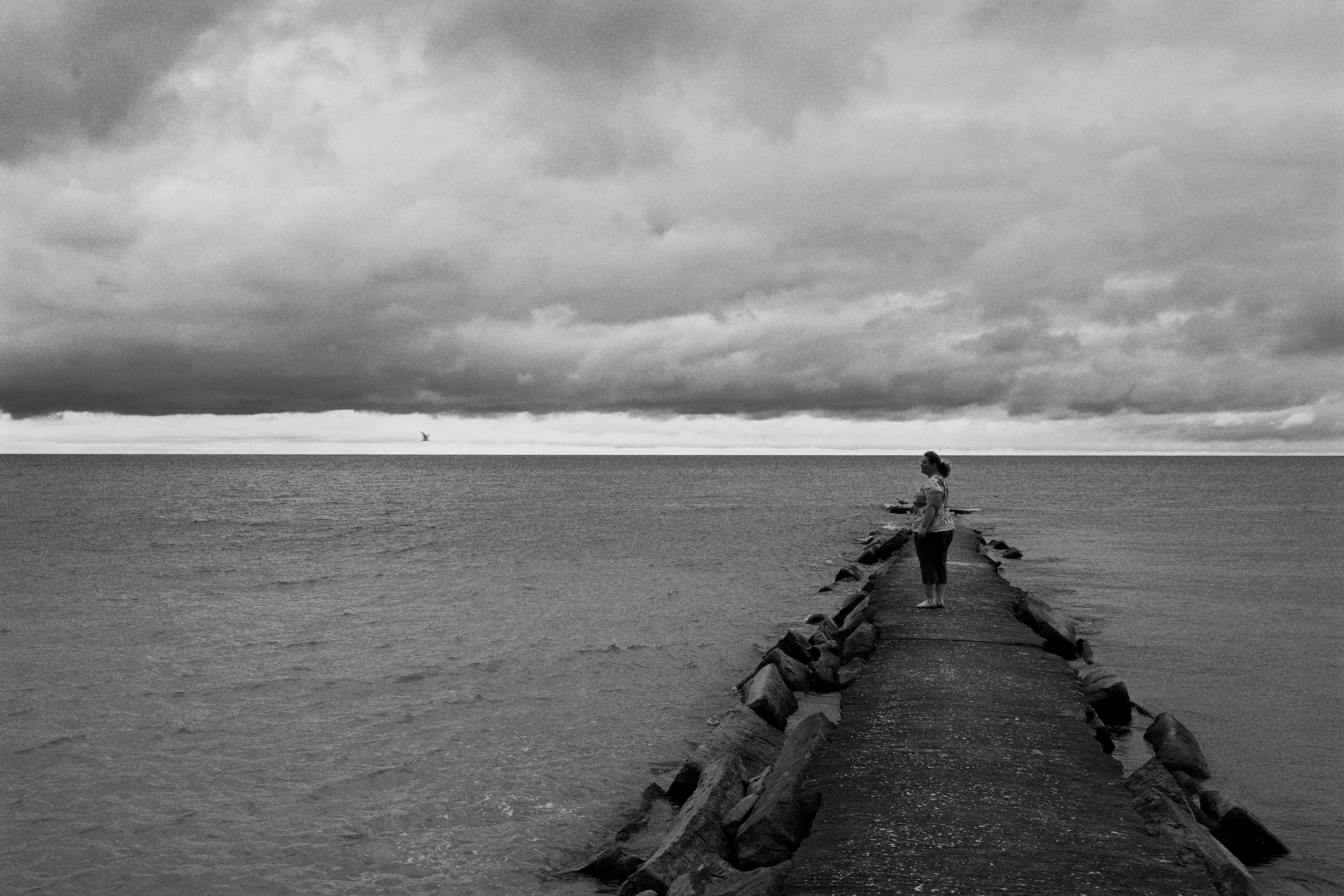
Every now and then, she gives herself the small pleasure of the freedom to breath. This decision toward independence is the zipper separating her responsibilities from her desires; the two halves fall away.

Only then is she able to see clearly the obstacles in her life. They don’t always approach head on, and she must look to the right and the left to see what blocks her journey.

When she clears her horizons of the minutiae of daily routine, her existence reorganizes into a system of priorities. The hazards of life recede, her vision focuses.

The path of her life is steady, extending toward a ribbon of hope. She can grasp it for herself now as there is plenty for her future. In doing so, she combats the crumbling edges of false perceptions and keeps the rolling tide of disappointment at bay.

Inspection of herself and her life grounds her. Dreams take flight and possibilities are realized. Reordered, she continues in the role of woman, wife, mother.

~~~~~

Thank you to HBSmithPhotography for the amazing photograph.

Regal and Waiting

“Hey there, big kitty, how you doing…c’mon, sleepyhead, wakeup….Cinnamon?”

The boxy head pops up; icy green eyes scan the human face on the other side of the bars. Recognition never comes, and all enthusiasm fades as the cat’s eyes glaze over with disappointment and disinterest.

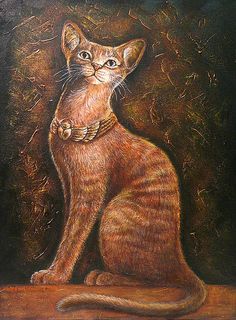
The woman standing there checks the card on the stacked metal cages that hold cats from the local rescue. Surprise flashes across her face when she reads that the large cat with a most inelegant head is indeed a female. Cats are usually defined by a slightly feminine grace, even the males. The girth of this particular feline is impressive.

She is appropriately named. Her fur is deeper than butterscotch or peanut butter, and while she would fall into the category of orange tabby, her coat is a dark, two shade variation of rusted pine needles. Her profile card says that she is nine and her former owners surrendered her because they didn’t want her anymore. Surrendered; the softened, politically correct term for abandoned, guaranteed not to inflict guilt upon an owner. No one forced them to give up the animal.

The profile cards admit when owners move, develop allergies, have a child of whom the animal is jealous, or returned to the rescue because he or she didn’t get along with earlier acquired pets. Cinnamon’s tag clearly indicates that she is no longer wanted.

Other people stop by the cages, read the cards, and cautiously poke their fingers through the bars to scratch behind an ear or under a chin. Cinnamon returns to her nap just beyond the reach of the grasping fingers; she is oblivious to the kind words and prying eyes.

She has seen this all before on the faces of these humans who stop by to look at her and her fellow rescues. Their eyes search first for the kittens or at least the young cats a year old or less. Then they read the cards on the cages, making mournful noises in their throats over the rescued strays. They compare each cat to one they’ve known at some time or other (This one looks like Lucky, only bigger or Doesn’t that one resemble Jane’s cat, Dartmouth). They cheer victoriously when a cat allows itself to be petted; more so should the slinky creature meow as if for their pleasure. They chuckle at funny names bestowed upon the cats (Witherspoon, Merlin, or Chairman Meow).

Cinnamon doesn’t care about any of this, but then neither does Ziggy in the bottom, left-hand cage. They continue napping, lending to the aloof reputation that cats enjoy and proving sullen, dog-loving boyfriends correct when they claim cats aren’t as nice or cuddly as dogs. Cinnamon does not need or want to go home with the young women dating these idiots. In fact, she doesn’t need anyone, or at least that’s what she wants you to believe.

Sometimes, during the hours she spends at the pet store in the small room with a glass partition, she wonders in cat fashion how long she’ll be here. And where are her owners? Why never crosses her mind because it isn’t her fault. She does wish the store employees wouldn’t prop open the door to the room. The store can be quite noisy, especially on the weekends.

A Dash of CinnamonOn the days that Cinnamon graces the public with her wakeful presence, her peridot eyes, and her expressionless visage, she likes to sit upright in her cage with tail wrapped around her front toes. From this position, she regally dispenses judgment like Bast. Go ahead and assess me if you dare. Her countenance would lead one to believe that she could read thoughts.

If she could, she would find humor in those running through the head of a man who really wants another cat but doubts the two he has at home would get along with her. His boys, both under two years of age, can be quite rambunctious at times. They would probably torment Cinnamon relentlessly as she attempted to nap. He imagines a scene in which Cinnamon rises like a disturbed lioness that tears into his precious fur babies with tooth and claw. Yes, perhaps, he’ll leave this one for someone else.

Then there is the young couple with two toddlers in tow. The mother, pregnant to the point of bursting, repeatedly corrects the children rattling the lock dangling from Cinnamon’s cage. The temptation is too much, and the mother must remove her offspring who tries to climb the front of the cages. She calls to the father who lingers a moment in the glass room, considering Cinnamon for adoption until a vision of a black lab playing with his grade school-aged children passes through his thoughts.

A little girl, who has been promised a cat for her birthday, complains to her anxious parents that she couldn’t rename the dumb, old cat because she probably wouldn’t learn her new name. She balls her fists on her hips and shouts Muffin. Cinnamon ignores her. When the child says Cinnamon, the cat’s head moves. The little girl stamps her foot, shouts I told you so, and dissolves into a tantrum of tears. She is dragged, screaming, from the store.

One woman passes up the opportunity to adopt Cinnamon because she fears cat fur would stick to her cabernet colored suede couch. An elderly couple decides against the option because they worry about who would take the cat in the event she outlived them. Another couple admires her, but their children are grown, and they want to start traveling; finding someone to watch the pets is such a chore.

No matter. Cinnamon is not in a hurry to go anywhere. Her owners might return at any minute. Maybe tomorrow.

One by one the lights in the warehouse-sized store begin to go off for the night. The staff scurries to finish sweeping and arranging displays. They grab coats, purses, keys, and lunchboxes. One calls out goodnight to the rescue cats. Then it is dark and silent, except for security lights and the bubbling of tanks in the fish department.

Cinnamon stares into the darkness, searching for movement in the aisles of pet food and toys. She doesn’t move for thirty minutes or more. It would feel so luscious to be able to escape her cage for a few moments, to stretch and roll along the floor, to prowl the quiet store. She curls into a ball under the wooden shelf in her cage and falls asleep contrary to her nature.

In her dreams, there is a person who visits the store for the express purpose of taking her home. Perhaps it’s a man, maybe a woman, but either way the voice is kind, soothing. This human is gentle with her, only saying her name in the long, drawn out way a human does when he or she is calling for someone. This individual doesn’t scold harshly when she is caught sleeping on the couch or lapping puddles off the shower floor. Cinnamon isn’t expected to curl up on a lap or play with kittenish toys. But this person is always within reach, reading the paper on the floor and laughing when Cinnamon decides to plop down on the pages, or sitting on the basement steps and inviting her to share the space. Most importantly, this person is patient. Patiently waiting for Cinnamon to relax enough to bestow even a fiber of trust. However long it takes, this person will wait, and he or she will recognize success when the sandpaper kiss of a tongue caresses the back of a hand just once.

Paws twitch and eyelids flicker. Cinnamon chatters in her sleep.

Across town a widowed woman said goodbye to her beloved cat today. Tomorrow, she will visit the pet store in search of another to help her work through her grief. Probably an older specimen for they are usually calmer, more settled. She is partial to orange tabbies.

Apple Seeds

Warmth from the sunbaked, terracotta tiles radiates through the bottom of his thin-soled, canvas shoes. The old man eases himself into a wrought iron chair beneath the jacaranda tree. He slips a pen knife from his pocket; he isn’t supposed to have it, not after Crazy Effie threatened one of the orderlies with her nail file during breakfast. Now they’re all supposed to cut their sausage links with a fork or spoon. This place, this rest home for the retired, treats them like imbeciles. He chuckles to himself as he watches his friend, Wade, drooling as he sits strapped into his wheelchair, napping in the sun. Maybe some of us are, he thinks.

It will be a cold day in Phoenix when he allows them to remove his pen knife from his possession. It’s nothing special. No insignia from a branch of the service or Boy Scouts graces the mother-of-pearl sides. It’s just a nice knife he bought at Woolworth’s when there was still one at the mall. He thinks there might have been a matching razor with it but can’t say for sure. He’s used it to open everything from letters to wounds. Years of grime need to be wiped from the space where the mother-of-pearl meets the metal. Hell, maybe it’s not even real mother-of-pearl.

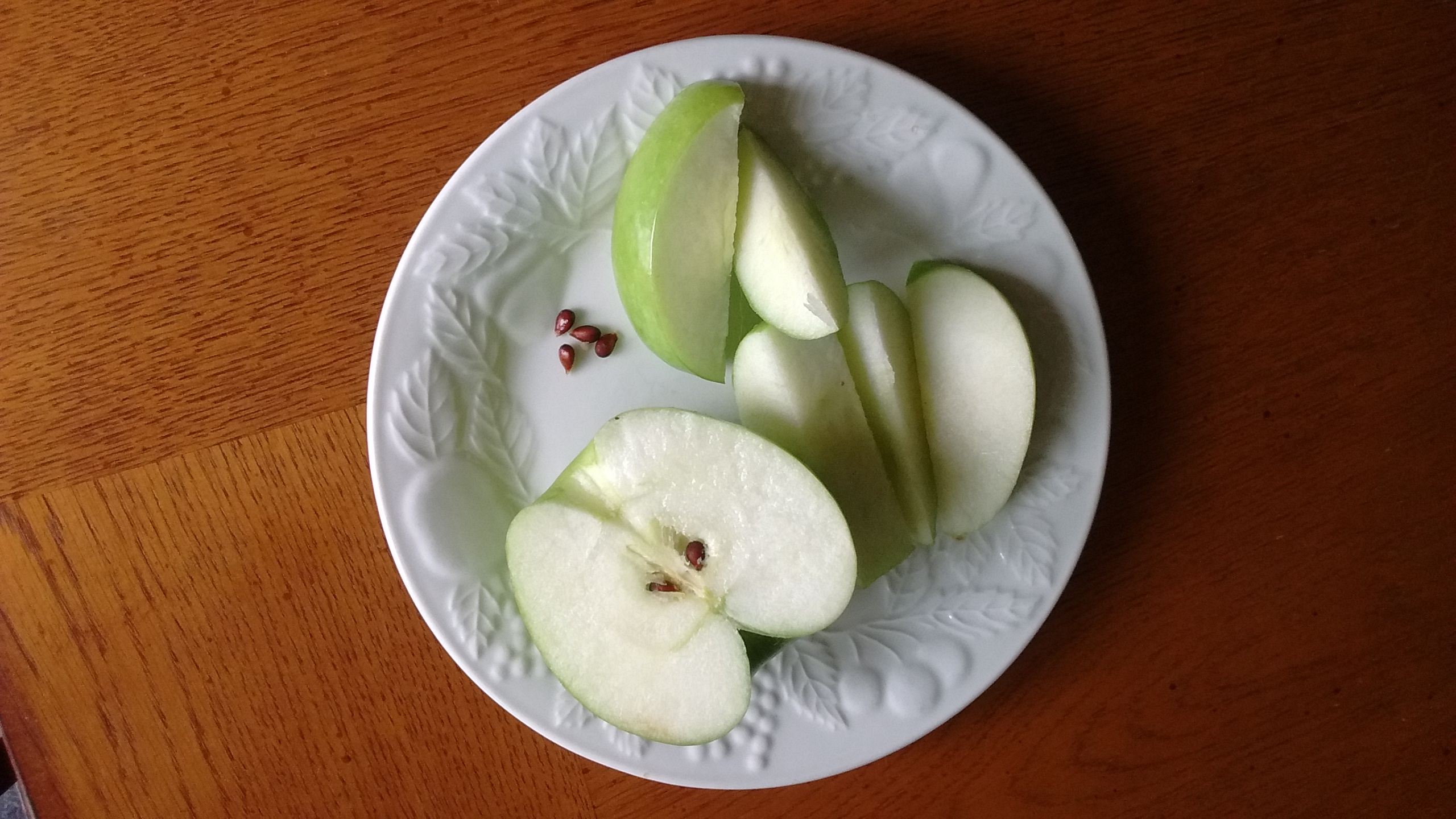
Apple SeedsHe removes a green apple from his sweater pocket. The bulge caught the eye of every resident he passed, making them wonder what he had smuggled out of the dining room. Green apples are his favorite, and the pretty Hispanic girl who runs the dining room, Gina or Tina, he can’t remember which, always keeps a few in the cooler for him. She knows he likes them cold; he must make more of an effort to remember her name.

Carefully, with much consideration and turning of the apple over and over in his hands while worrying his dentures with his tongue, he decides where to make the first cut. The vibrant green skin breaks with a crisp snap and a soft spray of juice as he slices along the entire curve of the apple. He licks the tartness from his thumb. With a gentle twist, he separates the halves.

Two seeds pop out onto his lap. He draws his knees together to catch them before they fall to the greedy earth hiding between the tiles below, enticing with the promise of life. He knows what the seeds do not: nothing disruptive, certainly not an apple tree with a vast and reaching root system, would ever be allowed to flourish here. Both seeds are pinched between his forefinger and thumb, and then placed gently on the tip of his protruding tongue.

The old man enjoys the bitter-almond taste of the seeds. He always chews them. While most people, especially his lazy grandchildren, only eat the flesh of the apple, the old man consumes every part of it except the stem. He savors the acrid taste of the seeds as he cuts a slice from one half of the apple, eating it off the thumb on which it is balanced, his knife held securely in the same hand. Another seed is visible but trapped in its pocket. A little surgery with the pen knife frees it from its fibrous prison. This seed is bigger because it did not have to share space with a sibling.

His wife once told him the taste of the seed was from the cyanide within. It seemed like a fact she would know, so he never questioned her on it. From then on, he made a point of eating every seed especially if she was watching. I’m building up my tolerance and recognition of cyanide in the event that someone tries to poison me, he had teased her. She retorted that if she wanted him dead she would use the cast iron skillet on his head while he slept. Their wicked sense of humor shocked most people, even their friends.

He wonders how many apple seeds he’d have to eat to escape this place. It’s so beautiful, Dad, his daughter had said, with flowering trees and benches, shuffle board courts and walking paths, a chess club and whirlpool. Who had she been trying to convince? One little tumble down the front porch steps and the next thing he knew, he was an inmate at Buena Vista Acres. His daughter believed she was doing him a favor moving him to Arizona to be near her. As if a fifty minute drive was near her. He might as well still be living in Ohio for all that he sees her.

If he could see anyone right now, it would be his wife. He crushes two more seeds between his back teeth, the ones that are still real. More of the apple is consumed, more seeds discovered. More memories flirt with the edges of his mind. The white walls of the main building shimmer with early morning heat, the brightness nearly blinding him even though his eyes are averted. Bittersweet and tart, apple seeds and life. The core of his existence chewed away to nothing. He will not let it poison him. He kisses the stem and flicks it into the bushes.

As he returns to his room for a nap, he waves to Maria, the dining room attendant. Maria, just like his wife. He smiles to himself, proud at having found a way to remember her name.