Shabbat Shalom to all my friends and followers. May your weekend be peaceful and productive.
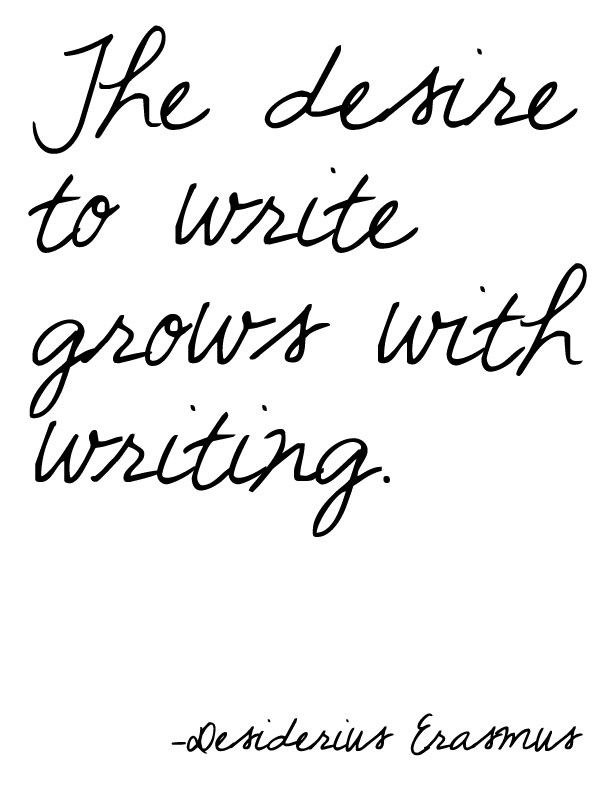
Shabbat Shalom to all my friends and followers. May your weekend be peaceful and productive.

Shabbat Shalom to all my friends and followers. May your weekend be peaceful and productive.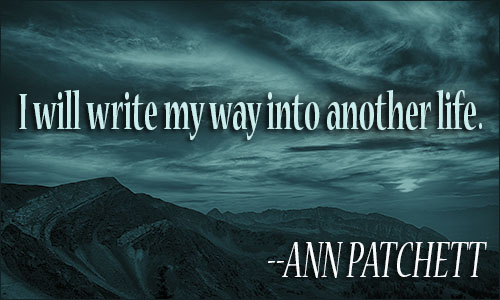

 Editing is like looking for your car keys on a messy dining room table. The keys are there, but you are unable to see them among the mail and magazines, your daughter’s homework, brochures from the hardware store, the candlesticks and forgotten napkin, a cup of cold coffee, a box of tissues, your toddler’s blocks, the dog’s leash, a bag of catnip, flyers formerly tucked in the front screen door, your son’s iPod, your husband’s wallet, and on and on.
Only when you have searched every other room in the house and finally returned to the dining room table will you be able to see the keys that have always been there. It is the same with editing. You must allow yourself to step away so that when you return, you will be able to see immediately what portions of your writing need to be revised.
I like to edit during my writing process. Part of the reason I do this is so that I don’t forget the really great idea that just popped into my head. I don’t understand the point of writing said idea in a notebook and going back to fix the issue after the entire novel is written. This works for some people, but not for me. And that’s okay. There is no one way to write a novel.
With that being said, I also like to step away from my work, especially the larger pieces, for about three months. Absolutely no peeking at the story on my laptop. I even try to not think about it unless an amazing idea surfaces, and being in touch with my work, I know the difference between when that occurs and when I’m just anxious to cheat and sneak a peek.
Turns out, what I discovered intuitively is actually a recommendation from one of my favorite writing books, Page After Page by Heather Sellers. Mrs. Sellers refers to this process as curing, and in her case, it’s what happens when she submits a work and doesn’t look at it, edit it, consider it again until all the rejections return or she’s accepted, in which case she doesn’t need to edit.
Then she goes one step further past the editing process and offers this practice as a method for handling rejection. When you and your writing come back together, it’s more complex, deeper, richer, funkier, more interesting, and a whole host of other things you didn’t see before because you didn’t put enough time between you and the writing. Also during this time, you’ve grown. Hopefully, you’ve been reading both for pleasure and to study writing. Keep writing every day to ensure you have enough stuff that you don’t feel as if you’re wasting time not editing it.
It’s really quite simple, and yet in its simplicity, it’s brilliant. Write to keep from editing too soon; write to ease the pain of rejection. But whatever you do, write.
Write Happy!

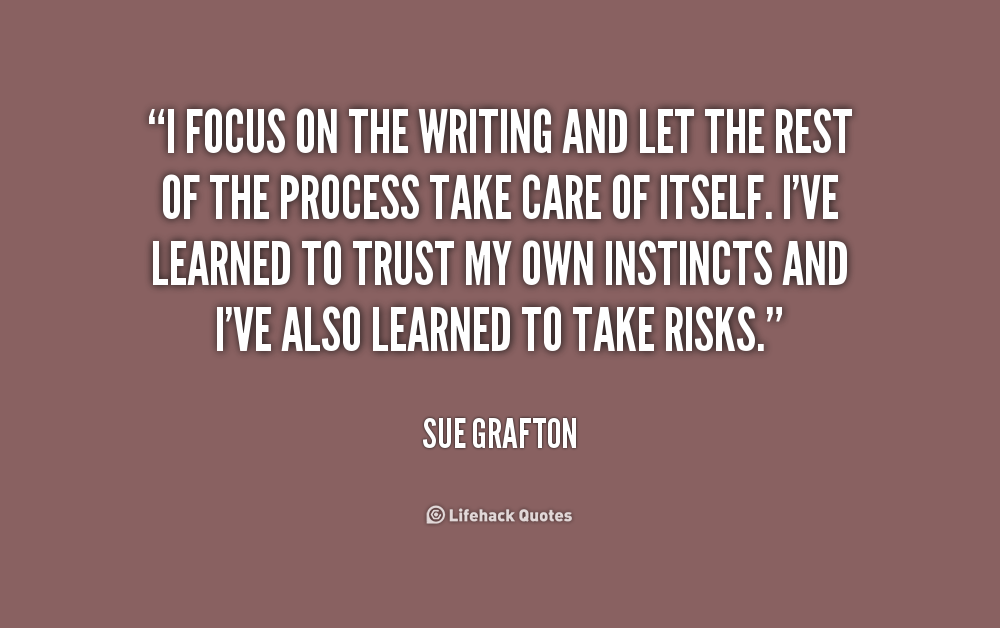
Shabbat Shalom dear friends. May your weekend be peaceful and productive.

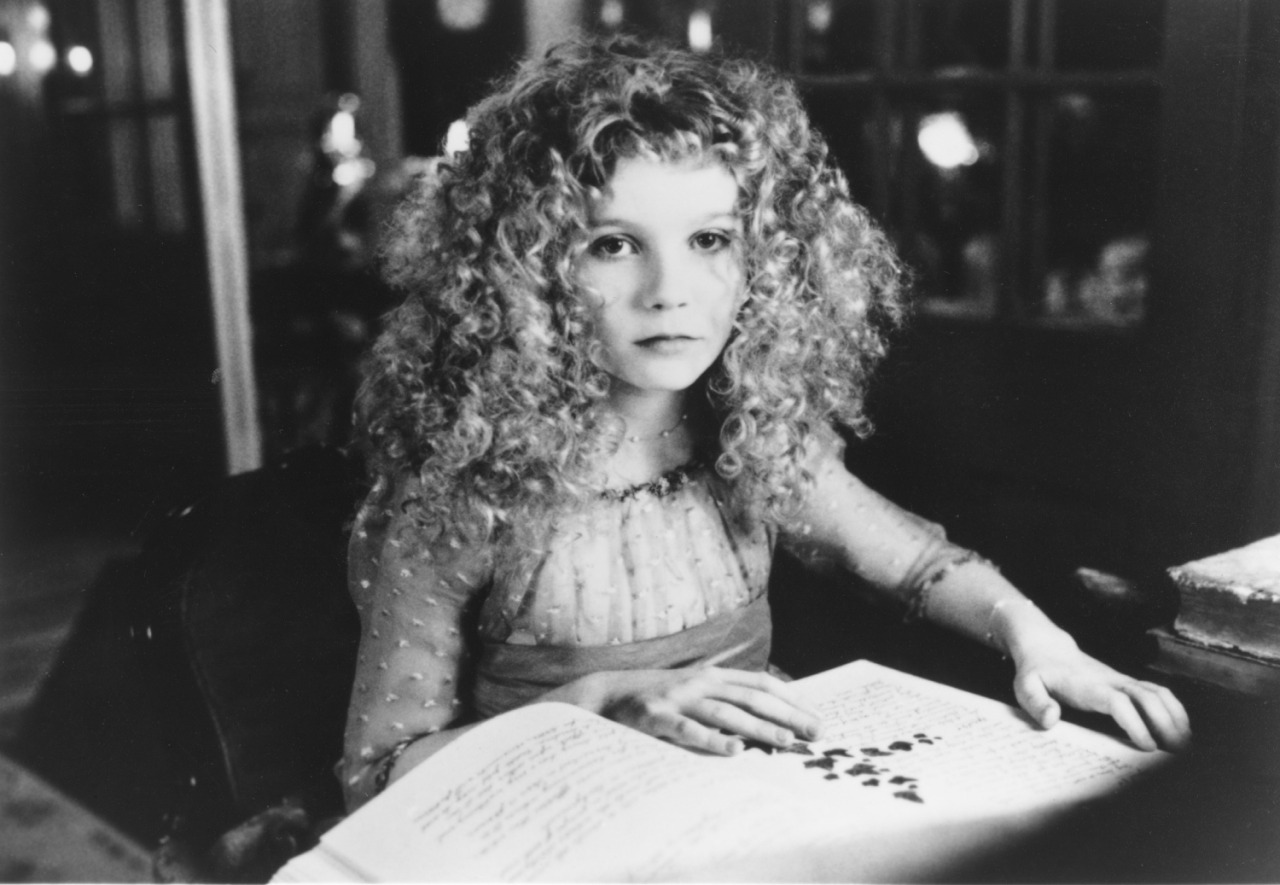 Nothing like a great classic to bring up some words you may know, but weren’t aware had interesting multiple definitions, and a few you may not know. I’m sure you’ll want to add these to your vocabulary, work them into your writing, and use them to win a round of Jeopardy.
First is beetling. When I came across it in a sentence, I thought I knew the definition of the word, but its usage didn’t make sense where it had been written. So, I went in search of the definition that would fit the sentence.
As a verb, beetling can mean:
Make one’s way hurriedly or with short, quick steps.
To use a beetle on; drive, ram, beat, or crush with a beetle.
To project or overhang threateningly.
As a noun:
A heavy hammering or ramming instrument, usually of wood, used to drive wedges, force down paving stones, compress loose earth, etc.
Any of various wooden instruments for beating linen, mashing potatoes, etc.
Any insect of the order Coleoptera, having biting mouthparts and forewings modified to form shell-like protective elytra (two-wing casing of a beetle).
As an adjective:
Projecting, overhanging.
That’s quite a few definitions for a word that sounds rather cute when you say it. Try it this way:
But just then the moon, sailing through the black clouds, appeared behind the jagged crest of a beetling, pine-clad rock, and by its light I saw around us a ring of wolves, with white teeth, lolling red tongues, with long sinewy limbs and shaggy hair.
Now it doesn’t sound so innocent, does it? Clearly the adjective of beetle was the one the author had in mind.
Let’s move on to prosecuting. I don’t know about you, but I instantly think all things legal when I hear the word. A verb all around, drop the –ing and head straight for prosecute to discover what it means:
Institute legal proceedings against (a person or organization), institute legal proceedings in respect of (a claim or offense), and (of a lawyer) conduct the case against the party being accused or sued in a lawsuit.
See what I mean about the legal thing. But press on a titch to find:
Continue with (a course of action) with a view to it completion.
And the archaic:
Carry on (a trade or pursuit).
Consider the sentence:
I think had there been any alternative I should have taken it, instead of prosecuting that unknown night journey.
Our character is fearful of his surroundings and the strange goings-on, so no doubt the second definition of prosecute applies here.
The last word is a fun one and needs to be worked into conversation at every opportunity not unlike the word huzzah. Try faugh on for size. The exclamation is used to express disgust, and I came across it in the sentence:
I am alone in the castle with those awful women. Faugh! Mina is a woman, and there is nought in common. They are devils of the Pit!
You might believe the author is writing about the Kardashians, but he’s not. The women in question are vampires, and if you haven’t figured it out yet, I’m reading Bram Stoker’s Dracula.
I wasn’t going to mention this word, but lest anyone think I’ve misspelled it, nought in the sentence above is not spelled incorrectly; it’s a variation of naught. But you, brilliant follower, already knew that.

Shabbat Shalom to all my friends and followers. Have a peaceful and productive weekend!

 The other day I banged out a sentence on the ole laptop and paused when my son interrupted my thought process to ask a question. When I returned my attention to the sentence, one word in particular caught my attention. My head tilted as I assessed the word, questioned the spelling. Strangely enough, the obnoxious red squiggles Microsoft Word is so found of hadn’t appeared, so I assumed I’d spelled it correctly. Still, something didn’t look quite right. Or perhaps I should say spot-on.
Perhaps you’ve guessed by now that I spelled the word in question, travelling/traveling, as if I was writing for our friends across the pond. I mentioned before in How Reading Taught Me to Misspell Words that I’ve been tripped up by the British spelling preferences. Usually, Word catches them. Not so this time.
I’ll cut to the chase and tell you that travelling and traveling are both verbs meaning to go from one place to another, as on a trip or journey. This isn’t a case of a second or third definition. In fact, the two spellings can be used interchangeably. What’s more, what I’m about to tell you applies to travelled/traveled and traveller/traveler.
So what’s the difference, you ask? There isn’t one. Today’s The Weight of Words is another example of British versus American spelling preferences. British writers employ the double L version of the word and American writers go for the single L spelling. No big deal if you’re jotting off a note to someone or a private letter. But if you’re writing a larger work for a particular audience or about Brits or Americans specifically, it might be wise to use a spelling your intended readers will not think is a mistake.
A tidbit of research uncovered the reason behind the differences in spellings:
Each word has its own unique history, but the primary mover and shaker in this transatlantic drama is the nineteenth century American lexicographer Noah Webster, he of dictionary fame. According to “A History of English Spelling” (Manchester University, 2011) by D.G. Scragg, Webster’s dictionary of 1828 is largely responsible for standardizing the accepted spelling of American English.
Before 1828, many words, such as humor (or humour), defense (or defence) and fiber (or fibre), had two acceptable spellings on both sides of the pond, because they were introduced in England via both Latin and French, which used different spellings. Webster picked his preferred forms (the former ones in each example above), justifying his choices in various ways, but partly on nationalist grounds: he wanted American spelling to be distinct from, and (in his opinion) superior to, British spelling.
I can appreciate Mr. Webster’s patriotism, but sometimes I wish he’d chosen another way to express it rather than in different spellings.
~~~~~
Wolchover, Natalie. “Why Do Brits and Americans Spell Words Differently?” LiveScience, Purch, 17 Apr. 2012, http://www.livescience.com/33844-british-american-word-spelling.html.

 Recently, at my writer’s group, a fellow writer who is beginning her chosen art form told me that she was advised to not write above an eighth-grade level. I remember several seconds of stunned silence between us before I asked, “Who told you that?” Based on her troubled countenance, I don’t doubt that the horror of this suggestion came through in my tone. I’ve also been told that my facial expressions convey exactly what I’m thinking, so I hope I didn’t overwhelm the poor woman with my response. I wanted her to run screaming, just not from me. If I didn’t scare her off, I’ll make sure I soften my reactions when discussing such matters in the future.
Still, I am shocked that this type of bad advice is floating around writer’s groups. The last time I checked, there were still twelve grades a student in America needed to complete. Somebody please tell me if the progression of education stopped at grade eight. That would mean my child, currently a senior, has read nothing beyond an eighth-grade level for the past four years. That’s insane. Then again, I recall the small heart attack I experienced when I saw Stephenie Meyer’s The Host on the high school reading list. Which piece of classic literature found itself guillotined at the inclusion of that piece of tripe?
I have suspected for a long time that the art form of writing was under attack. My fellow writer’s comment confirmed this. So when did the dumbing down of American literature begin? I don’t know if I can actually pinpoint the precise moment it occurred, but I can tell you the moment I became aware of it. (And shame on me for not being more vigilant if it took place sooner.)
I remember the day I saw a t-shirt printed with the statement “underachiever and proud of it.” I had another moment, not quite as intense as that with my fellow writer, but one in which I was completely baffled. I could not fathom a person or society comprised of people who willingly settled for mediocrity in anything and a world in which one did the bare minimum to get by. There is no hope of success when one functions under such a principle.
And yet, this is exactly where we, as a society, have fallen twenty-five years later. It’s as if those who bullied the smart kids for hanging out at the library weren’t content to just harass their fellow students. They wouldn’t stop until the smart kids not only condoned but encouraged this stagnation of the intellect. If you don’t get on board—don’t hold yourself back from seeking knowledge or temper your drive and ambitions—you’ll be labeled a snob in the least and intolerant at the worst.
So again I ask: why this attack on art? Because art is dangerous. Art tells the truth. Artists are freethinkers who challenge the status quo. It was a novelist and playwright who said, “The pen is mightier than the sword.” A gold star to anyone who can tell me who said this. Here’s where the problem of proud underachiever comes in. The generation in which this concept became acceptable doesn’t care enough to find out who said the above-mentioned quote or what the quote even means. They are too lazy to want this information for themselves and are disdainful toward anyone who does. If it isn’t required of them in school, and based on the poor quality of curriculum in American schools I doubt that it is, they won’t reach out and grasp the knowledge.
That’s pathetic when you consider that we live in an era where knowledge is readily accessible. No more searching through the card catalog or plowing through large volumes of encyclopedias. You don’t even have to go to the library. Just ask Alexa, Cortana, or Google what you need to know from the comfort of your couch. Be sure to wait until the commercial or you’ll miss the best part of your favorite recorded TV show.
What troubles me about his indolent attitude is that it’s creeping backward and contaminating older generations. Hopefully it won’t pollute the writing of those already established and feeling pressured to churn out more or older writers just beginning to pursue their passion. As for me, I am personally committed to fighting this process of dumbing down by writing the best literature I can and by seeking to improve myself in every way. I am not afraid to compete, to go for the gold. After all, why run the race if I don’t intend to win?
I’ll most likely be among the first to die if America ever succumbs to an oppressive regime because we all know how much tyrants fear artists. But If I can leave behind a written work that the next generation, possibly the survivors, smuggle from home to home and hold up as an example of what they should strive for, then my art—my writing—will not have been in vain.

How about a most accurate definition of a writer for today’s Quotation Station? Shabbat Shalom to all my friends and followers. May your weekend be peaceful and productive.


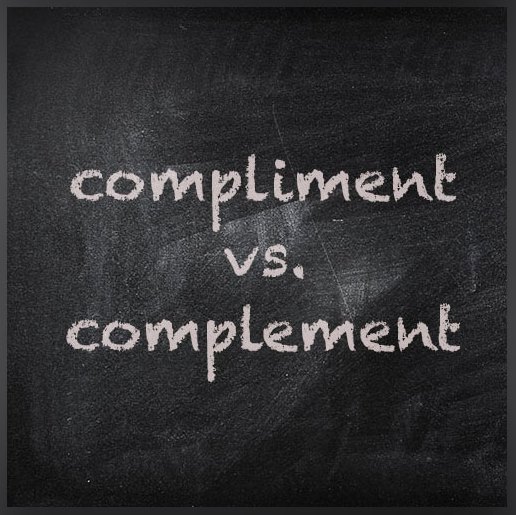 For far too long those crazy Latin-speaking people have influenced English to the detriment of high school students everywhere. Until we can stop them, here’s some information on compliment versus complement. No doubt the confusion started with the fact that they are pronounced alike and used to have similar meanings. Fortunately, they evolved into separate words.
The older of the two words, complement with an E derived from the Latin complementum. As a noun, complement means “a thing that completes or brings to perfection” and “a number or quantity of something required to make a group complete.” As a verb, it means “to add to (something) in a way that enhances or improves it; make perfect.”
Noun 1: The lyrics provided the perfect complement to the music.
Noun 2: As of today, we have a full complement of employees.
Verb: The navy blazer complements the tan slacks for a classic look.
If something complements something else, it completes it or enhances it. A handbag can complement an outfit, and a throw pillow can complement a sofa. Remember the color wheel from grade school art class? Complementary colors were those that were directly across from each other. The contrast between them enhanced their relationship: orange and blue, yellow and purple, red and green.
Remember: if something complements something, it completes it.
Compliment with an I also derives from the Latin root completmentum, which explains some of the early overlap of meaning. It was introduced to English by way of the Spanish cumplimiento, via the route of Italian and French. You can pay someone a compliment, or compliment someone for a job well done.
As a noun, compliment means “a polite expression of praise or admiration.” As a verb, it means “to politely congratulate or praise (someone) for something.”
Noun: George paid me an enormous compliment.
Verb: Marcia complimented Darren on his academic achievements.
Hopefully, today’s The Weight of Words helps with the compliment versus complement confusion. If not, blame those pesky Latin-speaking folks.

 hl gibson, author