Quotation Station

Shabbat Shalom to all my friends!

May your weekend be peaceful, productive, and worth writing about.

Whenever I am unable to write on my current work in progress, I find that journaling helps ease my frustration. It’s a great tool to overcome writer’s block and jump start one’s mind back into the process of writing. I’d be lost without my journals.

Take the Money and Run

It’s Cotton Tail in the lead by three lengths…

You probably think today’s blog post has something to do with The Steve Miller Band song of the same title. You know the one where the lead singer (possibly Steve) throws grammar and rhyme to the wind? Actually, today’s blog post is about the phrase give them a run for their money. I used the phrase in my novel, The Tedescos, when describing the success of a peripheral character’s sisters.

Per the Collins dictionary, if you say that someone could give someone else a run for their money, you mean you think they are almost as good as the other person. Per the Macmillan dictionary, it means to compete very well against someone so that it is hard for them to defeat you. And about the phrase, the Urban dictionary offers the definition to challenge someone.

Other websites dealing with phrase origin claim that the saying came from horse racing where one wants a run for his money. This means he wants a horse upon which a bet has been placed to participate in the race. If the horse withdraws from the race after bets are placed, the bettor does not get a run for his money.

Also going along with the horse racing theme, to give someone a run for their money is to give a good race (even if you don’t win) in return for their backing. The definition suggests a challenge, and it is in keeping with the definition presented in the Urban dictionary.

The Oxford English Dictionary agrees that the phrase originated with horse racing and suggests that it could be used in a figurative or extended sense to mean any sort of challenge whether or not money is spent. The OED supplied the earliest usage of the phrase that I could find.

“1874 Slang Dict. 274 To have a run for one’s money is also to have a good determined struggle for anything.”

It has also been suggested that the phrase originated with the British style of hunting where one chases animals with hounds but doesn’t shoot them with guns. (Correct me if I’m wrong, but doesn’t the fox die at the end of these hunts? I’ve watched enough BBC shows to know Brits use guns to kill animals. But I digress.)

Supposedly, if an area of the country wasn’t well stocked with animals to kill, a hunting party had to purchase a fox or stag to set free so they could chase it. The purchase of an animal to hunt added to the already high costs of hunting (good horse, proper riding clothes, and correct footwear) but was considered to be worth it if you had a good run for your money. It all sounds so civil. I wonder if they recycled the fox or stag.

I used the phrase when describing the rate at which my peripheral character’s sisters supplied grandchildren. The sisters gave rabbits (well known to be prolific producers of progeny) a run for their money, and yet the challenge wasn’t really for rabbits.

If you are at all familiar with a grandparent’s desire for grandchildren, you know that more than a simple challenge was presented. The gauntlet was thrown down at the feet of their childless sister. I expanded the definition to show an elevated level of aggression. Wouldn’t it be lovely if this additional aspect was added to the definition of the phrase with the line from my novel cited as the first usage?

Love is Sharing Your Popcorn

When I was little, I loved to sift through my mother’s recipe cards. I believe a gas station issued a pack of cards with every fill up as some kind of incentive. The cards had to be sorted into a holder according to the type of recipe. Each card bore the number of the category into which it fell. I particularly liked the section on children’s parties and recipes kids could make.

Nowadays, libraries and bookstores are full of cookbooks for children. As a former library employee, I enjoyed browsing these books while shelving them to see what kids might be cooking up. One recipe I don’t find anymore is that for making popcorn. I suppose that’s because today’s kids simply unwrap a package of popcorn and toss it in the microwave.

In my novel, The Tedescos, I chose to write about the old-fashioned method of making popcorn on the stovetop. The first popular home model of a microwave had been introduced in 1967 as the countertop Radarange. It cost about $495 (approximately $3700 today), so it wasn’t practical for my story.

Jiffy Pop, which I had once as a child during the same era in which my novel takes place, was also around, having been marketed since 1959. I believe the thrill was watching the popcorn bursts through the foil because the flavor left much to be desired.

Admittedly, I didn’t bother researching when air poppers came on the scene because, quite frankly, none of these methods were real cooking. Again, for a tasty and fun experience, popcorn made on the stovetop the way Mom did was the best. I know someone out there will gasp and clutch his/her heart when I suggest teaching a child to cook on a real stove, but honestly, a whole generation of children born in the 1970s who learned to make popcorn on the stove with mom are alive and well today.

In my novel, Joe Jr. attempts to make popcorn without his mother’s help. He forgets the oil, has the heat too high, and ends up with scorched kernels. Not to be deterred, Joe Jr. keeps adding fresh kernels to the skillet he’s using, but he never quite achieves success. The following recipe is what he should have done.

Perfect Popcorn

3 T olive oil

½ c popcorn kernels

Sea salt

4 T butter

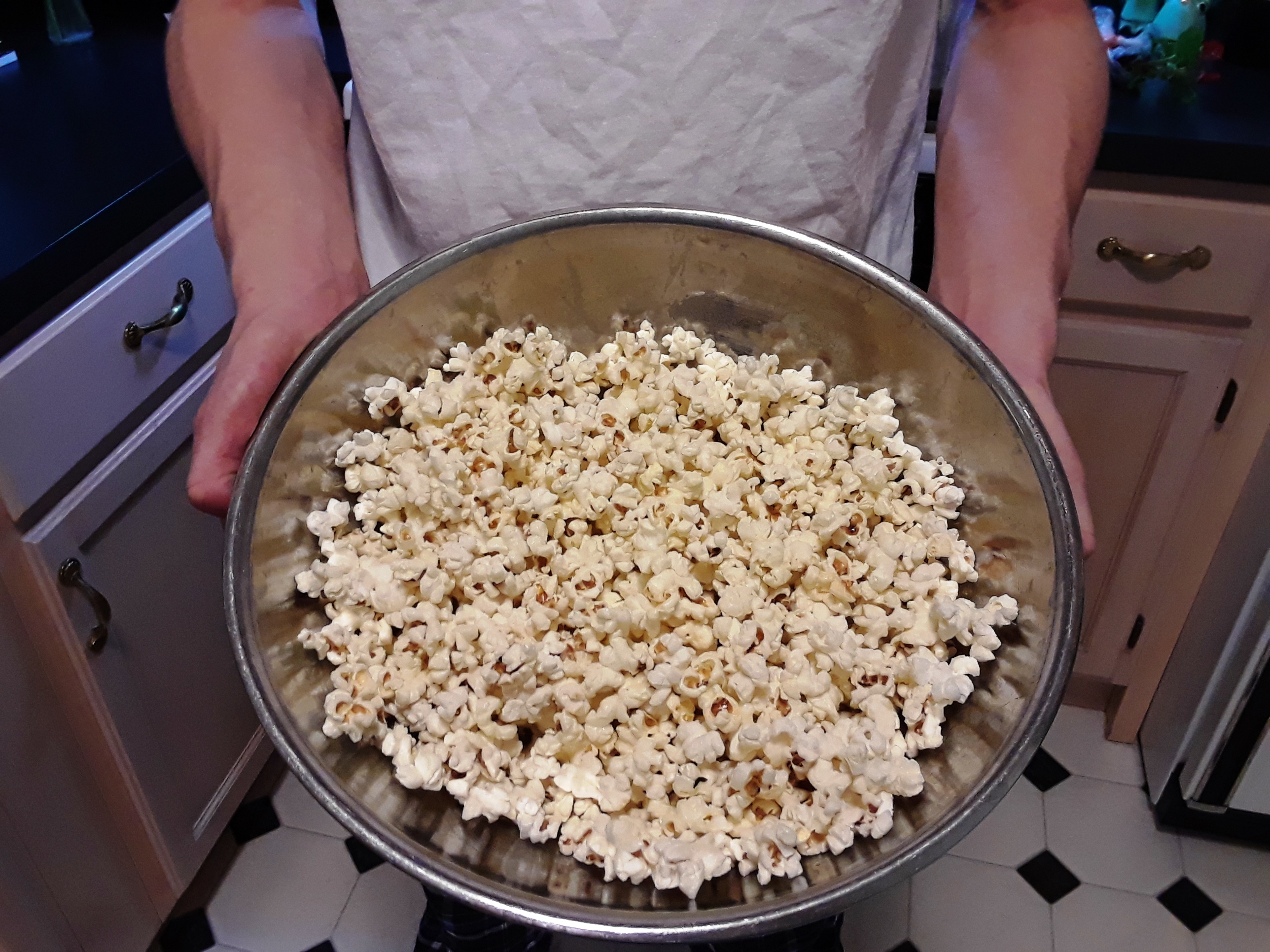
Add the oil and popcorn kernels to a large pot with handles on each side. Put the lid on the pot, and turn the burner on to medium heat. When you hear the kernels begin to pop, gently move the pot back and forth over the burner. A gentle toss during this process encourages un-popped kernels to fall to the bottom. It only takes a few minutes for all the kernels to pop. During this time, don’t be tempted to lift the lid or hot popcorn may fly out and hit you in your face.

When the popping slows to about three seconds between pops, the popcorn is done. Use a large spoon to transfer the popcorn to a clean serving bowl. Wipe the pot in which you popped the kernels with a clean paper towel to remove pieces of hull and any un-popped kernels. Use the pot to melt the butter over a low heat. Pour the butter over the popcorn and salt to taste.

I cook on a gas stove, so I find maintaining even heat to be quite simple. Never having cooked on a modern electric range, I have to assume the burners are like the ones my mother had when I was a child, and that they don’t cool quickly just because one has turned down the heat. I mention this because you don’t want to burn the popped corn while waiting for the last kernels to pop, and removing the pot from an electric burner rather than shaking it back and forth to prevent scorching may be necessary.

Enjoy!

PS – Charles M. Schulz of “Peanuts” fame is responsible for the quotation that is the title of my blog post.

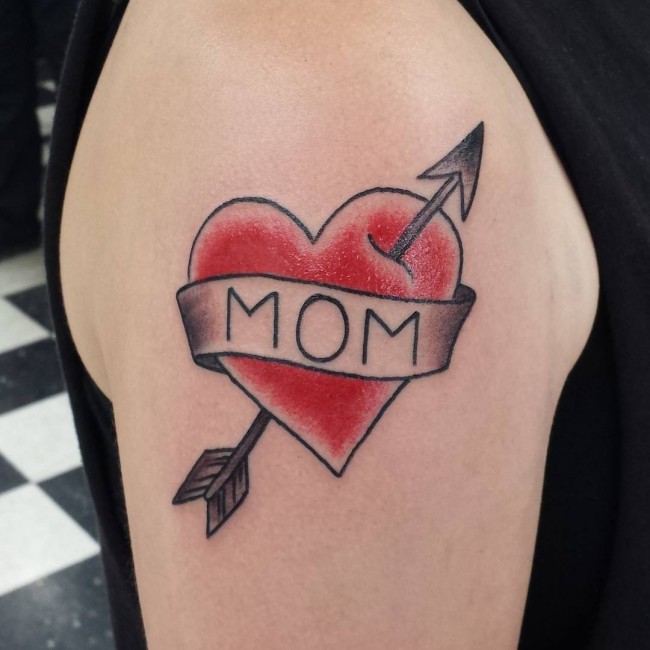
Who’s Your Momma?

Shirley Tedesco has her hands full with eight children ranging in age from five to sixteen, but she loves being a mother. She’s also very practical about the whole endeavor and readily distributes hugs or spanks as needed to keep her brood of eight angels/hoodlums in line. In the chapter of my novel, The Tedescos, titled “Soul Food,” Shirley is feeling like less of a mother than she normally does. Her husband, Joe, knows she’s experiencing a bout of the blues, and his heart breaks for her. Joe springs into action with a Mother’s Day celebration sure to lift Shirley’s spirits and quite possibly earn him some points.

While writing, I knew that Mother’s Day had been established long before the year during which my novel took place, but the research provided some interesting history with which I’d like to honor mothers everywhere.

One of the earliest examples of celebrating mothers came about with the Christian festival known as “Mothering Sunday.” This holiday fell on the fourth Sunday during Lent, and it was once a major tradition in England and parts of Europe. Faithful church attenders would return to their “mother church” (the main church nearest their home) for a special service.

Over time, Mothering Sunday became a more secular holiday. Children began presenting their mother’s with small tokens of appreciation or flowers. This custom started to fade in popularity, but it eventually merged with the American version of honoring mothers, Mother’s Day, in the 1930s and 1940s.

In America, the origins of Mother’s Day date back to the 19th century. Prior to the Civil War, Ann Reeves Jarvis, a resident of West Virginia, helped start the “Mother’s Day Work Clubs” in an effort to teach proper childcare to local women. Later, the clubs served as a unifying force in areas of the country still divided by the Civil War. In 1868, Jarvis promoted reconciliation between mothers of Union and Confederate soldiers by organizing “Mothers’ Friendship Day.”

Julia Ward Howe, an abolitionist and suffragette, also provided an important aspect to what would become the modern Mother’s Day. In 1870, Howe wrote the “Mother’s Day Proclamation.” Her call to action asked mothers to unite in promoting world peace. In 1873, she campaigned for a “Mother’s Peace Day” to be celebrated every June 2.

Anna Jarvis, daughter of Ann Reeves Jarvis, was instrumental in promoting the official Mother’s Day holiday in the 1900s. After her mother’s death in 1905, Anna Jarvis regarded Mother’s Day as a way of honoring the sacrifices mothers made for their children.

John Wanamaker, a Philadelphia department store owner, provided financial backing for Anna Jarvis allowing her to organize the first official Mother’s Day celebration in 1908 at a Methodist church in Grafton, West Virginia. Thousands of people also attended a Mother’s Day event at one of Wanamaker’s retail stores in Philadelphia.

Anna Jarvis, who never married or had children, started a massive letter writing campaign to newspapers and influential politicians in an effort to have Mother’s Day added to the national calendar. By 1912, many states, towns, and churches had adopted Mother’s Day as an annual holiday, and Anna Jarvis established the Mother’s Day International Association to assist with promoting her cause. Her perseverance paid off in 1914 when President Woodrow Wilson signed a measure to officially establish the second Sunday in May as Mother’s Day.

There is no set way to honor and celebrate mothers and motherhood. My experience has been that small, private celebrations or those grounded in faith touch a mother’s heart the most. It isn’t about what you can give to and/or do for your mother; it’s about maintaining the relationship throughout the year, and then taking one special day a year to say an extra “I love you.”

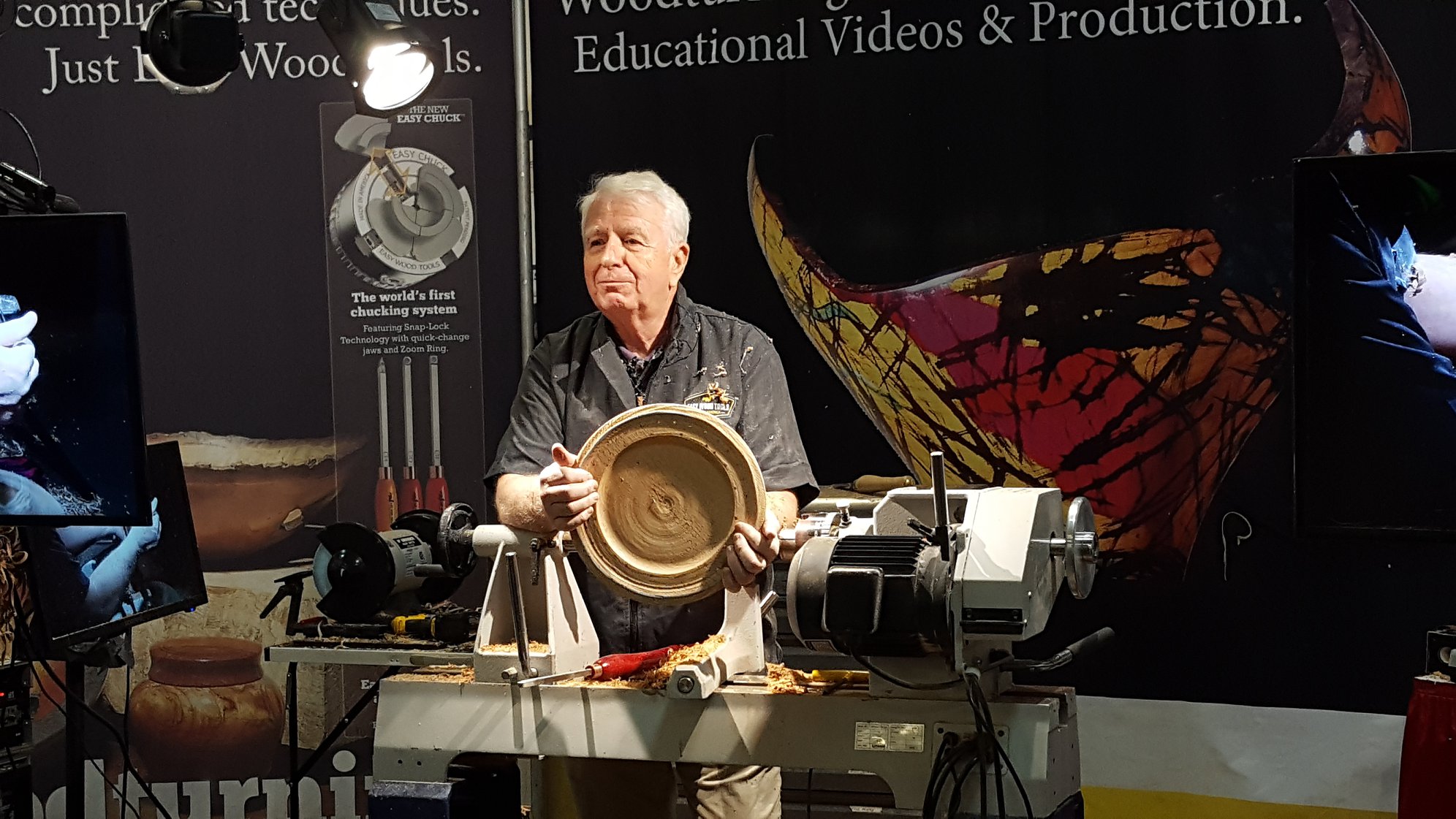
The Artist’s Corner – Arthur Miller, Woodworker

As a writer, I like to keep it simple. A spiral-bound notebook and a no. 2 pencil sharpened to a precise point are all I need to make my ideas a reality on the page. I love the sound of the pencil scritching across the paper. It’s the sound of progress being made. But every now and then, a writer needs to raise the quality of her writing instrument if for no other reason than the sheer pleasure it brings in owning a piece of artwork.

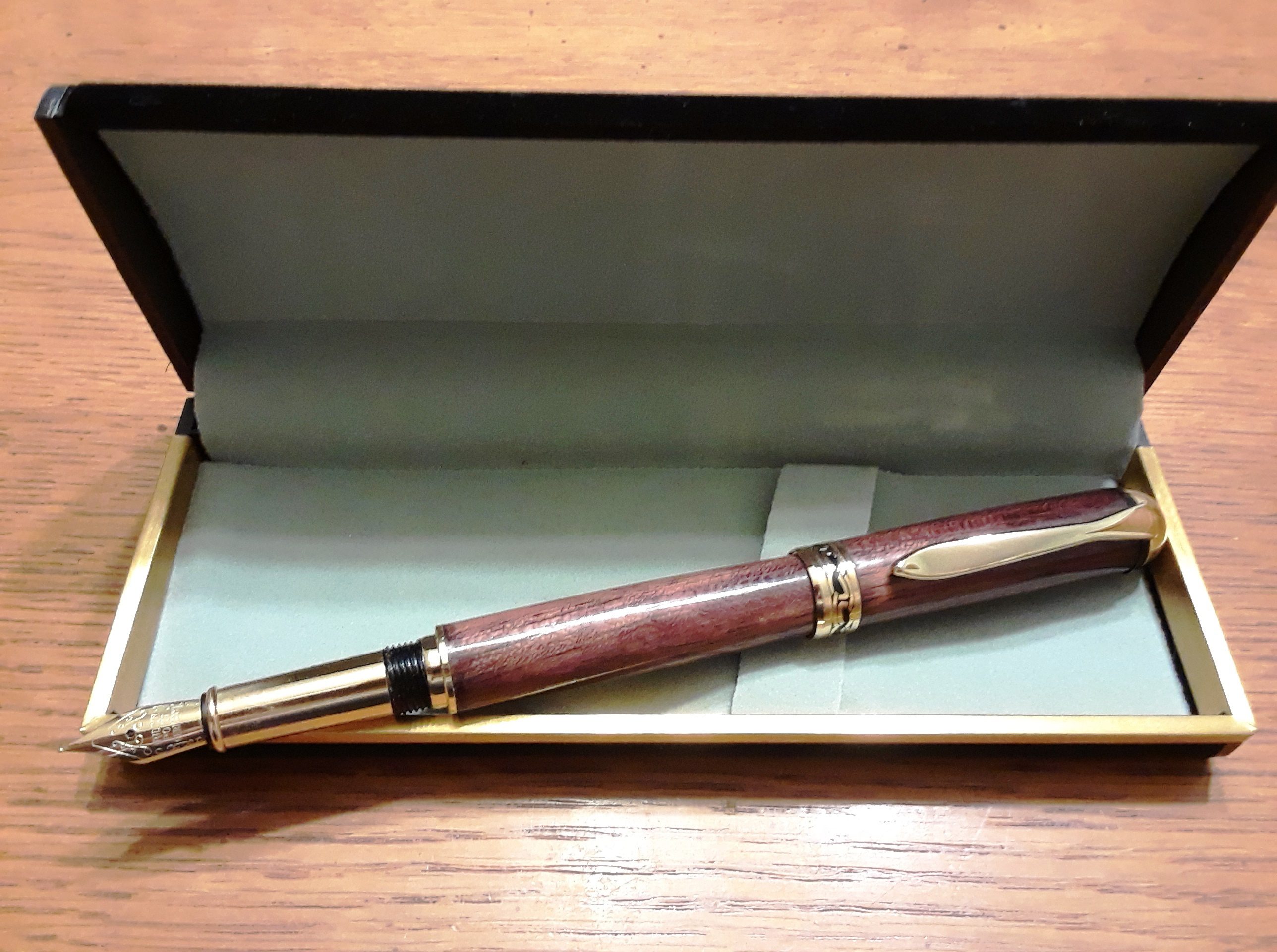
I cannot describe the thrill of writing with my custom-made fountain pen created by woodworker Arthur Miller. So far, I’ve saved my beautiful pen with its specially chosen color of ink for journaling. But art such as Mr. Miller creates is beautiful, functional, and durable. It would be a shame to keep my pen locked away for only occasional use. I simply love the feel of the pen in my hand and how the silky flow of ink makes even a humble grocery list look like a masterpiece of calligraphy.

Mr. Miller was gracious enough to share his passion for woodworking and explain the process behind the fountain pens and other beautiful works of art he creates in his studio.

Tell me a little bit about yourself.
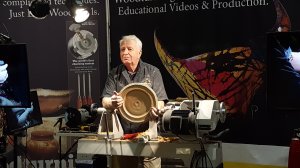
I was born in Akron, Ohio. I attended Springfield Township Schools and graduated from Buchtel High School. The Vietnam War was on, so two years after graduating I joined the U.S. Coast Guard. My first airplane ride was from Cleveland to Philadelphia, where I boarded a bus for the trip to Cape May, NJ where I attended boot camp. I have been stationed in Ogdensburg, NY on the St. Lawrence River; Cleveland, Ohio; Honolulu, Hawaii; Cape May, New Jersey; Little Creek, Virginia; New York City, and back to Cape May thus completing thirty years, two months, and fifteen days of service and retiring as a Chief Warrant Officer, CWO4. Following retirement, I worked for a durable medical equipment company, at a hardware store, and at a destination resort in Cape May. I have always been interested in wood turning, and my hobby, now in full force, somehow got out of control.

I am married to my first wife, Diana (from Medina, Ohio), and have two married daughters who live close by, and one grandson.

How did you develop your interest in woodworking? Was it a career or hobby? How long have you been at it?

I have long loved wood. Our childhood home was made from wood of one form or another: barn siding in the kitchen, pine paneling boards in the living room and office, mahogany panels in the bedrooms. The only plaster in the house was in the bathroom. I loved the smell, the feel, and the look of wood since forever except when we moved and I had to remove all the green paint from the oak paneling and woodwork in our new city house. I loved to climb trees and build things from wood. In high school, I took wood shop from Mr. John McKay who further enhanced my woodworking experience.

Are you professionally educated/trained in wood working or self-taught?

While I have been exposed to several of the foremost wood turners in the country since starting my business, and I don’t make any claim to match them. I am largely self-taught beyond the high school years.

What tools do you use in the process of woodworking?

For tools of the wood working trade, of course there are the lathes of which I have three: two bench top (a 10 in. x 24 in. and a 12 in. x 24 in. capable lathes) and a larger 16 in. x 36 in. floor model. The smaller number indicates half the distance from the spindle to the bed x 2 which is the maximum turning diameter over the bed. Of course, the lathe can be reconfigured. The headstock can be moved to the end of the bed where by the maximum diameter is half the distance from the spindle to the floor—in my case about 7 feet. I am not turning 7 foot diameter items at this time!

Then there are the tools of wood turning. They come in two types: HSS (High Speed Steel) and carbide. The HSS come in several categories, gouges, scrapers, and specialty. This category of tool is sharpened on a diamond grinding wheel. Carbide tools are not sharpened. The cutting surface is replaced when it is no longer sharp. Both tools are important in the studio of Sweet N Round. Resins are another important tool used for casting.

What are some products you make from wood?

The product line at Sweet N Round is quite extensive. I make Pepper Mills, Salt Mills and Shakers, Coffee Mills, Platters, Bowls, Kaleidoscopes, Pens and Pencils, Sewing and Knitting items (Seam Rippers, Yarn Minders and Yarn Barns, Crochet Hook Sets), Marker Rings, Shawl Pins and Rings, Key Rings, Pill Boxes, Purse Hangers, Clocks, Garden Dibbles, Pizza Cutters, Bottle Openers, Wine Cork Extractors and Stoppers, and many other items.

Do you make furniture, sheds, toys, porches, framing, or other large items?

All items are made in my studio. Funny, in 1996, my brother-in-law and I built a shed. Soon, since I did a little mechanical work at that time, it was called a “Shop.”  Today, that same building is now called my “Studio.” I do make toys—toy tops and kaleidoscopes.

Describe the process of making a fountain pen.
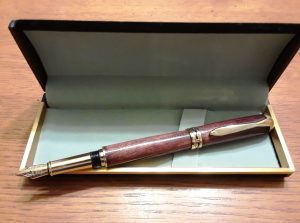
How to make a pen: first and foremost, select the style pen to make—be it a simple ball point, an advanced ball point, a roller ball, a fountain pen (which also come in simple and advanced), or a dip pen.

Most pens share these steps: select the kit (metal parts which will make up the pen), match with the material (see more on material later), we will call this the blank. Mark the blank to maximize the probability the grain will match. Cut to length then drill a proper hole for the tube that holds the workings inside—ranging from 7 mm to 27/67 inch. The drilling is done on the lathe using a special chuck, which holds the material tightly on the lathe, and of course the proper size drill. All brass tubes used on the interior of the pen must be roughed up with sand paper. This process is also done on the lathe using a mandrel. Tubes which will be used in acrylic pens must next be painted white. When the blanks are measured, drilled, and ready, the tubes are glued into the blank using either CA (cyanoacrylate) or two part epoxy glue. You know CA by its more common name, Super Glue. When the glued blanks have set, the next step is to mill the ends of the blanks (make the ends of the pen square with the tube). Once squared, the blanks are almost ready to be turned. Each blank is marked inside to indicate the end. In my shop, the mark is either the nib end or the finial end. In the case of many high-end writing devices, the finial end is larger than the nib end. Finally, the piece is turned. The blanks are mounted on a pen mandrel and turned to the proper sizes—sanded to usually 5000 grit in the case of wood—and then an appropriate finish is applied. In the case of acrylic or other similar products, the blanks are finished to 12,000 grit, polished with cream, and then buffed on the buffing wheel.

If wood, the finish may be wax, wax and oil, or CA. If CA is used to finish, seven coats of CA are applied and cured, and then the blank is finished in the same manner as acrylics.

What types of wood do you work with? What’s your favorite wood to work with?

The most expensive exotic woods used at Sweet N Round are composites. A composite is wood or other material which, standing alone, has no value. The wood or other material is cast in different materials and then cut into blanks. Seashell blanks come to mind. The seashell material destroys regular cutting tools. Think of sanding sand in resin with sand paper.  It cannot be cut using a regular saw, drill, etc.

We work with local woods (maybe from my back yard), domestic and exotic woods, acrylics, Corian, antler, horn, composites, and other materials.

My favorite woods to work with are those that smell nice. Pau Ferro, aka Bolivian Rose Wood, of the Rose Wood family comes immediately to the front. Included in this family is Cocobolo, a wood from Mexico. Many people are allergic to these woods though once finished it poses no issues to the user.

What other materials do you work with?

I like to turn a variety of acrylic and Corian although at the initial turning stages the chips are shrapnel. One must protect oneself from the hundreds of flying sharp pieces. Also a consideration in wood turning is the dust.  Air filters are an absolute must in a closed shop and studios. Masks are also a must to protect the lungs from the dust. However, they also cause the eye protection to fog, so everything comes to a halt until I can see once again. Another wood I use is color wood. Grown in Maine, bass is cut, sliced into thin plies, dyed different colors, glued into slabs, cut to size, and sold to me for a ton of money. Colored wood items, such as mills, sell ten to one over the most beautiful grained cherry, oak, mahogany, maple, sassafras, etc.

What has been your biggest challenge with woodworking?

Finishing. Most of the time I use a finish called friction finish. It is mostly shellac and carnauba wax. I have no problem with small surfaces, but bigger surfaces are not always so good. I would like to learn lacquer and colors.

Many artists love turning a concept into a reality. What is your dream project?

I would like to turn items frozen in ice. Assorted shapes, permanently mounted on a base of some type, and then frozen in a block of ice to hold the smaller pieces in position. The result would be perhaps a wood or other material ball with a concave shape cut into it or a pyramid or a box. I’m still thinking about it.

What has been your most complex project to date?

I’m thinking the most complex, which should be the simplest, drilling a hole through a baseball bat.

What do you enjoy most about woodworking and/or working with your hands?

I like taking a piece of wood, conceptualizing, mounting on the machine, and then have the wood dictate to me what it wants to be.

Does your chosen craft require practice? If so, how much?

How do ya get to Carnegie hall? Practice, practice, practice. I often get pieces of wood from someone’s family farm, or the yard, or something Grandpa always liked. The instruction: “I dunno, see what you can get from it”.

How critical are you of your own work?

I’m pretty tough. My quality control lady (wife) is way tougher. My burn box is full of items that did not make the grade.

Of what product/piece/project are you most proud?

I like my “Dark Side of the Moon,” my “Lunar Lander,” and my large “Natural Edge Cherry Burl Bowl”—I don’t know what to name it.

Do you teach your craft to others?

Absolutely. Belonging to the Cape Atlantic Wood Turners, an AAW affiliate (American Association of Wood Turners), one of the missions of our club is to spread the word. Each member has some private instruction arrangement and several of us teach basic wood turning at our local Technical Night School.

Do you participate in trade shows, craft shows, lectures, demonstrations, or conferences?

Shows are where it is at. I enjoy meeting the people, explaining, demonstrating, showing, and selling my work. It is a joy to see someone come to my table and their eyes just light up. One show, it was a Sunday afternoon, a lady came to my table, and tears immediately filled her eyes. I didn’t know what to think. Her son was about to graduate from college and her husband, a Vietnam Vet, had just passed away. She was looking at my wooden Sierra Vista Pen, which was a rendition of the Vietnam Service Ribbon, in wood. Something we enjoy but have not done a lot is the home parties.

Are all your pieces unique? Do you work by commission?

I tell people all the time that my pieces are unique. I never (well rarely) measure. If you find two alike, it was an error or a forgery. Bring it back!

I am honored when people ask me to do commission work. I once made a lid for the urn for Uncle Fred’s ashes.

When I do this kind of work, we understand we will aim for this or that goal. If my work misses your goal, we will try again until you are happy. However, woodworking is an art form.

Where would you like to go with your woodworking?

I’m pretty happy with where I am though not stagnating. There are items I must make to sell—that is what pays the bills—and there are items I call bait. Be they big or small, bait are items people want to drool over but really, where will they put it or how will they afford it?  I like to make captured ring items.  Typically a wine glass looking piece with a ring of the stem.

Does your skill set include carving or wood burning?

I burn my fingers all the time! I do not (have not) carved. Occasionally, I will burn a ring into a piece as accent.

What are you currently working on?

Pens, pens, pens. I make usually sixty pens at a time. Pepper mills for the summer.

Where is your workshop set up?

My shop is at the rear of my home. It is 12 x 16 feet. I have no radio because I want to hear the machines and the work as it is developing.

Where can people find you on social media?

We call ourselves Sweet N Round, and we can be easily found on Facebook.

Sweet: because we are honeybee keepers. We also honor my wife’s heritage as a Medina Bee. Medina is the honey capital of the world and home of the A. I. Root Company—formerly the largest honeybee supplier in the world and now the premier candle producer in the world.

N: for a conjunction

Round: well, I make round things.

The Buzz About Last Names

Making the last name of the family in my novel, The Tedescos, plural was quite easy. I simply added an S to their name when speaking or writing about the entire clan. And then I assigned one character the last name Roberts and decided to write about his family as well. Time to apply “The Joneses Rule.”

Of course this isn’t the official title of the grammar rule; it’s just my way of remembering that when I make a last name ending in S plural, I add –es. The AP Stylebook, The Chicago Manual of Style, the Cambridge Guide to English Usage, Garner’s Modern American Usage as well as many grammar websites agree with this practice.

Then there is the annoying little pronunciation rule that pops up every now and then. If a last name ending in S sounds like a Z, as in Jones, one shouldn’t add the –es. A trick to determining this is to place your hand on your throat, say the name aloud, and see if you can feel your throat buzzing. Really? We’re supposed to trust proper grammar to the buzzing in our throats? This is made doubly ridiculous because sites that uphold this rule still say that Jones should be Joneses when making the name plural.

Here’s my advice: play it safe by trashing the buzzing rule, be consistent in your writing, and add –es to any last name ending in S. Regional dialects pronounce names differently, and it’s too difficult to pin down whether a name is ending in an S sound or a Z sound.

The Luxury of Chocolate

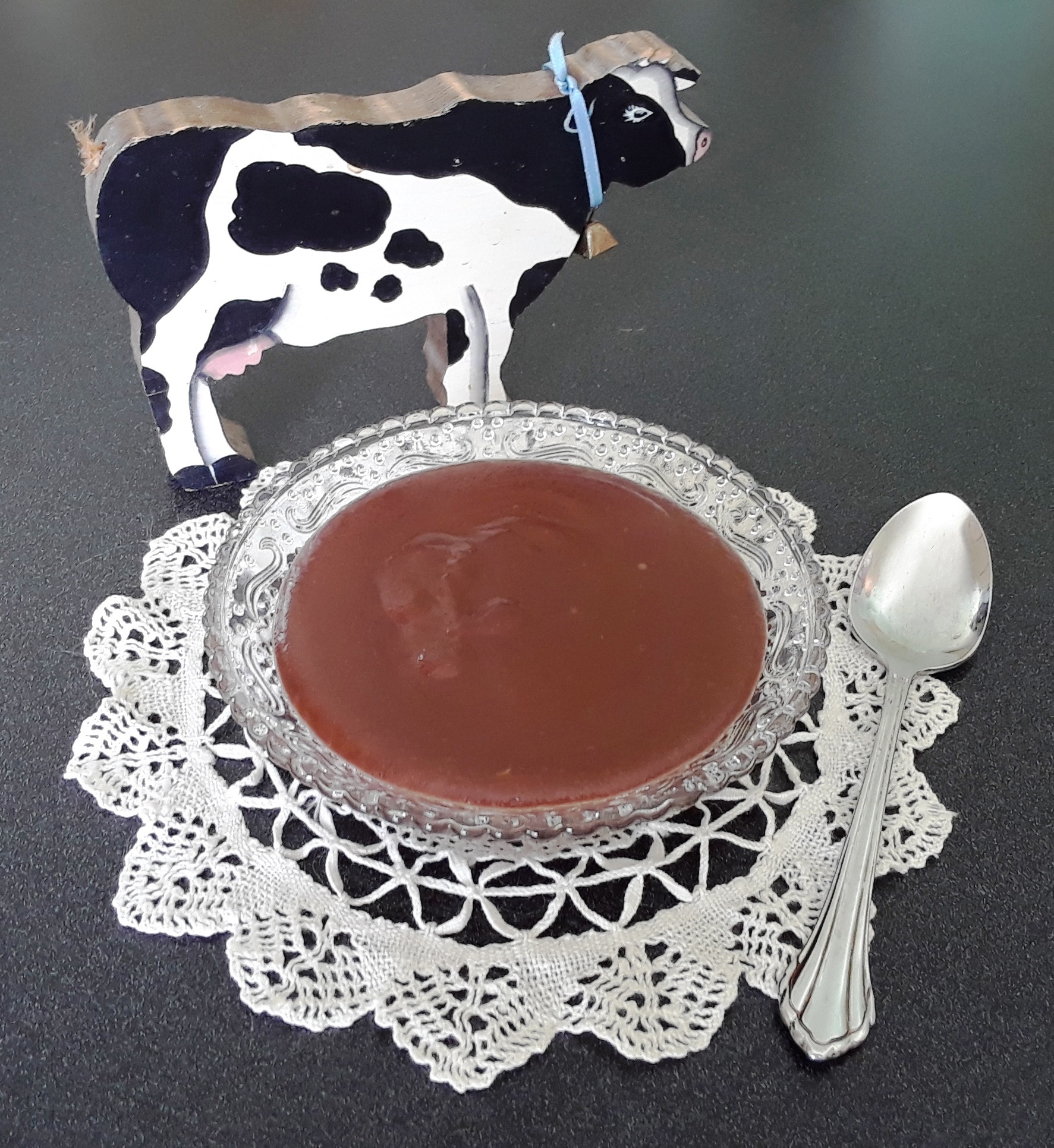
Chocolate ranks high among all the comfort foods in which one can indulge. It’s even better when it’s incorporated into a homemade recipe lovingly prepared by Grandma’s hands. And while chocolate in all its many forms is delicious, I do believe there isn’t anything that can’t be made better by eating homemade chocolate pudding.

Grandma Josephine Tedesco believes in love as the main ingredient in everything she makes for her grandkids. And even though Grandma’s mind isn’t always in the present, when it comes to cooking or baking, she’s as sharp as Gordon Ramsay’s knives. The following recipe for chocolate pudding is the one I had in mind when writing about pudding in my novel, The Tedescos. It’s absolutely decadent and just the sort of dessert Grandma Josephine would proudly serve. It’s simple, elegant, and a little bit of chocolate heaven.

Grandma Josephine’s Chocolate Pudding

2 ¼ c whole milk

½ cup sugar (I used raw sugar for a deep, rich flavor)

Pinch of sea salt

1/4 c unsweetened cocoa powder

2 T cornstarch

2 large egg yolks

1 large egg

5 oz. semisweet chocolate, finely chopped or in chips

2 T unsalted butter

2 t vanilla

STEP ONE: Whisk the cornstarch, cocoa, and ¼ c of the sugar in a mixing bowl. Add ¼ c of milk, and whisk until it’s smooth. Set aside.

STEP TWO: In a medium bowl, thoroughly whisk the whole egg with the two egg yolks. Set aside.

STEP THREE: Combine the remaining 2 cups of milk, ¼ c of sugar, and the sea salt in a medium saucepan. Bring the mixture to a boil over medium heat. Stir constantly to dissolve the sugar. When the mixture in the saucepan comes to a boil, reduce the heat and stir in the mixture from Step One. Once the two are thoroughly combined, bring the mixture to a boil over medium heat, whisking constantly. Do this for about two minutes or until the pudding is thick enough to coat the back of a spoon.

STEP FOUR: Reduce the heat to low under the pudding and gradually whisk about ½ c of the hot pudding into the egg mixture from Step Two until thoroughly combined. Pour the egg/pudding combination back into the saucepan taking care to scrape out the bowl. Cook the pudding over medium heat, whisking constantly, until a soft boil is achieved, about two minutes.

STEP FIVE:  Remove the pudding from the heat and add the semi-sweet chocolate, butter, and vanilla. Stir until the butter and chocolate are melted and the pudding is smooth. Pour the pudding into six dessert dishes or ramekins that hold about 6 ounces each. A piece of plastic wrap placed directly on the surface of the pudding will keep a skin from forming. Refrigerate the pudding until chilled.

Serve with whipped cream and/or chopped peanuts if desired.

Enjoy!

La Cucina Povera

In the chapter of my novel, The Tedescos, titled “Soul Food,” the family attends church on Mother’s Day with their good friends, The Robertses. After the service, the Tedesco Clan is invited to attend a meal in the church fellowship hall. The men and boys prepared the meal they will serve to the mothers to honor them. Much of the food the Tedescos encounter is familiar, but one dish in particular initiates a conversation between Joe Jr. and Tabitha and Tonya Roberts and results in the explanation of ‘la cucina povera.’

The Italian phrase literally means the poor kitchen, and it is a style of cooking familiar among the lower classes (think peasants) of a particular society. Often, peasants had to cook with whatever they had on hand whether it came from the kitchen or the farm. The ‘poor kitchen’ can be found in every society. The great thing about this concept is that some really delicious recipes emerged from the simple, high-quality ingredients that were available.

Attempting to cook in the style of ‘la cucina povera’ may earn you a laugh especially from an older person who lived through the war in Italy. They may refuse to acknowledge ‘the poor kitchen’ style and argue that it was simply the preparation of the food they had on hand. Americans, with all their varied food choices and easy access to said food, have a tendency to romanticize a style of cooking that was a part of basic survival. Still, I can think of several recipes in which my family indulges that found their way into my writing because of my love to feed people whether real or imagined. Many cookbooks featuring this style of food have been published, and I highly recommend you try one or two meals from them if you’ve never encountered peasant cooking.

Beans and cornbread, cabbage and noodles, and soup made from some combination of vegetables are the types of peasant food I grew up with. I never knew that what we ate was considered to be from ‘the poor kitchen’ because the adults who prepared it for me cooked with love and made everything taste wonderful. Delicious, simple food is usually the tastiest, and in the end, that’s really what it’s all about. What does your family enjoy from ‘la cucina povera?’