Equine Medicine

Equine MedicineEveryone knows what big babies men are about illness.   One little sniffle and they’re down for the count. Then it’s, “Sweetie, could you bring me some hot tea with honey,” and “Honey, how about some chicken soup?” Next thing you know, your big baby is asking for tissues, Tylenol, NyQuil, cough drops, the heating pad, extra blankets, Vicks, etc., etc.

I’ve fluffed pillows for my own big baby, laid cool clothes across his forehead, run for warm socks and Theraflu in the middle of the night when he woke up with chills. I’ve administered B-12, zinc drops, vitamin C, and Echinacea. And one time, I even held his hand and shot nasal spray up his nose because he has this thing about his nose. He can barely stand for the doctor to touch it. It’s quite hilarious.

Anyhow, during a routine checkup for my big baby, the doctor asked if he wanted a flu shot. Now my baby knows how bad flu can be for someone who has dealt with asthma all his life. You don’t want flu on top of that. So naturally, he accepted the shot.

I asked him how his doctor visit went when he came home. He told me that all was well and that he got a flu shot. I snorted because I am the exact opposite of my big baby when it comes to health.  I am not cautious, I put off going to the doctor as long as possible and usually only go kicking and screaming, I would die in my own bed before admitting that I was sick, I only do shots if they’re in glasses, and I think doctors see you coming with dollar signs dancing before their eyes.

So, I had to rag on him just a titch about the shot.

“Boy, did they see you coming. You go in for one reason and they score big bucks getting you to take a shot.”

“Well, this way I won’t get flu.”

“Do you know how many people get the flu anyhow? And they probably wouldn’t have if they hadn’t taken the stupid shot. You’ll be sorry.”

Now this may sound harsh, but we’ve teased each other quite wickedly for over twenty years of marriage. We totally get each other’s sense of humor. Besides, a few months later, big baby had his revenge. I developed the longest lasting case of flu I have ever had. And no, I hadn’t taken the shot.

Weeks after my doctor somewhat proudly announced that I had flu (I suspect he felt bitter yet superior over my stubbornness), I was still suffering under the effects of the illness. I couldn’t regain my energy which left me listless and not a little crabby.

One day, while complaining about how long it had been since I felt well, big baby reminded me that I hadn’t taken the flu shot. He even suggested that I probably should have and said something like who’s sorry now. Well, of all the gall! Can you believe he’d kick me when I was down? I summoned what little energy I could to retaliate.

“Yeah, well, you’re like an old draft horse, you know?”

“What do you mean?”

“They lead you where they want you to go, and you comply. Just strap on a bag of oats and ole Willy will take the shot. I, on the other hand, am a thoroughbred.”

“Yeah! High-strung, stubborn, and unpredictable!”

(Long, long pause for shared laughter. Still laughing. Still laughing. Finally, we’re winding down.)

“Okay, I’ll own that one.”

So while I still refuse to get the flu shot every year, at least I know big baby will care for his stubborn pony.

Baring My Writer’s Soul – Part 15

Two days ago I started reading a novel by an author whose previous book I enjoyed. Admittedly, I only had one book by which to judge her writing, but since I absolutely fell in love with the story, I trusted that I would like other books she wrote. The first novel I read by this particular author was set in medieval Japan, a favorite era of mine, which scored the book high marks right off the bat. I didn’t have to labor at all to find the exciting parts as the writing was excellent and the story captivated me. Again, this alone shed a positive light on the second novel even though it wasn’t about Japan.

Writer's Soul 15Many years had passed between reading the two novels, but I had high hopes for the second one. The second book started slowly with very little dialog and page long paragraphs composed of rambling sentences from multiple POVs separated only by commas. It took some effort to follow whose thoughts were being expressed. But I’m no quitter. If I could read José Saramago’s The Double which has enormous paragraphs with only periods and commas even when it’s dialog, and ended up being one of the best books I ever read, then I could finish this book.

One of the first things I checked was where in the lineup of publication this particular book stood. It’s number fourteen for the author which is quite impressive. There was a reason to keep going. If publishers believed the novel worthy of printing, then I should probably press on. I mentioned this to my husband, and it generated a question we’ve debated before. Is there a certain place in an established author’s career when no matter how mediocre the book may be it will still be published based on his or her prior success and/or reputation?

I’m tempted to read this author’s first and second books. They were published several decades ago, and I wonder how the writing may have evolved over time. Is it better, worse, different? Was the author simply trying something new, something she always wanted to do but didn’t dare attempt until she was established enough to trust that her work wouldn’t be rejected? Or does this later book reflect the change in tastes among readers?

In either case, I’m going to be fair to this author and finish the book. There have been less than five books in my lifetime that I was unable to finish. Also, I’m willing to allow an author some grace as she builds up to the pinnacle of the story. I trust that fourteen books later, this author knows how to write worthy of my attention. There are slight mysteries and questions that have been posed, and I cannot set the book down without discovering what they are.

I mention all of this to lay some groundwork for the real issue I want to discuss. It has to do with query letters, synopses, and first page or chapter critiques experienced by new authors. If the book I’m reading was a first novel, without an established reputation backing it, to be judged only on a query letter, synopsis, or first chapter, regardless of how brilliant those items may be written, it would be rejected outright.

A person simply cannot focus on a tiny glimpse of someone’s writing taken out of context and judge whether or not the entire work is worthy of publication. And yet, this is exactly what it done during pitch sessions at writing conferences and in agents’ offices on a daily basis. How much brilliant writing is bypassed because an agent, editor, or publisher wasn’t aware of all the narrative forces driving the story as it unfolds to reveal its true shape?

I fear that what I’ve termed ‘fast-food thinking’ has negatively influenced the art of writing and publication of said writing. Everything in life takes place at the speed of light so that our desires receive instant gratification. Just as quickly, we move on to seek the next tantalizing thing without ever realizing that we aren’t truly satisfied. The more we seek, the more things need to be supplied to fulfill the vicious whims of demand. And if you are the person who can do it bigger, better, faster than anyone else, you’ll probably be the one to make boat loads of money. So what if quality suffers? Well, that’s the problem I’m leading up to.

Let’s step back for a moment and analyze why this fast-paced process isn’t working. Let’s start with the writing. Great writing takes time, and if people have bought into the lie that time is money, then great literature is in more danger of becoming obsolete than even I thought possible.

There has to be a better way.

Writing is a major investment of passion and time. It doesn’t follow cookie-cutter formats and spew out copycat books, it doesn’t happen to make the writer rich, and it doesn’t exist for the express purpose of becoming a movie. Writing can be summarized for book flaps and reviews, but if that was all it took to satisfy a person, the writing wouldn’t have become a book in the first place.

It’s time to trade in ‘fast-food thinking’ for ‘stop and smell the roses reasoning.’ If anything worth having is worth waiting for, then I propose allowing this lesson in patience to be applied to how books are evaluated. Furthermore, as a society, we must no longer tolerate being spoon fed our entertainment especially where books and/or writing is concerned. Readers must also slow down and appreciate the treasures they hold in their hands when they read a book.

Of course, I’m open to suggestions on how to make this process work better, not just easier. In doing so, we’ll not only rescue writing from being destroyed, we’ll stop this process from encroaching upon other forms of art.

Write Happy!

Looking Through the Long Lens of History

Glimpses of understanding are all many of us will ever have for what the men who stormed the beaches at Normandy experienced on June 6, 1944. I have looked at it from several different sources, and still, my knowledge is mere shadow when compared to the memories of the men and women who served during World War II.

Conneaut 2

As heart wrenching as Band of Brothers was to watch, I didn’t have a true understanding of the ordeals faced by the American and Allied soldiers and medical staff until I began researching my novel, The Secrets of Dr. John Welles. Per my husband’s suggestion, I attended the Conneaut D-day Reenactment. I assumed I’d find some hobbyists with a useful amount of knowledge. I am not ashamed to admit that the whole event was incredibly humbling, and what I discovered far surpassed my expectations.

Conneaut 1

My journey began when three nurse reenactors graciously granted me an interview and patiently answered all my questions. They directed me to And If I Perish and Heroes From the Attic as additional resources where I would find the specific details needed to create believable scenes in my novel. Both books provided the information I desired, but more importantly, they supplied a sense of approachable familiarity that my research had been lacking. Long before I finished reading, I felt as if I knew the people about whom the books had been written. They became friends with whom I experienced fear, anxiety, sympathy, joy, loss, relief, and a whole host of other emotions. I developed an even deeper respect for them, and I wish I’d had the pleasure of meeting and knowing them.

Conneaut 3

Another valuable perspective of World War II was the autobiography of Omar N. Bradley, A Soldier’s Story. General Bradley’s account supplied information from the other end of the spectrum, bridging the gap between those in charge and those under orders. As inscribed in the front of the book, General Bradley hoped to help soldiers “understand why they were going where they did.” I believe his memoir answers anyone’s questions if only they are willing to look. While many would criticize those in charge without offering alternatives and/or solutions, I know that I would never want to shoulder the burden that Omar Bradley and others like him did during World War II. To simply say they did the best they could would be insulting. From the lowest private to the highest ranking general, and everyone in between, they all served bravely and selflessly.

Conneaut 4

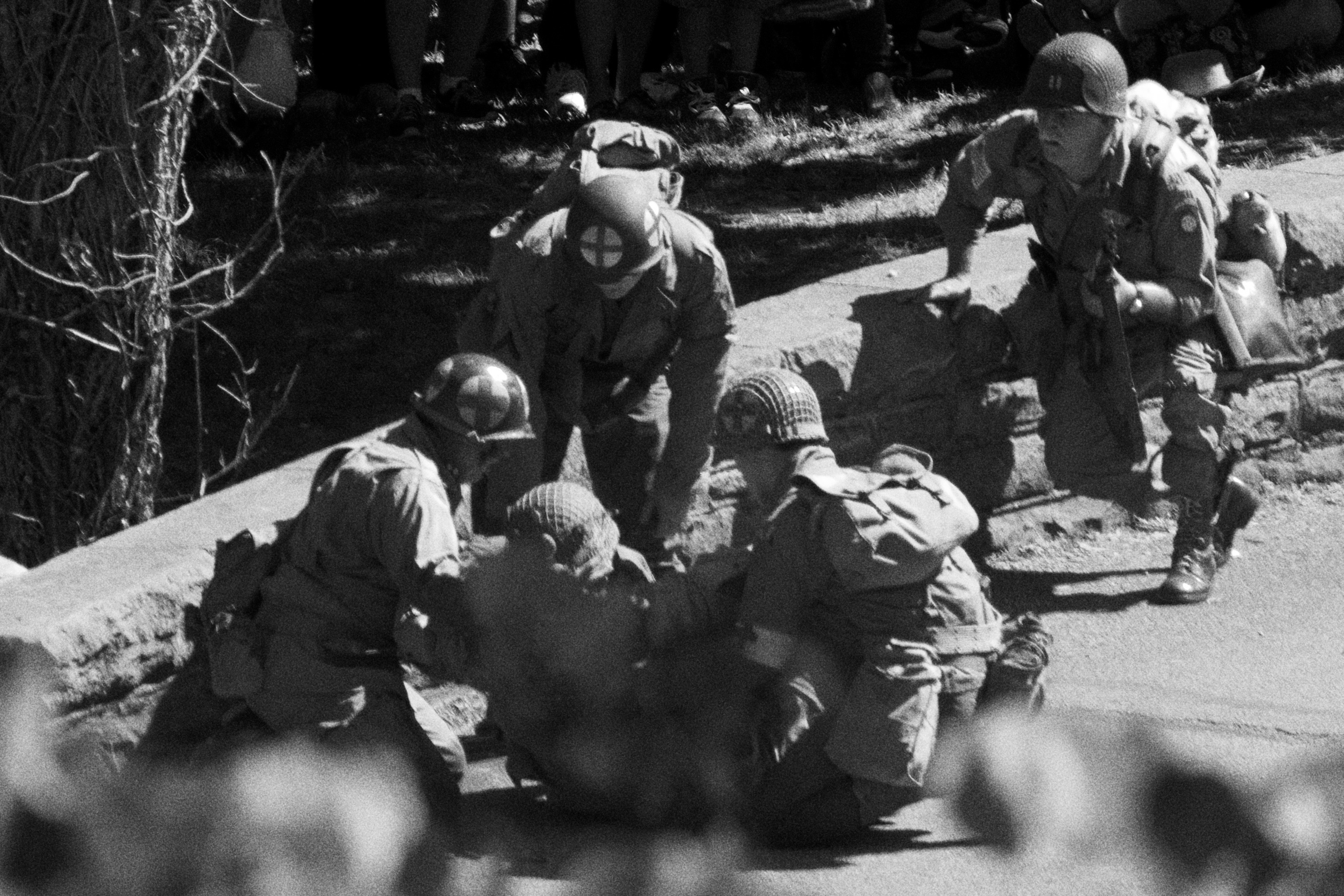
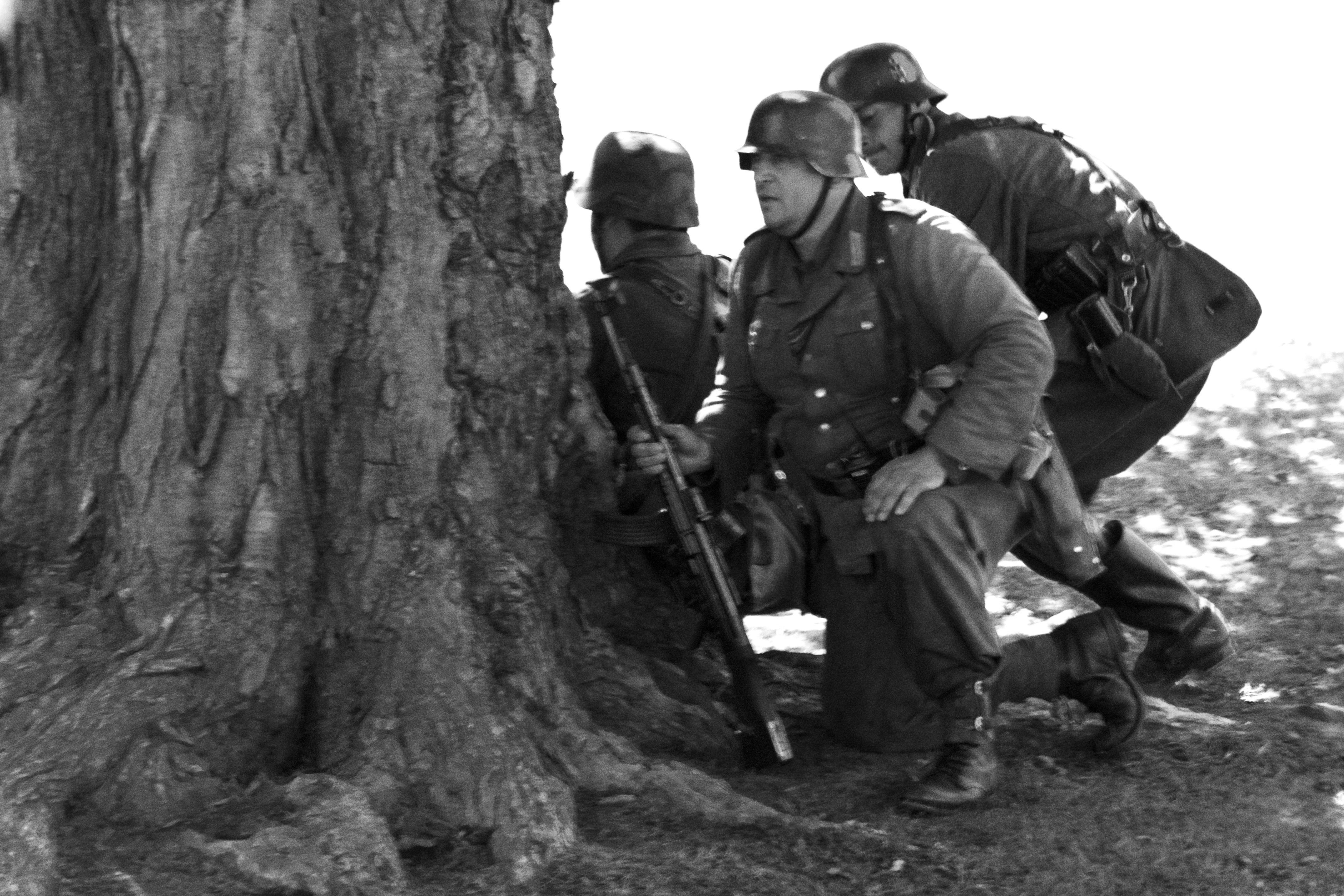
This post would be incomplete without attempting to describe the D-day battle portrayed at Conneaut. My emotions get the better of me every time I think about it. It all seems to happen at once.

Landing craft full of American and Allied soldiers about to crash onto the beaches.

The thrill of the B-17 Flying Fortress flying over so close I swear you could reach up and touch it.

The B-25 Mitchell banking in the brilliant blue sky.

P-51 Mustangs crisscrossing the air like darting swallows.

Excitement and tension mounting, trying to remember it’s a reenactment.

The ground vibrating with the boom of the German 88, the shock traveling up through your body.

Black clouds billowing upward from the flame thrower.

Soldiers storming the beach and falling, the dull ache in your chest every time that soldier is American or Allied.

Inch by grueling inch they gain ground.

The Germans relentless, the Americans resilient.

Again the planes, again the 88, the sound of bullets ripping the air.

And then, a small cheer is heard in the distance, rippling through the crowd, swelling.

Clapping and people jumping to their feet.

Tears in your eyes.

The American and Allied soldiers have gained their objective.

Breathing a sigh of relief.

It’s over. For us, right now, D-day is over.

Locking eyes with those around you as your remember that in 1944, it was just a beginning.

I cannot thank the reenactors enough for keeping alive the memory of what brave American and Allied men and women did. Their selfless sacrifice must never be forgotten or rewritten. The sad fact remains that much of this history is not being taught to upcoming generations. Worse, there are those who wish to revise it as something undesirable or reprehensible. As much as this grieves me, it is not enough for me to want this for future generations. They must desire the knowledge of history for themselves.

Until then, I will carry on remembering for every person who served long after the last one is gone.

~~~~~

Thank you to HBSmithPhotography for the wonderful pictures from the 2015 Conneaut D-day Reenactment

Pause and Effect

Jetty

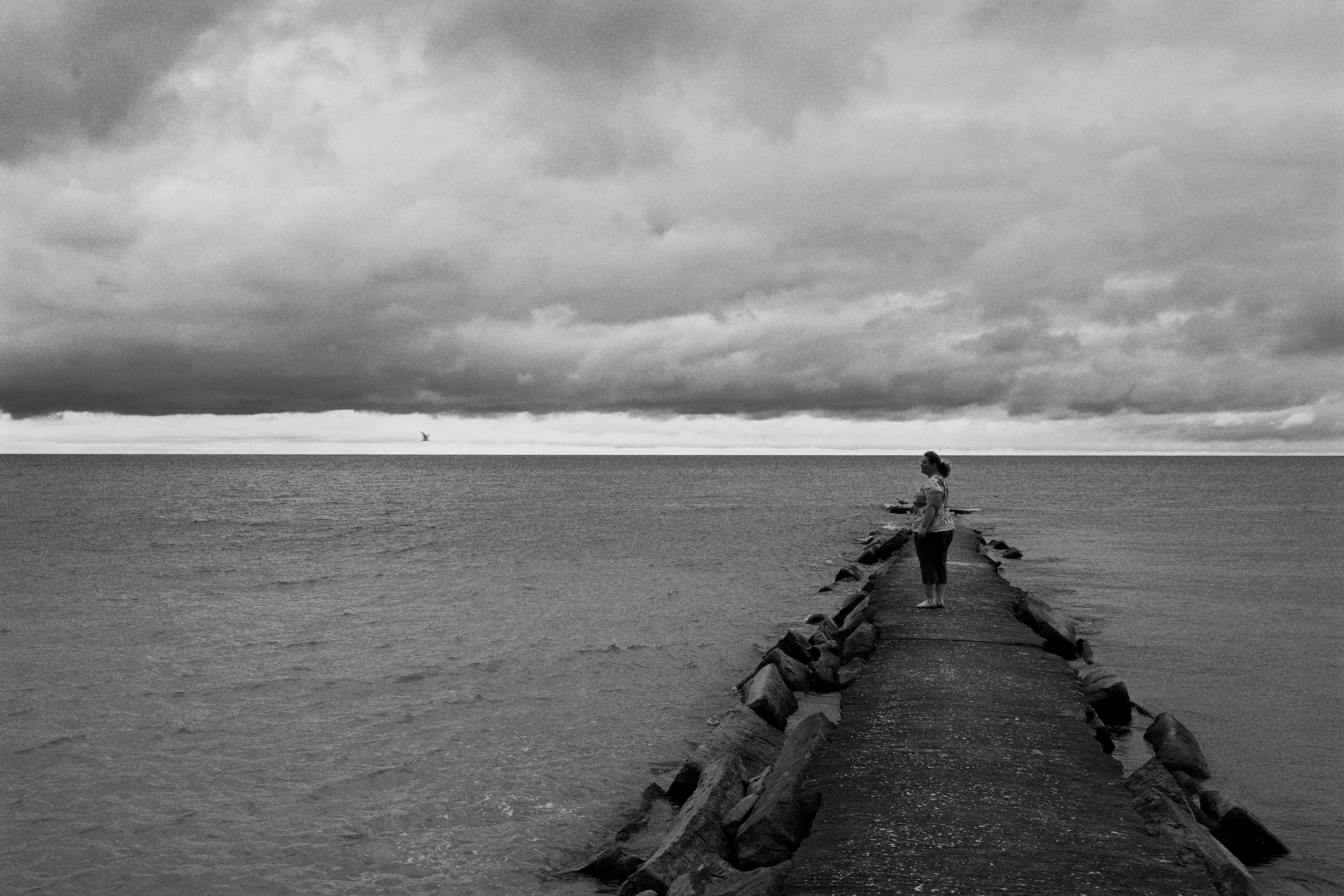
Every now and then, she gives herself the small pleasure of the freedom to breath. This decision toward independence is the zipper separating her responsibilities from her desires; the two halves fall away.

Only then is she able to see clearly the obstacles in her life. They don’t always approach head on, and she must look to the right and the left to see what blocks her journey.

When she clears her horizons of the minutiae of daily routine, her existence reorganizes into a system of priorities. The hazards of life recede, her vision focuses.

The path of her life is steady, extending toward a ribbon of hope. She can grasp it for herself now as there is plenty for her future. In doing so, she combats the crumbling edges of false perceptions and keeps the rolling tide of disappointment at bay.

Inspection of herself and her life grounds her. Dreams take flight and possibilities are realized. Reordered, she continues in the role of woman, wife, mother.

~~~~~

Thank you to HBSmithPhotography for the amazing photograph.

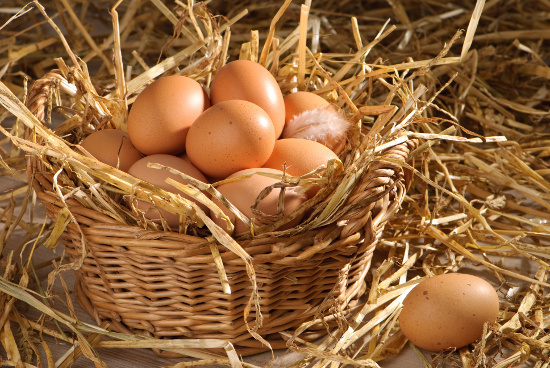
Egg On My Face

What could be more delicious or simple than a fried egg? There is so much about the egg that I could say (the history of eggs, uses in different cultures, health benefits, recipes, etc.) but won’t. There are tons of websites devoted to the creation of the perfect fried egg including debates on cast iron versus non-stick skillets. There are sites encouraging the incorporation of the fried egg into everything from bowls of rice and/or veggies to plopping it down on top of ciabatta bread and tomatoes then sprinkling with feta cheese and arugula, thus elevating the humble fried egg to a snazzy dinner item. And don’t get me started on the various methods of frying with absurd names like “animal style” and “press down.” One ill-informed person even suggested that the perfect fried egg wouldn’t have crispy brown edges. Seriously? That’s the best part.

I guess I’m old school and harken back to the days when the toughest decision one had to make about fried eggs was whether or not you wanted the yolk hard or soft. This simplicity of thought is where my mind drifted as I wrote the scene in my novel, The Secrets of Dr. John Welles, when midwife Collie Mercer makes a celebratory breakfast for the Welles family in honor of the new baby she has just delivered.

The Welleses lived on a farm, so naturally eggs were part of their diet in some fashion on a daily basis. I imagine nothing fancier than scrambled or fried eggs ever appeared on the Welles children’s plates, not even an omelet. But I also know that the eggs were prepared with love. And while a wide variety of foods may not have been an option, no boxes of colorful cereal or flaky croissants, the children were no doubt raised with an appreciation for an abundance of good food prepared simply.

There isn’t an exact recipe involved with this post. In many ways, the preparation of a great fried egg is a combination of common knowledge and simple logic with a dash of familial preference for good measure.

The Perfect Fried Egg

Fresh eggs – we obtain ours from a neighbor down the street

Butter

Salt & pepper

Cast Iron Skillet – our preference at the Gibson household

Pre-heat a cast iron skillet on the stove. Melt about ½ T of butter in the pan per egg until it bubbles. Don’t brown or burn the butter. Crack your eggs directly into the skillet, spacing evenly around the circumference depending on the quantity of eggs and size of the skillet.

Break the yolks at this point if you want them hard. Allow the underside to set up before flipping them to continue cooking on the other side. They are done when the yolk it set and the edges reach desired crispness.

Or, when the underside of the white turns opaque, you can pour a little water in the pan and cover to steam your eggs to doneness. This is usually done for a soft yolk. No flipping required.

Season the cooked eggs with salt and pepper to taste. Serve hot and enjoy!

Regal and Waiting

“Hey there, big kitty, how you doing…c’mon, sleepyhead, wakeup….Cinnamon?”

The boxy head pops up; icy green eyes scan the human face on the other side of the bars. Recognition never comes, and all enthusiasm fades as the cat’s eyes glaze over with disappointment and disinterest.

The woman standing there checks the card on the stacked metal cages that hold cats from the local rescue. Surprise flashes across her face when she reads that the large cat with a most inelegant head is indeed a female. Cats are usually defined by a slightly feminine grace, even the males. The girth of this particular feline is impressive.

She is appropriately named. Her fur is deeper than butterscotch or peanut butter, and while she would fall into the category of orange tabby, her coat is a dark, two shade variation of rusted pine needles. Her profile card says that she is nine and her former owners surrendered her because they didn’t want her anymore. Surrendered; the softened, politically correct term for abandoned, guaranteed not to inflict guilt upon an owner. No one forced them to give up the animal.

The profile cards admit when owners move, develop allergies, have a child of whom the animal is jealous, or returned to the rescue because he or she didn’t get along with earlier acquired pets. Cinnamon’s tag clearly indicates that she is no longer wanted.

Other people stop by the cages, read the cards, and cautiously poke their fingers through the bars to scratch behind an ear or under a chin. Cinnamon returns to her nap just beyond the reach of the grasping fingers; she is oblivious to the kind words and prying eyes.

She has seen this all before on the faces of these humans who stop by to look at her and her fellow rescues. Their eyes search first for the kittens or at least the young cats a year old or less. Then they read the cards on the cages, making mournful noises in their throats over the rescued strays. They compare each cat to one they’ve known at some time or other (This one looks like Lucky, only bigger or Doesn’t that one resemble Jane’s cat, Dartmouth). They cheer victoriously when a cat allows itself to be petted; more so should the slinky creature meow as if for their pleasure. They chuckle at funny names bestowed upon the cats (Witherspoon, Merlin, or Chairman Meow).

Cinnamon doesn’t care about any of this, but then neither does Ziggy in the bottom, left-hand cage. They continue napping, lending to the aloof reputation that cats enjoy and proving sullen, dog-loving boyfriends correct when they claim cats aren’t as nice or cuddly as dogs. Cinnamon does not need or want to go home with the young women dating these idiots. In fact, she doesn’t need anyone, or at least that’s what she wants you to believe.

Sometimes, during the hours she spends at the pet store in the small room with a glass partition, she wonders in cat fashion how long she’ll be here. And where are her owners? Why never crosses her mind because it isn’t her fault. She does wish the store employees wouldn’t prop open the door to the room. The store can be quite noisy, especially on the weekends.
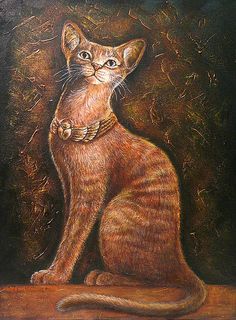
A Dash of CinnamonOn the days that Cinnamon graces the public with her wakeful presence, her peridot eyes, and her expressionless visage, she likes to sit upright in her cage with tail wrapped around her front toes. From this position, she regally dispenses judgment like Bast. Go ahead and assess me if you dare. Her countenance would lead one to believe that she could read thoughts.

If she could, she would find humor in those running through the head of a man who really wants another cat but doubts the two he has at home would get along with her. His boys, both under two years of age, can be quite rambunctious at times. They would probably torment Cinnamon relentlessly as she attempted to nap. He imagines a scene in which Cinnamon rises like a disturbed lioness that tears into his precious fur babies with tooth and claw. Yes, perhaps, he’ll leave this one for someone else.

Then there is the young couple with two toddlers in tow. The mother, pregnant to the point of bursting, repeatedly corrects the children rattling the lock dangling from Cinnamon’s cage. The temptation is too much, and the mother must remove her offspring who tries to climb the front of the cages. She calls to the father who lingers a moment in the glass room, considering Cinnamon for adoption until a vision of a black lab playing with his grade school-aged children passes through his thoughts.

A little girl, who has been promised a cat for her birthday, complains to her anxious parents that she couldn’t rename the dumb, old cat because she probably wouldn’t learn her new name. She balls her fists on her hips and shouts Muffin. Cinnamon ignores her. When the child says Cinnamon, the cat’s head moves. The little girl stamps her foot, shouts I told you so, and dissolves into a tantrum of tears. She is dragged, screaming, from the store.

One woman passes up the opportunity to adopt Cinnamon because she fears cat fur would stick to her cabernet colored suede couch. An elderly couple decides against the option because they worry about who would take the cat in the event she outlived them. Another couple admires her, but their children are grown, and they want to start traveling; finding someone to watch the pets is such a chore.

No matter. Cinnamon is not in a hurry to go anywhere. Her owners might return at any minute. Maybe tomorrow.

One by one the lights in the warehouse-sized store begin to go off for the night. The staff scurries to finish sweeping and arranging displays. They grab coats, purses, keys, and lunchboxes. One calls out goodnight to the rescue cats. Then it is dark and silent, except for security lights and the bubbling of tanks in the fish department.

Cinnamon stares into the darkness, searching for movement in the aisles of pet food and toys. She doesn’t move for thirty minutes or more. It would feel so luscious to be able to escape her cage for a few moments, to stretch and roll along the floor, to prowl the quiet store. She curls into a ball under the wooden shelf in her cage and falls asleep contrary to her nature.

In her dreams, there is a person who visits the store for the express purpose of taking her home. Perhaps it’s a man, maybe a woman, but either way the voice is kind, soothing. This human is gentle with her, only saying her name in the long, drawn out way a human does when he or she is calling for someone. This individual doesn’t scold harshly when she is caught sleeping on the couch or lapping puddles off the shower floor. Cinnamon isn’t expected to curl up on a lap or play with kittenish toys. But this person is always within reach, reading the paper on the floor and laughing when Cinnamon decides to plop down on the pages, or sitting on the basement steps and inviting her to share the space. Most importantly, this person is patient. Patiently waiting for Cinnamon to relax enough to bestow even a fiber of trust. However long it takes, this person will wait, and he or she will recognize success when the sandpaper kiss of a tongue caresses the back of a hand just once.

Paws twitch and eyelids flicker. Cinnamon chatters in her sleep.

Across town a widowed woman said goodbye to her beloved cat today. Tomorrow, she will visit the pet store in search of another to help her work through her grief. Probably an older specimen for they are usually calmer, more settled. She is partial to orange tabbies.
And If I Perish

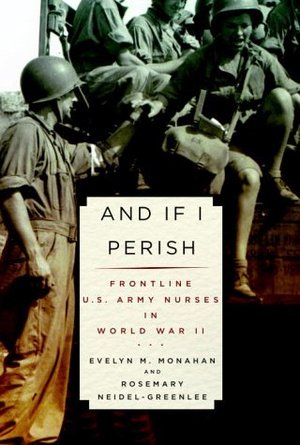
And If I PerishAnd If I Perish was recommended to me by the nurse re-enactors of the Conneaut D-day event as a source of information on American medical staff during World War II. I needed to place my protagonist, Dr. John Welles, in the European Theater as a surgeon, but I truly had no idea how to incorporate a civilian doctor among the ranks of military personnel.

Thanks to Evelyn Monahan and Rosemary Neidel-Greenlee’s thoroughly researched book, I not only had a way to place Dr. Welles in the war, I had firsthand accounts via actual medical staff of what he would have encountered.

And If I Perish is a treasure trove of information not to be missed. I highly recommend it to students of nursing and history. While the contribution of doctors is also noted, the focus of the book is on the nurses who responded to the call to tend American soldiers fighting in North Africa, Italy, and at the Normandy landings through to the end of the war in Europe.

Often without footwear and uniforms in their sizes, yet an abundance of nylons, lipstick, and face powder supplied by the military, the nurses who participated in World War II made tremendous sacrifices and improvised on the spot to ensure that American and Allied soldiers received the best in medical care. They even gave the best they had to offer when working on German POWS who, with the exception of SS officers, were often grateful for the care they received once they overcame the fear of being captured.

It was no small challenge for the nurses to assist doctors while only a couple of miles from the front lines, often in horrible weather, and sometimes during retreats with the threat of being left behind hanging over their heads. And they did it without the benefit of weaponry to fight back.

The nurses endured bombing, strafing, and even evacuation from a hospital ship that had been attacked by unscrupulous pilots of the Luftwaffe contrary to the Hague Conventions. Occasionally they lost one of their own, a fact that further solidified their sense of family. All this they endured at less pay than their male counterparts.

With the equality that women enjoy today in many fields of work, it is difficult for me to comprehend why, for so many years, the nurses’ stories were overlooked and why they didn’t receive as many promotions and awards as the men serving. Hopefully, Mrs. Monahan and Mrs. Neidel-Greenlee’s book came in time for all of them to know how loved and appreciated they were and are for the sacrifices they made in serving their country.

My Classical Education

My Classical EducationI stopped reading Jane Austen’s Pride and Prejudice forty-two pages before the end of the book. I am familiar with the conclusion, and I have viewed both the Jennifer Ehle version of the movie as well as the Keira Knightly version (the Jennifer Ehle is far superior), and yet I put the book down for no other reason than to extend my own enjoyment. I’ll never tire of the tension between Elizabeth and Mr. Darcy, Jane’s sweet disposition, or even Mrs. Bennet’s endless rambling and scheming plans to marry off her daughters.

Pride and Prejudice is the first in a list of books that I am reading not only for pleasure but also for a close study of classical literature as suggested by Francine Prose in her book, Reading Like a Writer. The language alone inspires me to write better. I do have to wonder, though, if Jane Austen would have liked the benefit of word searches. While her pet words do not detract from the story in any way, she does have a few that she repeatedly employs. I find it encouraging that someone who is considered a master of writing and storytelling made such a simple error, and it is certainly one that I am willing to overlook.

Most importantly, what I am learning from reading Pride and Prejudice is that great writing appears in many different styles that transcend time. I may acquire a few talents from Jane Austen, and being compared to her would be no small compliment, but I have a voice of my own to hone and hopefully will do so until one day, when someone reads a passage from my books, they will be able to say, “Clearly, this is HL Gibson’s writing, and it is remarkably well done.”

A Matter of Classes

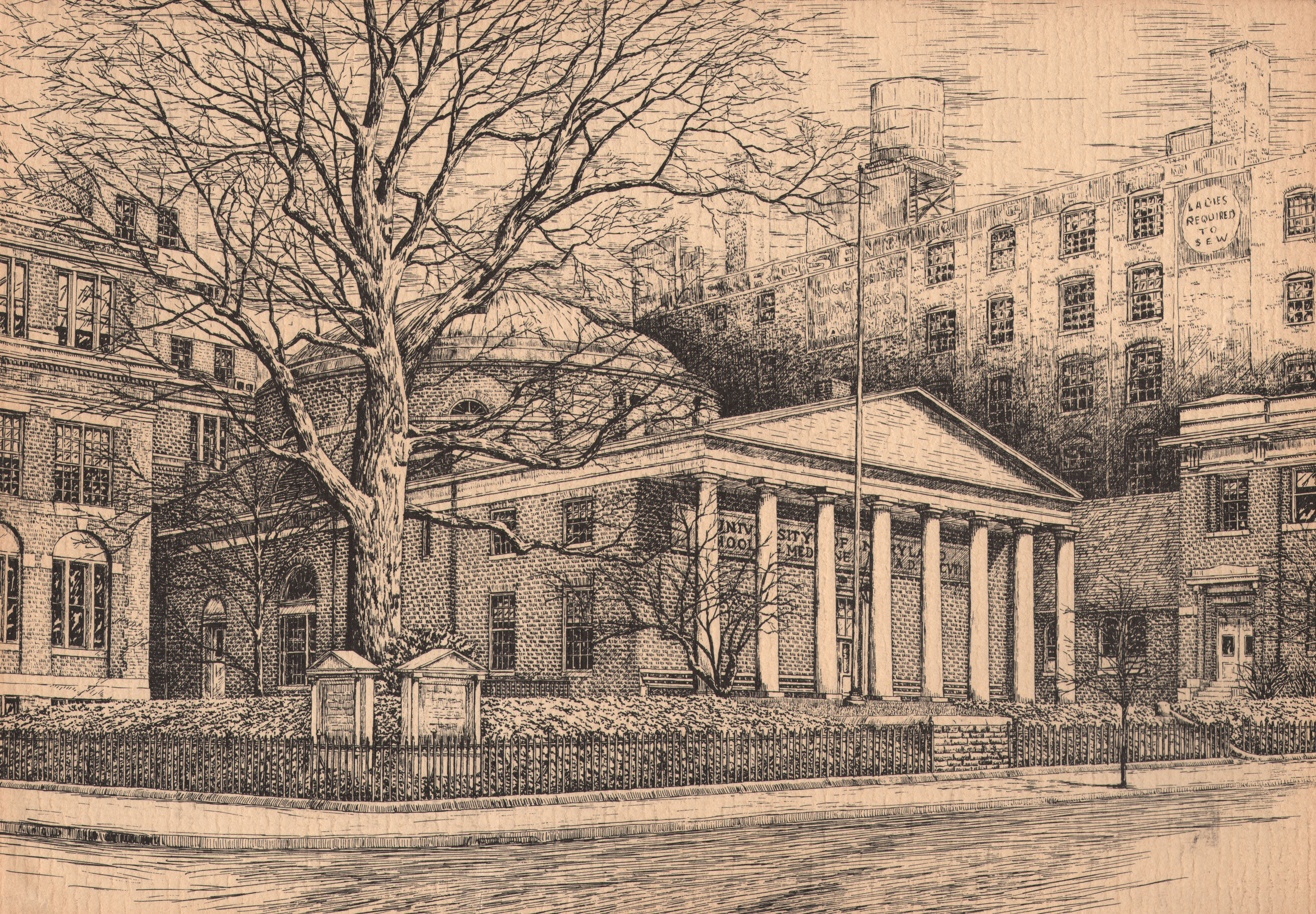
A Matter of ClassesOne of the jewels in the crown of the research for my novel, The Secrets of Dr. John Welles, is a class schedule from the University of Maryland for 1922. I could not have been more pleased with the delivery of this item into my possession than if I had asked what the Queen of England ate for dinner on May 28, 1997, and been told not only what she consumed but how well she like it.

Let this exaggeration serve to convey exactly how pleased I am. When I began my research, I had absolutely no idea how I was going to discover what classes and labs doctors in the 1920s were required to pursue or for how long. I only had my knowledge of modern day medicine to fall back on, and that simply wouldn’t do.

Douglas Skeen, who at the time of my research was employed at the Maryland Department of the Enoch Pratt Free Library in Baltimore, Maryland, and hopefully still is, is responsible for locating the bulletin and sending it to me as a PDF. I sincerely thank Mr. Skeen yet again for performing his role as a Reference Librarian above and beyond my expectations.

I created the Research Road portion of my blog with the express purpose of sharing what I discovered with other writers. I don’t know how many others may need similar information, but I will allow you to stand on my shoulders as you search for it, and I’ll hold your ankles to balance you as you do. With that being said, please enjoy the attached PDF of the Bulletin of the University of Maryland School of Medicine and College of Physicians and Surgeons, Vol. VII, from July 1922. At the very least, I hope you enjoy the walk through history.

UM Bulletin Vol 7 July 1922

Reading Like a Writer by Francine Prose

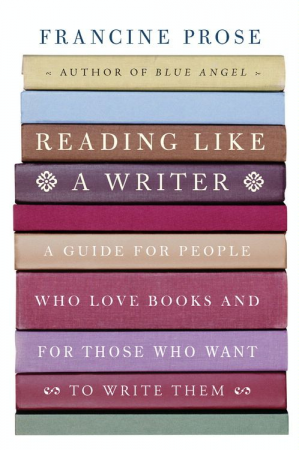
I first spied Francine Prose’s book, Reading Like a Writer, while shelving at my former job. I sneaked a few moments to read the first few pages and Reading Like a Writerinstantly fell in love. The sentence that resonated with me, “Like most–maybe all–writers, I learned to write by writing and, by example, by reading books,” combined with, “Long before the idea of a writer’s conference was a glimmer in anyone’s eye, writers learned by reading the work of their predecessors,” confirmed for me that I had found a kindred spirit. Her passion for reading and writing and the process of learning by indulging in both was the best piece of advice I had ever heard. Mrs. Prose’s comments awakened in me what I always believed to be true: great writing is an organic process that comes from creating beyond outlines and plot-pointed structures with perfect character arcs.

Great writing begins with close reading and follows with careful consideration for every word that will become a sentence, which will become a paragraph. This isn’t to say that Mrs. Prose or I believe writing should be utter chaos without any structure, but I trust if one applied her approach to their own writing, he or she would see amazing growth in how they create characters, employ narration and dialogue, and present details and gestures.

Woven throughout the book are examples from great writers that will back up what Mrs. Prose is teaching. You don’t need to be familiar with these authors or their works to appreciate them. Another reviewer I read proclaimed his dislike for Mrs. Prose’s book because he didn’t know any of the referenced works. I suspect he thought Mrs. Prose was being pretentious; I encourage you not to be intimidated by her knowledge but rather delve into the suggested reading list as soon as possible.

Another aspect of the book that appealed to me is Mrs. Prose’s admission that while there are rules in writing for the express purpose of guiding us, rules are, essentially, meant to be broken. And if you’re brave enough to ride off the reservation of writing rules, make sure you’re breaking them brilliantly.

Regardless of your preferred writing style or approach thereof, I highly recommend reading Francine Prose’s book. I would be truly surprised if you didn’t take away something positive from the experience.