A Vision in Red

I woke up this morning thinking about the red glass rabbit. The memory must have ridden in on the tail end of a wild night of dreaming because I haven’t thought about her in decades. In my mind, she still holds center court among the animal figurines sitting on my great aunt’s kitchen windowsill in Tennessee.

My great aunt never hesitated to let me play with what I believed were her most treasured possessions. For this reason, I took great care not to break any of the inch and a half tall animals in the collective herd. There was a goose and a deer among the group, but my favorite was the solid red, blown glass rabbit with two miniscule dollops of white glass for eyes. She was perfect.
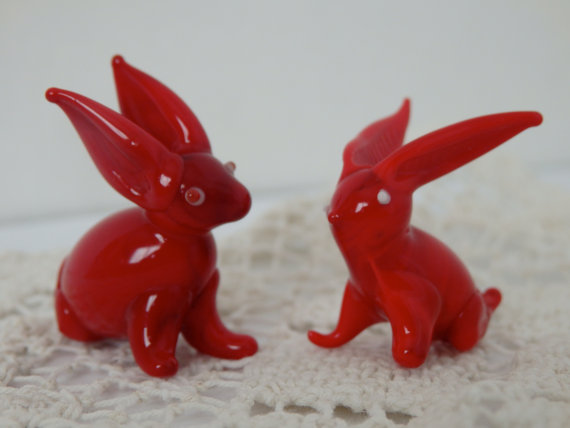
Red Glass RabbitThe red glass rabbit starred as the heroine in all my adventures played out on the kitchen table. She forever needed rescued by the other animals led by her boyfriend, the deer. I’m pretty sure I named him Bambi; I don’t recall what I named the rabbit. Every scenario, in which I imprisoned her in a tiny basket, ended with her being declared queen, a title she graciously accepted.

Occasionally, her liberation depended on the assistance of my great aunt’s salt and pepper shakers. There were four of them, two couples of different size, reminiscent of the man on the Cream of Wheat box and Aunt Jemima. These shakers are the type of item labeled Black Americana today and are found in antique stores and probably homes south of the Mason/Dixon line. I could be wrong about that, though.

During one summer visit to my great aunt’s home, I was horrified to discover that since the last year, someone had chipped the ear of the red glass rabbit. My great aunt didn’t seem as upset as I believed she should have been. She said either she, or my great uncle, or her mother probably knocked the rabbit off while washing dishes. My thoughts fluctuated between relief that it wasn’t me who caused the mar and appreciation that the damage could have been so much worse.

My great aunt broke up housekeeping several years ago after my great uncle and her mother passed. She sold the home and large items in Tennessee, bestowed smaller goods upon close friends, packed up the rest, and moved back to Ohio. It was good to have her home. I asked about the salt and pepper shakers because I trusted their size ensured they survived until my adult years. Unfortunately, my great aunt had already given them away.

I never inquired about the red glass rabbit. I knew in my heart the tiny treasure had disappeared long ago. Before I stopped playing with my own collection of animal figurines, the red glass rabbit probably had her ears and toes chipped until she appeared in a sorry state. Or perhaps one tumble into the depths of the empty kitchen sink was one too many, and she had to be discarded.

Does it matter that my great aunt probably doesn’t even remember owning such an item?  Does anyone reading this even care? Who can say? All I know is that somewhere in time, a very talented glassblower created a beautiful red glass rabbit that brought immeasurable joy to a little girl.

Gold Plated

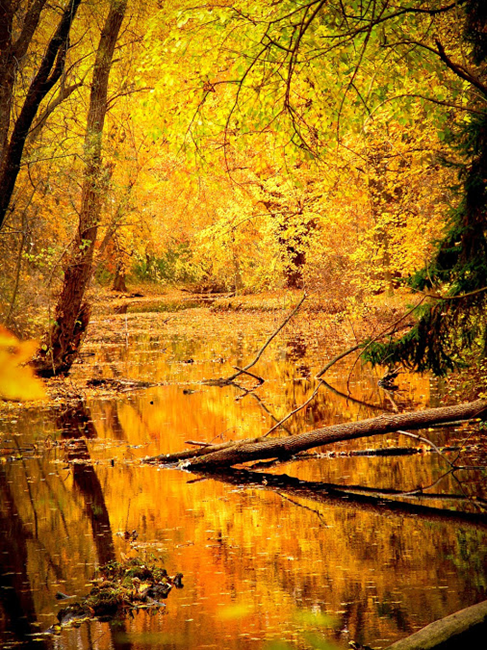
The following short story was based on the visual writing prompt of the swamp.  While everyone in my writing circle wrote lovely stories, mostly fantasy, that would delight readers of any genre, I took one look at the picture and decided upon a different tale.  I’ll withhold my comments on why I wrote what I did until after you’ve read this piece.  I want your unbiased opinion toward the story, so please be sure to leave feedback in the comments section.


Golden Swamp

Gold Plated

Zach stomped into the clearing and threw his book bag on the ground with all the force he could muster. He proceeded to kick it hard, heedless of the laptop inside. Two more kicks landed the black canvas satchel on the edge of the marsh.

Frickin’ parents,” he screamed, straining his chest with the force.  It was the closest his upbringing would allow him to swearing.

He collapsed on the damp leaves, his legs crossed awkwardly beneath him, the sound of blood rushing in his ears, and sat perfectly still until his heart stopped racing and his ragged breathing slowed.

Feelings of self-pity began to sting Zach’s eyes, but he refused to indulge in tears. Instead, he stood to retrieve his book bag from the water. Soggy homework, folders, and the papers he had stolen that morning from his father’s desk were removed and littered across the forest floor. He inspected his laptop for damage. Moisture hadn’t seeped into the computer case which had been shielded between his algebra and chemistry books. The books had not fared so well; water leached an inch into the pages, darkening the edges all around.

“Whatever,” he mumbled, stuffing the laptop and ruined books back into the bag.

Zach slung the bag over his shoulder and took several deep breaths. For the first time, he observed his surroundings. The beauty of the golden foliage sickened him.

“Looks like freakin’ King Midas has been here. Too bad it’s so wet. This place would look great going up in flames.”

His mouth curled upward in a lopsided sneer, and his fingers caressed the lighter in his pocket.

The blaze would have been spectacular. Even though there wouldn’t be any witnesses, these events had a way of producing detailed accounts. People would be enraged when their forest succumbed to destruction at the hands of an unknown arsonist. They would swear they had seen the culprit and go so far as to describe him. Ripped jeans, a dark hoodie, both arms tatted up, and multiple piercings would be just a few of the descriptors they used when speaking with the local media about the tragedy. They would mention the exact brand of designer sneakers worn when the vandalism took place. Someone would inevitably mention that drugs were involved…probably.

The worst liars would make subtle remarks that cast aspersions on the perpetrator’s possible ethnicity.

Zach sighed, his anger spent. He brushed leaf litter from the front of his school blazer and swiped the sides of his mud-crusted dress shoes in a patch of grass. Then he pulled his iPhone from his pocket to check the time. He still had an hour before he had to meet Kevin at the library to study for the AP Chemistry test.

One more deep breath enabled him to set out for home where his parents, oblivious to his delayed arrival, would be absorbed in their own pursuits. The scent of decaying leaves reminded him of a smell somewhere between the cherry tobacco in his father’s pipe and his mother’s compost heap. A small flame of resentment flared in his heart, but Zach refused to let it take hold.

“Let ‘em divorce,” he said. “See if I care.”

Night Flight

9c019efa-62b4-49a3-8d25-06bde493c6e7The rhythmic drumming of hooves from a single horse is followed within thirty seconds by the chaotic stampede of many horses. Branches slap the riders’ faces as they race beneath the low branches in pursuit of a lone horseman.

The forest reverberates with the sound of man and beast: leather saddles creaking, hilted swords rattling, shouts from the pursuers, and powerful blasts of breath from their steeds. All of it fading, fading into the distance as the last of the leaves disturbed from the branches glide silently to the ground, touching earth without so much as a sigh.

Belsante leans her whole body against the wet bark of the tree behind which she hides; her dress draws the moisture like a man dying of thirst. She presses her palms and cheek into the bark until it imprints her skin, but still she does not move. The rasp of her breath, steel against whetstone, swells and recedes in her ears.

Theobald left her with the promise of return and a scrap of cloth, the corners cross-tied into a knot, wherein he had placed a chunk of bread and a leather flask of wine. He barely had time to kiss her goodbye before he mounted his stallion, Saracen, and led her father’s retainers away from her hiding place.

They agreed that Belsante should make her way to the very abbey where her father planned to have her imprisoned upon learning of her desire to marry Theobald, a mere merchant’s son. It’s not that Belsante isn’t devout toward her faith or unwilling to attend the needs of the poor; she simply wants to marry the man with whom she had fallen in love and not the aging Duke her father had chosen for her. Furthermore, her father would never think to look for her there.

The Abbess, a kind woman with a progressive mind, doesn’t believe in making a girl serve against her will, no matter how generous the endowment from said girl’s father. The young lovers trust her to help in their plan to escape France. Where they’ll go and how they’ll make a living afterward is anyone’s guess. Theobald had proposed selling Saracen, the only thing of value he possesses, but the couple doesn’t know how to go about doing so without attracting attention.

When she can no longer hear the sound of hooves hammering the ground, Belsante peeks around the tree trunk. Twilight and mist dim the woods; she will need to hurry if she wants to reach the abbey before she is caught. The threat of wolves hastens her steps.

The young girl travels throughout the night, and as dawn approaches the horizon, she sees the walls of the abbey on the edge of town. She also sees her father’s men leading Saracen, his mouth flecked with foam, his sweat-glistened sides heaving. Theobald does not sit astride the majestic, black horse who limps as he walks.

Belsante cannot hear the conversation between her father’s men and the Abbess, but she can tell from the determined shake of the Abbess’ head that she is aware of the night’s events. With much hand gesturing, the elderly woman encourages the men to leave, convincing them that Belsante is not within the walls of the abbey.

Again, the distraught girl must hide among the trees until the men leave. She emerges to see the Abbess waiting for her; a gentle beckoning draws Belsante from the woods. The Abbess’ arms are open, and the weary girl falls into them, weeping.

“His mount threw a shoe. They overtook Theobald before he could escape,” the Abbess says.

“They rode him down like a dog,” Belsante cries, her voice anguished.

“What will you do, my child?”

Belsante lifts her tear-streaked face from the Abbess’ ample bosom.

“Do you know where they have laid my love?”

“His body has been returned to his family. He will be interred in the cemetery of the town where they reside.”

Steel stronger than any blade enters Belsante’s body as she stands before the Abbess, shoulders rigid, head held high.

“I will take holy orders. My life will be given to serve those among whom Theobald lived.”

The Abbess’ eyes look down and away; she knows the impetuousness of young women often fades once the hardships of life in the abbey become apparent. When she looks into Belsante’s face, she observes strength born of loss. The old woman nods her head in agreement.

“Welcome, my child.”

Simply Walking

Blue-white diamond sunlight filters through the meager canopy of branches. Wet leaves dampen the sound of Rachel’s footfalls and cling to her bare feet. Her arms embrace each other, hands rubbing away her shivers and prickled flesh. The salt trails of her tears dry on her face leaving her skin taut.

5077bd7e-718c-42b8-b79a-0092083d321eStars littered the sky when she walked away from the house full of grief-stricken people; so many family members and friends sitting shiva for her parents. Her little brother, Bartholomew, huddled in an overstuffed armchair in the corner of her grandparents’ living room. His wide eyes searched the room for the hugs and kisses that never came. Eventually, he fell asleep.

The forest stands in stark contrast to the house she left. In the stillness of the woods she can hear her own heartbeat, her own breathing, and the rhythmic sounds soothe her. If she had brought Bartholomew, he would have peppered her with the endless questions of a five year-old. “Are Mom and Dad in Heaven? Who will we live with? What color was the truck that hit them? Was our car wrecked? Why aren’t you wearing any shoes, Rachel?”

And like she has done for the past five days since her parents were killed en route to the pediatrics conference in Florida, she would say, “Yes, Bartholomew, they are in Heaven. We will stay with Nana and Papa. It wasn’t a truck; it was an RV. We’ll get a new car in two years when I’m old enough to drive.”

As for the last question, she would have encouraged him to remove his socks and dress shoes, to feel the cool earth beneath his tender feet if only to distract him from his sadness. But he isn’t with her, and her sorrow hangs heavy in the dewy morning air.

Watching, Waiting

0cb3d7c0-6e1e-494d-9835-e17446c0ebca

I hover in the massive cloud, watching the man whose life had been entrusted to me. He doesn’t believe in me, but then he doesn’t believe in the One who sent me.   This fact does not have an impact upon my mission, although it grieves me terribly.

Before I have the opportunity to settle in and observe, I sense my fellow messenger, Tefilah, passing on his way to the Throne Room. He carries a sacred prayer box constructed of wood taken from a tree to which Humans no longer have access. Tefilah pauses beside me; I can tell he wants to talk.

“Delivering prayers to the King, my friend?”

“Many more requests these days. I think Humans have forgotten how to give thanks.”

I nod in agreement and to indicate the Human I am watching. Tefilah looks where directed.

“How long have you been guiding this one, Merea?”

“Since his birth, but I’m not guiding, not even influencing in any way. The Creator was precise in his instruction when He said to simply make sure this one fulfills his purpose.”

Telifah draws back for a moment, as if he knows he should complete his task but desires more information.

“Who is he, Merea?”

“The one who will broker peace between the Creator’s Chosen People and the World.”

No–I can’t believe it. You’ve been given the assignment of watching the False Peacemaker? But you’re just a–”

Tefilah looks stricken over his blunder, but my laughter moves the cloud around us, allowing shafts of light to reach the Human beneath the tree. The Man mistakes my mirth for a change in the weather.

“Fear not, my friend. I know I’m just a choir angel, but this man was just a teacher when he started. Look how far his ambitious writings have brought him; the whole world listens to what this Man says. I have followed him for forty five of his years through every church, cathedral, temple, synagogue, shrine, and mosque across every continent as he looked for ways to thwart the Master. He thought he was seeking, but his heart…”

“Already hardened,” Tefilah finishes for me. “Does Michael know?”

“Michael is the one who ushered me into the Ruler’s presence when I received my assignment.”

“Why isn’t Michael overseeing this task?”

“He’s busy battling…”

Neither of us is willing to say the name of that Fallen Angel.

“I worry, Merea, that your task will not be easy. We both know how this ends.”

Tefilah points to the vile form of Tsalmaveth moving like an oily shadow, lingering among the branches of the tree under which my charge stands, waiting to descend upon him during a moment of confusion or distraction and hasten in the Fallen One’s plan before it is time.

“That demon is nothing more than a minor irritation. I’ve already run him off ten times in this moon/sun cycle.”

“Still, Merea; don’t underestimate his power.”

“Do you really think Tsalmaveth has the ability to deny our Sovereign His due glory?”

“Of course not. It’s you I worry about.”

“I admit that as our battle grows in intensity, I sometimes wish Michael would take over my obligation. But, I also know that the Maker would not have given me this task if I wasn’t capable of completing it.”

Tefilah moves closer, reassuring me with his strength and presence.

“I wish more Humans had your faith, Merea. It would make our job so much easier if they just relied on the King the way you do.”

Tefilah leaves me, but I know I’m not alone. None of us, whether Human or Spirit, can ever be out of the Holy Presence. I take comfort in this fact, for even as I recall it, I sense a change in my Human. I do not possess the ability to see into Men’s hearts, but I can witness the alteration to their countenance, the look that comes into their eyes, when a decision has been made.

The time has come. I honestly did not think it would be this soon, but I haven’t a moment to spare. I gather my wits about me, my sword, and my shield. I feel the growing darkness even as the clouds split and Michael leads the Heavenly Host forward to guide me back to Heaven. Our final battle is just beginning.

Lesson Learned

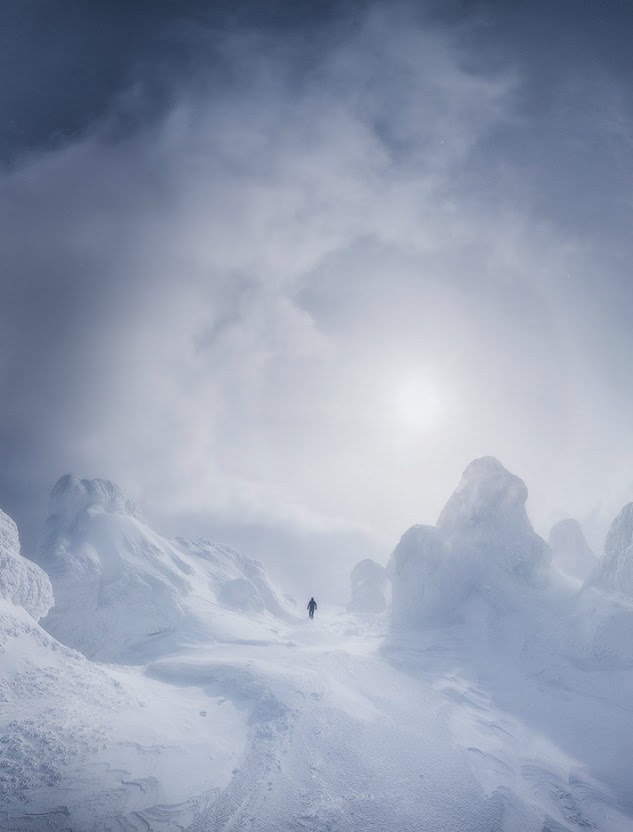
The White Silence - Photography by Daniel Kordan www.korzhonov.ru Otorten mountain, North Ural expedition. This mountain located very near to the Dead Men MountainJust don’t walk away from the group. How foolish to disregard the common knowledge every school child learns on their first field trip as they stand in pairs, lining up for the bus, wearing color-coded tags matching the one worn by their bathroom buddy.

He forces himself to stop thinking about the bathroom again. Gary would give anything right now to strip down and relieve himself, but exposing his skin to the biting wind would probably quell the urge to go anyhow. He chuckles at the only funny thing about his current situation.

With shrugged shoulders and head down, he presses on toward an unknown destination. Every labored step should take him closer to base camp. Damn this snow sucking at his legs, dragging him deeper and deeper.

Another pause to examine his surroundings reveals an unforgiving landscape that looks the same in every direction. The breath of cold air crystalizes in his mouth and sears his lungs. The dark glasses he wears are no longer sufficient against the knives of sunlight off snow. Pain hammers his temples, his eyes flood with tears, and he swears he can hear a sound like the strain of violin strings being misused. Panic swells in his throat like bile, but he swallows it and marches on.

He knew he was the Christa McAuliffe of the group. What business did a linguist from Manchester, England, have traipsing around a polar expedition when all his life he eschewed the very idea of camping? Days spent reading ancient texts and lecturing at prestigious universities formed the core of his existence.

His presence had been secured by winning an online contest. He knew he’d win even as he manipulated the English of his 500-word essay, fashioning a convincing reason why he was essential for the mission. Persian or Tamil would have made for a more interesting read. There certainly isn’t anyone in this godforsaken wasteland that requires the expertise of a linguist. Even the Russian chemist among the group speaks a decent form of English gleaned from YouTube and vintage MTV.

How arrogant he had been to believe that studying ancient languages had actually taken him somewhere no one else had ever been. He’d never set foot in any of the countries that gave rise to his beloved languages, never ventured beyond the stone buildings on campus. And why should he when his ego assumed there wasn’t anything anyone could teach him that he didn’t already know?

Nightfall slowly drapes her cloak across the sky, but he cannot tell; he is snow blinded. The falling temperature penetrates the wolverine lining of his gloves and boots, needling his fingers and toes. He no longer feels warmed by thoughts of home, school, or survival. Did he step away to prove that he could find his way back? He isn’t a risk taker. Never once did he desire to jump from a bridge tied only by a bungee cord around his ankles. Not even skydiving with a professional could lure him from the safety of Mother Earth. He laughs at fools who swim with sharks. Who’s laughing now?

Gary is the child tempted to see what happens when you stick a metal hairpin in an electrical outlet. The shock is not at all what he expected. He travels without the benefit of map or compass in a land he does not know and cannot navigate. Nothing in his education or experience prepares him for the classroom of life. Just don’t walk away from the group. Well, lesson learned.

Why You Should Be Writing Short Stories

Sometimes the attitudes toward various aspects of writing boggle my mind. The two most recent are short stories are not worthy of our attention and the omniscient point of view has fallen out of favor. No sooner will I come across one of these narrow-minded statements, I’ll discover someone being recognized for doing them brilliantly. The same people who make these statements will then laud said brilliant person, and the rest of us flock to be like them. Really?

Today, I’m going to focus on the short story issue. I cannot image chucking any form of writing because the proverbial they have declared it no longer fashionable. What is this, writing high school where we all want to be in the popular clique?

images (3)I am bothered by the fact that frivolous trends, like those that, in my opinion derived from my perspective, define fashion, would also dictate the world of writing. Are we going to allow ourselves to be misguided and limited by believing that everybody should be writing in the same style and format? Or am I wrong in believing that writers are above this?

True, we can grow in our chosen art form, but it would be to our detriment to forget, abandon, or leave untried other styles and forms of writing. There are many reasons why the short story should be explored by the novelist and poet. In turn, writers of short stories will benefit from attempting a novel or poetry. Perhaps this stems from my being a proponent of cross training in the work place or the fact that short stories are where I first tried my hand at writing.

In any case, I hope you enjoy the following posts on why you should be writing short stories. Your feedback on these articles, as well as critiques of my own writing under the Read & Relax tab of my blog, is most welcome.

An Argument for Writing Short Stories

The Power of the Short Story

Diamond in the Rough

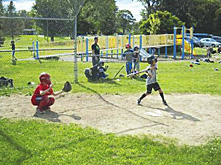
Diamond in the RoughHe stared at them through thick lenses distorting the size of his eyes. West Texas heat shimmered up from the ground, obscuring the face of every kid standing on the far side of the baseball diamond spray painted on the dirt. The white lines zigzagged in places where the finger depressing the nozzle of the paint can had grown tired.

As he sized up the other players, he noticed there were several girls among them. One of them had her ball cap pulled so low she had to tip her head back to see out from underneath the brim. She blew a large pink bubble. Particles from a plume of dust kicked up by a sudden breeze stuck to the gum. She sucked it back into her mouth to resume chewing, crunching dirt and all.

The boy looked too big for a twelve year-old. He knew how he appeared in the short, striped tee shirt revealing his soft brown belly and the glasses meant for a senior citizen. He figured it’s what kept them from motioning him to come over. But he didn’t have anything to prove to anyone. Most of them had seen what he could do with a ball and bat in gym class.

Besides, none of them owned cleats let alone a real uniform with sponsorship from some local pizza shop emblazoned on the back of a bright orange or green shirt. There were no freshly pressed baseball pants among this crowd of imitators smacking their dented aluminum bats against the bottom of their Goodwill Nikes. Their gear consisted of worn out relics discarded from the Y. In this respect, they were all equal with the exception of one detail.

He owned his own bat. It was the best part of him, an extension of his true self. With care he swabbed an alcohol-soaked cotton ball across the wood to remove excess dirt before massaging it with linseed oil. The treatment was stringent but soothing, not unlike his own personality. Every night he stored the bat handle side up in the cool, dry closet of his concrete block home.

With confidence as solid as the maple bat he held in both hands, the boy walked over to where the bottom of a blue plastic milk crate marked home plate. He informed them in a voice as deep as a grown man’s that he would captain one team and didn’t care who led the other. Braced for their rejection, his shoulders relaxed when they nodded their reluctant agreement.

Every kid stood taller, straighter, to ensure they were not chosen last. With nods and waves as subtle as those at an auction house, players were selected until they stood in a ragged group behind their respective captain. Each silently swore allegiance to their leader simply because no one wanted to be on the losing side. They would expend every ounce of energy to secure a victory regardless of who led them.

Someone’s lucky Mercury head dime flashed in the air, tails was called, and the boy said his team would take the field. A few skeptical glances were cast in his direction, but he reassured them that if they were down in the ninth inning they would want to be last at bat. Not that he planned on being behind.

With a touch of swagger, he left his precious bat in the care of the only girl in a dress as she sat on the swaybacked, wooden bleachers. Then he selected a glove and ball from the pile. He took the mound with authority, made eye contact with his first, second, and third basemen, nodded to the catcher, and caught the first batter off guard with his best four-seam fastball.

When several members of the other team cheered as their own captain struck out, the boy knew he had made friends and enemies. He also knew he would be invited back if only for the sake of a rematch. That pleased him; bruised egos made for good opponents. He wished he had the money for a round of Slush Puppies. It would probably help to ease the sting of defeat. Since it wasn’t an option, he focused instead on earning their respect rather than buying it.

Cryzzk’s Journey

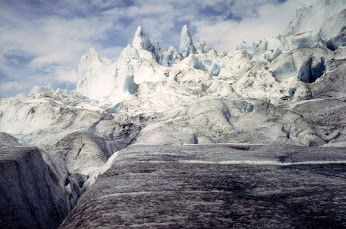
I do not write fantasy.  I repeat: I DO NOT WRITE FANTASY.  And yet, when I saw the picture below, a visual writing prompt from the writing circle to which I belong, a fantasy story popped into my head.  Go figure.

Fortunately, I didn’t have to ‘world-build’ because I used good ole Earth as is for my setting.  My main character was also somewhat created for me.  His story is all mine though.  Enjoy!

glacier-138994_1280

Cryzzk’s Journey

Yeti, Sasquatch, Abominable Snowman, Bigfoot, Offspring of Fallen Angels, Marked of Cain–all the stupid names Humans have attached to his kind. Their own unfounded fears put fangs in his mouth and claws on his hands. Their so-called encounters were nothing more than staged hoaxes. Occasionally the drunken fools would tangle with an ape or bear and blame it on him. Him, the last of his kind for at least five hundred years.

Cryzzk cannot keep the angry thoughts from tormenting his mind as he walks through the frozen land to which he has exiled himself. No longer can he tolerate foolish Humans. They were never really a threat to anyone but themselves. In their ignorance and superiority, they denied what his people had to offer. Gifts of healing and knowledge on how to preserve the Earth could have been theirs.

He continues to trudge through the waist-deep snow, never looking back, always pressing forward. The drifts yield to his strength like dust before a breath of wind. He drags his fingertips, the only part of him devoid of fur. Ten even trails flank the ruts made by his powerful legs.

“Let them figure that one out,” he says to hear the sound of his own voice in a land free from the pollution of noise.

He doesn’t break stride when he reaches the slushy river, plowing through to the other side. Ice and water are shaken from his fur as he keeps on walking. The elements are unable to penetrate the many layers. Cryzzk is warm despite the freezing temperature. Loneliness is the only thing he cannot keep at bay. It penetrates his very being the way the icy winds burn his lungs, an indication that he is getting older. It was his choice to remain alone after Moerge died. He still misses his mate, knowing she would scorn his solitary life.

“It is our responsibility, Cryzzk, to ensure the Earth goes on. Keep reaching out to Humans. One day they will accept us and our gifts.”

It was Moerge’s mantra until the day she died from mercury poisoning. Cryzzk blames Humans. It is why he must continue his journey alone.

Peace by Proxy

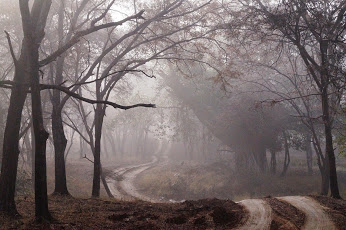
The following piece of flash fiction was written based on the visual writing prompt below.  It wasn’t the original idea that came to mind, but it is the one with which I was most pleased.  I have been writing flash fiction lately for a writing circle contest.  I hope you enjoy my latest installment.

dirt-road-427913_1280

Josiah watched the soldier march up the long road snaking across his property. Fog shrouded the young man, but his uniform and unique helmet marked him for a Brit. When he reached the front porch, he stopped and saluted smartly.

“Excuse me, sir, does Jenny Coates live here?” the young man asked in a Cockney accent.

“No, son, she doesn’t.”

The soldier chewed the inside of his mouth, narrowed his eyes.

“All right then. I’ll ask at the next house.”

He disappeared around the side of the house as the screened door creaked open. Josiah’s wife, Kathleen, stepped out carrying two cups of coffee. She handed one to her husband and scrutinized his pale face.

“You saw the soldier again, didn’t you?”

“Yep,” Josiah admitted. “He just left.”

“Why do you think he keeps coming here?”

“I suppose his ghost is attached to that old Lee Enfield I bought for my collection.”

“Why don’t you sell it at the next gun show?”

“I can’t. I have to find out his name and why he’s looking for this Jenny.”

Kathleen smiled into her cup. She took a sip and asked, “You aren’t afraid of him, are you?”

Josiah snorted. “He’s just a boy.”

“A boy who’s obviously been dead since World War I.”

Josiah sighed and turned up the collar of his Carhartt against the November chill. Kathleen sat beside him on the glider, setting it in motion.

“You believe you can bring some peace to this boy, don’t you?” she asked.

“If not him, then perhaps me.”

“It won’t bring our son back, Josiah. Tommy’s sacrifice in Afghanistan–”

“Look, Kath; if Tommy is out there wandering, his ghost attached to some piece of gear, wouldn’t you want people to do right by him?”

“Let’s start with the initials R.W. carved into the stock, okay? We can trace it back through dealers next.”

Josiah squeezed his wife’s knee.

“Thanks, babe.”