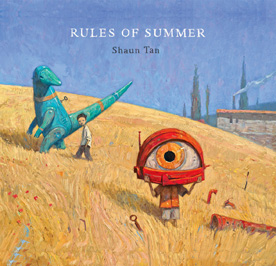
The Rules of Summer by Shaun Tan

People who know me are aware of my love of books but may not know that I enjoy picture books every bit as much as novels and works of non-fiction. For those who don’t know me, start here (My Love Affair With Books).

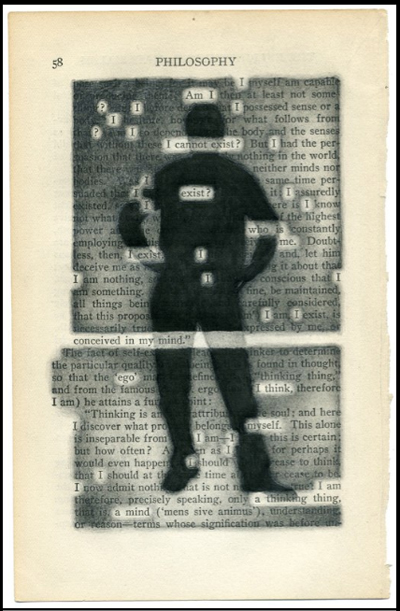
The Rules of SummerA couple of weeks ago, as I shelved picture books in the children’s department of the library where I used to work, I discovered Shaun Tan’s book, The Rules of Summer. The unusual artwork on the cover immediately caught my eye, and I indulged in a few stolen moments to read the book. What a treasure.

The lean text tells the story of two brothers and the unique and arbitrary rules that govern their summer. The pictures, semi-abstract creations in oil and acrylic, relay a deeper story about the nature of the boys’ relationship.

I believe the story speaks volumes about how people treat each other whether they’re children or adults, friends or family. It’s testimony to how far we will go in our relationships and exactly what we’ll tolerate and for how long. This may sound heavy for a picture book, but the beauty of the subtle message is that there is hope even when human nature ensures that this process repeats itself. When it does, we learn and grow, love and forgive.

I’ve already enjoyed reading The Rules of Summer five times and have decided that I must own a copy for my private library. The book as a whole is an incredible work of art, and I’ll never tire of sifting through the many layers of the story, both words and pictures.

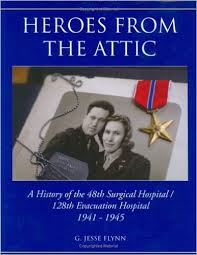
Heroes From the Attic by G. Jesse Flynn

Heroes From the AtticOne of my favorite books, and a feather in the cap of my private library, is Heroes From the Attic by G. Jesse Flynn. I first learned about the book while interviewing participants from the Conneaut D-Day Reenactment this past August. Lisa Merzke, who portrayed a nurse, suggested the book because it explained in detail about the creation of the first MASH unit, the 48th Surgical Hospital, which was later reworked into the 128th Evacuation Hospital.

I obtained an excellent copy of the book and was thrilled to discover the author’s signature in the front cover. Although the inscription isn’t addressed to me, I couldn’t have been more pleased that I owned a signed copy.

Mr. Flynn was prompted to write the history of the 48th/128th upon learning about his parent’s involvement with its formation. Through interviews, letters, diaries, and pictures, Mr. Flynn has constructed a thoroughly detailed accounting that answered my specific questions with such precision that at times I believed the book had been written for me.

As well written as the history is, what truly endeared me to this book were the personal accounts of the members of the 48th/128th. Through the letters of Nurse Lt. Margaret Hornback, the diary of Dr. Leonard Schwade, and individual testimonies of various other members, one gets a true sense of what these brave men and women experienced and how they felt about it.  In an event that, God willing, we never allow to be repeated, members of the 48th/128th often learned on the job but never missed a beat, and they set the high standard of quality by which other units were formed and trained.

I am forever grateful to the doctors, nurses, and enlisted men of the 48th/128thfor their selfless sacrifice. I also thank Mr. Flynn for collecting and recording their amazing history so that it will never be forgotten. Their stories and information helped me to accurately place my protagonist in the European Theater of World War II, and I hope they will graciously indulge my boldness in assigning Dr. John Welles to their most successful and exemplary unit.

Description-A Writer’s Friend or Foe?

dearada_typepad_com_dear_ada_images_2008_01_15_experience_261_artFellow author Mark Tilbury tossed out a question that is often on my mind as a reader and writer. In his post, Have Books Lost Something With Their Lack of Description, Mark asks us our opinion on today’s style of writing.

We’ve all encountered the “massive blocks of descriptive prose” to which Mark refers. Sometimes they truly are too long, too irrelevant to the story, too purple, etc., etc. I have skimmed such passages in search of the storyline and/or dialog that would put me back in the story.

However, because we’re all friends and adults here, I’m going to say that I disagree with the notion that description is informative but unnecessary. I hear all the time that the reader shouldn’t be led around by the nose; he/she should be given the opportunity to imagine the story. As an avid reader, I can honestly say that I have never felt this way about descriptive writing. On the contrary, my imagination was enhanced and grew because of the description I read including that written about journeys and the passage of time.

The key is that writers need to learn the perfect balance between too much and enough, the fine line between well-written, well-placed prose versus that which is encumbering, unnecessary. This seems like a daunting task, but I believe it can be achieved by not reducing writing to a formulaic method. In doing so, authors will elevate writing back to the level of artistic recognition it deserves.
85806_Ashford_1_122_526lo_122_526loI have never read Stephen King’s book, On Writing, but I would have to agree that abundant description about a character’s acne would be tedious. If that acne-plagued character traveled by canal boat from Pennsylvania to Ohio, then I would love the benefit of description. I would look forward to a word picture painted by the author that draws me in to the sounds, smells, and sights of the trip. It would be a perfect place to introduce traveling companions, a time for the protagonist to reflect, an opportunity to build the tension that so deliciously moves the story forward.

Even if none of the above-mentioned suggestions occur, as a reader I would still enjoy the mental images of traveling with the character, and I believe an important part of the writing would be lost if these well-written descriptions didn’t occur. As Mark mentioned in his post, they are an art form unto themselves. Like all art, value thereof still resides in the eye of the beholder, or in this case, the reader. Well-written description can exist purely for the sake of entertainment.

I have to wonder if writing hasn’t gone the way of food preparation in that we no longer know how to linger over a book in the same way that we forego multiple course meals and choose to patronize fast-food restaurants. I read because I enjoy the slower pace, and while there is a place in my fa9bbdedb5103e7f31a0893eff84ed56reading diet for the occasional literary Big Mac, more often than not, I opt for the balanced meal of description, dialog, prose, and narrative.
Now I don’t want to start a fight with screenwriters because I truly do appreciate their craft. However, using what worked in an action-packed movie and applying it to writing has resulted in fast-paced novels written with the singular hope of being turned into a movie. This has diminished writing for some of us. This influence has led to the removal of poetry and painting (mental images) from writing resulting in flat, hollows stories. Let movies be movies, appreciate them for all that they are; and let books be books, treasures not to be rushed through.
Recycling Before Recycling Was Cool

25bcf1fd2283ff81a59233bb01a448faDetails, details. They really can make or break a piece of writing. Too many and the passage is bogged down, too few and the reader will visualize what they choose, too gaudy and you’ll be accused of purple prose. But if you can capture a scene with the right amount of description formed by carefully chosen words, you will achieve Olympic writing gold. We’ve all experienced that moment when we sit back in open-mouthed awe of a perfectly crafted sentence that conveys exactly what we meant to say.

I recently experienced this during my fifth round of editing on my novel, The Secrets of Dr. John Welles. I needed to show the quaint but tidy lifestyle Lyla Welles maintained in her home. Her husband, John, is a farmer, and while the family does well enough, there isn’t money for frivolous luxuries such as lace curtains.

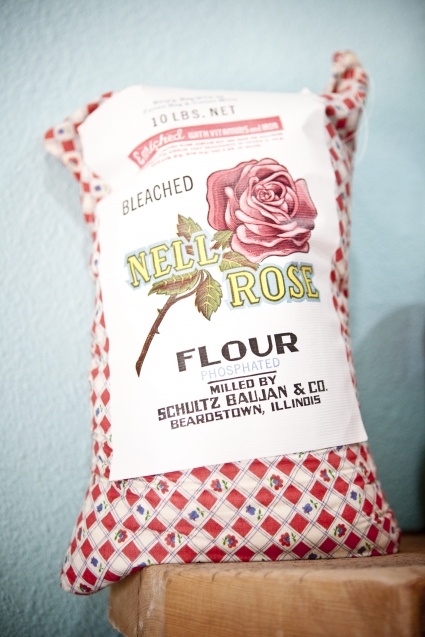
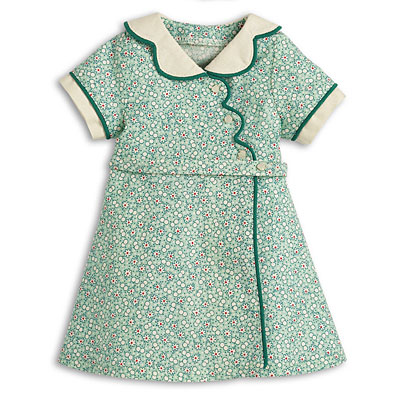
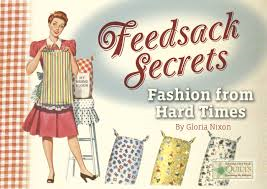
When I described what I wanted for the scene, my mother suggested feed sack curtains. Images of stained, coarse fabric crudely stitched togetherfeedsack-dress came to mind. Mother informed me that they were quite pretty and, in fact, feed sack was used to make dresses for little girls, tea towels, and aprons. I had to go in search of the fabric that could be used for such items while baring a name more plain than homespun. What I found prompted this post.

Ingenious women of low income reused the fabric from feed sacks for undergarments, curtains, pillowcases, etc. Initially, the fabric was white and without pattern. A company logo, which had to be scrubbed out or strategically placed on the homemade item, was the only ornamentation. These plain white feed sacks were probably what Lyla Welles would have used during the time period for the above-mentioned scene. I imagine her hand lovingly embroidering a simple pattern or trimming the edges.

It wasn’t until the 1920s that patterned feed sack became popular as a marketing tool. Women chose the products they purchased depending on the pattern on the feed sack fabric. Contests were held to design prints and artists were consulted to make them more appealing.untitled (5)

The following link from the Buchanan County, Iowa Historical Society provides a complete history on the evolution, popularity, and history of feed sack fabric. I recommend utilizing Google to see a myriad of garments and household items made from the repurposed fabric. There are even Pinterest boards and quilting forums dedicated to the humble feed sack.

The Homesman – Movie Review

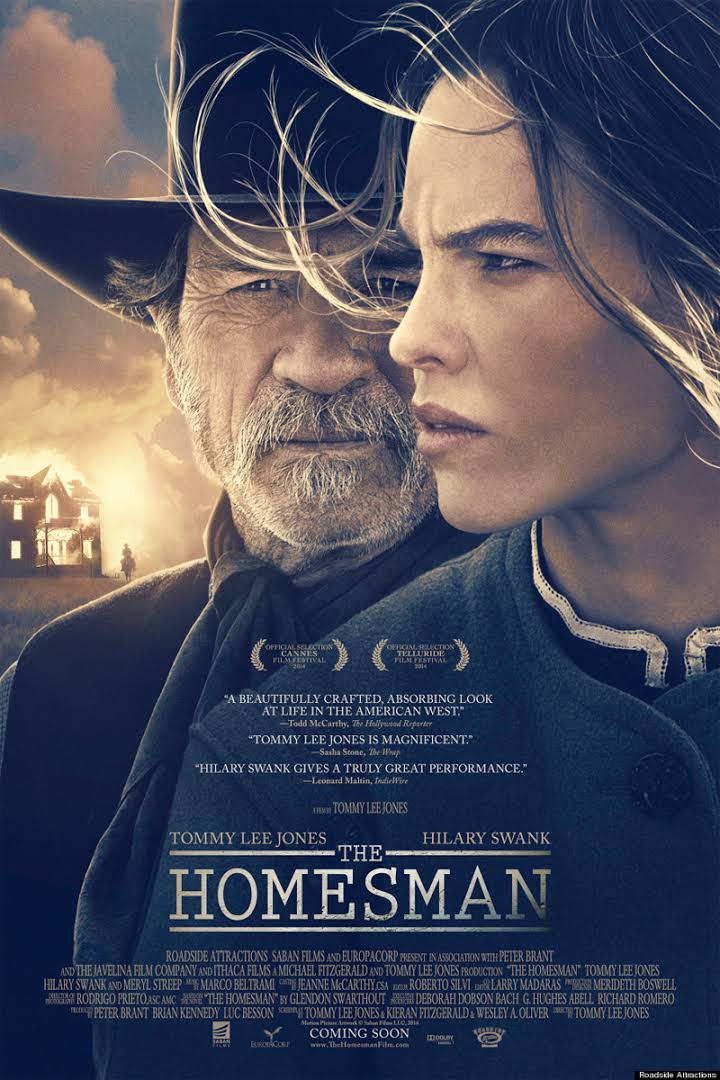
images (3)One of the best movies I have seen in a long time is The Homesman, directed by Tommy Lee Jones. Mr. Jones stars as George Briggs, a claim jumper saved by pious spinster, Mary Bee Cuddy, played by Hilary Swank. The performance of these two Oscar-winning actors is brilliant as they draw you in to the stark reality of life in the 1850s American West.

In return for sparing his life from hanging, Briggs is pressed into service as a homesman by Mary Bee. A homesman is someone who accompanies people back home when they become too ill to survive life on the plains. In the case of three women who have experienced hardships beyond their endurance, severe mental illness necessitates removal from their families.

There are harsh and disturbing images in the movie, but in the hands of a director like Tommy Lee Jones, they don’t come across as cheap, shock value scenes. Factor in an all-star cast of characters in fabulous cameos, an unexpected mid-movie twist, and visually appealing cinematography and The Homesman presents the makings of a classic film.

I don’t want to start a firestorm debate on book versus movie; however, I’m anxious to see if the novel lives up to the quality of the movie. I researched the novel and author and was pleasantly surprised to find that Glendon Swarthout is also the author of the novel, The Shootist, which inspired the 1976 movie and is best known for being John Wayne’s last film. Admittedly, I’ve never read a western, but I am interested to give Mr. Swarthout’s The Homesman a try if for no other reason than to see how closely the movie follows the storyline.

Let us not forget Marco Beltrami’s beautiful yet haunting musical score which perfectly matches the scenes from the movie. If movie music allows you to recall and relive the scenes as if you were watching them all over again, I believe the score deserves the mark of excellence. Marco Beltrami achieves this with a score that is powerfully subtle, always blending with the scenes rather than jarring you out of them, and certainly memorable.

Whether or not you are a fan of the western, I believe you will find The Homesman an enjoyable movie not to be missed.

Jim the Boy – Book Review

I am concerned that many readers, and not a few writers, have lost the ability to enjoy a story that exists purely to entertain. That unless a novel is outlined with on cue plot twists, pinches, and character arcs, the reader will dismiss the story as worthless. The only reprieve some books receive is to be classified as literary fiction.  Yet even this term will drive some readers away with the expectation of highbrow prose not easily understood. I blame this last fact on the current confusion that exists when we are expected to force every book into a specific genre.

Prologues, we are told, are anathema. One-sided conversation between characters is labeled an info dump. On and on the criticism toward books who stray from the above-mentioned criteria flows from reviewers, and again, I worry that excellent literature is being ignored or cast aside in favor of the high-tension, action-packed, reads-like-a-movie novel.

untitled (5)Sit down and let me tell you a story. Be still, and without interruption allow yourself to be drawn into the world of ten year-old Jim Glass, his widowed mother, and his three unmarried uncles. Set aside your technology, your resistance to everything you believe this story isn’t, and your expectations for a dystopian universe where children kill each other to survive. Slip back to a simpler time that existed during a difficult era, the Depression, and get a feel for what true social interaction means.

Live for a year with Jim’s family in Aliceville, a town that has been wired for electricity for years but has yet to receive the blessing of lights after dark. Attend the brand new school on the hill with Jim and be afraid that the converging of kids from all the closed one room school houses presents the terrifying and thrilling opportunity to make new friends. Enjoy the push and pull relationship between Jim and his best friend, Penn Carson, as they vie for playground supremacy. Listen to the family history, tall tales, and ghost stories told by the adults in Jim’s life.

If you can do this, long before you reach the last page of Tony Earley’s novel, Jim the Boy, you’ll have made lifelong friends, and you’ll feel as if you’re among kin. Or, sadly, you may dismiss the story as merely charming, quaint, and anticlimactic. That’s okay, too; no one will judge you for it because you probably won’t even realize you let a treasure slip through your fingers.

For readers who enjoyed Ivan Doig’s The Whistling Season and John Grisham’s A Painted House, I highly recommend Tony Earley’s novel, Jim the Boy.

Why You Should Be Writing Short Stories

Sometimes the attitudes toward various aspects of writing boggle my mind. The two most recent are short stories are not worthy of our attention and the omniscient point of view has fallen out of favor. No sooner will I come across one of these narrow-minded statements, I’ll discover someone being recognized for doing them brilliantly. The same people who make these statements will then laud said brilliant person, and the rest of us flock to be like them. Really?

Today, I’m going to focus on the short story issue. I cannot image chucking any form of writing because the proverbial they have declared it no longer fashionable. What is this, writing high school where we all want to be in the popular clique?

images (3)I am bothered by the fact that frivolous trends, like those that, in my opinion derived from my perspective, define fashion, would also dictate the world of writing. Are we going to allow ourselves to be misguided and limited by believing that everybody should be writing in the same style and format? Or am I wrong in believing that writers are above this?

True, we can grow in our chosen art form, but it would be to our detriment to forget, abandon, or leave untried other styles and forms of writing. There are many reasons why the short story should be explored by the novelist and poet. In turn, writers of short stories will benefit from attempting a novel or poetry. Perhaps this stems from my being a proponent of cross training in the work place or the fact that short stories are where I first tried my hand at writing.

In any case, I hope you enjoy the following posts on why you should be writing short stories. Your feedback on these articles, as well as critiques of my own writing under the Read & Relax tab of my blog, is most welcome.

An Argument for Writing Short Stories

The Power of the Short Story

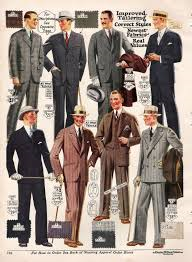
Wardrobe Selection

untitled (6)In yesterday’s blog post, When the Clothes Really Do Make the Man, I provided a link to a website for excellent information regarding vintage clothing.

Today’s trip down Research Road stops at a post by Liz Michalski on Writer Unboxed. In her article, Clothing Your Characters, Liz offers insight into why the clothing you choose for your character is important in how it relates to character development.

After reading Liz’s article, I stepped back for a moment to see how well I portrayed clothing in my novel, The Secrets of Dr. John Welles. There were a couple of scenes where the clothing my characters wore was important to the story, however, I may use the tips Liz suggested to create a more tactile feel to other parts of my story.

The Ever-Evolving Art of Writing

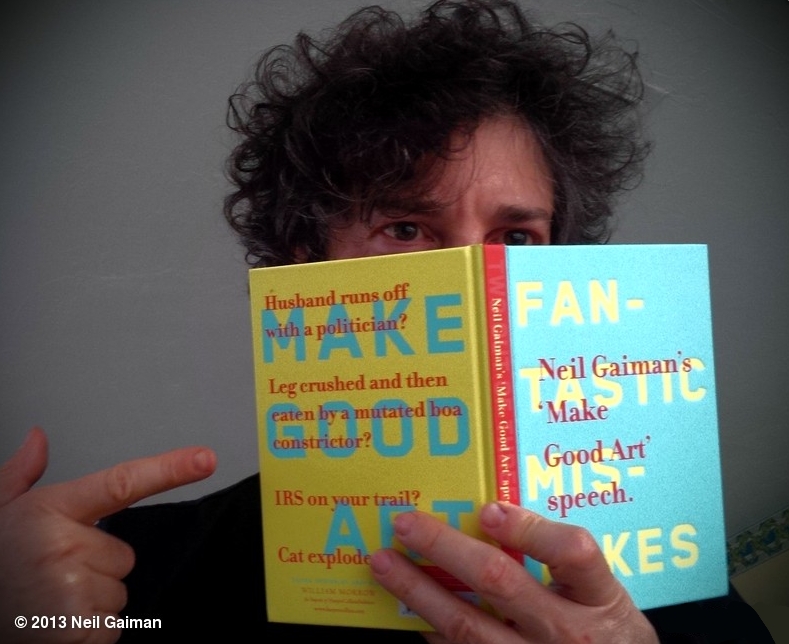
I remember the moment I understood that my writing is art. It came after watching a YouTube video of Neil Gaiman give a speech to a graduating class. Prior to that, I believed art was created by masters who worked a lifetime producing museum quality pieces. What a thrill to know that I am creating art.

makegoodart_gaimanBut my discoveries didn’t stop there. As I set out to, per Neil’s advice, make good art, I found that what I wrote kept changing. Fortunately, it changed for the better. I learned some things that I’ll definitely employ and other things that I’m sure will not work for me. One thing I came across, and have blogged about before, is pantsing versus outlining.

Let me clarify: I hate labels. Once you label something, you’re obligated to define it. After you define it, you must maintain it. This leads to the messy business of judging someone who doesn’t agree with your label. That causes more labeling of those who aren’t like you.

What I’m saying is, while I still adhere closer to the pantser end of the spectrum, by the end of my novel, I discovered I’m somewhat of an outliner, too. Go ahead and create a label for that, if you dare.

My outlines probably don’t conform to what one might find in a writing workbook or to those created by other authors. However, I have my color-coded, multi-tabbed spreadsheet of information created so that I don’t to forget all the wonderful ideas that flooded my head when I first decided to write a novel. Unlike traditional outliners, my ideas aren’t all solidified prior to the beginning of my writing; I like to surprise myself, leave a little wiggle room, add some things and remove others.

So, maybe I’ve been producing something a little closer to an outline than I originally thought? I can think of two outliners who are probably happy-dancing right now.

I will never judge anyone for the way in which they choose to create their work of art. That would be like criticizing someone for being a hands-on learner while you’re a book learner. In return, I’ll ask the same of everyone else toward me. At the end of the day, we’re all artists.

Today, I’m stocking my Writing Toolbox with a piece from NY Book Editors called Planning to Outline You Novel? Don’t. This one tips the scales toward pantsing. Whatever style you choose to create your novel, just remember that it has to meets your needs.

The Standards of Prose – Realistic or Ridiculous?

imagesWho gets to decide what makes something good? Or great? I’ve often asked this question about art, books, and movies especially after I’ve read a review.

Does a critic have to possess a degree in the field they are critiquing? Must they successfully produce vast quantities of work in said field before they qualify as worthy to deliver an opinion? Or does simply earning a lot of money doing what they enjoy make them an expert in the field? And, most importantly, do we listen without question when they cast their vote for yea or nay?

These questions have been on my mind as I edited the fourth draft of my novel, The Secrets of Dr. John Welles. Admittedly, I have been (WARNING: cliché ahead) tying myself up in knots trying to predict what the agents I will query, the publishers they will solicit, and any potential readers may want out of my novel. Along the way, I may have even foolishly surrendered what I wanted from my book in my quest for perfection.

Recently, I tortured myself with chapter one rewrites until I met with my level-headed, best friend who talked me through my dilemma and put me back on track. Suddenly, writing was fun again.

But I’d be lying if I said I didn’t have a pea under the mattress of my brain, niggling me with doubts and fears. I reread the first lines, paragraphs, and pages of my favorite books, trying, without copying, to capture the essence of what made them great according to my perception of greatness.

About this time, I came across a brilliant essay written by Daniel Wallace titled Sentence Anxiety. Mr. Wallace eloquently stated exactly how I feel about the standards of prose to which writers must aspire if they want to be considered real writers and/or great writers. I enjoyed the entire essay, but I believe the following paragraph, my favorite, contains the spirit of the piece:

I suspect that most common readers — people who read novels but are not professionally connected to literature — simply don’t read like this. Not only do such readers lack the stylistic precision to tell actual bad writing from, say, Nabokov or Joyce amusing themselves with marginally overblown prose, such readers do not approach books with the professional reader’s exhaustion, his frantic need for newness. Few common readers, I humbly posit, read the opening pages of Harry Potter and the Philosopher’s Stone and cry, “Oh, God, not another school-based bildungsroman!”

After reading the complete article, I would love to hear your opinion on the subject.  In the meantime, I’m going to continue putting all of my efforts into creating my novel. My goal is to not only write good and great sentences, but to write an enjoyable novel that readers will find hard to put down, a book that they will recommend to their friends and family, and a story that will stay with them long after its conclusion.