Tuesday Tea – Escape

About two years ago, I purchased a two-ounce packet of Hawaiian Colada Rooibos from Ohio Tea Co. during a sidewalk sale at their establishment. The sweet earthiness of the rooibos blended perfectly with the other ingredients and lent itself quite well to the teatail I had in mind. Although we could never settle on a name for our teatail, we enjoyed it thoroughly and frequently that summer. But alas, Hawaiian Colada Rooibos was a limited edition and is no more. Imagine our heartbreak.

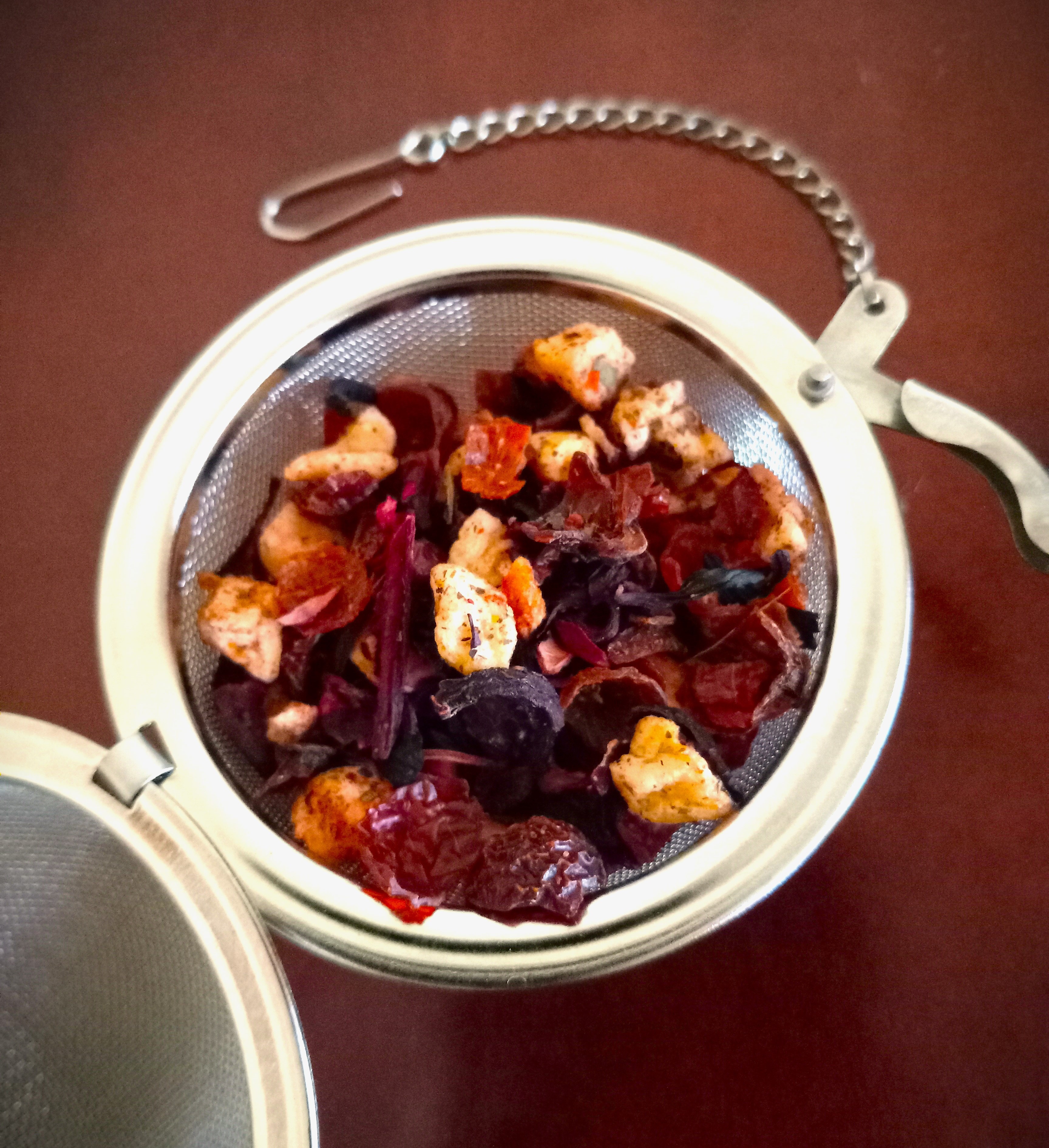
The good news is that in their creative wisdom, Ohio Tea Co. took it upon themselves to offer us Pina Colada, which has turned out to be a more than adequate replacement. So, this summer, when I returned to the drawing board for crafting teatails, I went straight for the Pina Colada. The heady aroma of this tea, or tisane if you want to be technical, smells like all things lush and tropical. Ingredients include apple, rosehip, pineapple, coconut pieces, hibiscus petals, and natural flavors. It is visually pleasing in the tea ball and the color is spectacular in the glass.

I recently made our new teatail for my mother, and after a couple of sips, I asked her for ideas on a name. Before she had the opportunity to respond, I told her that I was thinking of calling it “Escape” in honor of the Rupert Holmes song more commonly known as “The Pina Colada Song.” She laughed and said she was going to suggest that but didn’t think I’d go for it.

That settled it, and if you follow the directions below, you’ll be experiencing your own Escape before you can sing, “If you like pina coladas, and getting’ caught in the rain . . .”

Escape Teatail

6 c fresh water

6 t Pina Colada tea

1 c demerara sugar

1 c fresh water

Malibu Rum

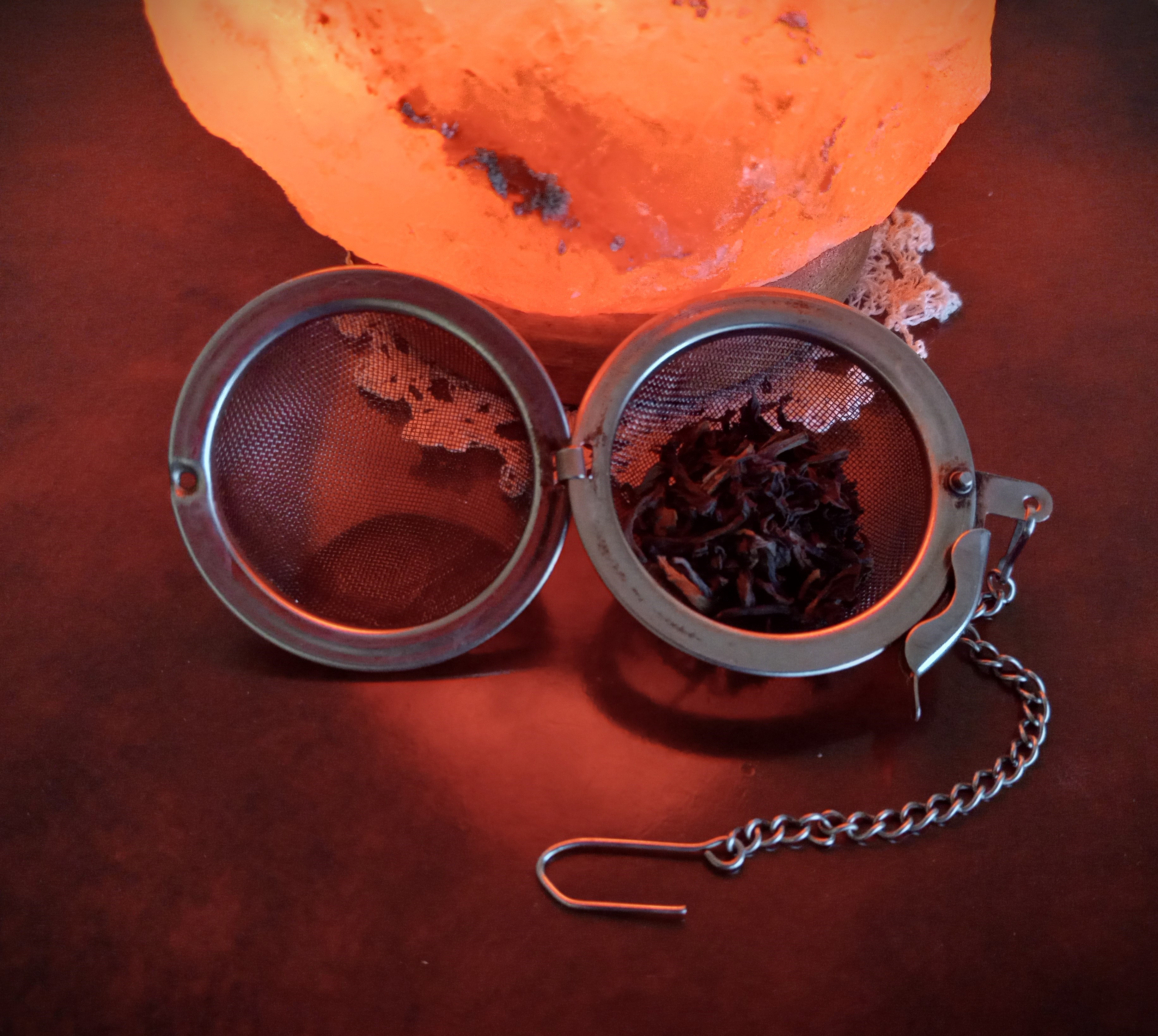
Bring the water to 212° F in a stainless-steel pot on the stove. While the water heats, measure out the Pina Colada tea into a large, mesh tea ball. When the water reaches the appropriate temperature, place the tea ball in it and cover the pot with a lid. Remember to turn off the heat below the pot (gas stove) or remove it from the burner (electric stove).

Allow the tea to brew for six hours, during which time it will also come down to room temperature. You may swirl it gently, otherwise do not remove the lid from the pot. The long, undisturbed brewing time ensures the tea is strong enough to stand up to the liquor you will add later without being bitter.

While the tea is brewing, add the raw sugar to one cup of water in a stainless-steel pot and stir to combine. Bring the mixture to a boil over a medium-high heat, stirring gently, until a rich syrup has formed. Remove from the heat, cover the pot with a lid, and allow the syrup to cool to room temperature. The syrup can be stored for up to a week in a sealed container in the refrigerator.

When the tea has brewed, you may swirl the tea ball once to ensure evenness of color. Remove the tea ball and discard the expended tea. Do not press out the contents into the brewed tea. Pour the tea into a glass pitcher, cover with plastic wrap, and place in the refrigerator until the tea is completely chilled.

To prepare:

You can perform a dry shake with a cocktail shaker if you choose. I recommend Viski products as they are quality and a great place to start building your personal bar. You can, however, achieve the same results, which is to thoroughly combine the Malibu Rum and chilled syrup, using a glass and a fork.

Measure ½ – 1 oz. Malibu Rum into a cocktail shaker or short glass and add ½ – 1 oz. of the rich syrup. Shake or stir until the liquor and syrup are completely combined. Set aside.

Choose a glass tumbler that is at least 12 oz. in size. Add four to six ice cubes depending on the size of your glass and cubes. Pour the chilled Pina Colada tea into your glass to within one inch of the rim. Top with the Malibu Rum/sugar mixture. Stir gently and enjoy!

I’d love to make this teatail again and garnish with a skewer of fresh pineapple, coconut, and apple slices. Let me know in the comments if you’ve tried the Escape teatail and how you served it up!

Tuesday Tea – We Be Jammin’

June and strawberries just go together which is why today’s Tuesday Tea features one of our favorite teatails, the We Be Jammin’. This light and delicious teatail is rich in sweet, jammy strawberry flavor. It’s gorgeous in the glass and perfect for summer.

Wild Strawberry, from Ohio Tea Co., is luscious with rosehips, hibiscus, apple pieces, strawberry pieces, and raspberry leaves. It’s perfect for icing. As a tea enthusiast, I insist that my teatail recipes highlight the tea, as all tea cocktails should, instead of boozing up the drink resulting in a beverage top-heavy in alcohol(s) wherein the tea is reduced to nothing but a color.

We Be Jammin’

6 c fresh water

6 t Wild Strawberry tea

1 c demerara sugar

1 c fresh water

Smirnoff strawberry vodka

Bring the water to 212° F in a stainless-steel pot on the stove. While the water heats, measure out the Wild Strawberry tea into a large, mesh tea ball. When the water reaches the appropriate temperature, place the tea ball in it and cover the pot with a lid. Remember to turn off the heat below the pot (gas stove) or remove it from the burner (electric stove).

Allow the tea to brew for six hours, during which time it will also come down to room temperature. You may swirl it gently, otherwise do not remove the lid from the pot. The long, undisturbed brewing time ensures the tea is strong enough to stand up to the liquor you will add later without being bitter.

While the tea is brewing, add the raw sugar to one cup of water in a stainless-steel pot and stir to combine. Bring the mixture to a boil over a medium-high heat, stirring gently, until a rich syrup has formed. Cover the pot with a lid and allow the syrup to cool to room temperature. The syrup can be stored for up to a week in a sealed container in the refrigerator.

When the tea has brewed, you may swirl the tea ball once to ensure evenness of color. Remove the tea ball and discard the expended tea. Do not press out the contents into the brewed tea. Pour the tea into a glass pitcher, cover with plastic wrap, and place in the refrigerator until the tea is completely chilled.

To prepare:

You can perform a dry shake with a cocktail shaker if you choose. I recommend Viski products as they are quality and a great place to start building your personal bar. You can, however, achieve the same results, which is to thoroughly combine the Smirnoff and chilled syrup, using a glass and a fork.

Measure ½ – 1 oz. Smirnoff strawberry vodka into a cocktail shaker or short glass. Add ½ – 1 oz. of the rich syrup. Shake or stir until the liquor and syrup are completely combined. Set aside.

Choose a glass tumbler that is at least 12 oz. in size. Add four to six ice cubes depending on the size of your glass and cubes. Pour the chilled Wild Strawberry tea into your glass to within one inch of the rim. Top with the Smirnoff/sugar mixture. Stir gently and enjoy.

Now that’s something to be proud of!

Tuesday Tea – Kanchanjangha Noir

Many, many cups of tea went into the creation, production, and publication of my novel, Realm. And even though I’m a published author now, I’m not so haughty as to not be able to chat with my friends over a cup of tea. After all, the purpose of Tuesday Tea was to stay in touch with followers, to remain approachable and grounded.

Kanchanjangha Noir—the name just sounds exotic and is fun to learn how to pronounce—is my newest acquisition from Ohio Tea Co. I enjoy black tea, and this beauty from Nepal does not disappoint.

A deep inhale of the tea leaves provides one with the heady aroma of mild cherry tobacco and an earthiness that leans toward floral more than grass or soil. One teaspoon of tea steeped for five minutes in eight ounces of water brought to 200° F delivers a vibrant cup of tea that is deep red-gold in color. The fragrance of the brewed tea is softly fruity, and the taste is dried cherry, raisin, and cocoa on the palate.

Kanchanjangha Noir is a zesty tea with extremely low astringency. In fact, I didn’t find it to be acidic or bitter at all. A sip finishes on the dry side, although it didn’t leave my mouth feeling tight, and the tea drinks clean and brisk in that the flavor didn’t linger. As usual, I enjoy it without cream or sugar so I can experience the full flavor of the tea leaves in all their glory. I’m looking forward to trying Kanchanjangha Noir iced this summer.

If you’ve had this lovely tea, let me know in the comments how you drank yours.

Tuesday Tea – Black Knight

Don’t you love discovering treasures in unexpected places? I know I do, and that’s exactly what happened to me while walking around a local flea market one day.

Probably second only to books, when I hear the word tea, my ears instantly perk up. So, when I heard the owner of Rusted Leaf Tea Company talking about the loose-leaf blends he creates, I made a beeline for his table.

Allow me to paint a picture for you. Imagine a husky, bearded gentleman wearing what I believe was a Celtic-patterned t-shirt, sporting longish hair, and displaying a passion for tea that lit up his face. I try not to stereotype people, but I must admit, he wasn’t what I expected in a tea seller. And I feel just terrible that I didn’t get his name, so I’ll blame it on my own enthusiasm.

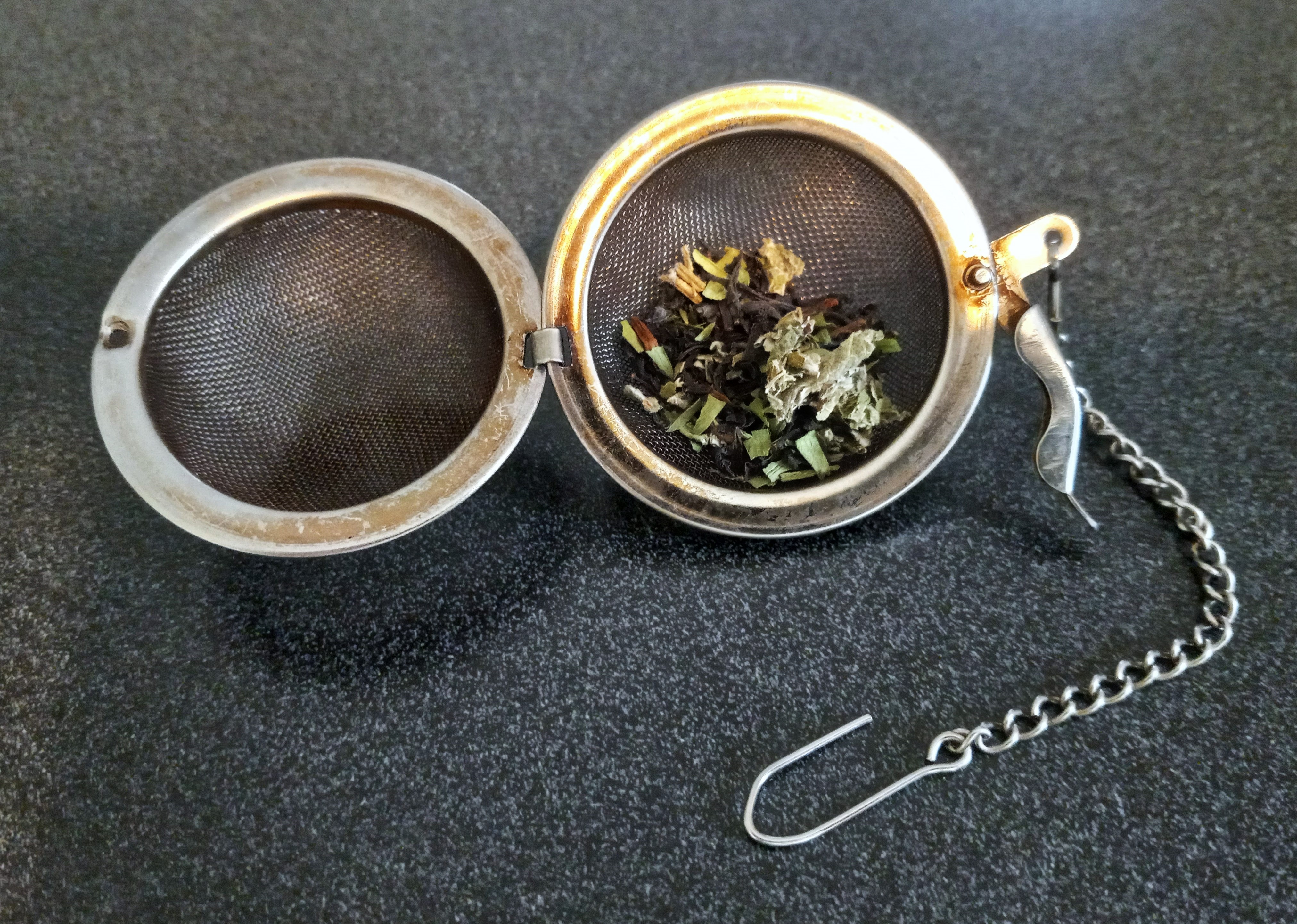
My excitement heightened as he described the ingredients in his proprietary blends and, thrill of thrills, allowed me to enjoy their aroma. He had a little tin with a clear top for each tea so one could see the mixtures and inhale the scent of each delicious concoction. It was difficult to decide, but I settled on Black Knight, and I’ll admit it was in part because the name is just so cool.

Black tea, raspberry leaf, and tarragon make up the ingredients, and in the bag, they smell sweet, fresh, and mildly minty. This last detail is from the tarragon which I love as a seasoning in beef dishes but came to adore in my hot tea. I learned a long time ago that mint teas are not my thing, but tarragon is obviously mint’s close cousin with a sweeter, less bitter personality. I was in love with the flavor that didn’t overpower but left my palate with that cool, minty sensation. Also, Black Knight didn’t require any sweetener or cream, but if you try it that way, let me know how it worked for you.

Make sure your water is quite hot for brewing this beauty. One teaspoon of the blend is perfect for a twelve-ounce serving. I found a four-minute steep with an additional minute to swirl my tea ball around the cup delivers a bright, bracing beverage that is perfect any time of the day. The tea is deep mahogany in color and tapers to a lovely green/gold near the edges. The aroma when brewed is that of a freshly mown field with stacks of moist grasses drying in the sun.

Prior to using, a quick fluffing with a fork will keep the settled ingredients well blended in the bag. I suspect Black Knight would make a delicious s iced tea, so if you try it, let me know in the comments how you enjoyed it.

Rusted Leaf Tea Company strikes me as a fledgling company since they are on social media but, as of this posting, do not have a website. Still, Rusted Leaf has much to offer, and I wish the company well and encourage you to seek them out.

The Ashtray

A low rumble buzzed in the little dog’s chest. His wet obsidian eyes watched the young man moving about the room gathering items and folding clothes to be placed in the suitcase lying open on the bed. Gary Hoover didn’t pay the terrier mix no mind; he knew the dog took its cue from its mistress. His mother got the dog when Gary was three; she called the mongrel her second son.

Like any other day, today found Lisbeth Hoover installed in her favorite armchair with the dog wedged between the ham of her thigh and the armrest. One massive hand with fingers splayed across the dog’s back lent comfort to the agitated beast. The other held her trademark Marlboro, and the candy dish on the table beside her overflowed with ash.

“Peppy don’t like whatch yer doin’,” Lisbeth said.

“I can’t do it nowhere else,” Gary replied.

He considered pulling the curtain across the wire strung from one side of the living room to the other. His father put up the makeshift divider when they moved in to the miniature apartment. He had secured the heavy gauge wire he brought home from work with eyebolts in the burgundy walls.

“Looks like a whorehouse in here,” Lisbeth had complained.

“Yeah…well…”

His father never finished his sentence. He never finished looking for a job that would pay for an apartment where Gary could have a real bedroom. He also never finished his marriage or his promise to teach Gary how to pitch a baseball. The only thing he finished doing was leaving bruises on Lisbeth’s face and arms. Gary was five when they had moved in, six when his father left.

That was the day Lisbeth sat down. She sat and smoked, watching the sun come up and continuing long after Gary had gone to bed. His ample mother smoked and became a mountain of flesh spilling over the chair, conforming it to her shape. Every few years, a new chair had to be found in a secondhand store and dragged home because they didn’t own a car and had no friend’s willing to haul it for them. Lisbeth and Gary ended up on some kind of assistance because his mother couldn’t work. He really never did know why.

What he did know was that their life was as secondhand as the chairs his mother ruined. Food stamps, government cheese, turkeys and hams from the Catholic Church every Thanksgiving and Christmas, clothing and shoes from the Salvation Army. Fist fights behind the school for wearing items recognized by their former owners. The fabric of their existence reeked with the smoke of failure not unlike the flowered upholstery covering his mother’s latest acquisition.

the-ashtrayThe only nice thing they owned was the carnival glass candy dish his father’s mother had given Lisbeth on her wedding day. As a toddler, Gary earned a hard smack to this pudgy hand the first time he ever reached for the dish. His blue eyes, level with the table where the dish sat, never released the brimming tears. He could stare for hours at the amber glass shimmering with rainbow iridescence, and often did, falling asleep in front of the table on which it stood as if reluctant to abandon a sacred shrine.

His grandmother would cover him with a blanket. His mother started using the candy dish as an ashtray. His family was told to find someplace else to live, and Gary never saw his grandmother again. At least they were allowed to take the ashtray with them as they began the house-hopping journey that led them to this place.

The beautiful dish couldn’t contain the quantity of ash Lisbeth deposited within its fluted borders. Even she knew it wasn’t suitable for the purpose to which it had been condemned. Gary always emptied the dish two or three times a day without being asked or thanked. He would barely have it back in place before another inch of spent tobacco would drop off. Sometimes it would land on the table or chair, and once on Lisbeth’s threadbare dress, and burn an abstract pattern into whatever it touched.

Less mesmerizing than the carnival glass was the never-ending smoke curling upward from the tip of Lisbeth’s cigarette. It trailed through the bird’s nest of grizzled hair framing his mother’s face, staining the gray yellow, before it moved on to touch the doilies, lampshades, and ceiling with its filthy fingers. His mother, ensconced in the arm chair in the dark corner of the red room with the shades pulled and smoke wreathed about her head, presented a glimpse into hell.

“What’s this fancy school got you think you need so bad?” Lisbeth asked. She ran her big paw over Peppy’s head, stretching his eyes until the whites showed and yanking his ears.

“I earned me a place with my good grades. You’d of known if you’d come to graduation.”

“In what—this piece of shit dress? All I ever had I gave up for you. I was the one that stayed, remember?”

What Gary remembered was every bitter word his mother used to fight his father for not being the man she loved. He waited for the familiar version of events to spill from Lisbeth’s slack mouth.

“I didn’t ask for his sorry hand in marriage. That was my daddy’s doing when he learnt you was on the way. I coulda been a soldier’s wife, going to fancy military balls and wearing long dresses and pearls. Your daddy, your real daddy, was a marine.”

Gary’s hands trembled as he buckled the straps in the suitcase then closed the lid and locked it.

“I’m going to study mathematics at the university, and I got a job at a warehouse loading trucks to help pay,” Gary said.

“Well you be sure to send notice of your highfalutin self to your daddy living over in Coyle with his new wife and kids.”

The young man stood with his suitcase gripped in one hand, a bus ticket in the other. He wasn’t sure how much of what his mother said was true or which man she spoke of. His eyes were trained like a pointer’s on the only door leading out of their firetrap apartment. He tucked his ticket under his arm, walked to the door, opened it, and said, “I’m leaving for school now, Momma.”

“I see that, Son.”

Another caterpillar of ash crept from Lisbeth’s cigarette.  She watched it fall on the growing pyramid in the beautiful ashtray.

Neighbors

It starts with a funeral.  Why does it take great tragedy to bring people together, Cathy Higgins wonders as she stands in line with her husband, Jake, waiting to hug Mr. Robertson’s son, Dan.  The line of mourners trails all the way from the casket, around the sanctuary, and out the door of the church.  Cathy pulls at the front of her blouse trying to puff some air into the collar sticking to her neck.  She wishes they could inch a few steps forward into the shade of the roof overhang.

A week ago, Jake asked Cathy if she’d seen Mr. Robertson mowing his yard or pottering around the outbuildings on his property.  She hadn’t, and as luck would have it, when Jake left for work that evening, he saw Dan mowing with his father’s tractor.  He pulled into the driveway, shouted and waved to get Dan’s attention.

“Hey, we haven’t seen your dad around for a couple of weeks, and we’re wondering if he’s okay.”

Dan shook his head; his crooked smile told the story.  Jake called Cathy on his cell as he drove on to work to report back the sad news.  For some reason, Cathy called her family to tell them, not that any of them really knew Mr. Robertson beyond the fact that he was the neighbor.

Air conditioning blasts from the open double doors of the church.  Cathy can feel it now that she and Jake are within range of the building.  They really should shut the doors in between people, she thinks.  It would stay cooler inside and not waste electricity and money.  Her laughter escapes as breath expelled from her nose at the weird thought.  She’s always thinking odd stuff like this; probably the result of growing up and hearing such admonitions regarding the closing of doors when the air is on and refrigerators when they are running.

Jake waves to someone ahead of them in the line.  He taps Cathy on the shoulder and gently takes her by the arm.  She scowls for a moment when she understands they are jumping line to join whomever Jake spied.  It is Fran Mencer whose backyard is perpendicular to the Higgins’s.  Her home faces the side street as does Mr. Robertson’s who lived next door to Jake and Cathy.

“Hi,” Fran says in that long drawn out way that conveys I’m so glad to see you, but I hate that it’s under these circumstances.  The light in her eyes is at odds with the grim smile on her face.

She and Cathy hug, and the line jumping is forgotten.  At least by Cathy who is relieved to run into someone she knows.  She went to school with Dan Robertson, but they traveled in different circles, and neither she nor Jake ever met his sister and brother.  The Higginses don’t even know if there are spouses to be consoled.

“Can you believe this?” Fran says.

“Was he sick?” Cathy asks.  “We hadn’t seen him out in the yard for a couple weeks, so we thought maybe he’d gone on vacation.”

Fran shook her head.

“He’d been in the hospital for a while.  Declined rapidly.  His old heart finally gave out.”

“Oh, boy.  I wish I’d known.”

“I tried to call you a couple of times, but your line was disconnected.”

Cathy’s eyebrows knit for a moment, and then she says, “Oh, we let our landline go several months ago.”

A thought flickers through Cathy’s head:  the yards aren’t so big that one couldn’t walk to a neighbor’s house with important news.  In the next second, her eyes widen and a knife stabs her heart.

“When I lost Buddy this past spring right after Pop passed, I pretty much went to bed for the summer.”

Oh dear Lord…how did we not know that Buddy and Pop died this spring, Cathy thinks.  Her husband and father in the same yearPlay it off or admit we didn’t know?

“Oh, Fran, I’m so sorry,” Cathy says, trying to cover all her bases.

How many times had she meant to walk across the yards and visit Fran?  Tea and a chat was always the invitation.  Cathy cannot discern what Jake is feeling beneath the shock on his face, but her stomach is heavy with the lead of guilt.

After talking with Dan Robertson, reminiscing about his dad, hearing how things are not going well in the absence of a will, and offering final condolences and goodbyes, Jake and Cathy leave hand in hand.  They look at the blacktop sprinkled with curled leaves dried from end-of-summer heat, falling before the autumn frosts have even arrived.  Neither speaks on the short trip home.

They change out of their dress clothes and wander outside to sit in lawn chairs, instinctively looking toward Mr. Robertson’s home.  Funny that we never called him by his first name, Cathy thinks.  Maybe because he was the oldest in our little neighborhood.  She and Jake always thought of themselves, Fran and Buddy, and Mr. Robertson as the neighborhood.

Their neighborhood:  not a sidewalk in sight, no fences between the yards, homes built on old farmland.  Deer still migrate through the yards as they hopscotch from cornfield to cornfield, foxes sneak through on their dainty paws, and hawks wheel in the endless skies above.  Fancy allotments with two and three thousand-square foot homes are popping up peripherally.

The Matulevich family lives across the street from Cathy and Jake.  Not a lot of contact past the occasional friendly wave, but Mr. Matulevich’s brother lives three doors down on the same side as the Higginses, and he is quite friendly.  He used to till the garden for Cathy every summer with his Bobcat until she gave up gardening for watercolor painting.

Across from Mr. Robertson are Clarice and Al Robertson, no relation, in the triplexes lining the side street.  They were there long before the Higginses built, permanent renters, and Cathy usually runs into one or both of them at garage sales every summer.

But so many other families come and go from these homes that Cathy and Jake gave up trying to learn who they were.  Still, unfamiliarity doesn’t prevent waves, smiles, and pulling cars out of snowdrifts when necessary.  That’s just how it is in this part of town that is somewhere between the suburbs and rural living.

img_20161030_173746250_hdrA month or more passes with Jake and Cathy falling back into the routine of work and lawn care for him and tending the house inside and out for her.  Always so much to do and never enough time to do it.  And then Jake comes in the house one day after putting his tractor away for the season.

“Fran is out back push mowing the yard.”

Cathy lays down the laundry she is folding and follows her husband outside.  They walk across the length of their backyard and two-thirds of Fran’s before finally reaching her.  These plots really are quite spacious, Cathy thinks.

“What are you doing?” Jake asks with laughter and gentle reprimand in his voice.

“I know, but I took some pain pills before I started and thought I’d work in patches,” Fran laughs in reply.

Jake offers to cut the yard however many times are needed until the November rains come.  The trio chats a bit; they end up inside Fran’s house with coffee, and they chat some more.

This time, Cathy thinks, we will be good neighbors.

Wishful Thinking

wishful-thinkingFinally Arthur sat down. With walking stick clenched in his hand and face turned toward the brilliance of morning, he rested on a moss-covered tree stump. A scent like fine tobacco and fresh melon drifted on the breeze, and leaves like discarded candy wrappers swirled at his feet. Beads of moisture dotted his forehead. He removed a handkerchief from his vest pocket and ran it over his face, pushing it up under the brim of his bush hat.

He signed and scanned the open field on the edge of the woods from which he had emerged moments ago. The sound of birdsong greeted him and nothing more. Arthur couldn’t remember how long it had been since he last saw the group, since Sherri the activity director’s nasally voice kept calling to him to hurry up, stay with the group, quit lollygagging. She hustled them along the trail like a herd of ancient elephants.

Arthur’s cheeks swelled with the childish, naughty thought that he had slipped the leash. His lips parted, and his unrestrained mirth escaped, startling the birds to silence. A weathered hand quickly stifled his laughter; he didn’t want to alert Sherri and risk recapture. He didn’t even feel guilty as he imagined her panic when she discovered he was gone.

Outdoor trips were rare, and Arthur planned to enjoy every moment of his freedom. His body, usually stiff with pain, found comfort on the craggy stump. He stretched his legs, licked his lips, and whistled the songs of the birds he’d heard when he first sat down. The sweet symphony further cheered his heart. Being lost pleased him.

But he wasn’t really lost. He was right here, right now, living life to its fullest in the simplest of ways.

“Arthur. Ar-thur! Quit daydreaming, and please find your seat on the bus. Everyone is waiting for you.”

Sherri’s nails-on-a-chalkboard voice cut through his reverie. She stood before the wicker rocker where he sat in front of the door at Bayberry Assisted Living, fists on her hips, tapping her foot. Arthur lurched forward with a grunt and a groan, pushing himself upward from the unsteady chair. He shuffled toward the bus full of residents staring at him with blank eyes from the smeared windows.

Today, today I will find a way to get lost, he told himself.

Too Tired to Rest

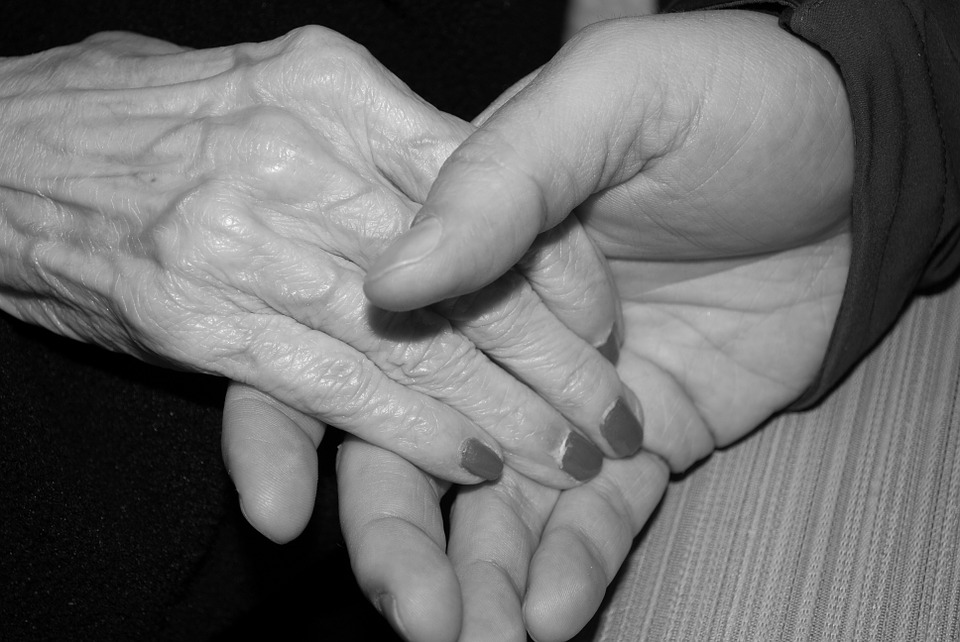
too-tired-to-restThe reel of unseen dreams flickers her eyelids as the man who has slipped into her room watches. A crescent smile glides across his face like a canoe trailed by ripples of worry. Deep within her consciousness, she senses his presence, and the blue eyes marred by clouds of age slowly open.

“Hello, Grandma.”

One, two, three seconds pass as recognition surfaces. Her face, soft as worn flannel, bunches around her eyes and mouth.

“Hello, Freddy.”

Her equally soft hand pats his sandpaper chin.

“I know I haven’t been to visit you as often as I should, but…”

“No apologies, sweet boy. You’re here now.”

“I came to spend Shabbat with you, Gram.”

The old soul leans forward in her bed, peers out the window.

“Seems a little early yet,” she says.

“Well, Mom says you’re asleep by seven, and the summer sun sets so late.”

“Cheeky devil,” she chuckles, again patting his face. “Go ahead and light the candles. Fetch my shawl from the drawer—no, that one, Freddy, the next one down—and I’ll say the blessing.”

Fred complies with her request, draping dark blue silk around her head and shoulders. Daylight blasts hot and bright through the windows of her room in the nursing home; her white crowned head swathed in navy gives the appearance of the moon in the night sky. He lights two candles in cut glass holders, and the sun withdraws its spears behind linty clouds.

Elsa Cohen breaths as deeply as her ravaged lungs will allow; she wheezes like a broken bellows, drawing withered hands above the dancing flames, the ancient prayer she recites flowing like new wine. When she finishes, she looks up into her grandson’s drum-tight face.

“Why so troubled, Freddy?”

“I don’t know, Gram. I’ve been feeling kind of…melancholy lately?”

“Are you asking me?”

“Well, no.”

Elsa pushes the shawl off her head, smooths the fabric around her shoulders.

“It’s just that, I haven’t been keeping Shabbat lately either, Gram.”

“I see.”

“Do you?”

“No, that’s just what people say when they’re giving you time to collect your thoughts and tell what’s on your mind. Spill it, Freddy.”

“Oh…uh, well, I haven’t been keeping Shabbat because…because it’s really hard to do in today’s society, you know? I mean, living in America and all, well, people don’t stop, like, working and stuff at sundown on Friday until sundown Saturday.”

“Oh gosh, people don’t even stop on Sunday anymore either.”

“That’s true.”

“I remember when you were little that gas stations and stores were closed on Sunday, and all the good people went to church, and everyone rested.”

“We live in a ‘round the clock kind of world these days, Gram.”

“That we do. How’s that working for you, Freddy?”

“What do you mean?”

“When you visited three months ago—”

“Ouch.”

Elsa waves him to silence.

“You said you and Margaret were so exhausted with long hours at work, running errands, shuttling the kids from here to there.”

“Well, I don’t see how taking a whole day off to do nothing is going to help any of that, Gram. Wouldn’t that just put us more behind?”

“Do more on the other six days. Totally run yourself into the ground. Or you could save up all your Shabbats until retirement and lay around doing nothing for ten years.”

“Gram, be serious.”

The old woman chuckles until she coughs. Fred leans her forward and delivers firm pats to her back. Her nightgown is a floral landscape across the sharp ridges of her shoulders. Once settled against her pillows, she continues.

“You have to decide for yourself, Freddy, why you do or don’t do these things.”

“Wouldn’t it be easier if you just told me what to do?”

“What fun would there be in that? Besides, there’s no guarantee you’d do it just because I say so.”

“It was so much easier when Grandpa was alive. We all met for dinner at your house and followed his lead.”

“Fredrick—Shabbat hasn’t gone by the wayside just because your grandfather died. Everything that is good about it is still with us. My goodness, dear boy, for one so educated, you sure are stupid.”

Fred can’t keep from laughing at his little grandmother’s spoon-blunt words cutting him sharply.

“Okay, Gram, I get it.”

“Are you sure? Because I could spell it out for you. Use pictures and small words.”

He kisses her forehead like she is his child.

“I love you, Gram.”

“I know, Freddy. Now take that box of candy over there your mother sent me—she knows I can’t chew caramel and nuts anymore—and go home to your family. Rest, my boy.”

Elsa snuggles into the blankets her grandson pulls up over her chin. Her eyes flicker as the dream scenes resume, and she is asleep before he crosses the room to leave.

Being Strong for Melinda

trial-or-tribulationSharon and Robert have spent many dark and lonely hours, separated from each other, asking for the things they believed were right and good. Too many times they listened to doctors whose explanations left them staring and openmouthed, their minds weighted down with things they struggled to comprehend.

Endless dashes to the hospital turned into a permanent stay for their only child. She looks like a little caterpillar cocooned in blankets, bandages, and wires from a host of monitors. Robert calls her his baby bug waiting to emerge with new wings.

Prayer requests make the round on social media. Praise reports are given when their daughter rallies. Many drop off when her condition lags. The weak and faithless have no explanation for this decline. They cannot explain why they couldn’t get Melinda healed, make excuses for God as if He needed them. All of it wears on Sharon and Robert until they pray for release for their beloved child because that must be what God wants for her, right?

With heavy hearts, tears amassing in their eyes, they claim they are willing to accept this for their baby girl. Each buries a duplicitous heart beneath stoic faces and solemn nods of the head. They just want to quit, for this to be over. They never speak of it anymore. In fact, they’ve stopped talking to each other at all. The constant company of the Women’s Bible Study Group and Men’s Fellowship doesn’t allow for much private conversation between them. Such good people, these men and women, who stay with Sharon and Robert 24/7, praying audibly non-stop.

Sharon slips away to the ladies’ room. She does not turn on the light, locks the door. The sound of breathing in the dark room scares her for a second, but whatever harm might be done to her by the owner of the breathing is preferable to what is going on with Melinda. Especially if it ends her.

“Sharon?”

She jumps and laughs wildly.

“Robert? What on earth are you doing in the ladies’ room?”

“It’s the only place the guys from church wouldn’t think to look for me.”

More deranged laughter, shared, from the emotionally and physically drained parents. Robert sighs but does not reach for his wife. Neither move to turn on the light.

“I’m so tired, Shar.”

“You, too?”

Robert’s voice dips and rises uncontrollably.

“I just want this…I just want…”

“I know, dear. Me, too.”

Their hands meet in the darkness, instinct guiding their palms and fingers into place. But they do not draw closer to each other.

“I want to quit, Shar. No—I have to quit. I’m done. I’m finished, and I got nothing left.” He pauses to draw a deep breath. “I was in here working up the nerve to tell you.”

“Rob, that’s why I came in here.”

“Why didn’t you say something?”

“When, Robert? Between entertaining and performing for the people from church—God knows I love them, but I really just need them to go home—to holding in my emotions every time the doctors tell us Melinda isn’t progressing as they’d hoped? You won’t even meet my eyes anymore.”

“I know. I’m sorry. But I was afraid if I looked at you, you’d see how scared I am—”

“—I’m scared, too—”

“—but I don’t have any answers for you, Shar. You know, I’m supposed to be the strong one and all that.”

“Don’t be ridiculous, honey. I never expected solutions to this. Not from you, anyhow.”

“Well, that’s a relief.”

“Is it? Because we’re off the hook, but I suspect we wanted our prayers answered in a specific way we’re too afraid to admit.”

“Can I turn on the light?”

Robert flips the switch before she consents setting off a round of watery-eyed blinking.

“Well, that’s better,” he jokes.

They step closer and melt into an embrace. Sharon cries against his shoulder as he runs his hand over her hair.

“I’m not really okay with losing Melinda,” his wife says.

“I know.”

“I feel so guilty for saying that. Like I’m less of a…”

“I understand, Shar. Really, I do.”

“So, now what?”

“Now we quit pretending. We’ve got to.”

“Agreed.”

“And if Melinda…if she…”

“Dies.”

“Yes, if…then we’ll figure it out together. Just the two of us.”

“But it doesn’t have to be just you and me, Rob.”

“I know. I meant all the church crowd.”

“They mean well—and quite a few have been helpful. Sincere.”

“That’s true. But when this is over, whatever over may be, it’s just you and me, and you and God, and me and God to work through this.”

It’s Sharon’s turn to sigh.

“Is this where we were supposed to be all along, Rob?”

“You mean if we hadn’t let all the hoopla get in our way?”

“Yes,” she chuckles. “Just trusting. Shutting up and trusting that God’s got this under control.”

“That’s a hard and scary place to be.”

Sharon nods and leans her forehead against Robert’s.

“I can’t promise I won’t be sad,” he whispers.

“You wouldn’t be human if you weren’t. Just don’t be afraid.”

“I’ll try, Shar. For you.”

“No, babe. For you.”

All the prayers they cannot speak radiate between them. A knock on the restroom door precedes, “Sharon—come quick. The doctors have been looking all over for you. Sharon?”

Melinda’s parents, raw and exposed, striped down to the soul, brace each other with hands to the shoulders.

“I don’t know where they are,” says the muffled voice on the other side of the door.

“Well we have to find them now. They need to know Melinda has opened her eyes and asked for them,” a male voice joins in.

Gasps of shock from the people on the outside are lost in bursts of laughter and tears of relief from Robert and Sharon within.

A First Good Day

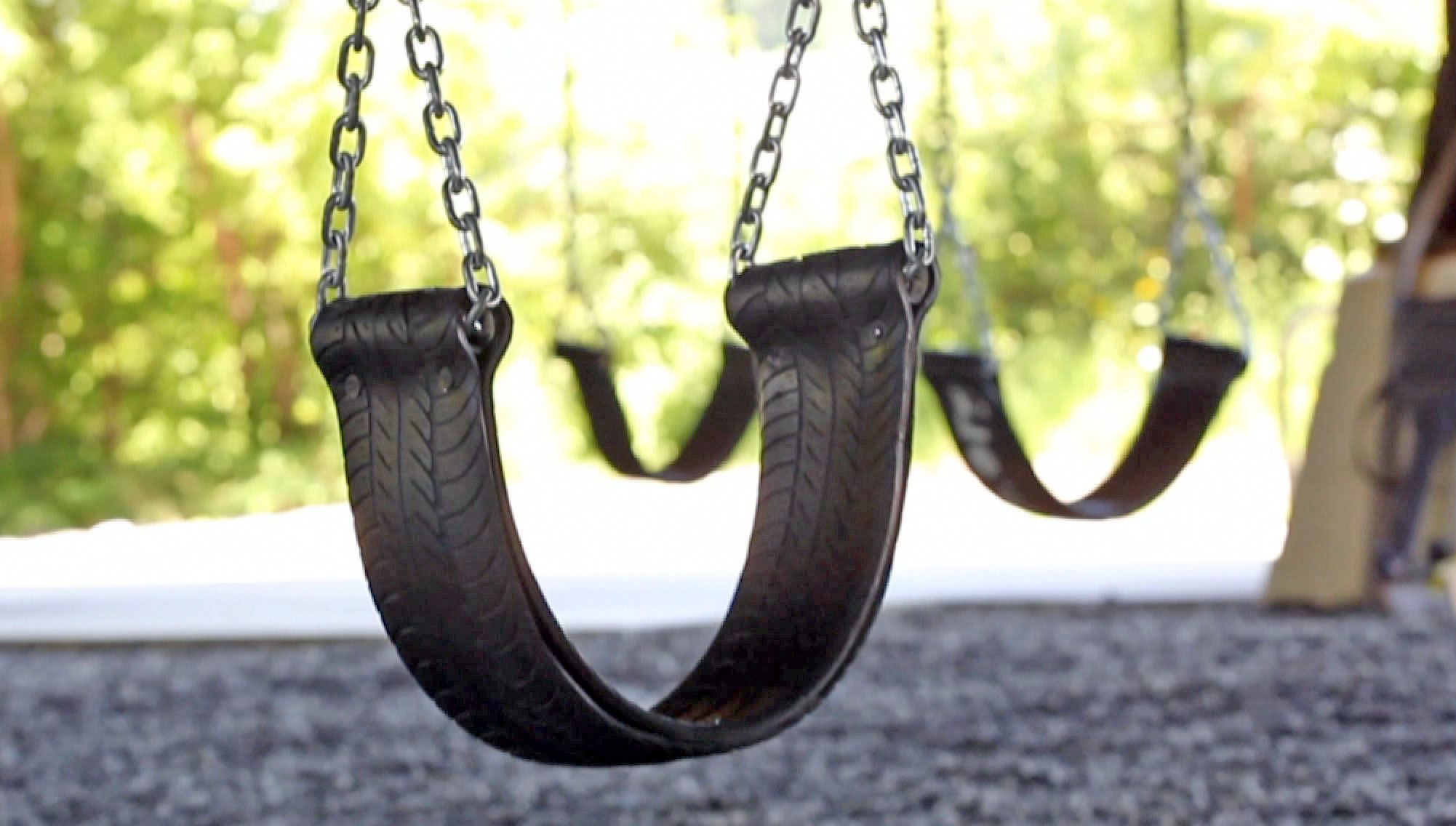
Some of the new swings are seen. A total of 11 new swings have been installed. SWINGPARK - The new swing park near the corner of East Brady and North Water Streets beneath the N. Holton St. Bridge on Wendesday, July 23, 2014, included newly designed swings that are a collaboration between the City of Milwaukee, the Brady Street BID #11, and the grassroots organization beintween (Òin betweenÓ). Beintween installed swings at the site in Fall 2012. When the swings fell into disrepair, they were removed by DPW in Fall 2013 as a safety precaution. The agencies worked together to redesign and rebuild the swings using recycled materials including rubber tires, metals and wood. A total of 11 new swings have been installed, including a set of baby swings and a metal swing that is ADA accessible. The cushioned ground beneath the swings has also been replaced with shredded rubber tires, and new lighting has been installed for a safer experience. Photo by Mike De Sisti / MDESISTI@JOURNALSENTINEL.COM

Angie sits on a swing, swaying gently and trying not to catch her skirt in the chains. Her flats are placed firmly on the shredded rubber mulch, the new favorite material to cushion falls at the playground. All around her children laugh and squeal, running from swings to slides, rock wall to climbing rope, sand box to wooden fort. Mothers cluster on benches in the shade of meager trees, some pushing a stroller with a drowsy baby back and forth, back and forth. A trickle of sweat slides between Angie’s shoulder blades.

She’s not sure where she fits in. Part of her identifies with the little girls playing house, carrying their baby dolls by the neck in the crook of their arms. They sequester themselves in the tower of the fort until the little boys invade wielding invisible lights sabers and threats of feeding the dolls to the Sarlacc. Angie has experience disrupting homes. As for the prom princess mall mavens, the only thing they have in common with Angie is the fact that they, too, have given birth.  She is smart enough to know that this alone does not make her a mother. There’s more to it. A lot more. Probably what these women sitting around the perimeter are doing. But she cannot tell what that something is.

Her eyes burn and drop to the toes of her scuffed black flats. Heat reddens her face as she imagines what these women would think if they knew how many miles she walked to wear the soles of her shoes thin, or how short her skirts were in comparison to her long navy blue one sweeping the surface of the playground. Fireworks of yellow, red, and orange flash behind Angie’s closed eyes. Sunlight caresses her cheeks with the warmth of a mother’s hands as she tilts her face upward. A woodpecker’s tap on her shoulder interrupts her solitude.

“Angie?”

“Yes, ma’am.”

Gloria Freshley stands to Angie’s right, clasping a briefcase handle in both hands. The social worker nods and gives her a head-to-toe once over.

“Very good. Remember what the judge said, okay?”

“This is not a reward for my good behavior, and the Mendenhalls are being generous by letting me see Chloe.”

“Exactly. Keep that in mind, and this will go smoothly.”

No mincing words with Gloria. Angie takes a breath to speak. Questions contort her face, but Gloria blinks slowly once in lieu of shaking her head. All the queries, arguments, and debates drift toward the thick clouds stacked across the sky.

“Here they come.”

Angie watches her three year-old daughter toddle between a man and a woman, her chubby hands held in one of their own. Their approach slows when the little girl navigates the concrete curb surrounding the playground, stops to watch the children play, and grabs a handful of sand to work between her palms. Mr. Mendenhall shares a smile with Chloe as he wipes her tiny hands with a handkerchief pulled from his back pocket. There’s something reassuring to Angie that her daughter lives with a man who still uses handkerchiefs. From beneath locks of long, brown hair, Mrs. Mendenhall’s eyes scan the playground. She’s a soldier on point acknowledging the enemy without giving herself away.

Indecision about the next twenty minutes muddles Angie’s thoughts. All she knows is that she doesn’t want to waste time thinking about her feelings. Analyzation comes later. For the next twenty minutes, earned by nineteen cocaine-free months, she will talk to Chloe and watch her play without touching her. She must remember to thank the Mendenhalls for taking care of Chloe and allowing this meeting. She must also remember to leave first. The last is her own stipulation, an old habit from her days on the streets to hide her true emotions.

Chloe staggers toward Angie who smiles at her daughter’s defiance to hold the Mendenhalls’ hands the last few yards. There are no words or expressions when Chloe totters past to explore the swings behind her mother. A bitten lip brings the taste of salt and rust; Angie’s mind scrambles to pin down a reaction to her daughter’s lack of recognition.

“Swings are her favorite,” Ted Mendenhall says to soften the blow.

“I should know that,” Angie replies.

“You do now,” Karen Mendenhall says.

The four adults sit at a picnic table. Their conversation contains praise for Chloe. No promises are given, no condemnation expressed. The offer to meet again in six months lightens the tension etched in the lines around everyone’s eyes except Chloe’s. She blows kisses over Ted Mendenhall’s shoulder as he carries her back to the car; his free hand holds his wife’s.

“That went well,” Gloria says. “I’ll call you a week before the next meeting to see where we are.”

Angie stands in the center of the playground trembling, unable to contain the smile aching her face. Suddenly, she realizes that she is the last to leave . Laughter and tears flow freely from the eighteen year-old as she enjoys the first good day she’s had in a long, long time.