Pop On Over, Love

IMG_20160607_085149863[1]By June of 1948, Dr. John Welles still hadn’t overcome his experiences during World War II. The haunting memories were more than he bargained for. Further gnawing at his conscience was the fact that his service had been quite brief. The worst part, though, was the secret John brought home from the war.

In his efforts to bury the painful truth of what took place in France, John became increasingly distanced from his family and friends. They were patient and loving in return, waiting for John to open up on his own terms. All except his Aunt Prudence.

Prudence had never been one to sit back and wait for things to happen. She always made her own outcome to her satisfaction, and this was exactly what she intended to do with John. Unfortunately, her well-meaning endeavors didn’t produce the results she had hoped for. She argued with her nephew until John simply shut down. Still, Prudence never backed off where he was concerned.

Into the middle of this family struggle stepped Lucia, Prudence’s sassy cook since the days of John’s boyhood. She knew her employer turned close friend had John’s best interests at heart, but sometimes Prudence’s tactics were too harsh, especially for a man still reeling from the effects of war.

One morning, over a breakfast of popovers, Lucia offered the sage advice that helped John make the first positive decision in his life since returning from Europe. Prudence hated to admit that her cook was right, but she didn’t press the issue.

The following recipe for popovers is the one I had in mind when writing the above-mentioned scene for my novel, The Secrets of Dr. John Welles. The recipe has been in my mother’s recipe box since her high school home economics days. Popovers are incredibly simple to make, and they taste delicious fresh from the oven with butter.

Enjoy!

Lucia’s Popovers

1 c all-purpose flour

½ t salt

1 c milk

2 eggs

Preheat the oven to 425° F

Thoroughly butter 5 – 9 custard cups. Mix all ingredients with a beater until smooth. Do not overbeat the batter or the volume will be reduced.

Fill the greased custard cups half full. Bake for 40 minutes. Resist the urge to peak or the popovers may fall. Check after 40 minutes. The popovers should be golden brown.

Serve warm with butter.

Egg On My Face

What could be more delicious or simple than a fried egg? There is so much about the egg that I could say (the history of eggs, uses in different cultures, health benefits, recipes, etc.) but won’t. There are tons of websites devoted to the creation of the perfect fried egg including debates on cast iron versus non-stick skillets. There are sites encouraging the incorporation of the fried egg into everything from bowls of rice and/or veggies to plopping it down on top of ciabatta bread and tomatoes then sprinkling with feta cheese and arugula, thus elevating the humble fried egg to a snazzy dinner item. And don’t get me started on the various methods of frying with absurd names like “animal style” and “press down.” One ill-informed person even suggested that the perfect fried egg wouldn’t have crispy brown edges. Seriously? That’s the best part.

I guess I’m old school and harken back to the days when the toughest decision one had to make about fried eggs was whether or not you wanted the yolk hard or soft. This simplicity of thought is where my mind drifted as I wrote the scene in my novel, The Secrets of Dr. John Welles, when midwife Collie Mercer makes a celebratory breakfast for the Welles family in honor of the new baby she has just delivered.

The Welleses lived on a farm, so naturally eggs were part of their diet in some fashion on a daily basis. I imagine nothing fancier than scrambled or fried eggs ever appeared on the Welles children’s plates, not even an omelet. But I also know that the eggs were prepared with love. And while a wide variety of foods may not have been an option, no boxes of colorful cereal or flaky croissants, the children were no doubt raised with an appreciation for an abundance of good food prepared simply.

There isn’t an exact recipe involved with this post. In many ways, the preparation of a great fried egg is a combination of common knowledge and simple logic with a dash of familial preference for good measure.

The Perfect Fried Egg

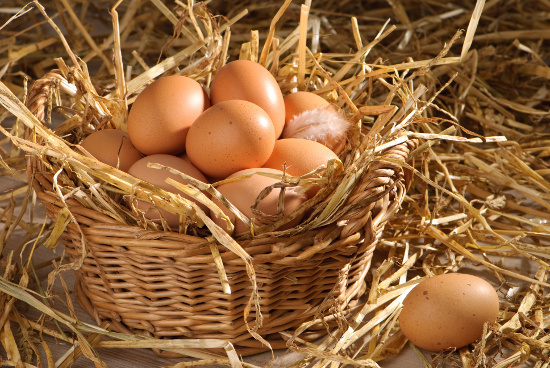
Fresh eggs – we obtain ours from a neighbor down the street

Butter

Salt & pepper

Cast Iron Skillet – our preference at the Gibson household

Pre-heat a cast iron skillet on the stove. Melt about ½ T of butter in the pan per egg until it bubbles. Don’t brown or burn the butter. Crack your eggs directly into the skillet, spacing evenly around the circumference depending on the quantity of eggs and size of the skillet.

Break the yolks at this point if you want them hard. Allow the underside to set up before flipping them to continue cooking on the other side. They are done when the yolk it set and the edges reach desired crispness.

Or, when the underside of the white turns opaque, you can pour a little water in the pan and cover to steam your eggs to doneness. This is usually done for a soft yolk. No flipping required.

Season the cooked eggs with salt and pepper to taste. Serve hot and enjoy!

Spread the Love

One of my earliest memories of butter includes sitting on the carpet in the kindergarten classroom, all of us in a large circle, passing a massive canning jar from person to person as we shook the sealed jar full of whipping cream as hard as our little arms could manage. We’d been told that this would produce butter. I remember my skepticism, but since I loved butter, I gladly took part and watched the magic unfold.

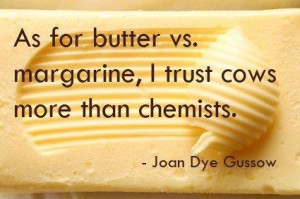
It’s funny how many of my food memories are attached to my Grandma Smith, but I believe her kitchen is where I developed my love of butter.Butter versus Margarine There was something different about the sunshine yellow block that sat in her cut glass butter dish. It was lighter, sweeter than the golden-colored sticks of ‘butter’ we used at home. As a young child, any yellow, creamy substance that one spread on toast or crackers was referred to as butter. My mother provided the explanation of the difference, and I learned the definition of margarine. It wouldn’t be until decades later that I learned what an evil substance margarine is, but I digress.

Grandma Smith would bring me packets of real butter from restaurants where she had dined. Nothing against my mother, but she used margarine for years until I finally convinced her to switch. Glory be–my taste buds rejoiced and food became so much tastier.

Where is all this leading you ask? To my novel, The Secrets of Dr. John Welles, of course. I’ve already established that as an author, I love to feed my fictional characters. Twice I reference butter specifically, once in conjunction with biscuits and again with cornbread, but what I want my readers to understand without mentioning it every time is that butter is my fictional characters’ ingredient of choice when it comes to cooking and baking.

As I wrote the scenes involving food and envisioned the preparation, butter was always in the picture, sitting in a crock or dish, just within reach of the experienced hands that would lovingly incorporate it into the recipe. I’ll spare you the debate on the health benefits of butter versus margarine and simply say don’t fear butter and all things in moderation.

To sum up this post, I made butter with my son because I wanted him to experience how easy and fun it is. The added step of washing the butter is new for me based on research for this post. The instructions for this activity follow. I highly recommend doing this with your kids because the memories you’ll make are priceless.

Enjoy!

Homemade Butter

2 c whipping cream (Raw cream from grass-fed cows is recommended, but store bought organic will work as well. This quantity will yield approximately ½ c of butter.)

sea salt

I used a stand mixer with a wire attachment for this process and chilled the bowl and wire attachment prior to using.

Pour the cream into your mixing bowl, filling the bowl halfway so it does not overflow as air is whipped into the cream. Mix on a medium-low speed to prevent splashing. As the cream thickens, you can turn it up to medium.

This process should take about 15 minutes but can vary depending on how much cream you are using and what type if mixer you have. Whipped cream will develop first. When the whipped cream begins to deflate, watch closely as your mixture can rapidly change to butter. To prevent splashing, cover the bowl with a lightly dampened tea towel.

When the butter begins to clump and stick to the whisk, it is done mixing. Pour the mixture through a fine strainer to separate the solids, butter, from the liquids, buttermilk. If you want it to last for more than a few days, you need to wash the butter. This will remove as much buttermilk as possible to keep the butter from going rancid. Put the butter back in your mixing bowl and cover with clean, cold water.

Use a large spoon to press the butter into the sides of the bowl. The water will become cloudy as the buttermilk is removed from the butter. Pour off the cloudy water and add more fresh. You can repeat this process until the water stays clear. Stir in a large pinch of amount of sea salt for every ½ c of butter.

Store in refrigerator or at room temperature if you will use it within a week or two.

Drowning Your Sorrows In Cinnamon

Drowning Your Sorrows In Cinnamon 2John Welles and his two best friends, Sam Feldman and Claude Willoughby, formed a strong bond during their two years of pre-med studies at the University of Maryland. As they faced the upcoming challenge of pursuing the heart of their degree, the three young men fluctuated between excitement and anxiety. Yet their biggest concern wasn’t that they would perform poorly in their classes and labs or receive low grades. What sent the trio into a case of the doldrums was the worry that they would lose touch as their classes intensified in difficulty.

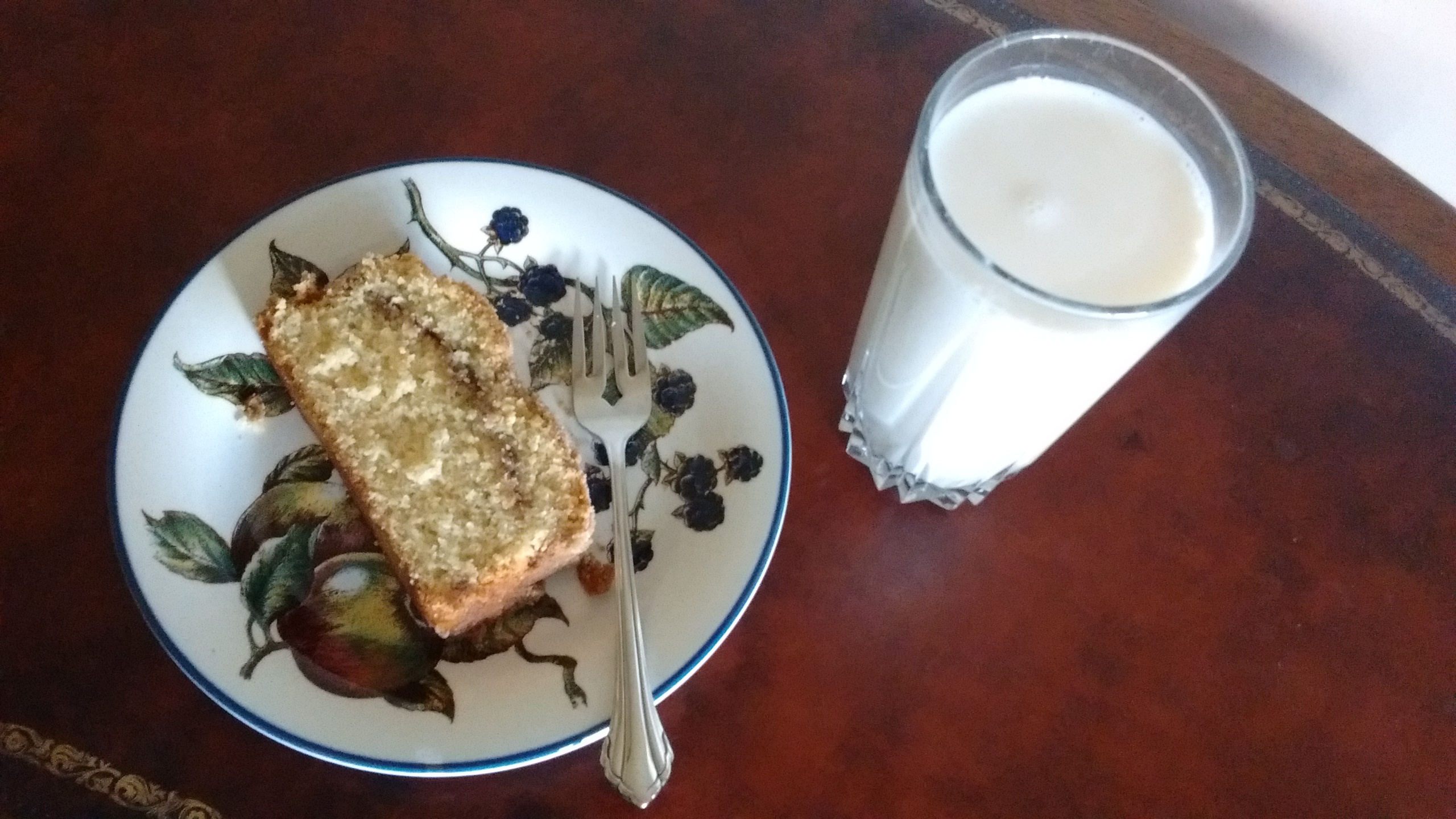
John’s Aunt Prudence suggested an end-of-summer barbeque to lift the boys’ spirits, but her sassy cook, Lucia, responded with a more immediate remedy: cinnamon cake. Lucia knew the benefit of comfort food, and the cake she served the boys was rich and delicious enough to drown anyone’s sorrows.

The following recipe is the one I had in mind when I wrote this scene. The flavor is reminiscent of pound cake, but this golden confection is lighter in body and smooth in texture. Be warned: it is rich beyond belief; however, most of the sweetness comes from the cinnamon streusel layer.

Enjoy a slice of Lucia’s cake with a cup of coffee or tea or a glass of milk.

Lucia’s Cinnamon Cake

Cinnamon Streusel Topping

½ c flour

½ c packed brown sugar

1 t cinnamon

¼ t salt

¼ c unsalted butter, cold & diced

Mix the flour, brown sugar, cinnamon, and salt in a bowl. Work in the butter with the dry ingredients using your fingers or a pastry blender until coarse crumbles form. Set aside.

Cake Batter

Preheat oven to 350° and grease and flour a metal 9 x 5 x 3 inch baking pan.

I strongly recommend using a stand mixer for this cake. The thick batter closely resembles dough and has the tendency to climb the beaters of a handheld mixer.

½ c unsalted butter, softened

1 c sugar (I use raw)

2 ¼ c cake flour OR all-purpose flour sifted with 1 T cornstarch per cup

2 t baking powder

¾ t salt

5 egg yolks

¾ c whole milk

1 t vanilla

Cream the softened butter and sugar. Add flour, baking powder, salt, egg yolks, vanilla, and milk. Mix on medium low speed until thoroughly combined, approximately 3 minutes. Spread 1/3 of the batter evenly in the baking pan. Top with half of the cinnamon mixture. Spread the remaining 2/3 of the batter in the pan and top with the rest of the cinnamon mixture.

Bake on the center rack for 65 minutes or until a tester inserted in the middle comes out clean. Cool the cake until you can handle the pan before turning it out.

Enjoy!

Completely Sauced

IMG_20151123_095305152Breaking bad news is never easy. Receiving bad news isn’t much better. The only hope is that it doesn’t affect you directly, but even then, you may be called upon to share the grief and comfort those who need it. But what do you do when the bad news is disguised as a lovely dinner with your friends and slips out through the course of pleasant conversation? Factor in the knowledge that the bad news is tiptoeing dangerously close to your own awful experiences, and the situation is bound to go south. Such was the case for Dr. John Welles when he accepted an invitation to dine with Reuben and Hannah Wise.

What began as an enjoyable meal with people he knew for years turned out to be a hidden request for assistance with a task that John absolutely does not want to complete. Not even Hannah’s delicious cooking could persuade the doctor to go against his conscience or dredge up painful secrets. By the time the Wises and Dr. Welles parted, not even the sweetness of Hannah’s homemade applesauce could soothe hurt feelings or smooth over the rift between them.

The following recipe is the one I had in mind when I wrote the above-mentioned scene. As with many recipes, there is room for change based on your preferences. I find that applesauce, not unlike apple pie, is one of those recipes that bear the signature flavors usually handed down through the family. I hope you enjoy the way my family makes it.

Homemade Applesauce

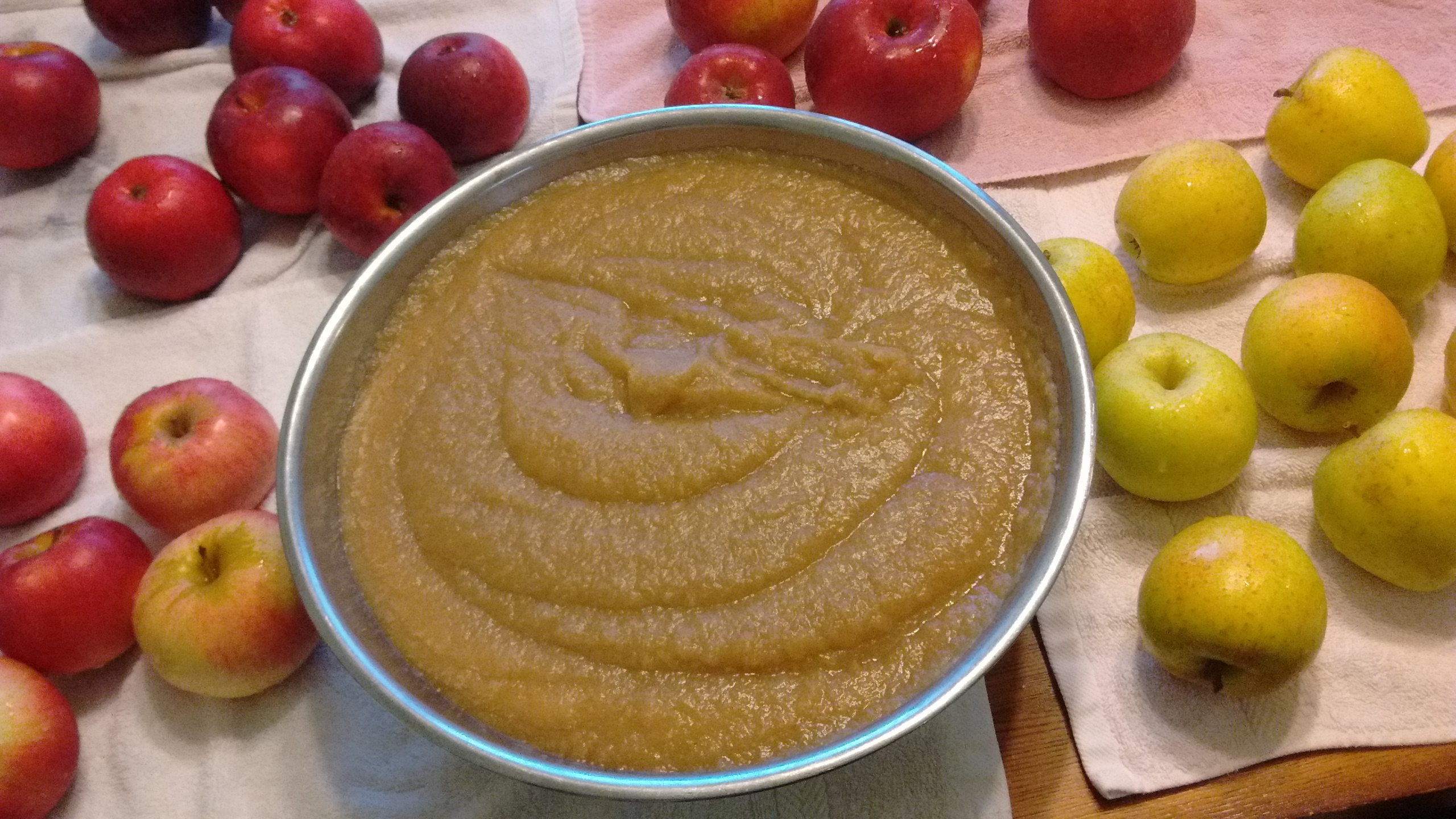
My favorite apples to use are Cortland, Jonagold, Melrose, Idared, Winesap, and Golden Delicious, and I use a combination of all six in this recipe. Stotler’s Orchard is where I purchased apples for saucing.

½ c brown sugar

1 t vanilla

1 t cinnamon

Allspice to taste***

1 c apple cider

I prefer to use a 6.5–quart cast iron, enamel covered Dutch oven, but any heavy cooker will do.

Peel, core, and cut enough apples into one-inch chunks to fill the cooker, leaving a little room to stir. Add the apple cider, brown sugar, vanilla, cinnamon, and several hearty dashes of allspice to the apples. Stir all ingredients, cover, and cook on a medium high heat. Don’t let the apples boil. Check regularly and stir the apples up from the bottom so the mixture cooks evenly.

At about 30 minutes, the apples should be soft enough to cut through a chunk with the side of a wooden spoon. If not, cook for an additional five minutes and recheck.

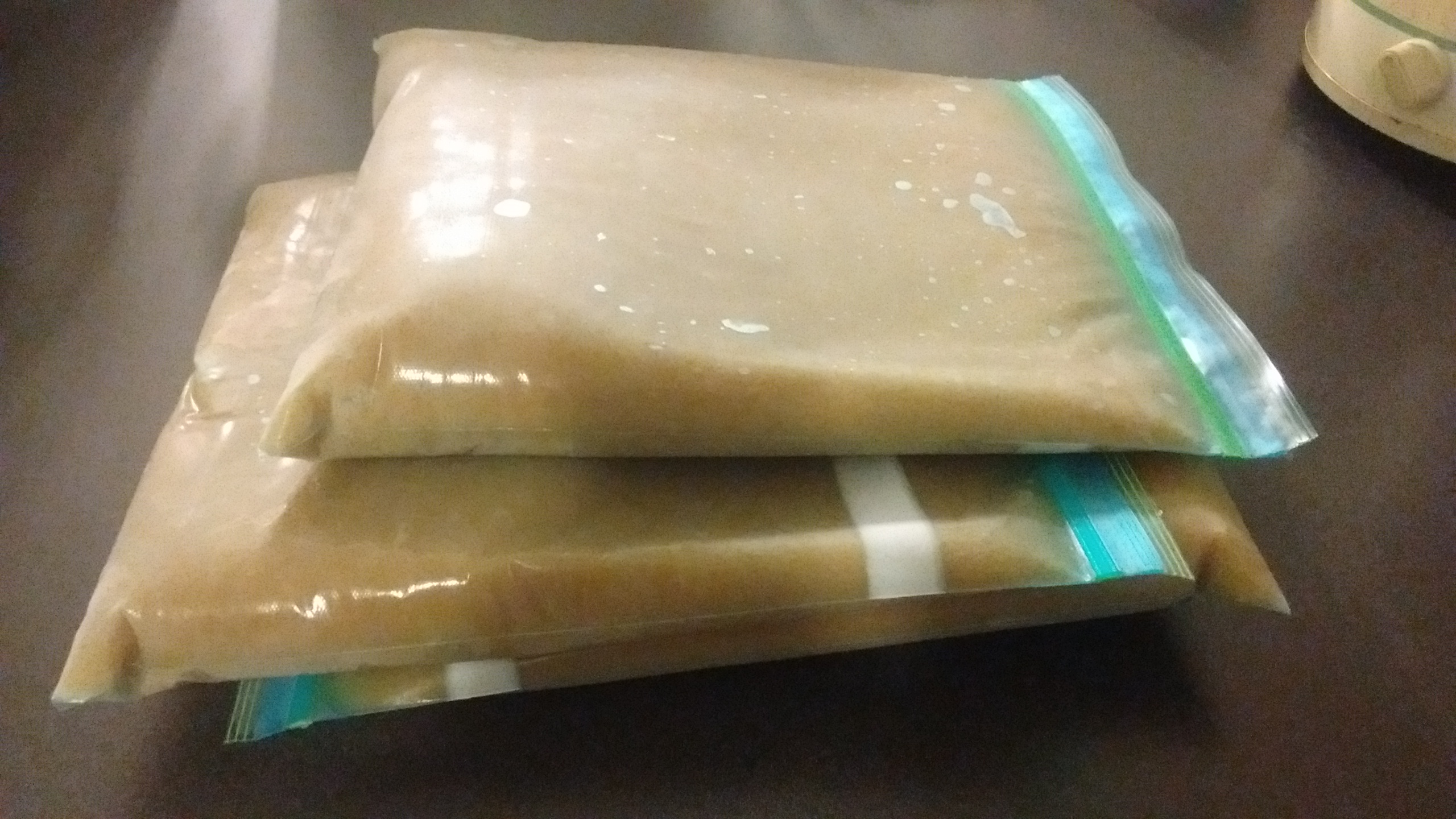
Once the apples are tender, transfer small batches to a food processor and blend to desired consistency. I allow the applesauce to cool to room temperature in a large metal bowl before transferring it to gallon-sized freezer bags. Enough applesauce is ladled into the bag so that it is about a half inch thick when sealed and laying on its side. Full bags stack nicely in the freezer.

IMG_20151227_162102649

***If your allspice lists several other spices in the ingredients, you’re not using real allspice.

The Sweet Side of Bitter

The Sweet Side of Bitter 3John Welles and his two best friends, Sam Feldman and Claude Willoughby, formed a strong friendship during their two years of pre-med studies. By 1927, when they began studying medicine in earnest, they were inseparable despite the differences in their personalities. It was their closeness that allowed John to pick up on the problems with Claude’s family life that his friend tried to keep hidden. After the boys naively crossed the line by interfering with Claude’s father’s private business, the once subtle problems exploded to the surface. John felt powerless to help Claude.

Worsening the issue was J.D. Willoughby, Claude’s Father, who infuriated John by maintaining a polished veneer on the situation in an effort to keep up appearances. J.D. Willoughby was the type of man who didn’t even flinch when he realized John and Sam overheard him yelling threats at Claude. Instead, he ushered Claude’s friends to the kitchen, treating them like ignorant children and distracting them with freshly baked cinnamon rolls.

The Sweet Side of Bitter 2

The following recipe is the one I had in mind when I wrote the above-mentioned scene. The sinfully rich, delicious baked good is a cut above a regular cinnamon roll with the inclusion of bourbon, golden raisins, and Zante currants; it’s just the sort of dessert J.D. Willoughby would expect to be served in his home. They are so luscious, I hesitated to attach them to such a despicable character. I trust J.D’s reputation won’t negatively influence your opinion of the recipe.

Enjoy!

Willoughby Family Recipe for Cinnamon Rolls

Dough:

2 ¼ t yeast (1 – ¼ oz. package)

½ c warm water (110° – 120° F)

½ c scalded milk

¼ c sugar (I used raw)

⅓ c unsalted butter, melted

1 t sea salt

1 egg

1 t pure vanilla extract

3 ½ – 4 c flour

Filling:

½ c unsalted butter, melted

¾ c sugar (I used raw)

2 T cinnamon

2 T bourbon

1 t vanilla

¼ c golden raisins

¼ c Zante currants

½ c finely chopped walnuts

Butter and sugar to prepare a 9 X 13 baking dish

Glaze:

4 T unsalted butter, melted

2 c powdered sugar

1 t vanilla

3 – 6 T freshly squeezed and strained orange juice

1 t orange zest

The Sweet Side of Bitter

In a small glass bowl, dissolve the yeast in warm water and set aside. In a large mixing bowl, combine the scalded milk, sugar, melted butter, salt, vanilla, and egg. Add two cups of flour and mix until it is smooth. Add the yeast/water mixture. Add another 1 ½ cups of flour until the dough is easy to handle. Knead the dough on a lightly floured surface for 5 – 10 minutes. This is where you may need to add the additional ½ c of flour a little at a time as you knead. The dough should not be overly sticky on your hands. Place in a large, well-greased bowl and cover loosely with plastic wrap. Let it rise until doubled in size, approximately 1 to 1 ½ hours.

Place the golden raisins, Zante currants, bourbon, and vanilla in a small glass bowl. Toss the fruit to coat with the liquid, cover, and set aside.

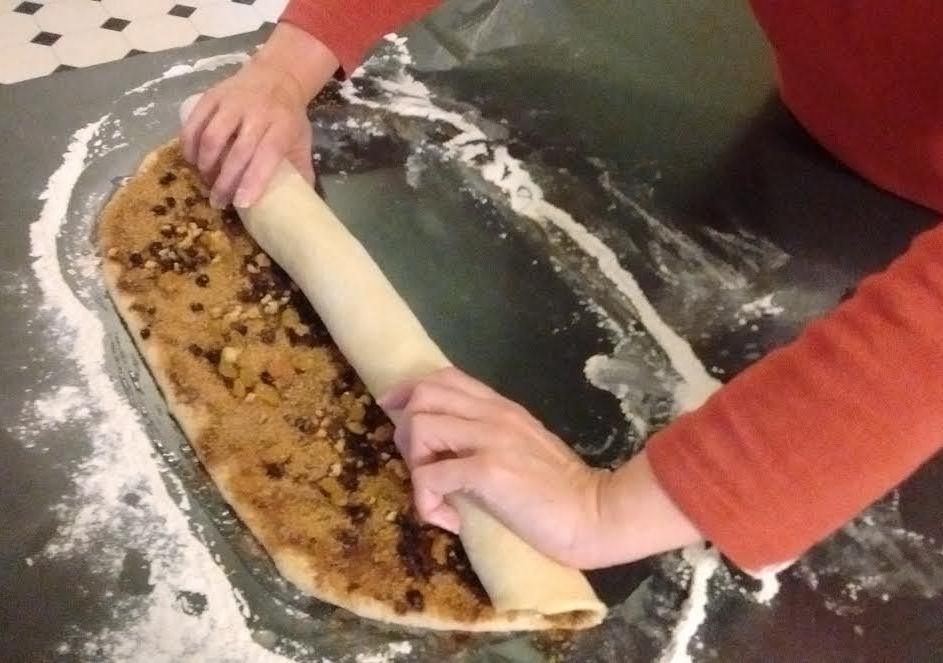
When the dough has doubled in size, punch it down and roll it out on a floured surface into a 15 X 10-inch rectangle. Spread half of the melted butter on the surface of the dough. Mix the sugar and cinnamon and sprinkle over the buttered dough. Sprinkle the raisin/currant/bourbon mixture and any remaining liquid over the dough. Sprinkle the walnuts over the dough. Begin with the 15-inch side and roll up the dough. Seal the long edge by pinching shut. Prepare a 9 X 13-inch baking dish by buttering the bottom and sprinkling it with sugar until coated. Cut the rolled up dough into 12 slices and place evenly in the buttered/sugared baking dish spiraled side up. Brush the sides and tops of the slices with the remaining melted butter. Let rise until double, approximately 45 minutes.

Preheat the oven to 350° F. Bake the rolls for 30 minutes or until nicely browned. While the rolls are cooling, mix the melted butter, vanilla, orange zest, and powdered sugar with 3 T of orange juice. Stir until smooth, adding 1 T of juice at a time until the desired consistency is achieved. Drizzle the glaze over the slightly warm rolls.

Serve immediately. These reheat well in the microwave for 10 – 15 seconds.

Sweet Distractions From Life

IMG_20151010_184243495[1]Collie Mercer is the type of woman who believed that children should be protected from all that is bad in the world. This is exactly what she did for the four Welles siblings in my novel, The Secrets of Dr. John Welles.

Whether shielding them from the overly harsh discipline of their oft drunk father, news of the Great War in Europe, or details of the Flu Pandemic, Collie worked hard to ensure peace for the children she was raising.

Her tactics could be as simple and comforting as a batch of homemade molasses cookies. Of course, any of Collie’s delicious recipes supplied the distraction and reassurance her stepchildren needed as she brought them together time and again to the table as a family.

When I wrote the scene involving Collie’s molasses cookies, I had a soft cookie in mind but no recipe. I don’t care for crisp molasses cookies, and while I enjoy the chewy version, I adore the soft ones best. Thanks to my friend, Gayle Hoffman, I finally have a recipe for soft molasses cookies such as Collie would have offered that are tender, delicious, and easy to make.

Enjoy!

Gayle Hoffman’s Soft Molasses Cutout Cookies

1 c shortening (I used unsalted butter)

½ c sugar (I used raw)

½ c packed brown sugar

2 eggs

1 c dark molasses

5 ½ c flour

1 T baking soda

1 ½ t ginger

1 t cinnamon

¾ t salt

½ c water

Preheat your oven to 350°. I worked with a KitchenAid stand mixer.

Cream the shortening or butter and both sugars about five minutes. Add the eggs one at a time. Beat in the molasses.

Combine and sift the flour, baking soda, ginger, cinnamon, and salt. Add to the cream mixture by large spoonsful, mixing well and scraping down the sides of the bowl as needed. I suggest adding the water alternately with the dry mixture as the batter thickens. When completely mixed, it should be soft and pliable.

Cover or wrap the dough and refrigerate for at least three hours. This will make for easier handling and rolling.

Divide the dough into four sections and refrigerate the other three to keep the dough firm. Roll one section at a time, approximately 3/8” thick, on a surface dusted with a half flour/half powdered sugar mixture. Cut with your favorite cutter.

Bake at 350° for 10 – 11 minutes. You may need to adjust the baking time depending on how large or small your cut cookie is.  Allow to cool on a rack and dust with more powdered sugar.  An alternate topping would be to dust with sanding sugar prior to baking.  Store in an airtight container. Freezes well.

IMG_20151010_174815685[1]

All-American Goodbye

Granny Smith ApplesWithout a doubt, apple pie ranks among the top choices of best comfort food. Like the other recipes I’ve shared here (biscuits, cornbread), every family has their own version, compliments of mom or grandma, and their own opinion of exactly how authentic apple pie should taste. This humble, all-American classic, often the cornerstone of Sunday dinners, picnics, and church-hosted bake sales, is also the dessert of choice that Collie Mercer sends with her youngest child, John, as he leaves the family farm to go live with his Aunt Prudence in Baltimore.

Collie’s decision to send the pie with John is probably based on the fact that apples are a readily available fruit, and her hands could make the pie from memory. Or perhaps her choice is slightly more self-serving as she silently prays the taste of the pie that John grew up with will prompt a change of heart and return her youngest child to her.

Whatever Collie’s motivation, the following recipe is the one I had in mind for her to bake during that melancholy June in 1920. I hope you enjoy it as much as my family does and as much as John did on the day he began a new chapter in his life.

Collie Mercer’s Apple Pie

5–6 Granny Smith apples

2 c flour plus 2 T for thickening

1 t salt

1 c cold, unsalted butter, cut into dices

¼ – ½ c ice water

½ c sugar, I use raw

1 t vanilla

1 ½ t cinnamon

Allspice

4 T butter for dotting

Cinnamon or sugar for dusting

Preheat your over to 425 degrees.

Mix the two cups of flour with the salt. Toss in the cold butter and cut it into the flour/salt mixture with a pastry blender or two knives until it resembles coarse meal. Slowly work enough ice water into the dry ingredients until you can form a ball of dough, making sure it’s not too wet or too dry. Work quickly by hand to ensure that all the dry ingredients are mixed in thoroughly. Be careful not to overwork the dough or the butter will become warm and the dough will be tough. Wrap the ball of dough in plastic and place in the refrigerator for twenty minutes.

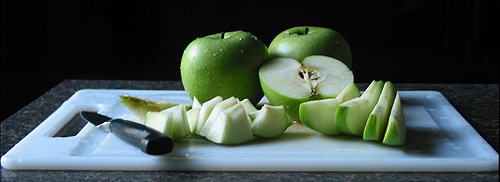
Peel and slice the Granny Smith apples to approximately ¼ inch slices. (They are an extremely firm apple and any thicker will require sautéing prior to being placed in the crust or they may not cook well during the baking process.) Toss the apples with the sugar, cinnamon, a couple of hearty dashes of allspice, vanilla, and the two tablespoons of flour. Stir to coat the apples thoroughly and set aside.

Remove the dough from the refrigerator and cut into two pieces. One piece should be slightly bigger than the other to serve as a top crust. Working on a lightly floured surface, use a rolling pin to roll out the dough enough to cover the bottom and up the sides of an eight-inch pie plate. The bottom crust can hang over the edge of the pie plate just a little. Fill the bottom crust with the seasoned apple mixture and place four tablespoon slices of butter on top of the apples. Roll the top crust larger than the diameter of the pie plate and place over the apples. Tuck the edges of the top crust beneath the edges of the bottom crust and crimp to seal. I prefer pressing with the floured tines of a fork to create an old-fashioned look.

Cut several vents in the top crust with a small, sharp paring knife to allow steam to escape. Brush the top crust with your choice of wash. I prefer a milk wash, but egg white thinned with water is also a good choice. Sprinkle liberally with cinnamon or sugar. Bake for 30 minutes. Check on the brownness of the crust and bake in five minute increments until a golden color has been achieved but no more than 45 minutes total.

Remove the pie from the oven and let stand for fifteen minutes. Serve warm with ice cream or whipped cream.

By Bread Alone

1433270193628Forgiveness is a tricky concept. It is easily applied to a situation when the transgression is minor. A forgotten birthday, a word misspoken in haste, a misunderstanding of perceptions; forgiveness is willingly doled out in each of these instances.

But what about the attempted genocide of an entire people? Or searching one’s own soul in an effort to release a lifetime of guilt? Who is responsible to bestow forgiveness to the offenders when these are the circumstances? Man and/or God?

These are the questions that trouble the minds of Reuben and Hannah Wise and Dr. John Welles after they dine together one January evening in 1955. All three are divided in their opinions concerning the particular events that generated their questions. While they remain polite toward each other, a wedge has been driven into their friendship, especially between Hannah and John.

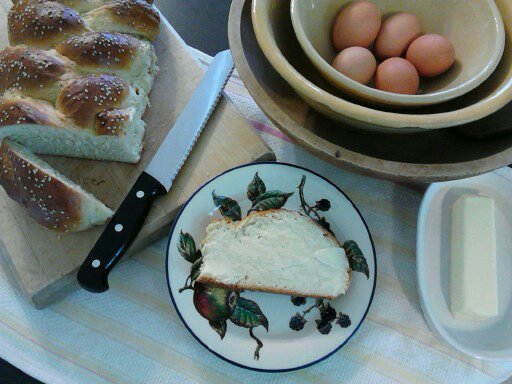
I chose to have Reuben serve challah bread during the Shabbat meal to which he and Hannah invited John for two reasons. For one, challah is traditionally served during the observation of Shabbat. More importantly, though, the presence of bread during this significant meal drew attention to the many references of bread in the Bible as well as underscored the differences between the Wises and Dr. Welles.

The following recipe is the one I had in mind for the challah Reuben made in my novel, The Secrets of Dr. John Welles. I hope you will enjoy this lightly sweet, rich, and delicious bread with your meals.

Reuben Wise’s Challah Bread

1 ½ cups warm water

2 tablespoon yeast

½ cup olive oil

½ cup sugar (or honey) (I used raw sugar)

3 eggs (2 for the recipe and 1 for the wash)

1/2 teaspoon salt

6 cups flour (slightly packed)

In a Kitchen Aid mixer add 1 ½ cups lukewarm water and 2 tablespoons yeast. Mix gently and allow the yeast to foam.

Add ½ cup sugar (or honey), ½ cup olive oil, 2 eggs, and ½ teaspoon salt. Mix well, approximately one minute or so. Add the six cups of flour one at a time and mix thoroughly with a bread hook. You may need to add ½ cup of flour if the dough is very sticky.

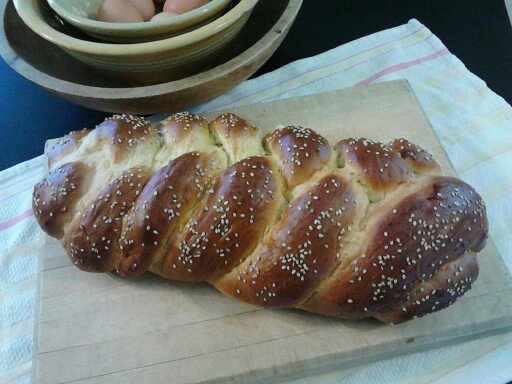
Remove from the mixing bowl and divide the dough into two halves. Divide each half into four pieces and roll each piece to about 12 – 14 inches in length. Braid the pieces of dough. (You can find instructions for braiding challah on the internet. I chose a four-strand braid for my bread.)

Brush each braided loaf with an egg wash (beaten egg with a little water to thin it). Place the braided loaves on a non-stick cookie sheet with parchment paper or a cooking mat on it and sprinkle liberally with poppy seeds, sesame seeds, or slivered almonds. Let the loaves rise until about 1/3 larger in size.

Preheat the oven to 350 degrees.  Bake the loaves for 23 – 25 minutes. Loaves should be golden and firm when finished.

This recipe can also be mixed and kneaded by hand.

1433270494920

The traditional blessing over the bread as spoken by Reuben Wise:

HAMOTZI – Blessing Over the Bread

Baruch Atah Adonai, Eloheinu Melech ha-olam, Ha-motzi lechem min ha-aretz.

hamotzi_0

Blessed are You, O Lord our God, King of the universe,

who brings forth bread from the earth.

The Bitter Truth

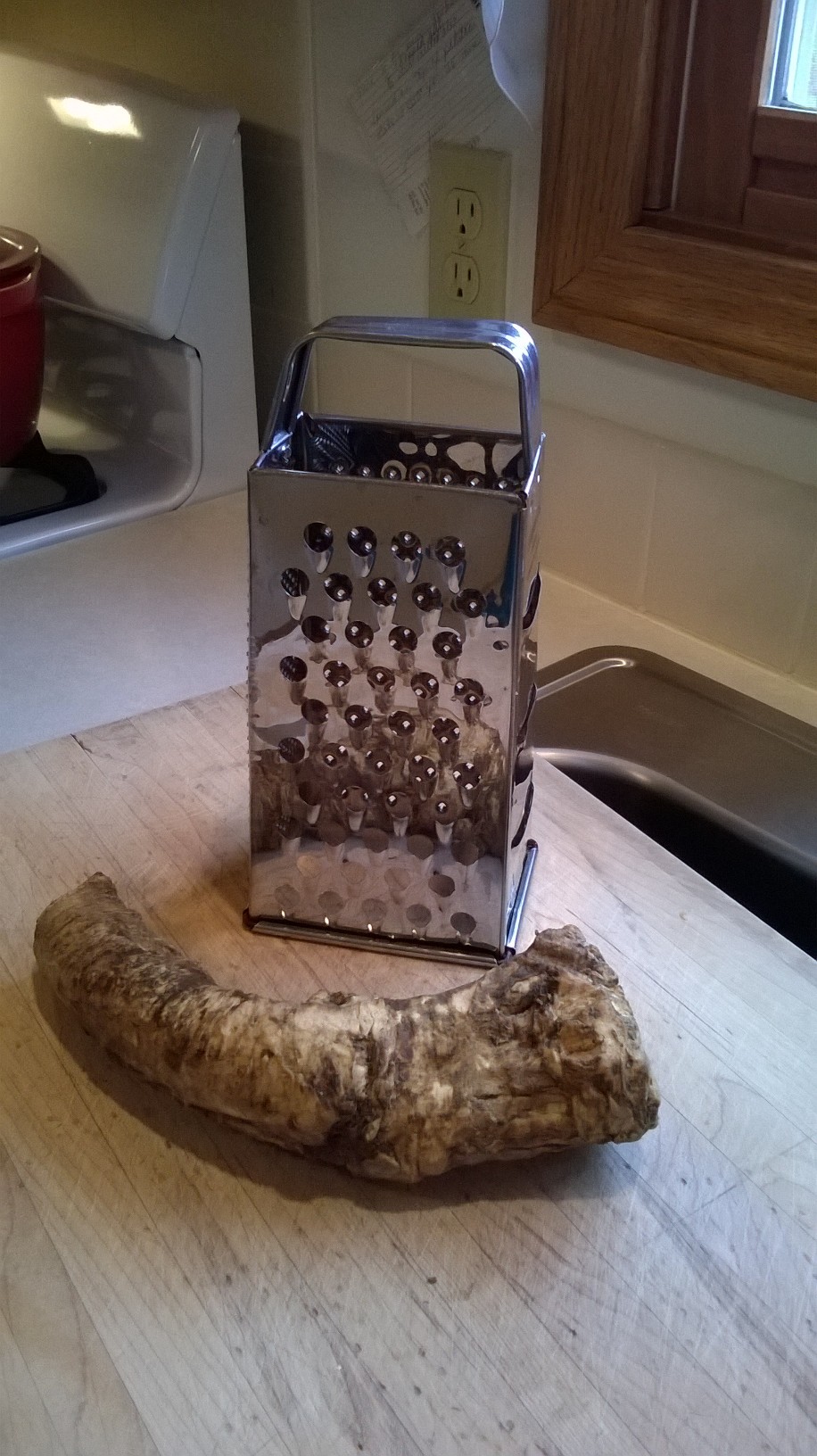
Horseradish and GraterWhen I first chose the meal my protagonist, John Welles, would enjoy with Reuben and Hannah Wise, I flinched at including horseradish sauce. A website on authentic Jewish cooking suggested the pungent condiment as a topping for the salmon patties I had Hannah serving.

I hate horseradish. My earliest memory of it involves cocktail sauce served at a seafood restaurant called Arthur Treacher’s that went out of business in our area years ago. My aunt was pumping the sauce out of a dispenser into little paper cups when one hefty pump spewed the offending sauce all over my shirt. I was mortified, and I guess my face showed as much because my aunt busted up laughing even as she wiped me off with paper napkins.

To this day I can sniff out horseradish in any meal even as someone is setting the plate down in front of me. I was sure I wouldn’t include it in my Edible Fiction posts featuring food from my novel, The Secrets of Dr. John Welles. Until my mom made fresh horseradish sauce.

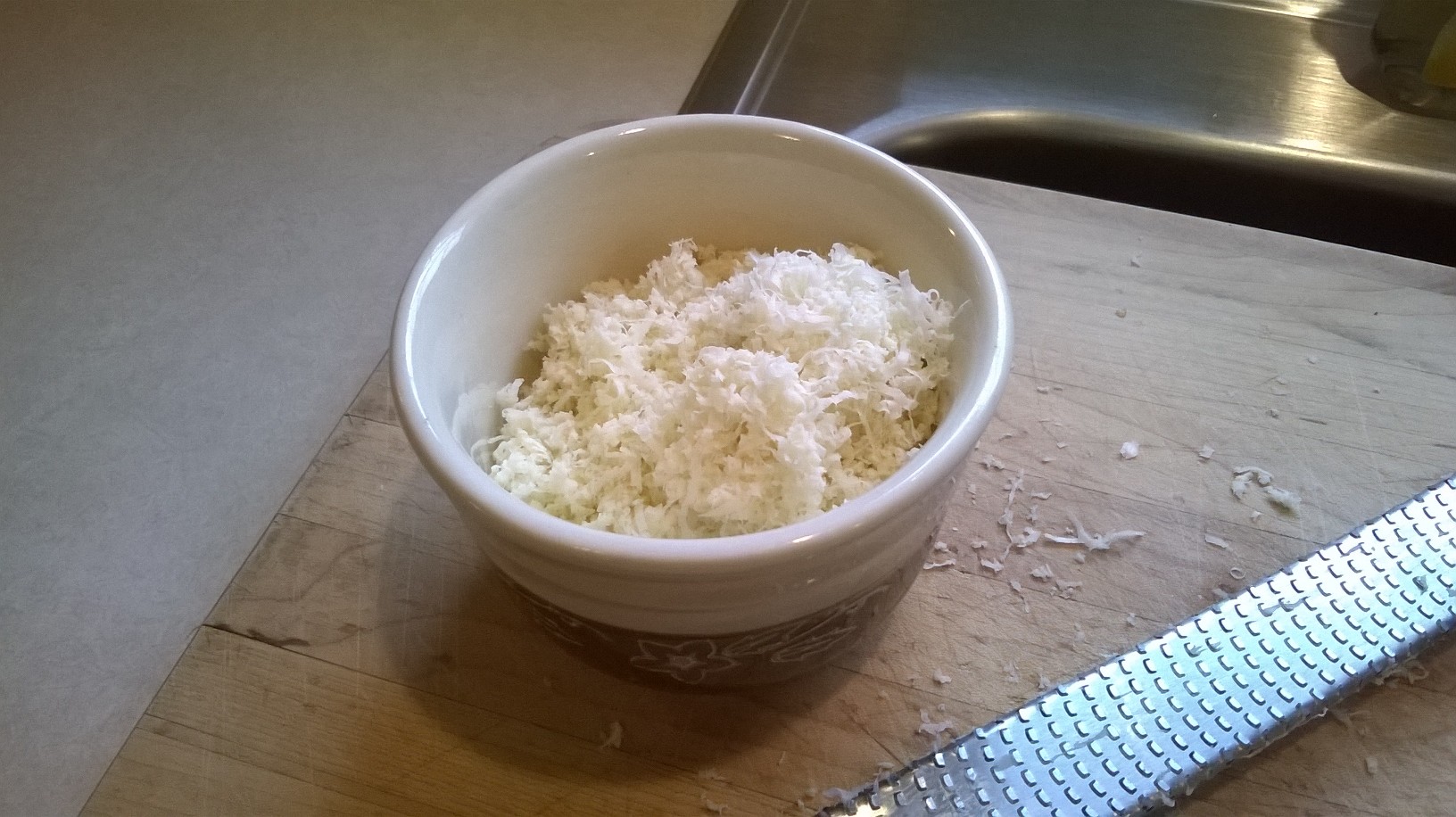
Homemade horseradish sauce is a whole different creature. The key, as I discovered, was to grate the horseradish fresh instead of using the jarredHorseradish Grated stuff. Freshly grated horseradish is zesty like radishes; it actually has flavor. Unlike the jarred stuff, which is bitter without much flavor at all, fresh horseradish tastes like peppery herbs.

As for recipes, there are thousands to be found for homemade horseradish sauce. I imagine Hannah would have mixed her freshly grated horseradish into a quality mayonnaise with a little salt and pepper to taste. Sour cream or crème fraiche is another suggestion as is the inclusion of white wine vinegar, chives, and Dijon mustard. You really can’t mess up the recipe; it’s just a matter of tasting as you create until you achieve the flavor you’re looking for.

The following is a basic recipe that provides a great jumping off point.

Horseradish Sauce

4 ounces of freshly grated horseradish root

1 ½ cups of mayonnaise

Salt and pepper to taste

Peel and grate the horseradish root. Stir into the mayonnaise and season with salt and pepper.