In For a Penny, In For a Pound


Done and cut

It is Christmas morning, December 1917, and young John Welles is celebrating with his family. Their festivities are halted for a moment when John’s often absent, always inebriated father walks into the kitchen. John and his three siblings hold their breath until their stepmother, Collie, prepares a plate of fried eggs and a cup of coffee and sends him back to wherever he spends his days.

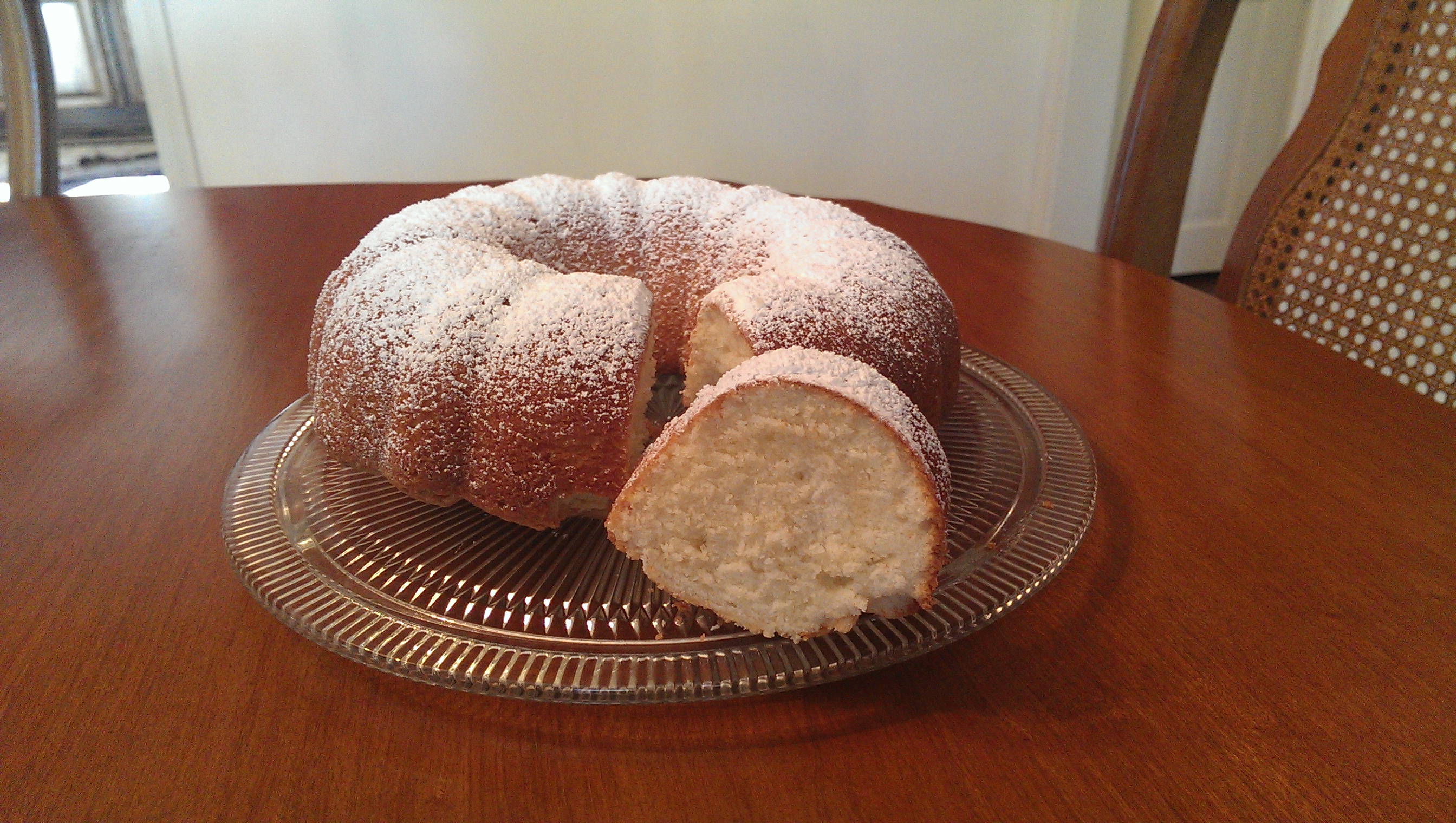
As a surprise for her stepchildren, Collie made pound cake and hot cocoa. She’s not the type to serve dessert for breakfast but makes an allowance for Christmas.

The following recipe is the one I had in mind when I wrote the scene above. I first tasted this particular pound cake at a work function. My co-worker, Cheryl Pandrea, really has the magic touch when it comes to making this recipe. The cake is rich, moist, and delicious. It’s perfect served with the cocoa recipe on my blog.

Cheryl’s Pound Cake

2 sticks of butter

3 cups of sugar

¼ teaspoon baking soda

6 eggs

16 ounces sour cream

3 cups flour

Preheat the oven to 325°

In a large bowl, cream the butter and the sugar. Add the baking soda and mix. Add the eggs two at a time and mix thoroughly after each. Add the sour cream and mix thoroughly. Gradually add the flour a half cup at a time, mixing well after each addition.

Grease and flour a bunt pan, be sure to get all the fluted edges. Bake the cake for 1 – 1 ½ hours or until golden brown. A tester inserted should come out clean.

Turn the cake out on a cooling rack. Let it cool until just warm or room temperature, then serve.

A Special Christmas Breakfast

A Special Christmas Breakfast

You Haven’t Been Cooking Again, Have You Prudence?

1424624185921October 1925 is the start of a very exciting time for John Welles; he’s beginning his pre-med studies at the University of Maryland. John’s deepest personal secret to date, the fact that he wants to study medicine, is becoming a reality.

Unfortunately, his first day is overshadowed by the rift that still exists between him and his stepmother, Collie. For three months, John hasn’t received a letter or telephone call from her. As much as he misses her presence in his life, he doesn’t know how to repair the damage.

His Aunt Prudence discerns that he’s still upset by the harsh words he exchanged with Collie, so she surprises him with a special breakfast consisting of the dishes he enjoyed as a child on the farm. John teases his aunt about her terrible cooking skills to which Prudence replies that her cook, Lucia, actually made the breakfast.

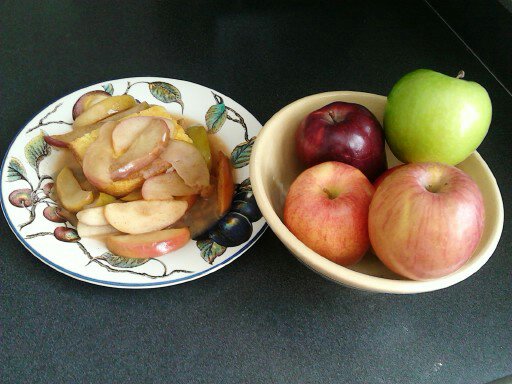
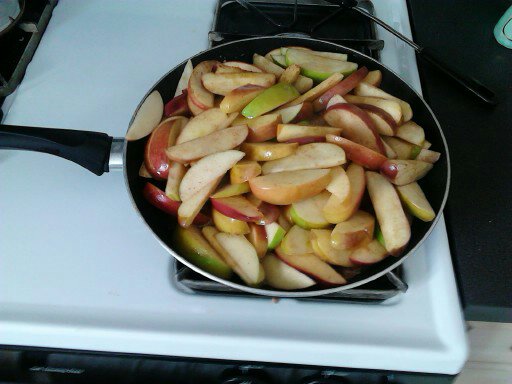
One of the breakfast menu items Prudence and Lucia serve John is fried apples. They’re delicious over biscuits, cornbread, ice cream, pancakes, or served in a bowl as a side dish. The great thing about fried apples is that you really don’t need a recipe. I’m sure recipes exist, but you’ll end up tweaking them to your tastes anyhow so just wing it from the start.1424622543744

I suggest at least two apples per person and keep in mind that people will want seconds and leftovers.  Just to be safe, make it three apples per person; they really do reheat well. We like a combination of sweet and tart apples. Any of the cooking varieties will do.

Apples

Unsalted Butter

Brown Sugar

Cinnamon

Salt, optional – add when seasoning

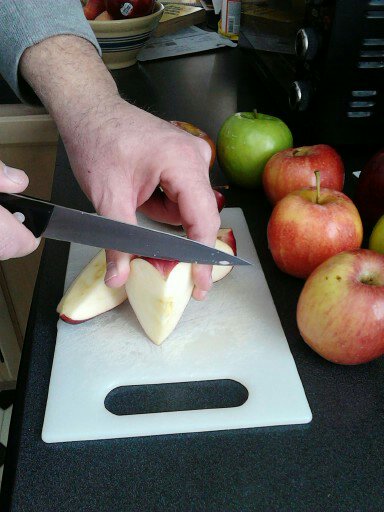
Slice each unpeeled apple in eight pieces and place in a large mixing bowl. Toss the apples with approximately a ¼ cup of brown sugar, several hearty shakes of cinnamon, and salt if using. Heat at least half a stick of butter in a very large skillet because this is one of those recipes that seem to grow as you make it. More butter means more syrup.

Transfer the spiced apple mixture to the skillet, cover, and cook the apples until they are tender but not falling apart, stirring occasionally. As they cook, the apple juice mixes with the brown sugar and cinnamon to make sticky syrup. This is where you’ll decide if you want more or less sugar, butter, and cinnamon or to add another flavor like honey or ginger. You really can’t go wrong with fried apples. Be adventurous and make the recipe your own; your family will love you for it!

Enjoy!

So easy the hubby can do it!

So easy the hubby can do it!

Crossing the Road with the Chicken

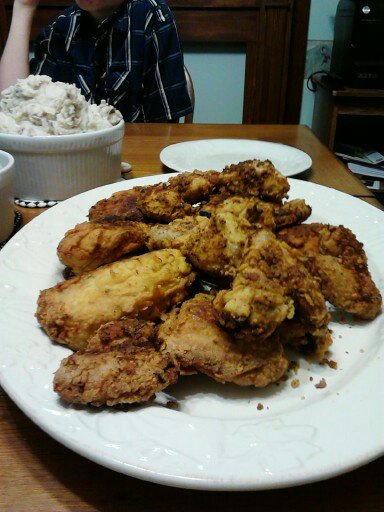
Buttermilk Fried Chicken with Mounds of Smashed Potatoes and a hungry child in the background.

Buttermilk Fried Chicken with Mounds of Smashed Potatoes and a hungry child in the background.

In June of 1920, John Welles travels with his Aunt Prudence to her house in Baltimore. It is the first time he has been away from his home on the farm. As much as he loves his family, John is desperate to escape the two tragedies that haunt him, leaving him with a painful secret.

John’s stepmother, Collie, packs a picnic lunch for him and Prudence. Buttermilk fried chicken is sure to ease the sadness John feels at his departure. Her gesture will also soften the heartbreak she experiences when her youngest child leaves home for good.

The fried chicken I imagined when I wrote this scene tastes like what my mother made during my childhood. Unfortunately, by the time I became a homemaker, frying had long since been replaced with baked or grilled skinless chicken. To make matters worse, Mom didn’t really remember how she prepared the chicken.

I called my sister-in-law because her parents host fish fries, but I discovered that she, too, possessed no talent for frying. After a good laugh, we collaborated on the following recipe. I took responsibility for the marinade, and she handled the coating. Together we monitored the frying process like a new mother watching over a sleeping baby. What we created was juicy, delicious, and not too bad for a couple of chicks learning to fry!

I hope you enjoy our recipe.

Buttermilk Fried Chicken

Chicken – 2 breasts, 2 thighs, 2 legs, 2 wings

Sea salt and freshly ground black pepper

2 cups buttermilk

2 teaspoons hot sauce

3 cloves garlic, crushed

½ teaspoons dried thyme

House of Autry Chicken Breader (I highly recommend this product; it is seasoned perfectly and deliciously)

32 oz. bottle peanut oil

Vegetable shortening

Rinse and trim the chicken pieces for excess fat, pat dry with a paper towel. Place the pieces in a baking dish and season with salt and pepper. Cover and refrigerate about an hour.

Mix the buttermilk, hot sauce, garlic, and thyme in a gallon-sized, re-sealable plastic bag. Add the chicken pieces, making sure all pieces are submerged, seal and refrigerate 2 to 4 hours, turning the bag every hour.

Remove chicken from the bag and gently shake off excess marinade. Place half of the chicken in another gallon-sized, re-sealable bag with two cups of chicken breading. Seal and shake thoroughly to coat the pieces. Remove from the bag and shake off any excess breading, set aside. Repeat with remaining pieces, adding more breading if necessary.

Fill an electric skillet with all of the peanut oil and two large spoonsful of vegetable shortening. Heat to 350° F, making sure the shortening melts completely. When the skillet reaches desired temperature, a bead of water dropped in the oil should dance across the surface.

I suggest cooking the thickest pieces first (breasts and thighs). Use tongs to carefully lower the coated chicken into the hot oil. The temperature will drop, so adjust the skillet heat as needed to maintain the correct cooking temperature.

The following indicates the number of minutes per side for each piece, with flipping in between, to ensure doneness without burning. The first five minutes per side sets the breading:

Breasts – 5, 5, 3, 3, 3

Thighs – 5, 5, 3, 3

Legs & Wings – 5, 5, 2, 2

Remove the chicken to a cooling rack lined with paper towels to drain, sprinkle with salt, and let rest a few minutes. Repeat with the remaining chicken. Serve with favorite side dishes.

Simple Fare, Shocking Secret

An invitation to dinner is a most coveted offer for a bachelor to receive. While many of them are experts at instant foods or eating out, single men rarely take the time to prepare a decent meal for themselves. It is no different for my protagonist, Dr. John Welles.

John grew up eating delicious food prepared by his stepmother, Collie, and later by his Aunt Prudence’s cook, Lucia. Unfortunately, their culinary skills never rubbed off on John. If not for the good food he eats at Bea Turner’s diner, John would probably lose a considerable amount of weight while living on his own in West Virginia.

During the snowbound winter of 1955, John accepts an invitation to dine with Rueben and Hannah Wise. The Wises own a small grocery store, and while they aren’t wealthy people, they provide a meal that is both simple and delightful. In addition to saving him from his own bachelor cooking, the Wises second, more important reason for inviting John to dinner completely catches him off his guard.

The following recipe for salmon patties is the one I had in mind as I wrote this scene. Salmon patties were cause for nose wrinkling when I was a 1422563010122child; I didn’t develop a taste for them until I became an adult. I do suggest making them when you can have the windows open or prepare them in a skillet that can be covered. Salmon patties are delicious, but they will leave a pungent, lingering aroma in your home for a couple of days!

Salmon Patties

1-14.75 oz. can of pink salmon, drained

½ cup crushed Ritz crackers

1 egg

1 T parsley

1 stalk of celery, minced

2 T onion, minced

Tabasco, several hearty shakes

Black pepper & Sea Salt to taste

Approx. 2 T Olive Oil

Approx. 2 T Butter

Mix all of the ingredients in a bowl until well blended. If mixture is dry, add 1 tablespoon of half and half at a time until mixture forms a ball. Gently press out salmon patties on a cutting board using your hands. Be sure to keep the edges neat so patties won’t crumble while cooking.

Melt the butter in a skillet with the olive oil. When the skillet sizzles, add the salmon patties and cook on a high heat to set each side. Take care not to burn. Flip once to cook the other side. Patties should be nicely browned and lightly crisped. Serve immediately.

Peas, Glorious Peas!

My Great Aunt Edie, a classy lady who never ceases to amaze me, once told me a story about a trip she and my Great Uncle Bud took to Maryland to attend the Butler Family Reunion. The most interesting part of the story included her description of the breakfast menu.

1422562899611One morning, Aunt Edie, Uncle Bud, and the relatives with whom they were staying ate breakfast with close family friends. Their hosts served the usual breakfast fare, but my aunt was surprised to see pork chops, creamed peas, and bowls of other vegetables on the table. She mentioned this to my uncle.

He explained that the men had been up early and already completed a full day of work before she and my uncle woke up. After breakfast, the men would return to work, break for lunch, return to work again, and finally eat dinner well after dark when all the barn chores had been completed.

I recalled this story as I wrote the scene in which the family of John Welles celebrated his arrival with a huge breakfast. Although the birth of a new baby was exciting, it didn’t take precedence over the work that had to be done. Those not involved with bringing young John Welles into the world still had chores to complete.

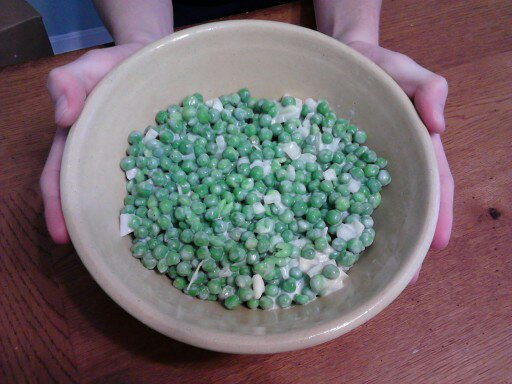
Once my novel has been published, I’ll be interested to see if anyone comments on creamed peas for breakfast. Will readers find it odd or familiar? The following recipe is the one I had in mind as I wrote the celebration scene in my novel, The Secrets of Dr. John Welles.

Enjoy!

Creamed Peas

2 cups of frozen peas

1 T butter

1 T flour

½ cup of whole milk

black pepper, I use a mixture of black, white, green, and pink peppercorns

sea salt

1 t sugar, I use raw sugar

2 green onions (white and green portion), diced

Bring water to a boil in a three quart saucepan. Add the peas, reduce heat, and stir. Cook/defrost the peas for three to five minutes, until they begin to float. Drain the peas.

Melt the butter in the hot pan. Whisk in the flour until smooth, be sure to not burn the mixture. Add several grinds of cracked black pepper, salt to taste, and the sugar. Slowly pour in the milk and whisk over medium heat until thickened. Stir in the cooked, drained peas. Toss lightly and stir in the onions.

Saved by the… Beef?

The year is 1927. John Welles’ best friend, Claude Willoughby, has had a falling out with his father. John isn’t aware of the details yet, but he suspects J.D. Willoughby isn’t as charming as he would like everyone to believe.

Part of Claude’s punishment is to remain in Baltimore while the rest of his family returns to Kentucky for Christmas. He’s heartbroken. Only the support of his two best friends, John Welles and Sam Feldman, manage to lift his spirits.

Part of their suggestion for Claude’s untraditional holiday is to spend some time with both of them at their respective homes. Sam goes one step further and proposes an after-the-fact Hanukkah celebration including traditional Jewish dishes such as brisket.

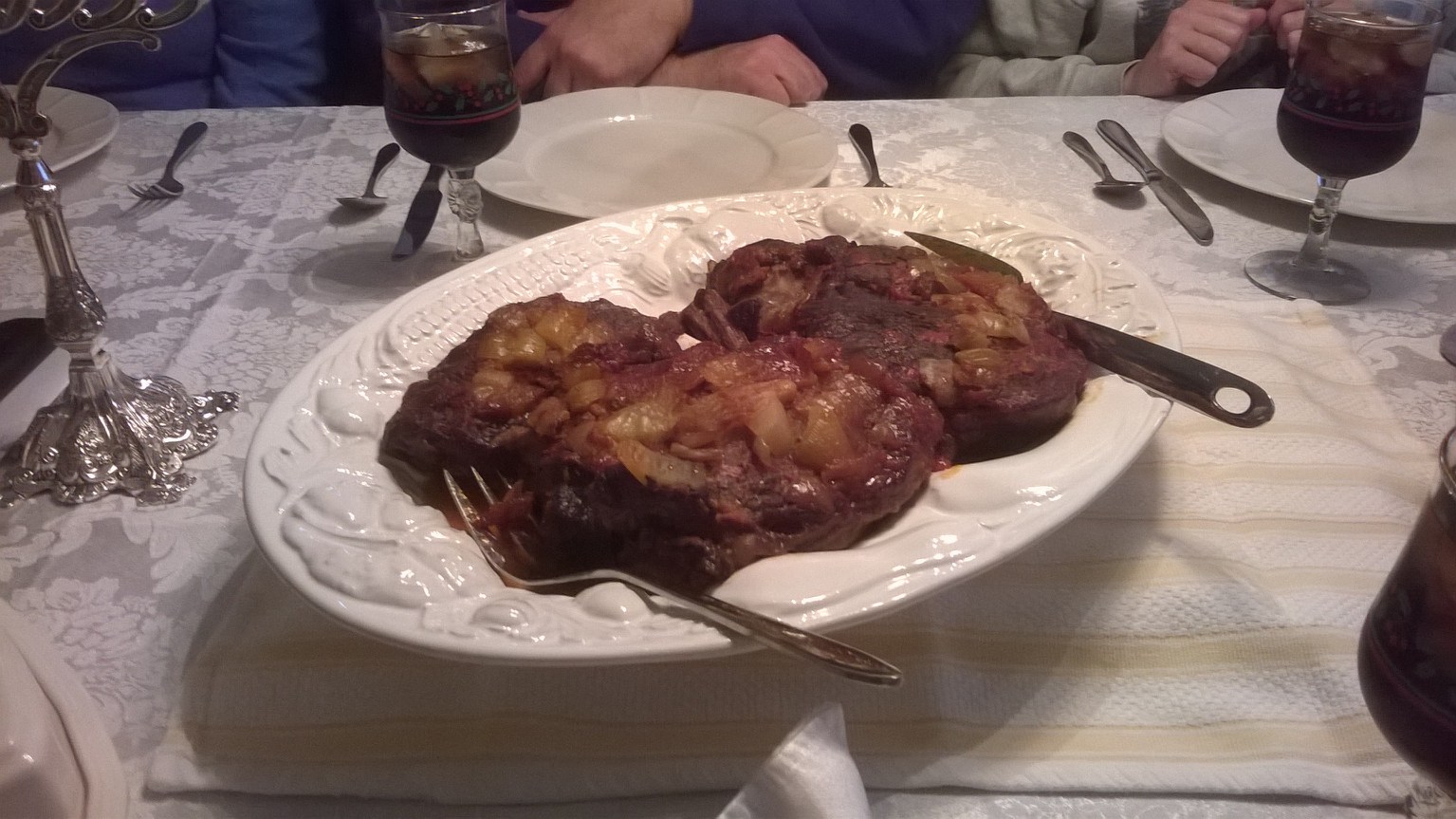
I had the following recipe in mind when I wrote the above-mentioned scene in my novel, The Secrets of Dr. John Welles. My family looks forward to eating brisket every Hanukkah. This recipe is perfect for celebrating any time of the year. I hope you’ll enjoy it, too.

Jewish Brisket

4 pounds beef brisket

Olive Oil

1 cup water

1 cup ketchup

½ white vinegar

2 onions, sliced

1 clove garlic, minced

¾ cup brown sugar

1 tablespoon salt

Drizzle olive oil in a large skillet or Dutch oven.  Add the brisket and heat over medium-high heat. Cook the brisket until browned on all sides. Mix water, ketchup, vinegar, onions, garlic, brown sugar, and salt. Pour mixture over the brisket and bring to a boil. Cover and reduce the heat to medium-low. Continue simmering until tender, turning brisket occasionally, 2 hours and 30 minutes to 3 hours and 30 minutes. Check often after initial 2 hours and 30 minutes to keep from burning or drying out.

Remove the brisket and allow it to cool slightly before slicing the meat against the grain. Place slices of brisket in a 9 x 13 inch baking pan or large platter, pour sauce on top, and serve. Cover any remaining brisket and refrigerate. Spoon off any excess fat and reheat before serving.

Eager hands waiting to attack the brisket after prayer.

Eager hands waiting to attack the brisket after prayer.

The Spice of Life – Gingerbread & Girlfriends

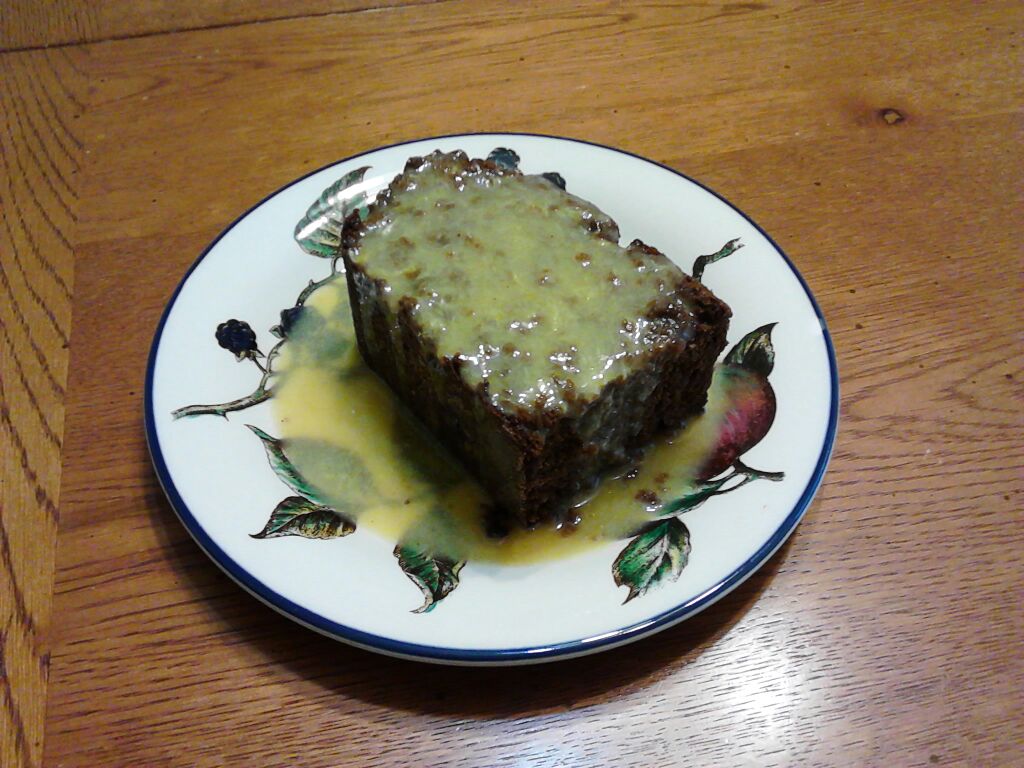
Gingerbread with Lemon SauceThe year is 1928. John Welles and his Aunt Prudence are having gingerbread with lemon sauce one evening when she brings up the very touchy subject of Miss Garland Griffin. Garland and John attend the University of Maryland. The two are in constant competition for the top spot in the grade standings. Their rivalry takes on a sharp edge.

Prudence presses John into admitting he has a more personal interest in the young woman by reminding him of comments he’s made regarding Garland’s beauty. Her attempts to draw him out only serve to frustrate him until the two are snapping at each other.

All is not lost despite Prudence’s often bungled attempts at parenting. She and John are close enough that they manage to work through their spats even if he’s the one who has to act more like the adult. John loves his sulky aunt, and in the end, he turns to her for advice.

The following recipe is the one I had in mind when I wrote the scene above. Prudence and John don’t always see eye to eye, but like sweet gingerbread and tangy lemon sauce, their personalities complement each other.

Gingerbread

½ c sugar

½ c butter

1 egg

1 c molasses

2 ½ cups all-purpose flour

1 ½ t baking soda

1 t ground cinnamon

1 t ground ginger

½ t ground cloves

½ t salt

1 c hot water

Preheat oven to 350 degrees F (175 degrees C). Grease and flour a 9-inch square pan. In a large bowl, cream together the sugar and butter. Beat in the egg, and mix in the molasses. In a bowl, sift together the flour, baking soda, salt, cinnamon, ginger, and cloves. Blend into the creamed mixture. Stir in the hot water. Pour into the prepared pan. Bake 1 hour in the preheated oven, until a knife inserted in the center comes out clean. Allow to cool in pan before serving.

Lemon Sauce

½ c sugar

2 t cornstarch

Dash of salt

Dash of nutmeg

1 c water

2 egg yolks, beaten

2 T butter

2 T lemon juice

½ t grated lemon peel

1 t lemon extract

Combine sugar, cornstarch, salt, nutmeg, and water in a saucepan, stir until smooth. Cook and stir over medium-high heat until thickened and bubbly. Reduce heat, cook and stir 2 minutes longer. Remove from heat.

Stir a small amount of hot filling into egg yolks, return all to pan, stirring constantly. Bring to a gentle boil. Cook and stir 2 minutes longer. Remove from heat. Gently stir in butter, lemon juice, lemon peel, and lemon extract. Serve warm with gingerbread. Refrigerate leftover sauce.

Collie Mercer’s Cornbread

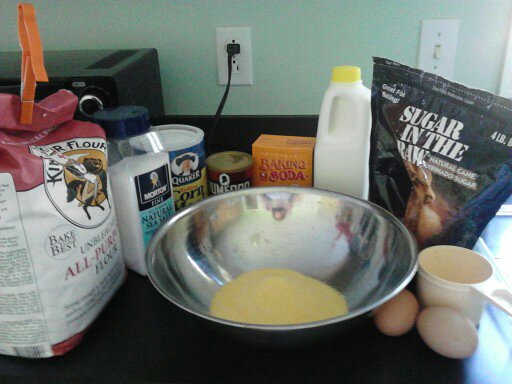
Buttermilk Cornbread Ingredients

Buttermilk Cornbread Ingredients

There are probably as many recipes for cornbread as there are people. Well, at least as many as there are people in the southern part of North America. I chose the following recipe because it was the one I had in mind when I wrote my novel, The Secrets of Dr. John Welles.

The year is 1907. For the three oldest Welles children, Stanley, James, and Eunice, December will hold an extra surprise this year. They will receive an early Christmas presents in the form of a new baby brother. Each has an opinion on whether or not another sibling is a good thing for their family.

After the three children get a peek at their baby brother, the midwife, Collie Mercer, sends them off to do their chores. Collie is a brusque, but kind woman, who makes sure the children have food in their stomachs before heading out into the cold. She directs them to cornbread and buttermilk on the kitchen table with the promise of a real breakfast once they return from the barn.

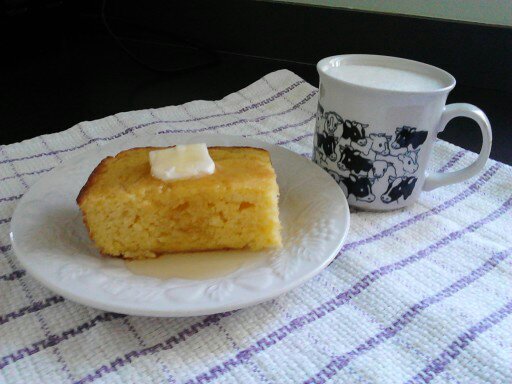
I love this recipe because it is rich and moist. Usually, I serve it with butter and honey, but the recipe is also good with the inclusion of herbs or spices, cheese, green onions or chiles; whatever you choose to add to make it your own. It is great crumbled up in chili, soaking up the broth from brown beans, or toasted and served with apple butter.

Enjoy!

Served With Butter & Honey

Served With Butter & Honey

Collie Mercer’s Cornbread

6 tablespoons unsalted butter, melted

1 cup cornmeal

3/4 cup all-purpose flour

2 tablespoons sugar (I use raw)

1 1/2 teaspoons baking powder

1/2 teaspoon baking soda

1 teaspoon salt

2 large eggs, lightly beaten

1 1/2 cups buttermilk

Cooking Spray

Preheat the oven to 425 degrees F. Lightly grease an 8-inch baking dish.

In a large bowl, mix together the cornmeal, flour, sugar, baking powder, baking soda, and salt.

In a separate bowl, mix together the eggs, buttermilk, and butter.

Pour the buttermilk mixture into the cornmeal mixture and fold together until there are no dry spots (the batter will still be lumpy). Pour the batter into the prepared baking dish.

Bake until the top is golden brown and tester inserted into the middle of the corn bread comes out clean, about 20 to 25 minutes. Remove the cornbread from the oven and let it cool for 10 minutes before serving.

Christmas Morning Hot Cocoa

Christmas Day has a special quality that is difficult to describe. For me, as a child, it began long before the day arrived. My excitement was wrapped up in anticipation of my family gathering in the morning and spending the entire day together. I admit the presents were a bonus, but what I’m talking about is the sacred, magical characteristics unique to Christmas.

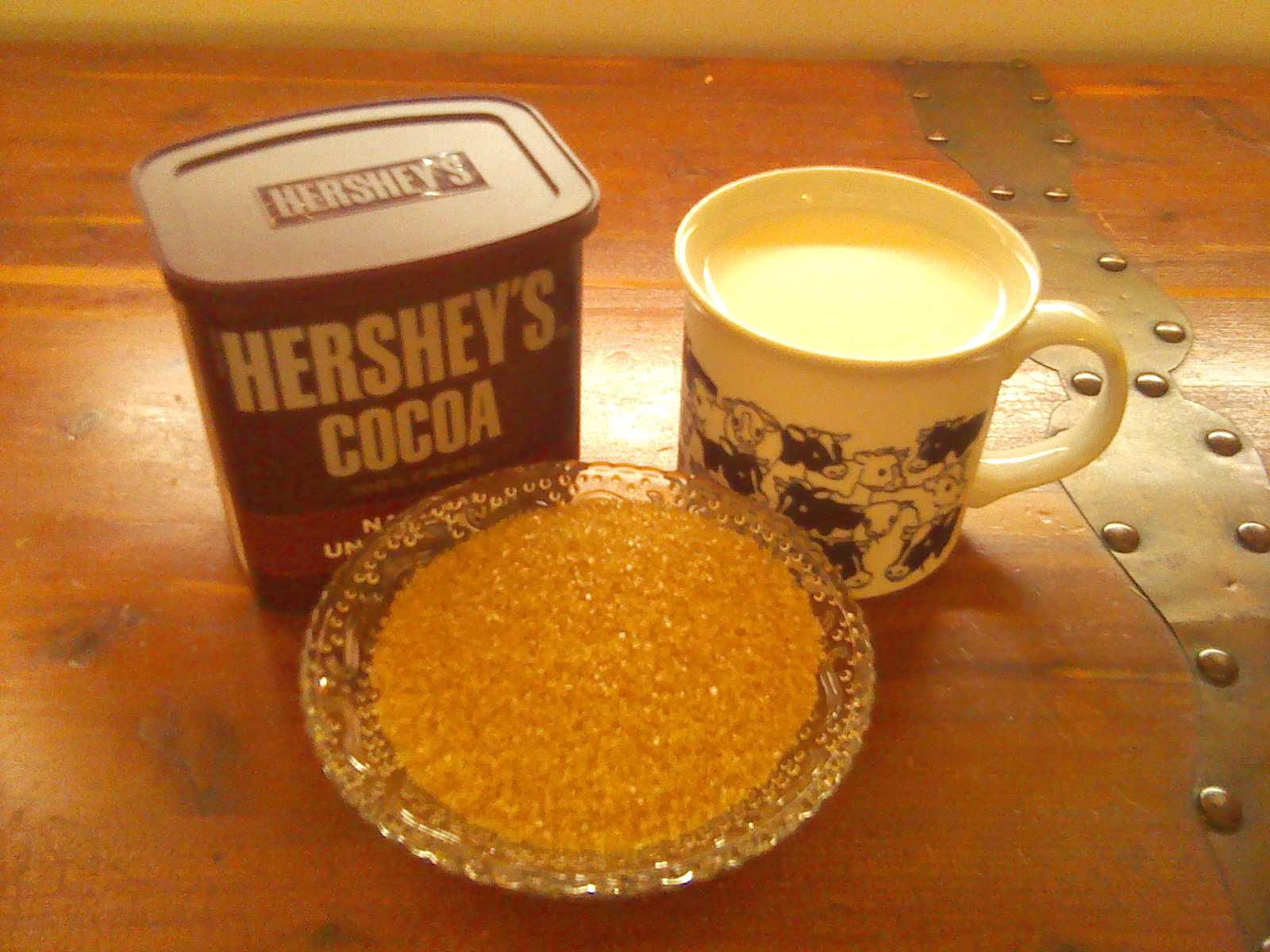
Creamy Hot Cocoa

Creamy Hot Cocoa

I tried to capture the essence of what I mentioned above in my novel, The Secrets of Dr. John Welles. The year is 1917 and Johnny is still a boy living on the farm with his family in Harford County, Maryland. The morning is almost ruined by an unwelcome visitor before Johnny’s stepmother, Collie, comes to the rescue.

Collie surprises the family with slices of pound cake and hot cocoa in addition to their usual fare. The food in this scene came from a memory I have of my mother waking my brother and me with slices of pound cake and hot cocoa one summer morning. I thought the rich cake and hot beverage would translate well to winter dining.

Sometimes the terms hot chocolate and hot cocoa are used interchangeably and incorrectly. Hot chocolate is milk and cream based with vanilla and shavings of semisweet or bittersweet chocolate. In some recipes, the quantity of chocolate used can make the drink so thick one has to spoon it out of the cup. Hot cocoa, on the other hand, is made with water, a little cream, sugar, and cocoa powder. This version is thinner with a more concentrated chocolate flavor.

For my novel, I chose to include the recipe my mother makes. It’s somewhere between the above-mentioned methods. My best memories of hot cocoa are made with the following recipe. Enjoy!

One 8 – 10 oz. mug per person

Whole Milk

Sugar (I use raw sugar)

Hershey’s Cocoa

Vanilla

Use one mug to measure out the quantity of milk needed, enough for each person, into a saucepan. Add 1 t. vanilla per person to the milk and warm on the stove. While the milk/vanilla is heating, measure 2 t. Hershey’s cocoa into each cup and 2 – 3 t sugar (depending on how sweet you like it.) When the milk/vanilla mixture is steaming, ladle it into each cup. Stir until sugar and cocoa are thoroughly mixed in. Garnish as desired.

Hugh Griffin’s Peach Pie

IMG_20140908_154003

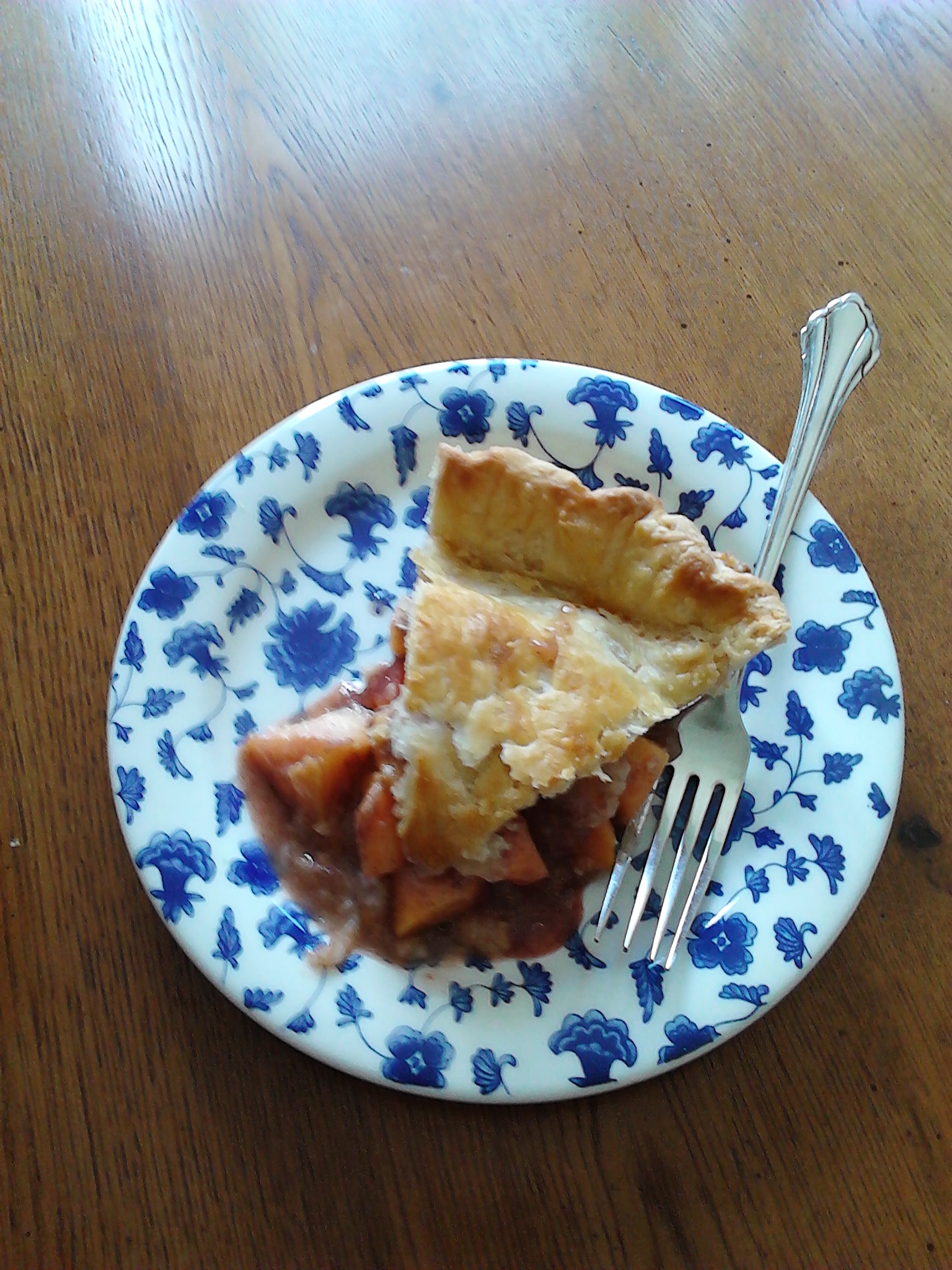
Juicy Peach Pie

It is the summer of 1929. John Welles and his girlfriend, Garland Griffin, take a trip to visit her father. It’s a big step in their relationship. She is opening up to John and showing a side of herself he never knew existed.

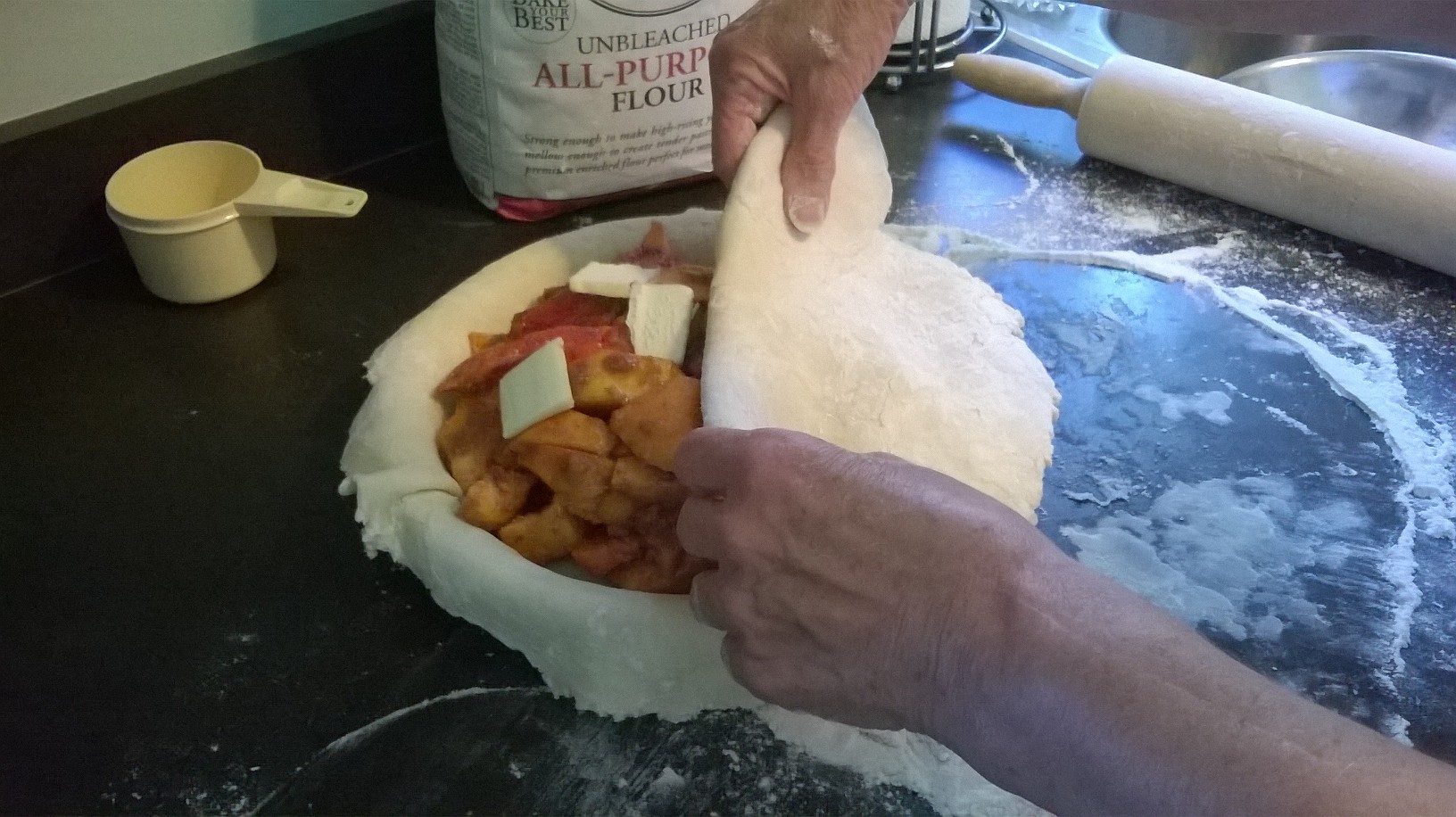
While visiting, Garland’s widowed father, Hugh, serves the couple peach pie he made himself. The following recipe is the inspiration for the pie in my novel, The Secrets of Dr. John Welles. Although Hugh is, no doubt, a very talented man, it was actually my mother who made the pie pictured throughout this post.

Lightly crisp, buttery, flaky, tender, mouth-watering pie crust is the hallmark of my mother’s pies despite the flavor of filling used. She is such a master at it that I don’t even bother learning how to roll crust myself. Shameful, I know.

Anyhow, I hope you’ll enjoy the peach pie as much as John and Garland!

Hugh Griffin’s Peach Pie

WP_20140908_006

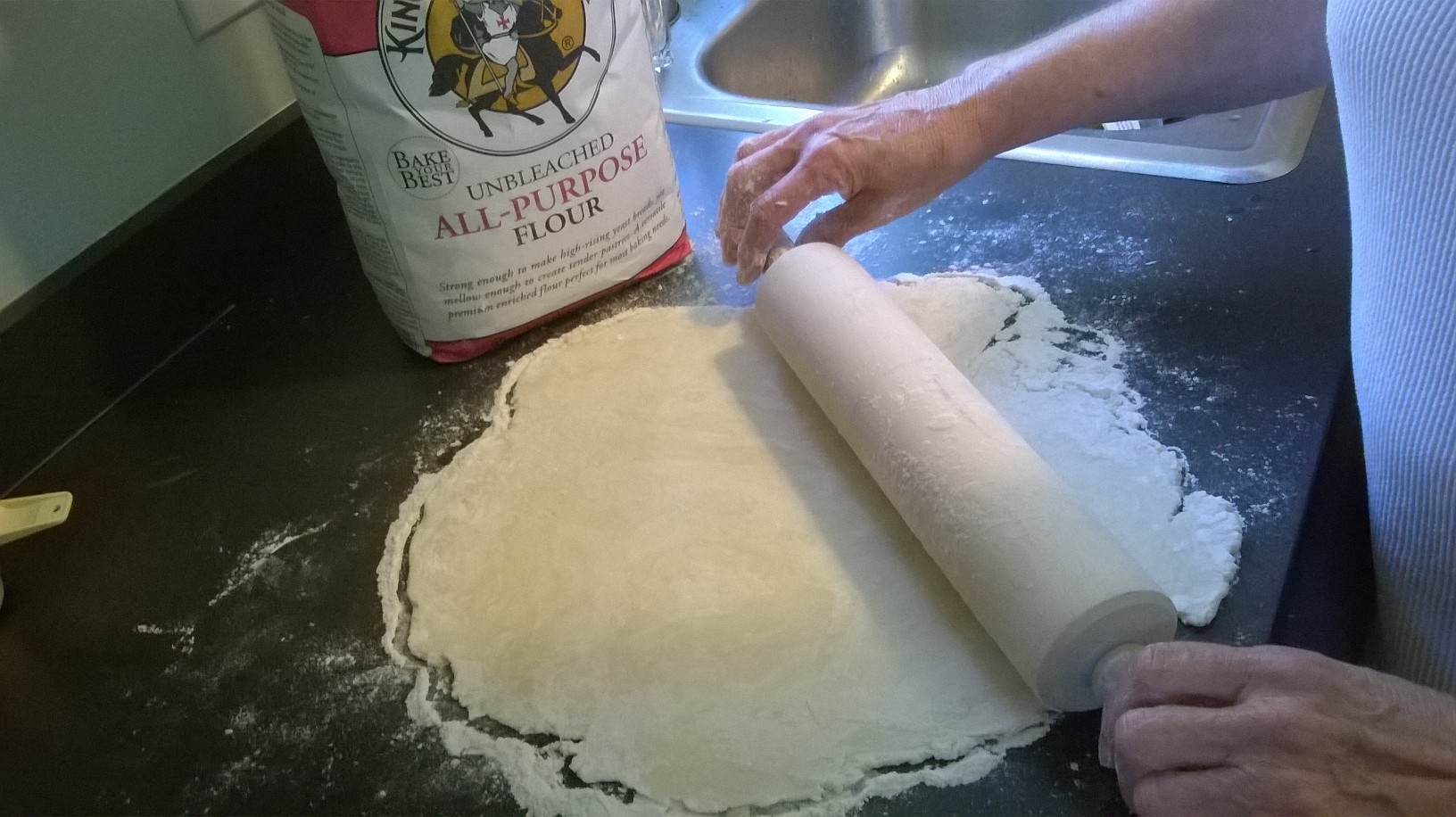
Expert Rolling of the Crust

For the Crust:

2 c all-purpose flour

1 t salt

1 c cold butter, cut into ½ inch pieces

Ice water

Sift flour and salt into a bowl. Work butter into the flour/salt mixture until it resembles coarse meal. A pastry blender or two knives is recommended so mixture stays cool. Add ice water one tablespoon at a time forming a dough ball with your hands. Work quickly to keep dough from warming. Wrap in plastic wrap and refrigerate while preparing peaches.

WP_20140908_007

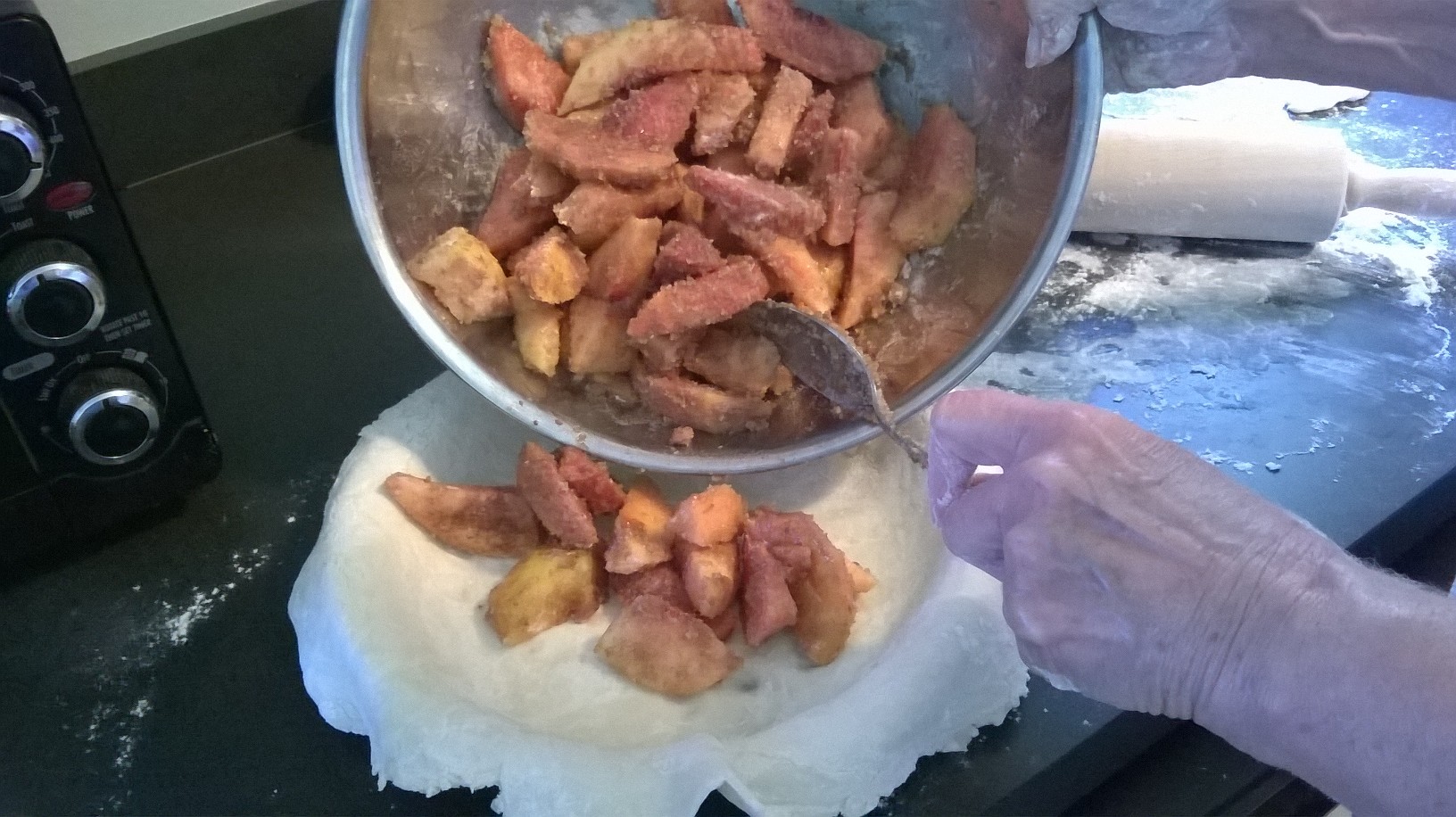
Adding Peaches to the Crust

For the Filling:

5 – 6 good sized peaches

5 T butter

¾ c sugar

¼ c flour

1 t vanilla

1 t cinnamon

½ t salt

Peel and slice peaches into a large bowl. Add sugar, cinnamon, salt, flour, and vanilla. Toss until well coated. Cover and set aside.

WP_20140908_010

Perfectly Assembled

Assembling the pie:

Divide dough ball in half. Roll one half for a bottom crust to fit in a 9” pie plate. Add peach mixture and dot with tablespoon slices of butter. Roll top crust and place on top of peaches. Tuck the edges of the top crust under the edges of the bottom crust. Crimp edges with a fork. Cut slits in top crust to allow steam to escape. Brush crust with an egg wash (1 egg beaten w/ 1 t water.) Bake at 425 degrees for 25 – 30 minutes or until crust is golden brown, taking care not to burn the edges.

WP_20140908_015

The hand that rolls the pie crust rules the world!