A Soldier’s Story – Omar N. Bradley

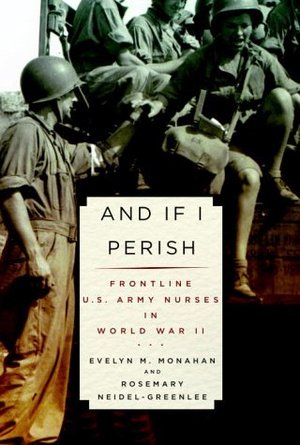
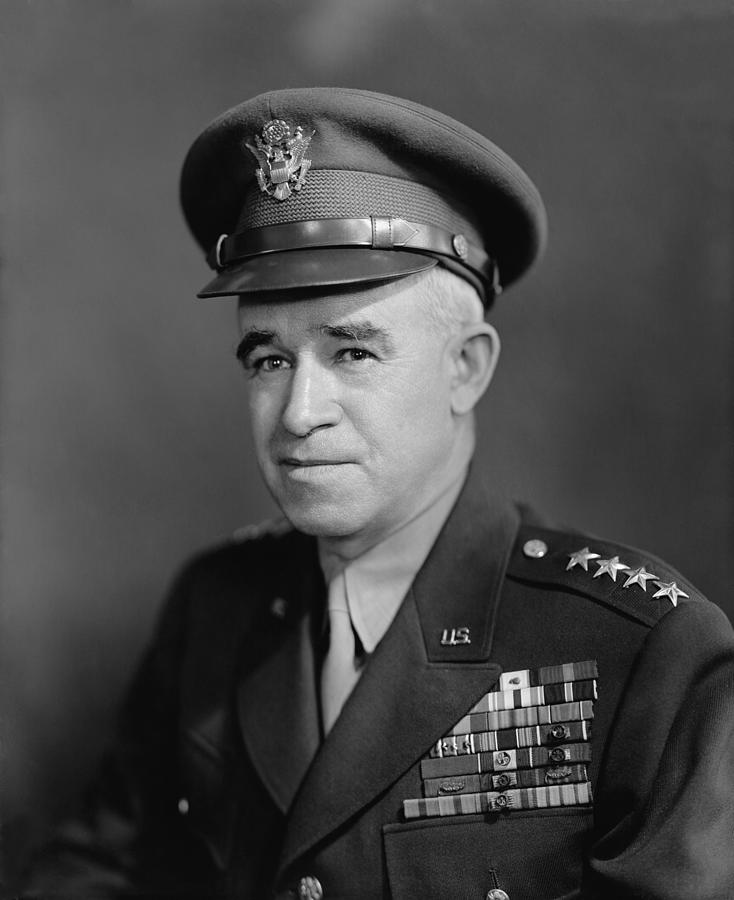
a-soldiers-storyA Soldier’s Story by General Omar N. Bradley is one of the most profound books I’ve ever read.  My friend and fellow writer, William Alford, loaned Bradley’s autobiography to me as a source of research for my novel, The Secrets of Dr. John Welles.  My research required a closer look at World War II, such as those provided by doctors and nurses (And If I Perish, Heroes From the Attic), but I still read Bradley’s account of the war, and I am extremely glad I did so.

He prefaces his autobiography with the inscription, “To those soldiers who must often have wondered WHY they were going where they did.  Perhaps this will help answer their questions.”

I believe Bradley answered these questions truthfully and without the ego that might have come from a lesser man achieving such rank and accomplishing what Bradley did.  As for the tough issue regarding loss of life, he explained how every move made by troops was analyzed and not conducted until the loss was the lowest number possible.  The decision to go ahead, shouldered by Bradley and other men like him, was not taken lightly, and it is not one I would ever want to have.

There are many who would argue that the war was unnecessary, but I concur with General Bradley:  the evil that swept through Europe wasn’t going to go away on its own.  Even with the combined forces of the Allies, the battles were not easily fought or won.  Perhaps unavoidable would be the better word choice in regards to World War II.

Bradley was against actions such as taking a site simply for the prestige of location.  Yet when other commanders’ egos swelled, he remained cordial with them even while strongly disagreeing with their decisions and/or actions.  He went so far as to put his career on the line to get the truth out to the American public regarding one such instance.

Further testimony to Bradley’s humility and strength of character are his accounts of his friend, General Patton.  Bradley spoke frankly about the times Patton overstepped his bounds, yet he never criticized in a way that tore Patton down.  When Patton was placed under Bradley’s authority, the two men worked together quite well and held each other in high regard.

Bradley includes comments from Prime Minister Winston Churchill that are chilling predictions come true.  Considering that the conversation took place in 1945 and wasn’t published until 1951, when Churchill says, “There may come a day when we shall walk into a cabinet room, break the glass over a switch, dial to the nation to be bombed, and push a button to declare war,” I can’t help but wonder if this technology was in place long before we were aware.  More unsettling are Churchill’s words, “But we shall never sit by and permit a minority to force its will upon a helpless majority anywhere,” which speak to the current world situation.

The book concludes with the end of the war in Europe, an occasion that was no doubt worthy of celebration, but I was left with a feeling of melancholy that I could only attribute to the realization that the type of patriotism displayed during World War II no longer exists.  Still, I believe that Bradley’s explanations successfully bridged the gap between those in command and those in the field.  I highly recommend A Soldier’s Story as a worthy read.

Who is in Your Details?

God Is In The Details by Mauricio Raffin

God Is In The Details by Mauricio Raffin

Today’s post counts as two entries in The Weight of Words and one for Research Road. It also stresses the importance of thoroughly editing and researching your work as well as finding a good editor. We’ve all made mistakes. I have received tactful comments from followers pointing out errors I’ve made. It’s easy to correct a blog post even after the fact, but what about my novel? I don’t live in fear of discovering an error post publication…oh, wait—I do.

I can’t tell you how many times my mother has said, “What difference does it make if you’re not 100% accurate? The common reader won’t know if you’re right or wrong.” To which I explained that I would know. Then there is the historian or well-read person who may read my novel and nail me for incorrectly portrayed facts. I’m not talking about the creative license we employ when placing our fictional characters in real periods of history or an entire reimagining of historical events such as the Germans winning World War II. I’m talking about modern words and phrases ending up in the mouths of characters from an earlier century and inaccurately portrayed artifacts, architecture, places, etc. due to lazy research.

A book I finished recently had two such errors. The first was the spelling of the word carcase/carcass. About thirty years ago, I read Dorothy L. Sayers’s novel Have His Carcase. It was part of a trio of Sayers’s books gifted to people who made a donation to the local PBS station. The announcer kept mispronouncing carcase the way one would say car case. How embarrassing. Years went by before I stumbled across the spelling carcass, which, by the way, is the only spelling Word recognizes as correct. I assumed it was another instance of American English vs. British English. What I discovered after reading several definitions for both spelling variations, is that carcase is the older, often consider archaic, of the two spellings although both are acceptable. Why is this important? The author of the aforementioned book used the word in the diary of a Carthusian monk from 1535, but she spelled it carcass. As soon as my eyes fell across the word, I was jolted out of the story to ponder whether the mistake was mine or hers. True, most people would have let it go, but for historical accuracy, well, I’ll leave it up to you to decide.

Small sidebar: When I checked writing forums for the correct spelling of carcase/carcass, Dorothy L. Sayers’s novel, Have His Carcase, was referenced at least once on every site as the example for the spelling carcase.

I was much less forgiving toward the second mistake. Another character, also from 1535, mentioned seeing a nine-branched menorah used in the second temple of Israel. Did you catch that? Talk about being shocked right out of the story. All my research on the subject verified what I already knew to be true: menorahs used in the temple of Israel have seven branches. The most reliable source of this information is the Bible. I don’t doubt that the candelabra people see the most and the one with which they are familiar is the nine-branched version known as a chanukkiah used in celebration of Chanukkah. The terms are used interchangeably and incorrectly. However, the two items are absolutely not the same thing.

My thoughts on the subject ranged from disappointment toward the author to wondering if the editor was too young to care about such facts or not interested in verifying them. Several years ago a self-published author gave the advice that you should research your history to the nth degree because your readers will trust that what you have written is true. That advice is what prompted me to research my own novel in minute detail. At one point, I had a fellow author/history buff tracing World War II troop movements to ensure I had placed my protagonist with a unit that had actually ended up in a battle I needed to feature.

Perhaps I sound like a fanatic. Even Andy Weir, author of The Martian, admitted to minor mistakes pointed out by other brilliant scientists, the type of knowledge the common reader wouldn’t possess. There may even be mistakes in my own novel. I sincerely hope someone catches them before it goes to printing. Still, I cannot stress enough that the writing and research of your work in progress begins with you. Beta readers and editors are essential to the process, but there is no excuse for a lazy author.

In closing, I’ll point to the title of this post as my final comment on the importance of using the correct words/phrases and conducting research. You’ve probably heard the devil is in the details and the older, slightly more common phrase, God is in the details. The first means that mistakes are usually made in the small details of a project. Usually it is a caution to pay attention to avoid failure. The second means that attention paid to small things has big rewards, or that details are important. Who is guiding your writing efforts?

Bea’s Diner-Open For Business

In the summer of 1948, Dr. John Welles is the newest resident in Addison-on-Gauley, West Virginia. He’s still reeling from his brief experience during World War II, the effects of which will haunt him for many years, and seeks refuge in the small town tucked away in the Appalachian Mountains. His role as the new doctor provides the perfect camouflage for the emotional scars he carries and allows him to hide behind his mask of professionalism. Only one person in the town can’t be fooled.

Bea's DinerBea Turner, the voluptuous, cigarette smoking diner owner, takes a fancy to John which he returns in kind. They become close during his initial trip into town, an event that makes John the butt of an unexpected joke, and their relationship grows through many hardships and trials. Their love for each other is recognized in town as something akin to marriage. They alone believe they’ve kept their liaison under the radar.

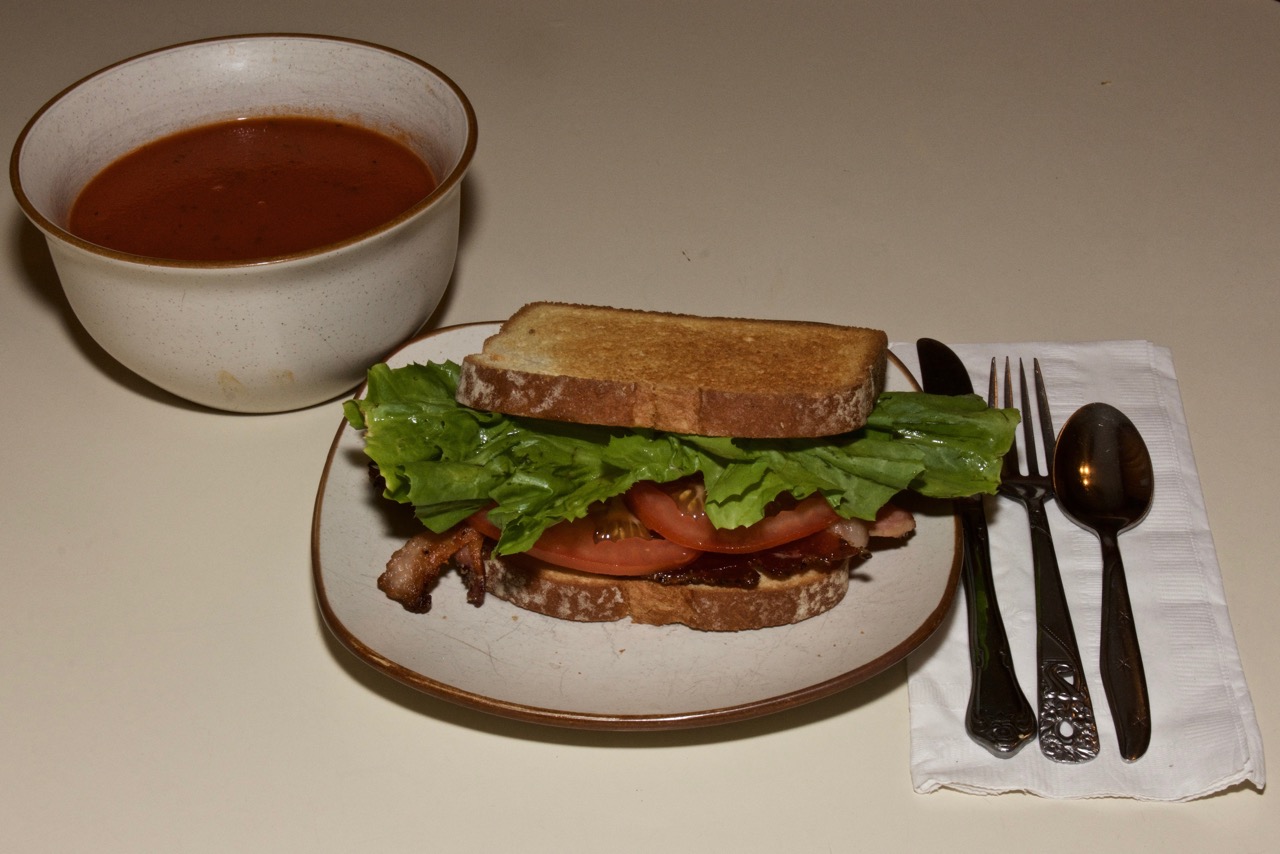
The sassy restauranteur serves John a bacon sandwich and tomato soup for lunch during his first visit. He doesn’t enjoy the meal surrounded by the more gossipy members of the town, but having Bea in his presence eases the awkwardness. The biggest surprise comes at the end of lunch when somehow John gets stuck with the entire check.

Bacon sandwiches are easy to make and don’t require a recipe. Two slices of your favorite bread toasted to your desired darkness, add as many slices of cooked bacon as you prefer, top with lettuce, tomato, and mayo—Viola! Bacon sandwich. I’m sure there are people who choose other condiments, vegetables, dressing, relishes, and those who leave off everything except the bacon. Really, the humble bacon sandwich is a matter of preference.

As for the tomato soup, while the majority of the items on Bea Turner’s menu are homemade, one place she cuts corners is by using good ole Campbell’s Tomato Soup. She is, after all, the only employee in her own restaurant.

I’ll not enter the debate on the sodium levels in canned soups and how Campbell’s added high fructose corn syrup to their soup to appease the American sweet tooth. I’d like to believe that during the summer of 1948, when John visited Bea’s diner, the soup was wholesome and tasty and the can wasn’t lined with bisphenol-A.

As recently as 2012, Campbell’s Tomato Soup still ranked as one of the top ten selling dry grocery items in U.S. grocery markets. It’s fairly healthy, too, for canned, modern industrial food. No fat, no cholesterol, no fake colors or flavors, laced with minerals, iron and Vitamin C. A two-serving can is only 270 calories before adding a bacon sandwich as a side.

There are organic choices on the market now as well as lower-sodium varieties and those made without high fructose corn syrup. Whichever option you choose, remember to add a tasty bacon sandwich, or the traditional grilled cheese, and enjoy your meal.

Pop On Over, Love

IMG_20160607_085149863[1]By June of 1948, Dr. John Welles still hadn’t overcome his experiences during World War II. The haunting memories were more than he bargained for. Further gnawing at his conscience was the fact that his service had been quite brief. The worst part, though, was the secret John brought home from the war.

In his efforts to bury the painful truth of what took place in France, John became increasingly distanced from his family and friends. They were patient and loving in return, waiting for John to open up on his own terms. All except his Aunt Prudence.

Prudence had never been one to sit back and wait for things to happen. She always made her own outcome to her satisfaction, and this was exactly what she intended to do with John. Unfortunately, her well-meaning endeavors didn’t produce the results she had hoped for. She argued with her nephew until John simply shut down. Still, Prudence never backed off where he was concerned.

Into the middle of this family struggle stepped Lucia, Prudence’s sassy cook since the days of John’s boyhood. She knew her employer turned close friend had John’s best interests at heart, but sometimes Prudence’s tactics were too harsh, especially for a man still reeling from the effects of war.

One morning, over a breakfast of popovers, Lucia offered the sage advice that helped John make the first positive decision in his life since returning from Europe. Prudence hated to admit that her cook was right, but she didn’t press the issue.

The following recipe for popovers is the one I had in mind when writing the above-mentioned scene for my novel, The Secrets of Dr. John Welles. The recipe has been in my mother’s recipe box since her high school home economics days. Popovers are incredibly simple to make, and they taste delicious fresh from the oven with butter.

Enjoy!

Lucia’s Popovers

1 c all-purpose flour

½ t salt

1 c milk

2 eggs

Preheat the oven to 425° F

Thoroughly butter 5 – 9 custard cups. Mix all ingredients with a beater until smooth. Do not overbeat the batter or the volume will be reduced.

Fill the greased custard cups half full. Bake for 40 minutes. Resist the urge to peak or the popovers may fall. Check after 40 minutes. The popovers should be golden brown.

Serve warm with butter.

Looking Through the Long Lens of History

Glimpses of understanding are all many of us will ever have for what the men who stormed the beaches at Normandy experienced on June 6, 1944. I have looked at it from several different sources, and still, my knowledge is mere shadow when compared to the memories of the men and women who served during World War II.

Conneaut 2

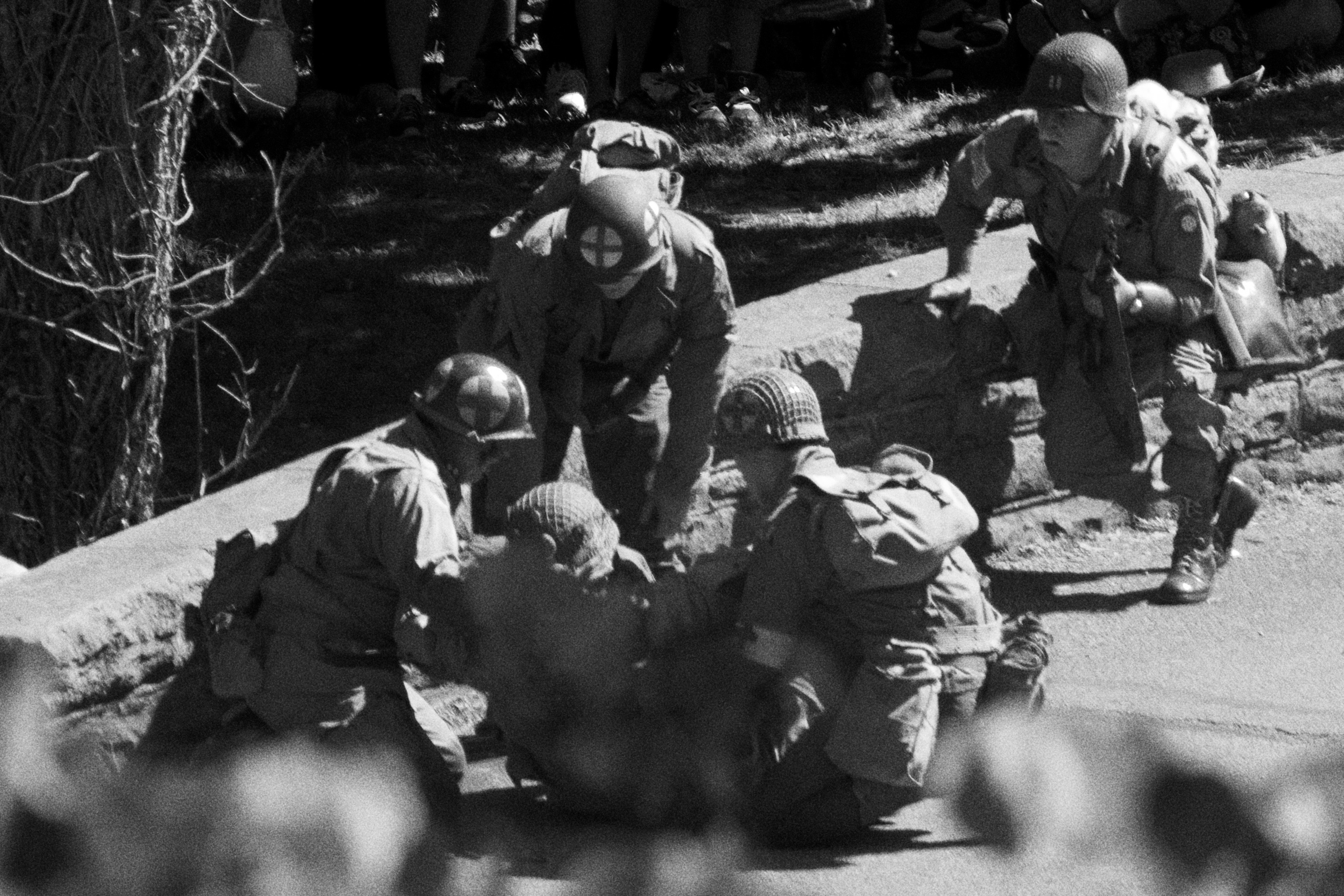
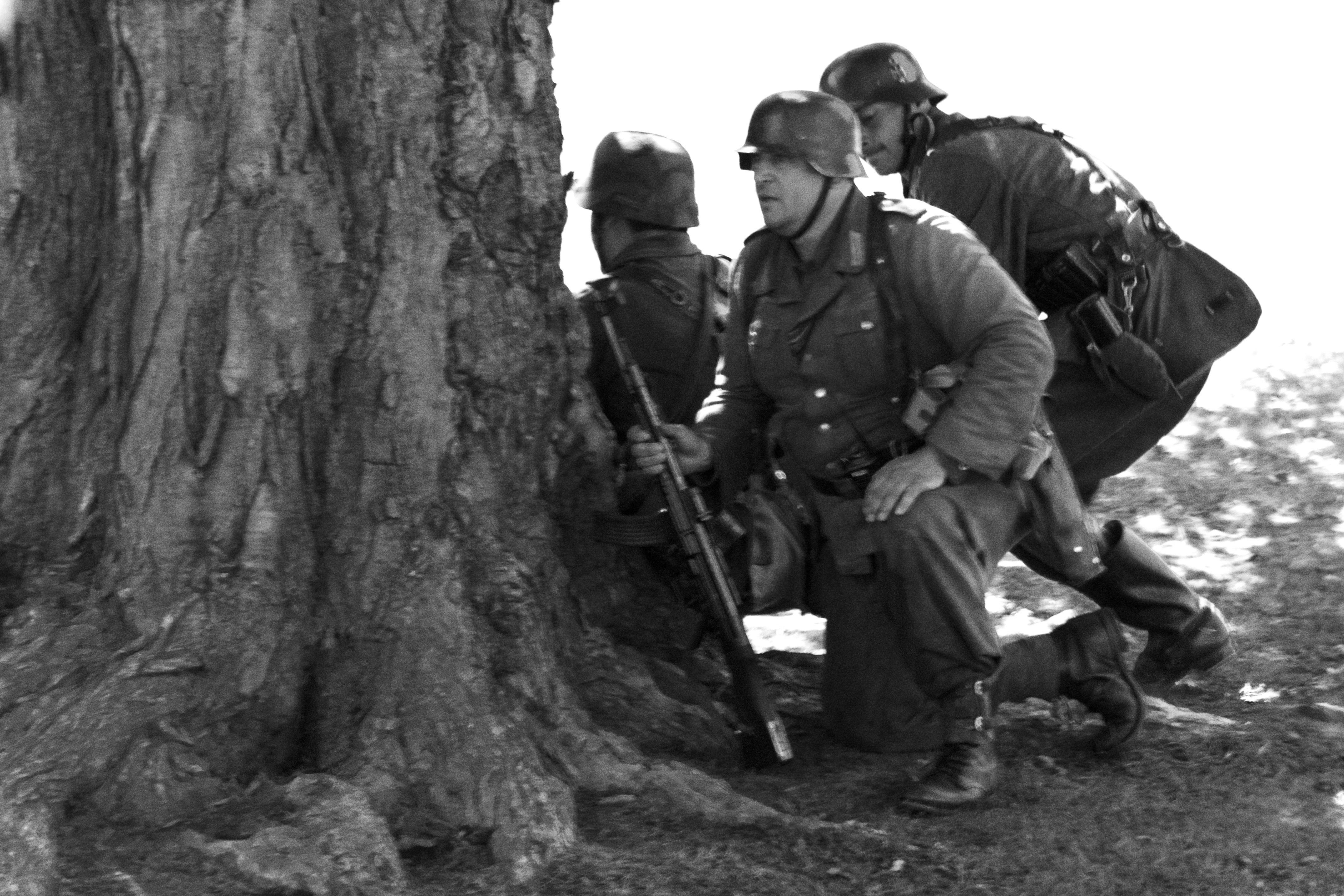
As heart wrenching as Band of Brothers was to watch, I didn’t have a true understanding of the ordeals faced by the American and Allied soldiers and medical staff until I began researching my novel, The Secrets of Dr. John Welles. Per my husband’s suggestion, I attended the Conneaut D-day Reenactment. I assumed I’d find some hobbyists with a useful amount of knowledge. I am not ashamed to admit that the whole event was incredibly humbling, and what I discovered far surpassed my expectations.

Conneaut 1

My journey began when three nurse reenactors graciously granted me an interview and patiently answered all my questions. They directed me to And If I Perish and Heroes From the Attic as additional resources where I would find the specific details needed to create believable scenes in my novel. Both books provided the information I desired, but more importantly, they supplied a sense of approachable familiarity that my research had been lacking. Long before I finished reading, I felt as if I knew the people about whom the books had been written. They became friends with whom I experienced fear, anxiety, sympathy, joy, loss, relief, and a whole host of other emotions. I developed an even deeper respect for them, and I wish I’d had the pleasure of meeting and knowing them.

Conneaut 3

Another valuable perspective of World War II was the autobiography of Omar N. Bradley, A Soldier’s Story. General Bradley’s account supplied information from the other end of the spectrum, bridging the gap between those in charge and those under orders. As inscribed in the front of the book, General Bradley hoped to help soldiers “understand why they were going where they did.” I believe his memoir answers anyone’s questions if only they are willing to look. While many would criticize those in charge without offering alternatives and/or solutions, I know that I would never want to shoulder the burden that Omar Bradley and others like him did during World War II. To simply say they did the best they could would be insulting. From the lowest private to the highest ranking general, and everyone in between, they all served bravely and selflessly.

Conneaut 4

This post would be incomplete without attempting to describe the D-day battle portrayed at Conneaut. My emotions get the better of me every time I think about it. It all seems to happen at once.

Landing craft full of American and Allied soldiers about to crash onto the beaches.

The thrill of the B-17 Flying Fortress flying over so close I swear you could reach up and touch it.

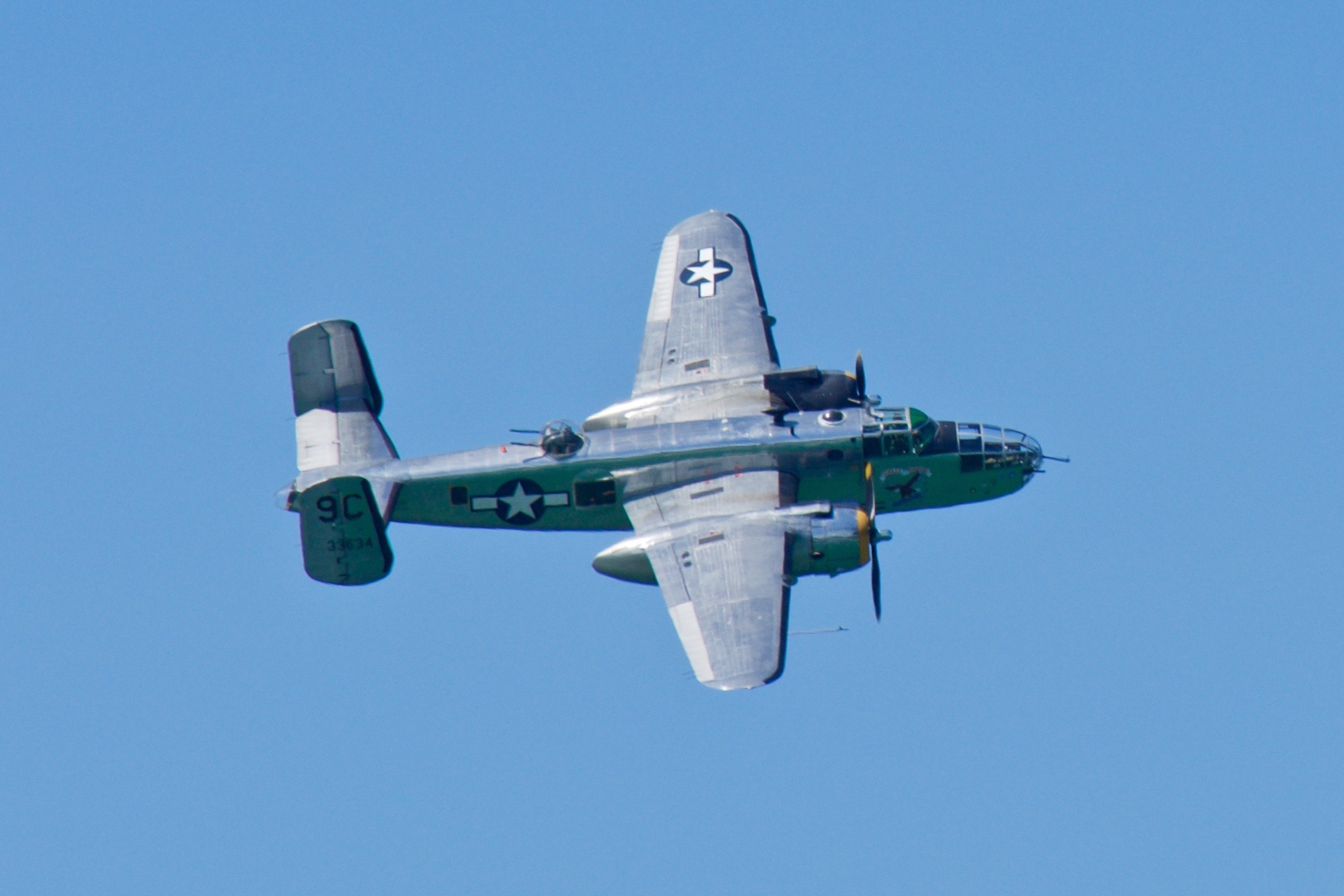
The B-25 Mitchell banking in the brilliant blue sky.

P-51 Mustangs crisscrossing the air like darting swallows.

Excitement and tension mounting, trying to remember it’s a reenactment.

The ground vibrating with the boom of the German 88, the shock traveling up through your body.

Black clouds billowing upward from the flame thrower.

Soldiers storming the beach and falling, the dull ache in your chest every time that soldier is American or Allied.

Inch by grueling inch they gain ground.

The Germans relentless, the Americans resilient.

Again the planes, again the 88, the sound of bullets ripping the air.

And then, a small cheer is heard in the distance, rippling through the crowd, swelling.

Clapping and people jumping to their feet.

Tears in your eyes.

The American and Allied soldiers have gained their objective.

Breathing a sigh of relief.

It’s over. For us, right now, D-day is over.

Locking eyes with those around you as your remember that in 1944, it was just a beginning.

I cannot thank the reenactors enough for keeping alive the memory of what brave American and Allied men and women did. Their selfless sacrifice must never be forgotten or rewritten. The sad fact remains that much of this history is not being taught to upcoming generations. Worse, there are those who wish to revise it as something undesirable or reprehensible. As much as this grieves me, it is not enough for me to want this for future generations. They must desire the knowledge of history for themselves.

Until then, I will carry on remembering for every person who served long after the last one is gone.

~~~~~

Thank you to HBSmithPhotography for the wonderful pictures from the 2015 Conneaut D-day Reenactment

And If I Perish

And If I PerishAnd If I Perish was recommended to me by the nurse re-enactors of the Conneaut D-day event as a source of information on American medical staff during World War II. I needed to place my protagonist, Dr. John Welles, in the European Theater as a surgeon, but I truly had no idea how to incorporate a civilian doctor among the ranks of military personnel.

Thanks to Evelyn Monahan and Rosemary Neidel-Greenlee’s thoroughly researched book, I not only had a way to place Dr. Welles in the war, I had firsthand accounts via actual medical staff of what he would have encountered.

And If I Perish is a treasure trove of information not to be missed. I highly recommend it to students of nursing and history. While the contribution of doctors is also noted, the focus of the book is on the nurses who responded to the call to tend American soldiers fighting in North Africa, Italy, and at the Normandy landings through to the end of the war in Europe.

Often without footwear and uniforms in their sizes, yet an abundance of nylons, lipstick, and face powder supplied by the military, the nurses who participated in World War II made tremendous sacrifices and improvised on the spot to ensure that American and Allied soldiers received the best in medical care. They even gave the best they had to offer when working on German POWS who, with the exception of SS officers, were often grateful for the care they received once they overcame the fear of being captured.

It was no small challenge for the nurses to assist doctors while only a couple of miles from the front lines, often in horrible weather, and sometimes during retreats with the threat of being left behind hanging over their heads. And they did it without the benefit of weaponry to fight back.

The nurses endured bombing, strafing, and even evacuation from a hospital ship that had been attacked by unscrupulous pilots of the Luftwaffe contrary to the Hague Conventions. Occasionally they lost one of their own, a fact that further solidified their sense of family. All this they endured at less pay than their male counterparts.

With the equality that women enjoy today in many fields of work, it is difficult for me to comprehend why, for so many years, the nurses’ stories were overlooked and why they didn’t receive as many promotions and awards as the men serving. Hopefully, Mrs. Monahan and Mrs. Neidel-Greenlee’s book came in time for all of them to know how loved and appreciated they were and are for the sacrifices they made in serving their country.

Woman in Gold – Movie Review

I’m not a fan of Ryan Reynolds especially after watching the disaster that was The Green Lantern and some piece of tripe he starred in with Jason Bateman. In fact, I don’t care for his acting at all, and I’m being generous when I call it acting. Helen Mirren, on the other hand, is brilliant, fabulous, and classy even if the movie she stars in is horrible and disintegrates around her.

When I saw that Ryan Reynolds had been graciously cast opposite Helen Mirren in the movie Woman in Gold, I cringed wondering if even she could carry the dead weight of Reynold’s flat acting and bleating voice. I was pleasantly surprised to discover that she didn’t have to.

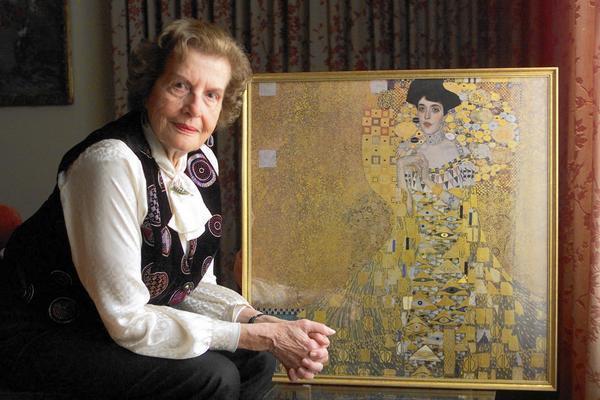
Woman in GoldWoman in Gold tells the story of Maria Altmann, a young Jewish woman who fled Austria with her husband during World War II. Sixty years after her forced exile, Maria seeks the help of Attorney Randy Schoenberg to reclaim the famous Gustav Klimt painting of her aunt, Adele Bloch-Bauer. Maria and Randy take the battle all the way to the US Supreme Court with a slowly building intensity that often left me clenching my teeth as I awaited the outcome of each painful step. I won’t spoil the ending, but rather, I’ll say this is one movie that should not be missed.

What I will focus on is the impression the movie left upon me. It is hard to imagine a regime so evil that it would perfect the practice of hatred to the level that the Nazis did. And yet, one can hardly turn on the news or surf the Internet without seeing this same type of barbarism taking place today all over the world. God forgive us that we are allowing it to happen again.

Equally chilling is the arrogance and indifference with which these acts of terror are met. Of course, it is absolutely criminal that personal property is stolen, but more important are the lives that are being destroyed. As Helen Mirren portraying Maria Altmann said regarding the restitution of the stolen art, it will not bring them back. Still, it is a small step toward acknowledging and righting the wrongs committed.

Then the problem becomes how do we stop the crimes that are occurring now as we make restitution for the past while preventing the evil from raising its ugly head in our future? I believe the answer lies within each person on a daily basis. What will you chose to do today? Acts of good or deeds of evil?

Woman in Gold 2

Straighten Up & Fly Right

Straighten Up and Fly RightIn my novel, The Secrets of Dr. John Welles, Claude Willoughby, one of John’s best friends, has had his share of trials and tribulations. When John and Claude first met, they sized up each other and decided they weren’t too keen on pursuing a friendship. After a few terse words, they overcame their differences, and together with Sam Feldman, forged an alliance that lasted a lifetime. So close was their bond, that when one of the afore-mentioned tragedies sent Claude to self-imposed exile in California, John and Sam felt as if their right arm had been severed.

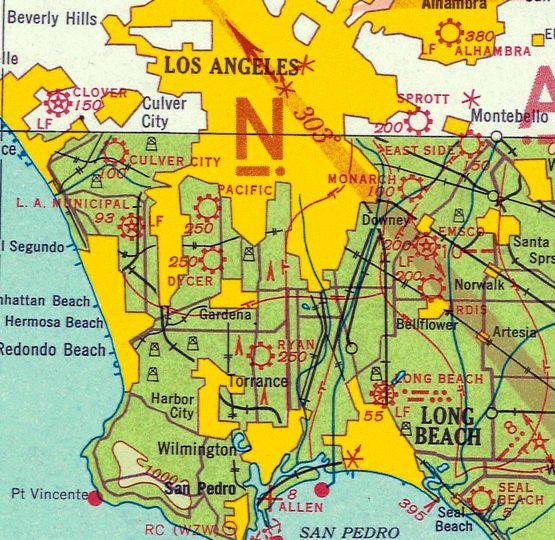
Claude obtained his pilot’s license as a means of dealing with his grief. He also secured employment at the airfield where he trained and later joined the Navy as a pilot during World War II. I had to research exactly what Claude would have encountered in 1937 when he learned how to fly. In doing so, I came across the most unusual website listing a compilation of airfields, now abandoned but operating during the time period about which I was writing. I really shouldn’t have been surprised; the Internet has a site for just about any subject a writer would need to research.

Abandoned & Little Known Airfields contains descriptions and images of 1,995 airfields in all fifty states and is organized alphabetically by state. I hope you find this information as useful as I did.

Lest We Forget

While researching World War II for several chapters of my novel, The Secrets of Dr. John Welles, I came across three books I’d like to share as beneficial reference materials.


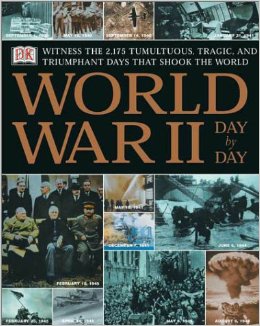
World War II DK PublishingWorld War II Day by Day, published by DK, is a collaborative effort by several former military personnel, researchers, and lecturers. The information is presented as news clippings from the various countries involved with or affected by World War II and the events leading up to it. A small calendar appears on each page and the days and weeks during which the events took place are highlighted. This allows one to isolate a particular event much easier. The book is replete with pictures, maps, and posters from the era. The numerical cross reference, timeline, and Who’s Who section lend ease to fact checking.


Campaigns of World War II

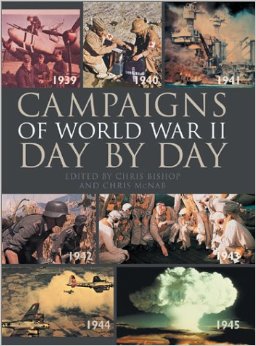
Campaigns of World War II Day by Day, edited by Chris Bishop and Chris McNab, is similar to the above-mentioned book but is laid out slightly different. The various campaigns are broken down into sections depending in which theater they occurred, whether European, Pacific, or African. Within each section, the daily and sometimes hourly timeline is most thorough. There are more maps in this book indicating troop movements as well as a focus on military weaponry, vehicles, and aircraft for the era.


World War II Donald Summerville

World War II Day by Day, written by Donald Summerville, presents many of the features mentioned in the first two books. This book is broken down into yearly sections with daily or monthly events listed within. The country in which each event took place is presented in boldface. The book concludes with a post war section.

I found each book to be extremely interesting, but together they presented a wealth of information I could check and cross check for accuracy. History buffs, reenactors, students, and writers alike will appreciate reading these books whether for enjoyment or research.

Heroes From the Attic by G. Jesse Flynn

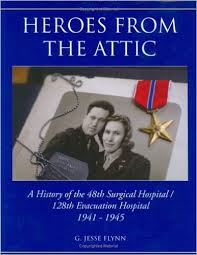
Heroes From the AtticOne of my favorite books, and a feather in the cap of my private library, is Heroes From the Attic by G. Jesse Flynn. I first learned about the book while interviewing participants from the Conneaut D-Day Reenactment this past August. Lisa Merzke, who portrayed a nurse, suggested the book because it explained in detail about the creation of the first MASH unit, the 48th Surgical Hospital, which was later reworked into the 128th Evacuation Hospital.

I obtained an excellent copy of the book and was thrilled to discover the author’s signature in the front cover. Although the inscription isn’t addressed to me, I couldn’t have been more pleased that I owned a signed copy.

Mr. Flynn was prompted to write the history of the 48th/128th upon learning about his parent’s involvement with its formation. Through interviews, letters, diaries, and pictures, Mr. Flynn has constructed a thoroughly detailed accounting that answered my specific questions with such precision that at times I believed the book had been written for me.

As well written as the history is, what truly endeared me to this book were the personal accounts of the members of the 48th/128th. Through the letters of Nurse Lt. Margaret Hornback, the diary of Dr. Leonard Schwade, and individual testimonies of various other members, one gets a true sense of what these brave men and women experienced and how they felt about it.  In an event that, God willing, we never allow to be repeated, members of the 48th/128th often learned on the job but never missed a beat, and they set the high standard of quality by which other units were formed and trained.

I am forever grateful to the doctors, nurses, and enlisted men of the 48th/128thfor their selfless sacrifice. I also thank Mr. Flynn for collecting and recording their amazing history so that it will never be forgotten. Their stories and information helped me to accurately place my protagonist in the European Theater of World War II, and I hope they will graciously indulge my boldness in assigning Dr. John Welles to their most successful and exemplary unit.