A Clean Sweep of Bad Words

images89FPFS5WVery, Really, Suddenly, Amazing, Awesome, That, Started:  what do these words have in common?  They should be avoided when writing.

This isn’t something I’d be too concerned with during a first draft, but when you go back to edit all the bad writing, these are the words to remove.  We’ve all slipped them in from time to time because they’re overused in every day language.

After reading the post from Writer’s Circle, I recalled a passage where I used suddenly.  It had been bothering me, but I couldn’t come up a worthwhile replacement word or phrase indicating the action.  As soon as I finished reading, a workable solution presented itself.  Some time away from my manuscript and this gentle reminder spurred my creativity to stretch beyond the commonplace.

One place I allow myself some leeway on using the seven, above-listed words is when writing dialog.  Working in the court reporting industry taught me that even educated people don’t speak as well as they’d like to believe.  Dialog sounds more realistic if is isn’t as perfect as prose.

I have noticed, however, that since I started writing, I make an effort to keep these words out of my conversation.  I’d be lying if I said I never used one , but I can’t put everyone on pause and go back to clean up what I said.  Until then, I’ll do my best to be very careful… Oops…

Also, don’t replace one bad word with another poor choice.  I discovered that I replaced very with extremely much too often when speaking. What sounded good to my ear prompted yet another scan of my manuscript to ensure that I hadn’t done the same thing in my writing.  I found five instances, and I’m currently in the process of editing them.

Another great thing about cleaning these words out of your writing is that it’s the first, small step to the editing process which often feels overwhelming.  Getting rid of them provides a building block to better editing which in turn means better writing.

“Very” and Other Useless Words to Erase Forever

Slip That Leash

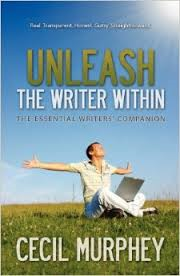
untitled (6)Unleash The Writer Within by Cecil Murphy is a relaxed and encouraging read. It’s an easy commitment that you’ll be able to finish in a few days.

The chapter titles make for a quick reference guide, directing you to different areas of your writing that you may need to work on. I could see this book becoming a handy tool that a writer might revisit as needed.

Each chapter ends with a motivational saying that might seem trite at first but are the very words often bandied about many writing websites, Facebook, and Twitter. They prove to be little jewels of wisdom, perfect for lifting yourself out of the writing doldrums.

When you need to step away from writing for a few days due to writer’s block, reading this book would be a good use of your time to help free your inner muse.

The Standards of Prose – Realistic or Ridiculous?

imagesWho gets to decide what makes something good? Or great? I’ve often asked this question about art, books, and movies especially after I’ve read a review.

Does a critic have to possess a degree in the field they are critiquing? Must they successfully produce vast quantities of work in said field before they qualify as worthy to deliver an opinion? Or does simply earning a lot of money doing what they enjoy make them an expert in the field? And, most importantly, do we listen without question when they cast their vote for yea or nay?

These questions have been on my mind as I edited the fourth draft of my novel, The Secrets of Dr. John Welles. Admittedly, I have been (WARNING: cliché ahead) tying myself up in knots trying to predict what the agents I will query, the publishers they will solicit, and any potential readers may want out of my novel. Along the way, I may have even foolishly surrendered what I wanted from my book in my quest for perfection.

Recently, I tortured myself with chapter one rewrites until I met with my level-headed, best friend who talked me through my dilemma and put me back on track. Suddenly, writing was fun again.

But I’d be lying if I said I didn’t have a pea under the mattress of my brain, niggling me with doubts and fears. I reread the first lines, paragraphs, and pages of my favorite books, trying, without copying, to capture the essence of what made them great according to my perception of greatness.

About this time, I came across a brilliant essay written by Daniel Wallace titled Sentence Anxiety. Mr. Wallace eloquently stated exactly how I feel about the standards of prose to which writers must aspire if they want to be considered real writers and/or great writers. I enjoyed the entire essay, but I believe the following paragraph, my favorite, contains the spirit of the piece:

I suspect that most common readers — people who read novels but are not professionally connected to literature — simply don’t read like this. Not only do such readers lack the stylistic precision to tell actual bad writing from, say, Nabokov or Joyce amusing themselves with marginally overblown prose, such readers do not approach books with the professional reader’s exhaustion, his frantic need for newness. Few common readers, I humbly posit, read the opening pages of Harry Potter and the Philosopher’s Stone and cry, “Oh, God, not another school-based bildungsroman!”

After reading the complete article, I would love to hear your opinion on the subject.  In the meantime, I’m going to continue putting all of my efforts into creating my novel. My goal is to not only write good and great sentences, but to write an enjoyable novel that readers will find hard to put down, a book that they will recommend to their friends and family, and a story that will stay with them long after its conclusion.

I’ll Take Theme for $1000, Alex

I'll Take ThemeThe continued editing of my novel has been an equally wonderful and painful experience. One of the points I wanted to make sure I had cinched up was my story’s theme. It was time to revisit one of my favorite posts by writing guru, K.M. Weiland. Then I realized that I should probably share this one in my Writing Toolbox.

What’s the Difference Between Your Story’s Theme and Its Message? posted on December 14, 2014, by K.M. Weiland, Helping Writers Become Authors.

Envy vs. Jealousy

Envy vs. Jealousy

Today’s Weight of Words post serves to clarify the difference between envy and jealousy. Too many times to count, and yet I cringe every single time, I have seen these words used interchangeably.

The definition of envy is to want what someone else has and resenting them for having it. Perhaps your best friend shows up for lunch in the pair of shoes you’ve had your eye on for months. You want to be happy for her, but you’re more likely to feel envy. You want the shoes and, if pressed to admit, you dislike the fact that she owns them before you.

Jealously is the sensation you register when you think someone’s trying to take what’s yours. You’re at a party with your new sweetheart, and although you love the attention you’re receiving, you’re also insecure about the fact that so many people are flirting with your new love interest. You begin to wonder if they have the ability to take this person away from you. This fear of loss leads to jealousy.

Now, young writing padawans, go forth and use these words correctly.

Favorite Author & Multi-Book Review

untitled (6)Joanna Trollope is my favorite writer when it comes to working through the family situation. Her well-written characters are as diverse as the personalities one encounters in his or her own family and just as frustrating. I’ll no sooner have my favorite characters chosen only to have him/her say or do something completely stupid, and my allegiance changes to the character I used to hate. In this way, Mrs. Trollope reels you in and casts you back throughout the story.

The way in which she presents real-life, everyday situations isn’t boring in the least. Her ‘fly on the wall’ perspective into the lives of her characters offers the same guilty pleasure as witnessing private conversations and/or arguments.

Further, her conclusions aren’t always neat and tidy happy endings. Much like real life and family, there is a definite end to the situation, but rarely does it go well for everyone. You’ll struggle, suffer, rejoice, and celebrate right along with Mrs. Trollope’s characters, often identifying with them or recognizing them in your own family members.

I haven’t read everything written by this author, and I haven’t experienced her writing under her pen name Caroline Harvey. What I have read has been enjoyable, the most recent being Daughters in Law. Her novel, Other People’s Children, received my strongest reaction. As expected, the book is replete with interesting characters in different walks of life. There is, however, one character in particular who I fantasized killing in the most heinous ways imaginable long after I had finished reading the book. That may sound horrible, but I believe it’s testimony to Joanna Trollope’s excellent writing skills.

Here is a list of Joanna Trollope’s novel in order of publication.

To NaNoWriMo, or not to NaNoWriMo, that is the question

I first heard about NaNoWriMo two years ago from my friend who heads our Writer’s Group. The idea of writing 50,000 words (an entire novel) in thirty days was both exciting and terrifying. As luck would have it, I had been kicking around an idea for a great novel. NaNoWriMo seemed like a good way to get the story out of my head and onto paper.

Before NaNoWriMo, I wrote short stories and children’s stories of picture book length. I had never heard of outlining a novel which might have been helpful for my first NaNoWriMo experience. Undaunted, I began writing near the end of the book leading up to the scene that was the catalyst for the whole novel. That’s when I realized I needed to go back to my character’s beginning. My first experience with NaNoWriMo was a jumbled mess.

I reached my goal of 50,000 words but didn’t have a complete novel. There was more to the story than I originally thought. The rest of the year was spent creating those portions while editing and chucking large sections of what I wrote for NaNoWriMo. I began to wonder if my November efforts had all been for naught when NaNoWriMo rolled around again. What to do?

I cheated again. I used the 50,000-word goal to keep writing new stuff my novel needed and editing what I had written last year. Perhaps the Deities of NaNoWriMo would smack my fingers with a ruler for this, but I justify what I did with the explanation that at least I wrote.

This year marks the third NaNoWriMo since I first participated. I didn’t join. I also didn’t use it as a motivational tool for rewrites and editing. I let myself off the hook with the understanding that my schedule and novel were in different places than what NaNoWriMo required. In short, I didn’t have the time and there wasn’t anything new to write or edit to meet the word count. I also didn’t want to start another novel when I already had one under way.  I’m not sorry for having tried NaNoWriMo, and I’ll probably do it again. In the meantime, I shall continue working on my second round of editing and looking for beta readers.

If you’re trying to decide whether or not NaNoWriMo is for you, consider the following article by Christopher Shultz. He’s much more eloquent in his explanation of what one needs to consider before jumping feet first into NaNoWriMo without knowing what it’s all about. I agree with his opinion that one should make NaNoWriMo work for him/her and that it isn’t a ‘must’ or ‘mustn’t’ situation in the life of a writer.

Are You a Pantser?

There is much debate on which way to write a novel: Outline/Plot vs. Pantsing. Those who fall on one side or the other can provide plenty of evidence to support their chosen method of writing that shows why their way is best. So far, I’ve never seen the conversation turn into an argument. The discussion usually ends with one side giving the other a sideways, narrow-eyed, head-tipping look of pity for not seeing the error of their ways. It’s actually quite funny.

I find this debate always surfaces shortly before NaNoWriMo starts. Janalyn Voigt of Live Write Breathe offers advice for those who might consider giving pantsing a try. In my opinion, the points mentioned are only the beginning of pantsing. Since it’s not a formal writing style, I can’t imagine too many rules actually exist. Admittedly, I’ll be looking for them. Guidelines, however, probably abound.

I believe I fall closer to the pantsing end of the writing spectrum but well short of insisting it is the only way to write. I’m not against outlining, but like most things in my life, I never limit myself to one of anything. I have outlined scenes for my novels to use during the editing process and when research needed to be conducted. Otherwise, I write by the seat of my pants.

So, whether you outline/plot or pants it, I hope you enjoy Mrs. Voigt’s suggestions from her blog post Pantsing: Writing by the Seat of Your Pants.

  1. Quiet your inner editor. Without stopping to edit, you’ll complete your manuscript more quickly. Speed is important because you’ll be carrying a lot of details in your head. The longer it takes you to write the story, the harder it will be to remember them all.
  1. Write in marathons. Rather than writing at a steady pace, clearing as much uninterrupted time as possible facilitates your writing the first draft quickly. This prevents the disruption to your focus that even a small interruption can bring.
  1. Don’t let the story go cold. Sometimes you can’t avoid being called away to work on other projects, but afterwards it can be very difficult to pick up the story thread.
  1. Try to have at least some research done in advance. You probably won’t know everything you’ll need to research at this point, but the need to stop and research can throw off a writing sprint. Guarding against that happening as much as possible is a good idea.
  1. Don’t stop for research that won’t determine the plot direction. Only stop to research vital information. Bold print passages you need to check and do the research on the second pass.
  1. When you get stuck, skip to the next scene, if possible. Mark the uncompleted scene or passage to fix in your second pass.
  1. Jot things to fix on a notepad or on the first page of the manuscript. Write a quick reminder of what needs fixing while you’re immersed in the creative process and you’ll thank yourself during the editing process.


Advice on Character Description

Nine times out of ten, when I find a piece of good writing advice on the Internet, the link directs me to K.M. Weiland’s website, Helping Writers Become Authors. And just as many times, I’m in agreement with what she has to say.

Like a carpenter stocking his toolbox with quality tools, my goal is to fill up my Writing Toolbox with valuable advice, tips, suggestions, etc. In turn, I want to share what I found with people who are seeking assistance with their own writing.

Most of the posts I put in my Writing Toolbox have been created by the owners of the sites to which I link. I will always indicate the website/blog name and owner (if known). When I create the post on my own, I’ll let you know.

So, with that being said, it is my very great privilege to share K.M. Weiland’s advice on ‘4 Ways to Make Readers Instantly Loathe Your Character Descriptions.’

Why Aren’t You Following My Blog?

In the spirit of the attached article, I would like to ask my Facebook friends and Twitter Community: “Why aren’t you following my blog!”

Authors are required to promote themselves long before they ever publish a book. Long before final revisions, query letters, and agent searches, authors must “sell” their “product” to a potential audience. I can tell you that most authors/writers do NOT have a degree or background in marketing. This makes the task much more daunting. With the advent of social media, authors can build a “platform” to accomplish the above-mentioned tasks. This is where you come in.

I’m offering each of you the opportunity to join me from the ground up. My promise to you is free, quality writing delivered straight to your inbox. Most of you are already perusing various social media sites. With my blog, you won’t have to search for high-quality content in various places. My blog features short stories, non-fiction blogging about the quirks of family life, and interesting articles used while researching my novel, The Secrets of Dr. John Welles. I also promise to not bombard your inbox with chain e-mails, offensive jokes, pictures of my kid and pets, or boring accounts of what I ate for breakfast.

In closing, thank you for your support during my journey from pre-published author to New York Times Best-Selling Author. ~ HL Gibson

“If You Don’t Ask, You Don’t Get”