The Blue Taxi by N.S. Köenings

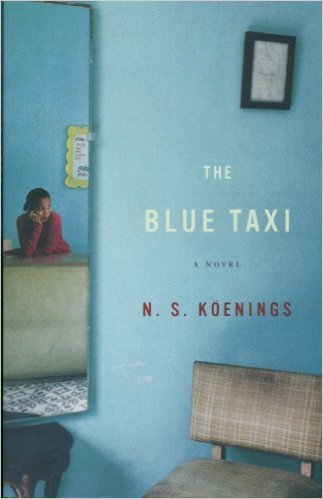
the-blue-taxiThe Blue Taxi by N.S. Köenings is a brilliant work of literary fiction. From the opening line the reader is treated to a feast of language describing with perfect accuracy and depth of detail a story of love and longing, loss and acceptance, new beginnings and dreams deferred. The tapestry of lives woven together includes Sarie, unfulfilled wife and mother, her husband, Gilbert, a small man of meager talents and grand ambitions, wise and naïve Bibi who desires visions almost as much as she does a grandchild, and Majid who lost his mind nine years ago when he lost his wife.

Drawn together by tragedy and influenced both positively and negatively by a cast of multi-layered peripheral characters, the lives of all involved will never be the same as they struggle to find their footing. Post-colonial South Africa provides the backdrop for this tale of cultures clashing and expectations shifting in N.S. Köenings’ unforgettable novel.

It’s a Mystery to Me

its-a-mystery-to-meMy first encounter with Agatha Christie was her novel, Murder on the Orient Express, which I read for one of my book clubs. I’m not usually a reader of mysteries unless by accident. John MacLachlan Gray’s two Edmund Whitty novels and Laura Joh Rowland’s Sano Ichiro series are among those happy accidents. Of course, there are the three Dorothy L. Sayer’s Lord Peter Wimsey novels my mother gave me for Christmas which prompted the purchase of the complete stories, so perhaps I occasionally, intentionally read a mystery.

With that being said, I approached Murder on the Orient Express with a titch of bias. I expected Agatha Christie’s writing to meet the standard set by the above-mentioned authors. In Mrs. Christie’s defense, I have read only one of her novels, and by the time I wrote this blog post, I also completed the short story, “Witness for the Prosecution.”

Charming but dull was the phrase that continually came to mind. Hercule Poirot didn’t do anything for me as a protagonist except manage to be cute and annoying at the same time and fusty even in the era for which he was created. The peripheral characters weren’t memorable; I had to keep re-reading their bios at the beginning to keep them straight. Only one of them had an interesting twist, and for all Poirot’s intelligence, how he managed to miss it until the end didn’t lend very much credibility to his detective skills.

I kept comparing Poirot to Lord Peter, who is more aware of his eccentricities, Chamberlain Sano, who accepts bad situations with great humility and presses on, and Edmund Whitty, who is a likeable loser right from the start. They are more believable as protagonists and detectives, more human in character and actions.

Then there was the prejudice of the author that comes through in the way she handled foreigners and the lower classes. Some of the things Mrs. Christie wrote would be considered intolerable today and were clearly the general opinion of her class. Dorothy L. Sayer’s tiptoed in this direction occasionally, but in my opinion, with much less offense. However, in the hands of someone like John MacLachlan Gray, these types of comments read harshly yet brilliantly. Perhaps this is because he’s writing an historical mystery, and I can trust he’s not wielding them for shock value.

As for the conclusion that everyone was guilty, I couldn’t accept that as a solution. Too many people who know the details of a secret are bound to screw it up without the help of Mother Nature. If not for the snowstorm, am I to believe all the suspects would have succeeded with their scheme? And perhaps I’ve watched too much Law & Order and Criminal Minds to accept that the head of the railway line, with Poirot’s apparent blessing, has the authority to let everyone off the hook because the man they killed was a kidnapper and murderer. Maybe I just wasn’t interested in debating the issue of justice in a book that in all other ways was simple and unengaging.

I probably wouldn’t have picked up another Agatha Christie book if it weren’t for the fact that my other book club is also doing Agatha Christie. My next purposeful attempt at a mystery will also be for book club. Arthur Conan Doyle’s Hound of the Baskervilles is on the schedule. I’ll be interested to see how he measures up to the other mystery writers.

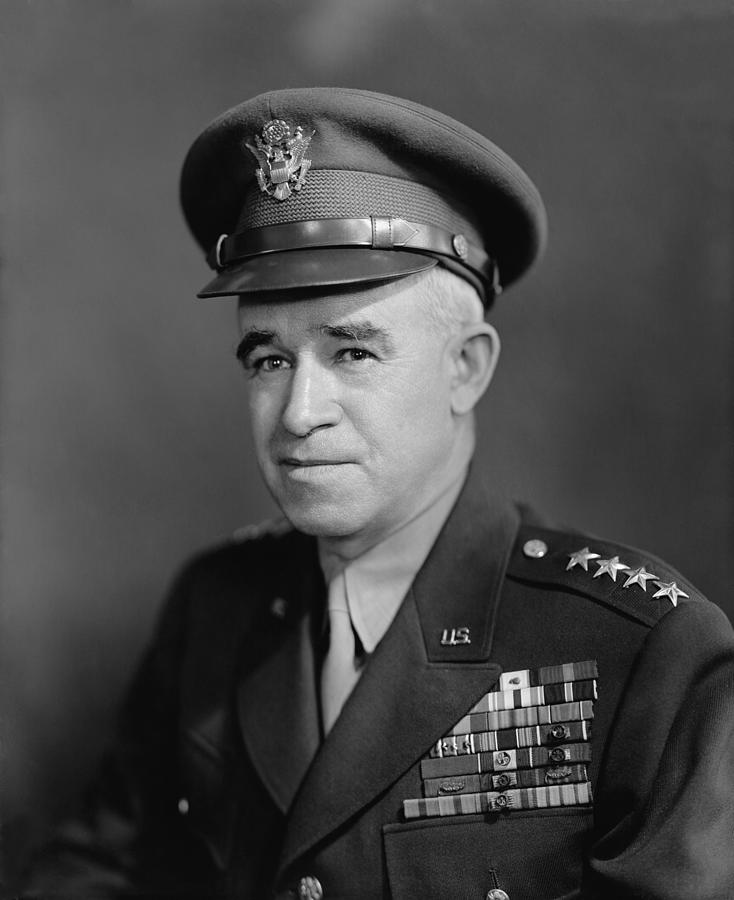
A Soldier’s Story – Omar N. Bradley

a-soldiers-storyA Soldier’s Story by General Omar N. Bradley is one of the most profound books I’ve ever read.  My friend and fellow writer, William Alford, loaned Bradley’s autobiography to me as a source of research for my novel, The Secrets of Dr. John Welles.  My research required a closer look at World War II, such as those provided by doctors and nurses (And If I Perish, Heroes From the Attic), but I still read Bradley’s account of the war, and I am extremely glad I did so.

He prefaces his autobiography with the inscription, “To those soldiers who must often have wondered WHY they were going where they did.  Perhaps this will help answer their questions.”

I believe Bradley answered these questions truthfully and without the ego that might have come from a lesser man achieving such rank and accomplishing what Bradley did.  As for the tough issue regarding loss of life, he explained how every move made by troops was analyzed and not conducted until the loss was the lowest number possible.  The decision to go ahead, shouldered by Bradley and other men like him, was not taken lightly, and it is not one I would ever want to have.

There are many who would argue that the war was unnecessary, but I concur with General Bradley:  the evil that swept through Europe wasn’t going to go away on its own.  Even with the combined forces of the Allies, the battles were not easily fought or won.  Perhaps unavoidable would be the better word choice in regards to World War II.

Bradley was against actions such as taking a site simply for the prestige of location.  Yet when other commanders’ egos swelled, he remained cordial with them even while strongly disagreeing with their decisions and/or actions.  He went so far as to put his career on the line to get the truth out to the American public regarding one such instance.

Further testimony to Bradley’s humility and strength of character are his accounts of his friend, General Patton.  Bradley spoke frankly about the times Patton overstepped his bounds, yet he never criticized in a way that tore Patton down.  When Patton was placed under Bradley’s authority, the two men worked together quite well and held each other in high regard.

Bradley includes comments from Prime Minister Winston Churchill that are chilling predictions come true.  Considering that the conversation took place in 1945 and wasn’t published until 1951, when Churchill says, “There may come a day when we shall walk into a cabinet room, break the glass over a switch, dial to the nation to be bombed, and push a button to declare war,” I can’t help but wonder if this technology was in place long before we were aware.  More unsettling are Churchill’s words, “But we shall never sit by and permit a minority to force its will upon a helpless majority anywhere,” which speak to the current world situation.

The book concludes with the end of the war in Europe, an occasion that was no doubt worthy of celebration, but I was left with a feeling of melancholy that I could only attribute to the realization that the type of patriotism displayed during World War II no longer exists.  Still, I believe that Bradley’s explanations successfully bridged the gap between those in command and those in the field.  I highly recommend A Soldier’s Story as a worthy read.

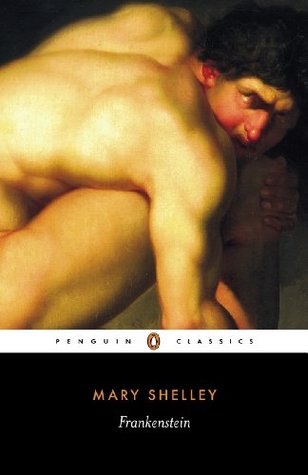
Mary Shelley’s Frankenstein

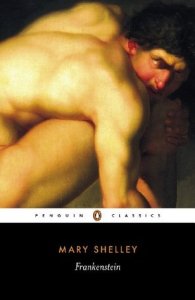
mary-shelleys-frankensteinI recently read Mary Shelley’s Frankenstein as a requirement for my classic literature book club. It was my first time reading the book, and I looked forward to it. As I approached the story, I knew better than to compare it to the Boris Karloff version of the movie by the same title. I’ve only viewed portions of the movie, and from what I’ve seen, I’m pretty sure I didn’t miss anything.

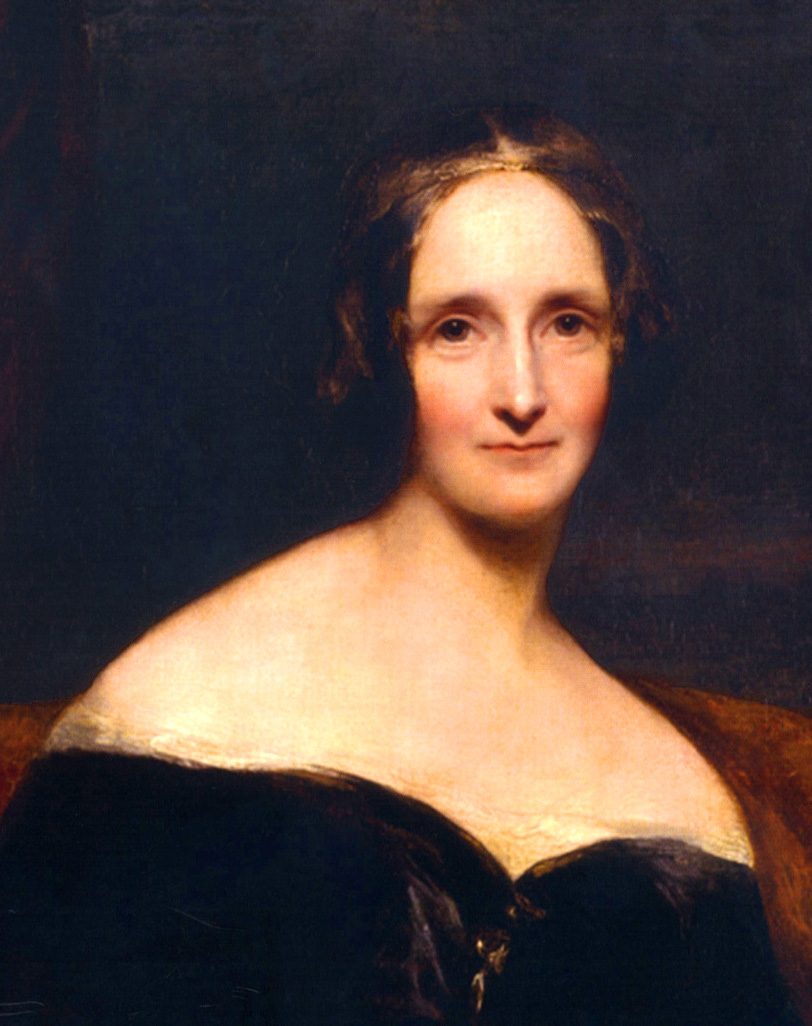
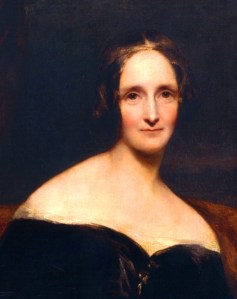
Of course, there was the Kenneth Branagh version of Frankenstein that I watched years ago. I recall the movie seemed classier, and it had Mary Shelley’s name in the title, so perhaps it was more closely linked to her original tale. Prior to reading the novel, my only other experience with Frankenstein was during my senior English class in high school. The teacher mentioned that Mary Shelley wrote the story as part of a competition with her husband, Percy Bysshe Shelley, and friend, Lord Byron, to write a ghost story. From Mary Shelley’s efforts, the novel was born.

With all this build up, I launched expectantly into Shelley’s biography at the beginning of the book. She had an unfortunate life full of tragedy and was a husband stealing adulteress. I kept in mind that the last fact should have no bearing on her writing. I did, however, tuck away her comment that people often asked her how a young woman could have written such a tale. I didn’t find it difficult to believe that a young woman wrote the book; the novel gushed on and on with a relentless amount of filler. In tone and passion, it matched the sappiest of poorly written romance novels. Truly, Mary Shelley had written a horror novel.

I suspect Mary Shelley’s overinflated belief in her ability to write was influenced by her sphere of acquaintances. Her parents were prominent writers and philosophers (her mother died shortly after Mary’s birth but left behind quite a legacy), her husband and friend (Lord Byron) were well-known writers, so why not give it a whirl herself? I must admit that Frankenstein is the only work by Mary Shelley I’ve read, but based on what I encountered, I am not motivated in the least to seek out her other writings. Feminists everywhere are probably damning me right now.

Led around by the nose is the phrase that kept coming to mind as I read the book. Mary Shelley obviously had a point she wanted to make, but she didn’t allow her readers to arrive at this point on his or her own. Victor Frankenstein was meant to be disliked and the monster pitied. I believe her intent was to make us wonder who the real monster was.

I kept hoping that Mary Shelley would raise the Creator vs. Creation issue because I would have enjoyed arguing that subject as I read. After all, Victor Frankenstein as the imperfect Creator would have made for a wonderful debate. Instead, we’re given a pathetic, weak man who repeatedly saves his own life over those he claims to love. I still don’t know why he suddenly rejected his own creation. We’re expected to suspend belief and simply accept that he did.

As for the suspension of belief, prepare to do so over and over and over again. The most unforgiveable place I found this to be true was in the mary-shelleys-frankenstein-2creation of the monster. Mary Shelley didn’t do her research as far as I’m concerned. She didn’t provide any method of preservation or refrigeration for the body parts and briefly mentions decay. Still, we’re expected to believe that Frankenstein built a human in a rented room in the middle of town. She glosses over the part where the creature is brought to life by having Frankenstein refuse to tell Captain Walton how he did it to prevent the sailor from making the same mistake. As a writer, I know that’s a major faux pas. Perhaps it was more acceptable when Mary Shelley wrote.
It’s a toss-up who fluctuated more in character: Victor Frankenstein or The Monster. Frankenstein’s resolve wavered every time he decided he was going to deal with his creation, and right on cue someone he loved would die by the monster’s hands because Victor’s spinelessness reasserted itself yet again. It was dangerous to be loved by this man, and I do not buy into the belief that he was helpless to stop the monster’s rampage.

The monster was intelligent enough to grab clothes upon fleeing Frankenstein’s rooms, learn language and reading in about a year, quote Percy Bysshe Shelley, Lord Byron, and John Milton’s “Paradise Lost,” but couldn’t discern his own feelings or come up with better plans for inserting himself into society. From the last two incidents, we’re supposed to believe the monster was a victim.

And when, exactly, did Frankenstein’s creation become a monster? In my opinion, it was when he refused to extend the grace he sought from humanity. In his unjustifiable rage, he lashed out not only toward those whose company he sought, but he hurt innocent bystanders as well (ex: burning the cottage punished the owner when the creature was rejected by De Lacy, Felix, Agatha, and Safie.) I could not find him pitiable, and it was not his right to act accordingly.

I could continue with issues such as why the monster possessed supernatural strength, how the scenes were predictable, the presence of too many coincidences, and how the character arcs read more like character cliffs. Since I haven’t read what the feminists believe Mary Shelley’s intent was for her novel, I’ll not enter that debate.

Instead, I’ll sum it up with the question of what makes a classic. If shock value for the era in which a novel was written qualifies, then a certain book in fifty shades is destined to become a classic in about one hundred years. Or does a book become a classic by the fact that it was written by an anonymous author who turns out to be the opposite sex from what we expected? All this did for me was present Mary Shelley starring in the role of Victor Frankenstein. (If you’re going to write an opposite sex character, try to make them masculine or feminine as is required of said character.) Don’t forget popularity and sales; they lend high regard for a book in the opinion of many people these days.

I’m not sorry that I read Frankenstein because now I can say I know for myself, but I cannot recommend the book as either well-written or worthy of being called a classic.
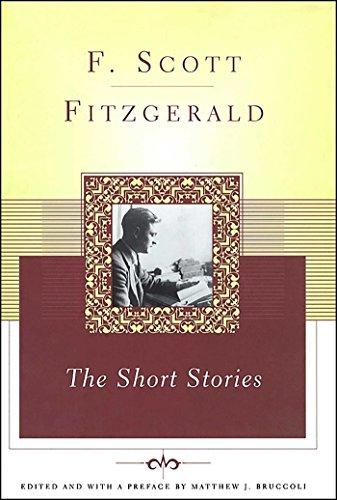
F. Scott Fitzgerald – The Short Stories

F. Scott Fitzgerald The Short StoriesAnyone who knows me knows I adore reading. And for those who don’t know me, it won’t take much time spent in my presence, whether in real life or via social media, to discover this. Recently, I’ve been reading the short stories of F. Scott Fitzgerald. I assigned this task to myself as part of the research for my new novel. My goal was to gain a better understanding of Fitzgerald through his writing first, and then I would tackle books of literary commentary as well as biographies of the man, the author, and his life.

I’m not sure where to begin with my review of Fitzgerald’s short stories because I must admit it isn’t favorable in the least. I must also confess my amazement that he earned the money he did during the era in which he wrote. This is especially astounding considering how small the payment is among literary journals today. According to the Dollar Times inflation calculator, four thousand dollars for “At Your Age” in 1929 would be like earning $55, 327.48 in 2016. The section notes prior to the story state this was his “top story price.” I interpret that as price per story and not salary for the year. Please correct me if I’m wrong, but either way, Fitzgerald was simply not that good an author.

If you read one short story, you’ve read them all and his novels as well. Beautiful, indifferent debutantes who pick up and drop men like they’re choosing and discarding shoes; rich ambitious fellas, possibly a football hero, who undoubtedly attended/will attend either Princeton, Yale, or Harvard; a sprinkling of drunks, some hopeless, some loveable; endless comparisons between the North and the South or America and Europe; and the ambitious pursuit of money, fame, and power over, and over, and over again. The most unforgivable crime Fitzgerald committed in this reader’s eyes was to cannibalize his own short stories for the sake of his novels. Worse was the fact that his agent, editors, and publishers allowed him to get away with this.

Ridiculous and cliché are the two words that came to mind the most as I read Fitzgerald. The scenarios portrayed were outlandish and unbelievable, and I’m not counting “The Diamond as Big as the Ritz” when I say this. Why anyone, even fictional, would tolerate the behavior depicted among the characters is beyond me. I tried to keep in mind that attitudes and actions were different in the ’20s and ’30s, but my opinion of the situation often deteriorated to how stupid can one person be and how much longer before he/she quits putting up with this garbage? Perhaps this was common behavior among the rich and lovesick back then. I honestly couldn’t say.

None of Fitzgerald’s stories were memorable. As I looked back through the book, I tried to recall the storylines and characters by the title alone but ended up cheating and reading the section notes. The only exception was “The Curious Case of Benjamin Button,” and that was because it had been made into a movie. So, I’m left wondering who decides what makes a piece of literature a classic. The death of the author, the passing of time, the payment received, popularity with the audience at the time of publication, being made into a movie, or some combination thereof? I shudder to think how the last four delineators will make classics of some of the drivel being produced today.

I don’t know what percentage of readers would stand with me in my assessment of Fitzgerald’s writing. Hopefully, I’ll find the commentaries and biographies more interesting. From what I already know about him, I believe if he had consumed less alcohol and been more content to hone his craft than pursue fame and fortune, he would have moved beyond his narrow world, experienced life to a greater degree, and found something new to write about. In the end, I’ll give Fitzgerald credit for leaving writers a good lesson even though he failed to learn it himself.

Poison by Susan Fromberg Schaeffer

PoisonSusan Fromberg Schaeffer’s novel, Poison, is a brilliant work of fiction; it is how all novels should be written. Poison explores the themes of love, greed, desire, human strengths and weaknesses, peoples’ perceptions of each other, and how we are molded by these perceptions. The author allows us inside the heads of a wide cast of characters and gives the reader the opportunity to decide who is good or bad, right or wrong. You’ll find yourself comparing the characters to your own friends and family all the while claiming, “I would never act like that.” The stream of consciousness style gives the reader the delicious, wicked sensation of reading someone’s private correspondence or diary. The letters between several characters heightens the experience.

Ms. Schaeffer employs the scenario of a death and a will like a bomb to set off a series of explosive events. It’s a situation many readers will find familiar. Like watching a slow-motion train wreck, one cannot turn away from reading the disastrous accounts of the characters’ lives. Your allegiances will shift throughout the book.

Poison is not a beach read. It is not for readers who want to plow through a book or those who want to be told everything up front with lots of action and a singular POV. But if you are willing to allow the story to unfold, the characters to develop and evolve, Poison will prove to be incredibly satisfying. I truly believe the novel will appeal to the intelligent reader whose mind can juggle multiple POVs, information given out of chronological order, and backstory appearing right up to the conclusion. It may sound like utter chaos, but I found Poison to be remarkably well-structured, one of the best works of literary fiction I’ve ever read.

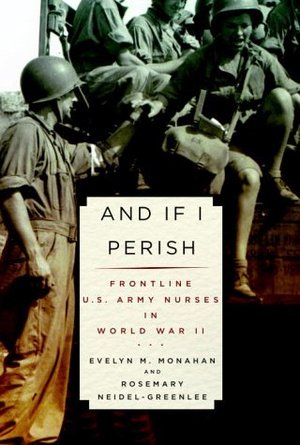
And If I Perish

And If I PerishAnd If I Perish was recommended to me by the nurse re-enactors of the Conneaut D-day event as a source of information on American medical staff during World War II. I needed to place my protagonist, Dr. John Welles, in the European Theater as a surgeon, but I truly had no idea how to incorporate a civilian doctor among the ranks of military personnel.

Thanks to Evelyn Monahan and Rosemary Neidel-Greenlee’s thoroughly researched book, I not only had a way to place Dr. Welles in the war, I had firsthand accounts via actual medical staff of what he would have encountered.

And If I Perish is a treasure trove of information not to be missed. I highly recommend it to students of nursing and history. While the contribution of doctors is also noted, the focus of the book is on the nurses who responded to the call to tend American soldiers fighting in North Africa, Italy, and at the Normandy landings through to the end of the war in Europe.

Often without footwear and uniforms in their sizes, yet an abundance of nylons, lipstick, and face powder supplied by the military, the nurses who participated in World War II made tremendous sacrifices and improvised on the spot to ensure that American and Allied soldiers received the best in medical care. They even gave the best they had to offer when working on German POWS who, with the exception of SS officers, were often grateful for the care they received once they overcame the fear of being captured.

It was no small challenge for the nurses to assist doctors while only a couple of miles from the front lines, often in horrible weather, and sometimes during retreats with the threat of being left behind hanging over their heads. And they did it without the benefit of weaponry to fight back.

The nurses endured bombing, strafing, and even evacuation from a hospital ship that had been attacked by unscrupulous pilots of the Luftwaffe contrary to the Hague Conventions. Occasionally they lost one of their own, a fact that further solidified their sense of family. All this they endured at less pay than their male counterparts.

With the equality that women enjoy today in many fields of work, it is difficult for me to comprehend why, for so many years, the nurses’ stories were overlooked and why they didn’t receive as many promotions and awards as the men serving. Hopefully, Mrs. Monahan and Mrs. Neidel-Greenlee’s book came in time for all of them to know how loved and appreciated they were and are for the sacrifices they made in serving their country.

My Classical Education

My Classical EducationI stopped reading Jane Austen’s Pride and Prejudice forty-two pages before the end of the book. I am familiar with the conclusion, and I have viewed both the Jennifer Ehle version of the movie as well as the Keira Knightly version (the Jennifer Ehle is far superior), and yet I put the book down for no other reason than to extend my own enjoyment. I’ll never tire of the tension between Elizabeth and Mr. Darcy, Jane’s sweet disposition, or even Mrs. Bennet’s endless rambling and scheming plans to marry off her daughters.

Pride and Prejudice is the first in a list of books that I am reading not only for pleasure but also for a close study of classical literature as suggested by Francine Prose in her book, Reading Like a Writer. The language alone inspires me to write better. I do have to wonder, though, if Jane Austen would have liked the benefit of word searches. While her pet words do not detract from the story in any way, she does have a few that she repeatedly employs. I find it encouraging that someone who is considered a master of writing and storytelling made such a simple error, and it is certainly one that I am willing to overlook.

Most importantly, what I am learning from reading Pride and Prejudice is that great writing appears in many different styles that transcend time. I may acquire a few talents from Jane Austen, and being compared to her would be no small compliment, but I have a voice of my own to hone and hopefully will do so until one day, when someone reads a passage from my books, they will be able to say, “Clearly, this is HL Gibson’s writing, and it is remarkably well done.”

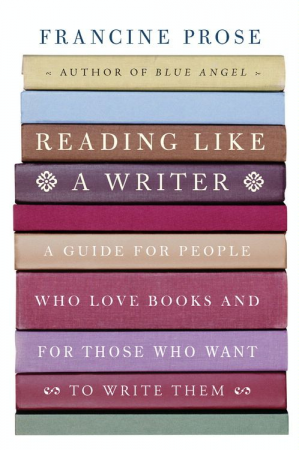
Reading Like a Writer by Francine Prose

I first spied Francine Prose’s book, Reading Like a Writer, while shelving at my former job. I sneaked a few moments to read the first few pages and Reading Like a Writerinstantly fell in love. The sentence that resonated with me, “Like most–maybe all–writers, I learned to write by writing and, by example, by reading books,” combined with, “Long before the idea of a writer’s conference was a glimmer in anyone’s eye, writers learned by reading the work of their predecessors,” confirmed for me that I had found a kindred spirit. Her passion for reading and writing and the process of learning by indulging in both was the best piece of advice I had ever heard. Mrs. Prose’s comments awakened in me what I always believed to be true: great writing is an organic process that comes from creating beyond outlines and plot-pointed structures with perfect character arcs.

Great writing begins with close reading and follows with careful consideration for every word that will become a sentence, which will become a paragraph. This isn’t to say that Mrs. Prose or I believe writing should be utter chaos without any structure, but I trust if one applied her approach to their own writing, he or she would see amazing growth in how they create characters, employ narration and dialogue, and present details and gestures.

Woven throughout the book are examples from great writers that will back up what Mrs. Prose is teaching. You don’t need to be familiar with these authors or their works to appreciate them. Another reviewer I read proclaimed his dislike for Mrs. Prose’s book because he didn’t know any of the referenced works. I suspect he thought Mrs. Prose was being pretentious; I encourage you not to be intimidated by her knowledge but rather delve into the suggested reading list as soon as possible.

Another aspect of the book that appealed to me is Mrs. Prose’s admission that while there are rules in writing for the express purpose of guiding us, rules are, essentially, meant to be broken. And if you’re brave enough to ride off the reservation of writing rules, make sure you’re breaking them brilliantly.

Regardless of your preferred writing style or approach thereof, I highly recommend reading Francine Prose’s book. I would be truly surprised if you didn’t take away something positive from the experience.

The Rules of Summer by Shaun Tan

People who know me are aware of my love of books but may not know that I enjoy picture books every bit as much as novels and works of non-fiction. For those who don’t know me, start here (My Love Affair With Books).

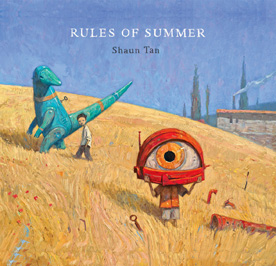
The Rules of SummerA couple of weeks ago, as I shelved picture books in the children’s department of the library where I used to work, I discovered Shaun Tan’s book, The Rules of Summer. The unusual artwork on the cover immediately caught my eye, and I indulged in a few stolen moments to read the book. What a treasure.

The lean text tells the story of two brothers and the unique and arbitrary rules that govern their summer. The pictures, semi-abstract creations in oil and acrylic, relay a deeper story about the nature of the boys’ relationship.

I believe the story speaks volumes about how people treat each other whether they’re children or adults, friends or family. It’s testimony to how far we will go in our relationships and exactly what we’ll tolerate and for how long. This may sound heavy for a picture book, but the beauty of the subtle message is that there is hope even when human nature ensures that this process repeats itself. When it does, we learn and grow, love and forgive.

I’ve already enjoyed reading The Rules of Summer five times and have decided that I must own a copy for my private library. The book as a whole is an incredible work of art, and I’ll never tire of sifting through the many layers of the story, both words and pictures.