Night on the Town

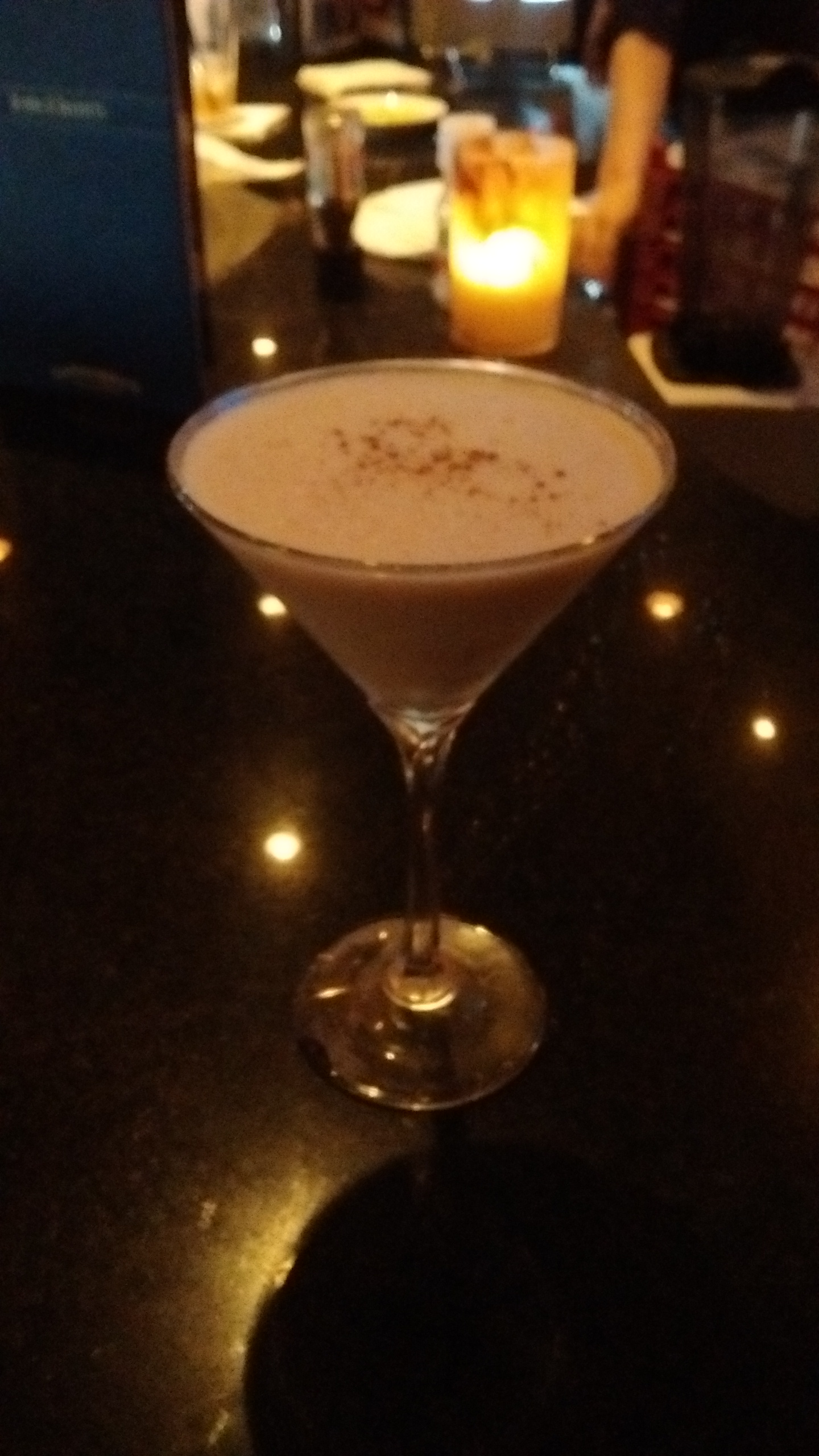
night-on-the-town-2The Alexander cocktail features in my novel, The Secrets of Dr. John Welles, during the winter of 1927 when John and his two best friends, Claude and Sam, sneak away for a night on the town. Prohibition limits their choice of establishments where they might procure a decent drink, but the young men are looking for a little wild entertainment. Where they end up provides more than they bargained for in quite a few ways. I’ll leave you with that little teaser (I have to save something for the publication of my novel), and provide you with the recipes I found and my experience with the drink.

I don’t keep ingredients on hand for cocktails, so I ventured out with my best friend, Emily, to find a bartender who could make the drink for us. It took us three tries at different restaurants before we found one that had the ingredients to make an Alexander. The drink is old-fashioned, and only one bartender knew what we were talking about.

When you mention an Alexander, the drink that most often comes to mind is the brandy version with white crème de cacao.   Even if you don’t order a Brandy Alexander, this is probably what you will receive.

Brandy Alexander

¾ oz. brandy

¾ oz. white crème de cacao

¾ oz. heavy cream

Add all the ingredients to a cocktail shaker and fill with ice. Shake, and strain into a chilled cocktail glass. Garnish with freshly grated nutmeg.

But let’s tiptoe back a little farther in history to 1910 and Jacob Abraham Grohusko’s book, Jack’s Manual on The Vintage & Production, Care & Handling of Wines, Liquors, etc., which is supposedly the oldest reference to a drink called The Alexander. It sounds lovely and like it might have a bit of kick with the rye whisky.

Alexander Cocktail

75% rye whisky

25% Benedictine

1 piece of ice

Twist of orange peel. Stir and serve.

And let us not forget the 1916 mention in Hugo Ensslin’s book, Recipes for Mixed Drinks, which provides this version of The Alexander.

Alexander Cocktail

⅓ El Bart gin

⅓ white crème de cacao

⅓ sweet cream

Shake well in a mixing glass with cracked ice, strain, and serve.

So which drink would John, Claude, and Sam have imbibed during their night on the town? For recipes, I’m following the lead of Gary Regan in his 2011 article, Behind the Drink: The Brandy Alexander, but I’m putting the gin back in the drink as it was originally created.

The Alexander

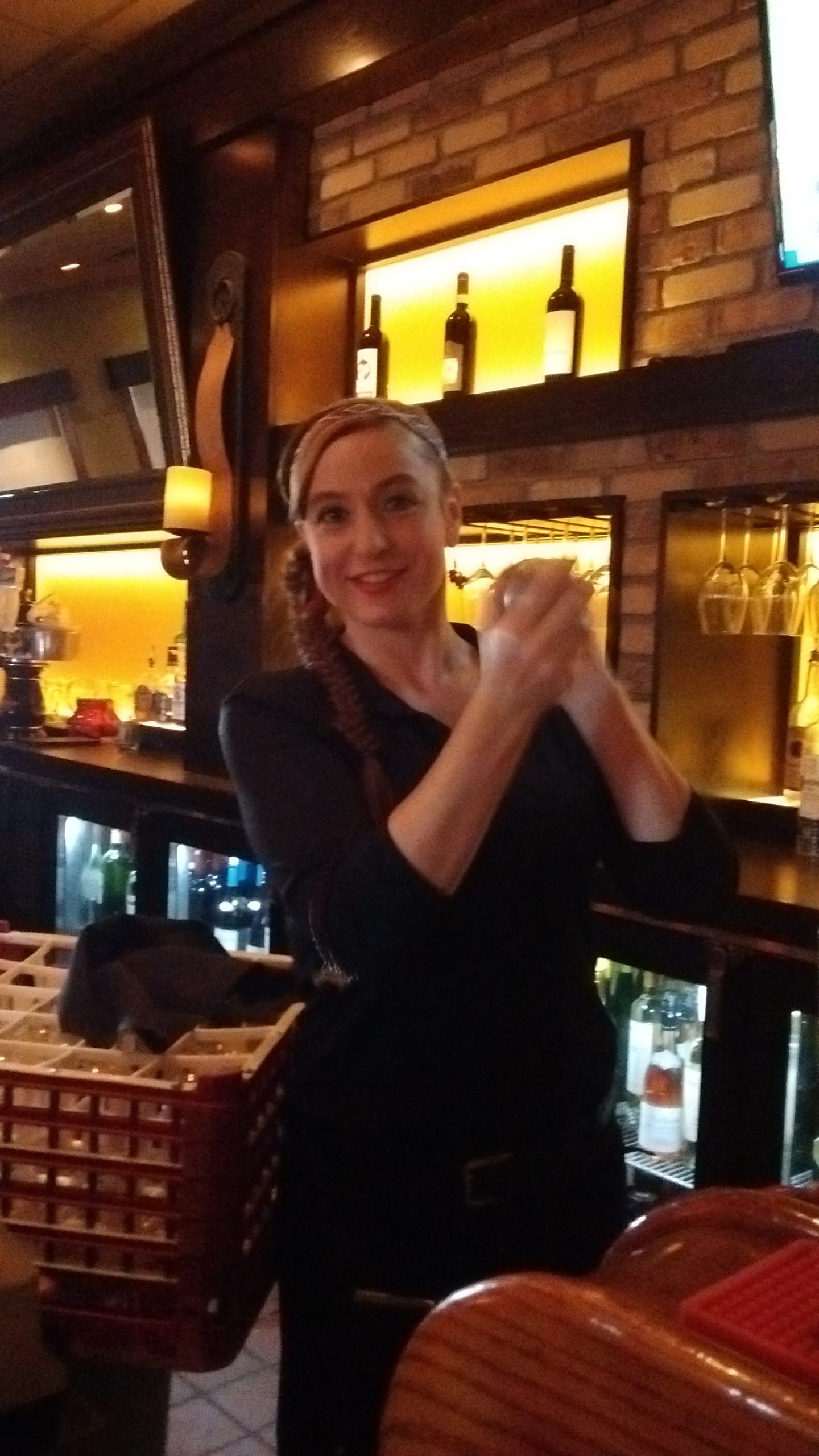
The lovely Gretchen

The lovely Gretchen

2 oz. gin

1 oz. dark crème de cacao

1 oz. heavy cream

Add all ingredients to a cocktail shaker and fill with ice. Shake, and strain into a chilled cocktail glass. Garnish with freshly grated nutmeg.

Emily and I requested Tanqueray gin, and the lovely bartender, Gretchen, was kind enough to procure heavy cream from the kitchen to make our drink. The restaurant where we dined makes a Brandy Alexander with gelato, but we were striving for authenticity. In our opinion, the drink was delicious. Not too cloying, the flavor of each ingredient blended well, but they also remained well defined. The gin made for a light, crisp drink despite the cream. For the sake of research, we tried the brandy version.

Brandy Alexander

2 oz. Cognac or other fine aged brandy

1 oz. dark crème de cacao

1 oz. heavy cream

Add all ingredients to a cocktail shaker and fill with ice. Shake, and strain into a chilled cocktail glass. Garnish with freshly grated nutmeg.

The Brandy Alexander was also a delicious cocktail but with a titch more warmth to it. The flavor was richer which we attributed to the brandy. Again, the three ingredients complimented each other without losing their identity and becoming something else entirely.

Traditionally, the drink was served in a cocktail glass, sometimes called a champagne glass, and if you aren’t familiar with it, it’s the saucer style glass on a stem. Today, if you find a restaurant or bar that can make a Brandy Alexander, or the gin version, you’ll receive the cocktail in a martini glass.

For an interesting tidbit, Barry Popik, historian, states the cocktail was invented at Rector’s in New York. According to Mr. Popik, Troy Alexander, the bartender, created the white drink to celebrate Phoebe Snow, the fictional character used in advertising for Delaware, Lackawanna & Western Railroad. The snowy beverage was used to emphasize the fact that the railroad powered its locomotives with anthracite, a clean-burning variety of coal, and was backed up by images of Phoebe Snow in a snow-white dress. The Brandy Alexander was originally known as Alexander #2.

Cheers!

Sweet History Lesson

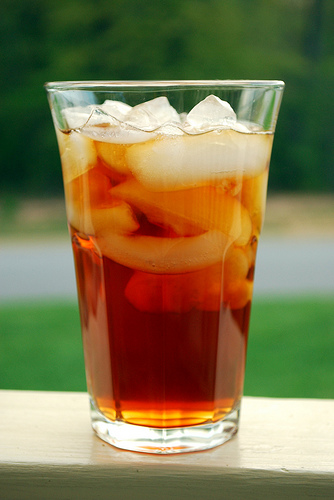
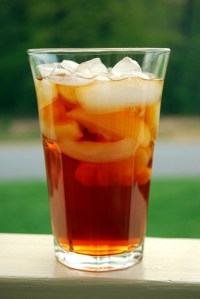
sweet-history-lessonI researched the history of sweet tea for my novel, The Secrets of Dr. John Welles, because I used it in a scene involving John and his two classmates at the University of Maryland, Sam Feldman and Claude Willoughby. As I’ve mentioned previous blog post (Who is in Your Details, No Bad Apples), it’s important to check your facts, and I honestly didn’t know how far back recipes for sweet tea went. Thankfully, the time period in which I wrote the scene was well after the first documented evidence of sweet tea in American culinary history.  So, without further ado, I present to you the History of Sweet Tea as gleaned from the What’s Cooking in America website.  I credit them and their sources with all of the history presented in this post.  It’s a bit of a lengthy read, but that’s what makes a great Research Road post.

History of Iced Tea and Sweet Tea

There are two traditional iced teas in the United States – Iced Tea and Sweet Tea.  The only variation between them is sugar.  Southerners swear by their traditional sweet iced tea and drink it by the gallons.  In the South, iced tea is not just a summertime drink, and it is served year round with most meals.  When people order tea in a Southern restaurant, chances are they will get sweet iced tea.  Outside of the southern states, iced tea is served unsweetened or “black,” and most people have never even heard of sweet tea.

18th Century

1795 – South Carolina is the first place in the United States where tea was grown and is the only state to ever have produced tea commercially.  Most historians agree that the first tea plant arrived in this country in the late 1700s when French explorer and botanist, Andre Michaux (1746-1802), imported it as well as other beautiful and showy varieties of camellias, gardenias, and azaleas to suit the aesthetic and acquisitive desires of wealthy Charleston planters.  He planted tea near Charleston at Middleton Barony, now known as Middleton Place Gardens.

19th Century

1800s – English and American cookbooks shows us that tea has been served cold at least since the early nineteenth century when cold green tea punches, that were heavily spiked with liquor, were popularized.  The oldest recipes in print are made with green tea and not black tea and were called punches.  The tea punches went by names such as Regent’s Punch, named after George IV, the English prince regent between 1811 until 1820 and king from 1820 to 1830.

By the middle of the nineteenth century, American versions of this punch begin to acquire regional and even patriotic names, such as Charleston’s St. Cecilia Punch (named for the musical society whose annual ball it graced), and Savannah’s potent version, Chatham Artillery Punch.

Iced tea’s popularity parallels the development of refrigeration:  The ice house, the icebox (refrigerator), and the commercial manufacture of pure ice, which were in place by the middle of the nineteenth century.  The term refrigerator was used for the first patented ice box in 1803 and were common in the mid-19th century in the United States.

1839 – The 1839 cookbook, The Kentucky Housewife, by Mrs. Lettice Bryanon, was typical of the American tea punch recipes:

“Tea Punch – Make a pint and a half of very strong tea in the usual manner; strain it, and pour it boiling (hot) on one pound and a quarter of loaf sugar. (That’s 2 1/2 cups white sugar) Add half a pint of rich sweet cream, and then stir in gradually a bottle of claret or of champaign (sic). You may heat it to the boiling point, and serve it so, or you may send it round entirely cold, in glass cups.”

1879 – The oldest sweet tea recipe (iced tea) in print comes from a community cookbook called Housekeeping in Old Virginia, by Marion Cabell Tyree, published in 1879:

“Ice Tea – After scalding the teapot, put into it one quart of boiling water and two teaspoonfuls green tea.  If wanted for supper, do this at breakfast.  At dinner time, strain, without stirring, through a tea strainer into a pitcher.  Let it stand till tea time and pour into decanters, leaving the sediment in the bottom of the pitcher.  Fill the goblets with ice, put two teaspoonfuls granulated sugar in each, and pour the tea over the ice and sugar.  A squeeze of lemon will make this delicious and healthful, as it will correct the astringent tendency.”

1884 – This may be the first printed recipe using black tea, which has become so universal today, and could also be the earliest version of pre-sweetened iced tea, the usual way of making it in the South today.  Mrs. D. A. (Mary) Lincoln, director of the Boston Cooking School, published Mrs. Lincoln’s Boston Cook Book: What to Do and What Not to Do in Cooking in 1884.  On page 112, there it is: iced tea, proving that the drink was not just a Southern drink.

“Ice Tea or Russian Tea – Make the tea by the first receipt, strain it from the grounds, and keep it cool. When ready to serve, put two cubes of block sugar in a glass, half fill with broken ice, add a slice of lemon, and fill the glass with cold tea.”

1890 – Professor Lyndon N. Irwin, of Southwest Missouri State University and a member of the St. Louis World’s Fair Society, found an article from the September 28, 1890, issue of the Nevada Noticer newspaper regarding the 1890 Missouri State Reunion of Ex-Confederate Veterans.  This article clearly states that iced tea had been around prior to1890.  The article states the following:

“The following figures will convey some idea of the amount of provision used at Camp Jackson during the recent encampment. There were 4,800 pounds of bread, 11,705 pounds of beef, 407 pounds of ham, 21 sheep, 600 pounds of sugar, 6 bushels of beans, 60 gallon of pickles, and a wagonload of potatoes. It was all washed down with 2,220 gallons of coffee and 880 gallons of iced tea. The committee expended $3,000, a little in excess of the amount subscribed, for the entertainment of the old soldiers.”

1893 – The 1893 Chicago World’s Fair, also called the Columbian Exposition, had a concessionaire that grossed over $2,000 selling iced tea and lemonade.

The Home Queen World’s Fair Souvenir Cookbook – Two Thousand Valuable Recipes on Cookery and Household Economy, Menus, Table Etiquette, Toilet, Etc.  Contributed by Two Hundred World’s Fair Lady Managers, Wives of Governors, and Other Ladies of Position and Influence, compiled by Miss Juliet Corson includes a recipe for variations on serving iced tea.

1895 – The Enterprising Manufacturing Co. of Pennsylvania distributed its popular recipe booklet called The Enterprising Housekeeper by Helen Louise Johnson. In the recipe booklet, they advertise their popular ice shredders and its many uses. One use was “for your iced tea.”

20th Century

1900s – After 1900, iced tea became commonplace in cookbooks, and black tea began replacing green as the preferred tea for serving cold.  The preference for black over green tea in an iced beverage came with of import of inexpensive black tea exports from India, Ceylon, South America, and Africa.

1904 – It was at the 1904 World’s Fair in St. Louis that iced tea was popularized and commercialized (not invented).  Due to the hot summer of 1904, people ignored any hot drinks and went in search of cold drinks, including iced tea.  Because of this, it changed the way the rest of Americans thought of tea, thus popularizing iced tea.

Most historians mistakenly give credit to Richard Blechynden, India Tea Commissioner and Director of the East Indian Pavilion, as being the creator of ice tea at the 1904 World’s Fair in St. Louis.  In the East Indian Pavilion at the Fair, Blechynden was offering free hot tea to everyone.  Because of the intense heat, it was soon realized that the heat prevented the crowd from drinking his hot tea.  Blechynden and his team took the brewed India tea, filled several large bottles, and placed them on stands upside down – thus allowing the tea to flow through iced lead pipes.  This free iced tea was very much welcomed by the thirsty fair goers.  After the fair, Blechynden took his lead pipe apparatus to New York City, offering free iced tea to shoppers at Bloomingdale Brothers Department Store, demonstrating iced tea is a desirable summertime drink.

According to the book Beyond The Ice Cream Cone – The Whole Scoop on Food at the 1904 World’s Fair by Pamela J. Vaccaro:

“Both hot tea and iced tea appeared on most restaurant menus at the Fair – at the Barbecue, Fair Japan, the Old Irish Parliament House, the Louisiana and Texas Rice Kitchen, Mrs. Rorer’s East Pavilioin Cafe, and so on. It is highly unlikely that all these restaurants jumped on the bandwagon of Blechynden’s “new idea,” and scurried to the print shops to have their menus reprinted!

What really “stirs the pot” is that “Richard Blechynden” was listed as an official concessionaire (No. 325) “to serve tea in cups and packages” at the Chicago World’s Fair in 1893 – 11 years before the one in St. Louis. The financial records from the exposition do not list any ledger entries for Blechynden – which raises the question of whether he actually showed up or was just late with his report. But, if he had been there, it would have been odd that he would not have realized that his product was already being sold in hot and cold versions. It would likewise be odd that, in the 11 intervening years, he would have been totally oblivious to the drink’s inclusion in cookbooks and on menus.”

1917 – By World War I, Americans were buying special tall iced tea glasses, long spoons, and lemon forks.  By the 1930s, people were commonly referring to the tall goblet in crystal sets as an “iced tea” glass.

1920 to 1933 – The American Prohibition (1920-1933) helped boost the popularity of iced tea because average Americans were forced to find alternatives to illegal beer, wine, and alcohol.  Iced tea recipes begin appearing routinely in most southern cookbooks during this time.

1928 – In the southern cookbook, Southern Cooking, by Henrietta Stanley Dull (Mrs. S.R. Dull), Home Ecomonics Editor for the Atlanta Journal, gives the recipe that remained standard in the South for decades thereafter.  It is a regional book that very much resembles the many “church” or “ladies society” cookbooks of that era.

“TEA – Freshly brewed tea, after three to five minutes infusion, is essential if a good quality is desired. The water, as for coffee, should be freshly boiled and poured over the tea for this short time . . . The tea leaves may be removed when the desired strength is obtained . . . Tea, when it is to be iced, should be made much stronger, to allow for the ice used in chilling. A medium strength tea is usually liked. A good blend and grade of black tea is most popular for iced tea, while green and black are used for hot . . . To sweeten tea for an iced drink, less sugar is required if put in while tea is hot, but often too much is made and sweetened, so in the end there is more often a waste than saving . . . Iced tea should be served with or without lemon, with a sprig of mint, a strawberry, a cherry, a slice of orange, or pineapple. This may be fresh or canned fruit. Milk is not used in iced tea.”

1941 – During World War II, the major sources of green tea were cut off from the United States, leaving us with tea almost exclusively from British-controlled India, which produces black tea. Americans came out of the war drinking nearly 99 percent black tea.

1995 – South Carolina’s grown tea was officially adopted as the Official Hospitality Beverage by State Bill 3487, Act No. 31 of the 111th Session of the South Carolina General Assembly on April 10, 1995.

21st Century

2003 – Georgia State Representative, John Noel, and four co-sponsors, apparently as an April Fools’ Day joke, introduced House Bill 819, proposing to require all Georgia restaurants that serve tea to serve sweet tea.  Representative John Noel, one of the sponsors, is said to have acknowledged that the bill was an attempt to bring humor to the Legislature, but wouldn’t mind if it became law. The text of the bill proposes:

(a)  As used in this Code section, the term ‘sweet tea’ means iced tea which is sweetened with sugar at the time that it is brewed.

(b)  Any food service establishment which served iced tea must serve sweet tea. Such an establishment may serve unsweetened tea but in such case must also serve sweet tea.

(c)  Any person who violates this Code section shall be guilty of a misdemeanor of a high and aggravated nature.

SOURCES:

1904 St. Louis World’s Fair – The Iced Tea Question, by Lyndon N. Irwin.

Beyond the Ice Cream Cone – The Whole Scoop on food at the 1904 World’s Fair, by Pamela J. Vaccaro, Enid Press, St. Louis, 2004.

Boston Cooking School Cook Book, by Mrs. D.A. Lincoln, Dover Publications, Inc., New York, 1996 Reprint.

GA: Food Establishments Must Serve Sweet Tea!, Political State Report, Tuesday, April 1, 2003.

Georgia General Assembly, House Bill 819.

I’ll Have What They’re Having – Legendary Local Cuisine, by Linda Stradley, Globe Pequot Press, 2002.

Mint Museum of Art in Charlotte, NC, Features Works by Pierre-Joseph Redout April Issue 2002, from Carolina Arts Magazine, by Shoestring Publishing Company, Bonneau, SC.

South Carolina General Assembly, 111th Session, 1995-1996.

Steeped in Tradition – Sweetened or Not, Iced tea is Southerners’ drink of choice, by Linda Dailey Paulson, writer for Atlanta-Journal Constitution newspaper.

Taste of Luzianne, Luzianne Tea.
No Bad Apples

no-bad-applesToday’s post falls into the category of Research Road, however, the information I discovered didn’t make it into my novel, The Secrets of Dr. John Welles, or more correctly, it was removed. The reason for this underscores my admonition to always check your facts. Whether you’re writing historical fiction or fantasy with factual details familiar to the known world, it’s important to present the particulars accurately.

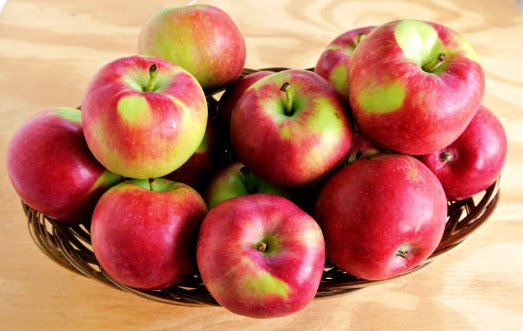
In an effort to entice potential readers once my novel is published, I have familiarized them with characters and situations through the food I featured in the story. Recipes for these meals can be found in Edible Fiction. Last week, I wrote a post for an apple pie eaten in a scene relaying Dr. Welles’s first trip into the town where he decided to spend his later years. For this particular pie, I chose to use Paula Red apples. They are among my favorite pie apples because they have an old fashioned flavor and become sauce-like when baked. I thought a little history on the heirloom apple would make for an interesting blog post, and that’s when I learned my mistake.

According to several websites devoted to antique apples, Paula Reds were discovered as a seedling in Sparta, Michigan in 1960 by Lewis Arrends. The apple, named for Arrends’s wife Pauline, was a happy accident that appears to have descended from the humble McIntosh. Why is this important you ask? Because the scene in which a Paula Red apple pie is eaten by Dr. Welles took place in 1958, two years before their discovery and ten years before they hit the market. Perhaps my favorite apple wasn’t as vintage as I first believed.

There are those, my mother among them, who will argue that this is a minor detail, one that wouldn’t be discovered by the casual reader. But as I’ve stated before, I’m not a casual reader or writer, and these details are important. How can I expect my readers to have faith in what I say if I don’t conduct thorough research? (Who is in Your Details?)

I know readers are expected to suspend some belief at times and trust their favorite writers, yet I can’t allow that one person who could nail me on the facts to be disappointed any more than I could tell blatant lies. Obsessed with the facts? I think so! In closing, I hope that another writer will benefit from the information presented about Paula Red apples. At the very least, I hope I’ve prompted writers to check their facts.

By the way, if you want a great recipe for an apple pie, check out the post All-American Goodbye.

Bean There, Done That

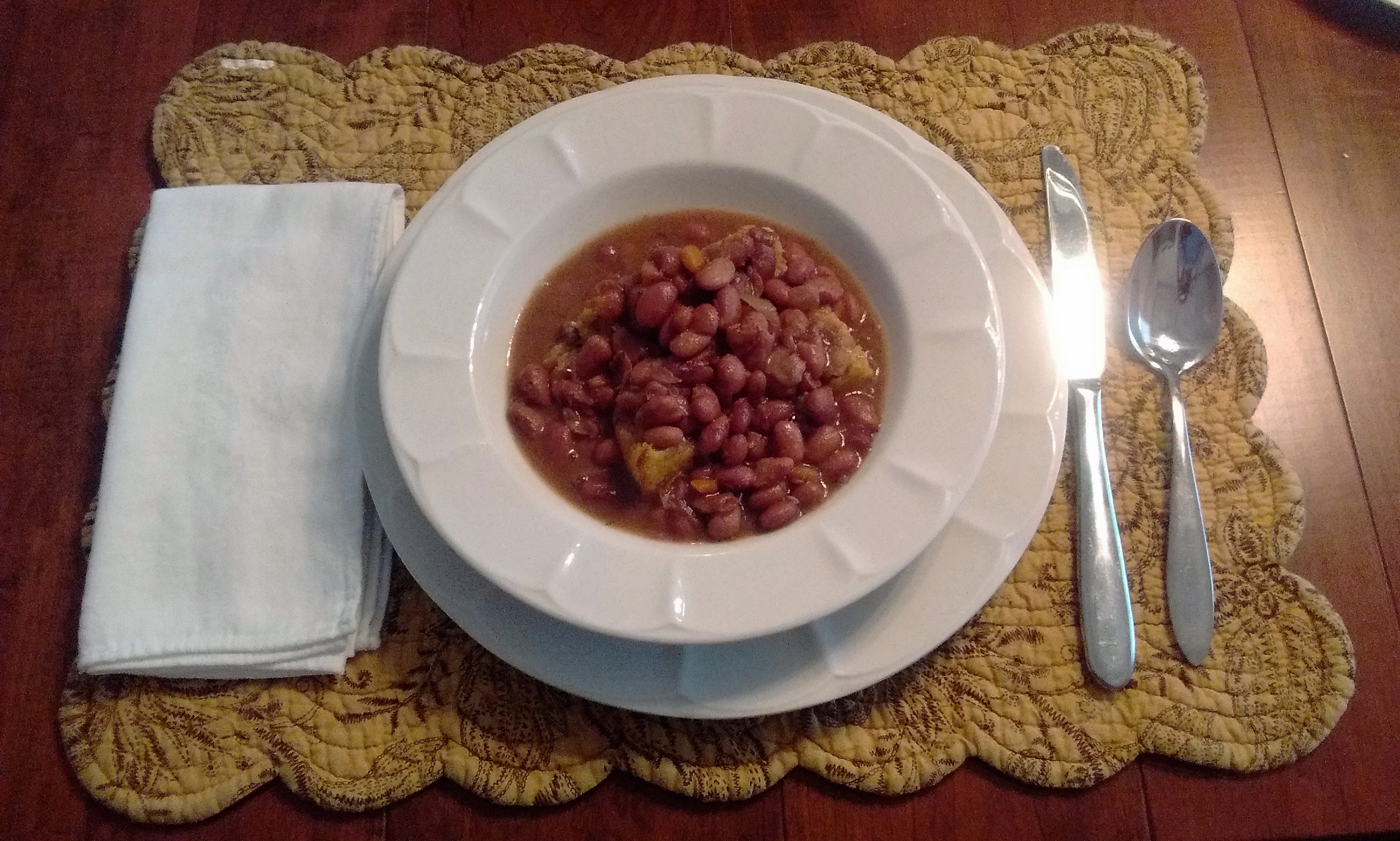
bean-there-done-thatI probably have as many memories of my mother telling me how she ate brown beans and cornbread as a child as she does instances of eating them. From what I understand, the humble meal was a staple among those living in West Virginia who were not financially well-off. Sometimes, they only had sliced white bread with their beans. To hear her tell it, though, you’d think she had eaten a meal fit for a queen such was her childhood love of brown beans and cornbread. Even her cousin, Ellen, and my Great Aunt Edie, also a former resident of West Virginia, speak of the meal as if it was manna from Heaven.

I grew up eating brown beans and cornbread though not with as much enthusiasm as my mother. They were okay, but as a child of the seventies, hotdogs, grilled cheese, and Kraft macaroni and cheese rounded out much of my diet. Besides, I was a somewhat finicky eater as a kid, and my appreciation for brown beans and cornbread didn’t develop until I was an adult. Now when Mom makes a pot of brown beans and a skillet of cornbread, you can bet my family, her cousin, Aunt Edie, and other relatives will trail in throughout the dinner hour to dine on the simple fare.

With all that being said, it just made sense to have Bea Turner serve brown beans and cornbread at the diner she owned. My protagonist, John Welles, had to eat them at least once during his sojourn in West Virginia. Even though the meal is mentioned only once in my novel, I suspect Dr. Welles developed a love for brown beans and cornbread and probably ate them quite often.

The recipe for brown beans is kind of like those for apple pie, meatloaf, or macaroni and cheese. Every family has their version of how the old familiar dish should taste. Often, finances dictated what went into the pot. At its most basic, brown beans were cooked in water with either a piece of salt pork or dollop of bacon grease, salt and pepper. I’m going to provide a recipe that is a little more elegant but not alter it so much that connoisseurs of the dish won’t recognize it.

Bea Turner’s Brown Beans

1 – 2 lb. bag of brown beans

2 – 14.5 oz. cans beef broth

2 – 14.5 oz. cans chicken broth

1 large carrot, diced

1 sweet onion, diced

1 – 2 stalks celery, diced

1 t thyme

1 T parsley

Dash of garlic powder

Couple dashes of Worcestershire sauce

Salt and pepper to taste

½ stick butter

⅛ c olive oil

Cover the beans with enough cold water to allow for absorption and soak overnight. Drain and wash the next day. Place the beans in a Dutch oven with all the remaining ingredients and bring to a boil. Reduce to a simmer and cook for 1 1/2 hours. Test for doneness at this point, and cook in thirty minute increments until the beans are tender, probably no more than 2 – 2 ½ hours total cooking time.

Ladle the beans over slabs of cornbread and serve.

Enjoy!

Recipe for Disaster

Recipe for DisasterOne of the worst secrets young John Welles will keep reaches its peak by late 1928. Only John isn’t aware of it yet. The secret involves one of his best friends, Claude Willoughby, and the ruthless gangster by whom he is employed, Leo Jenkins.

Leo goes out of his way to make sure Claude suffers at every turn. He does so as a means of getting back at Claude’s father, the true object of Jenkin’s scorn. Bad business dealings put Claude’s father, J.D., at odds with Jenkins, but instead of bearing the brunt of the gangster’s wrath, J.D. offers up Claude as compensation by suggesting his son work for the man. Claude’s loathing of Leo cannot be suppressed during one of their encounters as the gangster eats a meal of sausage and potatoes, and it costs him dearly.

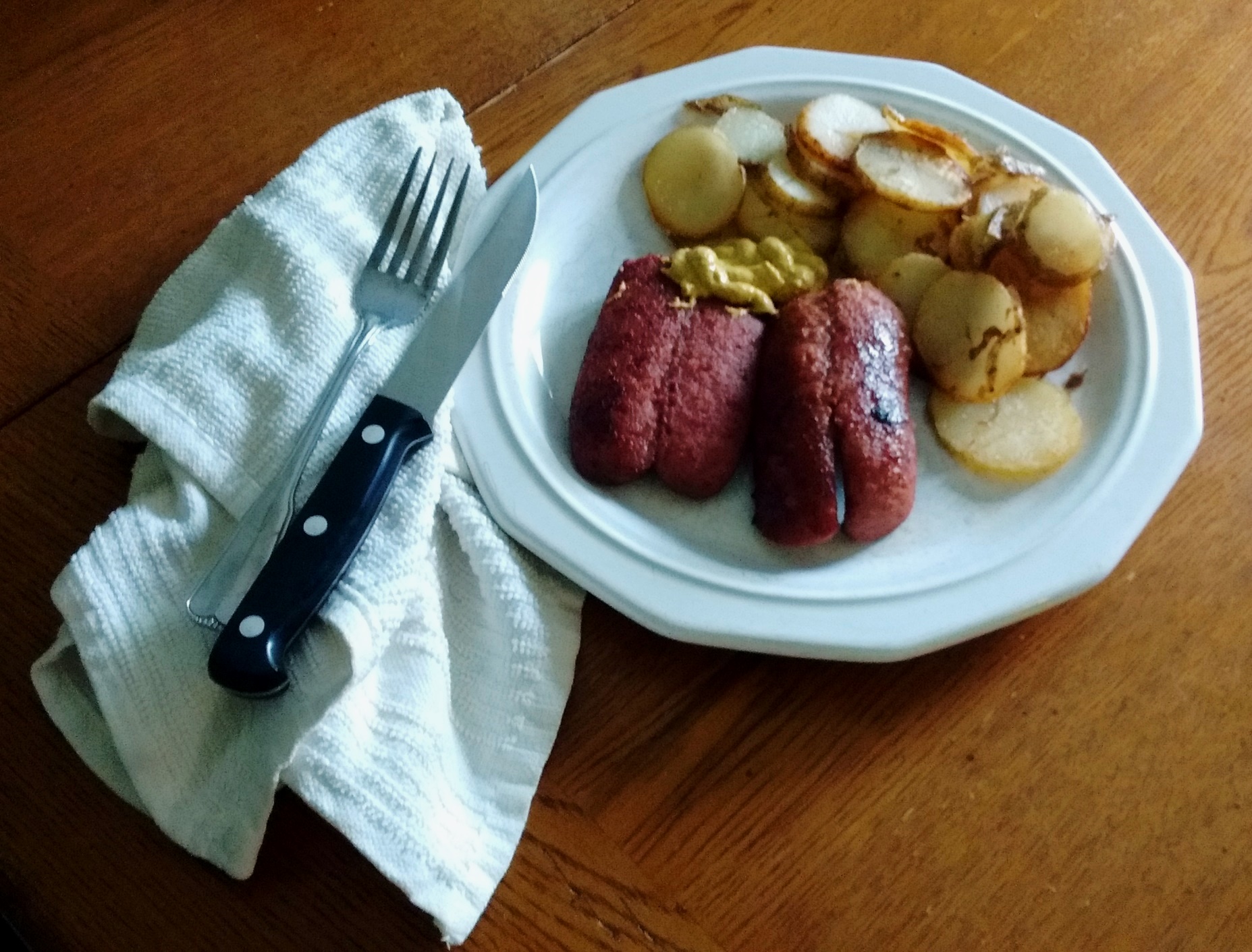
When I wrote the scene, I pictured kielbasa-style sausage and fried potatoes. I don’t have the kitchen equipment required to make sausage, but I’m sure there are many delicious recipes on the Internet. Also, you could consider kielbasa from a local butcher or even a well-known brand. Sliced fried potatoes are easy and delicious, and they complement the sausage. Add some grainy brown mustard, and you have a meal fit for a man as coarse as Leo Jenkins.

Fried Potatoes

Russet potatoes (about 3 inches long)

Peanut oil (Whoever made the potatoes for Leo Jenkins probably would have used lard or butter, but I’m suggesting peanut oil because I love the way it crisps whatever you fry in it.)

Sea salt

I recommend about three potatoes per person. Scrub the potato skins under water with a soft brush to remove excess dirt and eyes. Place the potatoes in a large pot and fill with enough cold water to cover your quantity of potatoes. Bring the water to a boil. Time the potatoes for five minutes and test for doneness with a sharp knife. You should be able to pierce them without resistance, but do not cook them to a soft or mushy state. Boil for another five minutes only if necessary.

Drain the potatoes and allow them to cool on a cutting board. After cooling, you can refrigerate them for use within two days or you can slice them to fry immediately.

Heat the peanut oil in a cast iron skillet over a medium-high to high heat. The surface will ripple and the oil pop. Drop in one potato to test. If the oil sizzles, it’s ready. Place the sliced potatoes in one layer in the skillet and cook until golden brown. You will need to cover them while they cook. Flip and repeat on the other side.

Remove the potatoes with a slotted spoon and transfer to a paper towel-lined platter. Keep the platter in a warmed oven as you cook. Repeat with remaining potatoes. Season the potatoes with salt in between the layers. Serve hot with the kielbasa and brown mustard.

Enjoy!

Keep Calm and Eat Latkes

Keep Calm and Eat LatkesLatkes are featured twice in my novel, The Secrets of Dr. John Welles. The first time was during a Hanukkah celebration Sam Feldman hosted for his two friends, John Welles and Claude Willoughby. Although Hanukkah was technically over, Sam’s idea to celebrate again was meant to cheer up Claude who had not returned to Kentucky with his family for Christmas. Sam’s mother, Gladys, made the latkes as an accompaniment to her brisket.

The second instance in which latkes are served was during the dinner John had with his neighbors, Reuben and Hannah Wise, during the years he lived in West Virginia. Hannah served the shredded potatoes with salmon patties.

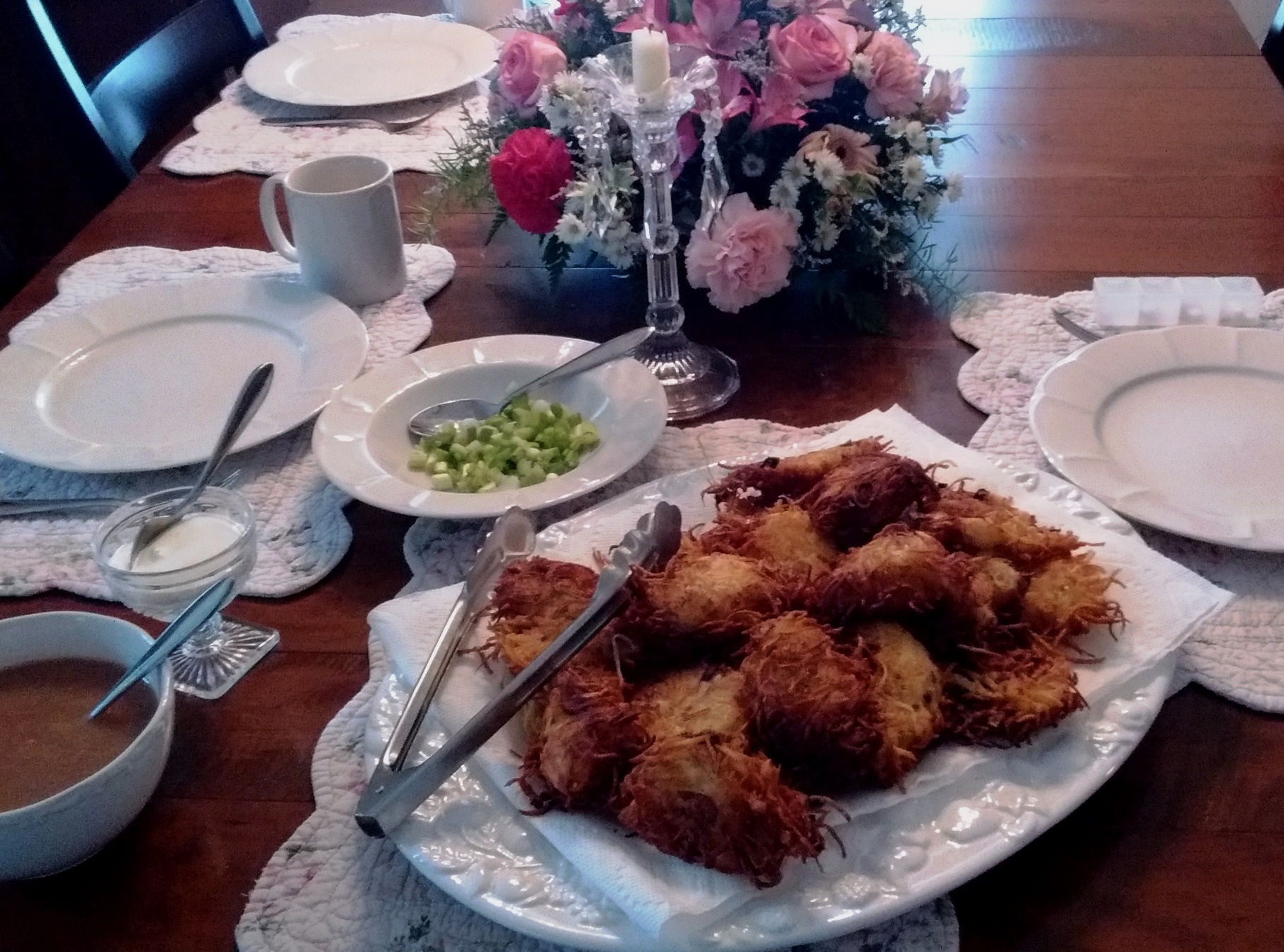
In both stories, the following recipe is the one I had in mind. Because the Feldmans and Wises are Jews, they would have used any oil other than lard. I recommend peanut oil because it ensures a wonderful crisp exterior and a tender, well-cooked middle. Some cooks prefer canola, but all appear to agree that this is one time to forego olive oil. Forget fancy potatoes for latkes as the starch in Russets also guarantees crunchy edges and soft, fluffy middles.

Latkes

12 Russet potatoes, shredded

1 large Vidalia onion, chopped

4 cloves of garlic, pressed

2 eggs, beaten

4 T flour

Salt and pepper to taste

Peanut oil

I recommend shredding the potatoes through a food processor to achieve matchstick like shreds. Be sure to press out all the liquid from the potatoes either by squeezing them through cheesecloth or a clean tea towel or in a colander under a heavy bowl filled with water. Wet potatoes do not fry well.

Combine the shredded potatoes and chopped onion in a large bowl. Add the remaining ingredients (except the oil) and stir. You may need to mix with your hands to ensure the clumps of potatoes are thoroughly coated.

Heat the oil in a cast iron skillet to very hot. The oil will ripple across the top and pop when ready. Drop in large spoonsful of the mixture and fry until golden brown and crisp on each side. Transfer the cooked latkes by slotted spoon to a paper towel-lined platter. Serve with sour cream and applesauce.

Enjoy!

Taking Stock of the Situation

Taking Stock of the Situation 1The summer of 1929 held a world of promise for young John Welles. He was succeeding brilliantly at the University of Maryland, had made two lifelong friends in Sam Feldman and Claude Willoughby, and the once competitive relationship he had with Garland Griffin turned into a romantic one unlike anything John ever imagined.

The opportunity to pamper the young woman who was swiftly becoming the love of his life occurred a few days after their visit to Garland’s home. An unexpected cold kept Garland away from John for a few days, and when he could stand it no longer, he took a crock of chicken soup to her.

Lucia, the sassy cook who works for John’s Aunt Prudence and keeps her on her toes, made the recipe for chicken noodle soup Sam’s mother, Gladys Feldman, gave her. Per Mrs. Feldman, Jewish chicken soup cured everything. Unfortunately, neither Lucia nor Gladys could predict how Garland’s secret would crash down upon John’s world, a secret for which there was no remedy.

The recipe I had in mind for the above-mentioned scene actually starts with the post Winner, Winner, Chicken Dinner. This recipe provides the carcass you’ll need for the stock that is the base of the soup. I highly recommend using this particular carcass as the seasoning from that recipe tastes amazing in the soup.

Chicken Stock:

1 roasted chicken carcass

2 T olive oil

12 c water

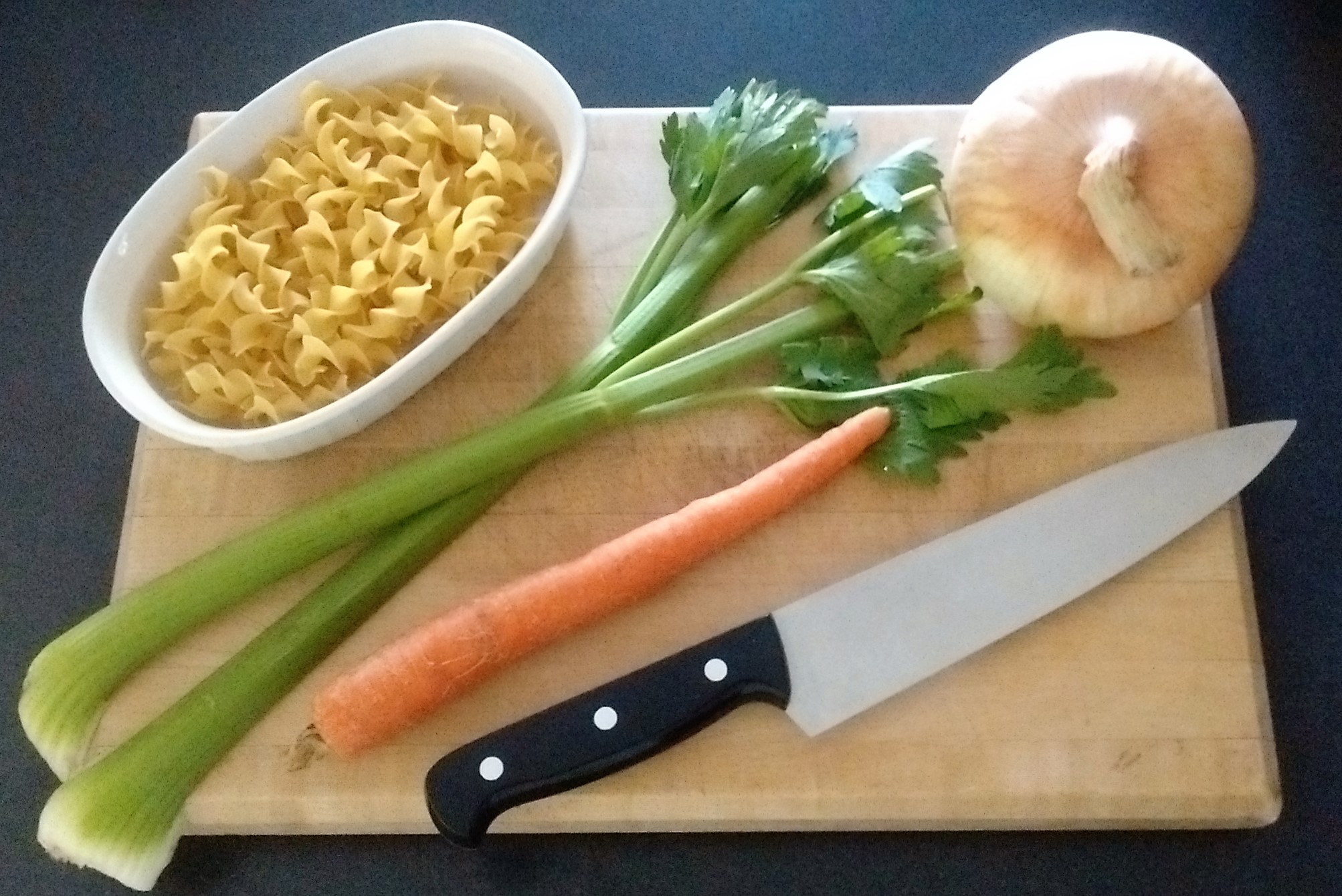
1 medium carrot

1 medium celery stalk

1/2 medium Vidalia onion

1 t thyme leaves

1 bay leaf

1 t quad-colored whole peppercorns

Remove the meat from the chicken carcass and reserve it for the soup. Break up the carcass into several pieces using a large knife or kitchen scissors. Heat the olive oil in a Dutch oven or stock pot to medium heat and brown the carcass pieces on all sides. Be sure to scrape any browned tidbits from the bottom of the pot and occasionally turn the pieces.

Peel the vegetables and coarsely chop them. Add the water, vegetables, and seasonings to the pot, and bring to a simmer. Do not let the stock boil. Reduce the heat to low and continue to simmer, occasionally skimming any scum off the surface of the stock using a large spoon. Adjust the heat as necessary to keep the stock at a simmer until the flavors have melded, about 1 – 1 ½ hours.

Remove and discard the pieces of chicken carcass. Pour the stock through a wire mesh strainer placed over a large crock or bowl. Do not save the vegetables for the soup as the flavor has gone into the stock. The stock can be cooled to room temperature and stored in an airtight container in the refrigerator for three days or frozen for one month.

Or you can pour the stock into a six quart pot and proceed with making soup.

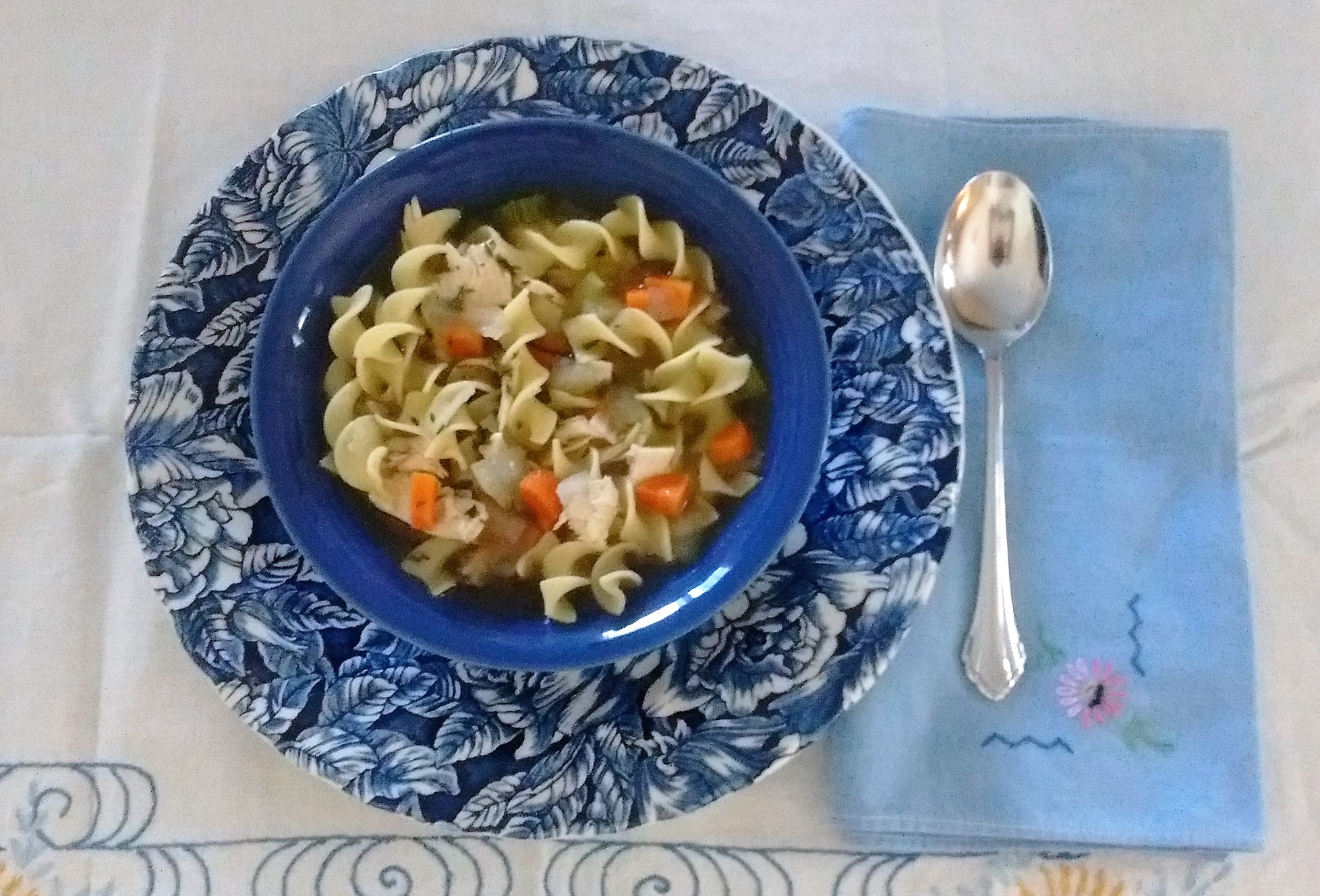
Chicken Noodle Soup:

Reserved chicken meat

2 medium carrots

2 medium celery stalks

1/2 medium Vidalia onion

1 t sea salt

1 t thyme leaves

Freshly ground quad-colored peppercorns to taste

2 c dried egg noodles

Bring the stock to a simmer over medium-high heat. Peel and dice the vegetables to a medium dice. Add them and the seasonings to the pot and stir thoroughly. Return to a simmer then reduce the heat to medium low. Simmer until the vegetables are tender, about twenty minutes.

In a separate pot, bring water to a boil. Add the noodles and cook until al dente. Drain them in a colander. Do not cook the noodles in the stock or they will become mushy and your stock pasty.

Shred the reserved chicken meat into small pieces. You’ll need about 2 c for the soup. Save any extra for another use.

Once the vegetables are tender, add the shredded chicken and drained noodles to the stock. Stir thoroughly and return to a simmer. Cook about five minutes to meld the flavors. Season with salt and pepper as needed.

Enjoy!

Taking Stock of the Situation 2

Winner, Winner, Chicken Dinner

Winner, Winner Chicken Dinner 2Hugh Griffin is on the cusp of a secret that will change the path of John Welles’s life forever. The unspoken shared knowledge exists between Hugh and his daughter, Garland, who John loves dearly. The once competitive pair has become quite close although for different reasons. Their relationship reaches its pinnacle in the summer of 1929 when she invites him to her home to visit her father, Hugh.

The retired Lutheran pastor welcomes his daughter and her boyfriend with abundant graciousness. Hugh is the type of man who lives a simple life with excellence. His cooking is homey, delicious, and prepared with love. For the special meal, he takes a little extra time with the otherwise ordinary dish of roasted chicken.

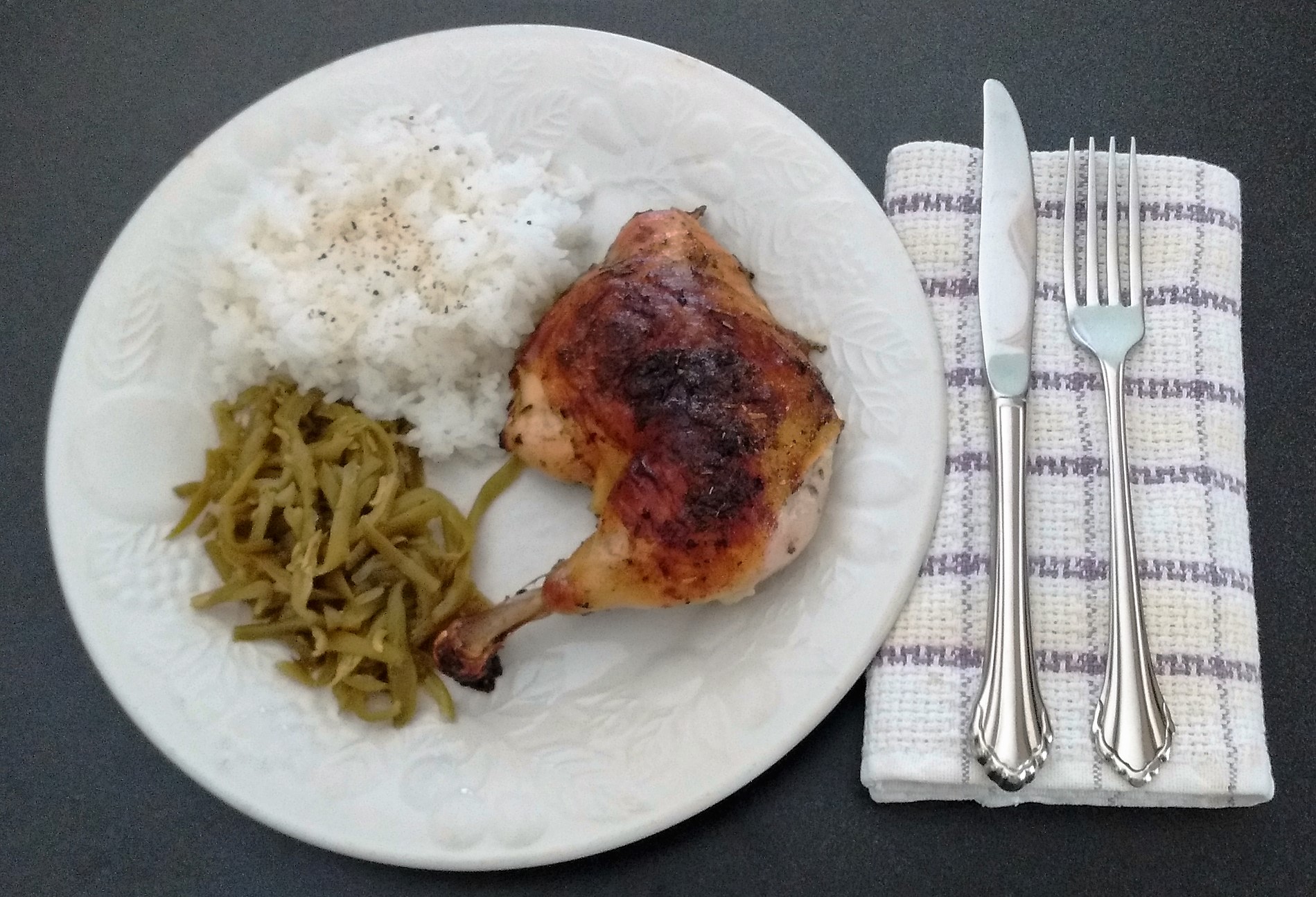
The following recipe is the one I had in mind for Hugh to prepare when John and Garland visited. The extra steps of spatchcocking and marinating the chicken are simple and go a long way to making the humble roast chicken juicy and tender. Besides, half the fun of spatchcocking a chicken is saying the word spatchcock. While I could describe this process to you, it’s much simpler to direct you to a website on Spatchcocking a Chicken. Once you’ve spatchcocked your chicken, proceed with the following recipe.

1 4-pound chicken, spatchcocked

Marinade:

2 c buttermilk

¼ c plus 2 T olive oil

4 cloves garlic, pressed

1 T ground peppercorns (I used quad-colored peppercorns)

1 T sea salt

2 T rosemary

1 T honey

Mix the buttermilk, ¼ c olive oil, garlic, pepper, sea salt, rosemary, and honey in a bowl. Whisk thoroughly. Pour the mixture over the spatchcocked chicken in a baking dish to be covered with plastic wrap or place the marinade and chicken in a freezer bag and seal tightly. Refrigerate overnight or up to two days.

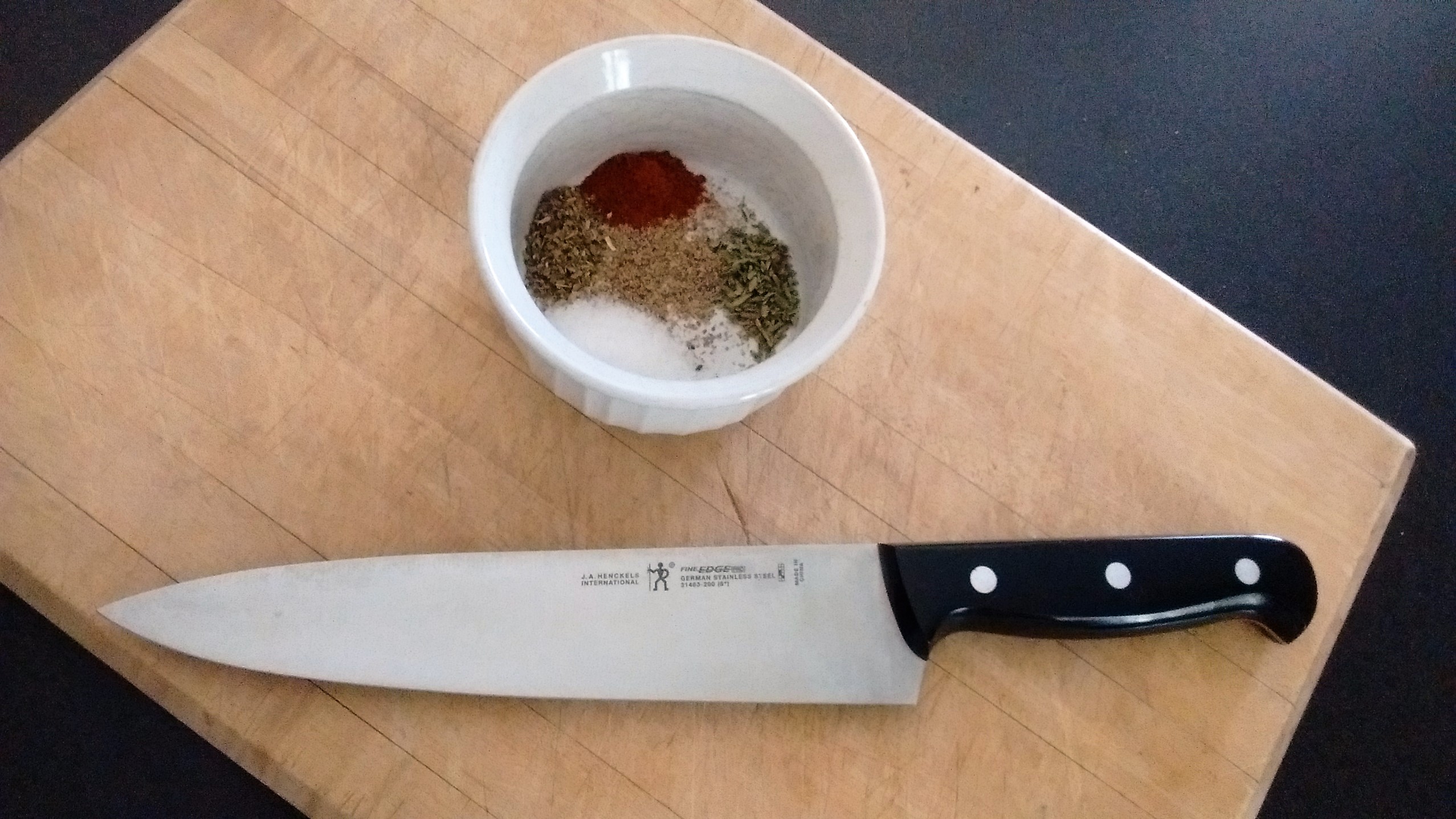
Preheat the oven to 400° F. Remove the chicken from the marinade and place on a rack so the excess can drip off. Prepare the seasonings mixture.

Seasonings Mixture:

6 T unsalted butter, cold and cut into six squaresWinner, Winner Chicken Dinner 1

1 t sea salt

¼ t oregano

¼ t thyme

¼ t paprika

¼ t ground peppercorns (Again, I used the quad-colored variety)

Combine the spices and salt. Dip one side of the cold squares of butter in the seasoning mixture and shove four beneath the skin across the breast of the chicken and one each beneath the skin over the thigh/drumstick area. Drizzle the chicken with remaining 2 T olive oil and sprinkle any remaining seasoning mixture across the skin of the chicken.

Place the chicken breast side up in a roasting pan or baking dish. Tuck the wing tips beneath the chicken. Roast for 45 minutes then reduce heat to 325° F. Baste the chicken and continue roasting until well browned and until juices run clear when chicken is pierced where leg joins thigh, about another 20 minutes.  Baste again when done roasting.

Place chicken on a carving board and allow it to rest for 10 minutes before cutting into serving pieces. Place a portion on each of four plates, and drizzle each serving with pan juices.

Enjoy!

The Secret in the Sauce

The Secret in the SauceGarland Griffin is an intelligent, beautiful young woman with a secret that’s going to change the course of John Welles’s life. When Garland and John first meet at the University of Maryland, where both are pursuing studies to become doctors, the pair develops an instant rivalry over grades. A chance encounter at a speakeasy leaves the duo unsure of where they stand with each other, but it is the unwelcome growing attraction they feel that catches both off their guard.

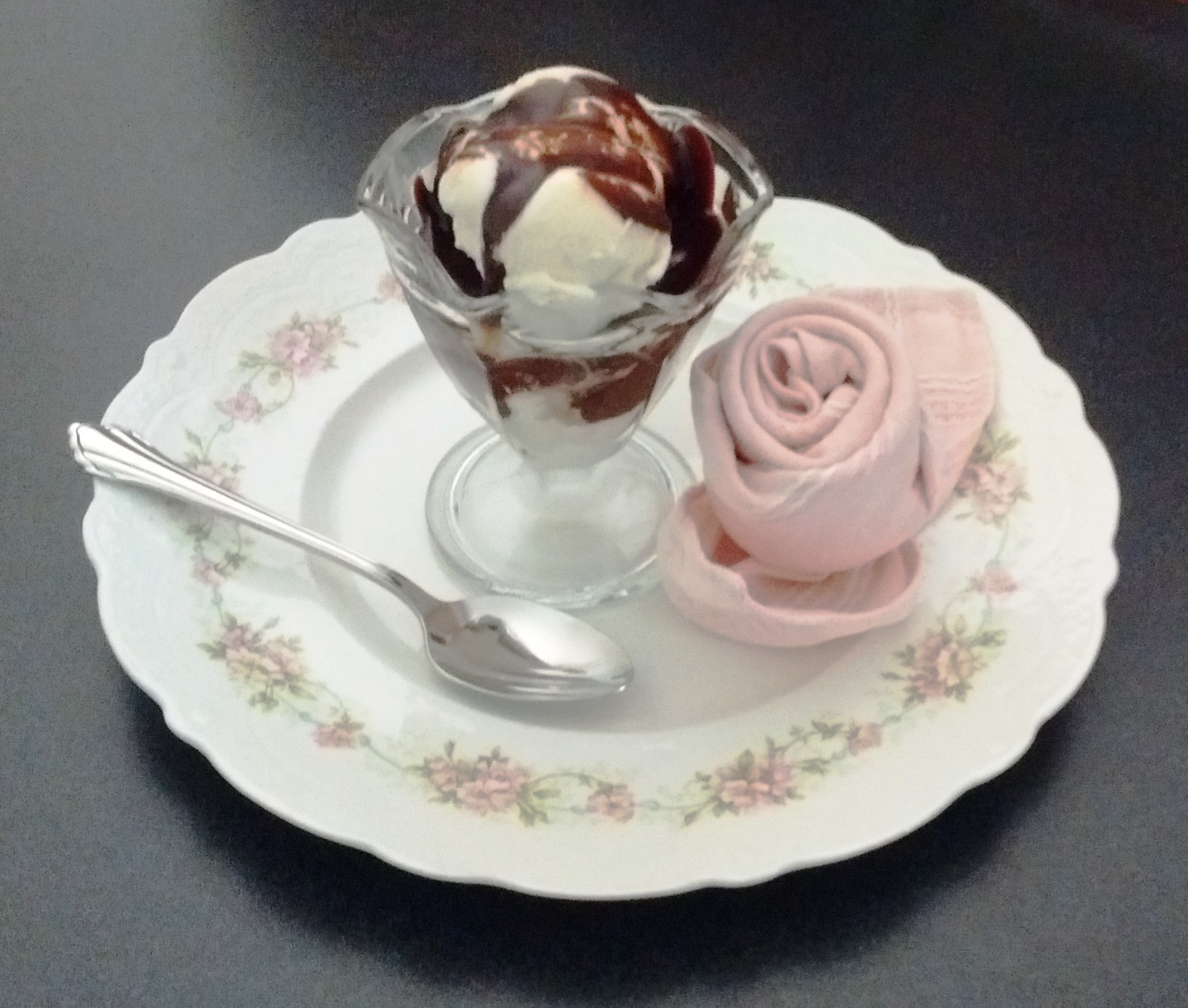
Over a tulip sundae at the soda shop, Garland observes John and his two best friends, Sam and Claude, and comes to the decision that although she’s experiencing feelings for her fellow student, what she needs is John’s presence in her life as cover for her dark secret.

The following recipe for hot fudge sauce is the one I had in mind when I wrote the above-mentioned scene. There are other delicious toppings I could have chosen for Garland, but she needed a selection as dark and sultry as herself.

Hot Fudge Sauce

⅔ c heavy cream

½ c light corn syrup

⅓ c dark brown sugar

¼ c Dutch-processed cocoa powder

¼ t sea salt

¾ c bittersweet chocolate (chopped and divided in half if using blocks. I used Ghirardelli chips.)

2 T unsalted butter

2 t vanilla

Bring the heavy cream, light corn syrup, dark brown sugar, cocoa, salt, and half the bittersweet chocolate to a boil in a saucepan over a medium-high heat, stirring constantly. Reduce the heat to low to maintain a simmer. Bubbles should rise slowly to the surface. Stir occasionally to keep from scorching the sauce. Cook for five minutes.

Remove from the heat and add the remaining chocolate, butter, and vanilla. Stir until smooth. Cool in the saucepan or a shallow dish for 20 to 30 minutes before transferring to an airtight container for storage in the refrigerator. The sauce will last for two weeks. Reheat in a saucepan on the stove over low heat or in the microwave for 30 second increments until it is pourable but thick.

Enjoy!

Bea’s Diner-Open For Business

In the summer of 1948, Dr. John Welles is the newest resident in Addison-on-Gauley, West Virginia. He’s still reeling from his brief experience during World War II, the effects of which will haunt him for many years, and seeks refuge in the small town tucked away in the Appalachian Mountains. His role as the new doctor provides the perfect camouflage for the emotional scars he carries and allows him to hide behind his mask of professionalism. Only one person in the town can’t be fooled.

Bea's DinerBea Turner, the voluptuous, cigarette smoking diner owner, takes a fancy to John which he returns in kind. They become close during his initial trip into town, an event that makes John the butt of an unexpected joke, and their relationship grows through many hardships and trials. Their love for each other is recognized in town as something akin to marriage. They alone believe they’ve kept their liaison under the radar.

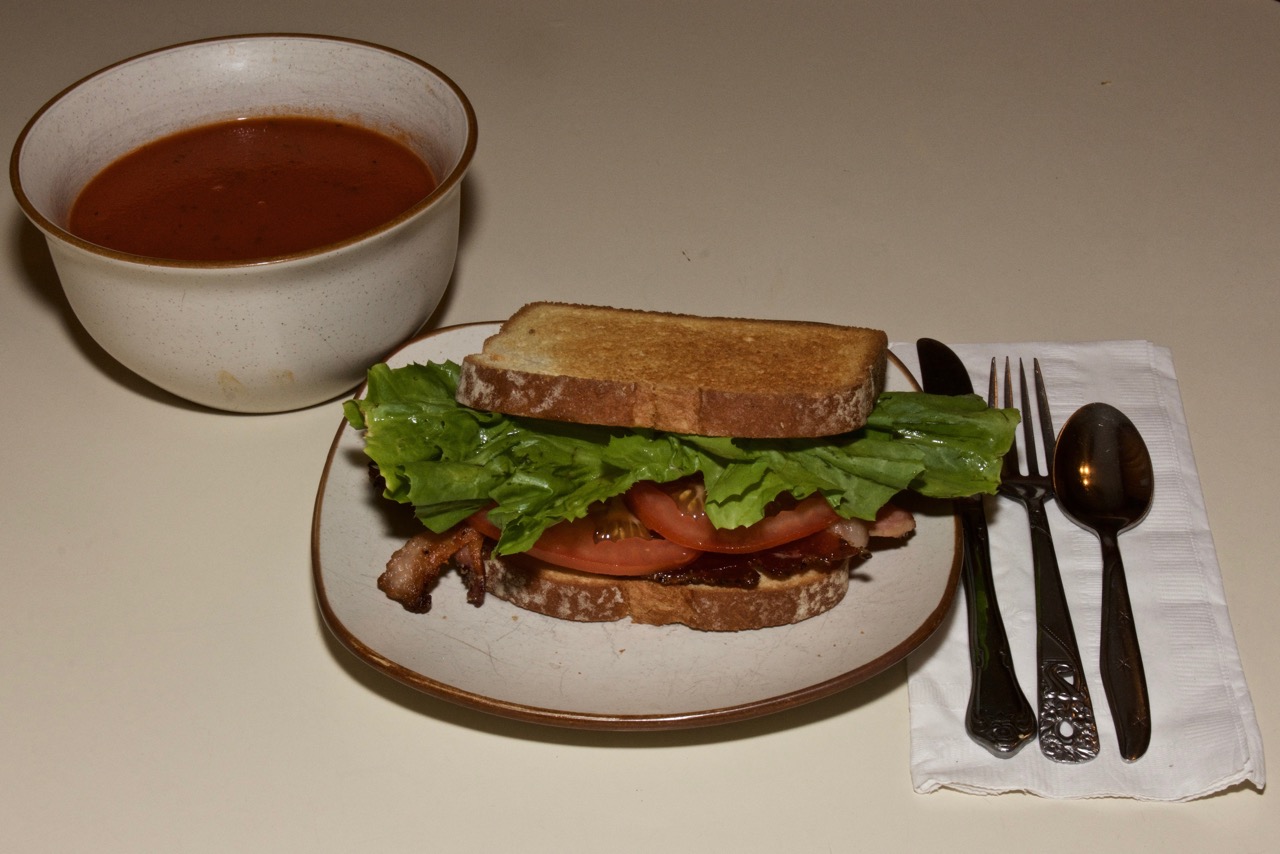
The sassy restauranteur serves John a bacon sandwich and tomato soup for lunch during his first visit. He doesn’t enjoy the meal surrounded by the more gossipy members of the town, but having Bea in his presence eases the awkwardness. The biggest surprise comes at the end of lunch when somehow John gets stuck with the entire check.

Bacon sandwiches are easy to make and don’t require a recipe. Two slices of your favorite bread toasted to your desired darkness, add as many slices of cooked bacon as you prefer, top with lettuce, tomato, and mayo—Viola! Bacon sandwich. I’m sure there are people who choose other condiments, vegetables, dressing, relishes, and those who leave off everything except the bacon. Really, the humble bacon sandwich is a matter of preference.

As for the tomato soup, while the majority of the items on Bea Turner’s menu are homemade, one place she cuts corners is by using good ole Campbell’s Tomato Soup. She is, after all, the only employee in her own restaurant.

I’ll not enter the debate on the sodium levels in canned soups and how Campbell’s added high fructose corn syrup to their soup to appease the American sweet tooth. I’d like to believe that during the summer of 1948, when John visited Bea’s diner, the soup was wholesome and tasty and the can wasn’t lined with bisphenol-A.

As recently as 2012, Campbell’s Tomato Soup still ranked as one of the top ten selling dry grocery items in U.S. grocery markets. It’s fairly healthy, too, for canned, modern industrial food. No fat, no cholesterol, no fake colors or flavors, laced with minerals, iron and Vitamin C. A two-serving can is only 270 calories before adding a bacon sandwich as a side.

There are organic choices on the market now as well as lower-sodium varieties and those made without high fructose corn syrup. Whichever option you choose, remember to add a tasty bacon sandwich, or the traditional grilled cheese, and enjoy your meal.