Coffee

CoffeeLeonard Summerscale sat like a mannequin in the center of a roomful of chattering diners. Knives and forks slaked against plates, ice swam brightly in glasses of water. Waitresses called orders to the cook before they were halfway back to the kitchen. Above the din of lunchtime in the city, the bell on the door chimed. Only then did Leonard’s face reanimate, as the scarecrow with red hair threw his arm up and navigated his way to where Leonard sat.

“Thank you for agreeing to meet with me, Reverend.”

“No problem, Len, none at all. Your message sounded so urgent. What can I do for you?”

“Please, have a seat,” Leonard said, indicating the chair opposite him at the two-seat diner table.

Reverend Bast slid into the grease-slicked, padded chair. The red vinyl cushion released a squeak and a puff from a tear near the edge. Leonard busied himself flagging down one of the waitresses performing an awkward ballet through the narrow aisles; a balancing act of three plates occupied the length of each arm.

“The service is usually much better, much better.”

“Don’t fret, Len. It is lunchtime.”

“Leonard, please.”

“Of course, I’m sorry.”

The harried waitress in a rumpled, powder blue uniform finally appeared at the table. She placed a menu in front of each man, shoved her sagging ponytail off her shoulder, and wiped the back of her hand across her nose.

“What’ll you have, Reverend? There’s a ten percent discount for men of the cloth.”

She jabbed her pencil in the direction of his collar.

“Well, lucky you,” Leonard said. “That should save you a few pennies.”

The Reverend’s eyes scanned the a la carte section of the menu as he mentally replayed Leonard’s voicemail. He was sure invite you to breakfast had proceeded his congregant’s request to talk.

“I’ll have the poached egg on rye toast, black coffee, please.”

As the waitress scribbled on her pad, Leonard waited with fingers steepled. He paused long enough to draw the young woman’s attention, making eye contact with her, before he spoke slowly, deliberately.

“I’ll have two eggs fried hard, and I do mean hard, with the yolks broken, brown, crispy edges, the whole nine yards. Please encourage the cook to properly season the eggs; I should be able to see the pepper flakes but not the salt. Shredded hash browns, toasted thoroughly but not swimming in grease. The ham steak? Is it sugar cured or country style? Oh, no matter–you probably don’t even know what I’m talking about. Wheat toast, hold the butter, cut from corner to corner. Is there mixed fruit jelly on the table? Very good. And decaf coffee. Be sure it’s a fresh pot. I know how long the decaf sits around in a place like this. Also, please bring real cream or at least milk. I despise those little plastic containers of oily, faux cream.”

The waitress shifted her weight from one foot to another. She chewed the inside of her cheek before smiling and saying, “You got it.”

The Reverend straightened jelly packets in the swiveling caddy as Leonard tsked at the waitress’s retreating back. He turned a conspiratorial look upon the Reverend and said, “Well, let’s see how much of that she gets correct.”

“I thought you’d been here before,” the Reverend asked.

“Oh, only a few times with co-workers. They chose to dine here. It’s not the sort of venue I’d normally patronize.”

“So, what can I do for you, Leonard?”

“Yes, the real reason we came. Now I know we haven’t been in your congregation long, and by we, I mean myself and Mrs. Summerscale–”

“–lovely woman, so very helpful in the nursery–”

“–and while we agree with the majority of your theology–”

“–oh, well–”

“–there are a few minor points I’d like to discuss on another occasion, still, I believe we made the correct choice in churches to attend.”

Leonard folded his hands across his stomach and leaned back in his chair. The Reverend remained silent for ten seconds until he understood it was his turn to speak.

“We…do enjoy your presence, and that of Mrs. Summerscale.”

“Ah, Mrs. Summerscale. What a tactful segue you’ve provided, Reverend, for it is the subject of my dear wife that brings me here today.”

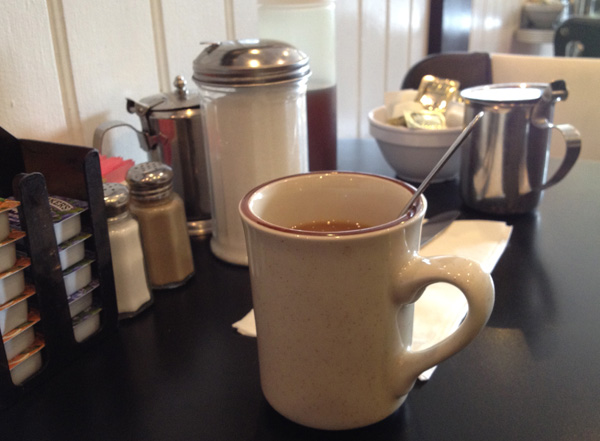
Leonard gazed toward the water-stained ceiling tiles and puffed his cheeks, his customary gesture when preparing for a long discourse on a topic of interest to no one but him. His efforts were halted momentarily by the arrival of their coffee followed by several moments of fussily arranging his cup and saucer, requesting an orange coaster to indicate to passing waitresses that he preferred decaf, and polishing his spoon as if for inspection by a Marine Corps drill sergeant.

Clouds of milk lightened Leonard’s coffee to an acceptable shade of taupe, placating the man to his previous state of calm. His voice achieved a stunning decibel of self-importance as he said, “Have you ever really considered coffee, Reverend?”

“I know I’m pretty worthless in the morning before I’ve had mine.”

Leonard’s eyes rose from his cup to contemplate the patches blushing the Reverend’s freckled cheeks. His uneven smile and softened expression conveyed the verdict of I know, I know. The Reverend thought to mention that Mrs. Carrick, the church secretary, always had a fresh pot ready for him prior to Sunday service, but he let it go.

“The average American adult drinks around three, eight-ounce cups per day. That’s 382 billion cups of coffee consumed in America alone every day. I suppose that makes me below average, eh Reverend?”

“Oh, I wouldn’t say that, Leonard. You’ve done marvelous things since joining the Board of Elders.”

A twitch in his left eye brought Leonard’s finger to the rescue. His hand in front of his face muffled his sigh.

“I only require one cup of coffee a day, and decaf at that. So many people are dependent upon the addictive qualities of caffeine to sustain them. But for me, coffee is a cup of warm reassurance that I shall succeed at whatever I set my mind toward for the day. That is to say, I don’t require coffee, Reverend, I enjoy it.”

“Indeed. How lucky for you.”

Another pause ensued as Leonard waited patiently for the Reverend to say something, anything, of relevance to the conversation. He came to the young man’s aid with, “As an unmarried man, you couldn’t possibly know the sheer joy of having your wife responsible for providing a fresh pot of coffee every morning. Such is the pleasure that Mrs. Summerscale brings to my life.”

“It’s the simple things, like drinking coffee together, that solidify a marriage. Or so I’ve heard.”

“You miss my point, Reverend: while I enjoy the coffee, what solidifies my marriage, any marriage for that matter, is the consistency with which the ritual is conducted. Therein lays the quality of any relationship. Do you understand?”

The Reverend twisted sideways in his seat.

“And when that consistency is disrupted–well!”

The Reverend twisted in the other direction, mostly to avoid Leonard’s hands thrown up in frustration but coming across the table with the rapaciousness of an eagle’s talons.

“Play nice, fellas. You’re breakfast is here.”

The waitress who placed their food on the table was not the one who took their order. This woman, with face haloed in bad orange foundation and crusted scabs of concealer, smacked down plates of food and topped off their coffee cups with the practiced movements of a seasoned professional. Her abrupt behavior brooked no complaint as the matriarch of the herd lumbered off to refill the cups of other customers, supervising the younger waitresses as she moved, her hosiery sagging around her ankles.

Both men obediently bowed their head to pray. Leonard’s head remained in the position of supplication long after the Reverend said Amen. When he opened his eyes, he caught the Reverend with fork in hand, spearing his first bite.

“You’re a young man yet, Reverend. What are you? Twenty eight, thirty tops?”

“I’m thirty five.”

A waved hand and gravelly snort dismissed the comment.

“See–young yet. Must be that peachy complexion beneath those constellations of freckles. One might even say peach fuzz.”

Leonard barked a laugh around a mouthful of food at his joke and set himself to coughing until his face reddened and his eyes watered. The female elephant, continuing her crisscross migration through the diner, delivered three hearty thumps to Leonard’s back as she passed.

“Thank you, Madam, thank you.”

The pair resumed eating in silence. The Reverend finished his meager breakfast. He sat with a napkin draped over his crossed legs while Leonard, only half way through his meal, restarted his conversation.

“I’ve established some basic but essential points for you, Reverend, and although I’ve applied them to marriage, if you take time to review what I’ve said at your convenience, your earliest convenience, you’ll see that what I’ve instructed also applies to life.”

The Reverend, whether willingly or unwillingly he did not know, remembered nothing Leonard had said prior to his choking fit. He had, however, managed to track the progression of a toast crumb from the corner of Leonard’s lips, into his mustache, watched it disappear once into his mouth, reappear on the tip of his tongue, and miraculously land in the opposite corner where it rode up and down with the movement of Leonard’s chewing.

Leonard mistook the Reverend’s intense concentration as interest and enthusiasm.

“But it is with much hesitation that I must admit to you as…well, if not my spiritual counselor or close confidante…then as a somewhat significant figure in my life that all is not well between me and Mrs. Summerscale.”

“What seems to be the problem?” the Reverend’s mind directed his mouth to say.

The crumb had fallen to Leonard’s chin. The Reverend rooted for it to hang on.

“I can’t quite place my finger on it. Mrs. Summerscale and I have been married for thirty five years, so I’m quite attuned to my wife’s quirks. Still, this event of which I shall inform you came quite out of the blue.”

A knuckle swiped across his chin came to rest on Leonards’ greasy lips. He meant to look thoughtful but only succeeded in redepositing the crumb to the hairless divot on his upper lip. The Reverend clenched his jaw; surely an indication of real concern.

“Exactly two weeks ago, Tuesday, Mrs. Summerscale arose promptly at 5:30 AM and donned her robe as she always does. Then she went to the kitchen to prepare my breakfast. All was well. I finished my bath, shaved and dressed, and descended to join her. Mrs. Summerscale had already placed my oatmeal and cream on the table. She had even stirred in half a cup of dried currants, a pleasant surprise as they are my favorite.”

A sharp intake of breath on Leonard’s part pulled the crumb back to his bottom lip. The Reverend’s brow creased, and his troubled congregant pressed on.

“Just as I was enjoying my first bite of oatmeal, the coffee pot gurgled, indicating that it was done brewing. Peripherally, I watched Mrs. Summerscale retrieve a cup and saucer from the cupboard and prepare my coffee.”

Lips pressed together then pursed shifted the crumb to Leonard’s upper front tooth. The Reverend leaned forward and pointed.

“Now just a moment, Reverend. I haven’t finished my story.”

“Please go on.”

“Mrs. Summerscale approached the table where I sat, and she…she arranged the cup near my right hand as I prefer.”

Leonard’s voice wavered with distress at the memory. The crumb, taking on a life of its own, worked its way across several teeth, moving in an eastward direction, before popping back into the bristles at the edge of Leonard’s lip. The Reverend pressed his balled fists into his mouth.

“And that’s when I saw it.”

The Reverend nodded wildly.

“My coffee was a muddy shade of black.”

“I’m sorry?” the Reverend allowed to slip from behind his bony knuckles.

“Yes, it’s true. You heard me order my coffee today with cream, or at least milk, so you are aware of how I take it. But then so isn’t Mrs. Summerscale aware, abundantly aware, of exactly how I take my coffee. Imagine my utter shock at looking into a cup of plain black coffee served by my wife. I asked her what was the meaning of this, and do you know what she replied? She said, ‘Oh isn’t that how you take your coffee?’”

“I don’t understand.”

“Reverend, really? For thirty five years Mrs. Summerscale has prepared my coffee to perfection. It is a–to what shall I liken it–an intimate knowledge of my very self, a dance between principle partners? For her to suddenly forget, or worse, become quite negligent and offer me a cup of coffee on the other end of the taste and shade spectrum? Why this can only indicate some gross aberration in foundation of my marriage. God forbid I entertain the thought, but do you suppose Mrs. Summerscale is having an affair?”

The Reverend smacked the table with both palms, fingers splayed, causing the dishes, silverware, and salt and pepper shakers to jump in unison. He threw back his head and laughed uproariously for five minutes until the redness in his face surpassed the color of his carroty hair.  All other sound and movement in the diner fizzled to quiet and stillness.

“Oh–Oh really–really, you are too funny, Leonard, too–damn–funny. You old fool. You pompous, cheap, old fool.”

Leonard’s mouth sagged like a mastiff’s; his head turtled into his shoulders at the unwanted attention directed toward himself and the Revered. The Reverend wiped his mouth, neatly folded his napkin, and stood to leave.

“By the way, Leonard. You have a toast crumb stuck in your mustache.”

Bonded

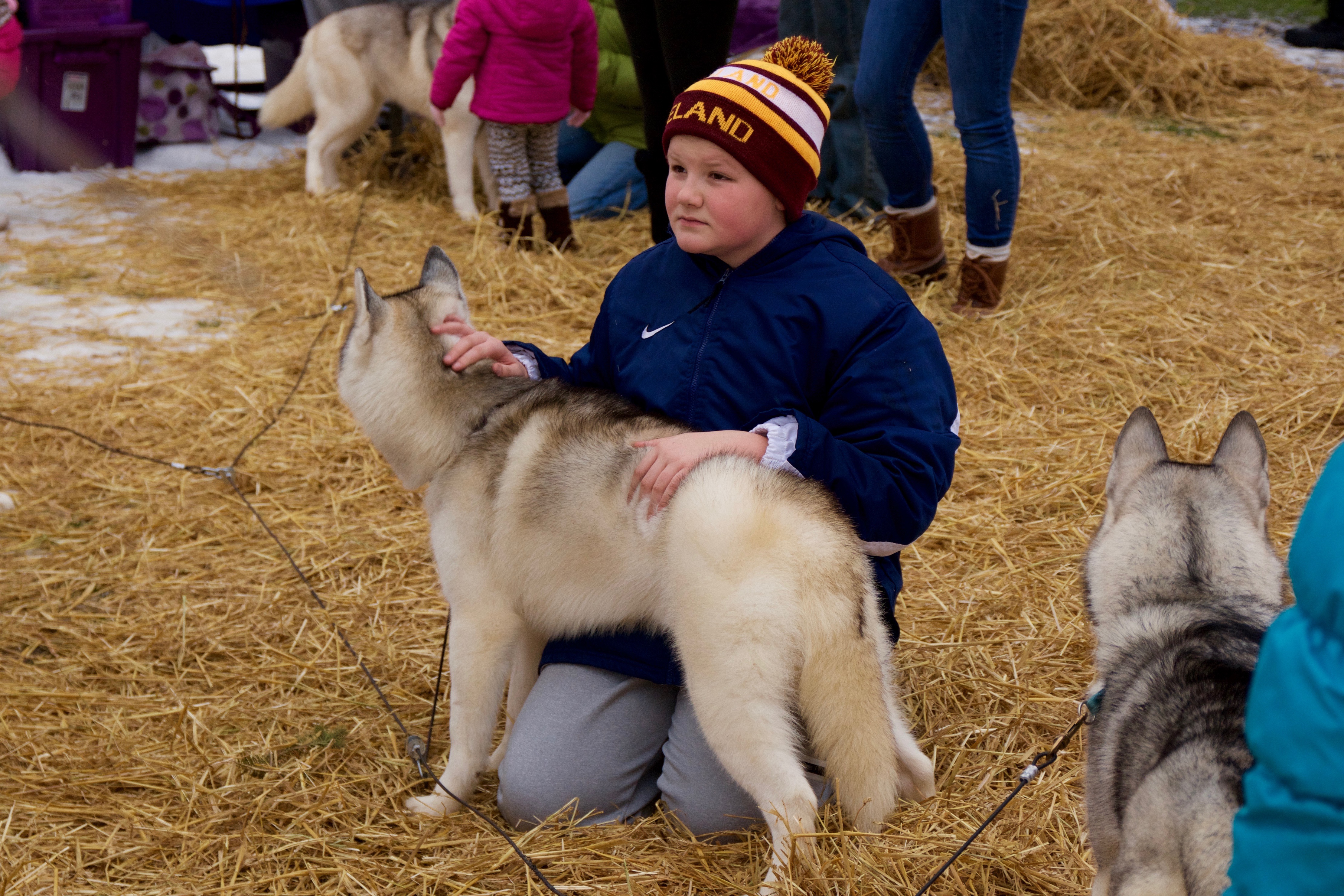
Raw DesireHis family hadn’t gone to the Winterfest Celebration looking for a puppy, but the second Robbie laid eyes on the young dog, he knew he had to have him. And it wasn’t just a matter of wanting; this dog belonged to Robbie. The boy knew it in his heart. He felt it in his soul.

The puppy’s eyes mirrored what Robbie sensed. The other dogs were friendly as they casually licked hands, nuzzled legs, and inevitably stuck their noses where they didn’t belong. This puppy, already weaned and ready to go, approached Robbie as if to say, “Here I am. I’ve been waiting for you.”

How to express this to his parents? That was the true dilemma. There had been so many things in the past that he had wanted, some obtained, some not, but so help him God this was different. To own this puppy, to be owned by it, was simply meant to be. Unlike the four-wheeler, the canoe, and his attempt at keeping chickens, Robbie’s very existence, his future peace of mind, was wrapped up in this dog.

He could hear his mother now. “We already have a dog. What are you going to do about ole Rusty? How’s he going to feel when you bring home a new pup?”

Rusty belonged to his parents before Robbie had been born. It was learning to walk while holding handfuls of Rusty’s wiry fur that instilled a love of animals, of dogs specifically, making Robbie even surer this puppy was meant for him and him alone.

Besides, Rusty was on his way out. Robbie felt no guilt at this thought. He and the ancient Airedale had already discussed this matter while curled up on the couch. They had said their goodbyes, made their plans. Robbie knew Rusty would approve of this puppy. It would be a bridge across the gap of his grief on the day Rusty didn’t come when he called.

All day the boy stayed with the husky pup, guarding it. His intense look of ownership, one of pure possession, caused even the adults to skirt this particular animal. Until finally…

“You know this dog ain’t for sale.”

“I know it.”

“I’ve already started working with this one. He’s begun his training, you know.”

“I said I know it.”

“He’s on display to show what sledding dogs are like.”

What more could Robbie say?

“The puppies for sale are over there with my wife. There’s three nice bitches left if you’re interested.”

“I don’t want a bitch.”

Robbie’s tongue tingled with the semi-forbidden word. He saw his parents milling their way back through the crowd. They hadn’t spotted him yet, still sitting with his puppy. Probably figured he had spent the day with his friends watching the men with chainsaws carve ice sculptures.

“What do you expect me to do?”

The breeder’s question placed Robbie on the precipice between hope and despair. He had only moments to formulate the correct answer. His parents, with visible head shaking and exchanged looks, spied him kneeling on the straw, the husky pup straddling his legs.

“Damn kid,” the breeder muttered.

“You’re gonna teach me how to train this dog. Okay? I’m gonna learn from you, and he’s gonna learn from me. That’s what you’re gonna do.”

The breeder ran his hand across his stubbly chin, ending at the base of his throat where he scratched long and leisurely. His eyes cast heavenward.

“I know it.”

There are times in the lives of children when they experience the raw desire to possess something wonderful (a horse, an electric guitar) or do something fabulous (ballet lessons, white water rafting). More often than should occur, children must bypass these opportunities. Perhaps there’s no time, or worse, no money. Sometimes they’ve used up all their credit with the dreams they want to pursue. Parents insist that children exercise logic and reason in these circumstances. They probably say this in an effort to assuage their guilt especially when their own resources don’t allow for childhood dreams to be fulfilled.

For Robbie Freeman, today was not that day.

~~~~~

Thank you to HBSmithPhotography for the lovely picture of the young boy with the husky pup.

Amphibious Fantasy

The rainforest is his favorite. A small slice of Heaven plunked down in the middle of his urban existence. The big cats are impressive, and everyone goes crazy over the elephants, but for Zach, the rainforest display at the zoo trumps them all.

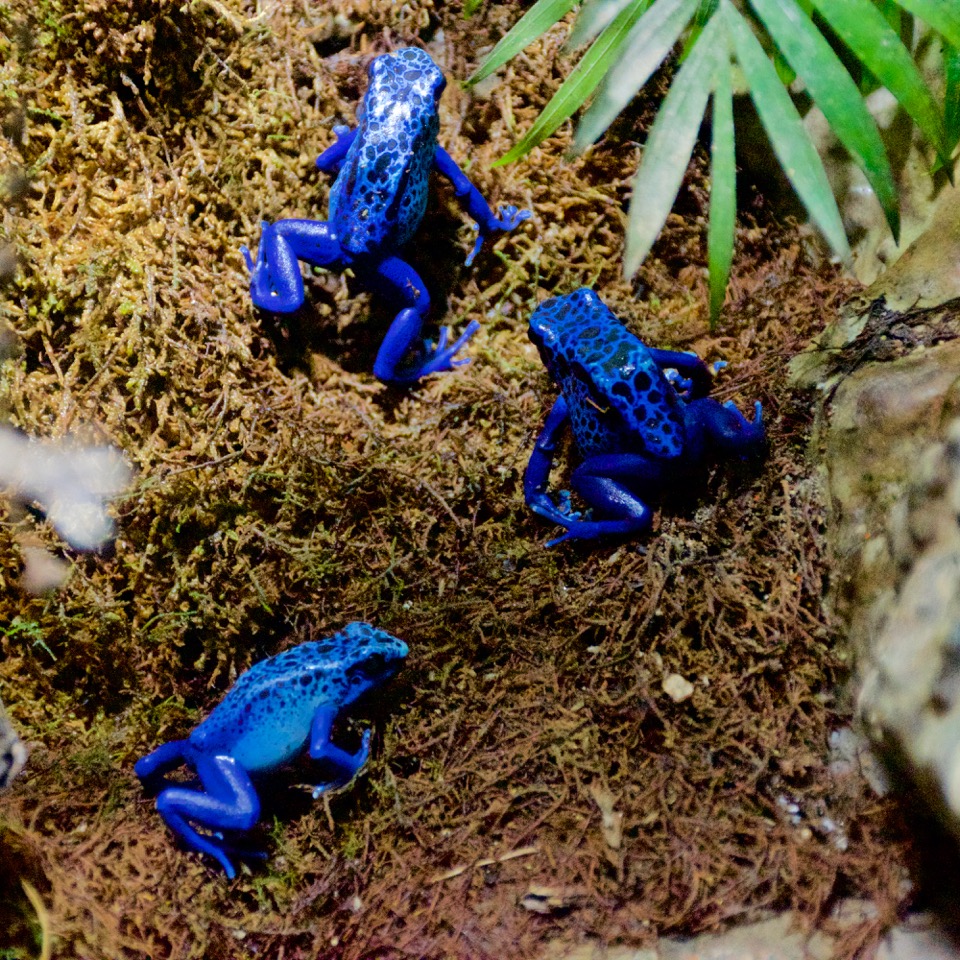
He stands before the glass-fronted cage holding blue poison dart frogs. Three of them. Their shiny skin, unrealistic in royal blue, renders them plastic replicas of themselves. Until one moves. The frogs are active during the day unlike the lazy wolves that refused to cooperate. Zach really couldn’t blame them; he wouldn’t have left the safety of his cave to be gawked at by a bunch of fourth graders.

He understands the sleeping wolves. Even now he can feel his eyelids descending as he watches the frogs. Sounds of the rainforest are piped throughout the building: calling birds, buzzing insects, chattering monkeys, flowing water, growling leopards. It’s enough to make anyone want to take a nap. That’s exactly what Zach would do if he could pass through the glass and curl up in the window box display with his beloved frogs.

He has no fear of the poison on their skin. Somehow, he would become one of them. A superhero, of sorts, who uses the poison to get rid of the bad guys. The little frogs would help him like the bats do when Batman needs them. Besides, blue poison dart frogs bred in captivity aren’t poisonous like those living in the wild.

Zach continues to stare past his reflection in the glass. He chews the pull string on his hoodie, soaking it and gnarling the plastic end. Maybe he Blue Dart Frogscould be The Blue Dart. His outfit could be the same shade of blue as the frogs but without the speckles. And no capes. Capes are dumb. He would have a mask, though. A black one across his eyes. He imagines his face above a well-muscled, adult body wearing just such a getup.

A tap to his shoulder signals that it’s time to move on. He nods and smiles at his teacher, Ms. Schaeffer, allowing the whole class to drift past. Then he resumes staring at the frogs. Ms. Schaeffer doesn’t notice; she’s too busy flirting with the security guard trailing the class. And the tour guide, aware of her tenuous hold on the kids’ attention, doesn’t stop spewing rainforest facts or she’ll lose control. Zach already knows everything she’s telling them. He slips back to daydreaming.

A little blue dart frog poison on the breading of the corndogs Jaxson Michaels favors would put an end to the bullying. He’s pretty sure the whole school would be grateful when the sixth grader gasped and fell off his chair. He almost laughs at the image of Jaxson flailing on the floor. His grandma’s face surfaces before his eyes, scowling and shaking her head.

Zach’s breathing quickens. The thoughts of killing upset him. He scowls at his reflection then taps the glass to make the frogs move, a major taboo. No one witnesses his transgression, but he looks around all the same. The people milling about are parents with children. His class is nowhere in sight.

Like poisonous blue magnets, the frogs draw Zach’s attention once more. He considers sitting beneath the cage, leaning against the wall, to fall asleep to the rumble of thunder that has joined the other rainforest sounds. The clicking of heels speeding in his direction means Ms. Schaeffer has discovered his absence. Zach will tune her out when she scolds.

Blame it on the frogs, he thinks, but just don’t mess with The Blue Dart, lady.

~~~~~

Thank you to Michelle Smith of Just4FunPhotography for providing the beautiful picture of blue poison dart frogs.

Dream Cooking

Dream CookingThe weather in Northeast Ohio has been bitterly cold lately. We’re paying for the month of December when we ran around in shirtsleeves and windbreakers. Personally, I’d rather spread out the bad weather instead of having it dumped on us all at once.

The cold puts everyone in the mood for soup, stew, or chili. Recently, my husband’s family all met at his parent’s house where everyone enjoyed a delicious ground sirloin and root vegetable stew. I took two loaves of bread which we cut into huge chunks for sopping up broth. The evening was a perfect blend of good food, great conversation, laughter, and reminiscing.

Today I’m making a pot of chili to combat the falling temperatures. Every family has their own recipe, or rather non-recipe, of ingredients combined without measuring until the chili tastes the way it’s supposed to. As I chop the onion and green pepper, press the garlic, I think about my Swedish photographer friend who I met on Twitter.

I came late to social media because it served no purpose in my life. If social media couldn’t allow me to hear my friends’ laughter, dry their tears, feel the warmth of their hugs, share a glass of wine or cup of tea, or lend a shoulder, then it held no value. Why would I even consider it when I’m the person who complained that e-mail doesn’t allow for the tone of voice to come through and it leads to too many misconstrued statements and hurt feelings? I’m still extremely cautious about what I type in posts, e-mails, tweets, etc.

Then one day I had to take the plunge into Facebook, Twitter, and a blog for the sake of my author platform. I’ll cut to the chase and admit that’s it’s proven to be successful and quite fun. Also quite addictive, so remember why you signed up in the first place. Don’t ignore the work, writing in my case.

But the most important part of my social media experience has been the connections I’ve made with people I’ve never met, only seen in the little photos they use as their profile icons, and never heard speak. They’ve become real friends, and it’s them I’m thinking about today as I cook.

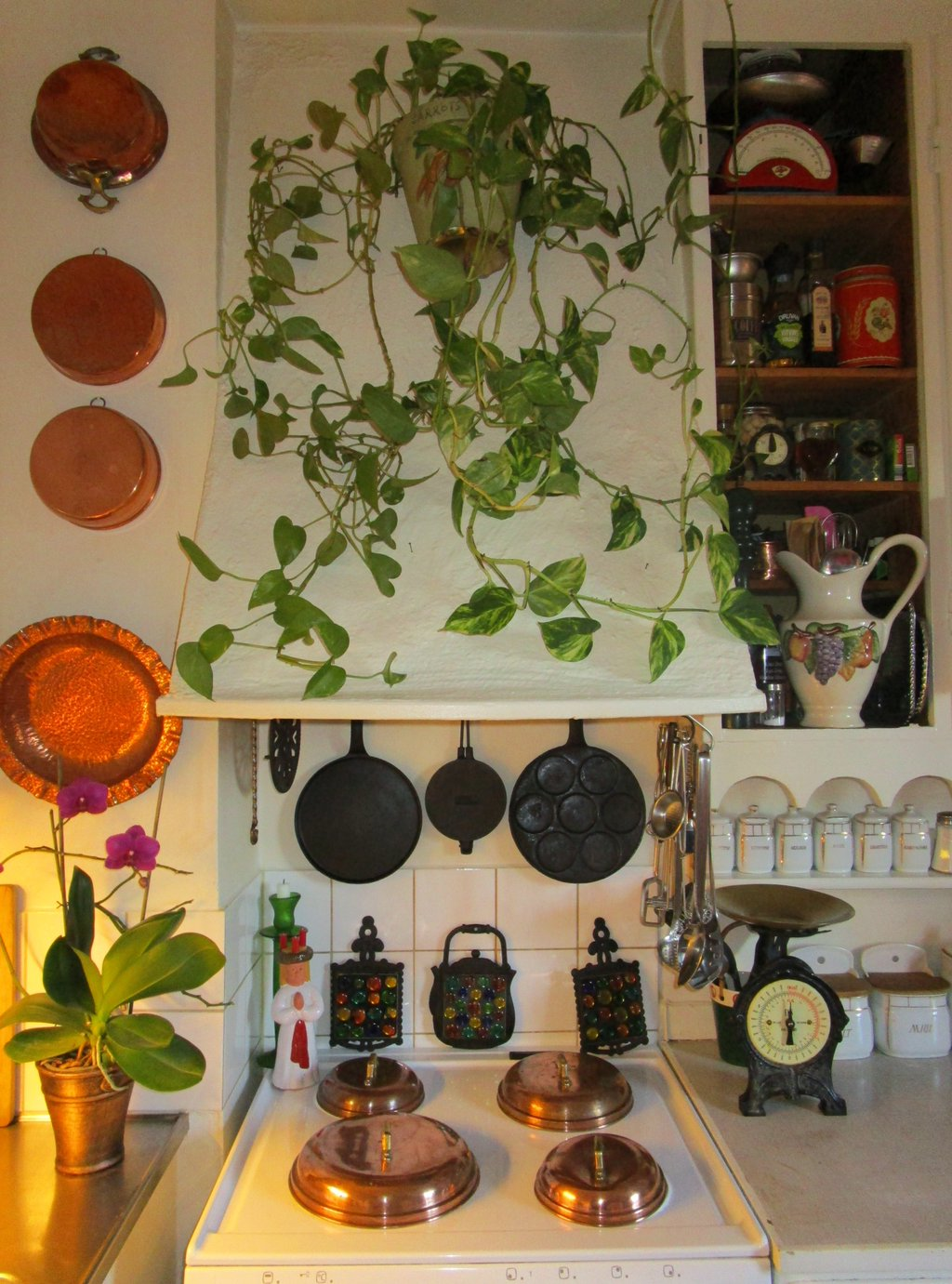
I wrote a post about apple pie not too long ago, and the friend I mentioned above commented that it’s a favorite in Sweden as well. She tweeted a picture of her beautiful kitchen, and I instantly fell in love with it. I replied that someday, we would cook together in her kitchen. She agreed…someday.

Ever since that tweeted conversation, I have dreamt about the two of us baking together. We would probably start with apple pie, while laughing and chatting at her kitchen table, hands warming around mugs of tea. We’ll take turns peeking in the oven, mouths watering, as we anticipate the rich dessert.

My imagination doesn’t end there for I’ve made other wonderful friends online. My handsome photographer friend from India breezes in without knocking because all are welcome here. He arrives from whatever exotic location he was photographing. A touch of mystery swirls in on the chill breezes, and we laugh and scold him to shut the door. After much foot stomping to knock snow off his boots, he sits at the table with his own mug of tea. No apple pie yet; it’s cooling on the counter.

Right behind him, my American poet friend knocks politely before poking his head in and calling hello. His online presence is so kind, so thoughtful, that I imagine him as soft spoken, warm, and gentle: a perfect blend of Robert Frost and a favorite uncle. His photography includes familiar pictures from daily life. That, too, is comforting. He joins us at the table, eyeing up the cooling pie.

Three more photographer friends arriving from India, America, and Finland join us as if they lived right around the corner. There’s enough room around the table that’s magically big enough to accommodate all of us. Many hands participate in the preparation of a pot of something savory now simmering on the stove. Fresh bread is baking. The men demand dessert; the ladies smile and say not until after dinner.

Then my writing friends drop in. I’ve invited them to meet the photographers. The first is a lion-hearted writer with a terrific smile. Then my comic-loving writer friend and my successfully self-published writing friend from England join the United Nation of Artists gathered at the table. Just as the table is being set for dinner, my part-scientist/part-writer friends hustles in. He laughs and says the weather is either cold with too much snow to shovel or hot with too much grass in need of cutting.

Chairs are added to the table, writers squeeze in between photographers, dinner is served. Conversation is replaced with murmurs of satisfaction. The stew is delicious. Suddenly, the door bangs open announcing one more writing friend to add to the mix. She apologizes as she wriggles out of her coat, tosses her snow-crusted gloves on the warm stove, brushes her long brown hair over her shoulders, and finds an empty spot at the table meant just for her. The t-shirt she wears catches every eye; it’s printed with the naked torso of a man staring just below the chin and ending just below his navel. Grins of appreciation for the intriguing shirt leave no doubt in which genre she prefers to write.

After dinner, as friends turned family push back from the table claiming they have no more room for another bite, dessert is served. Coffee and tea are refreshed. A pie that normally would have served eight at the most transforms into miraculous bounty. There is enough for everyone to have seconds. It is around midnight, and everyone’s spirits are still high. All heads turn at the sound of the door opening one more time.

The last friend to join our impromptu party has been out walking, planning paintings, sussing life’s situations, and enjoying his retirement. His wandering has brought him home, so to speak. Everyone presses him into a chair, places stew, bread, and pie in front of him, and asks after his wellbeing.

I sit back and listen contentedly as writers, photographers, and painters blend perfectly. Art talk abounds. Mugs of warm beverages have given way to glasses of wine. We’ve already started planning our next meal together.

Slowly, each friend fades from view, disappearing in the steam rising from the pot of chili I am stirring. But I can still sense them with me. I say still even though I haven’t met them yet. Someday. Someday it will all start with an apple pie baked in a beautiful kitchen in Sweden.

~~~~~

Thank you to my wonderful friend, Rosita Larsson, for the picture of her beautiful kitchen which inspired this post.

I Think That I Shall Never See…

HBSmithPhotography

HBSmithPhotography

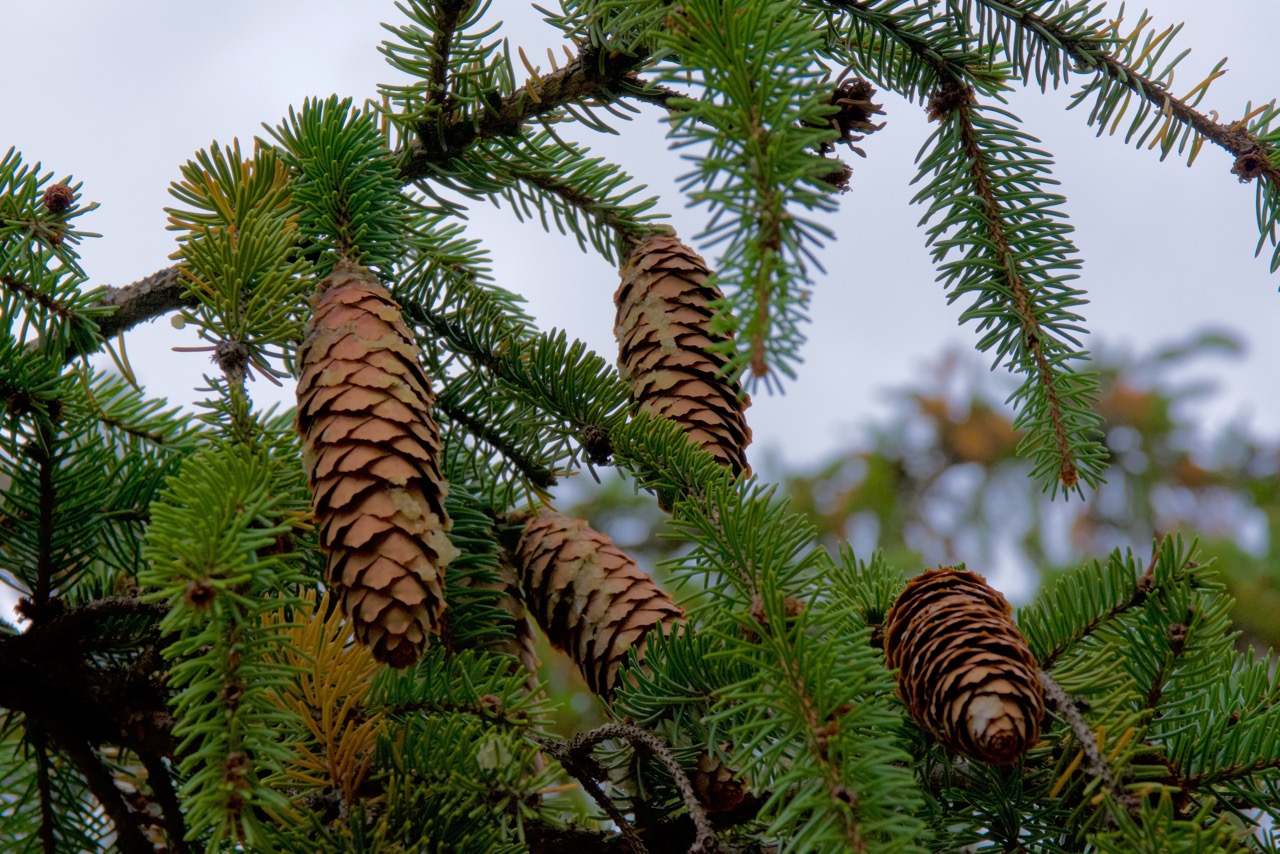
Trees are beautiful and majestic. I remember the pine tree on the back corner of our yard at the house in Ellet. There weren’t many limbs that were good for climbing, they were too close, too thin, and too gooey with pine tar, but we still managed to hoist ourselves up through the tightly spaced branches to reach a height that made the adults look up with concern. Don’t go too high was always the admonition. It never felt that high. We climbed under the illusion of childhood invincibility, a trait we didn’t even know we possessed.

That old pine was the only real tree on our property in suburban Akron. I say real because it was years before my father planted a Sunburst Honey Locust in the front yard at my mother’s request. The locust tree was so delicate and frilly, nothing like the ancient sentinel in the backyard. We would never climb Sunny. That was the name we gave to the tree.

The last time I drove past our former home, Sunny stood head and shoulders above the little white Cape Cod where I spent my grade school years. I don’t know if the pine was still there. I drove slowly past the house but didn’t linger long enough to make anyone suspicious. I really need to see if the pine still stands. As tightly packed as the cookie cutter houses were placed, removing the pine would be a precarious job best left to the professionals. Until that sad day, I hope many more small hands grasp the gritty branches, hauling little bodies skyward, as the camphorous odor of pine sap assaults little noses.

The Way I See It

window-shopping-rosita-larssonI have watched you from this window for so long that I have to wonder how often you can go on looking and never seeing. I’m right here in plain sight.

Always the same routine with you: every day searching for something that is right before your eyes, stopping to observe as crowds hustle past.

I see it in your blank face, your empty expression, the way you stare. You want something more, something to quell the dissatisfaction. But you don’t even know what that something is. Your reflection shimmers with desire as you stand there.

If only you weren’t so frozen, unable to move beyond this prison not of your own devising. You let yourself be used, positioned for everyone else’s happiness at the cost of your own. Now you’re on display for the entire world to see, all the while pretending you are invisible, hidden away on the top floor, safe above the masses below.

From every angle you are visible, from inside and out. And you don’t even know I’m watching. If you could just tip your head up or tilt it down, a bit to the left, maybe the right, you would see me there as rigid as a soldier yet at ease. Patiently waiting. And never touching, we would share a smile and know that everything will be all right.

Instead, you fix your hair, straighten your clothes, stand at perfect, stylish attention, retreat within. It’s time to move on; tomorrow, we will repeat the whole process.

~~~~~

Thank you to my dear friend, Rosita Larrson, for allowing me to use her beautiful photography as a visual writing prompt.  This particular photograph, “Window Shopping,” can be found at Rosita Larrson, fineartamerica, in the gallery titled Mannequins Display Windows Reflections.

A Vision in Red

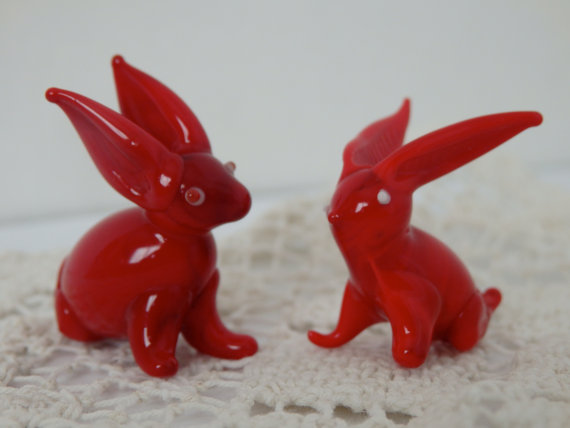
I woke up this morning thinking about the red glass rabbit. The memory must have ridden in on the tail end of a wild night of dreaming because I haven’t thought about her in decades. In my mind, she still holds center court among the animal figurines sitting on my great aunt’s kitchen windowsill in Tennessee.

My great aunt never hesitated to let me play with what I believed were her most treasured possessions. For this reason, I took great care not to break any of the inch and a half tall animals in the collective herd. There was a goose and a deer among the group, but my favorite was the solid red, blown glass rabbit with two miniscule dollops of white glass for eyes. She was perfect.

Red Glass RabbitThe red glass rabbit starred as the heroine in all my adventures played out on the kitchen table. She forever needed rescued by the other animals led by her boyfriend, the deer. I’m pretty sure I named him Bambi; I don’t recall what I named the rabbit. Every scenario, in which I imprisoned her in a tiny basket, ended with her being declared queen, a title she graciously accepted.

Occasionally, her liberation depended on the assistance of my great aunt’s salt and pepper shakers. There were four of them, two couples of different size, reminiscent of the man on the Cream of Wheat box and Aunt Jemima. These shakers are the type of item labeled Black Americana today and are found in antique stores and probably homes south of the Mason/Dixon line. I could be wrong about that, though.

During one summer visit to my great aunt’s home, I was horrified to discover that since the last year, someone had chipped the ear of the red glass rabbit. My great aunt didn’t seem as upset as I believed she should have been. She said either she, or my great uncle, or her mother probably knocked the rabbit off while washing dishes. My thoughts fluctuated between relief that it wasn’t me who caused the mar and appreciation that the damage could have been so much worse.

My great aunt broke up housekeeping several years ago after my great uncle and her mother passed. She sold the home and large items in Tennessee, bestowed smaller goods upon close friends, packed up the rest, and moved back to Ohio. It was good to have her home. I asked about the salt and pepper shakers because I trusted their size ensured they survived until my adult years. Unfortunately, my great aunt had already given them away.

I never inquired about the red glass rabbit. I knew in my heart the tiny treasure had disappeared long ago. Before I stopped playing with my own collection of animal figurines, the red glass rabbit probably had her ears and toes chipped until she appeared in a sorry state. Or perhaps one tumble into the depths of the empty kitchen sink was one too many, and she had to be discarded.

Does it matter that my great aunt probably doesn’t even remember owning such an item?  Does anyone reading this even care? Who can say? All I know is that somewhere in time, a very talented glassblower created a beautiful red glass rabbit that brought immeasurable joy to a little girl.

Gold Plated

The following short story was based on the visual writing prompt of the swamp.  While everyone in my writing circle wrote lovely stories, mostly fantasy, that would delight readers of any genre, I took one look at the picture and decided upon a different tale.  I’ll withhold my comments on why I wrote what I did until after you’ve read this piece.  I want your unbiased opinion toward the story, so please be sure to leave feedback in the comments section.


Golden Swamp

Gold Plated

Zach stomped into the clearing and threw his book bag on the ground with all the force he could muster. He proceeded to kick it hard, heedless of the laptop inside. Two more kicks landed the black canvas satchel on the edge of the marsh.

Frickin’ parents,” he screamed, straining his chest with the force.  It was the closest his upbringing would allow him to swearing.

He collapsed on the damp leaves, his legs crossed awkwardly beneath him, the sound of blood rushing in his ears, and sat perfectly still until his heart stopped racing and his ragged breathing slowed.

Feelings of self-pity began to sting Zach’s eyes, but he refused to indulge in tears. Instead, he stood to retrieve his book bag from the water. Soggy homework, folders, and the papers he had stolen that morning from his father’s desk were removed and littered across the forest floor. He inspected his laptop for damage. Moisture hadn’t seeped into the computer case which had been shielded between his algebra and chemistry books. The books had not fared so well; water leached an inch into the pages, darkening the edges all around.

“Whatever,” he mumbled, stuffing the laptop and ruined books back into the bag.

Zach slung the bag over his shoulder and took several deep breaths. For the first time, he observed his surroundings. The beauty of the golden foliage sickened him.

“Looks like freakin’ King Midas has been here. Too bad it’s so wet. This place would look great going up in flames.”

His mouth curled upward in a lopsided sneer, and his fingers caressed the lighter in his pocket.

The blaze would have been spectacular. Even though there wouldn’t be any witnesses, these events had a way of producing detailed accounts. People would be enraged when their forest succumbed to destruction at the hands of an unknown arsonist. They would swear they had seen the culprit and go so far as to describe him. Ripped jeans, a dark hoodie, both arms tatted up, and multiple piercings would be just a few of the descriptors they used when speaking with the local media about the tragedy. They would mention the exact brand of designer sneakers worn when the vandalism took place. Someone would inevitably mention that drugs were involved…probably.

The worst liars would make subtle remarks that cast aspersions on the perpetrator’s possible ethnicity.

Zach sighed, his anger spent. He brushed leaf litter from the front of his school blazer and swiped the sides of his mud-crusted dress shoes in a patch of grass. Then he pulled his iPhone from his pocket to check the time. He still had an hour before he had to meet Kevin at the library to study for the AP Chemistry test.

One more deep breath enabled him to set out for home where his parents, oblivious to his delayed arrival, would be absorbed in their own pursuits. The scent of decaying leaves reminded him of a smell somewhere between the cherry tobacco in his father’s pipe and his mother’s compost heap. A small flame of resentment flared in his heart, but Zach refused to let it take hold.

“Let ‘em divorce,” he said. “See if I care.”

Moving Day

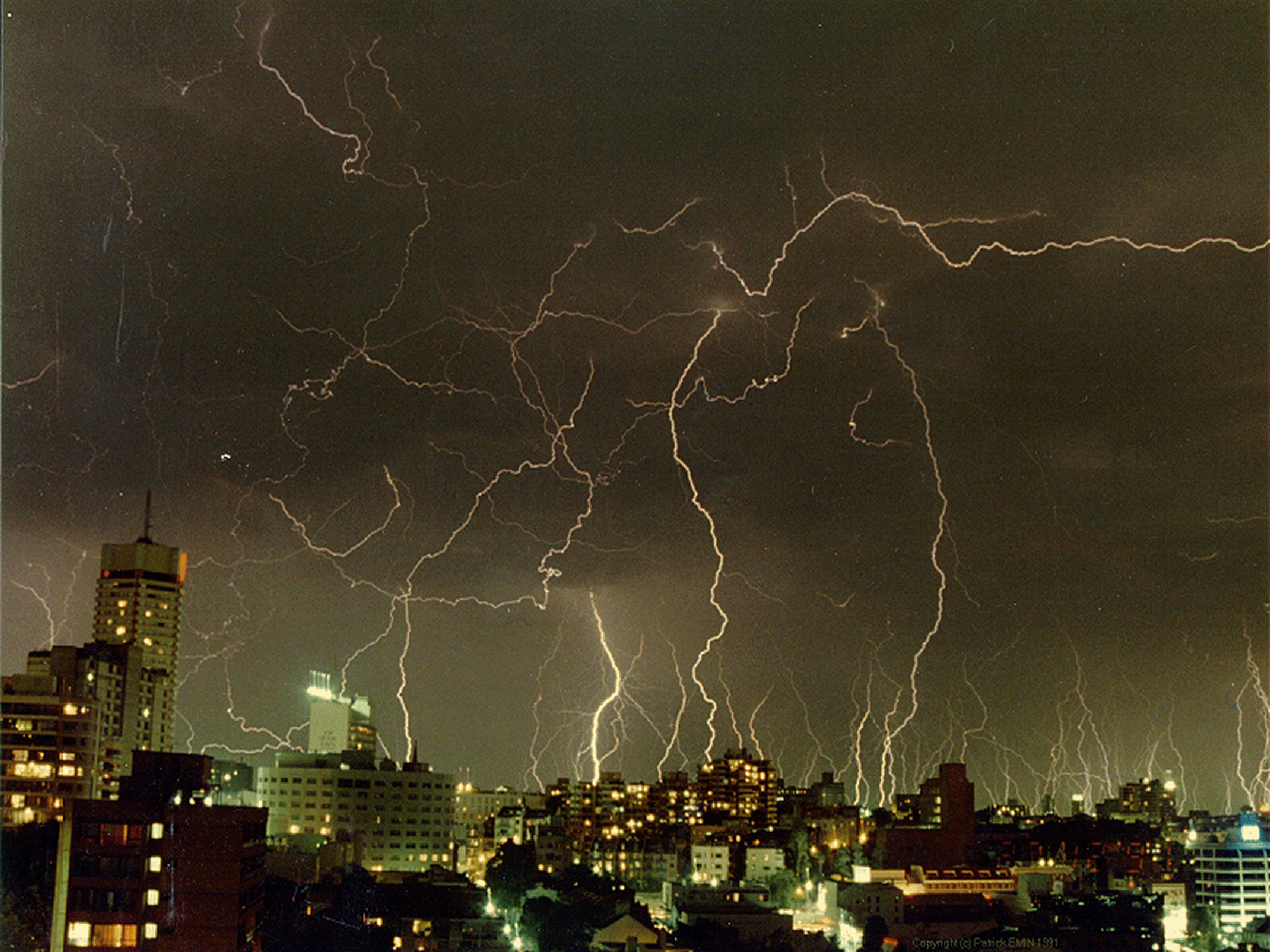
Thunderstorm_in_sydney_2000x1500Thunderstorms of a Noachian proportion blast the city for three days, washing the sun from the sky. White water eddies cluttered with trash swirl around the tires of cars abandoned until the deluge subsides. Undulating sheets of rain reduce all human activity to that of water-logged muskrats scurrying from building to bus stop and back again.

When the skies finally clear, the ancient apartment building smells like books stored in the basement. Tenants prop open their doors with fans to shift the staleness from corner to corner, never allowing it to settle on the pages of their lives. Cycling dehumidifiers placed by the landlord lure the saturated air with the promise of stagnation in the too-small reservoirs.

Joel’s fingertips rest on the windowsill; his eyes scan the street three stories below. Part of him wants to go downstairs to search for the movers’ truck. They were scheduled to arrive at nine that morning but probably couldn’t find a place to park out front. For all he knows, they’re circling the block or double parked, ticketed, and arguing with a cop. His fingers drum impatiently, and he sighs. His own lack of punctuality over the years has not made him lenient toward other people’s lateness.

Another stack of books is removed from the shelves, the void outlined in dust, and absentmindedly placed in a cardboard box. All week things he’d rather be doing kept popping into his head, but he doesn’t have the leisure of avoiding the chore, and no one else is going to do it for him. The zip of duct tape brings Kirsten from the bedroom. Her eyes are red and swollen.

“Can I help?”

Joel kneels to press the duct tape along the seam of the cardboard flaps. When he looks up, a forced smile twists his mouth sideways.

“I got this.”

“’Cause you know I’ll help. It’s not like I wouldn’t or something.”

“I know.” He stands and places his hands on her arms. “It’s why I love you.”

A quick peck to her forehead conceals his cringe at having misspoken, but now he’s afraid his kiss also sends the wrong message.

“You don’t have to be here right now–or stay–if you don’t want.”

“I came out ‘cause I thought you’d enjoy some tea, but I’ll go back if you want.”

“That’s fine, tea is fine.”

She shuffles to the doll-sized kitchen, the slap and scuff of her slippers grating on Joel’s already frayed nerves. Gray sweatpants and hoodie render her dancer’s body shapeless. Her unwashed hair is pulled into a sloppy ponytail, exposing her long neck as she stands at the sink filling the kettle with water. Damn he loves the sight of her neck. It was the first place he ever kissed her, right where the long, sable strands stopped and the micro fine, colorless ones began. She had been wearing a ponytail then, too.

He could spend hours making love to her neck alone, her warm flesh goose-pimpling beneath his parted lips, and the sweet scent of lily of the valley residing behind her ear. Being with Kirsten felt like standing in intense, bright sunshine, and looking at her like viewing diamonds of light dancing on water until his eyes teared, the pain so sweet. He believed he possessed something truly worth having when he held her in his arms; he was free and bound all at once in his love for her.

Joel’s eyes close like a stage curtain dropping on the memory.   He remains motionless for several seconds listening to the click and ragged woof of the burner. When his body sways, his eyes flick open. Dizziness on the fringe of his senses is replaced with the claustrophobia of the stuffy living room crammed with packed boxes of his stuff.

“The tea should be ready in a jif.”

He nods at Kirsten and wanders about the room gathering the last few items that defined his space in their home. A high school swimming trophy, the book on Albert Einstein he is currently reading, a chipped clay dinosaur he made in first grade, the teak kaleidoscope Kirsten gave him for Hanukkah, a Lego pirate, his Call of Duty video game; all these items are cradled in his arms. Again he looks out the window wondering where the hell the movers are.

“Where’s your favorite mug?”

Kirsten searches the cupboard where it should be and all the ones in which it was never stored, opening and slamming the doors shut, making little noises in her throat every time she doesn’t find it.

“I already packed it, but I know right where it is.”

“Never mind; you can use mine.”

Gathering clouds and the return of soft rain diminishes the light in the narrow room, fuzzing the crisp edges of the long shadows. Joel listens to the patter against the windows, his thoughts disturbed by the remembrance that she doesn’t have a favorite mug. Another lie.

Kirsten removes the kettle from the burner when the metal begins to tick and hiss with the strain of the boil inside. The simple process of drinking tea will draw them together one more time when all Joel really wants is for Kirsten to leave so he can focus on packing. Anything would be better than the haphazard orbit they’ve danced for the past three weeks, tactfully avoiding each other but never able to escape the other’s pull.

A few dunks of the tea bag and Kirsten plops down on the loveseat with both legs tucked beneath her. She splashes the hot tea on her hand and winces with childlike poutiness. The mug intended for Joel stands alone on the countertop. He can feel a bee swarm of bitterness rising in his chest as he dumps the gathered items in his arms on the countertop next to the tea. He knows Kirsten wants him to join her on the loveseat, but he resists her wishes. Much to his surprise, he has to resist his own as well.

To drink the tea means he’s yielding his will to hers, but he doesn’t know what to do with her simple offering. It’s just tea, though; green tea with jasmine, his favorite tea in her pretended favorite mug. The unspoken request for forgiveness swirls upward with the coils of fragrant steam.

The thing is, Joel wants to forgive Kirsten. The knotted rope of muscles between his shoulders would finally be eased; his stomach would stop roiling like a bad chemistry experiment. And how many times has he heard in life that forgiveness is as much for him as it is for the other person? Countless. Just do it, he thinks and chuckles at relationship advice coming from a Nike ad.

Kirsten reaches between the loveseat cushions to retrieve the remote. She points it at the stereo releasing Monica’s voice into the room. Angel of Mine fills up every ounce of space not already taken up by moving boxes and furniture. Joel’s shoulders sag, and his weight shifts to one hip. When she pats the space beside her, he obeys.

“More than anything–no wait–I just want, hope rather, that we can part on…if not good terms exactly, um, happy?”

“Friends? You want us to leave as friends, Kirsten?”

“Well at least friendly. Kind to each other would be nice. There’s no reason anymore to be angry or bitter. Not now that you’ve decided to leave.”

Joel seriously considers a scalding gulp of tea to keep from saying what he truly wants to say and to keep the conversation from deteriorating into an argument. Monica has given way to Marvin crooning about sexual healing.

“You’ve conveniently made this my fault because I decided to move out.”

“I don’t believe this is a matter of fault, Joel. I’m not pointing fingers or laying blame.”

“No, Kirsten, that’s not what I meant.”

“Then what did you mean?”

“Just forget it, okay?”

He stands too quickly, spilling tea on his cargo pants. As he pauses to brush at the blossoming stain, she jumps up to follow and runs into his bent back, dousing his ratty cardigan with tea.

“Ow–that’s still hot!”

“Oh, baby, I’m so sorry.”

Her hands join his in trying to wipe away the liquid, but he pushes her away bodily with his arm.

“Never mind, Kirsten, I’m gonna have to change. It soaked through to my t-shirt.”

“But your clothes are already packed.”

The stupidly obvious statement silences him; he stares at her as if she suddenly grew scales on her lovely neck. With exaggerated precision of movement, he walks to the boxes stacked three high. The top two are removed with great flourish, and then Joel pauses to make sure Kirsten watches.

“Look, honey, they can just as easily be torn open.”

He grabs the doubled-over, duct tape handle he fashioned and rips it from the box removing a great deal of cardboard with it. The ragged scar across the edges will be difficult to reseal. All manner of clothing is flung about the room until he locates a pair of jeans and a t-shirt. The neat freak in Joel stalks past the mess without stopping to pick it up. He heads for the bedroom with Kirsten in tow.

“Joel–I can fix this. It’ll be okay.”

“You can’t fix this, Kirsten. It’s ruined.”

Janet calls from the stereo reminding him that’s the way love is.

He tosses his clean clothes on the dresser then sheds the drenched cardigan and throws it at her feet, turning his back on her to remove the rest of his clothes. When he faces her, she has his sweater, pants, and shirt clutched in her arms, pressed to her face. Her muffled voice comes to him edged in tears.

“It’s not ruined, Joel. It just needs cleaned.”

Cool air makes his skin prickle; he feels like a fool in just his socks and underwear. A shiver makes him cross his arms. She lifts her face from the soggy bundle.

“And I can sew on another button where you lost one, put some Fray Check on the cuff where it’s unraveling. Please let me fix this.”

Every fiber of his being wants to beg her for forgiveness, no longer caring that the blame has shifted to him. He accepts it willingly, never questioning how he came to be the one needing to explain his actions.

“It’s just that that sweater was my Grandpa Joe’s. I’m named for him, you know.”

“I know.”

“He wore that thing every day of his life. I can still smell him on it.”

“That cologne he wore?”

“Yeah. It was like his signature scent or something. His calling card before he entered a room. And his sweater…”

“I get it, Joel. Really, babe, I do.”

“My Grandmother Judith made that sweater for him. It’s been around for like–ever. It’s endured a lot.”

“And it’s well made. That’s why it’s survived.”

“Exactly.”

Kirsten tucks Joel’s shirt and pants under her arm. With the clothes pressed against her body it’s difficult to properly fold the sweater, but she does. The precious garment is placed on the dresser, the ordinary clothes dropped. She stand before him for so long that he doesn’t know what to do next.

Instinctively, his arms pull Kirsten against his chest where his skin quivers at her presence. His mouth seeks her forehead, her cheek, her earlobe. Joel slips outside of his own body, watching his hands sneak under the draw-string waistband of her sweatshirt, caressing her back as they move upward. He sees with his fingers that she isn’t wearing a bra.

Luther tells him all that matters is here and now. So Joel submits to the sacredness of the moment, the opportunity to occupy the same space as Kirsten, the chance to reknit the warp and weft of the fabric of their life together. Time stops, and the morning is lost to work more satisfying than packing boxes.

There is no before, no after, only rain drumming a cadence on the roof of their building, the sound dulling Joel’s consciousness as he sinks into the softness of Kirsten’s embrace. He spirals downward toward sleep, aware of the sensation overtaking him until his body jerks. The buzzing cell phone vibrates on the hardwood floor, demanding attention.

A missed call is followed by three rapid-fire texts. Joel slips from the tangle of Kirsten’s arms and legs, twisting on the bed to pick up her cell phone where it fell when she undressed.

Emilio: Hey babe is he gone yet

Emilio: Call me when the jerk leaves

Emilio: Are we on for tonight

Joel’s thumbs work at punching out the message: screw u Emilio

Plastic and tidbits of circuitry fly in every direction when the cell phone hits the closet door.

“Hey!”

Kirsten sits up in bed and points at the debris of her new iPhone freed from its hot pink paisley cover.

“What the hell are you doing, Joel?”

“You’re worried about your damn phone right now?”

“What the hell else should I be worried about right now? Oh, how about the fact that my boyfriend has gone psycho?”

“Unbelievable, Kirsten; you are just so freakin’ unbelievable.”

Joel grabs his tea-stained, damp pants from the floor and jams his foot into one leg, hopping around on the other foot.

“This is so typical of you, so typical, and I am so tired of being your computer geek patsy. How cliché for the principal dancers to fall in love with each other.”

“What–What did you say? You’re muttering, Joel.”

He spins around and loses his balance, his feet tangled in both empty pant legs as his knees crash into the bed, and he lands on his outstretched arms. His face is only inches from hers. Kirsten laughs and places her palms on either side of his face.

“Oh, Joely.”

“No–don’t you Joely, me.”

“It was just a cell phone, honey; I don’t mind, although I do feel bad since you paid for it.”

“How could you? This isn’t even about the stupid phone, Kirsten.”

“Then why don’t you tell me what it’s about? And why don’t you either put your pants on or lay back down with me?”

Her arms assume the fifth position as she reclines on the bed, but her legs are in second beneath the covers. Disgust contorts Joel’s face, and he pushes himself upright.

With his back to her, he finishes dressing. A sneaked look in the mirror on the bedroom door reflects her image with drawn up knees and her chin resting on her crossed arms. Wide-eyed, innocent Kirsten has returned.

“Joel, I know I’m not perfect–”

“You got that right–”

“–but I believe what we have together is worth saving.”

“That may have been true at one time, but I’m not so sure now.”

“If you’re not sure, then why leave? Why make a hasty decision you’ll end up regretting?”

“Because I don’t want to stay here and end up regretting us.”

“Is that your final decision?”

Joel sits on the caned chair by the window. The torn seat gives under his weight but does not break. His eyes search the view outside, his back still toward her, as Tina asks what’s love got to do with it.

“Kirsten, I have allowed this to play out for so long, that I don’t even know what I’m looking for anymore. I want–I need–a sign or something to tell me what am I supposed to do?”

Joel squints when sunlight slices through the partially drawn bedroom curtains. He stands to lift his face toward the brightness like a sunflower. His chin drops to his chest as the squeal of brakes on the street below signals the arrival of the moving van.

A Fresh Perspective

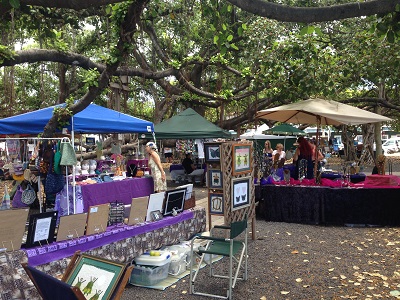
banyan-tree-shoppingI started the following short story several months ago, and while I had an idea of how I wanted the tale to begin, I honestly wasn’t sure how it should end.  So I let it sit, worked on other writing projects, and forgot about it.  I came across this piece five days ago and still didn’t know how things were going to turn out for my protagonist, but I felt more inclined to take the journey with her.  I’m pleased with the outcome, and I hope you will be, too.  Enjoy!

A Fresh Perspective