Heroes From the Attic by G. Jesse Flynn

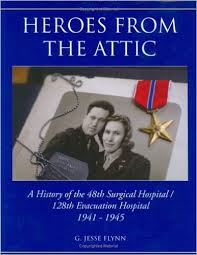
Heroes From the AtticOne of my favorite books, and a feather in the cap of my private library, is Heroes From the Attic by G. Jesse Flynn. I first learned about the book while interviewing participants from the Conneaut D-Day Reenactment this past August. Lisa Merzke, who portrayed a nurse, suggested the book because it explained in detail about the creation of the first MASH unit, the 48th Surgical Hospital, which was later reworked into the 128th Evacuation Hospital.

I obtained an excellent copy of the book and was thrilled to discover the author’s signature in the front cover. Although the inscription isn’t addressed to me, I couldn’t have been more pleased that I owned a signed copy.

Mr. Flynn was prompted to write the history of the 48th/128th upon learning about his parent’s involvement with its formation. Through interviews, letters, diaries, and pictures, Mr. Flynn has constructed a thoroughly detailed accounting that answered my specific questions with such precision that at times I believed the book had been written for me.

As well written as the history is, what truly endeared me to this book were the personal accounts of the members of the 48th/128th. Through the letters of Nurse Lt. Margaret Hornback, the diary of Dr. Leonard Schwade, and individual testimonies of various other members, one gets a true sense of what these brave men and women experienced and how they felt about it.  In an event that, God willing, we never allow to be repeated, members of the 48th/128th often learned on the job but never missed a beat, and they set the high standard of quality by which other units were formed and trained.

I am forever grateful to the doctors, nurses, and enlisted men of the 48th/128thfor their selfless sacrifice. I also thank Mr. Flynn for collecting and recording their amazing history so that it will never be forgotten. Their stories and information helped me to accurately place my protagonist in the European Theater of World War II, and I hope they will graciously indulge my boldness in assigning Dr. John Welles to their most successful and exemplary unit.

Choose and Use the Correct Word

Or are they?

Or are they?

It’s always a wonderful feeling when you meet someone who loves words as much as you do. I had that experience about a week or so ago when I came across a post by Mark Schultz, Word Refiner. Don’t you just love his title? I know I do.

Mark’s article works perfectly with the type of posts I publish for The Weight of Words. When I first read it, I sensed a kindred spirit, and, dare I say it, a fellow member of the Grammar Police.

According to Mark’s bio on the Word Refiner webpage, he has been “purifying documents of all kinds for over 40 years.” What’s not to love with such an impressive resume?

So, without further ado, I give you Homonyms Hurt Your Writing. Enjoy!

Commenter vs. Commentator

untitled (5)

Today’s The Weight of Words is one that made me pause for a moment. Until recently, I never had cause to use the word commenter. My own blog post prompted a quick search on the difference between commenter and commentator. As mentioned in a recent post, Get It Right the First Time…Oops…, I grind my teeth when I post something with a typo or incorrectly used word or phrase.

So, to prevent that from happening to me or anyone else, here is an explanation on the difference and correct usage of commenter vs. commentator. I wasn’t at all surprised to see the definition of commenter has been influenced by social media!

Get It Write the First Time…Oops…

mountain-peak-landscapes-wallpaper-53cb399969af2

I just about fall out of my chair laughing when I see “peeked my interest” or “peaked my interest.” This usually happens on places like Facebook or Twitter because people don’t seem too concerned with the editorial process on social media. When this slips into a book, I just about have a fit. If I was in charge, this type of offense would have me storming into an editor’s office with a pink slip.

Now I don’t mean to sound snooty; I admit to using my Google search bar as a spell checker. I also admit to the occasional mistake in a blog or Facebook post and Twitter tweet. I grind my teeth when this happens.

Still, if you’re going to employ a phrase, please take the time to double check the wording and etymology of phrase to ensure that you’re using it correctly. The following link explains the difference and appropriate use of pique, peak, and peek. I found it to be most useful with tips on how to remember which \ˈpēk\ is correct for your sentence.

To Struggle With Forgiveness

31holocaust-xlarge

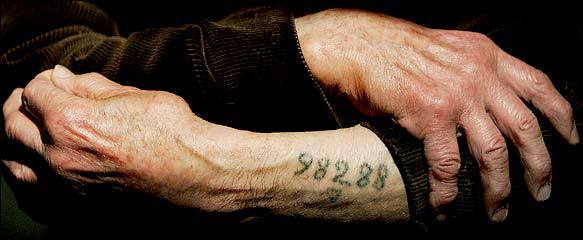
In a previous blog post involving my protagonist, Dr. John Welles, and his two Jewish friends, Reuben and Hannah Wise, I mentioned that the three were divided on the issue of forgiveness as it related to the Holocaust. For reasons that I’ll save for the publication of my novel, The Secrets of Dr. John Welles, each of them comes to the table with a different perspective on how the situation should be handled.

When I first wrote the storyline involving the Wises and Dr. Welles, everyone ended up forgiving everyone else with hugs and smiles all around. I admit that I wrote these scenes fast and furiously for NaNoWriMo without having done my research and because I wasn’t sure what direction I wanted the storyline to take.

Then two of my aunts attended a program on women Holocaust survivors and brought me some information on the subject. After reading the materials they gave me, I knew the scenes I wrote concerning the Wises and Dr. Welles were completely inaccurate, and therefore, unbelievable. I had to step back for a moment to analyze where my perspective of forgiveness came from and examine my knowledge of the Holocaust.

Everything I learned about the Holocaust came during my school years, and I can tell you that for the purposes of writing a novel, the knowledge was slim compared to what I found when I conducted my research. I realized I was too far removed from the facts because I was too young to have experienced it firsthand and didn’t have a relative who either perished or survived the concentration camps. My original scenes were trashed, and I set about rewriting the story.

Once the details of time and place were corrected, I worked on an aspect of my story that took me by surprise: the concept of forgiveness as understood by Jewish people who practice Judaism. My experience with forgiveness as I was taught might have influenced Dr. Welles but would seem ridiculous to Reuben and Hannah Wise. By applying my faith based instruction to the overall story, I denied my Jewish characters a single ounce of reality.

The questions that kept going through my head, those that drove my characters, included 1) Do we forgive but not forget? 2) Can only God truly forgive? 3) Must the perpetrators of the crime repent and ask for forgiveness before it can be bestowed? 4) If the criminals are dead, can forgiveness take place? 5) Should we forgive no matter what for every offense committed against us?

There are many articles on the internet about forgiveness written from many different perspectives. I chose to draw on those based in Christianity and Judaism when writing my novel and peppered the views found there with heavy dashes of my characters’ own attitudes and viewpoints.

The following article, “Can You Forgive Hitler?” written by Stewart Ain, September 22, 2006, for The Jewish Week, is the article that helped me the most when deciding how to have my characters react to the difficult questions and trying situation with which they struggled.

It’s easy to say what I would do until faced with the death of my loved ones at the hands of evil people. Still, I wonder about Holocaust survivors who do forgive and maintain their faith regardless of the hell they endured versus those who refuse to forgive and lose their faith because of the hell they endured. It scares me to know that because of the condition of our world today, many are challenged with these same questions.

The Sweetest Libation This Side of Heaven

Bourbon whiskey plays an important role in the life of my protagonist, Dr. John Welles. Bourbon is the souvenir of choice for John and his two best friends, Sam Feldman and Claude Willoughby, as they spend a bachelors’ weekend in Kentucky watching the Derby and celebrating Sam’s upcoming marriage. Later in my novel, John employs the contents of this special bottle of bourbon to drown the guilt he endures for his part in a secret cover up regarding the death of a child.

a3f4b1eaa0a14348aa91ede804788043_adf390df7753413c870a7e4655fcf9bd_headerI chose bourbon as John’s drink of choice after a trip to Kentucky with my brother and sister-in-law in 2010. They completed the Kentucky Bourbon Trail the year before and knew which distilleries we would enjoy visiting. Woodford Reserve, Wild Turkey, Heaven Hill, and Maker’s Mark rounded out our initial bourbon experience.

I loved every minute of it. From the heady aroma emanating from the enormous vats of sour mash, to the dusty, blackened rickhouses, to the generous samples imbibed in the tasting rooms, our tour was an education steeped in the warm glow of bourbon. While I’m partial to Elijah Craig 18 Year-Old Single Barrel, Parker’s Heritage Fifth Edition Cognac Barrel Finish, Woodford Reserve, and Wild Turkey Kentucky Spirit, we’ve also discovered several other bourbons worthy of purchase. Don’t miss Willet Pot Still Reserve or 1792 Ridgemont Reserve.

The history of bourbon is as rich as the copper color of the drink itself. Baptist preacher Elijah Craig has been credited for the invention of bourbon whiskey although the tale may be a little on the tall side. We were told during one distillery tour that the charred oak barrels used in making bourbon whiskey came about as the result of an accident in which the barrels were burned. Preacher Craig, either too poor or too cheap to replace the barrels, used them anyhow and bourbon first received its signature color.

Whether or not this is true, bourbon whiskey is an all-American beverage. Strict requirements must be met before the whiskey can be labeled and advertised as bourbon. The Federal Standards of Identity for Distilled Spirits state that bourbon made for U.S. consumption must be 1) Produced in the United States, 2) Made from a grain mixture that is at least 51% corn, 3) Aged in new, charred oak barrels, 4) Distilled to no more than 160 (US) proof, 5) Entered into the barrel for aging at no more than 125 proof, and 6) Bottled at 80 proof or more.

Impressive standards for an impressive drink.

Recycling Before Recycling Was Cool

25bcf1fd2283ff81a59233bb01a448faDetails, details. They really can make or break a piece of writing. Too many and the passage is bogged down, too few and the reader will visualize what they choose, too gaudy and you’ll be accused of purple prose. But if you can capture a scene with the right amount of description formed by carefully chosen words, you will achieve Olympic writing gold. We’ve all experienced that moment when we sit back in open-mouthed awe of a perfectly crafted sentence that conveys exactly what we meant to say.

I recently experienced this during my fifth round of editing on my novel, The Secrets of Dr. John Welles. I needed to show the quaint but tidy lifestyle Lyla Welles maintained in her home. Her husband, John, is a farmer, and while the family does well enough, there isn’t money for frivolous luxuries such as lace curtains.

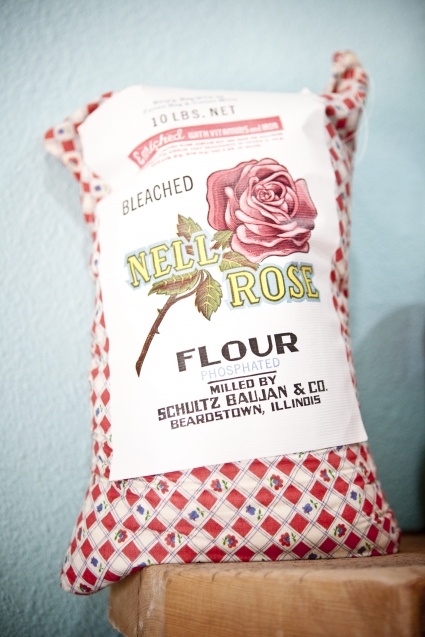
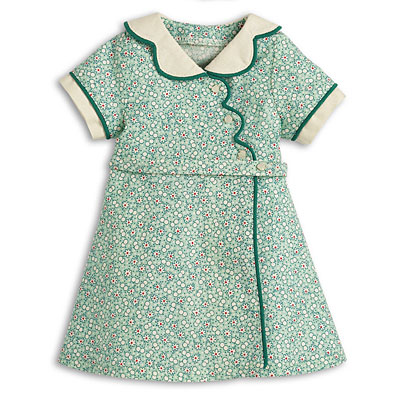
When I described what I wanted for the scene, my mother suggested feed sack curtains. Images of stained, coarse fabric crudely stitched togetherfeedsack-dress came to mind. Mother informed me that they were quite pretty and, in fact, feed sack was used to make dresses for little girls, tea towels, and aprons. I had to go in search of the fabric that could be used for such items while baring a name more plain than homespun. What I found prompted this post.

Ingenious women of low income reused the fabric from feed sacks for undergarments, curtains, pillowcases, etc. Initially, the fabric was white and without pattern. A company logo, which had to be scrubbed out or strategically placed on the homemade item, was the only ornamentation. These plain white feed sacks were probably what Lyla Welles would have used during the time period for the above-mentioned scene. I imagine her hand lovingly embroidering a simple pattern or trimming the edges.

It wasn’t until the 1920s that patterned feed sack became popular as a marketing tool. Women chose the products they purchased depending on the pattern on the feed sack fabric. Contests were held to design prints and artists were consulted to make them more appealing.untitled (5)

The following link from the Buchanan County, Iowa Historical Society provides a complete history on the evolution, popularity, and history of feed sack fabric. I recommend utilizing Google to see a myriad of garments and household items made from the repurposed fabric. There are even Pinterest boards and quilting forums dedicated to the humble feed sack.

What Would You Give to Have That?

imagesI recently wrote a blog post on the unusual things people say.  We grow up hearing odd turns of phrase and use them as an adult never questioning where they came from or what they mean.  We’ve said them all our lives and understand them perfectly.  Southerners, Northerners, people from other countries–we all have our quirky expressions that we employ without hesitation assuming everyone in our hearing vicinity will know what we mean.

While researching the origins of the phrases used in my family, I came across the following question and answer regarding the giving of one’s eye teeth for something. I use this one quite frequently and never gave it much thought.

The question was stated in such a way as to make me laugh. The answer proved informative. I had no idea this phrase dated back so far.

I would love to know the crazy sayings peculiar to your family or locale that you grew up hearing and/or saying.  As a writer, I’m always looking for unique ways to state something without sounding clichéd.  I believe it adds flavor to the story and strengthens a character’s voice.

Enjoy!

Parlez Vous West Virginia?

Have you ever wondered as a child where all those weird things adults would say actually came from? I’m speaking of the oddities my mother and grandmother used to express which I later labeled West Virginia-isms after their home state. Things like dead in Hell with your back broke and this life, the next, and the ironworks. What do they mean?

Then there are two not suitable to be publicly blogged, but I will e-mail them to you upon your request. Everyone should have the opportunity to experience them at least once in his or her life.

Taken out of context, these phrases are rather odd. Having grown up with them, I understand that to be dead in Hell with your back broke is worse than your current situation so shut up and quit complaining.

“I don’t like cleaning the cat box.”

“Well, you could be dead in Hell with your back broke.”

On the other hand, it could be preferable to your current situation.

“I’d rather be dead in Hell with my back broke than stay at this party one minute longer.”

If you think it’s bad now, there’s this life, the next, and the ironworks. Things are pretty hopeless when you reach this state.

“Dang, I hate my job.”

“I know, but there’s this life, the next, and the ironworks.”

Not everything filtering down through the generations of my family was negative. My grandfather used to say something was prettier than a speckled dog under a red wagon. Hmmm…they were poor and lived during a simpler time. Maybe that’s the prettiest thing he had to compare.untitled (4)

I came across a saying close to this but was unable to determine the origin of the similar expression prettier than a specked pup in springtime. Locale probably determined which one you used, and I wouldn’t be surprised to learn they came from yet another comparable phrase.

I’m not crediting my family or West Virginia for the creation of these colorful sayings, but I can appreciate how realistic they make dialog sound when reading or writing. You can’t help but speak them with a slightly southern accent. Go ahead and try; I dare you.

The great thing about them is that no editor could ever claim they are clichéd!

Understanding Prudence

Joan CrawfordI devoted chapter seven of my novel, The Secrets of Dr. John Welles, to developing the character of Prudence Welles Mayfield. Unfortunately, her interesting backstory didn’t move the rest of the plot forward. I struggled with cutting what became known as Chapter Prudence because I really like her, and the writing was good. In the end, I discarded it in favor of keeping the story focused on my protagonist alone.

The following account details Prudence as a child and young woman. There are a few references to things that occur later in my novel, tidbits that I dealt with in others ways upon removal of this chapter, but nothing so confusing that you won’t be able to understand what’s going on.

Although her backstory went by the wayside, Prudence herself did not. She is very much an influential presence in the life of the nephew, John Welles. I hope reading about her youthful adventures, and the following character sketch, give you a better perspective into the personality of Prudence.

Chapter Prudence

You believe you already know Prudence; she’s the stunning woman with an expensive, tailored wardrobe you would give your eye teeth to own. You would probably label her an arm ornament until she opens her mouth, and you realize an intelligent, well-spoken woman resides in the beautiful package. Suddenly, you want her as your friend.

You will find Prudence with drink in hand at the center of every social engagement, commanding her audience with a stellar personality, smoking long before it was fashionable for women to do so. She’s a lady to the core, despite what society may think about her, and would sooner burn her shoe collection than be caught drunk in public.

Don’t be fooled by Prudence, though. The petit woman isn’t afraid to speak her mind and can back down the most assertive man. Other women, especially those vying for a place in her beloved nephew’s life, are her particular kryptonite.

From the outside, it looks as if Prudence has a charmed life. She has plenty of money, secured by a good head for business, so she and John want for nothing. Her life is full of quality items from the home she lives in, the car she drives, the vacations she takes. Yet closer inspection would reveal sadness in Prudence kept hidden from the world. Her care of John, while altruistic on the surface, also services to satisfy her need for penance and motherhood.

Still, she isn’t the type to sit around mourning an unfortunate circumstance. She is proactive in her own restless life and will seek satisfaction until she has secured it instead of waiting around for a man to provide it.Coco Chanel, French couturier. Paris, 1936 LIP-283

For all her forthrightness, Prudence can still be wounded at heart. As much as she loves John, it is he who most often draws the line on her outrageous behavior especially in regards to her creative honesty. She’ll never let on that she feels the sting of his rebuke, and if pressed, Prudence would admit that her nephew is a positive influence in her life.

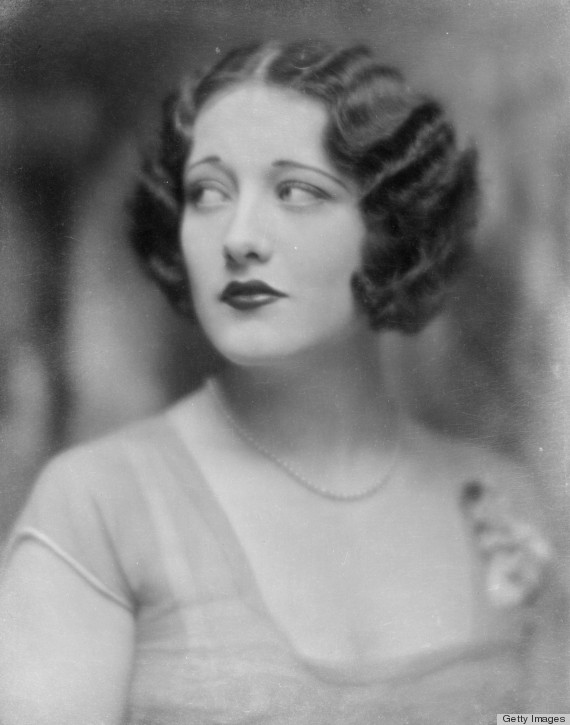
The pictures of Joan Crawford and Coco Chanel capture the essence of Prudence as I envisioned her.