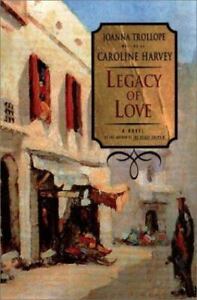
Legacy of Love

I’ve always enjoyed Joanna Trollope’s writing because she captures and portrays the nature of human relationships with accuracy. Writing as Caroline Harvey, the name she used for her historical romances, Trollope provides the reader with a triple dose of her writing style in her novel Legacy of Love.

The story begins with Charlotte, a beautiful, passionate young woman who is dissatisfied with the social conventions of what she perceives to be her uninspiring life. Marriage removes her from Victorian London to exotic Afghanistan where her adventures unfold. Scandal dogs her every step, but Charlotte is impervious and indifferent to the gossip.

Charlotte’s story is told from the POV of her beloved sister, Emily. Although Emily sees Charlotte’s faults, she is devoted to her older sister and can barely contemplate her displeasure let alone express it. Charlotte often takes advantage of Emily’s sweet nature, and in my opinion, her actions come across as bullying . . . in the sweetest of ways.

When Charlotte meets the love of her life, a man as dashing and wild as she, they present an unstoppable pair who surmount every crisis and are the ones to whom everyone else looks for strength and encouragement. Unfortunately, when nothing extraordinary is occurring, Charlotte and her man are rather useless people who are unable to make a home or farm their land.

While Charlotte could have been an example of a strong woman who met every challenge with dignity, she ended up reading like a selfish, self-made legend whose only purpose was to entertain herself and her husband. This is never more clear than when she tossed over her first husband, who naturally expected Charlotte to conduct herself like a Victorian lady, and did nothing to earn her lack of interest or commitment. He was conveniently killed in battle.

The legend of Charlotte continues to cause damage when her own daughter, Iskandara, is born with a twisted leg and average looks. Iskandara cannot live up to the myth of Charlotte, and she allows this to distort her spirit as badly as her leg. Her lifelong disappointment is taken out on her own daughter, Alexandra.

Alexandra holds center court for the middle portion of the novel. She, too, lives in awe of her grandmother, Charlotte, but instead of trying to imitate her, Alexandra flees her grandmother’s larger-than-life persona that continues to haunt the family estate long after her death.

Emily, now a great aunt without children of her own, provides refuge and guidance for Alexandra in what read like classic Jane Austen. A bit of reverse psychology executed by Emily crowbars the backward Alexandra out of her complacency and into the life she’s always dreamed of where she is the rudder of her own ship. Throw in an extremely talented, brooding, and slightly volatile artist whose career is revived when he falls in love with and paints Alexandra, and we have happily ever after à la Austen.

Cara, named after her great grandmother Charlotte, rounds out the last third of the novel. The youngest child of Alexandra, she is as enthusiastic, beautiful, and daring as her legendary great grandmother. Cara commands attention wherever she goes and is a natural born leader, but eventually, all this amounts to is that she is popular.

When World War II disrupts Cara’s plans, her self-centeredness rears its head much like Charlotte’s, however, Cara is also outrageously spoiled, so her obnoxious qualities rise to the surface to simmer most unbecomingly. It didn’t take me long to dislike Cara and realize that most of her problems are self-made.

There’s more predictability in the last third of the novel since the reader has Charlotte’s and Alexandra’s stories as a foundation for Cara, but Trollope infuses freshness and hope into the story by having Cara mature in a way that Charlotte never did. I suspected how things would turn out for Cara, which was extremely satisfying despite the obviousness of it, but counterbalancing this detail is the believability with which Trollope transitions Cara from brat to womanhood.

Cara undoes the harm Charlotte’s influence has over the lives of the women in her family by taking responsibility for herself and everyone around her not just when crises arises but during the drudge of daily life. She leads the life Charlotte wanted with far more grace, and in doing so, she grows in wisdom.

Legacy of Love is historical romance, but I found it to be so much more than simple love stories.  Trollope does a wonderful job of grounding the reader in every era without bogging the narrative down by adding too much detail. Her peripheral characters are expertly woven into the lives of her protagonists thus making them essential to the tale, and her conclusions are pleasurable without being overly sentimental.

Let me know in the comments if you’ve read Legacy of Love or any Joanna Trollope novel. I’d love to compare reviews.


Step Into the Realm

Have you ever longed for a dream project to become a reality all the while living in a state that hovers somewhere between excitement and fear? If so, then you’re probably an artist. And if you’re an artist, then you know that talking about what you’re going to do is where creativity goes to die and fear to thrive.

For writers, we often talk about all the great stories we’re going to write. Many of us even have a notebook devoted to story ideas where we jot them down so we can pretend to stay focused on our WIP. Then one day, when the guilt gets to be too much, we make the commitment to not just set aside time for writing but actually write.

We attend writers’ groups, join online writing communities, and scour the Internet for writing advice all in the hopes of producing a piece of writing worthy of publication. There are good days and bad days, and then one day, it all pays off.

Stepping out in faith has been a large part of my writing process, and I’d say finding an excellent beta reader was where it started. I have been blessed to have a beta reader who catches my mistakes, asks the right questions to keep my plot on course, and challenges me to see things from a different perspective. He also provides amazing feedback and encouragement.

Then there’s my editor, who is a Godsend. When I was feeling my most resistant to completing my own dream, she entered the picture as an answer to prayer. Her expertise and energy never cease to amaze me. Combined with my beta reader, I have two people in my corner who often believe in me more than I believe in myself.

My blessings don’t end there. My husband has been through every high and every low of the writing process with me. I know I sometimes take him for granted, but as soon as I remember, I express my gratitude. He’s so compassionate and forgiving that occasionally I agree with my mother: I don’t deserve him.

My son lies on the other end of the spectrum from my husband, but that’s not a bad thing. Sometimes, his tougher approach riled me up, but it made me strive to be a better writer and prove to the little upstart that I could finish. Besides, what kind of parental example would I be setting if I didn’t complete what I started, which is the whole point of this post.

It is my very great pleasure to announce that my novel, Realm, is officially in production.

Thank you, dear followers, for taking this journey with me. Stay tuned for all the exciting updates.

~HL Gibson

Quotation Station

Shabbat Shalom to artists everywhere.

As I wish you rest and peace for the last time this year, may I also wish you abundant blessing for the year to come. Remember, to create is to imitate Adonai, so make sure your efforts reflect well on the One who gave you your ability to create in the first place.

Read to Write

Every year I take the Goodreads pledge to read twenty-four books. This year, I finished with sixty-one books. This is a new record for me. I’m actually going to end with sixty-two as soon as I get to the one sitting on my to-be-read stack, but I’m also kind of a stickler about not counting a book until it is absolutely finished. You never know what could occur during the course of my day to prevent me from completing it. I wouldn’t want to offend the Goodreads gods or something.

I’m sure I’ve said it on my blog before, but I’m going to say it again: if you want to write well, you must read well.

Let’s start with quantity first. Get your hands on everything you can and read it. Books, articles, newspapers (do we still have those?), fiction, non-fiction, read inside your favorite genre and outside your favorite genre. Read, read, read.

There are going to be people who tell you what the best is by labeling it classic, best seller, or some other tag to entice you. That’s fine, give it a whirl. Remember, though, that the final decision is yours on whether or not the book deserves such high and lofty praise. Keep in mind, however, that good writing can occur even if you don’t care for and/or disagree with the piece of writing (fiction or non-fiction), so analyze every aspect of what you’re reading before bringing the hammer down on a particular work.

Now let’s talk about quality. The more you read, the more you will expose yourself to the good and bad in writing. Very soon you’ll be able to discern not just what appeals to your reading tastes, but what lends to the foundation of good writing. Again, this will only occur if you crowbar yourself out of your reading rut and into the vast libraries of the world. Keep in mind that the popularity of the book/how well it was received, the money it made, shocking subject matter, being written by someone the public did not expect, and the tale being turned into a movie are not factors by which one should judge the writing.

I’m not going to include the research, data, or links to posts about how much smarter one becomes by reading, but it’s true. It just is. Your vocabulary and knowledge will increase, and at the very least, you’ll spark new interests and have something worthy to discuss with other people.

So, I challenge each of you reading this to set a goal for the quickly approaching new year and get to reading. Take a moment to let me know in the comments what you read this past year, what you loved, what you hated, and why. Word of mouth is often how I find my next great read.

Tuesday Tea – Banana Bread

Perhaps it’s because this is the busy week of Hanukkah, perhaps it’s because I’m enjoying a cup of this delicious tea right this moment, but whatever the case, Tuesday Tea is coming to you late in the morning, but at least it’s coming!

What could be better than the delicious aroma of freshly baked banana bread permeating every nook and cranny of your home? How about your hands wrapped around a warm cup of Banana Bread tea on a frosty winter morning?

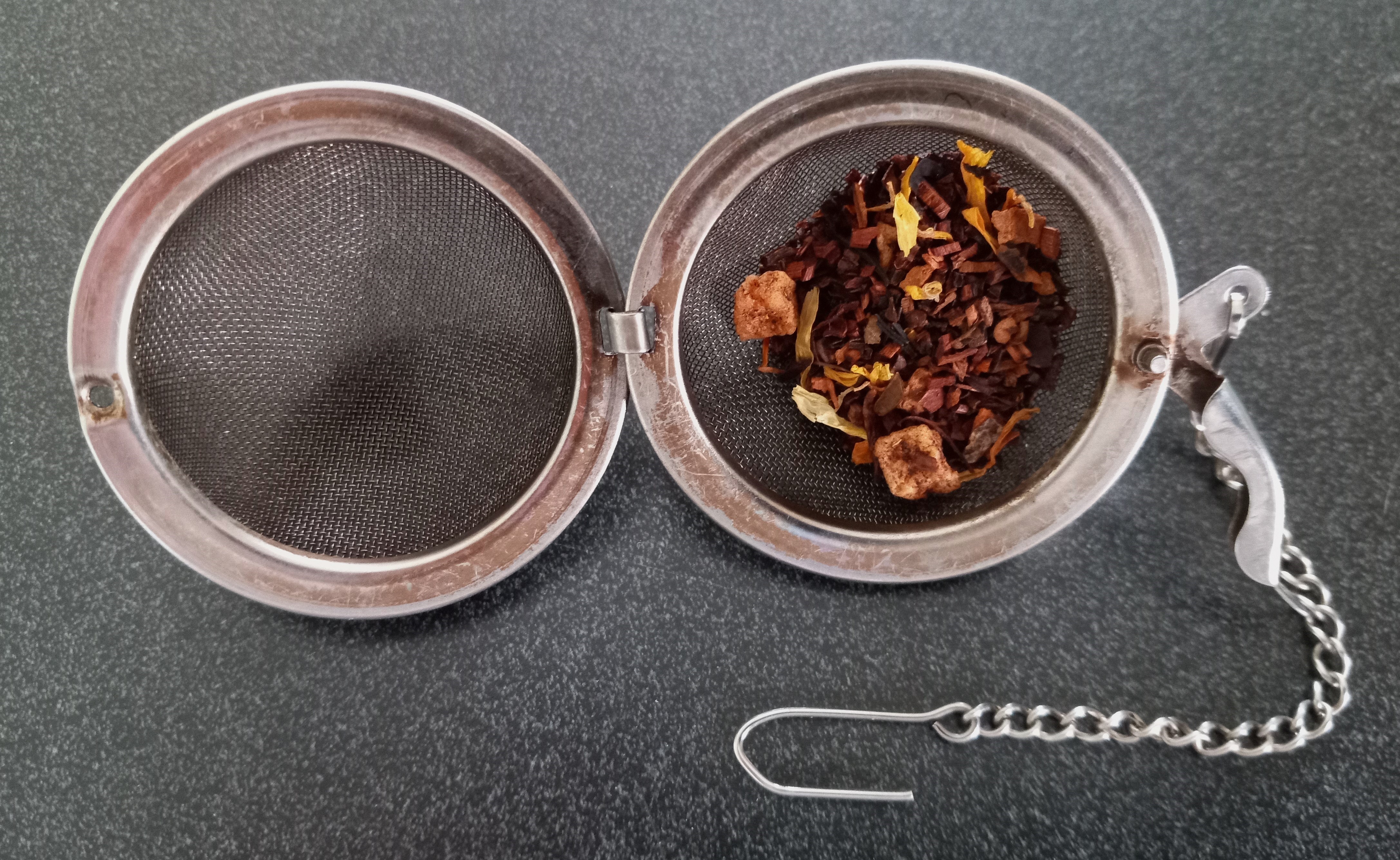
Thank you, Ohio Tea Company, for offering this beautiful, fragrant tea that serves up as comforting and delicious as the familiar baked good. There’s nothing artificial tasting about this brew composed of honeybush tea, apple pieces, cinnamon, cocoa nibs, natural banana flavor, natural chestnut flavor, and marigold flowers.

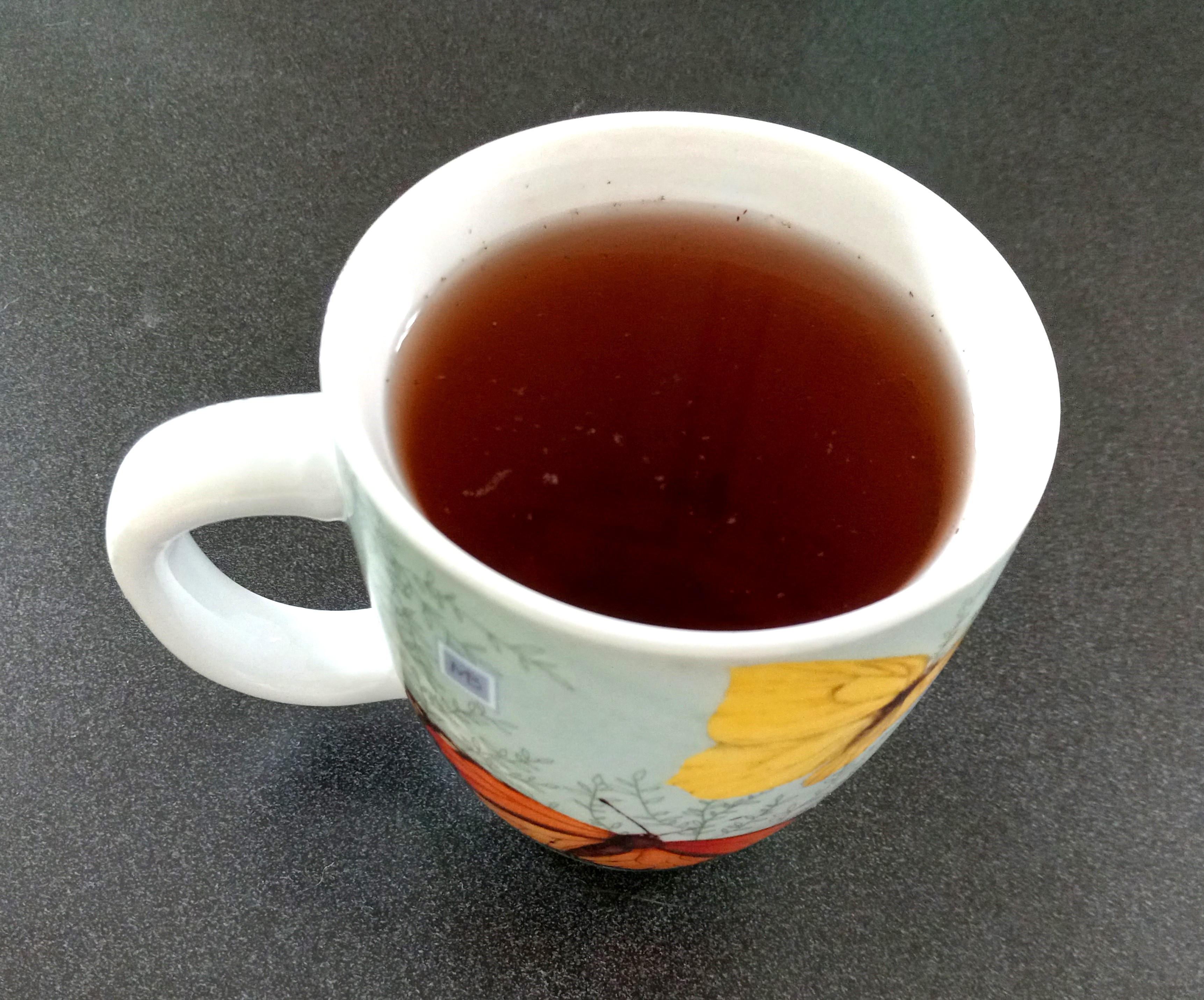
It’s lovely in the tea ball and equally gorgeous in your favorite teacup or mug as it brews up a pleasant shade of mauve. This caffeine-free herbal infusion is similar to rooibos, although I found the honeybush to be a shade milder but no less tasty. It also lends itself well to blending with the other ingredients.

The best part about Banana Bread tea is that it satisfies one’s craving for dessert, and in this season of over-indulging in too many sweets, this tea is a lifesaver. What’s more, it takes far less time to make a cup of tea than to prepare and bake loaves of banana bread. I find that detail comes in handy when you receive unexpected guests and have nothing to serve them in the way of dessert.

I haven’t done this yet, but I imagine Banana Bread tea would be well received at a tea party, especially when paired with shortbread for dunking. The flavor focal point becomes the tea instead of the food, and it elevates tea to a new level instead of presenting it as the usual accompaniment essential for a tea party but often overlooked.

I enjoy this tea without sugar or cream, but if you decide to include one or the other or both in your cup, please let me know how that worked for you. Also, I’m interested in balanced pairings, so do be sure to let me know what you served with Banana Bread tea.

Tamar & Cancel Culture

I apologize for the late delivery of this blog post. Monday is usually the day I publish new material, but a nasty cold took me down earlier this week. Now I’m wondering if it wasn’t for the sake of what I discovered.

I’m studying Tamar’s story, and I’m seeing how an overwhelming lack of understanding of her tale is playing out across our world right now. You’ll want to pause and read Genesis/B’reisheet 38 if you’re not already familiar with Tamar. The short chapter is an amazing digression in a larger narrative, but it is one that must not be missed.

I would also urge you to reject the usual feminist perspective of scripture as patriarchal and misogynistic. Tamar’s story is so much more than that, and to stop here in your thinking is to do her a great injustice and miss the fact that her actions provided the opportunity for revelation, healing, and repentance.

I admit that I never truly understood Judah’s statement “She is more righteous than I” until I came across sources that delved more deeply into the text, the history, and the culture. Understanding all three is crucial to learning the lesson at hand.

One must accept that children were highly prized at the time in which Tamar’s story was written. Children were understood to be life and wealth, not burdens and inconveniences. And when I say wealth, I don’t mean that they were treated as mere property. Children were considered one of the ultimate blessings not just for the woman but for the family as a whole. This truth must be accepted, or the rest of the story breaks down.

And perhaps that’s why we are where we are today.

When a woman was denied the right and privilege to bear children, she was denied an honor to the degree of severe social shame. Yet in Tamar’s case, her shame wasn’t because she was unable to bear her own children. Something, or someone, stood in her way.

A close reading of the text reveals that Judah had no intention of giving Tamar to his youngest son for the purpose of raising up offspring for his brother, which was something that Tamar wanted for herself and her dead husband. She was trapped between Judah’s fears of losing another son and her inability to marry anyone else because she was legally bound to her brother-in-law. In her desperation, Tamar took drastic action to ensure that her husband’s name would not be lost among his brethren and that she would become a mother.

At this point, one might believe that Tamar’s efforts to gain children were what made her more righteous than Judah. She took a great risk to achieve what should have rightfully been hers. While her methods were more in keeping with her Canaanite heritage, her desire to be part of Judah’s family—a family striving to adhere to the instruction of the one and only living God—must not be casually discarded.

Both Judah and Tamar conducted themselves inappropriately. Two wrongs never make a right, and neither person in this story was perfect. But here’s where Tamar prevailed: Judah, believing his daughter-in-law was guilty of adultery, wanted her to be dealt with publicly, whereas Tamar, knowing Judah to be the one by whom she was pregnant, sent him a coded message that only he would understand, thus revealing the truth. Tamar fulfilled her duty to her dead husband, but more significantly, she spared Judah public shame.

Allow me to repeat that: Tamar spared Judah public shame.

What she did was huge, and the moral implications have reverberated throughout history for those willing to learn the lesson.

Through her understanding of shame and humiliation, Tamar had become sensitized to what Judah was about to experience if she allowed it. Again, Tamar was holding all the cards, yet she chose to act in righteousness by sparing Judah’s dignity when she withheld her words. What Tamar knew—that for which she was willing to put her life on the line—was that psychological damage can harm far worse than physical damage.

Words hurt, and once spoken, they can never be taken back.

Fast forward to today when exposing someone’s shame is considered not simply justice but righteous justice. People are applauded for conducting smear campaigns to the point of canceling another person in the eyes of a fickle society. The fact that this goes on in politics is no big surprise, although it is still unacceptable, but at the familial level, it’s nothing short of reprehensible.

Imagine airing your dirty laundry to the degree that you make millions of dollars and produce a documentary. Surely, the hurt you’ve experienced justifies you doing so, right? No, not according to God’s word. Not even if you attach the latest trending social label to it.

Tamar was on the fringe of society as a two-time childless widow, unable to remarry a man of her choice, and a foreigner. Yet instead of cashing in on her low status for the sake of gaining sympathy, she considered the other person and spared him the loss of dignity that would equate to a loss of life.

For her selfless actions, great integrity was attributed to Tamar, the outsider. She wrote herself into the most important royal lineage known to man, that of King David and ultimately, King Yeshua. She was and always will be a role model for how to conduct ourselves when someone else’s dignity is on the line.