God Gives Us Teenagers Because He Loves Us

I have a theory. I’ve been sitting on it for about six years, keeping it to myself as I mulled it over and tested it. I experience it in daily life especially when interacting with my teenager. It goes like this: I ask Joshua to do something, and he responds with “Oh joy, oh rapture” to let me know that he is not going to enjoy what I’ve asked him to do. I already knew that what I requested of him wasn’t meant to produce pleasure, but nevertheless, it needs to be done. A voice in my head whispers, “Kind of like I told you (insert request here) needs to be done.”

Another example is when Joshua asks me for something, and the answer is no.  I usually follow up with a tactfully pointed out, “Why would I spend money on (insert desired objection) when you don’t appreciate what I’ve already given you?” And the gentle voice in my heart says, “Sounds familiar, doesn’t it?”

Then there are the times when I give Joshua instructions for completing a task, and he does it wrong because he doesn’t listen and/or doesn’t care about the outcome. It takes him twice as long to finish (insert task here) and often things end up broken. I say, “Why didn’t you do it the way I told you the first time?” and the loving but firm voice speaking to my will sighs, “Exactly, beloved.”

My theory: God gives us teenagers to let us know what it’s like for Him when dealing with us. If I hadn’t heard His voice every single time I corrected Joshua, I would never have come to this conclusion. And because I’m the adult, the parent, the smart one who has lived more than twice as long as my child, I have it all together and nailed it the first time, right? Wrong.

I’ve grumbled, complained, whined, begged, pleaded, made deals, and sulked my way through life just like a teenager. God—being the great parent that He is—never backed down. Discipline and guidance came my way whether I wanted it or not. The lessons flowed from God to me to Josh, and still I didn’t catch on.

Until one day last week when I had a moment of brilliant insight. I had been moping because I received my first rejection notice concerning the novel I’m currently querying. Instead up getting right back up in the saddle and sending out another query, I sat in a chair at the kitchen table and sulked. It was a most unproductive day until my teenager came home. While Joshua may be a sluggard when it comes to picking up the dirty socks on his bedroom floor, he’s a drill sergeant when it comes to my writing.

“How many queries did you send out?” he asked. No “Hello, Mother, how are you? It sure is wonderful to see you.”

“None,” I replied.

“Get up.”

“What?”

“Get over to the laptop and send out a query letter.”

“I don’t want to.”

Without further comment, Joshua pulled out the chair with me in it, used a karate hold on me that put my arm behind my back, and led me to the computer at the other end of the table. Before you become upset thinking that he hurt me, please be assured that we laughed throughout the whole process. No bullying was involved as my son strong-armed me out of the doldrums and into positive energies. It worked.

Here’s the key: I knew better than to resist the karate hold because it was a real one he learned on his way to becoming a red belt. It didn’t hurt at all when Joshua helped me from the chair and gave the instruction to get back to work. If I had pushed or leaned in any direction against the hold, it would have been painful, and that’s when it hit me. God’s instructions only hurt when I resist them.

Finally, I’ve learned my lesson. Will I always apply it to my life perfectly? Probably not, but that doesn’t let me off the hook from trying. Just as I expect Joshua to strive for new levels of maturity in his life so, too, am I expected to stop behaving like a child, grow up, and pass the lesson forward.

Oh, Honey—That’s Good!

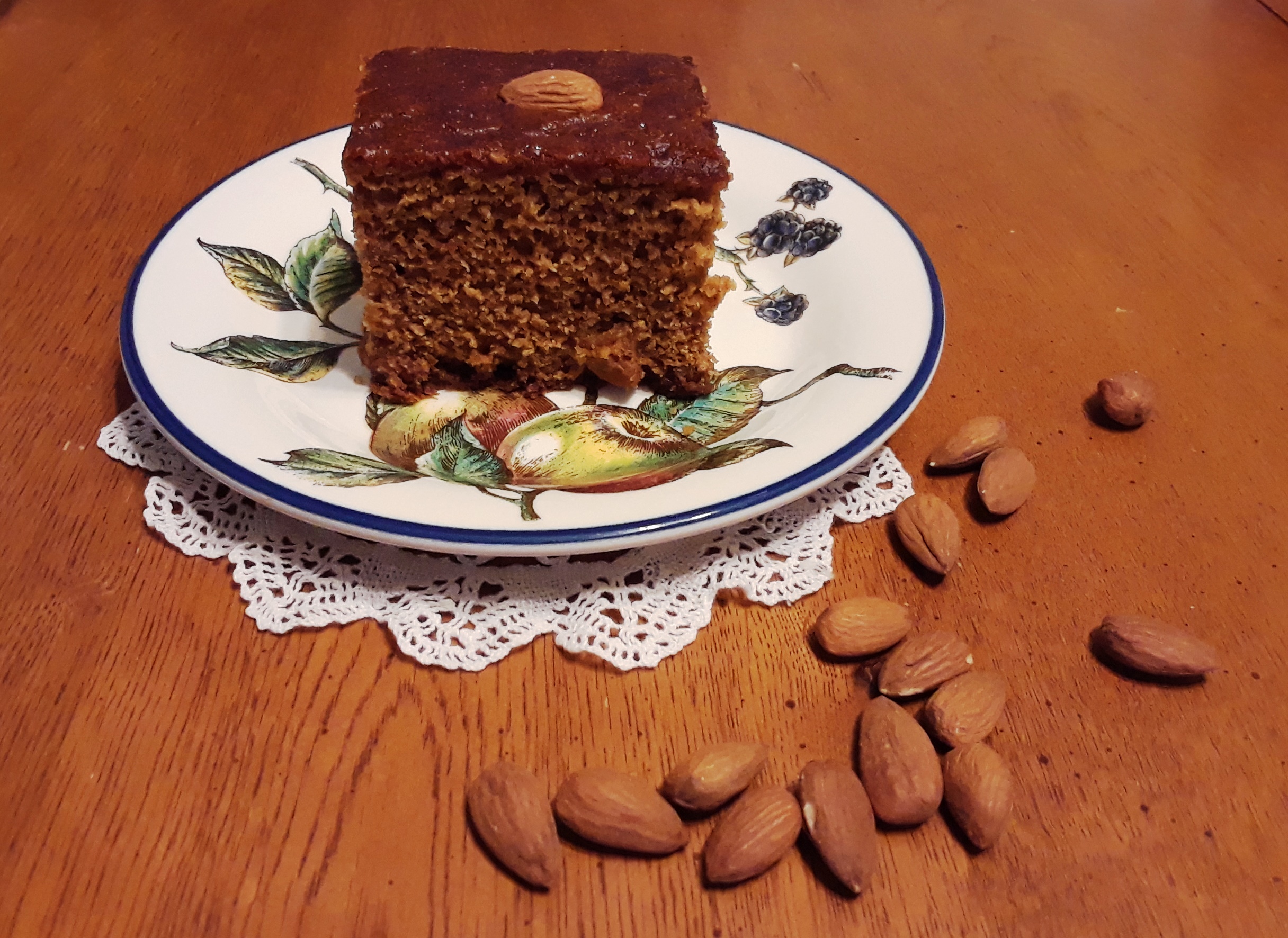
Jewish honey cake is traditionally served at Rosh Hashanah, but all Shirley Tedesco knows is that her new neighbor, Muriel Shapiro, loves the stuff. Besides, it’s only January, and Shirley is desperate. At least she takes the time to discover Muriel’s heritage as well as her preferences in desserts.

From the deep wells of kindness that abide in Shirley’s heart, she uses the delicious cake to make inroads with Muriel. And while her motives are pure—she really does want to become close with the shy Jewess from New Jersey—if pressed to admit, Shirley also needs a babysitter who has never experienced her brood of eight unholy terrors.

The following recipe is the one I had in mind for Shirley to present as a peace-offering prior to Muriel experiencing the Tedesco horde. When Muriel agrees to babysit, she has to watch the twins, Holly and Noelle. Unfortunately, the twins are disgruntled at being the only siblings without plans for the evening, and they take it out on their unsuspecting babysitter. There isn’t enough honey cake in the world to repair the damage the girls inflict upon poor Muriel.

Jewish Honey Cake

3 ½ c unbleached flour

1 t baking soda

1 T baking powder

1 t cinnamon

½ t ginger

¼ t cloves

¼ t nutmeg

Dash of allspice

4 extra large eggs

1 ¼ c packed dark brown sugar

4 T extra virgin olive oil

1 t vanilla

1 ¾ c honey

1 c very strong coffee (decaf is fine)

1 c golden raisins

1 c whole or half candied or plain almonds

Preheat oven to 300° F. Grease and flour two 9×5-inch loaf pans or one 9×13 pan. Set aside.

In a saucepan, combine the honey and coffee and bring to a boil. Set aside to cool.

Sift the flour, baking powder, baking soda, and spices together. In a large mixing bowl, blend the eggs, brown sugar, vanilla, and oil. Do not overbeat.

Stir the flour and honey/coffee into the egg mixture alternately, beginning and ending with the liquid. Blend well. Toss the raisins in a little flour to keeping them from sinking and stir them in gently. Pour into the prepared pan(s) and place the almonds over the cake. (If using whole almonds, arrange them in straight rows to denote a serving and to indicate where to cut the cake finishing with an almond on top of each piece.)

Bake for 60-70 minutes, or until the cake springs back. Let the cake sit overnight before serving.

Serve as is or top off with freshly whipped cream. Enjoy!

Quotation Station

Shabbat Shalom! May your weekend be peaceful and productive.

I laughed hilariously when I first came upon this quote, and then I sobered just as quickly because I know it’s so true. Unleash the writing and keep the craziness bay at… somewhat.

Danny Does Denim

The younger Tedesco brother, Danny, is not known for his success with the ladies. It could have something to do with his perpetually broke-down car (his dates always have to drive), his constant lack of funds (his dates always pay for dinner and entertainment), or his questionable sense of fashion (his only decent suit is made of denim). Fortunately for Danny, his most recent girlfriend is not at all put off by her new beau’s style choices.

Known as the Canadian tuxedo or the Texan tux, Danny’s suit, manufactured by Lee, comes with a lovely matching vest. No doubt Grandma Josephine Tedesco bought the ensemble for him, but whether or not she remembers doing so is another matter.

Keep in mind that a denim jacket (also known as a jean jacket) is a different animal altogether. Denim jackets are a stylish staple in casual wardrobes and enjoy varying degrees of popularity throughout the decades. It’s also commonly worn by those in a more rugged line of work (think cowboys and roughnecks). But when it comes to tailored suits, denim is rarely if ever well received.

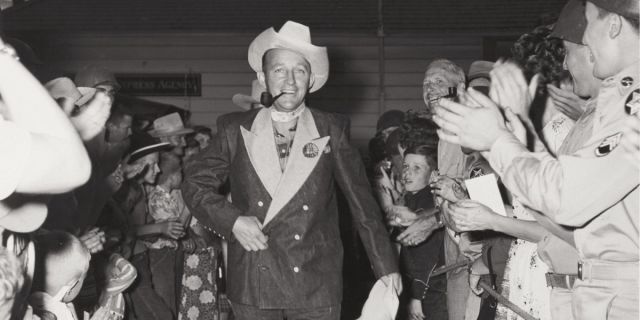
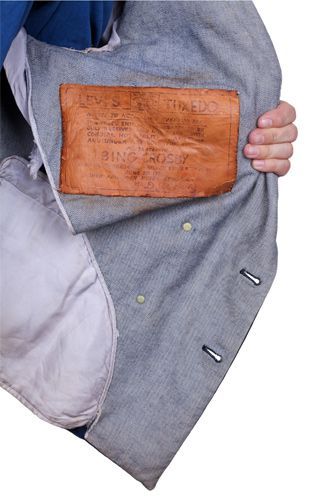
The history of the denim suit is short and infamous, and its origins don’t go all that far back. Levi Strauss is credited as the originator of the denim jacket in the 1800s, but the earliest reference to a denim suit that I could find was 1951. A story exists of singer Bing Crosby being denied access to a hotel in Canada because he was dressed from head to toe in denim. Although the was eventually allowed in, Levi’s made him a custom double-breasted denim suit jacket so that he would “never have problems wearing Levi’s jeans, even in fancy establishments.”

The jacket, presented to Crosby at the 1951 Silver State Stampede in Elko, Nevada, contained a leather label on the inside bearing a “Notice to all Hotel Men” stating that denim was acceptable to wear on any occasion. At least Danny is in good company. Bing’s suit now lives in the Northeastern Nevada Museum in Elko.

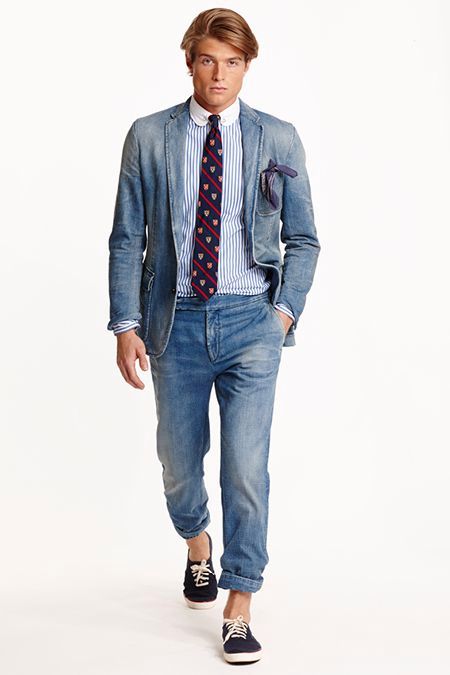
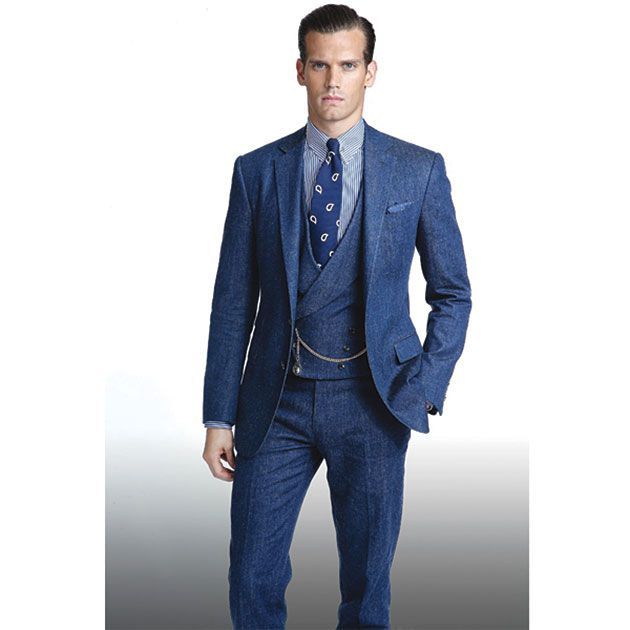
In 2015, Ralph Lauren took a stab at the denim suit with a hipster and Wall Street version. In my humble opinion, both look like something a demented college student would try to pull off as good fashion sense. I have no doubt CEOs avoided these two suits like the plague they are.

If these denim suits don’t float your boat, you can always opt for one of the two hundred, limited run reproductions of Bing’s jacket that originally went for $1,800.00. I’m sure eBay is stocked with these little goodies.


For Love of Country

I’m writing my blog post for Memorial Day one day late because most Americans were busy yesterday with picnics and parades. That is certainly not a criticism, so please don’t take it as one. In fact, my hope for every person reading this post was to have been surrounded by loved ones doing the activities you enjoy. But again, quite a few of us were busy yesterday, so I hope you have time now to read what I write because it may present information of which you were not aware.

Did you know that the Civil War, which ended in the spring of 1865, claimed more American lives than any conflict in the history of the United States? The first national cemeteries were established to provide final resting places for the many soldiers who died in the war.

Americans began the practice of decorating these fallen soldiers’ graves with flowers and reciting prayers during springtime tributes in the late 1860s in various towns and cities. No one is sure where this tradition originated because different communities may have started the memorial gatherings independent of neighboring towns.

In 1966, the federal government declared Waterloo, New York as the official birthplace of Memorial Day. Waterloo first celebrated memorial services on May 5, 1866, and the town was chosen because it hosted an annual, community-wide event. All businesses closed and residents decorated the graves of soldiers with flowers and flags.

These days, businesses stay open and Memorial Day is often seen as simply marking the beginning of summer. Most Americans wish each other Happy Memorial Day, but I’m not quite sure that’s appropriate. And at the risk of becoming a little more somber, let’s not forget that the day came out of a conflict in which brother fought against brother. Still, if I make you pause for just a moment to realize how blessed America and Americans are, then I’ll take the risk.

War is never good, and America is not perfect. But since we have Memorial Day, I’d like to offer some suggestions on how to observe it. Cub Scouts and Boy Scouts decorate the graves of local soldiers with American flags. I’m sure they’d gladly welcome non-Scouters who wish to honor the fallen.

Visit nursing homes and seek out veterans. Use caution when talking about their war experiences, but by all means, encourage them to talk about whatever interests them. Keep in mind that your own neighbors may be veterans, so offer to cut grass, cook a meal, or run errands for them. Please don’t rule out young veterans. They have needs, too. Remember, not all wounds are visible; use love and wisdom in every situation.

Don’t forget the family of soldiers who are currently serving. Your kind words and offers of assistance will go a long way. It doesn’t take a lot of money to show compassion. Babysitting, washing dishes, or simply visiting a lonely spouse will help to ease the void left by a serving soldier. And since we’re Americans, and everyone knows Americans love their pets, don’t forget to walk the dog or brush the cat of a serving soldier or elderly or disabled veteran.

Widows and widowers of fallen soldiers may be the hardest to detect especially if you weren’t already aware of the fact that she or he was married to a soldier. When you do find out, gently encourage the surviving spouse to remember their fallen loved one. Sharing memories is a great way to work through the grieving process.

When you see a stateside soldier, shake his or her hand and offer thanks for his or her service. If you’re able, offer to buy that cup of coffee he or she just ordered, the lunch he or she sat down to eat, or his or her groceries on the conveyor belt ahead of yours. And if you’re not able, consider giving your place in line to the soldier behind you.

I hope this doesn’t come across as preaching. These are just suggestions, and I’m sure you can come up with many more. The thing is, it isn’t just on Memorial Day but rather every day that we need to be serving each other. I have to remind myself more than I care to admit that I should be serving others. Memorial Day is one of those days, not unlike Thanksgiving, when I’m reminded to do just that.

Latkes Like Momma Makes

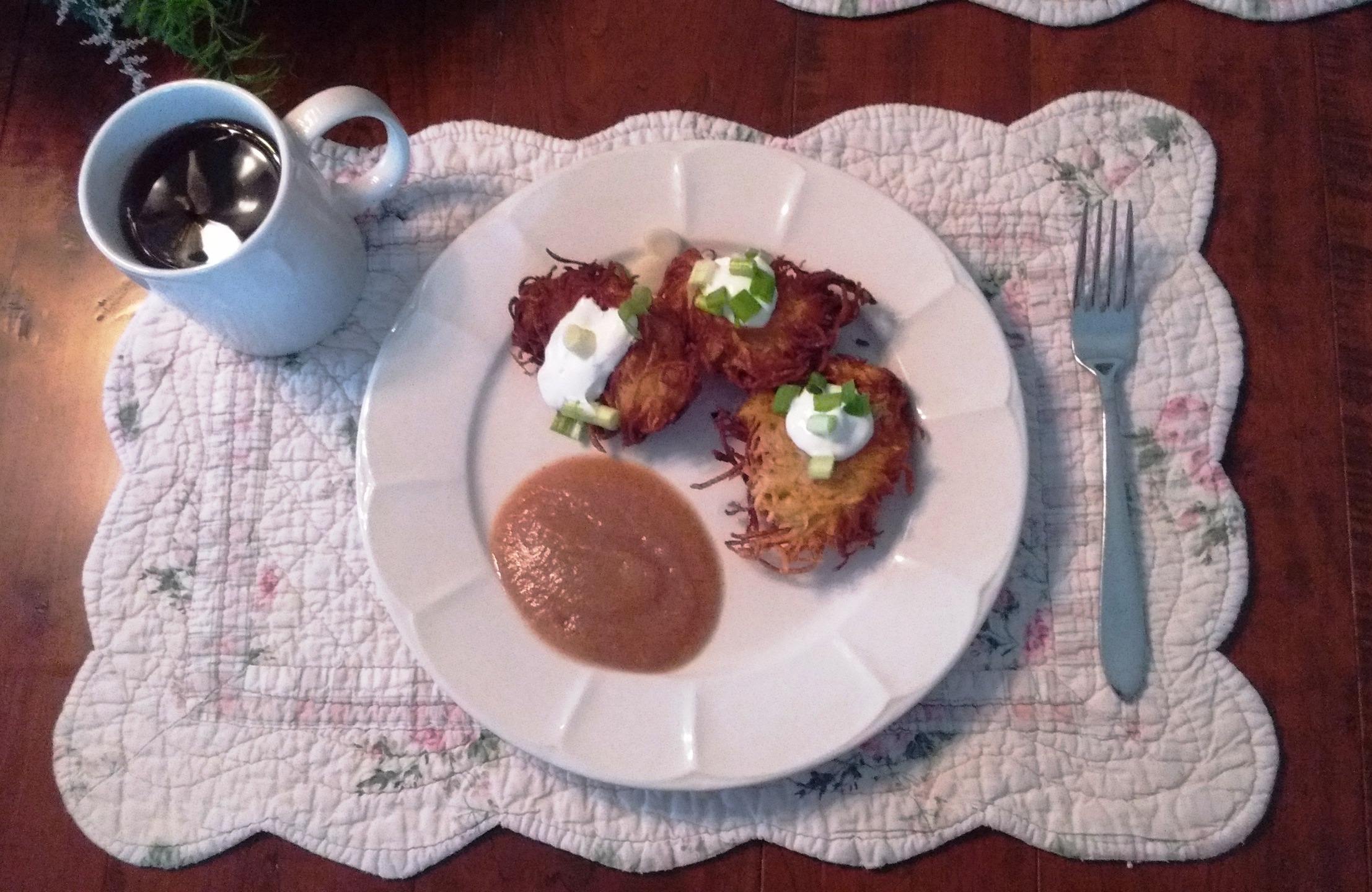
Muriel Shapiro is one of my favorite peripheral characters in my novel, The Tedescos. The shy, intelligent native of New Jersey flees her home state with the dream of starting afresh in Northeast Ohio. When she moves into Joe and Shirley’s neighborhood, all memories of her disastrous cooking experiences under the tutelage of her impatient mother have been left behind. So have comparisons between Muriel and her well-married, grandchild-producing sisters, a father whose every sentence is spoken in a yelling voice, and the constant reminders of her failed art gallery. If ever anyone needed a peaceful environment in which to recoup, it is Muriel Shapiro.

The following recipe for latkes is quite easy, so perhaps dear Muriel’s talents simply lie elsewhere. I’m sure you’ll have splendid success when making “Momma’s” latkes and enjoy eating them even more than preparing them.

Momma Shapiro’s Latkes

12 Russet potatoes, peeled and shredded

1 large Vidalia onion, chopped

4 cloves of garlic, pressed

2 eggs, beaten

4 T flour

Salt and pepper to taste

Peanut oil

Peel the potatoes and place them whole in a large bowl of cold, salted water until all twelve are peeled.

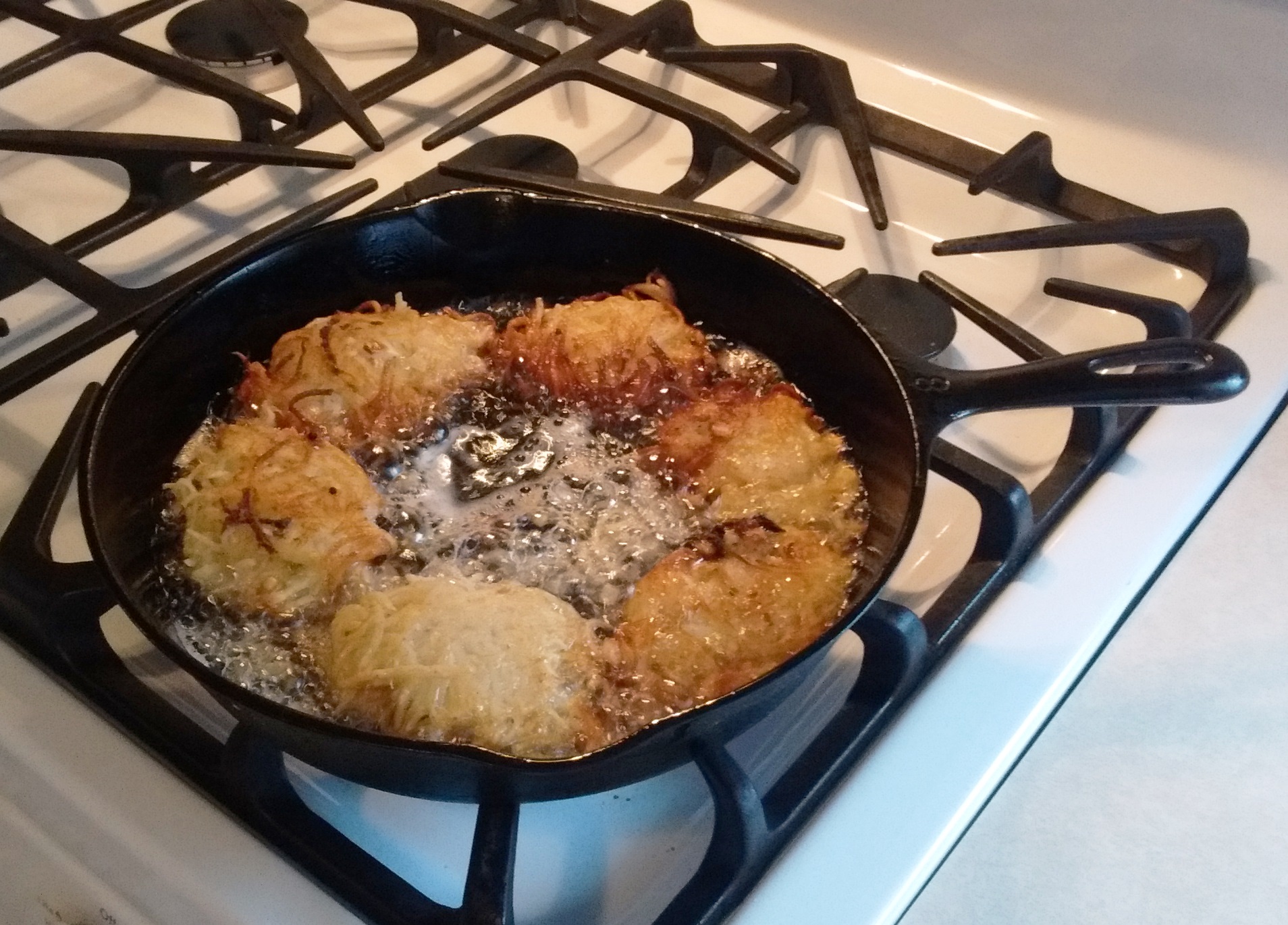
I recommend shredding the potatoes through a food processor to achieve matchstick like shreds. Be sure to press out all the liquid from the potatoes either by squeezing them through cheesecloth or a clean tea towel or in a colander under a heavy bowl filled with water. Wet potatoes do not fry well.

Combine the shredded potatoes and chopped onion in a large bowl. Add the remaining ingredients (except the peanut oil) and stir. You may need to mix with your hands to ensure the potatoes are thoroughly coated.

Heat the peanut oil in a cast iron skillet to very hot. The oil will ripple across the top and pop when ready. Drop in large spoonsful of the mixture and gently press them into patties. Fry the latkes until golden brown and crisp on each side. Transfer the cooked latkes by slotted spoon to a paper towel-lined platter to drain excess oil. Serve them warm with sour cream and applesauce.

Enjoy!

Quotation Station

Shabbat Shalom to all my friends.

May your weekend be peaceful and productive.

My mother and I recently had a conversation on this very subject. I have found that I am happiest when I’m writing. Sometimes, even the dream of publication can suck the soul out of my love to create stories. I am no less a writer whether I’m published or not. The passion of writing is the flame I choose to keep burning.

She Called Her a What?

Danny Tedesco, Joe’s younger brother, is the black sheep of the family. He’s long on money-making schemes and short on work ethic. And although Danny and Joe get along—they really do love each other—more often than not, Danny is a bit of a thorn in Joe and Shirley’s side.

Joe springs it on Shirley that Danny and his new girlfriend are coming to dinner, and Shirley is not at all happy. She doesn’t want to cook for her loser brother-in-law and the latest bimbo he’s picked up Lord knows where. Unfortunately, Danny is family and must be welcomed. In defiance of the dinner party, Shirley announces that she’ll make spaghetti alla puttanesca. Joe questions her choice, but his strong-willed wife has made up her mind.

The elegant sounding dish is really quite delicious, and Shirley’s choice wasn’t altogether a bad one. If you aren’t familiar with the history of the dish and/or you don’t speak Italian, allow me to explain. Spaghetti alla puttanesca literally means spaghetti in the style of a whore. According to various websites, the dish was created in Naples and dates back to the mid-twentieth century. One legend says the meal was quick and cheap for prostitutes to make between customers while another says the robust aroma drew clients in.

I lean more toward the belief that Italians use the word puttana as an all-purpose swear word the way Americans use sh*t. It would be like saying, “I threw a whole bunch of sh*t into the pan and came up with this.” Reinforcing my opinion is the fact that I watched a cooking show years ago where the Italian Momma taught the host the meaning of, “I just sh*t.” Much laughing was involved, but Momma explained it meant to take stuff from the cupboard and toss it in the pot without the benefit of a recipe.

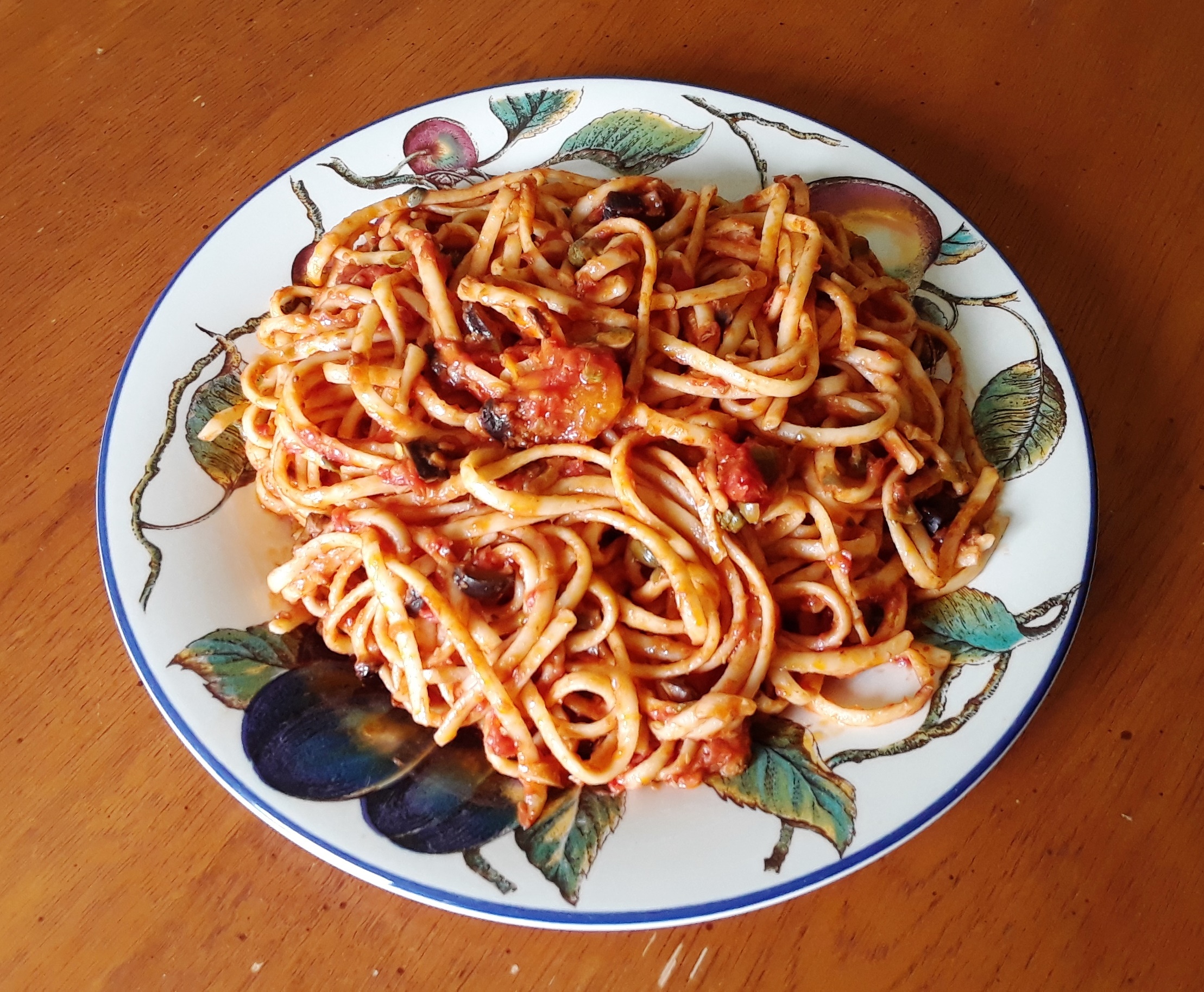
There are variations to the recipe with a particular ingredient omitted or added based on preference and locale. The sauce is traditionally served over spaghetti, but can also be served over linguine (as pictured above), penne, or bucatini. Trust me when I encourage you to use all the ingredients listed even if you don’t think you’ll enjoy them. I admit there was one on the list that made me hesitate, but ever since I discovered spaghetti alla puttanesca, I have come to love the simple, flavorful dish.

Shirley Tedesco’s Spaghetti alla Puttanesca

1 lb. dried spaghetti

Sea Salt

8 T extra virgin olive oil (reserve 2 T)

6 – 8 large cloves garlic, thinly sliced or finely chopped

8 – 10 anchovy fillets (packed in oil), finely chopped

1 – 2 large pinches red pepper flakes

½ c capers, coarsely chopped (press them dry in a paper towel first)

½ c pitted black olives, drained and coarsely chopped

1 – 28 oz. can whole peeled tomatoes with the juice (recommend San Marzano), crushed by hand

Minced parsley or basil for garnish

½ – 1 T Pecorino Romano or Parmesan cheese, finely grated (optional)

Ground black pepper (I used quad-colored peppercorns)

Place the spaghetti in a large, deep skillet or sauté pan and cover with water. Add a pinch of sea salt. Bring it to a boil over high heat, stirring occasionally to keep the pasta from sticking.

In a medium skillet, combine 6 T olive oil, anchovies, garlic, and red pepper flakes, and cook over medium heat until the garlic turns a light golden color, approximately five minutes. Adjust the heat as necessary to keep the mixture sizzling without burning the garlic. Add the capers and olives, and stir to combine.

Stir in the crushed tomatoes and juice and bring to a light simmer. Continue simmering the sauce until the spaghetti is cooked to al dente (about 1 minute less than recommended on the package). Use tongs or a pasta spoon to transfer the spaghetti to the sauce. Reserve 1 cup of cooking water.

Add a few tablespoons of cooking water to the sauce and increase the heat to bring the spaghetti and sauce to a vigorous simmer. Add more cooking water as necessary to keep the sauce loose until the pasta is al dente (about 1 – 2 minutes). The spaghetti cooks more slowly in the sauce, and the starchy cooking water helps the sauce to thicken and cling nicely to the pasta.

Season lightly with sea salt (anchovies, olives, and capers are quite salty already) and heartily with black pepper. Stir in the remaining 2 T olive oil and parsley or basil. Some purists say that cheese has no place in puttanesca, but I find Pecorino Romano or Parmesan perfectly complements the dish. If using cheese, add it at this point and stir to combine. Transfer the spaghetti alla puttanesca to a platter or individual dishes and serve with more grated cheese if desired.

Enjoy!

It Didn’t Cost Me a Thing

I remember how much a loaf of bread cost the year my husband and I married. I remember the price of a gallon of gas the year I started driving. I also remember the hourly rate a teenage girl could make babysitting in the late 1980s. Unfortunately, I have never written about any of these things in my novels or short stories.

When I need to know how much something costs for the year during which my story takes place, I can usually find it by Googling. But every now and then, I use an inflation calculator to go backward or forward in time and come up with a price.

Most often, the US Inflation Calculator, which works for prices between the years of 1913 and 2018 (updates to current year), is my go-to source for pricing. In the event I need to tiptoe farther into the past (1800), this Inflation Calculator is my second favorite. It’s not as official, but the site offers some other inflation-related links which may prove to be beneficial.

I know inflation calculators are not new or impressive, but I find them fascinating and most helpful when writing. Besides, nothing is worse than having to stop the flow of writing to research a detail.

Children Need Pause and Rewind Buttons

Well, we finally did it! The hubby and I survived high school. We made it through all four years and came out the other side relatively unscathed. There were some bumps and bruises along the way in the form of forgotten homework, mad dashes to school with hastily packed or forgotten lunches, and most recently, the delivery of two loads of cardboard that entirely filled the back of hubby’s SUV to the school our son attended in the afternoon for Civil Engineering and Architecture. Oh, did you think I meant hubby and I survived our own high school years? No, no, no… I’m talking about our son, Joshua, and how despite all the snark thrown our way (and that’s when he was actually communicating) we are now the proud parents of a high school graduate.

Man, did that go quickly. I put him on the bus for kindergarten on Monday, and he graduated on Friday? When I dressed him for school, he had on shorts, a striped t-shirt, and sneakers that lit up when he ran. He loved those shoes. What came home that last day wore a backpack bigger than he was when he started school and sneakers longer than the bus. His sense of fashion didn’t change much. He still leans toward t-shirts, but if you ever see him in shorts it’s only because someone pulled a prank and cut off the legs of the sixty dollar jeans he conned out of his grandfather.

I have vague memories of a little kid who never ordered anything to eat except “chickie fries” suddenly being the young man whose stately walk into the auditorium and perfect pivot at the aisle deposited him at his seat where he promptly clasped his hands behind his back like a Marine standing at attention. And after the ceremony, the only way I could spot him among the sea of blue and white caps and gowns was to look for the face that had once been soft and round and was now square and chiseled. I can recognize that jawline anywhere.

Leap past the graduation dinner at his favorite restaurant to all of us fast asleep in bed that evening. Everyone except me because my mind and heart aren’t quite sure if I’m supposed to be happy or sad. I believe that mix is called melancholy. Add to it a dash of “what do we do with this young person now,” and you will be standing outside the fence of the ballpark in which hubby and I are now playing. Perhaps you are familiar with this scenario, but Joshua is our one and only. We won’t even have the opportunity to apply what we learn to another child.

As I sit here typing this, watching him brush his teeth in the kitchen sink like some kind of animal, I have to wonder how we did with him. Is he truly ready to be unleashed on the public? How much will his behavior reflect on us? Is it too late for Catholic military boarding school in Siberia? Does he love us? Does he even like us?

I suppose we could have done this instead of that. More of A and less of B. Chosen what was behind curtain one as an alternative to taking what was in the box. Would it have made a difference? Life is not a dress rehearsal, so who can really say? I made a promise to infant Joshua to never lie to him no matter how many times he asked me the same question as a toddler (it’s true that airplanes don’t fly when it’s too cold). I tell teenage Joshua that I’ll pay for any therapy needed due to emotional scarring endured while cleaning his bedroom.

Sometimes I wish we had a crystal ball so we could see where all this is heading because it feels like we’re riding a roller coaster in the dark. There are times when I think that’s a good thing because there will be no witnesses when I push Joshua out of the car. But most days, I cling to him in case there is a sudden drop up ahead that none of us can see. We know he wants us to loosen our hold on him for the thrill of rising out of the seat on the dips and hills. And we will… once we check that he secured his seat belt for life.