I’ll Drink to That

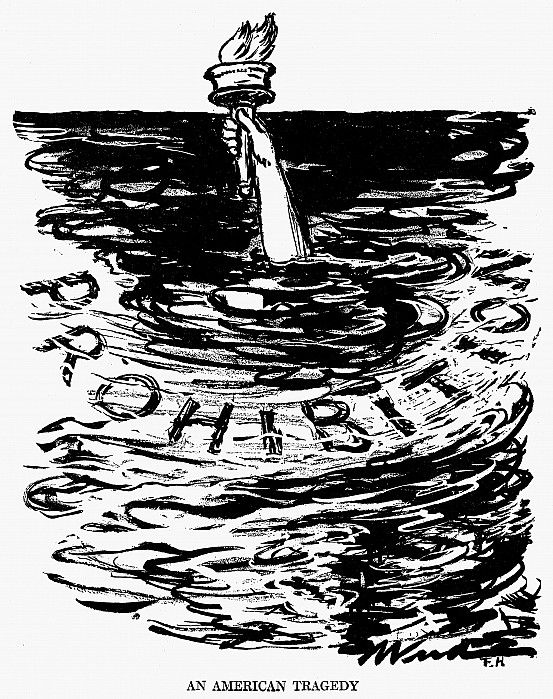
ill-drink-to-thatWhen you ask people about Prohibition in the United States, the response they most readily provide is that for some strange reason it became illegal to drink alcohol of any kind. This is usually accompanied by mystified looks and slow shakes of the head.

Unfortunately, what many don’t know is why this occurred and that it was actually part of our Constitution at one time. So, here’s a little history lesson born of my own need to understand Prohibition more thoroughly for the sake of my novel, The Secrets of Dr. John Welles.

By definition, Prohibition was the legal prevention of the manufacture, sale, and transportation of alcoholic beverages in the United States from 1920 to 1933 under the terms of the Eighteenth Amendment. Note that the consumption and private possession of alcohol was not illegal, so what a person already owned could be enjoyed in his or her own home. Just drink responsibly and sparingly as it was now tougher to resupply one’s stash.

The National Prohibition Act, known informally as the Volstead Act, set down methods for enforcing the Eighteenth Amendment, and defined which intoxicating liquors were prohibited, and which were excluded from Prohibition (e.g., for medical and religious purposes). The Amendment was the first to set a time delay before it would take effect following ratification, and the first to set a time limit for its ratification by the states. Its ratification was certified on January 16, 1919, with the amendment taking effect on January 16, 1920. For the following 13 years Prohibition was officially in effect, though the ability to enforce it was limited by the Volstead Act and by corrupt and complacent politicians who overlooked illicit manufacturing and smuggling.

The Anti-Saloon League’s Wayne Wheeler conceived and drafted the bill, which was named for Andrew Volstead, Chairman of the House Judiciary Committee, who managed the legislation. The Anti-Saloon League was the leading organization lobbying for Prohibition in the United States in the early 20th century.

So, why all this hatred toward alcohol? The Eighteenth Amendment was the result of decades of effort by the Temperance Movement in the United States and at the time was generally considered a progressive amendment. The Temperance Movement, which went back as far as the late eighteenth century, was born of the concern for alcoholism and how it played into spousal abuse, family neglect, and chronic unemployment. However, the desire for cheap, plentiful alcohol led to relaxed ordinances on alcohol sales, and the problem persisted.

A tract published in 1784 by Benjamin Rush detailing how excessive use of alcohol was harmful to one’s physical and psychological health. Many people got on board with the idea, initially proposing temperance rather than abstinence, but like most well-meaning organizations, political in-fighting stalled the group.

Throughout the decades, the Temperance Movement received support from various religious denominations and temperance groups, but it also took a back seat to issues such as slavery during the Civil War. It wasn’t until the third wave of temperance that any movement achieved success. With the formation of The Anti-Saloon League by Rev. Howard Hyde Russell in 1893, the Temperance Movement found footing not by demanding that politicians change their drinking habits, only their votes in the legislature. Under the leadership of Wayne Wheeler, the Anti-Saloon League stressed political results and perfected the art of pressure politics. The Anti-Saloon League’s motto was “the Church in action against the saloon,” and it mobilized its religious coalition to pass state and local legislation, establishing dry states and dry counties.

By the late nineteenth century, most Protestant denominations and the American wing of the Catholic Church supported the movement to legally restrict the sale and consumption of alcoholic beverages. These groups believed that alcohol consumption led to corruption, prostitution, spousal abuse, and other criminal activities. Brewers and distillers resisted the reform movement, which threatened to ruin their livelihood, and also feared women having the vote, because they expected women to vote for Prohibition. The Anti-Saloon League achieved its main goal of passage of the Eighteenth Amendment on December 18, 1917.

Just after the Eighteenth Amendment’s adoption, there was a significant reduction in alcohol consumption among the general public and particularly among low-income groups. Consumption soon climbed as underworld entrepreneurs began producing rotgut alcohol, and the speakeasy quickly replaced the saloon. Likewise, there was a general reduction in overall crime, mainly in the types of crimes associated with the effects of alcohol consumption, though there were significant increases in crimes involved in the production and distribution of illegal alcohol.

Those who continued to use alcohol tended to turn to organized criminal syndicates, who were able to take advantage of uneven enforcement, suddenly overwhelmed police forces, and corruptible public officials to establish powerful, murderous smuggling networks. Anti-prohibition groups arose and worked to have the Amendment repealed once it became apparent that Prohibition was an unprecedented catastrophe.

The Amendment was repealed in 1933 by ratification of the Twenty-first Amendment, the only instance in United States history that a constitutional amendment was repealed in its entirety.

It’s a Mystery to Me

its-a-mystery-to-meMy first encounter with Agatha Christie was her novel, Murder on the Orient Express, which I read for one of my book clubs. I’m not usually a reader of mysteries unless by accident. John MacLachlan Gray’s two Edmund Whitty novels and Laura Joh Rowland’s Sano Ichiro series are among those happy accidents. Of course, there are the three Dorothy L. Sayer’s Lord Peter Wimsey novels my mother gave me for Christmas which prompted the purchase of the complete stories, so perhaps I occasionally, intentionally read a mystery.

With that being said, I approached Murder on the Orient Express with a titch of bias. I expected Agatha Christie’s writing to meet the standard set by the above-mentioned authors. In Mrs. Christie’s defense, I have read only one of her novels, and by the time I wrote this blog post, I also completed the short story, “Witness for the Prosecution.”

Charming but dull was the phrase that continually came to mind. Hercule Poirot didn’t do anything for me as a protagonist except manage to be cute and annoying at the same time and fusty even in the era for which he was created. The peripheral characters weren’t memorable; I had to keep re-reading their bios at the beginning to keep them straight. Only one of them had an interesting twist, and for all Poirot’s intelligence, how he managed to miss it until the end didn’t lend very much credibility to his detective skills.

I kept comparing Poirot to Lord Peter, who is more aware of his eccentricities, Chamberlain Sano, who accepts bad situations with great humility and presses on, and Edmund Whitty, who is a likeable loser right from the start. They are more believable as protagonists and detectives, more human in character and actions.

Then there was the prejudice of the author that comes through in the way she handled foreigners and the lower classes. Some of the things Mrs. Christie wrote would be considered intolerable today and were clearly the general opinion of her class. Dorothy L. Sayer’s tiptoed in this direction occasionally, but in my opinion, with much less offense. However, in the hands of someone like John MacLachlan Gray, these types of comments read harshly yet brilliantly. Perhaps this is because he’s writing an historical mystery, and I can trust he’s not wielding them for shock value.

As for the conclusion that everyone was guilty, I couldn’t accept that as a solution. Too many people who know the details of a secret are bound to screw it up without the help of Mother Nature. If not for the snowstorm, am I to believe all the suspects would have succeeded with their scheme? And perhaps I’ve watched too much Law & Order and Criminal Minds to accept that the head of the railway line, with Poirot’s apparent blessing, has the authority to let everyone off the hook because the man they killed was a kidnapper and murderer. Maybe I just wasn’t interested in debating the issue of justice in a book that in all other ways was simple and unengaging.

I probably wouldn’t have picked up another Agatha Christie book if it weren’t for the fact that my other book club is also doing Agatha Christie. My next purposeful attempt at a mystery will also be for book club. Arthur Conan Doyle’s Hound of the Baskervilles is on the schedule. I’ll be interested to see how he measures up to the other mystery writers.

How I Cheated at NaNoWriMo and Won

how-i-cheated-at-nanowrimoA couple years ago, my friend and fellow writer, S of JSMawdsley, talked me into trying NaNoWriMo. She mentioned it at the writer’s group she facilitates at the library where we worked. At the time, I was mainly a short story writer and dabbled in the occasional picture book. As luck would have it, I had an idea for a novel in mind, and NaNoWriMo seemed like the perfect way to get it out of my head and on my laptop.

Being new to the world of NaNoWriMo, I didn’t prepare at all. I just started writing on November first and quit on November thirtieth. I had 50,000 words, which satisfied the requirements of NaNoWriMo, but I didn’t have a complete novel. What I did have was a lot of work ahead of me and the conviction that maybe I really hadn’t won.

At this point, S would probably have told me I needed to outline my novel, but the first thing I discovered from writing such a lengthy piece is that I’m a pantser. I plot a little when approaching my writing, but I love to explore the rabbit trails because that is where I discover my best writing. My opinion on pantsing can be read here: Are You A Pantser?

So, did I win NaNoWriMo or did I cheat? I started at about the last one-third of the novel because I had the most information for writing that portion. In short, I learned the valuable lesson of researching before you write especially if it’s for a contest such as NaNoWriMo. You don’t want the added stress of trying to conduct research while keeping up a word goal.

I pressed on throughout the year editing what I had written and creating the rest of the novel as I wanted it to be. I researched more thoroughly and ended up chucking quite a bit of what I wrote for NaNoWriMo. Again, part of that was my fault, but I also wondered if one 50,000-word novel every year is what I wanted. Is that what the creators of NaNoWriMo want?

I suspect and sincerely hope the purpose of NaNoWriMo is to keep people writing because that’s what I did. Before I knew it, November had rolled around again, and with it NaNoWriMo. I wasn’t finished with my first novel, so why on earth would I abandon it for the added pressure of creating a new novel. Admittedly, I had no new ideas at the time, and I didn’t want the burden of coming up with one. Also, there was no time to research even the slim ideas that passed through my head.

Instead, I cheated, and I cheated grandly! I signed up for NaNoWriMo, and without a single ounce of shame, I re-entered my novel, The Secrets of Dr. John Welles. Dr. Welles’s story was almost complete, but I needed a little motivation to finish the missing chapters and tie it all together. NaNoWriMo provided this inspiration by keeping me on track with a daily word goal, but it also became a beneficial editing tool. If I edited my daily word goal, I counted it along with any new writing.

What I achieved wasn’t another half-baked novel, but rather a well-written, well-edited novel with which I was extremely pleased. A titch more editing after the fact, and Dr. Welles was ready for the hands of beta readers.

I took a couple years off from NaNoWriMo, but the point of the contest was always close to my heart. I knew I couldn’t devote time to a new novel and make The Secrets of Dr. John Welles all I wanted it to be.   Then there is the fact that when story inspiration comes to me, I have to begin which sometimes means starting before NaNoWriMo starts. Yes, there is Camp NaNo, but my heart belongs to the original taking place in November.

When NaNoWriMo rolled around this year, I was already a little over halfway through my current novel. During the month of October, I had to set my writing aside to prepare for my son’s Eagle Scout Court of Honor. When I was ready to restart, good ole NaNoWriMo once again came to the rescue as a means up jumpstarting my writing. Although I didn’t sign up with the official website, I created a spreadsheet to track and tally my daily writing goal. I’m using it to finish the current novel, for which I am prepared research wise, as well as for any writing I do that can be published including my blog posts.

Yes, that’s cheating because it’s not a single new novel of at least 50,000 words. But again, I have to believe the heart and soul purpose of NaNoWriMo is to keep writers writing. That is what I am doing.

One Little Letter Makes All the Difference

UNITED STATES - CIRCA 1950s:  Businessman with worried expression.  (Photo by George Marks/Retrofile/Getty Images)

Today’s The Weight of Words is one I’ve seen popping up with some frequency on Facebook. I’m sure it was a simple error in typing and not a misunderstanding or lack of knowledge that led to the misuse of then when what the person really meant was than. But just in case, let’s revisit exactly when, how, and where one would use then and than.

When considering which word to use, remember then, mainly an adverb, deals with the element of time. Think what comes next or after and apply then to the sequence of events. It can also be used in Ifthen constructions. Don’t forget using then as a noun meaning that time (fifth example) and as an adjective meaning at that time (sixth example).

EXAMPLES:

I’ll mow the grass and then I’ll play golf.

We watched television and then we went to bed.

She made dinner and then her family ate it.

If you don’t complete your chores, then you aren’t going to your friend’s house.

I wanted lunch at 11:30, but then was not a good time.

My then sister-in-law stays in touch with me since the divorce.


Than, a conjunction, is used when comparing things. Think instead or rather. A choice may be involved.

EXAMPLES:

I’d rather play golf than mow the grass.

We prefer watching television than going to bed.

She’d opt for dining out rather than making dinner for the family.


Also keep in mind than has no one-word synonyms whereas then has many synonyms that can be used as replacements except in Ifthen constructions where then is usually required when paired with if.

Comfort Food

comfort-foodThe spring of 1920 sees the end of a turbulent time in the life of Johnny Welles. Three tragedies for which he feels responsible plague him until he seeks to escape the only life he’s ever known. Nothing his stepmother, Collie, or his three older siblings do helps to put Johnny’s mind at ease. Prudence Welles Mayfield, the aunt Johnny has never met, provides the solution to her nephew’s grief.

Prudence visits the Welles farm when Johnny is twelve with the express purpose of taking him to live with her in Baltimore. She has an agenda that will not only please her nephew, but will also satisfy her own hidden desires. Without waiting for an invitation to lunch, Prudence seats herself at the kitchen table to eat the simple, delicious food Collie prepared and reveal her plan.

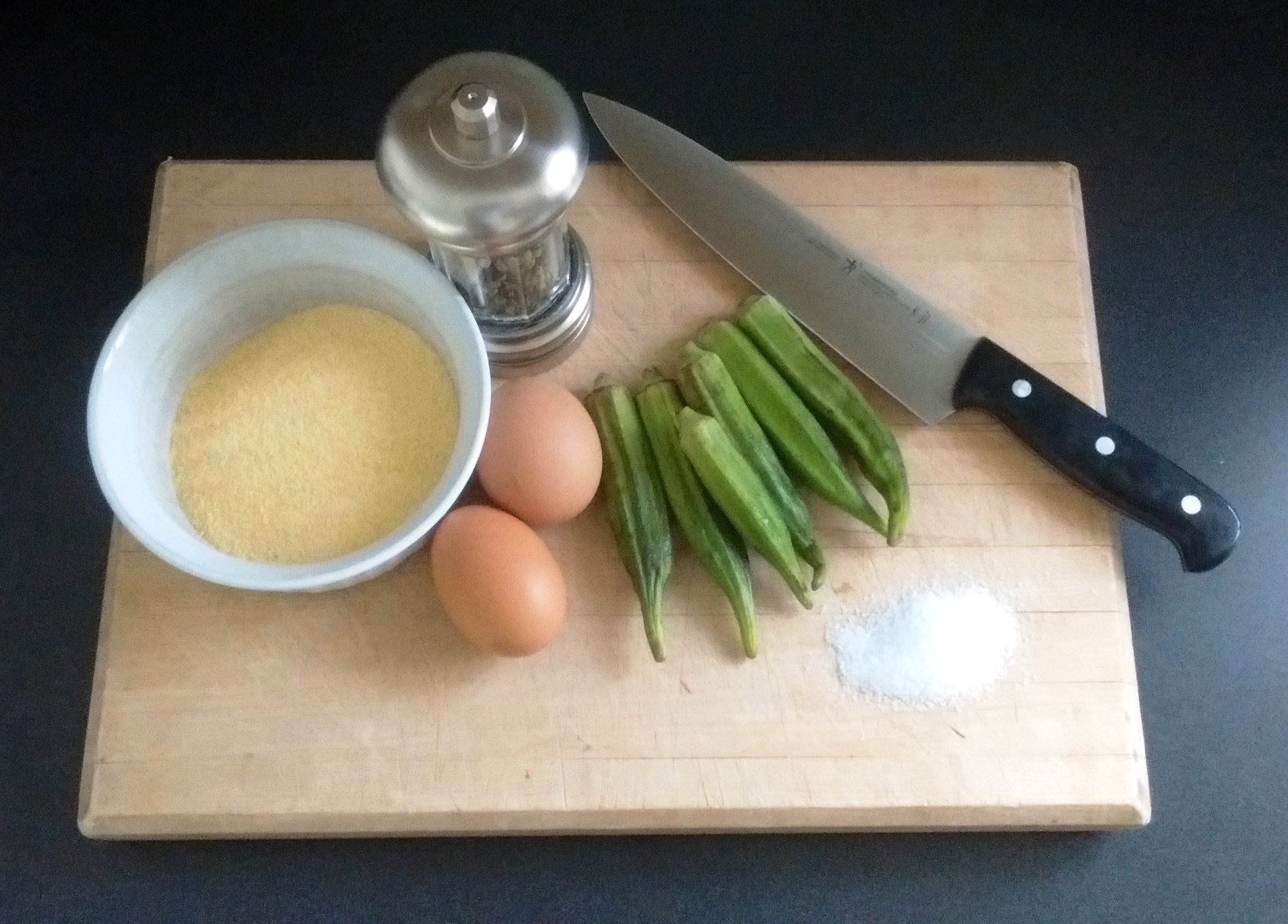
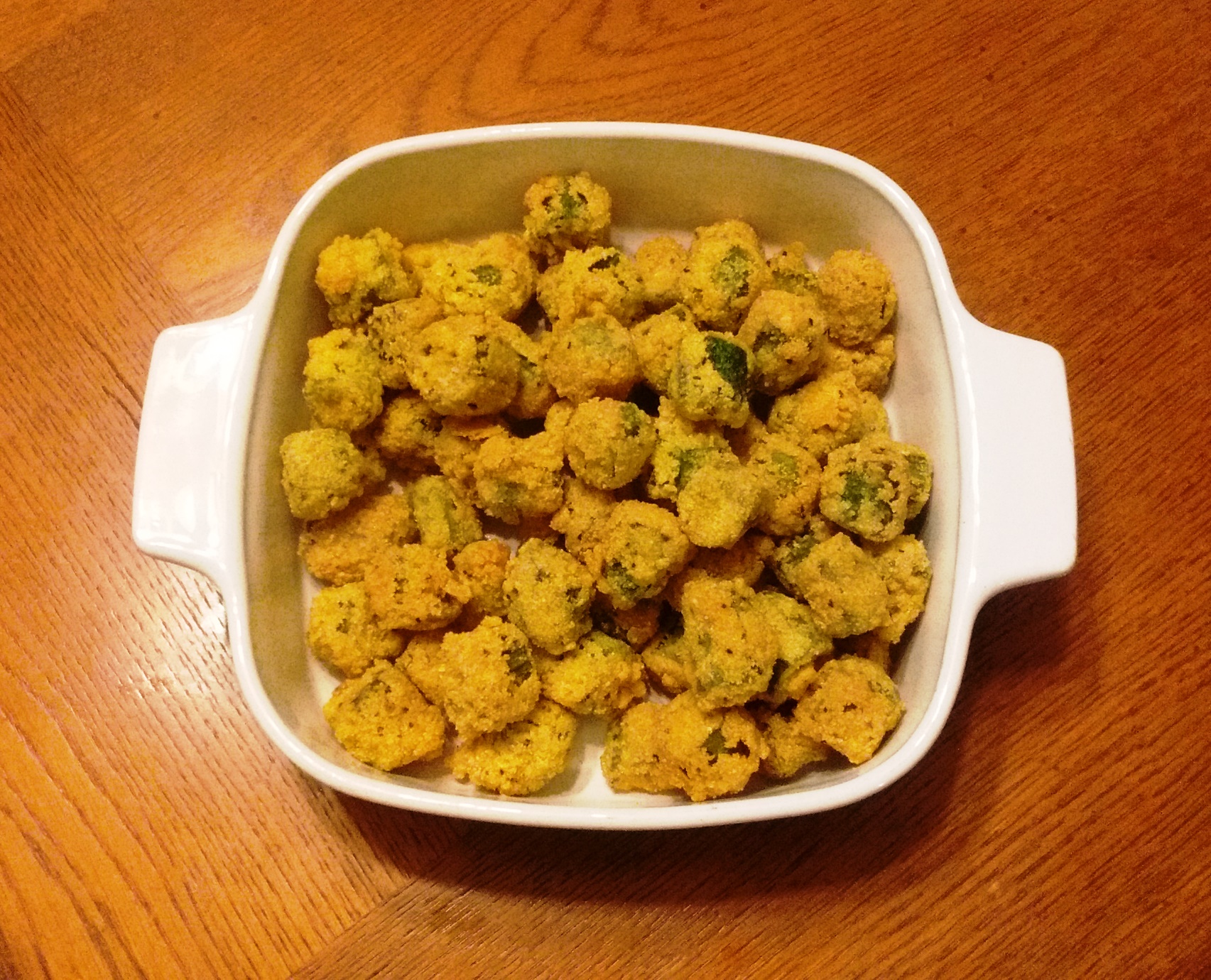
I had fried okra in mind as a side dish when I wrote the scene above. It’s amazingly simple to make, but tastes incredible. The great thing about okra is that it can be canned for frying and enjoyed in the middle of winter or any other time the vegetable is out of season.  Simply open a jar, don’t rinse it, and proceed with the following recipe.

Collie’s Fried Okra

1 lb. fresh okra (choose small, bright green pods free of rust or black spots)

1 egg

Tabasco

1 c cornmeal

3 T flour

1 ½ t sea salt

½ t black pepper

⅛ t cayenne

Dash of garlic powder, optional

Peanut and/or canola oil for frying

Bring about one inch of oil up to 400° in an electric skillet or in a cast iron skillet with a thermometer to gauge the temperature.

Wash the okra and pat dry. Trim both ends and cut into ½ inch pieces. Mix the cornmeal, flour, salt, pepper, and cayenne. Add garlic powder to this step if using. Toss the dry ingredients with a fork to blend.

Break the egg into a bowl and add several hearty dashes of Tabasco. Beat the egg thoroughly. Dip one-third of the okra in the beaten egg and toss to coat. Transfer the okra to the dry mixture and stir to ensure the pieces are thoroughly covered.

Carefully float the coated okra in the heated oil in small batches. Allow them to cook on one side then turn them to finish cooking on the other. When the coating is golden brown, transfer the okra to a paper towel-lined plate to drain. Repeat with the remaining okra.

Season with more sea salt if desired. Keep the okra warm in a baking dish in the oven while cooking in batches. Serve warm.

Enjoy!

comfort-food-4

A Soldier’s Story – Omar N. Bradley

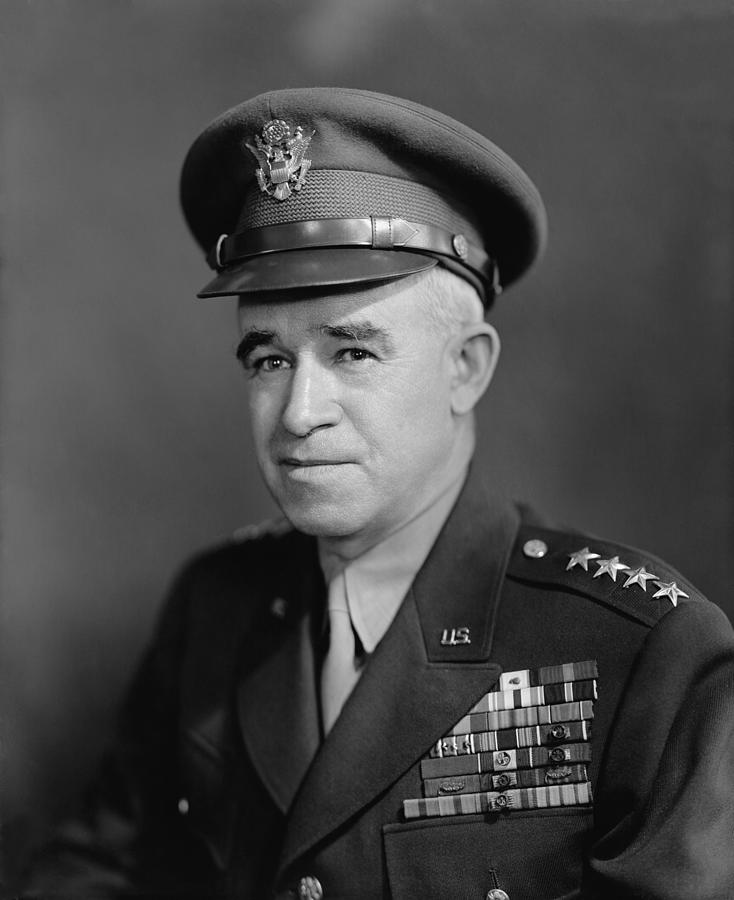
a-soldiers-storyA Soldier’s Story by General Omar N. Bradley is one of the most profound books I’ve ever read.  My friend and fellow writer, William Alford, loaned Bradley’s autobiography to me as a source of research for my novel, The Secrets of Dr. John Welles.  My research required a closer look at World War II, such as those provided by doctors and nurses (And If I Perish, Heroes From the Attic), but I still read Bradley’s account of the war, and I am extremely glad I did so.

He prefaces his autobiography with the inscription, “To those soldiers who must often have wondered WHY they were going where they did.  Perhaps this will help answer their questions.”

I believe Bradley answered these questions truthfully and without the ego that might have come from a lesser man achieving such rank and accomplishing what Bradley did.  As for the tough issue regarding loss of life, he explained how every move made by troops was analyzed and not conducted until the loss was the lowest number possible.  The decision to go ahead, shouldered by Bradley and other men like him, was not taken lightly, and it is not one I would ever want to have.

There are many who would argue that the war was unnecessary, but I concur with General Bradley:  the evil that swept through Europe wasn’t going to go away on its own.  Even with the combined forces of the Allies, the battles were not easily fought or won.  Perhaps unavoidable would be the better word choice in regards to World War II.

Bradley was against actions such as taking a site simply for the prestige of location.  Yet when other commanders’ egos swelled, he remained cordial with them even while strongly disagreeing with their decisions and/or actions.  He went so far as to put his career on the line to get the truth out to the American public regarding one such instance.

Further testimony to Bradley’s humility and strength of character are his accounts of his friend, General Patton.  Bradley spoke frankly about the times Patton overstepped his bounds, yet he never criticized in a way that tore Patton down.  When Patton was placed under Bradley’s authority, the two men worked together quite well and held each other in high regard.

Bradley includes comments from Prime Minister Winston Churchill that are chilling predictions come true.  Considering that the conversation took place in 1945 and wasn’t published until 1951, when Churchill says, “There may come a day when we shall walk into a cabinet room, break the glass over a switch, dial to the nation to be bombed, and push a button to declare war,” I can’t help but wonder if this technology was in place long before we were aware.  More unsettling are Churchill’s words, “But we shall never sit by and permit a minority to force its will upon a helpless majority anywhere,” which speak to the current world situation.

The book concludes with the end of the war in Europe, an occasion that was no doubt worthy of celebration, but I was left with a feeling of melancholy that I could only attribute to the realization that the type of patriotism displayed during World War II no longer exists.  Still, I believe that Bradley’s explanations successfully bridged the gap between those in command and those in the field.  I highly recommend A Soldier’s Story as a worthy read.

Neighbors

It starts with a funeral.  Why does it take great tragedy to bring people together, Cathy Higgins wonders as she stands in line with her husband, Jake, waiting to hug Mr. Robertson’s son, Dan.  The line of mourners trails all the way from the casket, around the sanctuary, and out the door of the church.  Cathy pulls at the front of her blouse trying to puff some air into the collar sticking to her neck.  She wishes they could inch a few steps forward into the shade of the roof overhang.

A week ago, Jake asked Cathy if she’d seen Mr. Robertson mowing his yard or pottering around the outbuildings on his property.  She hadn’t, and as luck would have it, when Jake left for work that evening, he saw Dan mowing with his father’s tractor.  He pulled into the driveway, shouted and waved to get Dan’s attention.

“Hey, we haven’t seen your dad around for a couple of weeks, and we’re wondering if he’s okay.”

Dan shook his head; his crooked smile told the story.  Jake called Cathy on his cell as he drove on to work to report back the sad news.  For some reason, Cathy called her family to tell them, not that any of them really knew Mr. Robertson beyond the fact that he was the neighbor.

Air conditioning blasts from the open double doors of the church.  Cathy can feel it now that she and Jake are within range of the building.  They really should shut the doors in between people, she thinks.  It would stay cooler inside and not waste electricity and money.  Her laughter escapes as breath expelled from her nose at the weird thought.  She’s always thinking odd stuff like this; probably the result of growing up and hearing such admonitions regarding the closing of doors when the air is on and refrigerators when they are running.

Jake waves to someone ahead of them in the line.  He taps Cathy on the shoulder and gently takes her by the arm.  She scowls for a moment when she understands they are jumping line to join whomever Jake spied.  It is Fran Mencer whose backyard is perpendicular to the Higgins’s.  Her home faces the side street as does Mr. Robertson’s who lived next door to Jake and Cathy.

“Hi,” Fran says in that long drawn out way that conveys I’m so glad to see you, but I hate that it’s under these circumstances.  The light in her eyes is at odds with the grim smile on her face.

She and Cathy hug, and the line jumping is forgotten.  At least by Cathy who is relieved to run into someone she knows.  She went to school with Dan Robertson, but they traveled in different circles, and neither she nor Jake ever met his sister and brother.  The Higginses don’t even know if there are spouses to be consoled.

“Can you believe this?” Fran says.

“Was he sick?” Cathy asks.  “We hadn’t seen him out in the yard for a couple weeks, so we thought maybe he’d gone on vacation.”

Fran shook her head.

“He’d been in the hospital for a while.  Declined rapidly.  His old heart finally gave out.”

“Oh, boy.  I wish I’d known.”

“I tried to call you a couple of times, but your line was disconnected.”

Cathy’s eyebrows knit for a moment, and then she says, “Oh, we let our landline go several months ago.”

A thought flickers through Cathy’s head:  the yards aren’t so big that one couldn’t walk to a neighbor’s house with important news.  In the next second, her eyes widen and a knife stabs her heart.

“When I lost Buddy this past spring right after Pop passed, I pretty much went to bed for the summer.”

Oh dear Lord…how did we not know that Buddy and Pop died this spring, Cathy thinks.  Her husband and father in the same yearPlay it off or admit we didn’t know?

“Oh, Fran, I’m so sorry,” Cathy says, trying to cover all her bases.

How many times had she meant to walk across the yards and visit Fran?  Tea and a chat was always the invitation.  Cathy cannot discern what Jake is feeling beneath the shock on his face, but her stomach is heavy with the lead of guilt.

After talking with Dan Robertson, reminiscing about his dad, hearing how things are not going well in the absence of a will, and offering final condolences and goodbyes, Jake and Cathy leave hand in hand.  They look at the blacktop sprinkled with curled leaves dried from end-of-summer heat, falling before the autumn frosts have even arrived.  Neither speaks on the short trip home.

They change out of their dress clothes and wander outside to sit in lawn chairs, instinctively looking toward Mr. Robertson’s home.  Funny that we never called him by his first name, Cathy thinks.  Maybe because he was the oldest in our little neighborhood.  She and Jake always thought of themselves, Fran and Buddy, and Mr. Robertson as the neighborhood.

Their neighborhood:  not a sidewalk in sight, no fences between the yards, homes built on old farmland.  Deer still migrate through the yards as they hopscotch from cornfield to cornfield, foxes sneak through on their dainty paws, and hawks wheel in the endless skies above.  Fancy allotments with two and three thousand-square foot homes are popping up peripherally.

The Matulevich family lives across the street from Cathy and Jake.  Not a lot of contact past the occasional friendly wave, but Mr. Matulevich’s brother lives three doors down on the same side as the Higginses, and he is quite friendly.  He used to till the garden for Cathy every summer with his Bobcat until she gave up gardening for watercolor painting.

Across from Mr. Robertson are Clarice and Al Robertson, no relation, in the triplexes lining the side street.  They were there long before the Higginses built, permanent renters, and Cathy usually runs into one or both of them at garage sales every summer.

But so many other families come and go from these homes that Cathy and Jake gave up trying to learn who they were.  Still, unfamiliarity doesn’t prevent waves, smiles, and pulling cars out of snowdrifts when necessary.  That’s just how it is in this part of town that is somewhere between the suburbs and rural living.

img_20161030_173746250_hdrA month or more passes with Jake and Cathy falling back into the routine of work and lawn care for him and tending the house inside and out for her.  Always so much to do and never enough time to do it.  And then Jake comes in the house one day after putting his tractor away for the season.

“Fran is out back push mowing the yard.”

Cathy lays down the laundry she is folding and follows her husband outside.  They walk across the length of their backyard and two-thirds of Fran’s before finally reaching her.  These plots really are quite spacious, Cathy thinks.

“What are you doing?” Jake asks with laughter and gentle reprimand in his voice.

“I know, but I took some pain pills before I started and thought I’d work in patches,” Fran laughs in reply.

Jake offers to cut the yard however many times are needed until the November rains come.  The trio chats a bit; they end up inside Fran’s house with coffee, and they chat some more.

This time, Cathy thinks, we will be good neighbors.

Putting Your Butterflies to Bed

John Welles’s first day of school at the University of Maryland was marred by a bad case of nerves. His Aunt Prudence eased the situation by planning a large, country-style breakfast like those John used to enjoy as a boy on the farm. Unfortunately, Prudence couldn’t cook to save her life, but the rich socialite didn’t trouble herself with such minor details. Instead, she wisely placed all responsibility for any culinary success upon her brilliant cook, Lucia.

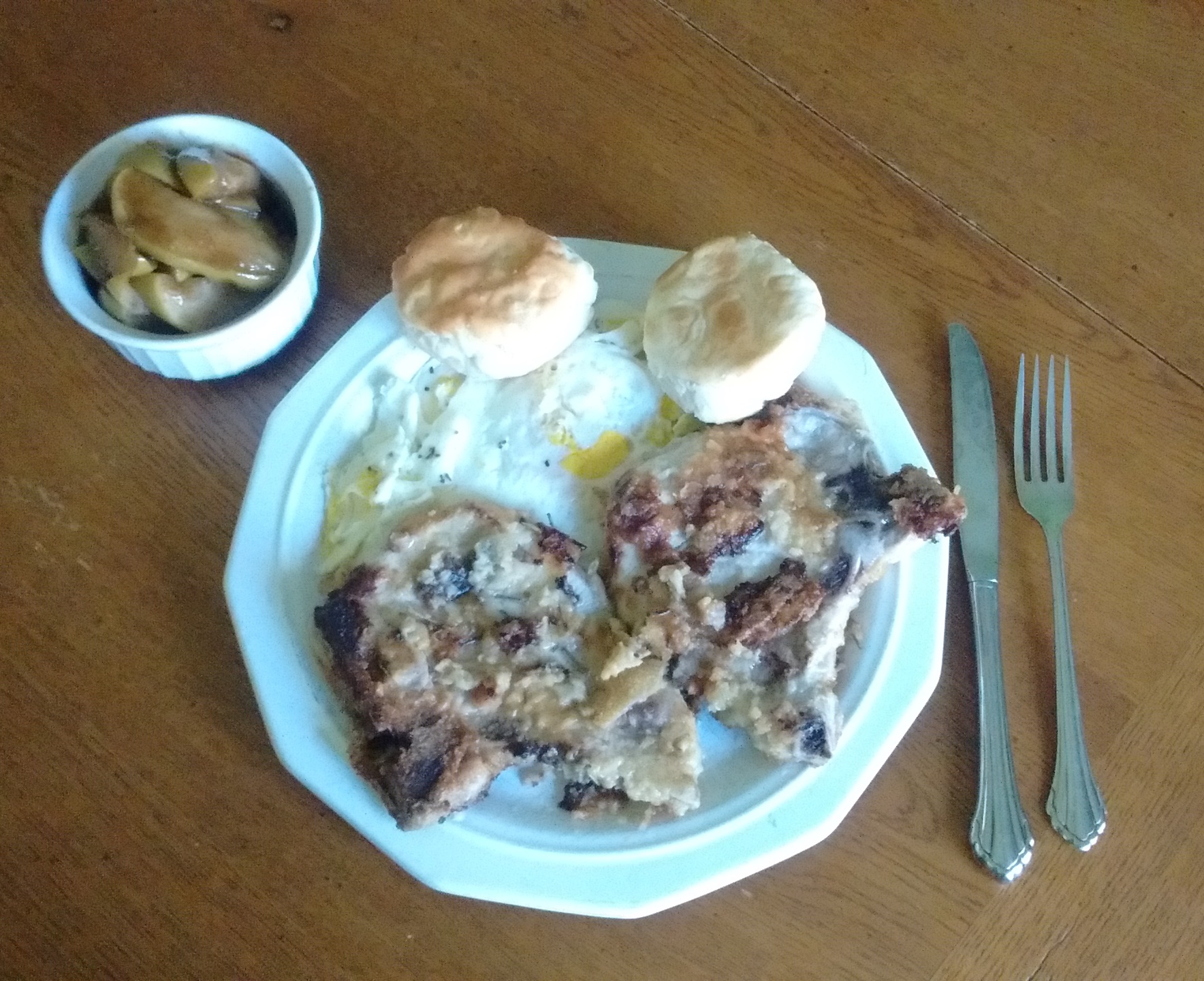
The ever-observant Lucia knew there was more troubling John than new school jitters. She calmed his distress by preparing his favorite dishes including pan-fried pork chops, fried apples, buttermilk biscuits, and fried eggs.  The following recipe for pork chops is the one I had in mind for the above-mentioned scene. The originator of the recipe is the type of cook who doesn’t measure as she creates, preferring to cook by taste, smell, and sight. I watched closely, and being a good judge of quantity, I copy-catted her recipe for this post.

Lucia’s Pan-Fried Pork Chopsputting-your-butterflies-to-bed

2 center cut, bone-in pork chops

2 T olive oil

Approximately 1 c buttermilk

1 t honey

1 T rosemary

½ t salt

Several grinds of black pepper (I used quad-color peppercorns when preparing the chops.)

Rinse the pork chops and pat them dry. Don’t trim the fat as it will flavor the chops while cooking. You can trim them afterward if you desire.

Put 2 T of olive oil in a one-cup measure and fill with buttermilk to make a full cup. Pour into a mixing bowl and add the honey, salt, pepper, and rosemary. Whisk thoroughly.

Pour half the marinade in an 8 x 8 glass baking dish, add the chops, and pour the remaining marinade over the top. Cover with plastic wrap and marinate in the refrigerator at least four hours or overnight.

Coating:

¼ c flour

2 T yellow cornmeal

½ t salt

¼ t garlic powder

¼ t onion powder

¼ – ½ t cumin

¼ freshly cracked black pepper (Again, I used quad-colored peppercorns.)

Combine the dry ingredients. Remove the chops from the marinade and drain them thoroughly. Dredge them through the coating mixture on each side.

2 T unsalted butter

Peanut Oil

Bring the butter and enough peanut oil to cover the bottom of a 12-inch cast iron skillet to a medium-high heat. Place the coated chops in the skillet and fry each side for eight minutes, turning in four-minute intervals, until they are no longer pink inside and the coating is crispy.

Serve with the suggested menu items for which I have provided recipes. This recipe can be increased as needed by doubling or tripling the quantities.

Enjoy!

Wishful Thinking

wishful-thinkingFinally Arthur sat down. With walking stick clenched in his hand and face turned toward the brilliance of morning, he rested on a moss-covered tree stump. A scent like fine tobacco and fresh melon drifted on the breeze, and leaves like discarded candy wrappers swirled at his feet. Beads of moisture dotted his forehead. He removed a handkerchief from his vest pocket and ran it over his face, pushing it up under the brim of his bush hat.

He signed and scanned the open field on the edge of the woods from which he had emerged moments ago. The sound of birdsong greeted him and nothing more. Arthur couldn’t remember how long it had been since he last saw the group, since Sherri the activity director’s nasally voice kept calling to him to hurry up, stay with the group, quit lollygagging. She hustled them along the trail like a herd of ancient elephants.

Arthur’s cheeks swelled with the childish, naughty thought that he had slipped the leash. His lips parted, and his unrestrained mirth escaped, startling the birds to silence. A weathered hand quickly stifled his laughter; he didn’t want to alert Sherri and risk recapture. He didn’t even feel guilty as he imagined her panic when she discovered he was gone.

Outdoor trips were rare, and Arthur planned to enjoy every moment of his freedom. His body, usually stiff with pain, found comfort on the craggy stump. He stretched his legs, licked his lips, and whistled the songs of the birds he’d heard when he first sat down. The sweet symphony further cheered his heart. Being lost pleased him.

But he wasn’t really lost. He was right here, right now, living life to its fullest in the simplest of ways.

“Arthur. Ar-thur! Quit daydreaming, and please find your seat on the bus. Everyone is waiting for you.”

Sherri’s nails-on-a-chalkboard voice cut through his reverie. She stood before the wicker rocker where he sat in front of the door at Bayberry Assisted Living, fists on her hips, tapping her foot. Arthur lurched forward with a grunt and a groan, pushing himself upward from the unsteady chair. He shuffled toward the bus full of residents staring at him with blank eyes from the smeared windows.

Today, today I will find a way to get lost, he told himself.

This Mothering Stuff is Hard

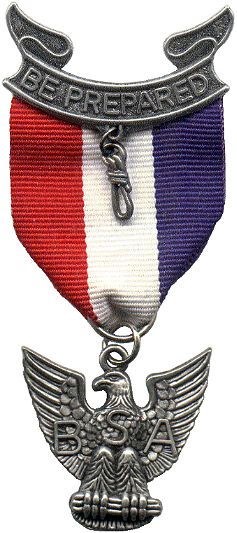
eagle-medalSince our son’s birth, I have enjoyed some amazing milestones with him. There were the obvious ones of first tooth, first step, and first word. The day I put him on a school bus for kindergarten was a thrill. I wasn’t afraid for him at all because my husband and I raised a tough little man. He was the type of kid who would scrape his knees to a bloody mess and worry more about returning to play outside than he was about the sting of hydrogen peroxide on the open wound.

Then there was a day ten years ago when Joshua decided he wanted to join Cub Scouts. He had tried T-ball and tennis, but Tiger Cubs appealed to him more. The first night he joined, throwing his stick of wood into the fire and announcing his name to the Pack, he declared he wanted to be an Eagle Scout. He stayed with Cub Scouts, achieving many more incredible milestones, and finished by earning his Arrow of Light during his second year of Webelos. Next came Boy Scouts.

About his time, Joshua started middle school. Homework, girls, and friendships became a little more difficult. Our sweet little boy turned teen, and a strange new creature emerged. My husband and I thought we were going to lose our minds at times as we dealt with this always hungry, often cranky, and sometimes smelly person. Through it all, Joshua kept plugging away at Boy Scouts, and he did quite well.

Mounds of pictures of Joshua at various Scouting functions piled up, and I always thought I’d have time to scrapbook them. And then one day, the time was gone. Joshua completed all the requirements toward the rank of Eagle and passed his Board of Review. We were ecstatic, the grandparents were over the moon, and even close friends and acquaintances smiled with pride when they heard. I tried to pack ten years’ worth of scrapbooking into a month and a half all the while planning Joshua’s Eagle Scout Court of Honor.

I put my entire life, including my writing, completely on hold because that’s what a good Eagle Scout Mother does. There were times when I wanted to quit making additional sacrifices on top of those I’d already made, but instead, I told myself to quit being a martyr and press on. Well, Joshua’s Court of Honor took place this past Saturday. I’m still receiving compliments for hosting an amazing party, and my dear husband defers any praise to me for the whole event. With a deep sigh of satisfaction, I turned Joshua over to another plateau of maturity. Only the feelings I expected didn’t occur.

Every time I looked at his shirt and merit badge sash bedecked like a four-star general, I tingled all over. That must be the pride, I thought. Only there was a lingering sense of melancholy. I chalked it up to post-party let down and laughed it off with the thought of now what? Occasionally, my eyes would tear up for no explainable reason.

Now don’t misunderstand me: I don’t want to abandon Joshua completely, but I did believe I’d relinquish him somewhat to his future. I’m not so sure that’s how motherhood works. My own mom confirmed this for me when she admitted that she still thinks of me and my brother as her babies, and the addition of spouses and grandchildren only provided more people for her to pray and worry over. In short, motherhood never achieves the status of finished.

What am I going to do when he graduates high school and leaves for college? How am I going to survive his engagement and marriage? What if he and his wife live out of state when my first grandbaby is born? And when he becomes the Prime Minister of Israel, next to the red phone on which he takes important calls relating to the administration of the country, he’d better have a gold phone labeled Mom.

I remember the night I gained the courage to turn off the baby monitor because it was extremely sensitive, and every time Joshua rolled over in his crib, the sound of crinkling sheets woke me up. I thought I’d never lose what my sisters-in-law dubbed my Mommy Ears. Little did I know that the tradeoff would be an increase in the footprint our son left on my Mommy Heart.