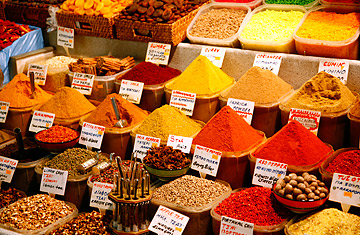
 I developed an interest in Indian cooking after watching the movie The Lunchbox. The main character, Ila, infused her cooking with beautiful, artistic expression in the form of spices. I enjoyed watching her hands move as she seasoned her culinary creations without the benefit of measuring spoons. Her spice box caught my attention and held my interest.
I mentioned this to a former co-worker, Bina, who is Indian. She was surprised that I enjoyed the movie, and we had a lovely discussion on Indian food. She suggested the movie The Hundred Foot Journey which further fueled my desire to learn Indian cooking. Bina invited me and three co-workers to her home for an introduction to the world of Indian cuisine.
One of the first things she explained was masala. I assumed masala was a set combination of spices used in a particular recipe. I had seen garam masala and madras masala in markets selling exotic foods. However, like curry, masala changes depending on the country and regions within said country. Bina didn’t own anything among her spices bottled and labeled masala. What she had were individual spices that she knew how to blend perfectly without measuring to create the flavor the recipe required.
Still, I didn’t quite understand masala, but I kept Bina’s comments and instructions in mind, specifically when she said she has a dessert masala, a chicken masala, and a vegetable masala. I Googled a few Indian recipes and tried them. They were good, and many of the spices Bina owns and uses were featured, but something was missing. My desire to cook Indian food was stifled by a concept I wasn’t grasping. I took a break from pursuing it and kept making recipes with which I am familiar.
One day I decided to make chili for dinner. When it came time to season the chili, jars were opened and contents sprinkled over the simmering pot until the quantity on the surface looked right and I stirred them in. A little tasting, a few more dashes of this or that, and I allowed the chili to simmer for a while. I always taste again before it’s completely cooked just to see if the flavors are balanced and add anything as needed. That’s when it hit me: the combination of spices I used was my chili masala which I return to every time I make it. I know how chili should taste to me, but I’m sure if I visited Texas or other chili-making regions of America, I’d experience other spice combinations.
I laughed to myself as my favorite seasoning combination for chicken came to mind. Then I realized I had been on the cusp of understanding the beautiful concept of masala several years ago when I attempted to swap ground ginger for fresh. The ground variety tastes savory and what I describe as classically American. Think Thanksgiving. But the recipe I was making needed the lemony zestiness of fresh ginger, that classically Asian flavor, because I was cooking a Chinese dish. Herbs de Provence is another example of a spice combination that will reflect the nuances of the person cooking with it. Just like masala, there are some spices that will always appear in the mix, but people love to alter it based on their preferences or just to add a dash of mystery.
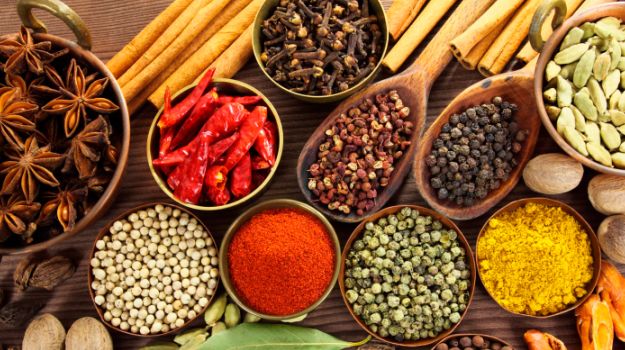 What I learned about masala, about seasoning food in general, is why I like being an American. Where else can you experience a merging of cultures that bring amazing culinary skills from their own countries so that everyone can enjoy them in one place? The great American melting pot starts in our kitchens and ends with the united flavors of America. I have returned to Indian cooking, and while I use the spices to which Bina introduced me, I suspect that my masala may not taste exactly like what she would expect. But that’s okay.



 hl gibson, author