Baring My Writer’s Soul – Part 14

Writer's Soul 14I’ve been thinking quite a lot about my writing, and I don’t mean in quantity. Rather, I’ve been thinking a lot of different things about what my writing is or isn’t.

It started last year around November when my novel was technically finished. There were a few minor points that needed to be re-researched (is that even a word), and I had a wonderful research librarian who I met at the Conneaut D-day Reenactment assisting me. The whole process was starting to bog me down. I began to hate it, resent it, and wanted to dig a deep hole in my back yard in which I could bury my book without any witnesses.

The holidays were coming, and since much of the preparation for Thanksgiving, Hanukkah, and Christmas fell to me, I really didn’t have anything left to give my writing. I didn’t want my writing to suffer, but I felt so guilty about setting it aside. After all, what kind of writer would I be if I wasn’t writing every single day? Good question.

While wrestling with this dilemma and wanting to be able to focus on all the fun that comes with the holidays, I ran into our pastor’s wife at the local grocery store. After the usual pleasantries, she asked after my novel. I told her what I’ve already mentioned above and concluded that I wish someone would give me the permission to quit for a little while. If I could just take a break, I knew I would go back to writing in January once I was refreshed.

She looked at me and said, “Heather, I give you permission to quit.”

Even now I laugh at how easy it was for someone else to grant me the grace I needed to give myself but was unable to. And guess what? I did go back to the writing and research in January as I promised myself I would. In fact, I attacked it with renewed vigor and produced better writing than I would have had I pressed myself to go on through November and December. What’s more, I enjoyed it!

So what’s the point of this blog post you may ask? It still scares me somewhat that I took off two months of much needed rest time. There are so many writing books, and I imagine books devoted to other forms of art, that will tell you to create every day without fail. Are these people right in tasking others in this way?

Yes and no. If I said it once, I’ve said it a thousand times. You have to find out what works for you. Thankfully, the day I returned to writing coincided with Chapter 11 of Heather Seller’s book, Page After Page. The writing exercises in this chapter were wonderful for getting me back on my rails. You’ll understand this better when you read the book which I highly recommend you do.

The funny thing was, while Chapter 11 worked for me, I recalled that before the holidays, Chapter 10 flipped me out. This is the beauty of the book. The next time I read it, Chapter 10 may be exactly what my writing needs. All this to say, don’t be afraid to embrace the bad (insert chosen art form here) because you may uncover a gem on the way to the good (insert chosen art form here).

In doing so, your creativity will flow and your art will come naturally. There are going to be different amounts of flow, and that’s to be expected. Don’t despair over these days even if they extend into weeks, months, or years. Begin again in small ways, flex your creative muscles, and build up to your peak performance like an athlete training for the Olympics. You will achieve gold.

Write Happy!

Dream Cooking

Dream CookingThe weather in Northeast Ohio has been bitterly cold lately. We’re paying for the month of December when we ran around in shirtsleeves and windbreakers. Personally, I’d rather spread out the bad weather instead of having it dumped on us all at once.

The cold puts everyone in the mood for soup, stew, or chili. Recently, my husband’s family all met at his parent’s house where everyone enjoyed a delicious ground sirloin and root vegetable stew. I took two loaves of bread which we cut into huge chunks for sopping up broth. The evening was a perfect blend of good food, great conversation, laughter, and reminiscing.

Today I’m making a pot of chili to combat the falling temperatures. Every family has their own recipe, or rather non-recipe, of ingredients combined without measuring until the chili tastes the way it’s supposed to. As I chop the onion and green pepper, press the garlic, I think about my Swedish photographer friend who I met on Twitter.

I came late to social media because it served no purpose in my life. If social media couldn’t allow me to hear my friends’ laughter, dry their tears, feel the warmth of their hugs, share a glass of wine or cup of tea, or lend a shoulder, then it held no value. Why would I even consider it when I’m the person who complained that e-mail doesn’t allow for the tone of voice to come through and it leads to too many misconstrued statements and hurt feelings? I’m still extremely cautious about what I type in posts, e-mails, tweets, etc.

Then one day I had to take the plunge into Facebook, Twitter, and a blog for the sake of my author platform. I’ll cut to the chase and admit that’s it’s proven to be successful and quite fun. Also quite addictive, so remember why you signed up in the first place. Don’t ignore the work, writing in my case.

But the most important part of my social media experience has been the connections I’ve made with people I’ve never met, only seen in the little photos they use as their profile icons, and never heard speak. They’ve become real friends, and it’s them I’m thinking about today as I cook.

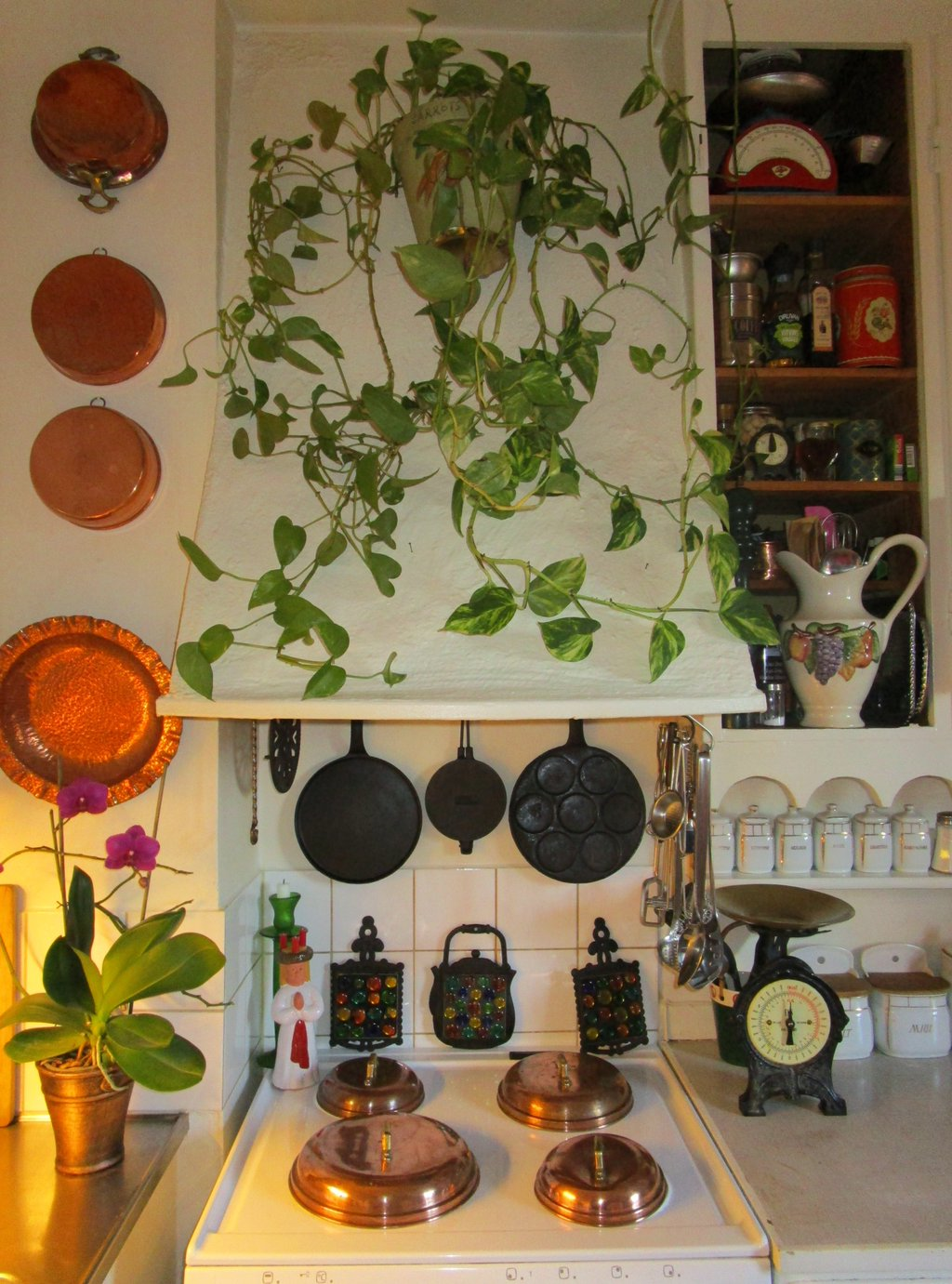
I wrote a post about apple pie not too long ago, and the friend I mentioned above commented that it’s a favorite in Sweden as well. She tweeted a picture of her beautiful kitchen, and I instantly fell in love with it. I replied that someday, we would cook together in her kitchen. She agreed…someday.

Ever since that tweeted conversation, I have dreamt about the two of us baking together. We would probably start with apple pie, while laughing and chatting at her kitchen table, hands warming around mugs of tea. We’ll take turns peeking in the oven, mouths watering, as we anticipate the rich dessert.

My imagination doesn’t end there for I’ve made other wonderful friends online. My handsome photographer friend from India breezes in without knocking because all are welcome here. He arrives from whatever exotic location he was photographing. A touch of mystery swirls in on the chill breezes, and we laugh and scold him to shut the door. After much foot stomping to knock snow off his boots, he sits at the table with his own mug of tea. No apple pie yet; it’s cooling on the counter.

Right behind him, my American poet friend knocks politely before poking his head in and calling hello. His online presence is so kind, so thoughtful, that I imagine him as soft spoken, warm, and gentle: a perfect blend of Robert Frost and a favorite uncle. His photography includes familiar pictures from daily life. That, too, is comforting. He joins us at the table, eyeing up the cooling pie.

Three more photographer friends arriving from India, America, and Finland join us as if they lived right around the corner. There’s enough room around the table that’s magically big enough to accommodate all of us. Many hands participate in the preparation of a pot of something savory now simmering on the stove. Fresh bread is baking. The men demand dessert; the ladies smile and say not until after dinner.

Then my writing friends drop in. I’ve invited them to meet the photographers. The first is a lion-hearted writer with a terrific smile. Then my comic-loving writer friend and my successfully self-published writing friend from England join the United Nation of Artists gathered at the table. Just as the table is being set for dinner, my part-scientist/part-writer friends hustles in. He laughs and says the weather is either cold with too much snow to shovel or hot with too much grass in need of cutting.

Chairs are added to the table, writers squeeze in between photographers, dinner is served. Conversation is replaced with murmurs of satisfaction. The stew is delicious. Suddenly, the door bangs open announcing one more writing friend to add to the mix. She apologizes as she wriggles out of her coat, tosses her snow-crusted gloves on the warm stove, brushes her long brown hair over her shoulders, and finds an empty spot at the table meant just for her. The t-shirt she wears catches every eye; it’s printed with the naked torso of a man staring just below the chin and ending just below his navel. Grins of appreciation for the intriguing shirt leave no doubt in which genre she prefers to write.

After dinner, as friends turned family push back from the table claiming they have no more room for another bite, dessert is served. Coffee and tea are refreshed. A pie that normally would have served eight at the most transforms into miraculous bounty. There is enough for everyone to have seconds. It is around midnight, and everyone’s spirits are still high. All heads turn at the sound of the door opening one more time.

The last friend to join our impromptu party has been out walking, planning paintings, sussing life’s situations, and enjoying his retirement. His wandering has brought him home, so to speak. Everyone presses him into a chair, places stew, bread, and pie in front of him, and asks after his wellbeing.

I sit back and listen contentedly as writers, photographers, and painters blend perfectly. Art talk abounds. Mugs of warm beverages have given way to glasses of wine. We’ve already started planning our next meal together.

Slowly, each friend fades from view, disappearing in the steam rising from the pot of chili I am stirring. But I can still sense them with me. I say still even though I haven’t met them yet. Someday. Someday it will all start with an apple pie baked in a beautiful kitchen in Sweden.

~~~~~

Thank you to my wonderful friend, Rosita Larsson, for the picture of her beautiful kitchen which inspired this post.

Woman in Gold – Movie Review

I’m not a fan of Ryan Reynolds especially after watching the disaster that was The Green Lantern and some piece of tripe he starred in with Jason Bateman. In fact, I don’t care for his acting at all, and I’m being generous when I call it acting. Helen Mirren, on the other hand, is brilliant, fabulous, and classy even if the movie she stars in is horrible and disintegrates around her.

When I saw that Ryan Reynolds had been graciously cast opposite Helen Mirren in the movie Woman in Gold, I cringed wondering if even she could carry the dead weight of Reynold’s flat acting and bleating voice. I was pleasantly surprised to discover that she didn’t have to.

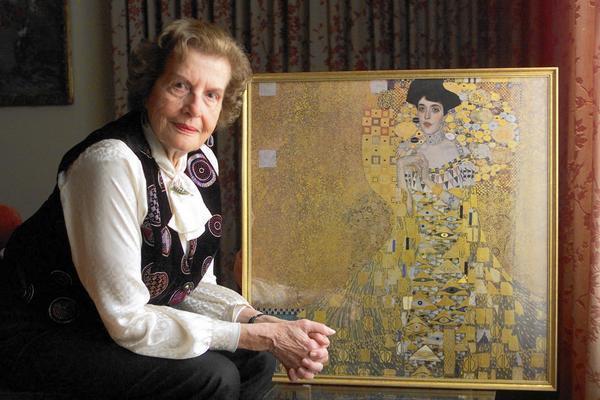
Woman in GoldWoman in Gold tells the story of Maria Altmann, a young Jewish woman who fled Austria with her husband during World War II. Sixty years after her forced exile, Maria seeks the help of Attorney Randy Schoenberg to reclaim the famous Gustav Klimt painting of her aunt, Adele Bloch-Bauer. Maria and Randy take the battle all the way to the US Supreme Court with a slowly building intensity that often left me clenching my teeth as I awaited the outcome of each painful step. I won’t spoil the ending, but rather, I’ll say this is one movie that should not be missed.

What I will focus on is the impression the movie left upon me. It is hard to imagine a regime so evil that it would perfect the practice of hatred to the level that the Nazis did. And yet, one can hardly turn on the news or surf the Internet without seeing this same type of barbarism taking place today all over the world. God forgive us that we are allowing it to happen again.

Equally chilling is the arrogance and indifference with which these acts of terror are met. Of course, it is absolutely criminal that personal property is stolen, but more important are the lives that are being destroyed. As Helen Mirren portraying Maria Altmann said regarding the restitution of the stolen art, it will not bring them back. Still, it is a small step toward acknowledging and righting the wrongs committed.

Then the problem becomes how do we stop the crimes that are occurring now as we make restitution for the past while preventing the evil from raising its ugly head in our future? I believe the answer lies within each person on a daily basis. What will you chose to do today? Acts of good or deeds of evil?

Woman in Gold 2

A Fresh Perspective

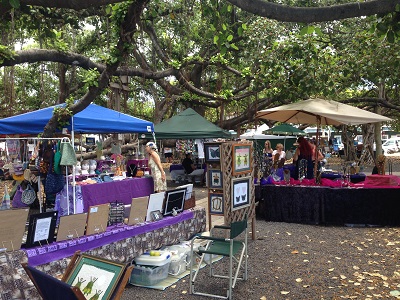
banyan-tree-shoppingI started the following short story several months ago, and while I had an idea of how I wanted the tale to begin, I honestly wasn’t sure how it should end.  So I let it sit, worked on other writing projects, and forgot about it.  I came across this piece five days ago and still didn’t know how things were going to turn out for my protagonist, but I felt more inclined to take the journey with her.  I’m pleased with the outcome, and I hope you will be, too.  Enjoy!

A Fresh Perspective

Seeing Is Believing

If beauty is in the eye of the beholder, then allow me to share with you what this beholder has been eyeing up lately. My appreciation for art in all its many forms wasn’t developed by education or by listening to the critics but rather by finding what I liked and seeking out more of the same. I’ve applied this to the books I read, the way I write, paintings and photography I view, the music I listen to, and the food I eat. Today, let’s focus on visual art.

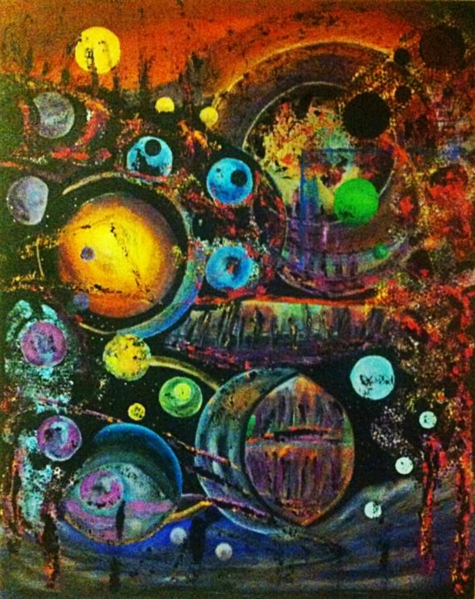
Michael Ferguson is an abstract artist whose work I found in my Twitter feed. I must have been following someone who retweeted Michael’s art, because the icon he uses for his profile, his own piece titled Essence, immediately caught my eye.

Through our conversations, I’ve learned that many things besides a paintbrush can be used for applying paint to an artist’s chosen surface. Cereal boxes remain among my favorite tools that Michael has used in his creative process. Like many things in life to which I never limit myself to one favorite, I really couldn’t say which of Michael’s pieces I like best. For the sake of space, I’m going to feature Shapes – World simply because my eye landed on this vibrant, colorful piece first. My initial thought upon seeing it was that it looked like a painted dreamscape.

1-michael-ferguson-1426877054-medium

Shapes-World by Michael Ferguson

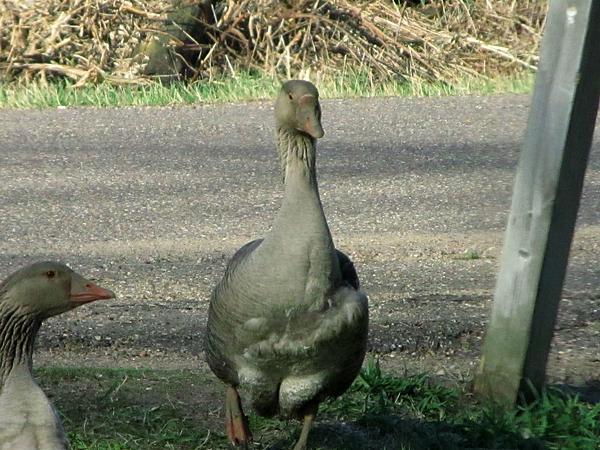
I also met photographer, Robert Nacke, on Twitter. Robert’s work resonates with me because he has a unique ability to capture familiar images and present them in a simple yet elegant way. I’ve seen many of his chosen subjects in my everyday life, but don’t think for one minute that this makes them commonplace.

The plump goose crossing the road or the doe with her spotted fawns are brought closer with a fine eye for detail and elevated to the level of art. You can’t help but feel as if what matters and/or what is special in life are important to Robert, too.

CGQH9OdVIAABFlK

Traveling Song by Robert Nacke

But my association with artists on Twitter didn’t end there. Photographer Rosita Larsson caught my heart with her picture of bleeding hearts, my favorite childhood flower. When I think of Rosita’s work, warmth and freshness always come to mind. I thought her florals were my favorites until I had the pleasure of viewing her forest scenes, nature abstracts, buildings, and landscapes, and I realized that I loved everything she shoots.

She manages to imbue every picture with such clarity that you want to reach out and touch the scene just to feel the velvety dampness of the petal or the heat radiating from a sundrenched stone wall. Rosita’s art breathes life and lifts your spirits all at once.

CFY2U6uVIAAFBsB

Bleeding Heart Up Close by Rosita Larsson

What I love about the work of photographer Irfan Dar is how he fluctuates between wide open pictures with simple objects just catching your eye to close up pictures of intense focus. Whether it’s crisp detail or softened edges, black and white or color, Irfan’s work always has a touch of the exotic in it.

I sense motion in Irfan’s pictures even if it’s just the mist moving subtly across a dense forest or grains of sand shifting beneath a camel’s feet. His photographs will make you want to travel to the places he has been and see the things he has seen.

Solitary by Irfan Dar

Solitary by Irfan Dar

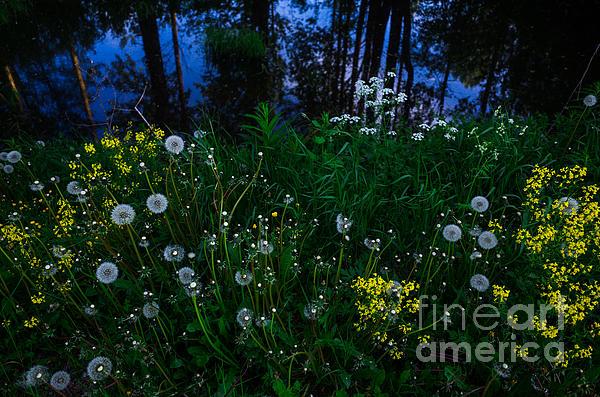
Ismo Raisanen photographs astound me with the depth of color he captures. It’s as if nature gives the very best show when he’s taking pictures. Even snowy winter scenes are brought to life with a range of shades I wouldn’t usually have associated with the season.

The other quality I like about his pictures is how he uses natural lighting to enhance the colors of the landscapes he photographs. Of course sunny scenes depict light in a most spectacular way, but you won’t be disappointed with his shady scenes that provide a great sensory experience to all who view them.

Midsummer Night's Magic

Midsummer Night’s Magic by Ismo Raisanen

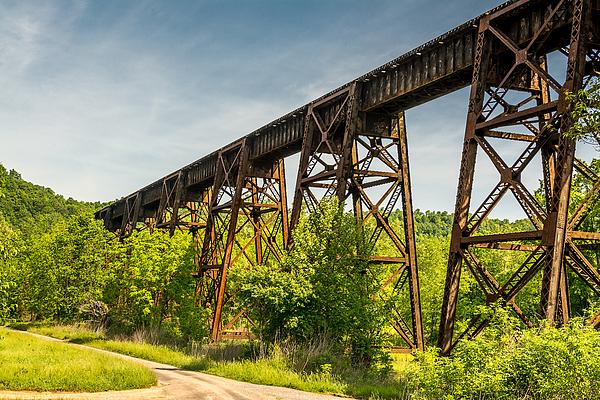
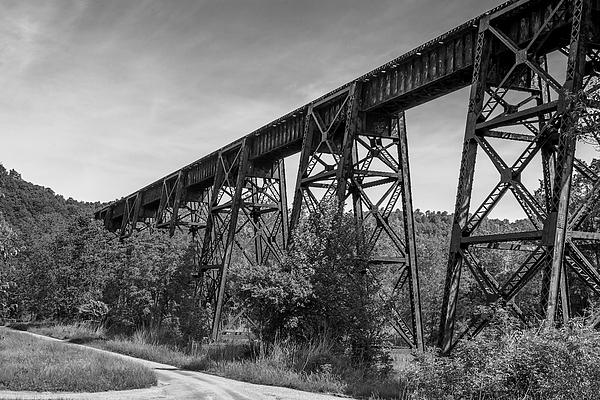
I was first drawn to Derrick Scofield’s photographs when he tweeted the South Fork Trestle in color and black and white. Both pictures were equally beautiful in their own way, almost as if he had taken pictures of two completely different bridges.

Derrick presents a wide range of subject matter for his photographs, and this variety lends even more appeal to his artwork. One might be tempted to think he snapped a series of random shots, but closer inspection will reveal that this is the work of a talented photographer because no one person is that lucky. Each scene appears exactly how it should have been photographed, capturing the moment perfectly, lending an emotional quality to the picture.

South Fork Trestle

South Fork Trestle by Derrick Scofield

South Fork Trestle 2 by Derrick Scofield

South Fork Trestle 2 by Derrick Scofield

I hope you enjoyed this visual tour of some of the finest artists on social media today who I have the pleasure of calling my friends.

Encouragement vs. Insult

I believe one of the cruelest insults a person can level at someone is to refer to that person as an amateur. At one time, we were all new to whatever it was we were pursuing.

Before the advent of social media, where everything a person does is on display from day one, some people had the opportunity to hone their craft to perfection without being in the constant spotlight, thus looking professional and well established when they joined social media. Stop and think for a minute: This is only how it appears.

GiveBack_webWe may never see every person’s humble beginnings, but rest assured every person has one. Instead of resorting to insults, privately distributed constructive criticism is what the situation calls for. If you, the commenter, don’t believe you can do this, simply refrain.

I’m not suggesting we become a world of wimps who shrivel at every negative comment. Just remember to be tactful and professional with your advice. It is possible to build people up even as you’re pointing out what they did wrong.

Share both your positive and negative experiences, offer your resources, give as well as take, and let the new person stand on your shoulders until they are strong enough to stand on their own two feet. It’s amazing how great you’ll feel when you do.

This advice also applies when helping someone who has been at a particular craft for a while and may still need instruction.  Again, encourage them and watch your fellow artist thrive under your beneficial tutelage rather than recoil from your scathing remark.

I offer the example set by James Michael Kahle, master glassblower, as the standard for how one should give back to those who are new to any form of art. Whether it is glassblowing, photography, writing, or painting, Mr. Kahle’s attitude toward approaching art and teaching others is inspiring. In fact, many of the lessons he applies to his art can be applied to life in general.

Some of Mr. Kahle’s views featured in the PBS documentary about his glassblowing, Turning Fire Into Ice, include his commitment to his art, his persistence when accepting challenges, listening to your art versus popular opinion, not dwelling on a setback, and, the most impressive, giving back and/or instructing future generations for free.

The world would be a considerably better place if we all adopted Mr. Kahle’s belief that if you don’t give back then you don’t have the right to take and what would the future be if we don’t give back now?

Description-A Writer’s Friend or Foe?

dearada_typepad_com_dear_ada_images_2008_01_15_experience_261_artFellow author Mark Tilbury tossed out a question that is often on my mind as a reader and writer. In his post, Have Books Lost Something With Their Lack of Description, Mark asks us our opinion on today’s style of writing.

We’ve all encountered the “massive blocks of descriptive prose” to which Mark refers. Sometimes they truly are too long, too irrelevant to the story, too purple, etc., etc. I have skimmed such passages in search of the storyline and/or dialog that would put me back in the story.

However, because we’re all friends and adults here, I’m going to say that I disagree with the notion that description is informative but unnecessary. I hear all the time that the reader shouldn’t be led around by the nose; he/she should be given the opportunity to imagine the story. As an avid reader, I can honestly say that I have never felt this way about descriptive writing. On the contrary, my imagination was enhanced and grew because of the description I read including that written about journeys and the passage of time.

The key is that writers need to learn the perfect balance between too much and enough, the fine line between well-written, well-placed prose versus that which is encumbering, unnecessary. This seems like a daunting task, but I believe it can be achieved by not reducing writing to a formulaic method. In doing so, authors will elevate writing back to the level of artistic recognition it deserves.

85806_Ashford_1_122_526lo_122_526loI have never read Stephen King’s book, On Writing, but I would have to agree that abundant description about a character’s acne would be tedious. If that acne-plagued character traveled by canal boat from Pennsylvania to Ohio, then I would love the benefit of description. I would look forward to a word picture painted by the author that draws me in to the sounds, smells, and sights of the trip. It would be a perfect place to introduce traveling companions, a time for the protagonist to reflect, an opportunity to build the tension that so deliciously moves the story forward.

Even if none of the above-mentioned suggestions occur, as a reader I would still enjoy the mental images of traveling with the character, and I believe an important part of the writing would be lost if these well-written descriptions didn’t occur. As Mark mentioned in his post, they are an art form unto themselves. Like all art, value thereof still resides in the eye of the beholder, or in this case, the reader. Well-written description can exist purely for the sake of entertainment.

I have to wonder if writing hasn’t gone the way of food preparation in that we no longer know how to linger over a book in the same way that we forego multiple course meals and choose to patronize fast-food restaurants. I read because I enjoy the slower pace, and while there is a place in my fa9bbdedb5103e7f31a0893eff84ed56reading diet for the occasional literary Big Mac, more often than not, I opt for the balanced meal of description, dialog, prose, and narrative.

Now I don’t want to start a fight with screenwriters because I truly do appreciate their craft. However, using what worked in an action-packed movie and applying it to writing has resulted in fast-paced novels written with the singular hope of being turned into a movie. This has diminished writing for some of us. This influence has led to the removal of poetry and painting (mental images) from writing resulting in flat, hollows stories. Let movies be movies, appreciate them for all that they are; and let books be books, treasures not to be rushed through.

The Ever-Evolving Art of Writing

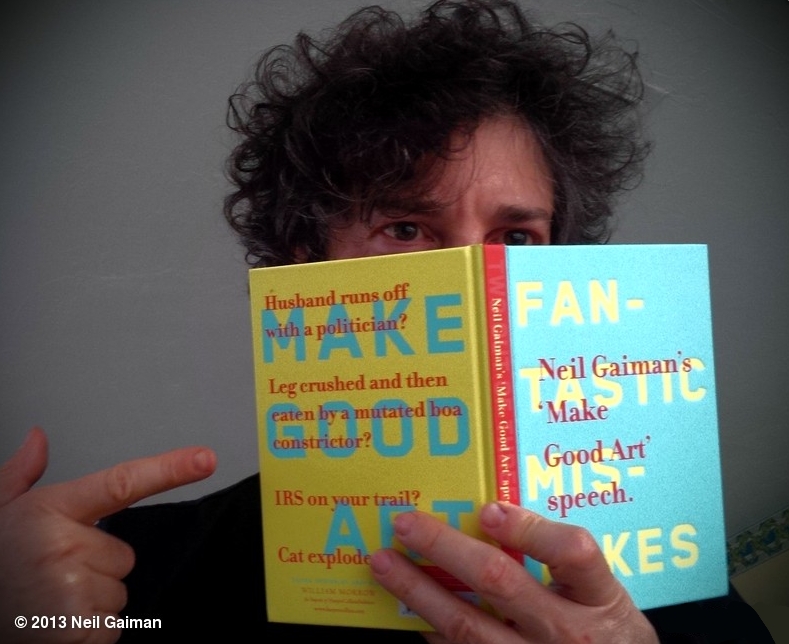
I remember the moment I understood that my writing is art. It came after watching a YouTube video of Neil Gaiman give a speech to a graduating class. Prior to that, I believed art was created by masters who worked a lifetime producing museum quality pieces. What a thrill to know that I am creating art.

makegoodart_gaimanBut my discoveries didn’t stop there. As I set out to, per Neil’s advice, make good art, I found that what I wrote kept changing. Fortunately, it changed for the better. I learned some things that I’ll definitely employ and other things that I’m sure will not work for me. One thing I came across, and have blogged about before, is pantsing versus outlining.

Let me clarify: I hate labels. Once you label something, you’re obligated to define it. After you define it, you must maintain it. This leads to the messy business of judging someone who doesn’t agree with your label. That causes more labeling of those who aren’t like you.

What I’m saying is, while I still adhere closer to the pantser end of the spectrum, by the end of my novel, I discovered I’m somewhat of an outliner, too. Go ahead and create a label for that, if you dare.

My outlines probably don’t conform to what one might find in a writing workbook or to those created by other authors. However, I have my color-coded, multi-tabbed spreadsheet of information created so that I don’t to forget all the wonderful ideas that flooded my head when I first decided to write a novel. Unlike traditional outliners, my ideas aren’t all solidified prior to the beginning of my writing; I like to surprise myself, leave a little wiggle room, add some things and remove others.

So, maybe I’ve been producing something a little closer to an outline than I originally thought? I can think of two outliners who are probably happy-dancing right now.

I will never judge anyone for the way in which they choose to create their work of art. That would be like criticizing someone for being a hands-on learner while you’re a book learner. In return, I’ll ask the same of everyone else toward me. At the end of the day, we’re all artists.

Today, I’m stocking my Writing Toolbox with a piece from NY Book Editors called Planning to Outline You Novel? Don’t. This one tips the scales toward pantsing. Whatever style you choose to create your novel, just remember that it has to meets your needs.