Beta Reading in the Realm

Hello, Realmers! Today at Realm Central we’re going to discuss one of the most important steps toward the production of my novel, Realm. Beta reading.

A couple years ago, a friend and I shared the opinion that writing group critiques would be more beneficial if the person critiquing had knowledge of the storyline from start to finish. That sounded like a tall order, especially if the work in progress (hereafter WIP) was a novel, but the idea made sense.

Many times, we had experienced the request for/suggestion of more backstory, dialog, character development, and character arcs from someone in the writing group. These were all valid requests and suggestions, but they were made based on the assumption that none of this existed within the story.

Please don’t hear me say that critiques supplied in writing groups are of no value. That is not the case at all. However, when a writer’s only option is to present 1500 words to one chapter (a generous quantity of writing) because of time constraints, many of the critiques supplied and questions asked could have been satisfied if the reviewer only remembered that he/she was being shown a mere sliver of the WIP and that many of his/her questions were probably already addressed.

Another issue contributing to this dilemma was the fact that the reviewer probably didn’t see the initial pages of the WIP, or he/she would have had foundational knowledge prior to critiquing. Also, when you consider the inconsistency with which members attend a writing group and that they often have no control over which WIPs they’ll review, well, you see how ineffective this process can be.

I’ve witnessed too many writers waste his/her allotted review time explaining all this away. There is, however, a major benefit to attending writing groups, and I’d like to point that out now. Make—great—connections.

If you’re going to succeed as a writer, you need people you can lean on during the entire process, and some of the most important ones will be your beta readers. Beta readers may start as your friends, but eventually, they’re going to need to be more. You need to find people who can be objective and strong, people you can trust and with whom you’ve established a solid relationship. Equally important is the fact that you must be this type of beta reader in return.

May I suggest that you make a connection and enter an agreement with one person who will become your primary beta reader. For me, this is the person mentioned at the beginning of the post. We made the commitment to read each other’s work from beginning to end thus eliminating many of the usual requests and suggestions.

The perspective we brought to each other’s WIP was enhanced by the fact that we read and wrote in different genres with different expectations for both as well as by life experiences in general. This immediately drove our critiques to the heart of our respective WIPs, eliminating all the writing small talk and allowing us to focus on any major concerns that needed to be addressed.

Side Note: Remember that trading whole manuscripts for beta reading requires both partners to have similar availability; to agree upon how long you’ll take to read and critique; to decide when, where, and how often you’ll meet; and to decide what type of critique is expected.

Then I sent Realm thought a round of secondary beta readers. I started with my non-reading reader, who prefers non-fiction when he does read. I knew that if I could snag and hold his attention, I had written something worthwhile. Because he read for different reasons, his unique perspective caught many details that were crucial to producing a great novel.

Next was a couple I knew would view Realm through a unique perception based on their own pursuits, and that was exactly what I needed. They recognized the overarching themes within Realm, proof that my storyline was intact, as well as found the small mistakes that required fixing.

Lastly, and this is where some people may disagree with me, I let my mother read Realm. Yes, Mom loves everything I write . . . until she doesn’t, and then she’s brutally honest. I can’t say how allowing your family members to read your WIP will go, but I know that if my mother doesn’t like it, understand it, or agree with what I’ve written, she’ll make me hash it out with her until I convince her the writing needs to be present and help her understand why. We don’t always part in agreement, but my editing is better because of the interaction.

This was my process for taking Realm from the roughest of rough drafts to a manuscript with which I was comfortable handing off to my editor. I sincerely hope these same people, especially my primary beta reader, will be available for my next novel. I also hope I’ll make many more connections for any future WIPs because the ultimate goal isn’t only to have my manuscripts edited. It’s to make lasting relationships.

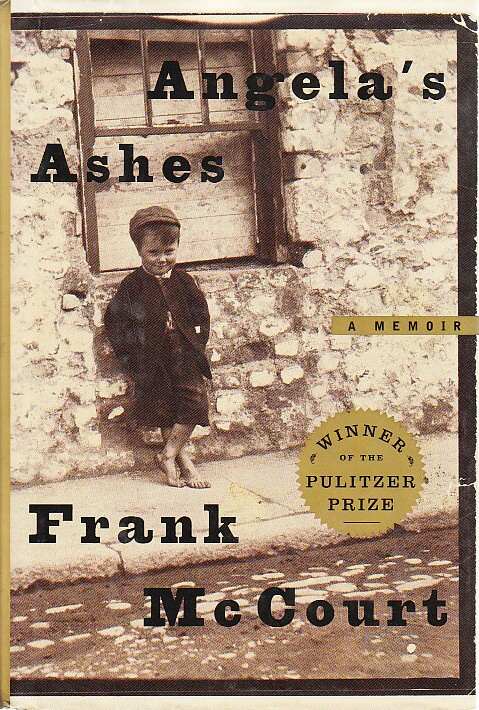
Angela’s Ashes by Frank McCourt

I recently read Angela’s Ashes by Frank McCourt.  If you follow me on Goodreads and you’ve read the book, you might think I’m rather rigid in my assessment of the memoir.  I’ve read other fiction and non-fiction accounts of the Great Depression in America as well as extremely poor people in Ireland, Appalachia, and other such places, and I must say that for a Pulitzer Prize winning memoir, Angela’s Ashes did not strike me as exceptional in any way.

I’m not sure why the book is titled as it is when the story is predominantly about McCourt’s experiences as a child.  His parents’ courtship and marriage prior to his arrival was necessary to set the stage for what the entire family would endure due to his father’s alcoholism and eventual abandonment, but again, the bulk of what one reads focuses on young Frank.

The prose is pleasant (riddled with Irish slang, sayings, and swear words galore), but nothing poetic or beautifully descriptive.  Sometimes dialog is properly placed between quotes and employs commas, periods, or question marks where necessary, and other times it’s buried in long paragraphs of run-on sentences.

One saving grace from all the depressing tales McCourt relays is the hilarity of the situations he’s writing about.  The thing is, the humor is derived from circumstances that are simultaneously horrific.  Yet the reader has to laugh because the truth is almost unbelievable.  Sadly, some of these dreadful circumstances include the way adults in the story treat McCourt, his siblings, and friends.

It’s unacceptable when adults express the depth of frustration, prejudice, and ignorance-born hatred toward each other that McCourt conveys, but children should never have to suffer at this level.  Educators, employers, priests, nuns, relatives, and hospital administration inflict verbal and physical damage on par with child abuse.  It’s a wonder any child living in these conditions turned out normal.

Near the end of the book, Angela McCourt finally takes the self-sacrificing initiative to do something for her children’s welfare.  Prior to that she tolerates her alcoholic husband’s actions to the extreme detriment of her family by keeping her abuser front and center in her life.  Perhaps it was the era in which the story takes place, perhaps it’s that divorce still carried the stigma of shame back then, perhaps it’s that Angela suffered from some type of battered-woman syndrome (hers being in the form of neglect beyond all reason), but because she refused to rid their lives of her worthless husband’s presence, they underwent shame to an equal degree anyhow.

There comes a point in the book when, in my opinion, McCourt rushes through years thirteen to nineteen because to tell it in any more detail would read as more of the same depressing ground already covered over and over and over.  Things turn around for young Frank ever so slightly; he hops a boat to America, end of story.

I’d like to say that Angela’s Ashes is one of those books that just shouldn’t be missed, but I can’t.  I’m not sorry I read it, but if asked whether or not it is a worthy read, I’ll probably shrug my shoulders, suggest the reader try it, and make up his or her own mind.

Description-A Writer’s Friend or Foe?

dearada_typepad_com_dear_ada_images_2008_01_15_experience_261_artFellow author Mark Tilbury tossed out a question that is often on my mind as a reader and writer. In his post, Have Books Lost Something With Their Lack of Description, Mark asks us our opinion on today’s style of writing.

We’ve all encountered the “massive blocks of descriptive prose” to which Mark refers. Sometimes they truly are too long, too irrelevant to the story, too purple, etc., etc. I have skimmed such passages in search of the storyline and/or dialog that would put me back in the story.

However, because we’re all friends and adults here, I’m going to say that I disagree with the notion that description is informative but unnecessary. I hear all the time that the reader shouldn’t be led around by the nose; he/she should be given the opportunity to imagine the story. As an avid reader, I can honestly say that I have never felt this way about descriptive writing. On the contrary, my imagination was enhanced and grew because of the description I read including that written about journeys and the passage of time.

The key is that writers need to learn the perfect balance between too much and enough, the fine line between well-written, well-placed prose versus that which is encumbering, unnecessary. This seems like a daunting task, but I believe it can be achieved by not reducing writing to a formulaic method. In doing so, authors will elevate writing back to the level of artistic recognition it deserves.

85806_Ashford_1_122_526lo_122_526loI have never read Stephen King’s book, On Writing, but I would have to agree that abundant description about a character’s acne would be tedious. If that acne-plagued character traveled by canal boat from Pennsylvania to Ohio, then I would love the benefit of description. I would look forward to a word picture painted by the author that draws me in to the sounds, smells, and sights of the trip. It would be a perfect place to introduce traveling companions, a time for the protagonist to reflect, an opportunity to build the tension that so deliciously moves the story forward.

Even if none of the above-mentioned suggestions occur, as a reader I would still enjoy the mental images of traveling with the character, and I believe an important part of the writing would be lost if these well-written descriptions didn’t occur. As Mark mentioned in his post, they are an art form unto themselves. Like all art, value thereof still resides in the eye of the beholder, or in this case, the reader. Well-written description can exist purely for the sake of entertainment.

I have to wonder if writing hasn’t gone the way of food preparation in that we no longer know how to linger over a book in the same way that we forego multiple course meals and choose to patronize fast-food restaurants. I read because I enjoy the slower pace, and while there is a place in my fa9bbdedb5103e7f31a0893eff84ed56reading diet for the occasional literary Big Mac, more often than not, I opt for the balanced meal of description, dialog, prose, and narrative.

Now I don’t want to start a fight with screenwriters because I truly do appreciate their craft. However, using what worked in an action-packed movie and applying it to writing has resulted in fast-paced novels written with the singular hope of being turned into a movie. This has diminished writing for some of us. This influence has led to the removal of poetry and painting (mental images) from writing resulting in flat, hollows stories. Let movies be movies, appreciate them for all that they are; and let books be books, treasures not to be rushed through.