Why WVU & Other Universities Need Creative Writing Programs

Please enjoy this guest post from Kori Frazier Morgan of Inklings Creative Strategies.

I had planned this week to talk about how to revise your writing through the lens of your reader. But sometimes, there are things that are more important than writing advice.

This is one of those times.

I am a graduate of the Master of Fine Arts program in creative writing at West Virginia University. On Friday afternoon, our community of alumni was slammed with the news that WVU plans to eliminate 32 programs, most of which are at the graduate level.

This is part of what they call their “Academic Transformation Initiative,” the goal of which is to “rethink academics for the future.” Led by WVU President Gordon Gee, the plan for accomplishing this is to “restate our relevance to current and future students and their families, stake our claim as a leader in innovative and purposeful research, and be ready and willing to adapt to an ever-changing landscape.”

The program I graduated from—which laid the foundation for my current work in arts ministry, author services, and independent publishing—is on the chopping block.

I graduated 13 years ago, but while these changes don’t immediately impact me, they do impact not just people I care about who have become friends, mentors, and encouragers even after I left, but current students and even the state of West Virginia as a whole.

As a result, the past few days have left me feeling unsettled and sick.

These people may lose their jobs.

Students may lose their chance to complete courses of study and take classes that may get canceled.

Most of all, my mentors who worked so hard to build something special may see it taken away.

The worst part is that there is no logic to it at all. The English department, as well as the World Languages and Literature department, which also stands to be eliminated, make WVU money. Information from the WVU Provost’s office shows that the two programs combined make the university over $3 million per year.

WVU is trying to reframe itself as “more relevant” by focusing on STEM programs. But by doing this, they are going to alienate students who want to pursue the liberal arts.

Also, we’re talking about West Virginia, which doesn’t have a lot of options for state education. If this were happening here in Ohio, say, at Ohio State, students could say, “Oh, okay, I’ll just go to Kent State/OU/Akron U.”

West Virginia students can’t do that. If they want to study foreign languages, literature, or creative writing, they will have to go to private schools or go out of state. And many of them won’t be able to afford that.

The stakes for this are high, and there is a lot more I could talk about regarding the damage this alleged “transformation” stands to cause.

But this is a writing blog, and I assume that many of you are wondering when I’m going to talk about something that’s directly relevant to you.

So, let’s talk about writing. Here are five reasons why creative writing programs are vital to the academic community and maybe even you as a writer.
Fostering & Discovering Creative Expression

I’ll never forget receiving the letter that I’d been accepted to WVU. I remember sitting in front of my computer in the apartment where I lived during my senior year of college drinking coffee with whipped cream on it and accidentally getting it on my face. After cleaning it off, I decided to go check my mail.

And there it was—an envelope emblazoned with the iconic “Flying WV” logo.

It was like getting my Hogwarts letter. I screamed and screamed. When I called my mom, she thought someone had died.

I was ready for the challenging experience of graduate school, but what I wasn’t prepared for was the discovery of how little I actually knew about creative writing. I was surrounded by students who seemed to know so much more than me and spent the first semester mostly feeling intimidated.

But gradually, as students and professors encouraged me to find my true voice and subject matter, I came out of my shell of insecurity. Having my work critiqued became an opportunity for growth rather than a chance of humiliation.

Most importantly, I discovered that my professors cared not just about my writing becoming the best it could be, but also about helping me reach my full creative potential.

Does that sound familiar to you? It should. Because Inkling Creative Strategies’ mission statement is to help writers reach their full creative potential so they can impact and inspire readers.

I learned that from the MFA program.

I recognize that graduate school in creative writing isn’t the right path for all authors. But those like me who desperately need guidance and community deserve a place to thrive and discover who they are.

In the process, it’s not just the students in the program who benefit. It’s the whole university community, which is impacted by the culture of its students.

Cultivating a Thriving Literary Community

Summer was my favorite time of year in the MFA program. I was usually taking an elective course amid the quiet campus and was busy writing, reading, and hanging out with my friends at my apartment complex.

But the best part of all was late July, when writers from all over the region and even outside of it would descend on campus for the West Virginia Writer’s Workshop. It was a four-day conference put on by the MFA program, which also brought renowned authors to WVU to teach and run workshops with attendees.

I had first learned about the MFA program by attending the conference, so it was special for that personal reason. But there was something magical about being with like-minded creative people, discussing our work together and listening to the wisdom of guest writers as they spoke about their craft and read their own work.

It was everything I normally loved about writing workshops crammed into four exciting days.

The MFA program kept this culture moving throughout the year, too. There were exclusive workshops with renowned authors, special presentations and readings from guest writers, and open mic nights with MFA students at a local coffee house and art gallery.

MFA programs bring budding writers up close and personal with the creative profession. It’s a hands-on laboratory where they get to collaborate with, learn from, and celebrate the community they have with professors, authors, and students.
Nurturing Critical Thinking and Analytical Skills

If WVU wants to be relevant to the future, this is the point where they most need to listen up.

Our society is desperately in need of people in all professions who can think critically, identify problems, and generate solutions that will bring change and make things run more efficiently.

Creative writing does this.

When you write a story, essay, or poem, you have decisions to make. You create a character, start with a phrase or image that attracts you, or recall a personal experience you feel compelled to write about.

Then you have to develop that character and put them in some kind of setting with a conflict. You have to choose when to break lines in a poem, which words to cut, and create imagery that will make it concrete for readers. You have to figure out how to take something very immediate that happened to you and make it relevant to the reader.

All of this requires you to think critically about your own work, analyze the problems it has, and determine how to solve them.

It isn’t even just about your own work. It’s about your fellow writers’ work, too. That’s what workshops are—you get to share what you’re working on, see how it’s currently hitting readers, and then find ways to make their experience better.

People mistakenly think that a creative writing program is just about people sitting in a circle around a campfire singing “Kumbaya.” In reality, it’s a deeply analytical act of detaching yourself from your creative work and understanding how it can best do its work in your reader.

Preparing Students for Professional Success

One thing about being an English major is that you always have to be prepared for someone to crinkle up their nose, raise their eyebrows, and say . . .

“So . . . what are you going to do with that?”

When I was in college, this made me really mad. But gradually, I discovered that these people weren’t trying to be malicious. Because creative writing doesn’t have a specific career track attached to it, they genuinely didn’t know what to think.

Creative writing degrees such as MFAs actually offer untold opportunities to succeed professionally. In the time since I graduated, I’ve held the following careers:

  • College instructor of composition, communications, public speaking, creative writing, and professional writing
  • Content creator for educational projects from Shmoop.com, The Economist, and McGraw-Hill
  • GRE verbal component tutor
  • Copywriter
  • Content specialist
  • Independent author of two books
  • Creator of an independent publishing imprint
  • Entrepreneur

It would be easy to look at that list and think, “Well, not many of those careers are directly related to creative writing.” I beg to differ.

As I mentioned earlier, creative writing is critical and analytical work. In fact, it’s next-level critical work because you’re creating something out of just words, observations, and experiences.

There are no directives, no standard operating procedures, and no direct supervisors—not even your professors.

I’ve found that since I’ve experienced so many strategies and moving parts to storytelling, tasks like content creation and copywriting are actually pretty easy.

No one should ever brush off a creative writing degree because of assumptions that the only job available is to sit in a tower somewhere and write a novel.

Yet, that’s what West Virginia University seems to be doing.

I know this blog post probably exhausts you and you wish I’d just talk about character development or something.

But without my MFA, you aren’t even reading it, because Inkling Creative Strategies wouldn’t exist.
Want to Support the WVU Creative Writing Program?

If this post has grabbed your attention, there are a couple of things you can do to fight for the WVU MFA program and creative arts education in general.

The most important thing you can do is write to the powers that be. They are:

Mary Anne Reed, Provost – maryanne.reed@wvu.edu

Mark Gavin, Associate Provost -mark.gavin@wvu.edu

Tracy Morris, Associate Provost – tracy.morris@mail.wvu.edu

President Gordon Gee – Gordon.Gee@mail.WVU.edu

You can also sign this petition and help generate awareness in that manner. Thank you.

Old Literature, New Words

Nothing like a great classic to bring up some words you may know, but weren’t aware had interesting multiple definitions, and a few you may not know.  I’m sure you’ll want to add these to your vocabulary, work them into your writing, and use them to win a round of Jeopardy.

First is beetling.  When I came across it in a sentence, I thought I knew the definition of the word, but its usage didn’t make sense where it had been written.  So, I went in search of the definition that would fit the sentence.

As a verb, beetling can mean:

Make one’s way hurriedly or with short, quick steps.

To use a beetle on; drive, ram, beat, or crush with a beetle.

To project or overhang threateningly.

As a noun:

A heavy hammering or ramming instrument, usually of wood, used to drive wedges, force down paving stones, compress loose earth, etc.

Any of various wooden instruments for beating linen, mashing potatoes, etc.

Any insect of the order Coleoptera, having biting mouthparts and forewings modified to form shell-like protective elytra (two-wing casing of a beetle).

As an adjective:

Projecting, overhanging.

That’s quite a few definitions for a word that sounds rather cute when you say it.  Try it this way:

But just then the moon, sailing through the black clouds, appeared behind the jagged crest of a beetling, pine-clad rock, and by its light I saw around us a ring of wolves, with white teeth, lolling red tongues, with long sinewy limbs and shaggy hair.

Now it doesn’t sound so innocent, does it?  Clearly the adjective of beetle was the one the author had in mind.

Let’s move on to prosecuting.  I don’t know about you, but I instantly think all things legal when I hear the word.  A verb all around, drop the –ing and head straight for prosecute to discover what it means:

Institute legal proceedings against (a person or organization), institute legal proceedings in respect of (a claim or offense), and (of a lawyer) conduct the case against the party being accused or sued in a lawsuit.

See what I mean about the legal thing.  But press on a titch to find:

Continue with (a course of action) with a view to it completion.

And the archaic:

Carry on (a trade or pursuit).

Consider the sentence:

I think had there been any alternative I should have taken it, instead of prosecuting that unknown night journey.

Our character is fearful of his surroundings and the strange goings-on, so no doubt the second definition of prosecute applies here.

The last word is a fun one and needs to be worked into conversation at every opportunity not unlike the word huzzah.  Try faugh on for size.  The exclamation is used to express disgust, and I came across it in the sentence:

I am alone in the castle with those awful women.  Faugh!  Mina is a woman, and there is nought in common.  They are devils of the Pit!

You might believe the author is writing about the Kardashians, but he’s not.  The women in question are vampires, and if you haven’t figured it out yet, I’m reading Bram Stoker’s Dracula.

I wasn’t going to mention this word, but lest anyone think I’ve misspelled it, nought in the sentence above is not spelled incorrectly; it’s a variation of naught.  But you, brilliant follower, already knew that.

Baring My Writer’s Soul – Part 23

Recently, at my writer’s group, a fellow writer who is beginning her chosen art form told me that she was advised to not write above an eighth-grade level.  I remember several seconds of stunned silence between us before I asked, “Who told you that?”  Based on her troubled countenance, I don’t doubt that the horror of this suggestion came through in my tone.  I’ve also been told that my facial expressions convey exactly what I’m thinking, so I hope I didn’t overwhelm the poor woman with my response.  I wanted her to run screaming, just not from me.  If I didn’t scare her off, I’ll make sure I soften my reactions when discussing such matters in the future.

Still, I am shocked that this type of bad advice is floating around writer’s groups.  The last time I checked, there were still twelve grades a student in America needed to complete.  Somebody please tell me if the progression of education stopped at grade eight.  That would mean my child, currently a senior, has read nothing beyond an eighth-grade level for the past four years.  That’s insane.  Then again, I recall the small heart attack I experienced when I saw Stephenie Meyer’s The Host on the high school reading list.  Which piece of classic literature found itself guillotined at the inclusion of that piece of tripe?

I have suspected for a long time that the art form of writing was under attack.  My fellow writer’s comment confirmed this.  So when did the dumbing down of American literature begin?  I don’t know if I can actually pinpoint the precise moment it occurred, but I can tell you the moment I became aware of it.  (And shame on me for not being more vigilant if it took place sooner.)

Dumbing down is the deliberate oversimplification of intellectual content within education, literature, cinema, news, video games, and culture in order to relate to those unable to assimilate more sophisticated information.

I remember the day I saw a t-shirt printed with the statement “underachiever and proud of it.”  I had another moment, not quite as intense as that with my fellow writer, but one in which I was completely baffled.  I could not fathom a person or society comprised of people who willingly settled for mediocrity in anything and a world in which one did the bare minimum to get by.  There is no hope of success when one functions under such a principle.

And yet, this is exactly where we, as a society, have fallen twenty-five years later.  It’s as if those who bullied the smart kids for hanging out at the library weren’t content to just harass their fellow students.  They wouldn’t stop until the smart kids not only condoned but encouraged this stagnation of the intellect.  If you don’t get on board—don’t hold yourself back from seeking knowledge or temper your drive and ambitions—you’ll be labeled  a snob in the least and intolerant at the worst.

So again I ask:  why this attack on art?  Because art is dangerous.  Art tells the truth.  Artists are freethinkers who challenge the status quo.  It was a novelist and playwright who said, “The pen is mightier than the sword.”  A gold star to anyone who can tell me who said this.  Here’s where the problem of proud underachiever comes in.  The generation in which this concept became acceptable doesn’t care enough to find out who said the above-mentioned quote or what the quote even means.  They are too lazy to want this information for themselves and are disdainful toward anyone who does.  If it isn’t required of them in school, and based on the poor quality of curriculum in American schools I doubt that it is, they won’t reach out and grasp the knowledge.

That’s pathetic when you consider that we live in an era where knowledge is readily accessible.  No more searching through the card catalog or plowing through large volumes of encyclopedias.  You don’t even have to go to the library.  Just ask Alexa, Cortana, or Google what you need to know from the comfort of your couch.  Be sure to wait until the commercial or you’ll miss the best part of your favorite recorded TV show.

What troubles me about his indolent attitude is that it’s creeping backward and contaminating older generations.  Hopefully it won’t pollute the writing of those already established and feeling pressured to churn out more or older writers just beginning to pursue their passion.  As for me, I am personally committed to fighting this process of dumbing down by writing the best literature I can and by seeking to improve myself in every way.  I am not afraid to compete, to go for the gold.  After all, why run the race if I don’t intend to win?

I’ll most likely be among the first to die if America ever succumbs to an oppressive regime because we all know how much tyrants fear artists.  But If I can leave behind a written work that the next generation, possibly the survivors, smuggle from home to home and hold up as an example of what they should strive for, then my art—my writing—will not have been in vain.

First Class Storytelling

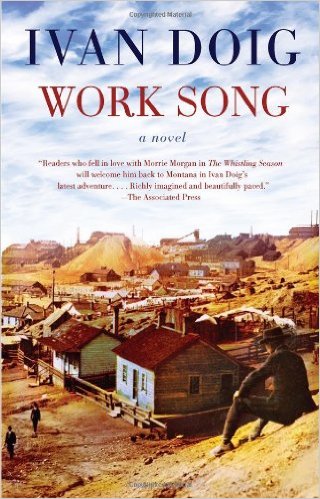
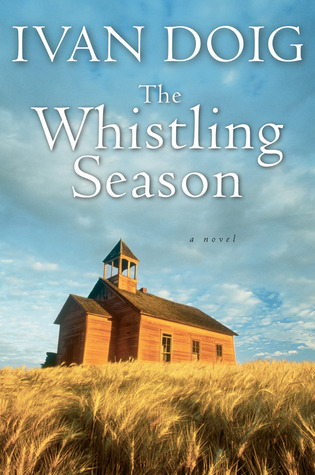
first-class-storytellingFans of Ivan Doig’s storytelling will not be disappointed with his novel, Work Song. The tale picks up with the character of Morgan Llewellyn, alias Morrie Morgan, after he departs the cast of characters living in Marias Coulee in The Whistling Season.

Morrie, still mourning his loss of Rose to widower Oliver Milliron, finds his way back to Montana and the copper mining town of Butte. He takes up residence in the boarding house of the lovely widow Grace Farraday where he meets Griff and Hoop, the twin-like retired miners full of life, full of the love of mining, and full of themselves.

Morrie’s first job as a funeral crier introduces him to the woes of life for the miners and their struggle with the Anaconda Copper Mining Company and the Industrial Workers of the World. But it is his love of reading and a fortuitous trip to the Butte Public Library that lands him in the position of glorified errand boy for the enigmatic and terrifying ex-rancher turned library administrator, Samuel S. Sandison.

Before long, Morrie is dragged into the copper miners’ battle between Anaconda, the IWW, and the union all the while dodgingDoig_WS_5.indd company goons who try to peg him as an IWW agitator and Chicago mobsters still looking for him for the gambling debacle he perpetrated with his brother. As if that weren’t enough to keep him hopping, Morrie finds his plate even fuller when a former student from Marias Coulee, now engaged to the union leader, presses him into service on behalf of the union. The Latin-loving bibliophile can no longer stay neutral in the battle, but he must operate below his tyrannical employer’s unpredictable nature and ever-watching eye.

At the eleventh hour, Sandison, a large man with an even larger secret, comes to Morrie’s rescue. All is saved, yet Morrie, who has fallen in love with the Widow Farraday, knows he cannot stay in Butte for it is only a matter of time before the mob finds him. A final, well-placed bet secures the financial future for those Morrie has come to care for. His last goodbye to Grace, another widow he must leave behind, produces the best windfall Morrie experiences to date.

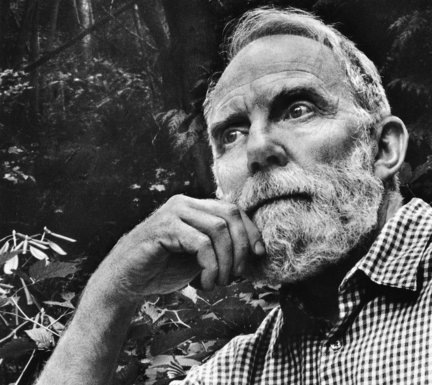
first-class-storytelling-3Doig’s tales of western life transcend the clichéd cowboy story. He writes from the working class point of view and evokes the joys and hardships of life in his beloved Montana. One of my absolute favorite authors, it was my sincere wish that he write a third novel summing up the lives of Morrie Morgan and the marvelous cast of characters spanning both the The Whistling Season and Work Song. Alas, with Ivan Doig’s passing in 2015, not only did his unforgettable characters lose their voice, literature lost one of the best storytellers known to man.

F. Scott Fitzgerald – The Short Stories

F. Scott Fitzgerald The Short StoriesAnyone who knows me knows I adore reading. And for those who don’t know me, it won’t take much time spent in my presence, whether in real life or via social media, to discover this. Recently, I’ve been reading the short stories of F. Scott Fitzgerald. I assigned this task to myself as part of the research for my new novel. My goal was to gain a better understanding of Fitzgerald through his writing first, and then I would tackle books of literary commentary as well as biographies of the man, the author, and his life.

I’m not sure where to begin with my review of Fitzgerald’s short stories because I must admit it isn’t favorable in the least. I must also confess my amazement that he earned the money he did during the era in which he wrote. This is especially astounding considering how small the payment is among literary journals today. According to the Dollar Times inflation calculator, four thousand dollars for “At Your Age” in 1929 would be like earning $55, 327.48 in 2016. The section notes prior to the story state this was his “top story price.” I interpret that as price per story and not salary for the year. Please correct me if I’m wrong, but either way, Fitzgerald was simply not that good an author.

If you read one short story, you’ve read them all and his novels as well. Beautiful, indifferent debutantes who pick up and drop men like they’re choosing and discarding shoes; rich ambitious fellas, possibly a football hero, who undoubtedly attended/will attend either Princeton, Yale, or Harvard; a sprinkling of drunks, some hopeless, some loveable; endless comparisons between the North and the South or America and Europe; and the ambitious pursuit of money, fame, and power over, and over, and over again. The most unforgivable crime Fitzgerald committed in this reader’s eyes was to cannibalize his own short stories for the sake of his novels. Worse was the fact that his agent, editors, and publishers allowed him to get away with this.

Ridiculous and cliché are the two words that came to mind the most as I read Fitzgerald. The scenarios portrayed were outlandish and unbelievable, and I’m not counting “The Diamond as Big as the Ritz” when I say this. Why anyone, even fictional, would tolerate the behavior depicted among the characters is beyond me. I tried to keep in mind that attitudes and actions were different in the ’20s and ’30s, but my opinion of the situation often deteriorated to how stupid can one person be and how much longer before he/she quits putting up with this garbage? Perhaps this was common behavior among the rich and lovesick back then. I honestly couldn’t say.

None of Fitzgerald’s stories were memorable. As I looked back through the book, I tried to recall the storylines and characters by the title alone but ended up cheating and reading the section notes. The only exception was “The Curious Case of Benjamin Button,” and that was because it had been made into a movie. So, I’m left wondering who decides what makes a piece of literature a classic. The death of the author, the passing of time, the payment received, popularity with the audience at the time of publication, being made into a movie, or some combination thereof? I shudder to think how the last four delineators will make classics of some of the drivel being produced today.

I don’t know what percentage of readers would stand with me in my assessment of Fitzgerald’s writing. Hopefully, I’ll find the commentaries and biographies more interesting. From what I already know about him, I believe if he had consumed less alcohol and been more content to hone his craft than pursue fame and fortune, he would have moved beyond his narrow world, experienced life to a greater degree, and found something new to write about. In the end, I’ll give Fitzgerald credit for leaving writers a good lesson even though he failed to learn it himself.

Literacy and Democracy

Reading and writing, like everything else, improve with practice. And, of course, if there are no young readers and writers, there will shortly be no older ones. Literacy will be dead, and democracy—which many believe goes hand in hand with it—will be dead as well. ~Margaret Atwood

Since I began working at the library, I have seen a decline in the quality of books for children and teenagers.  I have even witnessed a decline in the value of those being read by adults, and it shocks me.  There is very little worth in the written word lately.

My concern is that authors aren’t putting out their best work for the sake of their readers.  I find it hard to believe that some writers are actually proud of what they are producing.  Rather, it seems as if turning a quick buck is the goal.  Again, this is cause for concern.

As a writer, I lay this burden at my own feet first.  My goal is to write a book that will engage my potential audience.  I dream about my novel becoming a classic, but, at the very least, I want to give readers something to chew on mentally.  Even if I create a book that’s just a good story, I work to make sure it’s well written.

What we feed our minds is as important as what we feed our bodies.  I’ll admit that I love a good dessert as much as the next person.  However, even desserts come in varying degrees of quality.  Then again, so does much of what we eat to sustain ourselves.  What I mean is, a diet of garbage from fast food restaurants isn’t going to provide what our bodies need.  I could probably live a better life eating my mother’s homemade desserts all the time, not that I would.

The same is true with what we choose to read.  I can’t fill my mind with endless garbage and expect to increase my knowledge and/or awareness of the world around me.  Too much cotton candy for the brain will render me useless.  I’ll die without anything of value to read.  This is the point where someone will want to debate who assigns value to what is being written and read.

But just for a moment, let’s be logical.  A steady stream of unintelligent reading is harmful.  Like cotton candy, it’s fun for the moment, but it won’t sustain you.  Train your brain to crave the weightier reads the way you teach your body to desire healthy food.  I promise you, there are no negative side effects to nourishing your mind.

As for the link to democracy, even if someone lies to you about a situation, you will know better because you took the time to read and find out.  You will not be led around by the nose.  You’ll be mentally strong enough to meet their attempted deception head on.  You will understand what is being said to you.  What’s more, you’ll be prepared to fight back.

So I implore you:  seek out quality reading.  Treasure it and share it with the upcoming generations.  Write the very best you have to offer.  By providing worthy literature, poetry, screenplays, etc., you will leave a foundation for the youth.  In return, they will know how to take care of you in your golden years as well as prepare for the generation coming up under them.