Legacy of Love

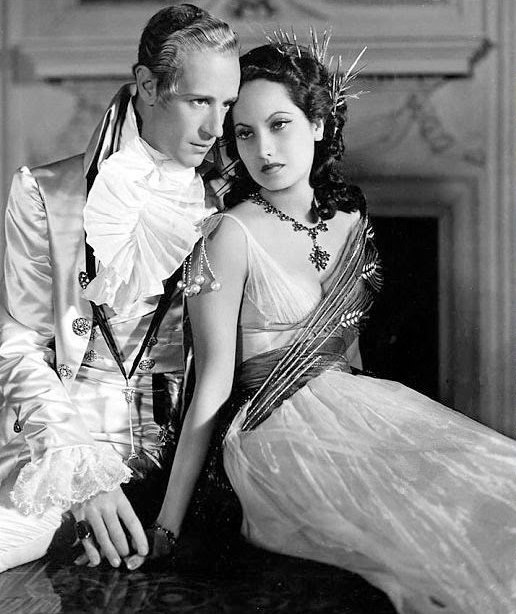
I’ve always enjoyed Joanna Trollope’s writing because she captures and portrays the nature of human relationships with accuracy. Writing as Caroline Harvey, the name she used for her historical romances, Trollope provides the reader with a triple dose of her writing style in her novel Legacy of Love.

The story begins with Charlotte, a beautiful, passionate young woman who is dissatisfied with the social conventions of what she perceives to be her uninspiring life. Marriage removes her from Victorian London to exotic Afghanistan where her adventures unfold. Scandal dogs her every step, but Charlotte is impervious and indifferent to the gossip.

Charlotte’s story is told from the POV of her beloved sister, Emily. Although Emily sees Charlotte’s faults, she is devoted to her older sister and can barely contemplate her displeasure let alone express it. Charlotte often takes advantage of Emily’s sweet nature, and in my opinion, her actions come across as bullying . . . in the sweetest of ways.

When Charlotte meets the love of her life, a man as dashing and wild as she, they present an unstoppable pair who surmount every crisis and are the ones to whom everyone else looks for strength and encouragement. Unfortunately, when nothing extraordinary is occurring, Charlotte and her man are rather useless people who are unable to make a home or farm their land.

While Charlotte could have been an example of a strong woman who met every challenge with dignity, she ended up reading like a selfish, self-made legend whose only purpose was to entertain herself and her husband. This is never more clear than when she tossed over her first husband, who naturally expected Charlotte to conduct herself like a Victorian lady, and did nothing to earn her lack of interest or commitment. He was conveniently killed in battle.

The legend of Charlotte continues to cause damage when her own daughter, Iskandara, is born with a twisted leg and average looks. Iskandara cannot live up to the myth of Charlotte, and she allows this to distort her spirit as badly as her leg. Her lifelong disappointment is taken out on her own daughter, Alexandra.

Alexandra holds center court for the middle portion of the novel. She, too, lives in awe of her grandmother, Charlotte, but instead of trying to imitate her, Alexandra flees her grandmother’s larger-than-life persona that continues to haunt the family estate long after her death.

Emily, now a great aunt without children of her own, provides refuge and guidance for Alexandra in what read like classic Jane Austen. A bit of reverse psychology executed by Emily crowbars the backward Alexandra out of her complacency and into the life she’s always dreamed of where she is the rudder of her own ship. Throw in an extremely talented, brooding, and slightly volatile artist whose career is revived when he falls in love with and paints Alexandra, and we have happily ever after à la Austen.

Cara, named after her great grandmother Charlotte, rounds out the last third of the novel. The youngest child of Alexandra, she is as enthusiastic, beautiful, and daring as her legendary great grandmother. Cara commands attention wherever she goes and is a natural born leader, but eventually, all this amounts to is that she is popular.

When World War II disrupts Cara’s plans, her self-centeredness rears its head much like Charlotte’s, however, Cara is also outrageously spoiled, so her obnoxious qualities rise to the surface to simmer most unbecomingly. It didn’t take me long to dislike Cara and realize that most of her problems are self-made.

There’s more predictability in the last third of the novel since the reader has Charlotte’s and Alexandra’s stories as a foundation for Cara, but Trollope infuses freshness and hope into the story by having Cara mature in a way that Charlotte never did. I suspected how things would turn out for Cara, which was extremely satisfying despite the obviousness of it, but counterbalancing this detail is the believability with which Trollope transitions Cara from brat to womanhood.

Cara undoes the harm Charlotte’s influence has over the lives of the women in her family by taking responsibility for herself and everyone around her not just when crises arises but during the drudge of daily life. She leads the life Charlotte wanted with far more grace, and in doing so, she grows in wisdom.

Legacy of Love is historical romance, but I found it to be so much more than simple love stories.  Trollope does a wonderful job of grounding the reader in every era without bogging the narrative down by adding too much detail. Her peripheral characters are expertly woven into the lives of her protagonists thus making them essential to the tale, and her conclusions are pleasurable without being overly sentimental.

Let me know in the comments if you’ve read Legacy of Love or any Joanna Trollope novel. I’d love to compare reviews.

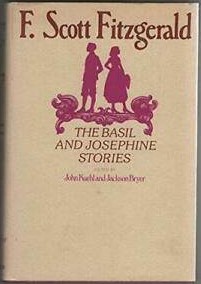
The Basil and Josephine Stories

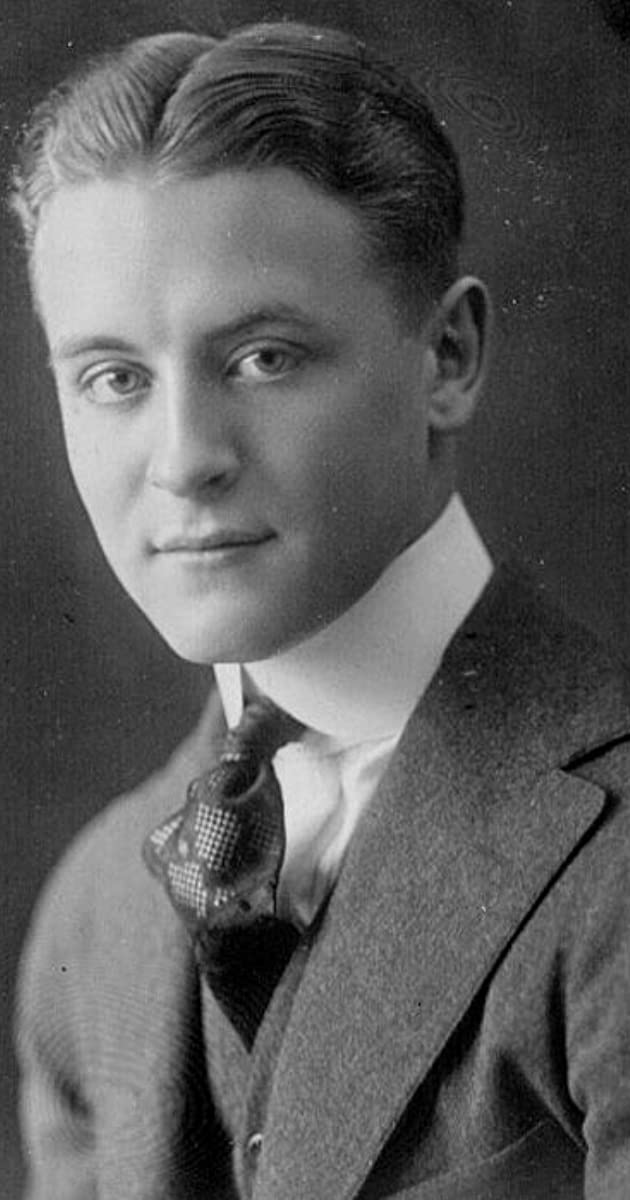
I’m not usually a fan of F. Scott Fitzgerald, and I’ve admitted I have a love/hate relationship with him, which meant I loved to hate him. I felt this way because I did not believe Fitzgerald deserved the acclaim he received, and still receives, for repeatedly producing the same work.

You may read my opinion of the author and his writings here: Under the Influence; Dear Scott, Sincerely, HL; and F. Scott Fitzgerald – The Short Stories.

Recently, I read The Basil and Josephine Stories, a compilation of Fitzgerald’s two previously published series from The Saturday Evening Post, and I honestly enjoyed them. I think they are some of his best writings.

Fitzgerald grabbed my interest by digging deep into the compost pile of this own youth. He transferred specific details and events to fashion Basil’s stories. While I formerly complained that he put too much of himself into his writing, the Basil stories were fresh in that they read like an attempt at self-analyzation, which I found intriguing.

I believe a mature perspective enabled the author to write about the humiliating details while at the same time stepping back and processing them. In doing so, the reader was treated to Basil’s growth and maturity, whereas in Fitzgerald’s own life, one does not see such amazing growth as experienced by his character.

One detail in Basil’s life that shocked me was the absence of his father, who had died in an unspecified manner. I recall reading that Fitzgerald was ashamed of his own father’s lack of success, and I wondered if removing Basil’s father from the stories was a subconscious method of dealing with this shame.

Now, factor in Josephine, a girl who repeatedly brought to mind “Charm is deceitful and beauty fades . . .” She is so shallow and self-absorbed that she never learns or grows throughout her stories until “Emotional Bankruptcy” wherein she is just becoming self-aware. There is more of Fitzgerald written into the character of Josephine than was initially apparent, maybe more than he intended, and she represents a warning of what not to become. Again, look at the author’s own life for evidence.

And she is most definitely a picture of the great lost love of his life, Ginevra King.

My conclusion is that Fitzgerald was crafting his version of the perfect ending to his relationship with Ginevra, a what-could-have-been scenario. I believe this because the author intended for Basil and Josephine to meet when he combined the series at some point.

I know that a book of Basil’s tales was proposed (and discarded for the flimsy reason of not wanting the story to detract from Fitzgerald’s more serious writing, i.e., his novels, in any way) but I’m not sure if the intended meeting between Basil and Josephine was supposed to happen in said book.

Whether as a novel or continuation of the series, I wonder if Fitzgerald began to fear the transparency of the story and/or accept that he could never make it right. The author depended on money earned from the stories to support his and Zelda’s lavish lifestyle between novels. Could the beautiful, troubled Zelda have seen what her wayward husband was attempting to accomplish thus forcing Fitzgerald to abandon the project?

Further, would Fitzgerald have had Basil snub Josephine, a literary comeuppance for Ginevra King, or would he have written a happily-ever-after ending bringing the pair together in a way that would show Ginevra, her father, the rich, and the world in general that a middleclass boy could marry a rich girl and make all her dreams come true? Would love have conquered riches?

We’ll never know, and while I would have liked to read that ending, all I’m left with is speculation. Still, I’m leaning more toward a comeuppance for Ginevra/Josephine because Basil/F. Scott was in the process of outgrowing her. Then again, Fitzgerald’s own lifelong pursuit of wealth and fame may have spelled doom for Basil and Josephine if they, as a couple, failed to overcome their worldly desires as Fitzgerald and Zelda did. Then there is the possibility that Basil would have led Josephine to a higher understanding of true happiness beyond money and reputation.

The whole ball of questions sound like something that would be a fabulous project for a writer of fan fiction, don’t you think?

I’m still itching to vent my usual complaints against Fitzgerald, but I’ll finish by saying that I felt more hope for him after reading The Basil and Josephine Stories. It’s obvious that he was better when writing short stories that built upon certain themes with the intention of having the characters intersect at some point. Perhaps I would like his novels better if he had written them as a collection of short stories. It certainly would have assisted with his inability to focus on longer works because of all he had going on in life.

Unfortunately, my hope for F. Scott Fitzgerald comes too late for an author who showed great potential and squandered much of it.

Percival’s Planet

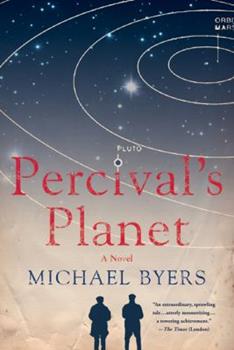
One of the reasons why I never watched the movie Titanic was because no amount of SPOILER ALERT was going to keep me from knowing the end of the story going in. The ship sank. The same was true for a book I recently read called Percival’s Planet, an historical fiction accounting of the discovery of Pluto. I had a good idea how the novel was going to end. Still, I was on an astronomical high from The Comet Seekers, so I thought I’d give Percival’s Planet a whirl.

Most reports I have read indicate that the Titanic sank in about two hours, which is a good length for a movie except that probably not that much occurred onboard that would make a good story. For this reason, pre-iceberg and post-iceberg filler was created to take up some time until the ship sank.

The same was true for Percival’s Planet. The process by which Pluto was discovered was so painfully boring that the author, Michael Byers, would not have much of a story if that was all he wrote about. And even after it was discovered, there was some skepticism as to whether or not what was found was indeed the elusive Planet X.

So, the reader was treated to more on Kansas farm boy, Clyde Tombaugh, the discoverer of Pluto. However, in Byers’s hands, Clyde’s story was about as exciting as watching grain being threshed. I did feel for him when a sudden hailstorm took out the crop that was supposed to pay for college, and he showed incredible perseverance producing handmade lenses until they were perfect. But again, Pluto and Clyde alone were not enough to carry this tale.

Vesto Slipher, the Lowells, and a few other real people were sprinkled in to help ground the story. There was a technical edge that was interesting without being too tedious even if one has not studied the math and science required for space exploration. The era during which the novel took place, 1928 to 1930, lent some curious appeal as far as social allowances, customs, clothing, and the looming Great Depression.

But it still was not enough to make this the type of story one can hardly wait to return to. It took me three weeks to plow through it, and there were days when I left it untouched. Still, the writing was not horrible, and I’m no quitter. There were some well-turned phrases, but nothing that leapt off the page begging to be read.

Not even the washed-up boxer, Teddy, going through a painful divorce, who was in love with his beautiful secretary, Mary, who was slowly going mad, helped. Nor did the secretary’s older, gay brother, Hollis, who struggled to maintain his relationship with his younger, extremely rich partner. Not even Dick and Florrie, more megarich and brilliant people involved with work at Lowell Observatory, made for interesting reading. And then there was the poor sap, Alan, an astronomer, who named a comet after Florrie before he realized she had run away to marry Dick.

Let’s not forget Felix, the failure-to-please-daddy heir, who decided he wanted to be an amateur paleontologist, and his mother, whose name I’ve honestly forgotten in the three days since I finished the book. Their relationship was awkward, and how they connected with those already mentioned was clunky at best, superfluous at worst.

Alan married Mary; Clyde had a crush on her; Mary was hospitalized after attacking Alan; Hollis disappeared; I truly wished Dick, Florrie, Felix, and his Mama would, too; Teddy became Mary’s champion; Pluto was found but not in a satisfying, triumphant, end-of-the-book way; peripheral characters charmed and annoyed on cue; and Byers wrapped up stories of fictional characters with whom I forged no connection or caring. The narrative moved at the pace of a comet viewed with the naked eye.

What we had here, folks, was a Great Plains soap opera that read like grit blown in from the Dust Bowl to lodge in the corners of one’s mind, waiting to be swept out by the next interesting book.

I suspect Michael Byers attempted to recreate the thrill of discovering a new planet, which was no small thing. Unfortunately, when the novel was published in 2010, moon landings were and still are studied as history, the Space Shuttle program ended in 2011, and it had been twenty years since the Hubble Space Telescope was launched, and twelve years for the first piece of the International Space Station.

Perhaps it’s a shame that we no longer look to the stars with as much interest as we once did. God knows we are barely able to take care of things on Earth let alone what we would do if we ever achieved colonization somewhere in space. Still, what could have been a great story, even to someone like me who doesn’t follow astronomy closely, ended up fizzling out faster than a shooting star.

In the end, I’m glad Clyde Tombaugh never knew Pluto was demoted from being a planet.

Writing Exercises

Writing books are replete with exercises meant to jumpstart your creativity. Even authors who write their memoirs can’t seem to resist mentioning the exercise that helped them. Whether the exercise is meant to focus your concentration or crowbar you out of a slump, I find writing exercises to be, well . . . tedious and annoying.

I remember a daily exercise where for one minute I wrote down the first ten things that came to mind. Then, no matter what the third thing was (or maybe it was the seventh), I spent another ten minutes writing about it.

I don’t know about you, but first thing in the morning my mind is creating a to-do list for the rest of the day, sometimes the week. My list often included thoughts such as take something out of the freezer for dinner, clean the litter box, and wash a load of jeans. Not exactly ideas worthy of ten minutes elucidation.

Needless to say, and yet I’m going to, I quickly tired of the exercise and abandoned it faster than a Spanx bodysuit in the women’s dressing room.

Now this isn’t to say that you shouldn’t try an exercise or two, and maybe they really have worked for someone, in which case I’d love to hear from you about the exercise and who suggested it. Don’t forget to include your results.

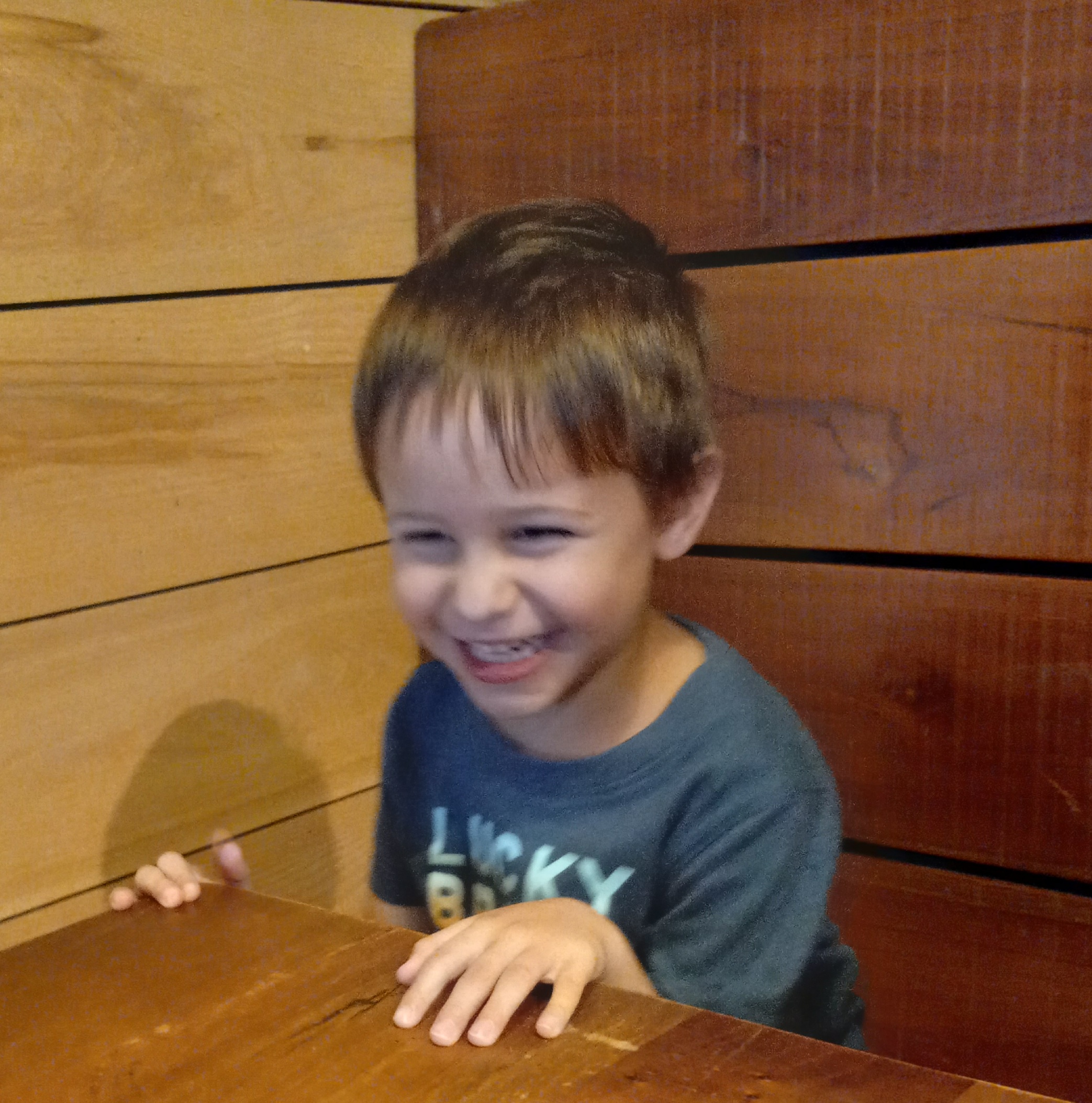
I have chosen a different approach to keep myself writing while larger works, like my novels and blog posts, swirl about my mind waiting to crystalize into something I can put on the page. For example, yesterday I left the laptop, pencils, and notebooks behind to spend the day with my grandbaby, Jacob. My writing flourished from the exercise.

I started by creating memories that don’t have to be edited because they’re already perfect, and now I can accurately describe a four-year-old’s laughter. It is pure sunshine. Then there are his little hands, more delicate than a bird’s wing and softer than a baby rabbit. Don’t forget his rubber band arms that he throws around my neck and noodle legs that he uses to run like a frisky colt.

And then there are his eyes, the color of melted chocolate; his eyebrows, pencil-thin and able to move independently of each other to express an array of emotions; or his knees, dappled blue and purple with a plethora of bruises.

His voice babbles like a little stream and makes about as much sense, his toes look like pink corn niblets, and his sweet head smells like warm grass.

So you see, I did write yesterday. I worked on description because there was way too much dialog to capture and most of it was delivered between fits of giggles and squealing. We do love a good game of tickle. Maybe I’ll recall this and use it in a story someday, maybe not. It really doesn’t matter as long as I keep at my writing.

Today, when Jacob is en route to his home in another state, I’ll return to the laptop, pencils, and notebooks. If I’m lucky, what I write then will be as perfect as what I wrote when I was with him.

Welcome Back

It’s been a while since I posted, but please don’t believe that I haven’t been busy because I have. I took the plunge some time ago and pulled back from social media. What an amazing advantage that proved to be when I shook off the fear of walking away. I realized quite quickly that my life wouldn’t implode if I wasn’t connected to social media twenty-four hours a day. Furthermore, my value as a person and a writer didn’t diminish in the least. The best part about that whole endeavor was when I connected with real people in real time. Go figure.

I may sound as if I’m welcoming you back, which I am, but I’m hopeful this will be an opportunity for you to welcome me back into your life. There’s a lot out there on the Internet and choosing to read what I create and post is appreciated more than words can say. But I’ll say it anyhow. Thank you!

However, this post is not an apology. As mentioned above, I needed the time away to craft better fiction of which I am extremely proud. I trust you will be, too, as I work to get it into the hands of my followers, whether I publish traditionally or independently.

As you come to know me better through my blog, one thing you’ll probably notice is that it’s different from other writing blogs out there. There’s a heavy personal touch to my posts. I did this in an effort to create openness and honesty. You’ll see the real me.

I’ve left everything intact since I started my blog, so please don’t hesitate to poke around. The first reason I did so is because I haven’t discounted the other novels I’ve written. They may still be published someday.

The second reason is because I’m not afraid to show a progression of growth in all aspects of my life on my blog. There are some things I posted that make me cringe but being vulnerable doesn’t compromise my strength. I’m open to discussion, so let’s have a conversation.

I’d love to hear from you in the comments about the creative endeavors are you pursuing. All artists are welcome here but kindly refrain from marketing and selling.

~HL Gibson

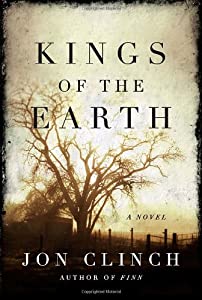
Kings of the Earth by John Clinch

Well, there are the three Proctor brothers, and a sister and two parents, a well-meaning yet slightly nosy neighbor and his wife, the state trooper, the nephew, the brother-in-law, and throw in a couple drug dealers, a girlfriend, a waitress, and the narrator, and it makes for quite a few points of view, but such is John Clinch’s Kings of the Earth, and I haven’t read Clinch since his debut novel, Finn, which I absolutely loved and will try not to review here because this is about Vernon, Audie, and Creed Proctor, and everyone attached to the mystery that is their lives as well as the mystery of how Vernon actually died, so you must understand that what you have here is a slowly unfolding tale told through different perspectives and eras, but as you piece together the Proctor brothers’ existence you’ll begin to comprehend why they are like they are—maybe—but I couldn’t believe anyone, even fictional, could live as they do with years of grime worked into their very pores until it colors them and everything they touch a shade of wretched yellow to downright repulsive brown, and try as you might, the smell of them, which takes on a life of its own like another voice, comes right off the pages of the book with Clinch’s frequent reminders in the form of well-written description that you really could do without because you’ll find yourself wrinkling your nose and holding your mouth open the way you do when they’re trying not to smell something bad, but now you’ve gone and made it worse because you can taste it, and Lord knows you don’t want to taste it, but like looking at a bad car accident, you just can’t tear your eyes away from the pages because you need to know what happened, how, and why, and Clinch certainly delivers as he discards the ridiculous writing rule being taught to writers today about choosing one point of view and sticking with it, and let me tell you he brilliantly breaks that one and many others in such a way as to give close-up views and sweeping panoramas, so you find yourself drawn in like one of those visitors who comes to see Audie’s whirligigs, but now you don’t know who you’re rooting for, and then all too soon the writing stops but the story never does.

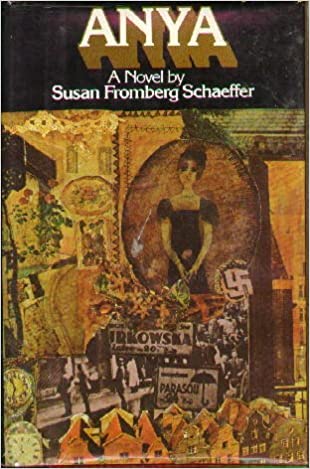
Anya by Susan Fromberg Schaeffer

Don’t read Anya by Susan Fromberg Schaeffer if all you want is a quick read about the Holocaust. Today’s writers are cranking out enough of those complete with prescribed character arcs and inciting incidents occurring within the first three pages guaranteed to keep you hooked. If, however, you’re willing to be stitched into the fabric of life of the protagonist, if you are willing to invest yourself in details and description, if you are interested in conversation that reads like it takes place at a large family gathering, then Anya just might be your novel.

The book reads like one long memory, and I believe it is this quality that makes the events of Anya’s life so seamless. The transition from well-off daughter, wife, and mother to a woman scrambling to keep her family together in the ghetto and then hold herself together mentally and physically in the concentration camps is so smooth. Perhaps it’s because very little detail about the war is provided as if the reader should already know the particulars of how, why, who, when, what, and where. Rather, we are given Anya’s perspective and reaction to everything that occurs. In fact, it’s very late in the war years that Hitler is even mentioned and only then as somebody far away who somehow has power over Anya’s life.

The reader will always be right in the moment with Anya. Schaeffer creates tension that keeps the reader from holding on to Anya’s past because the danger of the situation prevents one from mourning what was lost. There is simply no time to do so. That will come later. Maybe. As for the future, don’t bother contemplating it because it is inconceivable that a future—at least a positive one—could even exist with all Anya is forced to endure and to do just to survive. The only saving grace is that this is not your story, dear reader. Unless maybe it was.

What I found to be the most chilling as I lived Anya’s story with her was the fact that I mentally collected her actions and words to fall back on in case I found myself in a similar situation. Perhaps it is the political, social, and cultural climate of today that subconsciously prompted me. I honestly cannot say. Still, for a work of fiction, Anya is one novel whose influence and impact will stay with me for a long time. I have said before that finishing a well-written book was like leaving behind great friends. The same is true for Anya. The ghosts will live on.

The Scarlet Pimpernel

Zounds! Zooks! And maybe even a few Egads! Although I may be flashing back to Clarence Day in Life with Father. These exclamations are just one of the many things that make The Scarlet Pimpernel so adorably charming. Who knew that cozy mysteries came in a vintage version? And thank you, Baroness Orczy, for taking only five weeks to transform your well-received play into a novel that reads like it was written in only five weeks.

“This can’t be a vintage cozy mystery,” you protest. “It’s about the Reign of Terror in France.” Yes, well, gentle reader, this version is about the more swashbuckling side of those dark days in the history of France. It features a thinly veiled hero, a beauty in need of rescue, and a villain who rubs his hands in malicious glee all the while laughing, “Bwa-ha-ha-ha!” At least that’s what I heard in my head every time Chauvelin rubbed his hands together. Which he did with annoying frequency. For a more realistic, yet still fictional, rendering of the Reign of Terror, I suggest A Tale of Two Cities by Charles Dickens.

Let’s also not forget to thank the Baroness for failing to consult her thesaurus for alternative adjectives when describing her three main characters. By the end of the novel, if you don’t know that Sir Percy Blakeney is inane, Lady Marguerite Blakeney is the most fêted woman in London, and Chauvelin is sarcastic, then you haven’t been paying attention. Then there is the gorgeous gorgeousness of life for the Blakeneys even though (SPOILER ALERT) they’re going through a bit of marital discord at the moment. In her defense, the Baroness did come from writing plays to novels, and perhaps she forgot that the repetitive adjectives worked better as onstage direction rather than actual words one has to read over and over and over.

Let’s take a closer look at Baroness Orczy’s hero, Marguerite Blakeney. “Wait—Marguerite is the lady in need of rescue. She couldn’t possibly be the hero of this story,” you again protest. Yes, well, since we’re all pretending we don’t know Sir Percy is the Scarlet Pimpernel, you must admit the majority of the story is told from Marguerite’s point of view. This small detail is a pleasant surprise as the reader is treated to a transformation in Marguerite’s character. And then Lady Blakeney ruins the ride by falling back in love with her husband and needing rescue herself thus shining the last few moments of glory on Sir Percy AKA the Scarlet Pimpernel. Way to dissapoint the feminists, Baroness.

I would have thought an inane man who kept an extra set of sumptuous clothing on his yacht into which he could change after performing astounding feats of derring-do to thwart a sarcastic villain would gladly have shared the heroic limelight with his fêted wife. As for Sir Percy’s alternate identity, it’s easy to see why he chose the Scarlet Pimpernel over the Red Ninny or the Crimson Fop. Those last two certainly wouldn’t make a damsel in distress tremble with desire.

The brilliant naming schemes don’t end there, dear reader. The worst is given to Mr. Jellyband whose name is so painfully, so obviously not a real name but rather a representation of his jovial character that I’m a titch surprised we weren’t further inflicted with Sir Manly Gorgeousbod, Lady Beauty Misunderstood, and Baddy Badguy. But really, the novel is so stinking precious than one simply cannot help but laugh aloud. To hate it would be like hating kittens, puppies, and babies.

Wilberforce

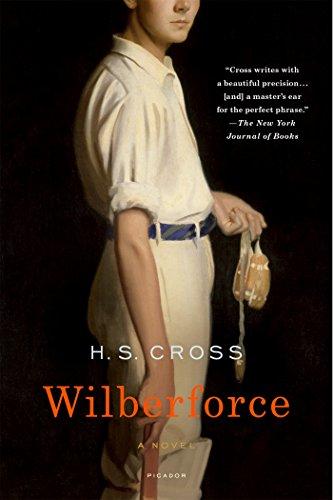
Morgan Wilberforce is a boy in trouble in the coming-of-age novel that bears his name, Wilberforce. His story is set in England in the 1920s at a time when the effects of the war are still fresh on everyone’s mind. The reader is thrown into the action along with Morgan as he wakes up from a suicidal tackle during a game of rugby. From there one journeys with him as he navigates life at St. Stephen’s Academy, complicated relationships, and devastating situations made so by Morgan’s involvement. Pay attention to the dark shadow of a clue delivered at the beginning of the novel as well as those tossed throughout the following pages. H. S. Cross handled these details in such a way that the reader never feels as if he/she is constantly trying to catch up.

Perhaps it’s because I’ve read several novels about all-boy schools in England, but I wasn’t the least bit surprised when the seamy underside of life at such a school included what Morgan referred to as ‘mucking about.’ The details were only implied, but the subject almost put me off from finishing the book. I’m glad I stayed with it because the situation plays into the larger issue of what Morgan is truly dealing with.

The last one-third of the novel slowed to a pace that, in the hands of a less skilled writer, could have tanked the whole book. Then Cross broke the rule of introducing a character late in the story (one of several rules she broke brilliantly, so I still complain about the way writing is being taught!), and she added the unexpected layer of—what shall I call it?—religion. And yet, while the Bishop (said late character) represents Anglo-Catholicism, there is nothing religious about his approach to helping ‘sort out’ Morgan Wilberforce. Cross didn’t make the story about religion but rather delivered a heavy dose of compassion, so when Morgan finally experiences a breakthrough, it is genuine. It is also surprisingly swift, occurs at the brink of Morgan’s sanity and the edge of the novel’s conclusion, and is satisfyingly realistic.

One will never see this novel in the inspirational section of any library or bookstore. I’m not sure it should be by virtue of the fact that it doesn’t conform to the type of books usually shelved there. What I loved about Wilberforce is that it didn’t shy away from the harsh realities of life, didn’t glorify them for shock appeal either, but it included an element that undeniably dealt with redemption. I must admit, I didn’t see it coming. For this reason, I’m looking forward to reading more by H. S. Cross.

Hot Potato

As sweet and satisfying as any dessert, Mother Arlene’s sweet potatoes are always a hit at church potluck dinners, funeral dinners, and most especially at the Mother’s Day Feast hosted by the Baptist church. The recipe has been in Mother Arlene’s family for generations, and while she will gladly share it with anyone who asks, there is something extra special about the dish when prepared by Mother Arlene herself. That something extra is love, and it’s the ingredient Shirley Tedesco needs on the particular Mother’s Day she and her family spend with their best friends, the Roberts family, at their church.

The following recipe is the one I had in mind when creating the above-mentioned scene. The deep, rich flavor of these potatoes makes them a welcome addition to any dinner table, but don’t wait until Thanksgiving to enjoy them. Mother Arlene’s sweet potatoes will add spice to your middle-of-the-week menu and make you glad you tried them.

PS – Don’t be shocked by Mother Arlene’s inclusion of bourbon in her recipe. This Godly, graceful woman is no fool when it comes to using this classic, American spirit in moderation as a flavoring for her famous sweet potatoes just like her mother taught her. “Oh, honey—it’ll be our little secret,” she will say as she presses the recipe into your palm.

Mother Arlene’s Sweet Potatoes

5 large sweet potatoes

8 T unsalted butter

½ t sea salt

1 t ground cinnamon

½ t ground nutmeg

¼ t ground clove

¼ t ground ginger

Dash of allspice

¾ c sugar (I used raw)

½ c dark brown sugar

1 T vanilla

2 T bourbon

Preheat the oven to 350° F.

Wash the sweet potatoes and peel them. Remove any bad spots with a paring knife. Cut the sweet potatoes into slices about a half-inch thick and place them in a large bowl.

Place the butter in a medium saucepan over low heat. When the butter is melted, stir in the sugars, spices, vanilla, and bourbon. Keep over the heat until the sugars are melted.

Pour the syrup mixture over the sweet potatoes and stir to coat them thoroughly. Transfer the potatoes to a 9 x 13 glass baking dish taking care to scrape all the syrup mixture from the bowl into the baking dish.

Cover the baking dish with aluminum foil and bake the potatoes for 30 minutes. Remove the baking dish from the oven and carefully baste the sweet potatoes with the syrup mixture. Replace the foil on the baking dish and return it to the oven for another 15 – 20 minutes or until a small knife penetrates a potato slice with ease.

Remove the sweet potatoes from the oven and allow them to rest for 10 minutes before serving.

Enjoy!