A Streetcar Named Opportunity

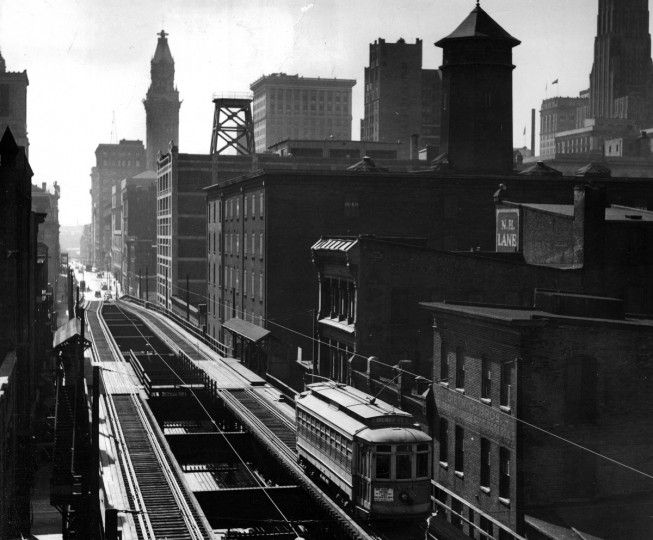
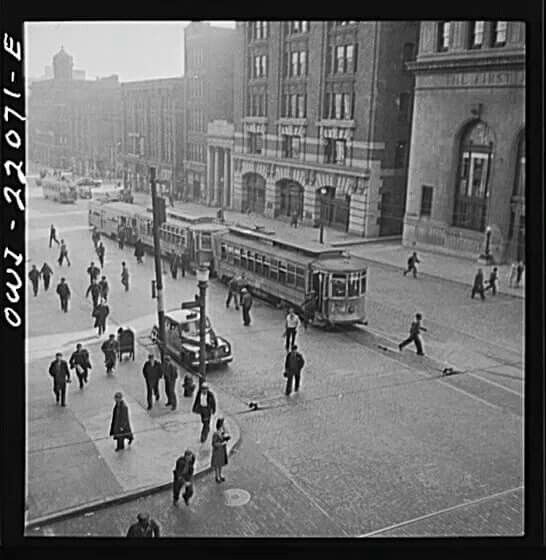
a-streetcar-named-opportunity-2John Welles began his pre-med studies at the University of Maryland in October 1925. As excitement and anxiety competed for supremacy in the young man’s mind, his Aunt Prudence came to the rescue with a country-style breakfast guaranteed to calm her nephew’s fears. Yet John could not dismiss the troubling events of the past summer that marred his first day of school. Further adding to John’s frustration was Prudence’s insistence that her chauffeur drive him to school, an offer he declined in favor of taking the streetcar.

A fortuitous meeting during the ride brightened John’s day considerably. Seated next to him was an elderly gentleman who discerned John’s apprehensions and encouraged the young man to speak openly about them by quickly earning his trust. Little did John know that the chance encounter would positively influence the rest of his life.

a-streetcar-named-opportunityI’ll direct you to the Baltimore Streetcar Museum website as the source of information I used when preparing the scene above. Also useful is the post, A Brief History of Baltimore’s Electric Streetcars, on the Monument City Blog. In addition to the pictures I found for streetcars from this era, both sites were helpful in creating the location for one of the most important meetings of John’s life.


Answers to the Question Y

answers-to-the-question-y2The summer of 1928 was a busy time for young John Welles. Although his schooling was going well, he fought to maintain top spot in the grade standings just ahead of the lovely, yet annoying, Garland Griffin for whom he was developing serious feelings. Also on the young man’s mind was the odd behavior of one of his best friends, Claude Willoughby.

Claude’s personality was always fiery and his temper unpredictable, but as of late, John knew there was something more going on with his friend than Claude would admit. The truth of the situation almost becomes clear to John during an afternoon spent at the YMCA with Claude and their friend, Sam Feldman. What John discovers aren’t the facts in their entirety, but what he assumed was bad enough. Only later does the full truth come out, and by then, John has absorbed Claude’s secret as his own.

My research on the YMCA led me to the Y’s own history page. I’ll direct you there for a comprehensive overview, but I do want to point out some tidbits about this benevolent organization that I found to be most interesting:

In 1844, industrialized London was a place of great turmoil and despair. For the young men who migrated to the city from rural areas to find jobs, London offered a bleak landscape of tenement housing and dangerous influences.

Twenty-two-year-old George Williams, a farmer-turned-department store worker, was troubled by what he saw. He joined 11 friends to organize the first Young Men’s Christian Association (YMCA), a refuge of Bible study and prayer for young men seeking escape from the hazards of life on the streets.

Although an association of young men meeting around a common purpose was nothing new, the Y offered something unique for its time. The organization’s drive to meet social need in the community was compelling, and its openness to members crossed the rigid lines separating English social classes.

Years later, retired Boston sea captain Thomas Valentine Sullivan, working as a marine missionary, noticed a similar need to create a safe “home away from home” for sailors and merchants. Inspired by the stories of the Y in England, he led the formation of the first U.S. YMCA at the Old South Church in Boston on December 29, 1851.

I pressed on with my research because I needed to know what the YMCA was like specifically in the 1920s. What I came across confirmed something I had heard about on a television show back in the 1970s but assumed was intended to be a funny portion of the storyline: swimming nude at the Y. I’ll direct you to Eric Markowitz’s 2014 article, “Until Fairly Recently, The YMCA Actually Required Swimmers To Be Nude,” because it has to be read to be believed. While nude swimming may have been the standard in the 1920s, I’ll allow potential readers to envision the above-mentioned scene based on what he or she is familiar with in regards to swimming at the Y.

Undercutting the Competition

June of 1925 was an exciting time in the life of John Welles. He had graduated from high school with honors and been accepted to the University of Maryland for his pre-med studies. With his Aunt Prudence’s help, John was one step closer to achieving his dream of becoming a doctor.

undercutting-the-competition-3For the occasion of his graduation party, Prudence guided her nephew on the decision of clothing and haircut. She had her reasons for showing off John to his peers, their parents, and most importantly, John’s own family. While the lanky teen bore the new look well, his appearance and success drove home Prudence’s self-serving point better than she could have predicted, and the results were disastrous.

undercutting-the-competition-2I always pictured John with undercut hair for this scene. The style, popular in Edwardian times, the 1920s, 1930s, and 1940s, resurfaced in the 2010s. Soccer star David Beckham sports the style as do actors Brad Pitt, Jake Gyllenhaal, and Michael Pitt when he portrayed Jimmy Darmody in Boardwalk Empire. Unfortunately, the style was also favored by the Nazis, but don’t allow that to deter you from considering it.

undercutting-the-competitionThe haircut is defined by long hair on top, parted on either side or down the center, with the back and sides buzzed quite short. Originally, undercut hair was considered a sign of poverty because one could not afford a barber capable of blending the back and sides with the top. The style, popular with working-class men and especially street gangs, was held in place with paraffin wax.

undercutting-the-competition-5Throughout the years, the style enjoyed slight variations. One such disaster was the result of combining undercut hair with a centrally-parted bowl cut, which was favored by fans of new wave, synthpop, and electronic music in the 1980s, and curtained hair, an atrocity worn in the 1990s. In England, some schools banned undercut hair because it was reminiscent of the cut worn by the Hitler Youth.

undercutting-the-competition-4Today, a myriad of products, including wax, pomade, gel, and mousse, exist to keep one’s undercut hair looking slick. There are also tutorials on YouTube for everything from how to cut the style yourself, what to tell a stylist when requesting the undercut, and how to achieve the look you desire for the long top portion. I do have to wonder, though, what the men and boys who originally wore the style, and wouldn’t use anything other than a comb and wax, would think of the inclusion of hair straighteners, hair dryers, and curling irons to the routine of maintaining an undercut.

A Sour and Sweet Situation

a-sour-and-sweet-situation-3The first time Dr. John Welles meets diner owner Bea Turner, he’s entangled in an embarrassing misunderstanding between himself and the town police officer. People in Addison had stopped to watch the encounter, but the situation became unbearable when John spied the voluptuous brunette sauntering toward him and Officer Boyce.

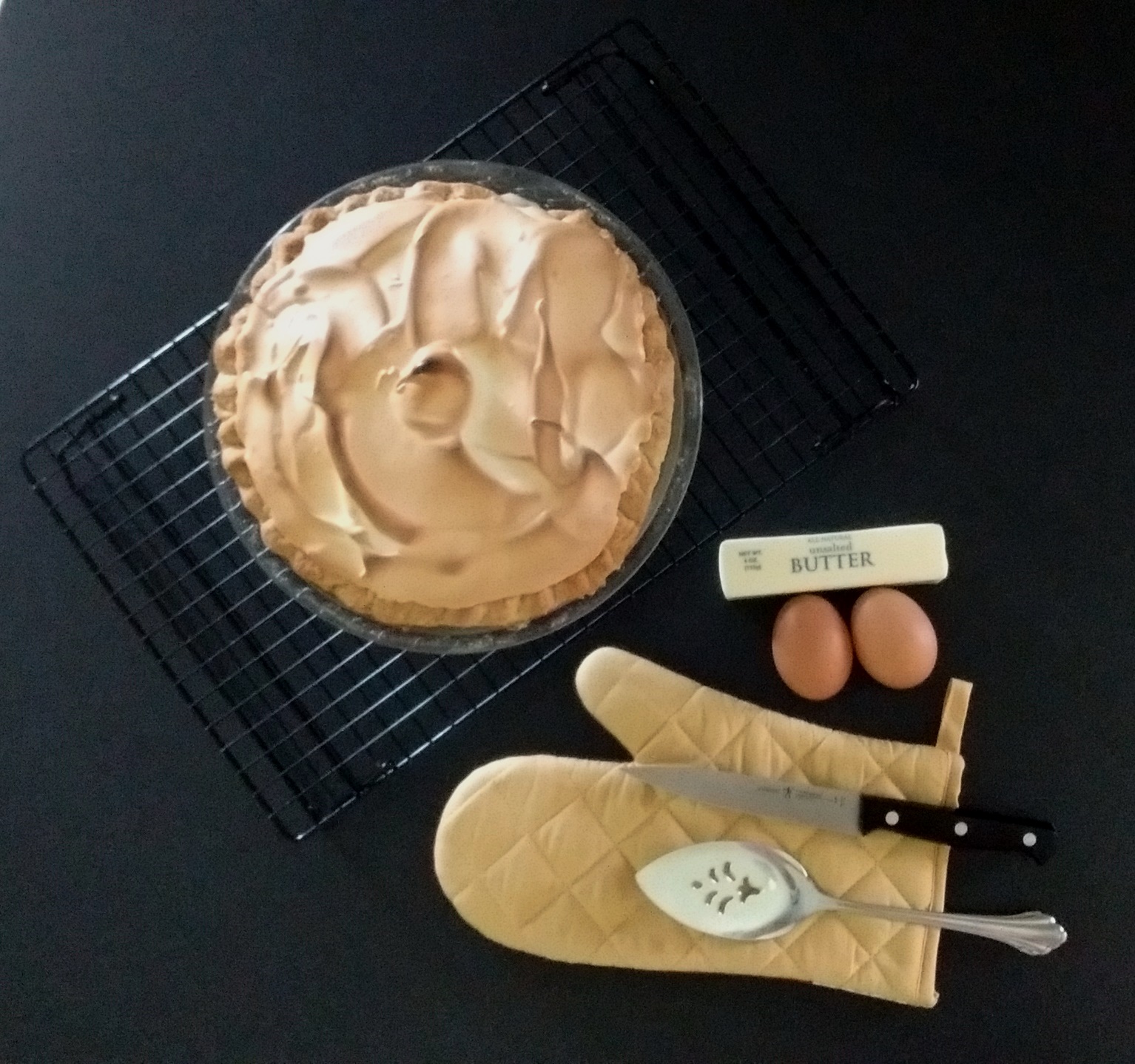
John would come to know Bea quite well in later years, but at the moment, he wished she had chosen another time to deliver a lemon meringue pie to the burly cop. Bea’s laughter upon departure only worsened the doctor’s humiliation; he believed he hadn’t made a good first impression.

When I choose lemon meringue pie for the above-mentioned scene, I didn’t realize how perfectly the dessert complimented what took place. John’s attitude toward life had turned sour, but in the hands of Bea Turner, he would know sweetness again.

Bea Turner’s Lemon Meringue Pie

Single Crust:

1 c flour

¼ t salt

1 stick unsalted butter, cold and diced into ¼-inch pieces

½ c cold water with an ice cube

To make a bottom crust, combine the flour, salt, and butter. Work with your hands until the flour and butter combine to make pea-sized pieces. Add the water a tablespoon at a time and work through until you can form a ball. Wrap the dough ball in plastic wrap and chill for twenty minutes in the refrigerator.

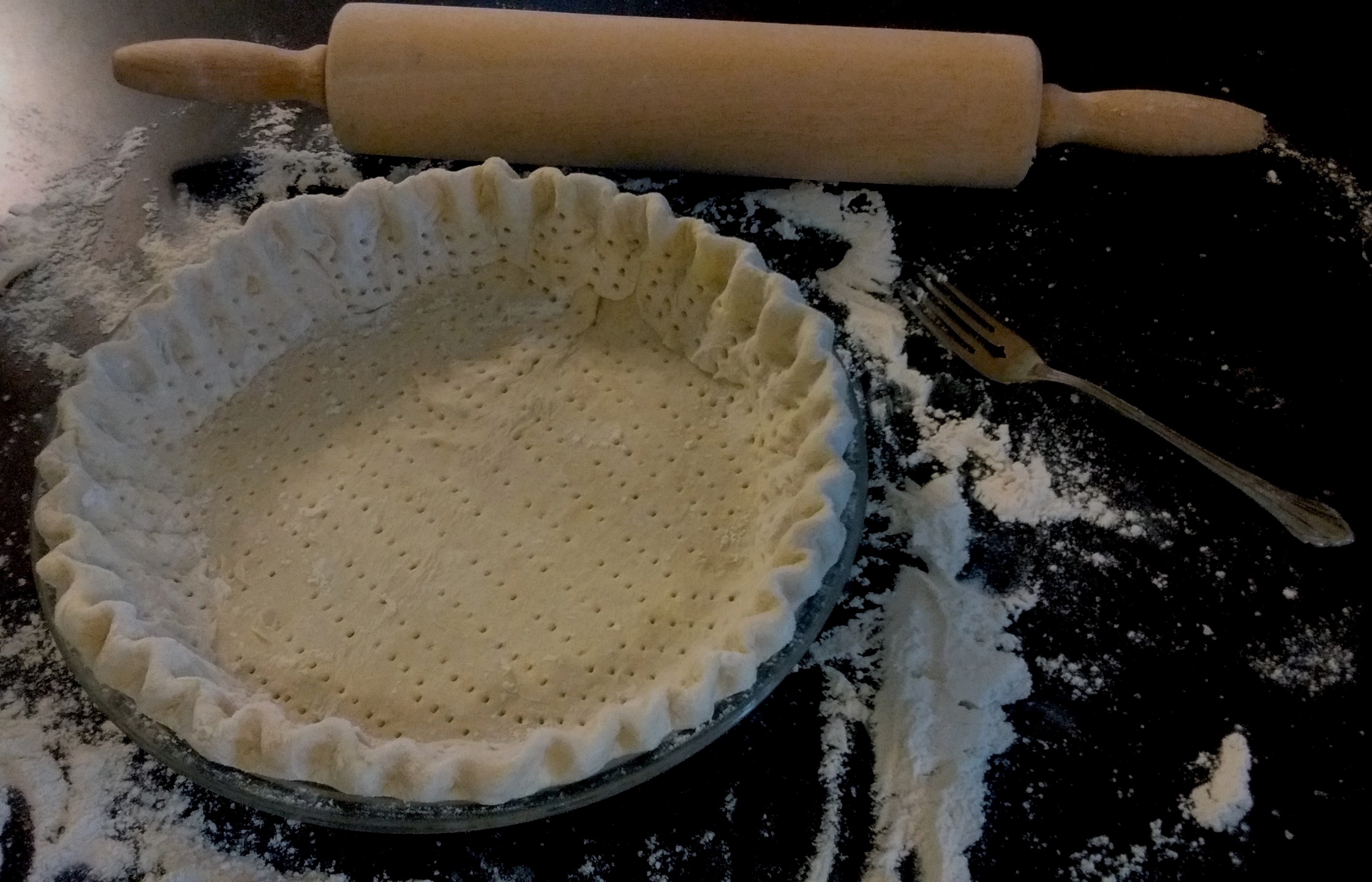
a-sour-and-sweet-situationPreheat oven to 425°. Roll the dough on a floured surface to fit a nine-inch pie plate. Crimp the edges and prick the bottom and sides of the shell with a fork. Line the pie shell with aluminum foil or parchment paper and fill with pie weights or baking beans. Bake at 425° for 10 minutes, remove the baking weights and continue cooking for 10 minute in 5 minute increments or until the crust is golden brown. Remove from the oven and place on a cooling rack.

Filling:

1 cup of sugar (I used raw)

2 T flour

3 T cornstarch

¼ t salt

1 ½ c water

2 lemons, juiced and zested

1 t vanilla

2 T unsalted butter

4 egg yolks, beaten

Combine the sugar, flour, cornstarch, and salt in a saucepan. Whisk to combine thoroughly. Add the water, lemon juice, lemon zest, and vanilla. Cook the mixture over a medium-high heat, stirring frequently, until it comes to a boil. Stir in the butter. In the thinnest thread possible, slowly pour the egg yolks into the hot mixture directly where you are whisking vigorously. This will keep the eggs from cooking and becoming scrambled eggs in your lemon filling. Continue cooking while stirring constantly until the mixture thickens. Strain the lemon filling through a wire mesh sieve to remove any pieces of zest. Pour into the baked pie shell.

Meringue:

4 egg whites

6 T sugar (I used white as the raw is too coarse for this step)

Pinch of cream of tartar

Whip the egg whites on a high speed until foamy. Gradually add the sugar and a pinch of cream of tartar, and continue whipping until stiff peaks form. Spread the meringue over the pie and seal at the edges of the crust. Set the meringue in a 425° oven for eight minutes or until it is golden brown. Cool the pie on a wire rack until you can handle the edges of the pie plate and serve warm, or chill the pie in the refrigerator for a couple hours and serve cold.

Enjoy!

Tips for success:

Chill the beaters and bowl in which you will beat the egg whites for meringue

That pinch of cream of tartar is what will keep your egg whites from breaking down and becoming watery

If you must buy citrus out of season, and you don’t want to risk pricey eggs and butter on bitter fruit, I suggest a test batch of lemonade to see how the lemons are doing. Another trick if you absolutely must make lemon meringue pie when lemons aren’t in season is a teaspoon of pure lemon extract to help take the edge off. I prefer having faith in my lemons, but that’s not always possible. Makes me wonder why so much lemonade sells in the summer!

Here’s a wonderful article on choosing citrus and when it’s in season

A Stitch in Time

a-stitch-in-timeIn December of 1918, the only thing on Marian Welles’s mind was a baby. She and James had tried to conceive throughout their first year of marriage, but to no avail. So it was with tears in her eyes that she accepted the beautiful, handmade quilt from her mother-in-law, Collie Mercer Welles, given as an anniversary present. Collie made the quilt from clothing James and Marian wore as children. She had the best of intentions, and a strong faith, when she created the quilt for her son and daughter-in-law. Unfortunately, Marian didn’t share Collie’s convictions, and the quilt was a stab of pain in her longing heart.

I received an amazing handmade quilt from my Aunt Inta as a wedding present, and I also inherited one from my Grandmother Huffman. Although they are different in style, both are heirloom quality works of art. I have also had the pleasure of sleeping under quilts made from scraps of fabric. These quilts aren’t created for their beauty, and yet as a non-quilter myself, I am still so impressed by the time that went into each quilt right down to the tiniest, perfect stitch. As I looked at the mismatched squares, I wondered where each one came from and marveled at how they found new life as a warm blanket.

I’ll direct you to Quilting in America for the history of quilts. The heritage is rich, abundant, and a worthy read. From alternative uses to perception of the craft throughout the decades, there is much in this article that I found quite interesting and hope you do as well.

I’ll Drink to That

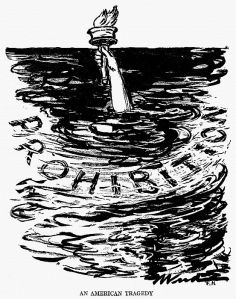
ill-drink-to-thatWhen you ask people about Prohibition in the United States, the response they most readily provide is that for some strange reason it became illegal to drink alcohol of any kind. This is usually accompanied by mystified looks and slow shakes of the head.

Unfortunately, what many don’t know is why this occurred and that it was actually part of our Constitution at one time. So, here’s a little history lesson born of my own need to understand Prohibition more thoroughly for the sake of my novel, The Secrets of Dr. John Welles.

By definition, Prohibition was the legal prevention of the manufacture, sale, and transportation of alcoholic beverages in the United States from 1920 to 1933 under the terms of the Eighteenth Amendment. Note that the consumption and private possession of alcohol was not illegal, so what a person already owned could be enjoyed in his or her own home. Just drink responsibly and sparingly as it was now tougher to resupply one’s stash.

The National Prohibition Act, known informally as the Volstead Act, set down methods for enforcing the Eighteenth Amendment, and defined which intoxicating liquors were prohibited, and which were excluded from Prohibition (e.g., for medical and religious purposes). The Amendment was the first to set a time delay before it would take effect following ratification, and the first to set a time limit for its ratification by the states. Its ratification was certified on January 16, 1919, with the amendment taking effect on January 16, 1920. For the following 13 years Prohibition was officially in effect, though the ability to enforce it was limited by the Volstead Act and by corrupt and complacent politicians who overlooked illicit manufacturing and smuggling.

The Anti-Saloon League’s Wayne Wheeler conceived and drafted the bill, which was named for Andrew Volstead, Chairman of the House Judiciary Committee, who managed the legislation. The Anti-Saloon League was the leading organization lobbying for Prohibition in the United States in the early 20th century.

So, why all this hatred toward alcohol? The Eighteenth Amendment was the result of decades of effort by the Temperance Movement in the United States and at the time was generally considered a progressive amendment. The Temperance Movement, which went back as far as the late eighteenth century, was born of the concern for alcoholism and how it played into spousal abuse, family neglect, and chronic unemployment. However, the desire for cheap, plentiful alcohol led to relaxed ordinances on alcohol sales, and the problem persisted.

A tract published in 1784 by Benjamin Rush detailing how excessive use of alcohol was harmful to one’s physical and psychological health. Many people got on board with the idea, initially proposing temperance rather than abstinence, but like most well-meaning organizations, political in-fighting stalled the group.

Throughout the decades, the Temperance Movement received support from various religious denominations and temperance groups, but it also took a back seat to issues such as slavery during the Civil War. It wasn’t until the third wave of temperance that any movement achieved success. With the formation of The Anti-Saloon League by Rev. Howard Hyde Russell in 1893, the Temperance Movement found footing not by demanding that politicians change their drinking habits, only their votes in the legislature. Under the leadership of Wayne Wheeler, the Anti-Saloon League stressed political results and perfected the art of pressure politics. The Anti-Saloon League’s motto was “the Church in action against the saloon,” and it mobilized its religious coalition to pass state and local legislation, establishing dry states and dry counties.

By the late nineteenth century, most Protestant denominations and the American wing of the Catholic Church supported the movement to legally restrict the sale and consumption of alcoholic beverages. These groups believed that alcohol consumption led to corruption, prostitution, spousal abuse, and other criminal activities. Brewers and distillers resisted the reform movement, which threatened to ruin their livelihood, and also feared women having the vote, because they expected women to vote for Prohibition. The Anti-Saloon League achieved its main goal of passage of the Eighteenth Amendment on December 18, 1917.

Just after the Eighteenth Amendment’s adoption, there was a significant reduction in alcohol consumption among the general public and particularly among low-income groups. Consumption soon climbed as underworld entrepreneurs began producing rotgut alcohol, and the speakeasy quickly replaced the saloon. Likewise, there was a general reduction in overall crime, mainly in the types of crimes associated with the effects of alcohol consumption, though there were significant increases in crimes involved in the production and distribution of illegal alcohol.

Those who continued to use alcohol tended to turn to organized criminal syndicates, who were able to take advantage of uneven enforcement, suddenly overwhelmed police forces, and corruptible public officials to establish powerful, murderous smuggling networks. Anti-prohibition groups arose and worked to have the Amendment repealed once it became apparent that Prohibition was an unprecedented catastrophe.

The Amendment was repealed in 1933 by ratification of the Twenty-first Amendment, the only instance in United States history that a constitutional amendment was repealed in its entirety.
How I Cheated at NaNoWriMo and Won

how-i-cheated-at-nanowrimoA couple years ago, my friend and fellow writer, S of JSMawdsley, talked me into trying NaNoWriMo. She mentioned it at the writer’s group she facilitates at the library where we worked. At the time, I was mainly a short story writer and dabbled in the occasional picture book. As luck would have it, I had an idea for a novel in mind, and NaNoWriMo seemed like the perfect way to get it out of my head and on my laptop.

Being new to the world of NaNoWriMo, I didn’t prepare at all. I just started writing on November first and quit on November thirtieth. I had 50,000 words, which satisfied the requirements of NaNoWriMo, but I didn’t have a complete novel. What I did have was a lot of work ahead of me and the conviction that maybe I really hadn’t won.

At this point, S would probably have told me I needed to outline my novel, but the first thing I discovered from writing such a lengthy piece is that I’m a pantser. I plot a little when approaching my writing, but I love to explore the rabbit trails because that is where I discover my best writing. My opinion on pantsing can be read here: Are You A Pantser?

So, did I win NaNoWriMo or did I cheat? I started at about the last one-third of the novel because I had the most information for writing that portion. In short, I learned the valuable lesson of researching before you write especially if it’s for a contest such as NaNoWriMo. You don’t want the added stress of trying to conduct research while keeping up a word goal.

I pressed on throughout the year editing what I had written and creating the rest of the novel as I wanted it to be. I researched more thoroughly and ended up chucking quite a bit of what I wrote for NaNoWriMo. Again, part of that was my fault, but I also wondered if one 50,000-word novel every year is what I wanted. Is that what the creators of NaNoWriMo want?

I suspect and sincerely hope the purpose of NaNoWriMo is to keep people writing because that’s what I did. Before I knew it, November had rolled around again, and with it NaNoWriMo. I wasn’t finished with my first novel, so why on earth would I abandon it for the added pressure of creating a new novel. Admittedly, I had no new ideas at the time, and I didn’t want the burden of coming up with one. Also, there was no time to research even the slim ideas that passed through my head.

Instead, I cheated, and I cheated grandly! I signed up for NaNoWriMo, and without a single ounce of shame, I re-entered my novel, The Secrets of Dr. John Welles. Dr. Welles’s story was almost complete, but I needed a little motivation to finish the missing chapters and tie it all together. NaNoWriMo provided this inspiration by keeping me on track with a daily word goal, but it also became a beneficial editing tool. If I edited my daily word goal, I counted it along with any new writing.

What I achieved wasn’t another half-baked novel, but rather a well-written, well-edited novel with which I was extremely pleased. A titch more editing after the fact, and Dr. Welles was ready for the hands of beta readers.

I took a couple years off from NaNoWriMo, but the point of the contest was always close to my heart. I knew I couldn’t devote time to a new novel and make The Secrets of Dr. John Welles all I wanted it to be.   Then there is the fact that when story inspiration comes to me, I have to begin which sometimes means starting before NaNoWriMo starts. Yes, there is Camp NaNo, but my heart belongs to the original taking place in November.

When NaNoWriMo rolled around this year, I was already a little over halfway through my current novel. During the month of October, I had to set my writing aside to prepare for my son’s Eagle Scout Court of Honor. When I was ready to restart, good ole NaNoWriMo once again came to the rescue as a means up jumpstarting my writing. Although I didn’t sign up with the official website, I created a spreadsheet to track and tally my daily writing goal. I’m using it to finish the current novel, for which I am prepared research wise, as well as for any writing I do that can be published including my blog posts.

Yes, that’s cheating because it’s not a single new novel of at least 50,000 words. But again, I have to believe the heart and soul purpose of NaNoWriMo is to keep writers writing. That is what I am doing.

Comfort Food

comfort-foodThe spring of 1920 sees the end of a turbulent time in the life of Johnny Welles. Three tragedies for which he feels responsible plague him until he seeks to escape the only life he’s ever known. Nothing his stepmother, Collie, or his three older siblings do helps to put Johnny’s mind at ease. Prudence Welles Mayfield, the aunt Johnny has never met, provides the solution to her nephew’s grief.

Prudence visits the Welles farm when Johnny is twelve with the express purpose of taking him to live with her in Baltimore. She has an agenda that will not only please her nephew, but will also satisfy her own hidden desires. Without waiting for an invitation to lunch, Prudence seats herself at the kitchen table to eat the simple, delicious food Collie prepared and reveal her plan.

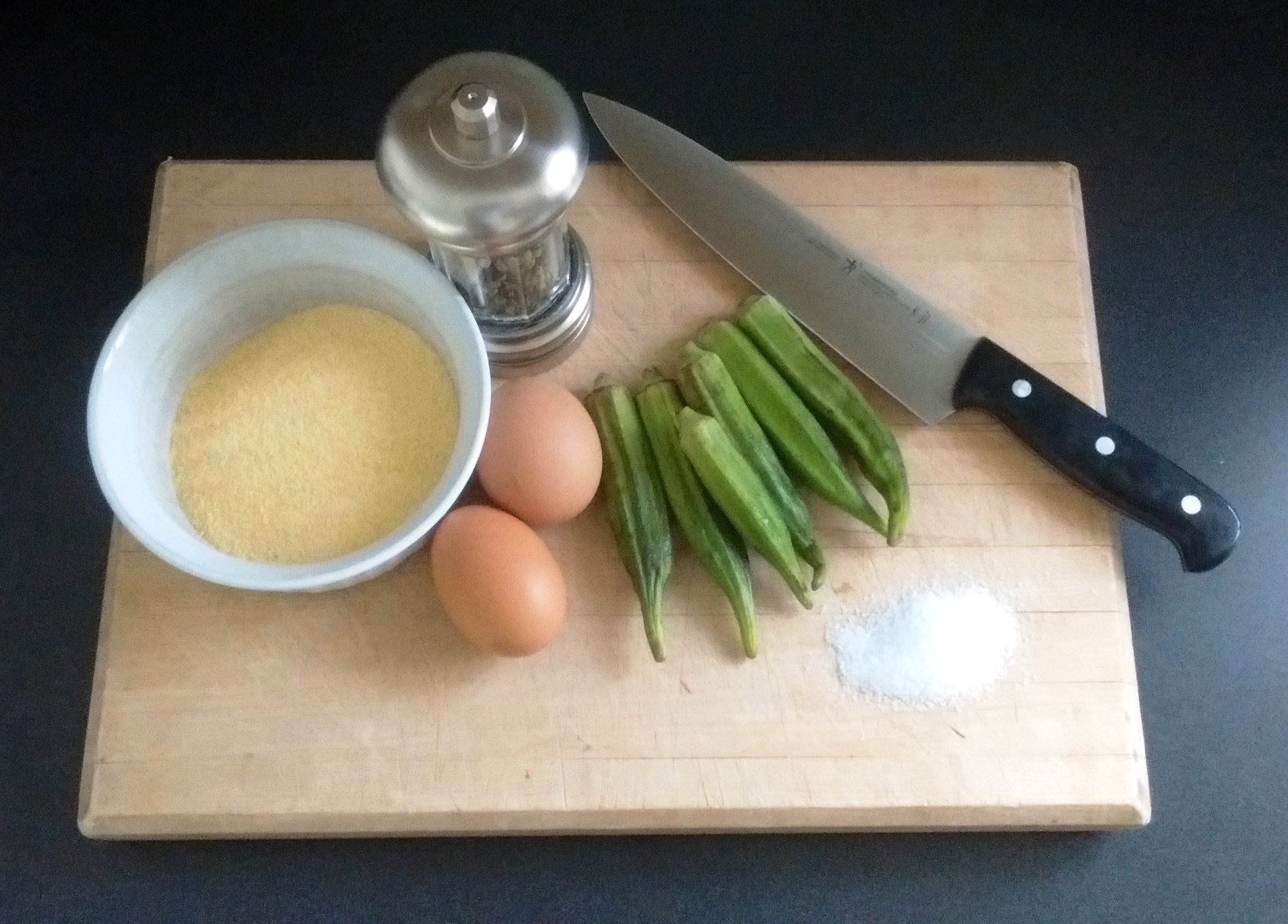
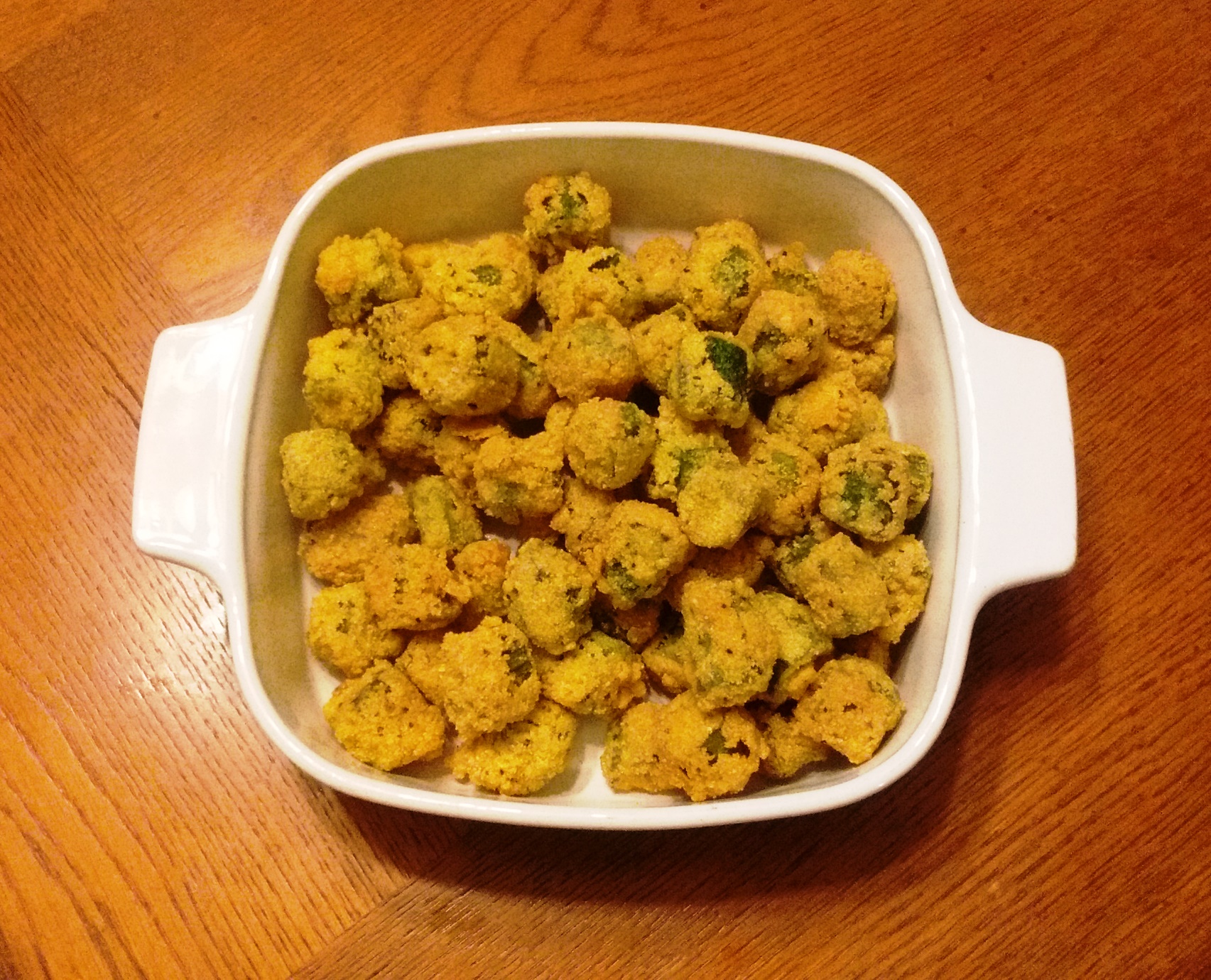
I had fried okra in mind as a side dish when I wrote the scene above. It’s amazingly simple to make, but tastes incredible. The great thing about okra is that it can be canned for frying and enjoyed in the middle of winter or any other time the vegetable is out of season.  Simply open a jar, don’t rinse it, and proceed with the following recipe.

Collie’s Fried Okra

1 lb. fresh okra (choose small, bright green pods free of rust or black spots)

1 egg

Tabasco

1 c cornmeal

3 T flour

1 ½ t sea salt

½ t black pepper

⅛ t cayenne

Dash of garlic powder, optional

Peanut and/or canola oil for frying

Bring about one inch of oil up to 400° in an electric skillet or in a cast iron skillet with a thermometer to gauge the temperature.

Wash the okra and pat dry. Trim both ends and cut into ½ inch pieces. Mix the cornmeal, flour, salt, pepper, and cayenne. Add garlic powder to this step if using. Toss the dry ingredients with a fork to blend.

Break the egg into a bowl and add several hearty dashes of Tabasco. Beat the egg thoroughly. Dip one-third of the okra in the beaten egg and toss to coat. Transfer the okra to the dry mixture and stir to ensure the pieces are thoroughly covered.

Carefully float the coated okra in the heated oil in small batches. Allow them to cook on one side then turn them to finish cooking on the other. When the coating is golden brown, transfer the okra to a paper towel-lined plate to drain. Repeat with the remaining okra.

Season with more sea salt if desired. Keep the okra warm in a baking dish in the oven while cooking in batches. Serve warm.

Enjoy!

comfort-food-4

A Soldier’s Story – Omar N. Bradley

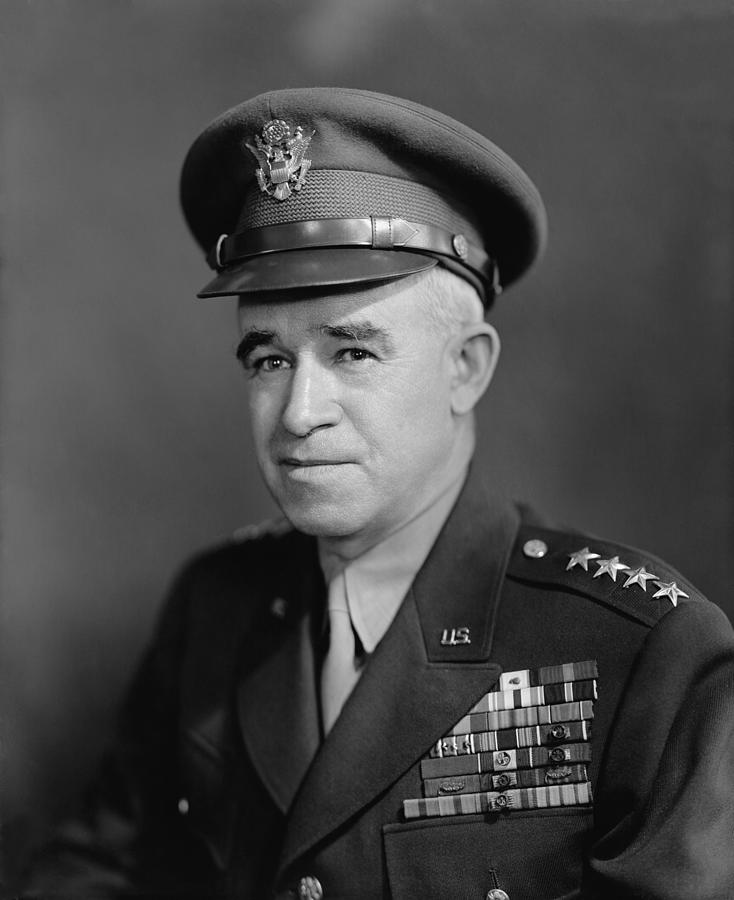
a-soldiers-storyA Soldier’s Story by General Omar N. Bradley is one of the most profound books I’ve ever read.  My friend and fellow writer, William Alford, loaned Bradley’s autobiography to me as a source of research for my novel, The Secrets of Dr. John Welles.  My research required a closer look at World War II, such as those provided by doctors and nurses (And If I Perish, Heroes From the Attic), but I still read Bradley’s account of the war, and I am extremely glad I did so.

He prefaces his autobiography with the inscription, “To those soldiers who must often have wondered WHY they were going where they did.  Perhaps this will help answer their questions.”

I believe Bradley answered these questions truthfully and without the ego that might have come from a lesser man achieving such rank and accomplishing what Bradley did.  As for the tough issue regarding loss of life, he explained how every move made by troops was analyzed and not conducted until the loss was the lowest number possible.  The decision to go ahead, shouldered by Bradley and other men like him, was not taken lightly, and it is not one I would ever want to have.

There are many who would argue that the war was unnecessary, but I concur with General Bradley:  the evil that swept through Europe wasn’t going to go away on its own.  Even with the combined forces of the Allies, the battles were not easily fought or won.  Perhaps unavoidable would be the better word choice in regards to World War II.

Bradley was against actions such as taking a site simply for the prestige of location.  Yet when other commanders’ egos swelled, he remained cordial with them even while strongly disagreeing with their decisions and/or actions.  He went so far as to put his career on the line to get the truth out to the American public regarding one such instance.

Further testimony to Bradley’s humility and strength of character are his accounts of his friend, General Patton.  Bradley spoke frankly about the times Patton overstepped his bounds, yet he never criticized in a way that tore Patton down.  When Patton was placed under Bradley’s authority, the two men worked together quite well and held each other in high regard.

Bradley includes comments from Prime Minister Winston Churchill that are chilling predictions come true.  Considering that the conversation took place in 1945 and wasn’t published until 1951, when Churchill says, “There may come a day when we shall walk into a cabinet room, break the glass over a switch, dial to the nation to be bombed, and push a button to declare war,” I can’t help but wonder if this technology was in place long before we were aware.  More unsettling are Churchill’s words, “But we shall never sit by and permit a minority to force its will upon a helpless majority anywhere,” which speak to the current world situation.

The book concludes with the end of the war in Europe, an occasion that was no doubt worthy of celebration, but I was left with a feeling of melancholy that I could only attribute to the realization that the type of patriotism displayed during World War II no longer exists.  Still, I believe that Bradley’s explanations successfully bridged the gap between those in command and those in the field.  I highly recommend A Soldier’s Story as a worthy read.

Putting Your Butterflies to Bed

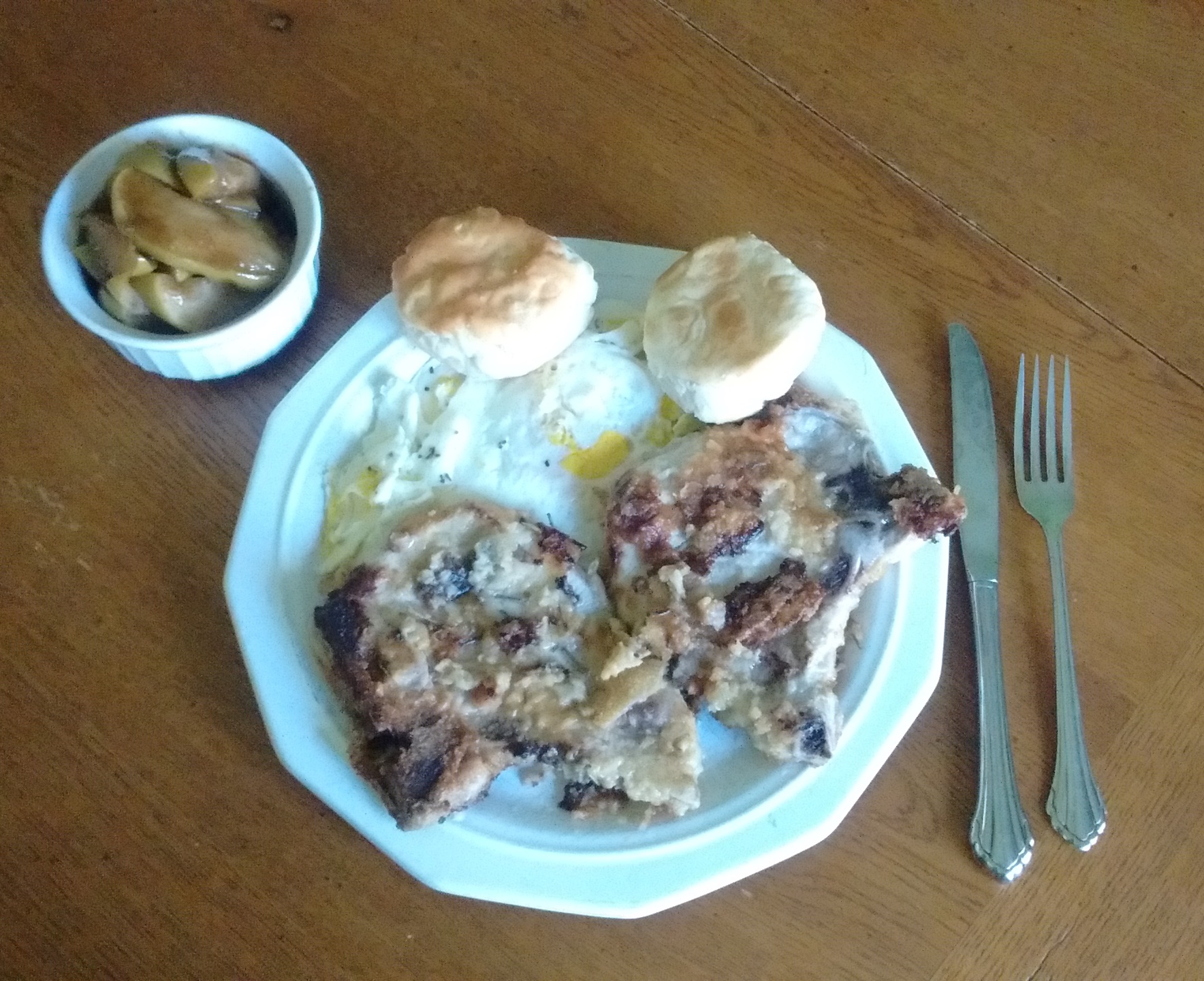
John Welles’s first day of school at the University of Maryland was marred by a bad case of nerves. His Aunt Prudence eased the situation by planning a large, country-style breakfast like those John used to enjoy as a boy on the farm. Unfortunately, Prudence couldn’t cook to save her life, but the rich socialite didn’t trouble herself with such minor details. Instead, she wisely placed all responsibility for any culinary success upon her brilliant cook, Lucia.

The ever-observant Lucia knew there was more troubling John than new school jitters. She calmed his distress by preparing his favorite dishes including pan-fried pork chops, fried apples, buttermilk biscuits, and fried eggs.  The following recipe for pork chops is the one I had in mind for the above-mentioned scene. The originator of the recipe is the type of cook who doesn’t measure as she creates, preferring to cook by taste, smell, and sight. I watched closely, and being a good judge of quantity, I copy-catted her recipe for this post.

Lucia’s Pan-Fried Pork Chopsputting-your-butterflies-to-bed

2 center cut, bone-in pork chops

2 T olive oil

Approximately 1 c buttermilk

1 t honey

1 T rosemary

½ t salt

Several grinds of black pepper (I used quad-color peppercorns when preparing the chops.)

Rinse the pork chops and pat them dry. Don’t trim the fat as it will flavor the chops while cooking. You can trim them afterward if you desire.

Put 2 T of olive oil in a one-cup measure and fill with buttermilk to make a full cup. Pour into a mixing bowl and add the honey, salt, pepper, and rosemary. Whisk thoroughly.

Pour half the marinade in an 8 x 8 glass baking dish, add the chops, and pour the remaining marinade over the top. Cover with plastic wrap and marinate in the refrigerator at least four hours or overnight.

Coating:

¼ c flour

2 T yellow cornmeal

½ t salt

¼ t garlic powder

¼ t onion powder

¼ – ½ t cumin

¼ freshly cracked black pepper (Again, I used quad-colored peppercorns.)

Combine the dry ingredients. Remove the chops from the marinade and drain them thoroughly. Dredge them through the coating mixture on each side.

2 T unsalted butter

Peanut Oil

Bring the butter and enough peanut oil to cover the bottom of a 12-inch cast iron skillet to a medium-high heat. Place the coated chops in the skillet and fry each side for eight minutes, turning in four-minute intervals, until they are no longer pink inside and the coating is crispy.

Serve with the suggested menu items for which I have provided recipes. This recipe can be increased as needed by doubling or tripling the quantities.

Enjoy!