What’s On the Menu?

What's On the MenuHow many times have you been writing brilliantly without pause only to stumble over the correct spelling of the word hors d’ouevre? I have to check every time I use it. This time, however, it was pad thai that sent me to the Internet not so much for a spell check but to verify whether or not the ‘T’ in thai was capitalized.

My search led me to UC Style: How to capitalize, spell, punctuate food, culinary terms, where I found the answer to the pad thai question. This is perfect for an author who loves to feed her characters (Edible Fiction). I’m definitely stocking my Writing Toolbox with this important contribution to The Weight of Words.

I hope you will find this site as helpful as I did.

Bon appetite!

Choose and Use the Correct Word

Or are they?

Or are they?

It’s always a wonderful feeling when you meet someone who loves words as much as you do. I had that experience about a week or so ago when I came across a post by Mark Schultz, Word Refiner. Don’t you just love his title? I know I do.

Mark’s article works perfectly with the type of posts I publish for The Weight of Words. When I first read it, I sensed a kindred spirit, and, dare I say it, a fellow member of the Grammar Police.

According to Mark’s bio on the Word Refiner webpage, he has been “purifying documents of all kinds for over 40 years.” What’s not to love with such an impressive resume?

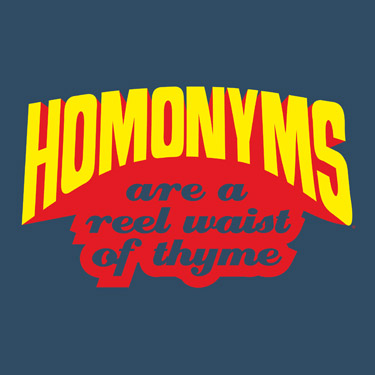
So, without further ado, I give you Homonyms Hurt Your Writing. Enjoy!

Commenter vs. Commentator

untitled (5)

Today’s The Weight of Words is one that made me pause for a moment. Until recently, I never had cause to use the word commenter. My own blog post prompted a quick search on the difference between commenter and commentator. As mentioned in a recent post, Get It Right the First Time…Oops…, I grind my teeth when I post something with a typo or incorrectly used word or phrase.

So, to prevent that from happening to me or anyone else, here is an explanation on the difference and correct usage of commenter vs. commentator. I wasn’t at all surprised to see the definition of commenter has been influenced by social media!

Get It Write the First Time…Oops…

mountain-peak-landscapes-wallpaper-53cb399969af2

I just about fall out of my chair laughing when I see “peeked my interest” or “peaked my interest.” This usually happens on places like Facebook or Twitter because people don’t seem too concerned with the editorial process on social media. When this slips into a book, I just about have a fit. If I was in charge, this type of offense would have me storming into an editor’s office with a pink slip.

Now I don’t mean to sound snooty; I admit to using my Google search bar as a spell checker. I also admit to the occasional mistake in a blog or Facebook post and Twitter tweet. I grind my teeth when this happens.

Still, if you’re going to employ a phrase, please take the time to double check the wording and etymology of phrase to ensure that you’re using it correctly. The following link explains the difference and appropriate use of pique, peak, and peek. I found it to be most useful with tips on how to remember which \ˈpēk\ is correct for your sentence.

What Would You Give to Have That?

imagesI recently wrote a blog post on the unusual things people say.  We grow up hearing odd turns of phrase and use them as an adult never questioning where they came from or what they mean.  We’ve said them all our lives and understand them perfectly.  Southerners, Northerners, people from other countries–we all have our quirky expressions that we employ without hesitation assuming everyone in our hearing vicinity will know what we mean.

While researching the origins of the phrases used in my family, I came across the following question and answer regarding the giving of one’s eye teeth for something. I use this one quite frequently and never gave it much thought.

The question was stated in such a way as to make me laugh. The answer proved informative. I had no idea this phrase dated back so far.

I would love to know the crazy sayings peculiar to your family or locale that you grew up hearing and/or saying.  As a writer, I’m always looking for unique ways to state something without sounding clichéd.  I believe it adds flavor to the story and strengthens a character’s voice.

Enjoy!

Parlez Vous West Virginia?

Have you ever wondered as a child where all those weird things adults would say actually came from? I’m speaking of the oddities my mother and grandmother used to express which I later labeled West Virginia-isms after their home state. Things like dead in Hell with your back broke and this life, the next, and the ironworks. What do they mean?

Then there are two not suitable to be publicly blogged, but I will e-mail them to you upon your request. Everyone should have the opportunity to experience them at least once in his or her life.

Taken out of context, these phrases are rather odd. Having grown up with them, I understand that to be dead in Hell with your back broke is worse than your current situation so shut up and quit complaining.

“I don’t like cleaning the cat box.”

“Well, you could be dead in Hell with your back broke.”

On the other hand, it could be preferable to your current situation.

“I’d rather be dead in Hell with my back broke than stay at this party one minute longer.”

If you think it’s bad now, there’s this life, the next, and the ironworks. Things are pretty hopeless when you reach this state.

“Dang, I hate my job.”

“I know, but there’s this life, the next, and the ironworks.”

Not everything filtering down through the generations of my family was negative. My grandfather used to say something was prettier than a speckled dog under a red wagon. Hmmm…they were poor and lived during a simpler time. Maybe that’s the prettiest thing he had to compare.untitled (4)
I came across a saying close to this but was unable to determine the origin of the similar expression prettier than a specked pup in springtime. Locale probably determined which one you used, and I wouldn’t be surprised to learn they came from yet another comparable phrase.

I’m not crediting my family or West Virginia for the creation of these colorful sayings, but I can appreciate how realistic they make dialog sound when reading or writing. You can’t help but speak them with a slightly southern accent. Go ahead and try; I dare you.

The great thing about them is that no editor could ever claim they are clichéd!

A Clean Sweep of Bad Words

images89FPFS5WVery, Really, Suddenly, Amazing, Awesome, That, Started:  what do these words have in common?  They should be avoided when writing.
This isn’t something I’d be too concerned with during a first draft, but when you go back to edit all the bad writing, these are the words to remove.  We’ve all slipped them in from time to time because they’re overused in every day language.

After reading the post from Writer’s Circle, I recalled a passage where I used suddenly.  It had been bothering me, but I couldn’t come up a worthwhile replacement word or phrase indicating the action.  As soon as I finished reading, a workable solution presented itself.  Some time away from my manuscript and this gentle reminder spurred my creativity to stretch beyond the commonplace.

One place I allow myself some leeway on using the seven, above-listed words is when writing dialog.  Working in the court reporting industry taught me that even educated people don’t speak as well as they’d like to believe.  Dialog sounds more realistic if is isn’t as perfect as prose.

I have noticed, however, that since I started writing, I make an effort to keep these words out of my conversation.  I’d be lying if I said I never used one , but I can’t put everyone on pause and go back to clean up what I said.  Until then, I’ll do my best to be very careful… Oops…

Also, don’t replace one bad word with another poor choice.  I discovered that I replaced very with extremely much too often when speaking. What sounded good to my ear prompted yet another scan of my manuscript to ensure that I hadn’t done the same thing in my writing.  I found five instances, and I’m currently in the process of editing them.

Another great thing about cleaning these words out of your writing is that it’s the first, small step to the editing process which often feels overwhelming.  Getting rid of them provides a building block to better editing which in turn means better writing.

“Very” and Other Useless Words to Erase Forever

You Keep Writing That Word…

images (3)Three little words that I see misused quite frequently are yea, yay, and yeah. Darn it, if they aren’t so similar that you may need to pause before employing one in your writing. Luckily for Tweeters and Facebookers everywhere, I’m here to help.

Yea – an archaic, formal, affirmative answer. Think King James Version of the Bible. I suspect this is rarely the word intended.

“Yea, though I walk through the valley of the shadow of death…”

Yay – an informal exclamation expressing triumph, encouragement, approval.

“Yay! You did it Robert!”

Yeah – an informal, casual variant of the word yes. I encounter this most often with teenagers.

“Yeah, pizza for dinner is cool with me.”

Envy vs. Jealousy

Envy vs. Jealousy

Today’s Weight of Words post serves to clarify the difference between envy and jealousy. Too many times to count, and yet I cringe every single time, I have seen these words used interchangeably.

The definition of envy is to want what someone else has and resenting them for having it. Perhaps your best friend shows up for lunch in the pair of shoes you’ve had your eye on for months. You want to be happy for her, but you’re more likely to feel envy. You want the shoes and, if pressed to admit, you dislike the fact that she owns them before you.

Jealously is the sensation you register when you think someone’s trying to take what’s yours. You’re at a party with your new sweetheart, and although you love the attention you’re receiving, you’re also insecure about the fact that so many people are flirting with your new love interest. You begin to wonder if they have the ability to take this person away from you. This fear of loss leads to jealousy.

Now, young writing padawans, go forth and use these words correctly.

Appreciation For vs. Appreciation Of

Appreciation For vs Appreciation Of

Today’s post is a simple reminder on when to use appreciation for versus appreciation of. We all believe we know the rule until that split second when we’ve been tasked with something like the engraving of a plaque to commemorate a co-worker’s achievement. The shop clerk, who usually isn’t an English major and provides absolutely no help at all, stares at you blankly, waiting for you to decide whether the plaque should read appreciation for a job well done or appreciation of a job well done.

Because I care enough to not let you return to the office in shame, I’m going to help you out with this little dilemma. Both are appropriate under different circumstances. Appreciation for indicates a love, an understanding, a feeling as in, “He has a great appreciation for modern art.” Appreciation of indicates a thankfulness, an acknowledgment as in, “The plaque was awarded in appreciation of Bob’s service to the organization.”

I hope this lesson is a helpful reminder. If you should ever forget how to use appreciation for and appreciation of, at least remember my blog address, www.hlgibsonauthor.com, where you’ll find all the answers to life’s annoying problems. Well, at least the ones that have to do with writing.