Three’s a Crowd

Three's a CrowdTwo words that are similar are enough to drive this writer crazy, but when there are three that actually give me pause concerning spelling, definition, and usage, well, that’s when the ole Google search bar gets quite a workout on my laptop. Today’s The Weight of Words focuses on eminent vs. imminent vs. immanent.

And by the way, I don’t really use my Google search bar to look up words. That’s what Grammarist is for. Per the website:

Someone or something that is eminent is of high rank, noteworthy, distinguished, or prominent. An accomplished world leader and a respected intellectual, for instance, are eminent.

Something that is imminent is (1) very near or (2) impending. For example, when the weather forecast calls for a 100% chance of thunderstorms, we might say that storms are imminent.

Something that is immanent exists within or is inherent to something else. The word is often used in reference to spiritual or otherwise nonmaterial things. For example, a spiritual person might say that God’s power is immanent to the natural world.

Though the three adjectives are not exact homophones, they are similar enough to engender occasional confusion. Immanent in particular is very often used in place of imminent in popular usage, and imminent and eminent are also frequently mixed up.

Clear as mud? Now go forth and use them!

Looking Through the Long Lens of History

Glimpses of understanding are all many of us will ever have for what the men who stormed the beaches at Normandy experienced on June 6, 1944. I have looked at it from several different sources, and still, my knowledge is mere shadow when compared to the memories of the men and women who served during World War II.
Conneaut 2

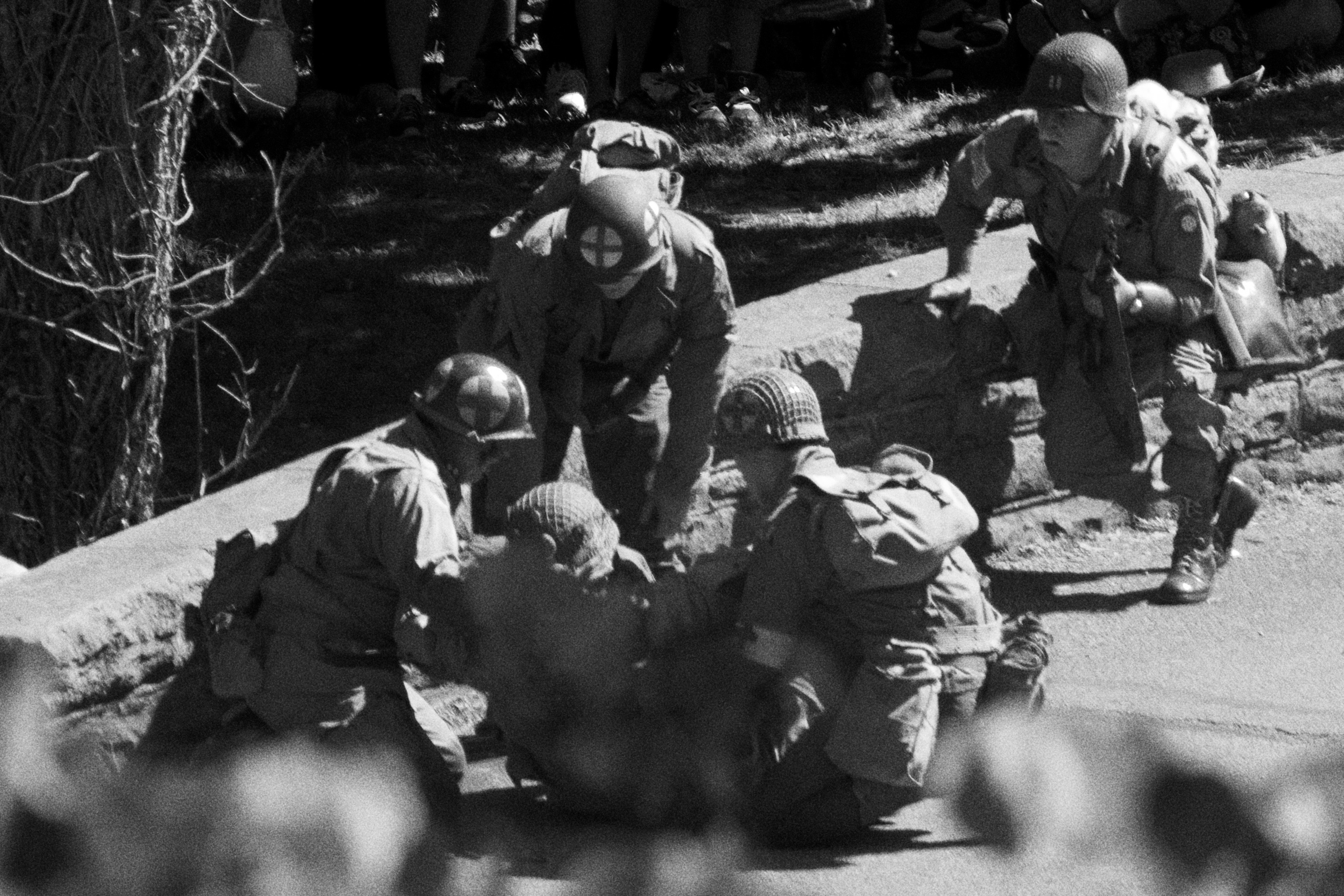
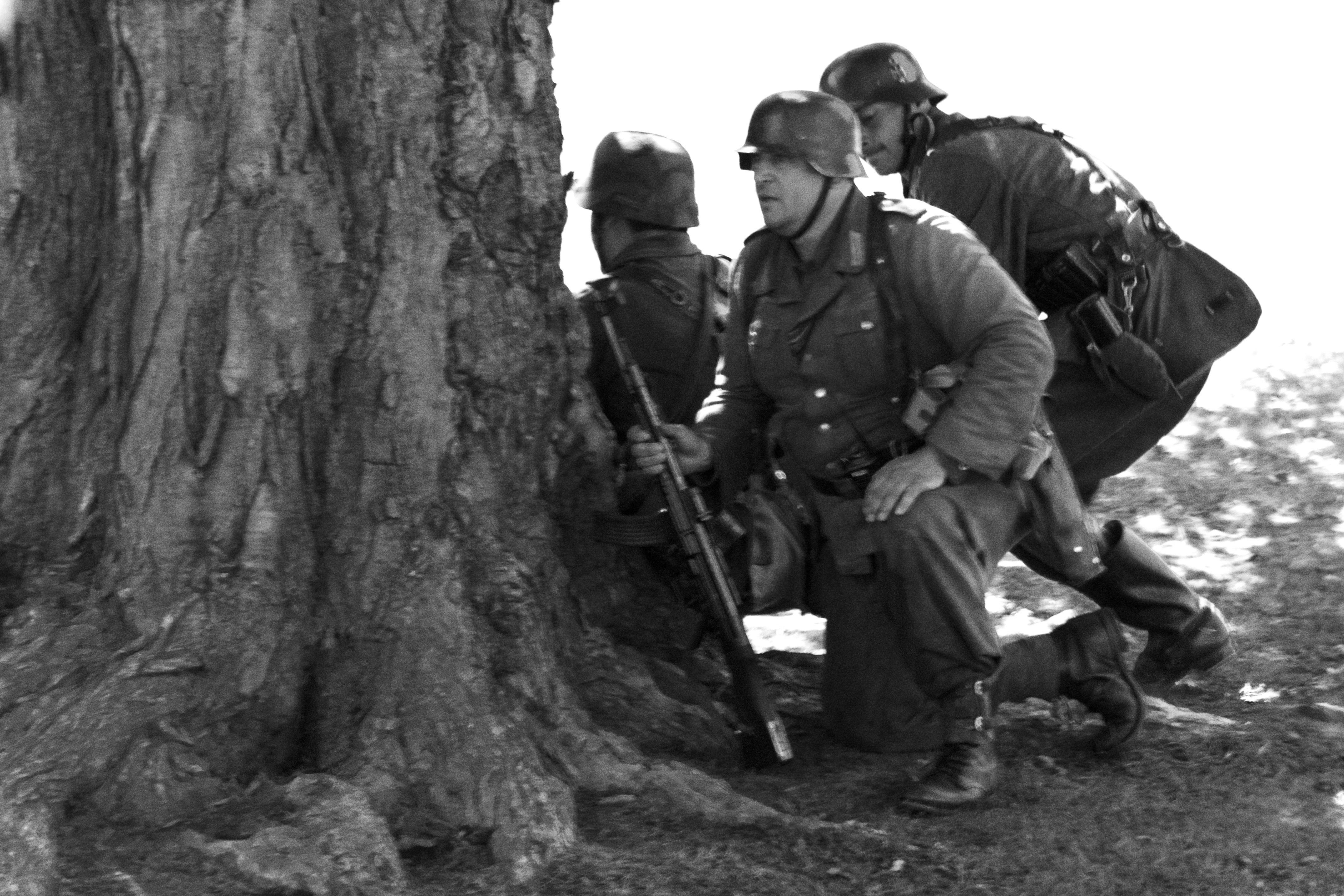
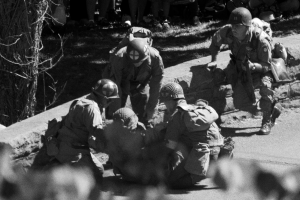
As heart wrenching as Band of Brothers was to watch, I didn’t have a true understanding of the ordeals faced by the American and Allied soldiers and medical staff until I began researching my novel, The Secrets of Dr. John Welles. Per my husband’s suggestion, I attended the Conneaut D-day Reenactment. I assumed I’d find some hobbyists with a useful amount of knowledge. I am not ashamed to admit that the whole event was incredibly humbling, and what I discovered far surpassed my expectations.
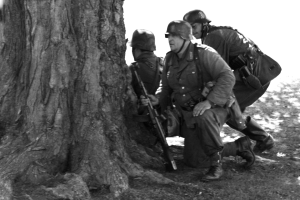
Conneaut 1

My journey began when three nurse reenactors graciously granted me an interview and patiently answered all my questions. They directed me to And If I Perish and Heroes From the Attic as additional resources where I would find the specific details needed to create believable scenes in my novel. Both books provided the information I desired, but more importantly, they supplied a sense of approachable familiarity that my research had been lacking. Long before I finished reading, I felt as if I knew the people about whom the books had been written. They became friends with whom I experienced fear, anxiety, sympathy, joy, loss, relief, and a whole host of other emotions. I developed an even deeper respect for them, and I wish I’d had the pleasure of meeting and knowing them.
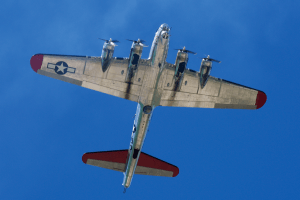
Conneaut 3

Another valuable perspective of World War II was the autobiography of Omar N. Bradley, A Soldier’s Story. General Bradley’s account supplied information from the other end of the spectrum, bridging the gap between those in charge and those under orders. As inscribed in the front of the book, General Bradley hoped to help soldiers “understand why they were going where they did.” I believe his memoir answers anyone’s questions if only they are willing to look. While many would criticize those in charge without offering alternatives and/or solutions, I know that I would never want to shoulder the burden that Omar Bradley and others like him did during World War II. To simply say they did the best they could would be insulting. From the lowest private to the highest ranking general, and everyone in between, they all served bravely and selflessly.
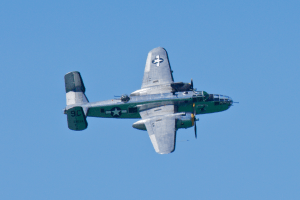
Conneaut 4

This post would be incomplete without attempting to describe the D-day battle portrayed at Conneaut. My emotions get the better of me every time I think about it. It all seems to happen at once.

Landing craft full of American and Allied soldiers about to crash onto the beaches.

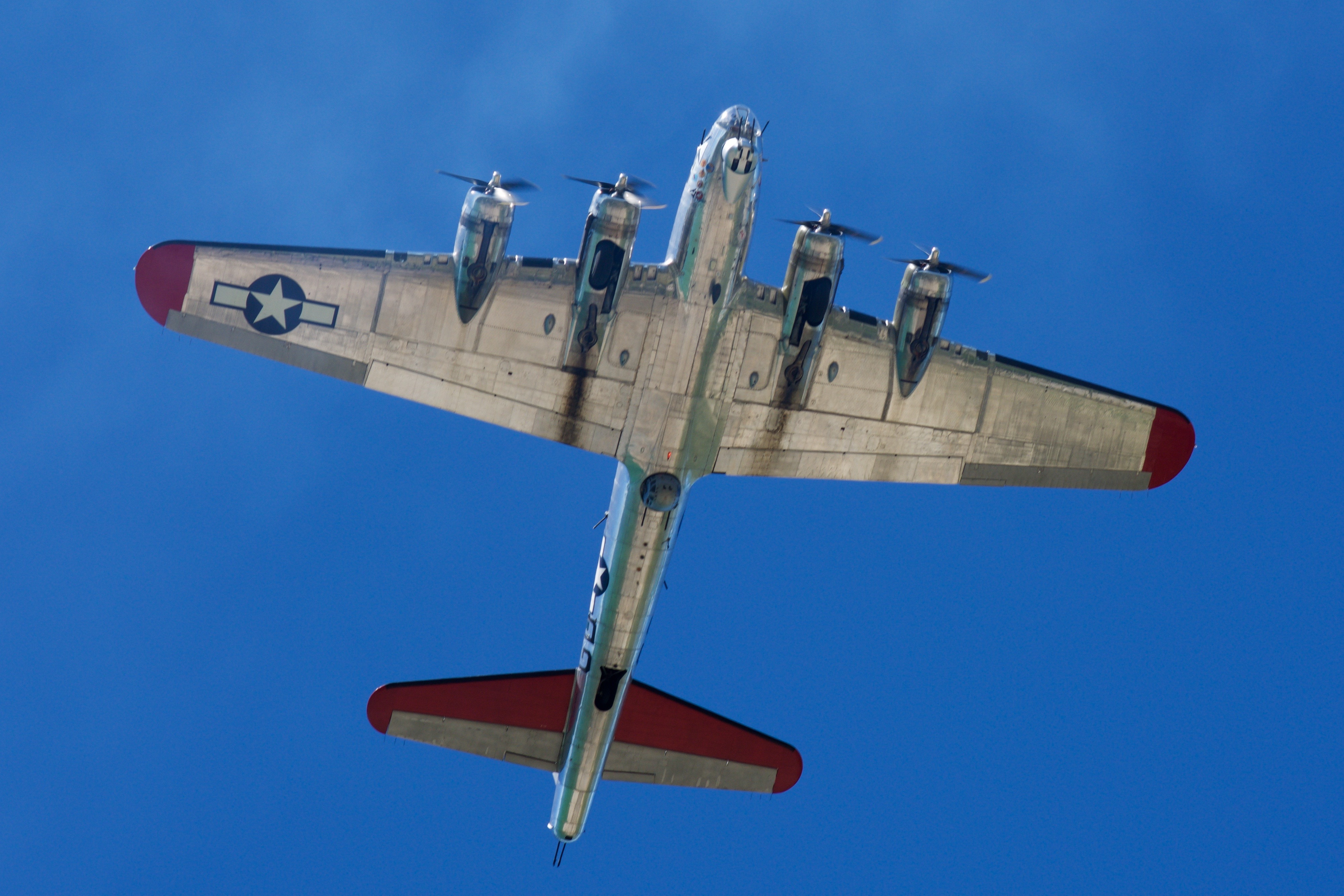
The thrill of the B-17 Flying Fortress flying over so close I swear you could reach up and touch it.

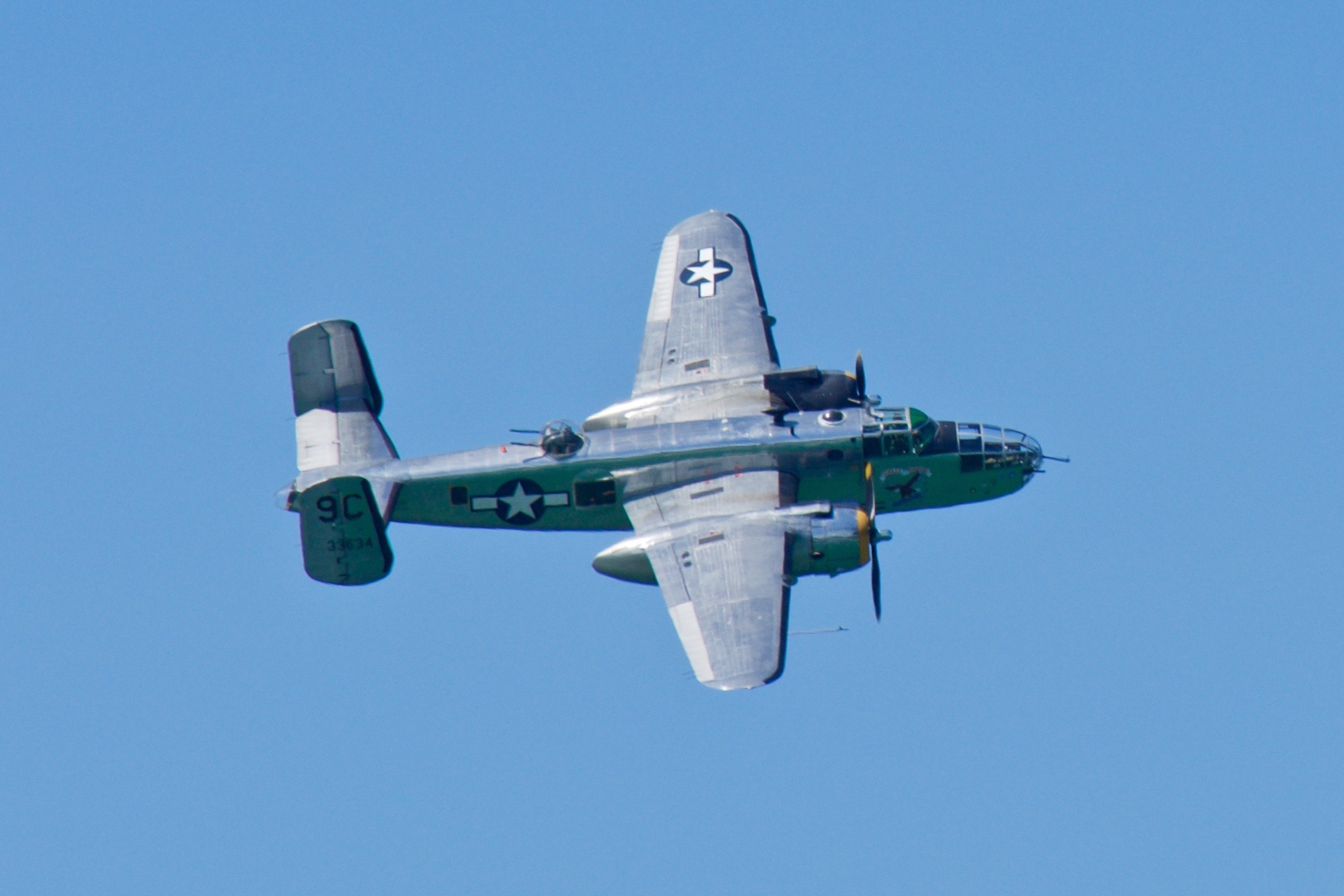
The B-25 Mitchell banking in the brilliant blue sky.

P-51 Mustangs crisscrossing the air like darting swallows.

Excitement and tension mounting, trying to remember it’s a reenactment.

The ground vibrating with the boom of the German 88, the shock traveling up through your body.

Black clouds billowing upward from the flame thrower.

Soldiers storming the beach and falling, the dull ache in your chest every time that soldier is American or Allied.

Inch by grueling inch they gain ground.

The Germans relentless, the Americans resilient.

Again the planes, again the 88, the sound of bullets ripping the air.

And then, a small cheer is heard in the distance, rippling through the crowd, swelling.

Clapping and people jumping to their feet.

Tears in your eyes.

The American and Allied soldiers have gained their objective.

Breathing a sigh of relief.

It’s over. For us, right now, D-day is over.

Locking eyes with those around you as your remember that in 1944, it was just a beginning.

I cannot thank the reenactors enough for keeping alive the memory of what brave American and Allied men and women did. Their selfless sacrifice must never be forgotten or rewritten. The sad fact remains that much of this history is not being taught to upcoming generations. Worse, there are those who wish to revise it as something undesirable or reprehensible. As much as this grieves me, it is not enough for me to want this for future generations. They must desire the knowledge of history for themselves.

Until then, I will carry on remembering for every person who served long after the last one is gone.

~~~~~

Thank you to HBSmithPhotography for the wonderful pictures from the 2015 Conneaut D-day Reenactment

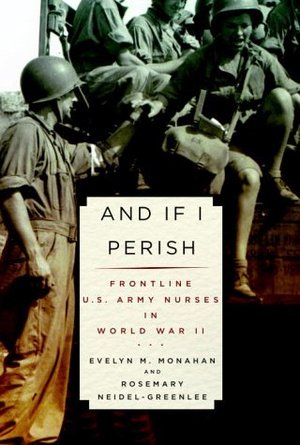
And If I Perish

And If I PerishAnd If I Perish was recommended to me by the nurse re-enactors of the Conneaut D-day event as a source of information on American medical staff during World War II. I needed to place my protagonist, Dr. John Welles, in the European Theater as a surgeon, but I truly had no idea how to incorporate a civilian doctor among the ranks of military personnel.

Thanks to Evelyn Monahan and Rosemary Neidel-Greenlee’s thoroughly researched book, I not only had a way to place Dr. Welles in the war, I had firsthand accounts via actual medical staff of what he would have encountered.

And If I Perish is a treasure trove of information not to be missed. I highly recommend it to students of nursing and history. While the contribution of doctors is also noted, the focus of the book is on the nurses who responded to the call to tend American soldiers fighting in North Africa, Italy, and at the Normandy landings through to the end of the war in Europe.

Often without footwear and uniforms in their sizes, yet an abundance of nylons, lipstick, and face powder supplied by the military, the nurses who participated in World War II made tremendous sacrifices and improvised on the spot to ensure that American and Allied soldiers received the best in medical care. They even gave the best they had to offer when working on German POWS who, with the exception of SS officers, were often grateful for the care they received once they overcame the fear of being captured.

It was no small challenge for the nurses to assist doctors while only a couple of miles from the front lines, often in horrible weather, and sometimes during retreats with the threat of being left behind hanging over their heads. And they did it without the benefit of weaponry to fight back.

The nurses endured bombing, strafing, and even evacuation from a hospital ship that had been attacked by unscrupulous pilots of the Luftwaffe contrary to the Hague Conventions. Occasionally they lost one of their own, a fact that further solidified their sense of family. All this they endured at less pay than their male counterparts.

With the equality that women enjoy today in many fields of work, it is difficult for me to comprehend why, for so many years, the nurses’ stories were overlooked and why they didn’t receive as many promotions and awards as the men serving. Hopefully, Mrs. Monahan and Mrs. Neidel-Greenlee’s book came in time for all of them to know how loved and appreciated they were and are for the sacrifices they made in serving their country.

A Matter of Classes

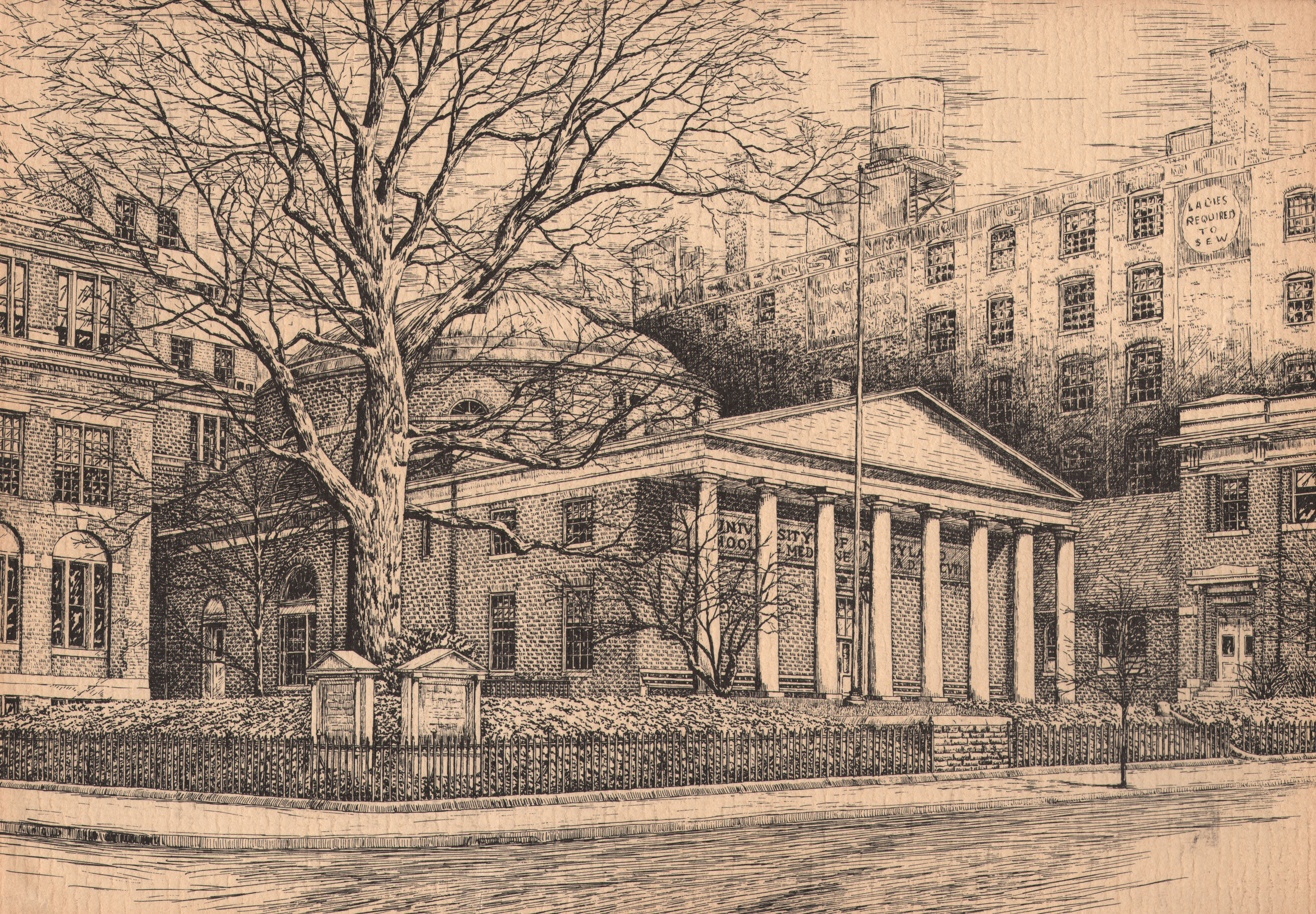
A Matter of ClassesOne of the jewels in the crown of the research for my novel, The Secrets of Dr. John Welles, is a class schedule from the University of Maryland for 1922. I could not have been more pleased with the delivery of this item into my possession than if I had asked what the Queen of England ate for dinner on May 28, 1997, and been told not only what she consumed but how well she like it.

Let this exaggeration serve to convey exactly how pleased I am. When I began my research, I had absolutely no idea how I was going to discover what classes and labs doctors in the 1920s were required to pursue or for how long. I only had my knowledge of modern day medicine to fall back on, and that simply wouldn’t do.

Douglas Skeen, who at the time of my research was employed at the Maryland Department of the Enoch Pratt Free Library in Baltimore, Maryland, and hopefully still is, is responsible for locating the bulletin and sending it to me as a PDF. I sincerely thank Mr. Skeen yet again for performing his role as a Reference Librarian above and beyond my expectations.

I created the Research Road portion of my blog with the express purpose of sharing what I discovered with other writers. I don’t know how many others may need similar information, but I will allow you to stand on my shoulders as you search for it, and I’ll hold your ankles to balance you as you do. With that being said, please enjoy the attached PDF of the Bulletin of the University of Maryland School of Medicine and College of Physicians and Surgeons, Vol. VII, from July 1922. At the very least, I hope you enjoy the walk through history.

UM Bulletin Vol 7 July 1922

One For the Gangstas

Today’s The Weight of Words was generated by my need to know the correct spelling of a word that I’ve said quite often but never needed to write. Until now.

Pants, jeans, slacks, trousers, breeches…or is it britches?

Pull Up Your Pants or Else!

Pull Up Your Pants or Else!

According to Grammarist.com, breeches are short trousers that extend to or below the knee. When speaking informally, breeches is a term that may refer to any trousers. Breeches is a plural noun, the preferred pronunciation is BRIchiz. The word breeches appears around 1200 and comes from the Old English word brec, the plural of broc, meaning a garment for the legs and trunk. Breeches cover a person’s posterior. The word breech has come to refer to a baby trying to emerge from the womb posterior first, and the part of a gun behind the bore.

Britches are also short trousers that extend to or below the knee, but when speaking informally, britches is a term that may refer to any trousers. Britches is a plural noun, the preferred pronunciation is also BRIchiz. Britches first came into use in 1571. It is an alternate spelling of breeches, and also, a less formal spelling.

I’ve compared the definitions several times and conclude that the only difference is whether or not you want to use the formal or informal spelling in your writing. They are pronounced the same.

In either case, gangstas, please pull up your BRIchiz. Problem solved.

Quit lolliking about an’ read this!

Gladstone_Pottery_Museum_Stoke-on-Trent_450Today’s The Weight of Words blog post began as tweets between me and my brilliant, artistic friend, Michael Ferguson. Mike lives in England, and right before the holidays, he came across the word crimbo in his tweet. I had a pretty good idea of what the word meant, but it generated a LOL and the request for an explanation.

This prompted Mike to go all ar ter toke crate on me (I still have no idea what this means!) and provide a link that would help me decipher what he was saying. At least in theory the link was to have done this.

Since The Weight of Words, Writing Toolbox, and Research Road are all present to assist other writers in need, I thought the link Mike sent would prove most helpful to anyone wishing to write in the language of the Potteries, a North Staffordshire Dialect.

As I scrolled through the list, I was quite pleasantly surprised to find that I recognized several words and phrases because I have heard them employed throughout my lifetime. I always believed them to be West Virginia-isms, but now I’m curious as to how these odd turns of phrase ended up in the mouths of my Mountain State ancestors when they have been credited to Stoke-on-Trent, England, and not Camden-on-Gauley, West Virginia.

Perhaps we shall never know…

Goodnight, Irene. Have a Good Night.

soiree1Today’s The Weight of Words blog post tackles the tricky question of whether you meant to write goodnight or good night.

Picture yourself enjoying a night out on the town that has, unfortunately, come to a thrilling but exhausting end. Your friends have graciously delivered your slightly intoxicated self to your doorstep, and you send them off with kind words. At this precise moment, you experience brief clarity and decide that you must rush to your laptop to chronicle the exciting evening including your final farewell.

If, in your parting statement, you meant to convey “Have a good night,” then you would type it as two words, good night.

However, if your last comment was a benevolent wish upon your friends, you would type goodnight.

Confusing? Not really. Just keep in mind that the first is an abbreviated form of “Have a good night” and the second is a pleasant wish bestowed.

What’s On the Menu?

What's On the MenuHow many times have you been writing brilliantly without pause only to stumble over the correct spelling of the word hors d’ouevre? I have to check every time I use it. This time, however, it was pad thai that sent me to the Internet not so much for a spell check but to verify whether or not the ‘T’ in thai was capitalized.

My search led me to UC Style: How to capitalize, spell, punctuate food, culinary terms, where I found the answer to the pad thai question. This is perfect for an author who loves to feed her characters (Edible Fiction). I’m definitely stocking my Writing Toolbox with this important contribution to The Weight of Words.

I hope you will find this site as helpful as I did.

Bon appetite!

Straighten Up & Fly Right

Straighten Up and Fly RightIn my novel, The Secrets of Dr. John Welles, Claude Willoughby, one of John’s best friends, has had his share of trials and tribulations. When John and Claude first met, they sized up each other and decided they weren’t too keen on pursuing a friendship. After a few terse words, they overcame their differences, and together with Sam Feldman, forged an alliance that lasted a lifetime. So close was their bond, that when one of the afore-mentioned tragedies sent Claude to self-imposed exile in California, John and Sam felt as if their right arm had been severed.

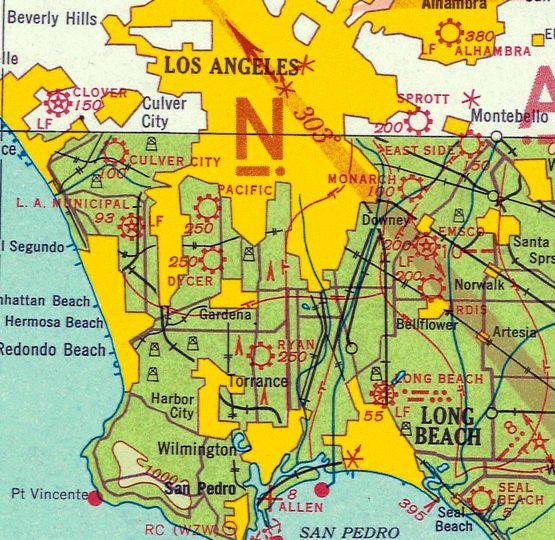
Claude obtained his pilot’s license as a means of dealing with his grief. He also secured employment at the airfield where he trained and later joined the Navy as a pilot during World War II. I had to research exactly what Claude would have encountered in 1937 when he learned how to fly. In doing so, I came across the most unusual website listing a compilation of airfields, now abandoned but operating during the time period about which I was writing. I really shouldn’t have been surprised; the Internet has a site for just about any subject a writer would need to research.

Abandoned & Little Known Airfields contains descriptions and images of 1,995 airfields in all fifty states and is organized alphabetically by state. I hope you find this information as useful as I did.

Lest We Forget

While researching World War II for several chapters of my novel, The Secrets of Dr. John Welles, I came across three books I’d like to share as beneficial reference materials.


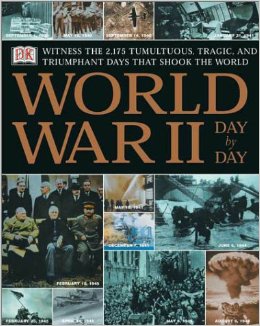
World War II DK PublishingWorld War II Day by Day, published by DK, is a collaborative effort by several former military personnel, researchers, and lecturers. The information is presented as news clippings from the various countries involved with or affected by World War II and the events leading up to it. A small calendar appears on each page and the days and weeks during which the events took place are highlighted. This allows one to isolate a particular event much easier. The book is replete with pictures, maps, and posters from the era. The numerical cross reference, timeline, and Who’s Who section lend ease to fact checking.


Campaigns of World War II

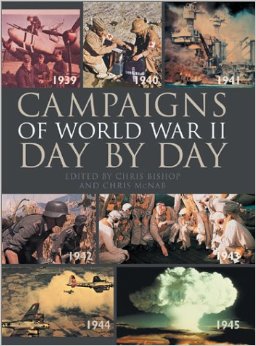
Campaigns of World War II Day by Day, edited by Chris Bishop and Chris McNab, is similar to the above-mentioned book but is laid out slightly different. The various campaigns are broken down into sections depending in which theater they occurred, whether European, Pacific, or African. Within each section, the daily and sometimes hourly timeline is most thorough. There are more maps in this book indicating troop movements as well as a focus on military weaponry, vehicles, and aircraft for the era.


World War II Donald Summerville

World War II Day by Day, written by Donald Summerville, presents many of the features mentioned in the first two books. This book is broken down into yearly sections with daily or monthly events listed within. The country in which each event took place is presented in boldface. The book concludes with a post war section.

I found each book to be extremely interesting, but together they presented a wealth of information I could check and cross check for accuracy. History buffs, reenactors, students, and writers alike will appreciate reading these books whether for enjoyment or research.