No Bad Apples

no-bad-applesToday’s post falls into the category of Research Road, however, the information I discovered didn’t make it into my novel, The Secrets of Dr. John Welles, or more correctly, it was removed. The reason for this underscores my admonition to always check your facts. Whether you’re writing historical fiction or fantasy with factual details familiar to the known world, it’s important to present the particulars accurately.

In an effort to entice potential readers once my novel is published, I have familiarized them with characters and situations through the food I featured in the story. Recipes for these meals can be found in Edible Fiction. Last week, I wrote a post for an apple pie eaten in a scene relaying Dr. Welles’s first trip into the town where he decided to spend his later years. For this particular pie, I chose to use Paula Red apples. They are among my favorite pie apples because they have an old fashioned flavor and become sauce-like when baked. I thought a little history on the heirloom apple would make for an interesting blog post, and that’s when I learned my mistake.

According to several websites devoted to antique apples, Paula Reds were discovered as a seedling in Sparta, Michigan in 1960 by Lewis Arrends. The apple, named for Arrends’s wife Pauline, was a happy accident that appears to have descended from the humble McIntosh. Why is this important you ask? Because the scene in which a Paula Red apple pie is eaten by Dr. Welles took place in 1958, two years before their discovery and ten years before they hit the market. Perhaps my favorite apple wasn’t as vintage as I first believed.

There are those, my mother among them, who will argue that this is a minor detail, one that wouldn’t be discovered by the casual reader. But as I’ve stated before, I’m not a casual reader or writer, and these details are important. How can I expect my readers to have faith in what I say if I don’t conduct thorough research? (Who is in Your Details?)

I know readers are expected to suspend some belief at times and trust their favorite writers, yet I can’t allow that one person who could nail me on the facts to be disappointed any more than I could tell blatant lies. Obsessed with the facts? I think so! In closing, I hope that another writer will benefit from the information presented about Paula Red apples. At the very least, I hope I’ve prompted writers to check their facts.

By the way, if you want a great recipe for an apple pie, check out the post All-American Goodbye.


Spin to Win

spin-to-winIn December of 1927, Claude Willoughby has been left behind in Maryland as his father, sister, and step-mother return to Kentucky for Christmas. The cruel abandonment is Claude’s punishment for disobeying his father’s directive. Sam Feldman comes to Claude’s rescue by inviting him and their friend, John Welles, over for an after-the-fact Hanukkah celebration. After a meal of brisket and latkes, the boys play dreidel with Sam’s mother, Gladys.

Although the game is meant for children, I know quite a few adults, myself included, who get caught up in playing dreidel every Hanukkah. In fact, we have a tradition that last year’s winner must return to defend his or her title the following year.

The Hebrew word sevivon or s’vivon means to turn around. Dreidel is the Yiddish word for a spinning top. All dreidels have four Hebrew letters on them which stand for the saying Nes gadol haya sham, meaning a great miracle occurred there. In Israel, instead of the fourth letter shin, there is a peh which changes the saying to Nes gadol haya po, a great miracle occurred here.

Playing with the dreidel is a traditional Hanukkah game played in Jewish homes all over the world, and rules may vary. Here’s how to play the basic dreidel game:

  1. Any number of people can take part.
  2. Each player begins the game with an equal number of game pieces (about 10-15) such as pennies, nuts, chocolate chips, raisins, matchsticks, etc. (Our family uses Hershey’s Nuggets which makes winning or losing fun as many of the playing pieces are enjoyed during the game.)
  3. At the beginning of each round, every participant puts one game piece into the center pot. In addition, every time the pot is empty or has only one game piece left, every player should put one in the pot.
  4. Every time it’s your turn, spin the dreidel once. Depending on the outcome, you give or get game pieces from the pot:
  5. Nun means nisht or nothing. The player does nothing.
  6. Gimmel means gantz or everything. The player gets everything in the pot.
  7. Hey means halb or half. The player gets half of the pot. (If there is an odd number of pieces in the pot, the player takes half of the total plus one.)
  8. Shin (outside of Israel) means shtel or put in.  Peh (in Israel) also means put in. The player adds a game piece to the pot. (Our family puts two pieces in.)
  9. If you find that you have no game pieces left, you are either out or may ask a fellow player for a loan. (We’re pretty ruthless for the Dreidel Champion title; once you’re out, you’re out!)
  10. When one person has won everything, that round of the game is over!

For non-Jewish players, we came up with a way to remember what do to for each Hebrew letter:

Nun you get none – don’t do anything

Gimme gimmel – you get the entire pot

Hey means half – you get half the pot plus one if there’s an odd number of pieces

Shin two in – put two game pieces in the pot

Masking the Truth

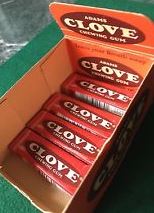
Clove Gum 2Everything seemed peaceful for Dr. John Welles in August of 1952. Despite a lifetime of dealing with secrets, whether keeping them for the sake of a loved one or generating secrets of his own, Dr. Welles believed he had finally found sanctuary in the hills of West Virginia. But it wasn’t to be.

By helping Bea Turner, who had become quite dear to him, John made a deal with the representatives of evil itself: the Ku Klux Klan. In his naiveté, he underestimated how truly wicked the Klan was and promised a favor in return to be fulfilled at the Klan leader’s whim. The day the favor was called in set John on his most destructive path so far. He turned to alcohol as a stabilizing factor in his downward spiraling life, yet he was unable to retain any sort of control. Alcohol claimed Dr. Welles for its own, and by submitting to the influence, he continued to lose what was dear to him.

One way the doctor kept people from discovering his alcoholism was to chew strong clove gum. Although I never mentioned brands, I always had Adams Clove Gum in mind for John when masking his drinking. He wouldn’t have been the first to do so.

Clove gum was first manufactured by the Thomas Adams Company in 1914. After working as a photographer and glassmaker, Adams tried his hand at inventing. The only thing he invented of any worth was achieved in the 1850s. While working as a secretary to the Mexican President, Antonio López de Santa Anna, the pair attempted the business venture of using chicle as a cheap alternative to expensive rubber tires. After a year of trying, the project was abandoned, and Adams eventually realized he could use chicle to produce a better type of chewing gum. He formed a company that by the late-1880s was making gum sold across the country.

In 1899, Thomas Adams became part of a new company called American Chicle Company which merged the six largest American chewing gum manufacturers. He remained a member on its board of directors until 1905 when he died. American Chicle Company was renamed Adams in 1997, and The Adams Company has since been acquired by Cadbury. Today it is known as Cadbury Adams. Cadbury Adams continues to use the same packaging used in 1914 to capitalize on the nostalgia factor, and the formula has remained essentially the same as well.

Commercial production of gum dates only to the mid-1800s making clove gum one of the oldest, continuously sold flavored gums on the market. It was especially popular in the Prohibition era, when people believed that they could cover up the scent of alcohol on their breath by chewing it.

Every few years, Adams Clove Gum makes an appearance on the market and is scooped up by longtime fans ensuring that candy and gum sellers run out quickly. The Internet helps when looking for new suppliers, however, my recent tour around the Internet didn’t reveal any sources at the moment.

While many young people today haven’t heard of clove gum, among its devotees, Thomas Adams will forever be remembered as the father of the modern day chewing gum industry.

Looking Through the Long Lens of History

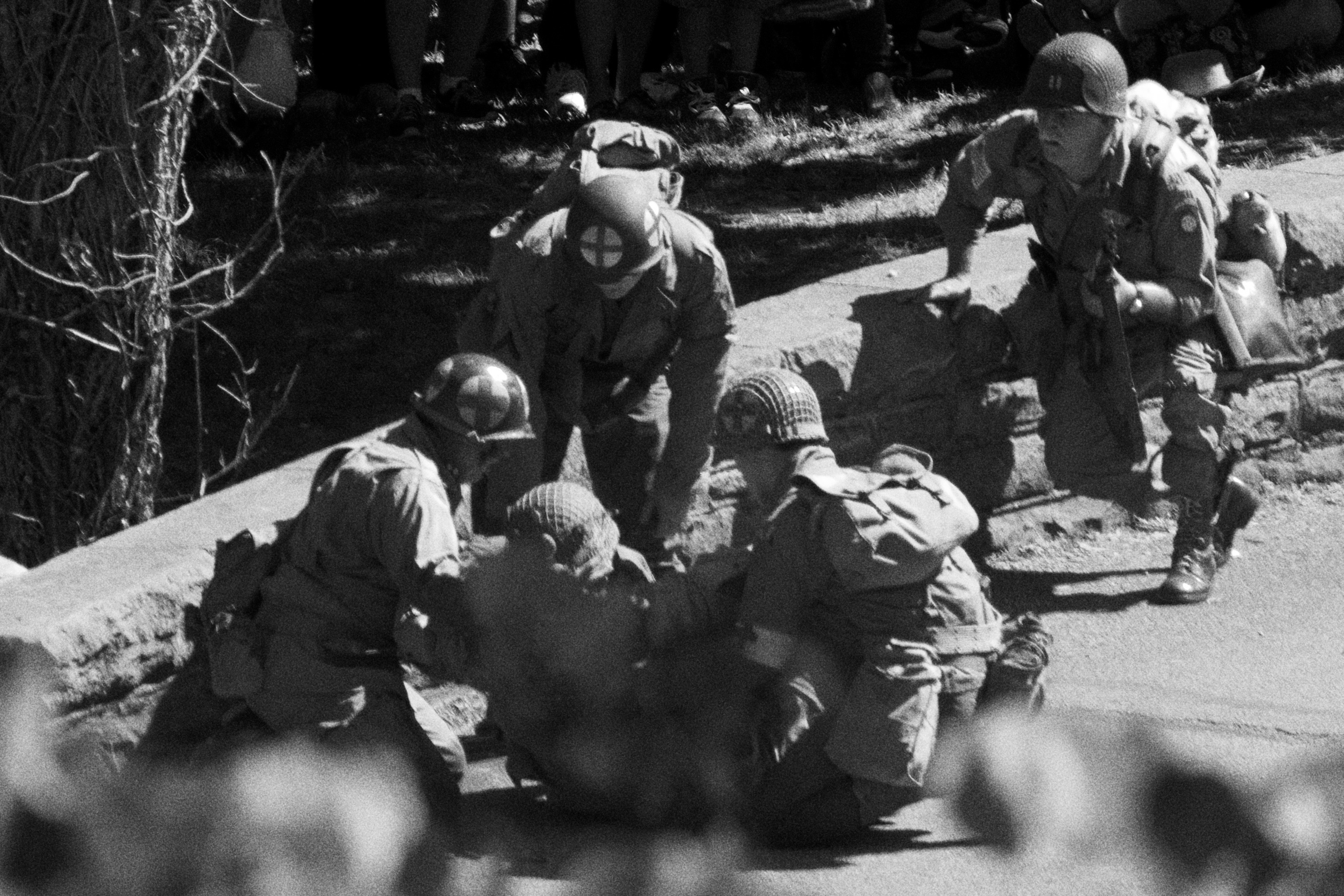
Glimpses of understanding are all many of us will ever have for what the men who stormed the beaches at Normandy experienced on June 6, 1944. I have looked at it from several different sources, and still, my knowledge is mere shadow when compared to the memories of the men and women who served during World War II.

Conneaut 2

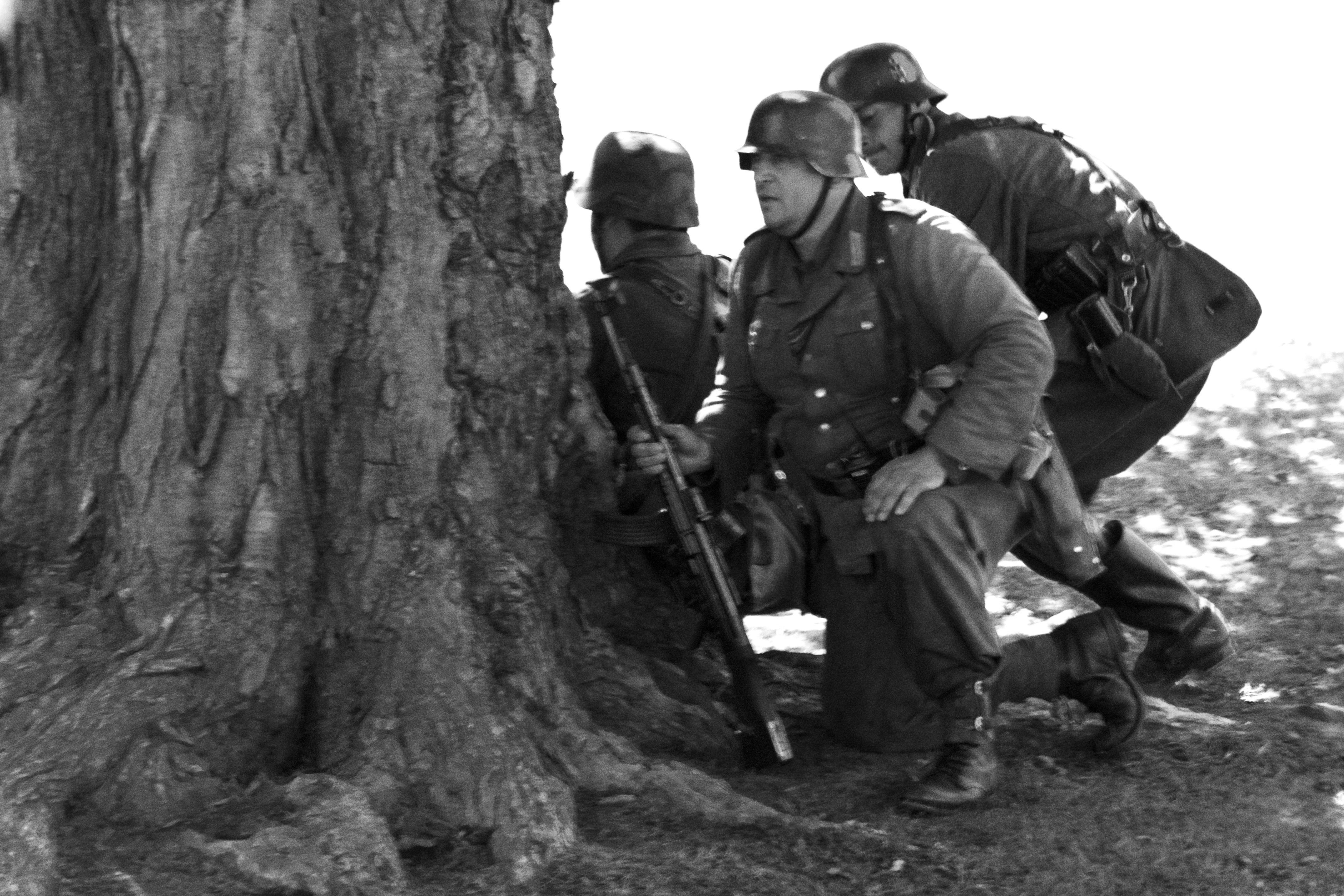
As heart wrenching as Band of Brothers was to watch, I didn’t have a true understanding of the ordeals faced by the American and Allied soldiers and medical staff until I began researching my novel, The Secrets of Dr. John Welles. Per my husband’s suggestion, I attended the Conneaut D-day Reenactment. I assumed I’d find some hobbyists with a useful amount of knowledge. I am not ashamed to admit that the whole event was incredibly humbling, and what I discovered far surpassed my expectations.

Conneaut 1

My journey began when three nurse reenactors graciously granted me an interview and patiently answered all my questions. They directed me to And If I Perish and Heroes From the Attic as additional resources where I would find the specific details needed to create believable scenes in my novel. Both books provided the information I desired, but more importantly, they supplied a sense of approachable familiarity that my research had been lacking. Long before I finished reading, I felt as if I knew the people about whom the books had been written. They became friends with whom I experienced fear, anxiety, sympathy, joy, loss, relief, and a whole host of other emotions. I developed an even deeper respect for them, and I wish I’d had the pleasure of meeting and knowing them.

Conneaut 3

Another valuable perspective of World War II was the autobiography of Omar N. Bradley, A Soldier’s Story. General Bradley’s account supplied information from the other end of the spectrum, bridging the gap between those in charge and those under orders. As inscribed in the front of the book, General Bradley hoped to help soldiers “understand why they were going where they did.” I believe his memoir answers anyone’s questions if only they are willing to look. While many would criticize those in charge without offering alternatives and/or solutions, I know that I would never want to shoulder the burden that Omar Bradley and others like him did during World War II. To simply say they did the best they could would be insulting. From the lowest private to the highest ranking general, and everyone in between, they all served bravely and selflessly.

Conneaut 4

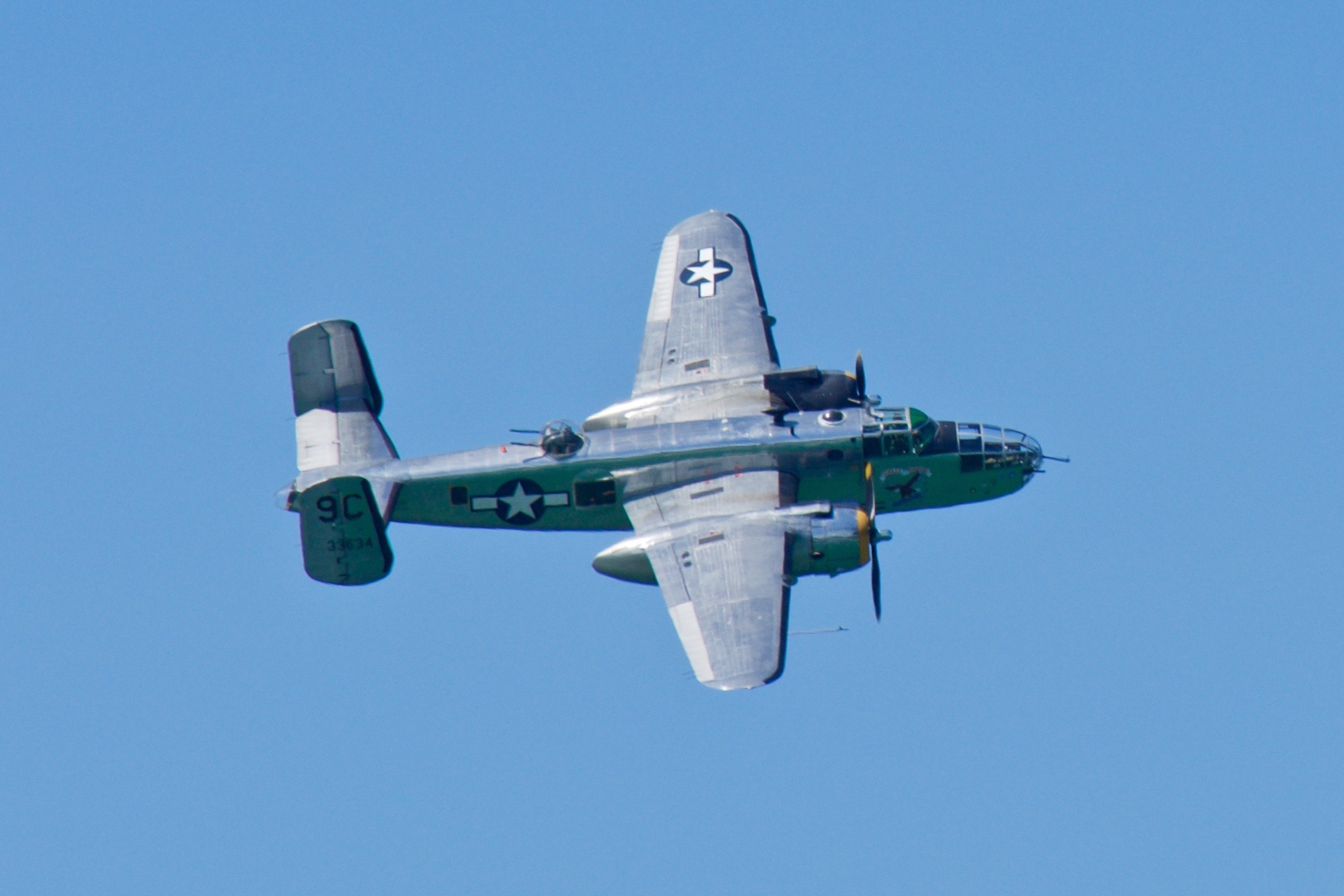
This post would be incomplete without attempting to describe the D-day battle portrayed at Conneaut. My emotions get the better of me every time I think about it. It all seems to happen at once.

Landing craft full of American and Allied soldiers about to crash onto the beaches.

The thrill of the B-17 Flying Fortress flying over so close I swear you could reach up and touch it.

The B-25 Mitchell banking in the brilliant blue sky.

P-51 Mustangs crisscrossing the air like darting swallows.

Excitement and tension mounting, trying to remember it’s a reenactment.

The ground vibrating with the boom of the German 88, the shock traveling up through your body.

Black clouds billowing upward from the flame thrower.

Soldiers storming the beach and falling, the dull ache in your chest every time that soldier is American or Allied.

Inch by grueling inch they gain ground.

The Germans relentless, the Americans resilient.

Again the planes, again the 88, the sound of bullets ripping the air.

And then, a small cheer is heard in the distance, rippling through the crowd, swelling.

Clapping and people jumping to their feet.

Tears in your eyes.

The American and Allied soldiers have gained their objective.

Breathing a sigh of relief.

It’s over. For us, right now, D-day is over.

Locking eyes with those around you as your remember that in 1944, it was just a beginning.

I cannot thank the reenactors enough for keeping alive the memory of what brave American and Allied men and women did. Their selfless sacrifice must never be forgotten or rewritten. The sad fact remains that much of this history is not being taught to upcoming generations. Worse, there are those who wish to revise it as something undesirable or reprehensible. As much as this grieves me, it is not enough for me to want this for future generations. They must desire the knowledge of history for themselves.

Until then, I will carry on remembering for every person who served long after the last one is gone.

~~~~~

Thank you to HBSmithPhotography for the wonderful pictures from the 2015 Conneaut D-day Reenactment

And If I Perish

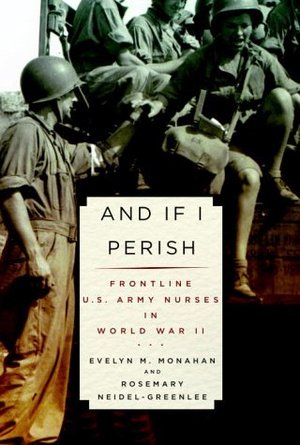
And If I PerishAnd If I Perish was recommended to me by the nurse re-enactors of the Conneaut D-day event as a source of information on American medical staff during World War II. I needed to place my protagonist, Dr. John Welles, in the European Theater as a surgeon, but I truly had no idea how to incorporate a civilian doctor among the ranks of military personnel.

Thanks to Evelyn Monahan and Rosemary Neidel-Greenlee’s thoroughly researched book, I not only had a way to place Dr. Welles in the war, I had firsthand accounts via actual medical staff of what he would have encountered.

And If I Perish is a treasure trove of information not to be missed. I highly recommend it to students of nursing and history. While the contribution of doctors is also noted, the focus of the book is on the nurses who responded to the call to tend American soldiers fighting in North Africa, Italy, and at the Normandy landings through to the end of the war in Europe.

Often without footwear and uniforms in their sizes, yet an abundance of nylons, lipstick, and face powder supplied by the military, the nurses who participated in World War II made tremendous sacrifices and improvised on the spot to ensure that American and Allied soldiers received the best in medical care. They even gave the best they had to offer when working on German POWS who, with the exception of SS officers, were often grateful for the care they received once they overcame the fear of being captured.

It was no small challenge for the nurses to assist doctors while only a couple of miles from the front lines, often in horrible weather, and sometimes during retreats with the threat of being left behind hanging over their heads. And they did it without the benefit of weaponry to fight back.

The nurses endured bombing, strafing, and even evacuation from a hospital ship that had been attacked by unscrupulous pilots of the Luftwaffe contrary to the Hague Conventions. Occasionally they lost one of their own, a fact that further solidified their sense of family. All this they endured at less pay than their male counterparts.

With the equality that women enjoy today in many fields of work, it is difficult for me to comprehend why, for so many years, the nurses’ stories were overlooked and why they didn’t receive as many promotions and awards as the men serving. Hopefully, Mrs. Monahan and Mrs. Neidel-Greenlee’s book came in time for all of them to know how loved and appreciated they were and are for the sacrifices they made in serving their country.

A Matter of Classes

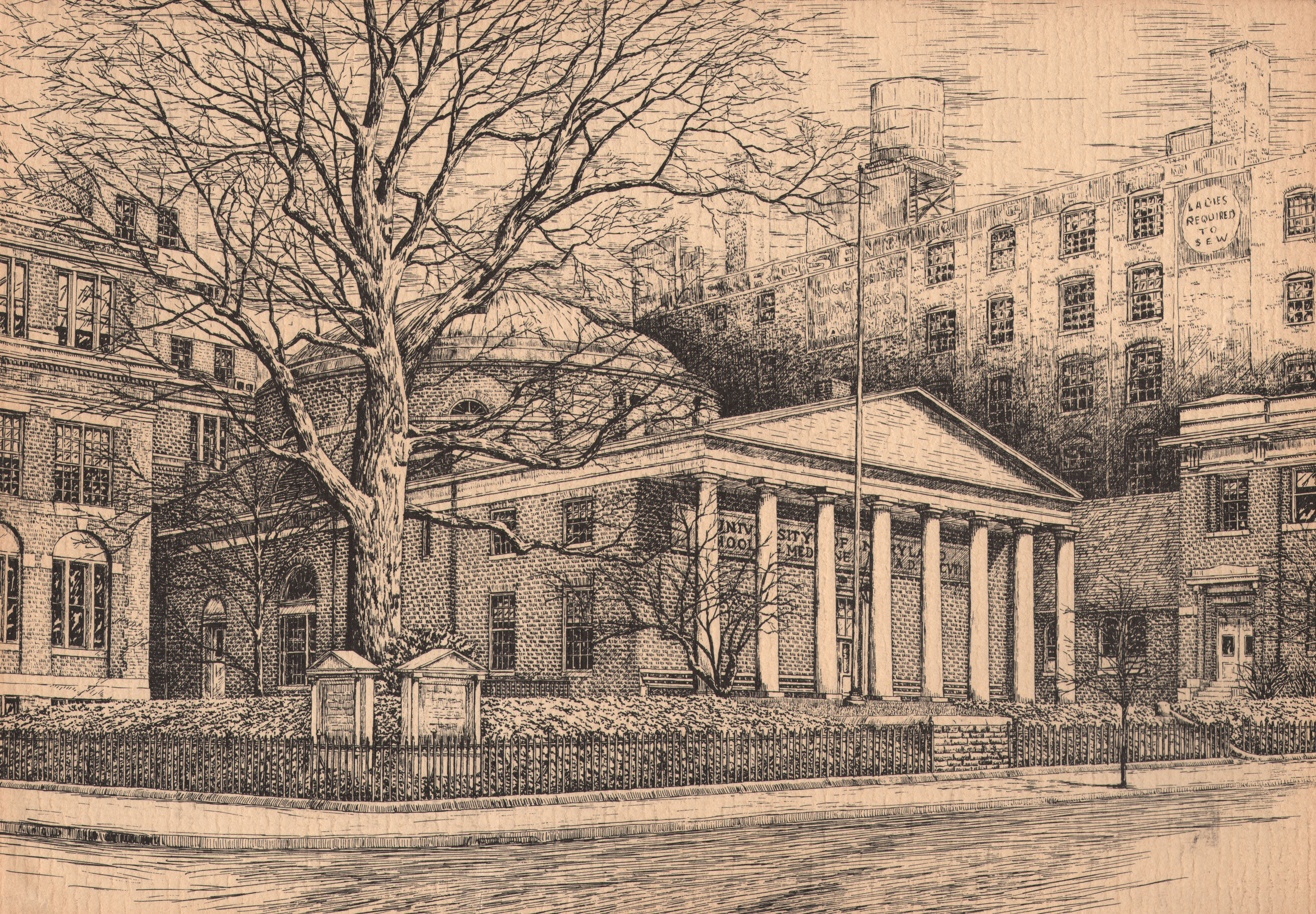
A Matter of ClassesOne of the jewels in the crown of the research for my novel, The Secrets of Dr. John Welles, is a class schedule from the University of Maryland for 1922. I could not have been more pleased with the delivery of this item into my possession than if I had asked what the Queen of England ate for dinner on May 28, 1997, and been told not only what she consumed but how well she like it.

Let this exaggeration serve to convey exactly how pleased I am. When I began my research, I had absolutely no idea how I was going to discover what classes and labs doctors in the 1920s were required to pursue or for how long. I only had my knowledge of modern day medicine to fall back on, and that simply wouldn’t do.

Douglas Skeen, who at the time of my research was employed at the Maryland Department of the Enoch Pratt Free Library in Baltimore, Maryland, and hopefully still is, is responsible for locating the bulletin and sending it to me as a PDF. I sincerely thank Mr. Skeen yet again for performing his role as a Reference Librarian above and beyond my expectations.

I created the Research Road portion of my blog with the express purpose of sharing what I discovered with other writers. I don’t know how many others may need similar information, but I will allow you to stand on my shoulders as you search for it, and I’ll hold your ankles to balance you as you do. With that being said, please enjoy the attached PDF of the Bulletin of the University of Maryland School of Medicine and College of Physicians and Surgeons, Vol. VII, from July 1922. At the very least, I hope you enjoy the walk through history.

UM Bulletin Vol 7 July 1922

Straighten Up & Fly Right

Straighten Up and Fly RightIn my novel, The Secrets of Dr. John Welles, Claude Willoughby, one of John’s best friends, has had his share of trials and tribulations. When John and Claude first met, they sized up each other and decided they weren’t too keen on pursuing a friendship. After a few terse words, they overcame their differences, and together with Sam Feldman, forged an alliance that lasted a lifetime. So close was their bond, that when one of the afore-mentioned tragedies sent Claude to self-imposed exile in California, John and Sam felt as if their right arm had been severed.

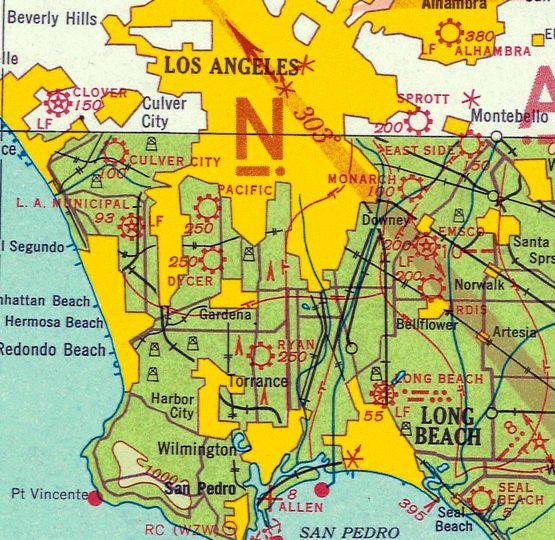
Claude obtained his pilot’s license as a means of dealing with his grief. He also secured employment at the airfield where he trained and later joined the Navy as a pilot during World War II. I had to research exactly what Claude would have encountered in 1937 when he learned how to fly. In doing so, I came across the most unusual website listing a compilation of airfields, now abandoned but operating during the time period about which I was writing. I really shouldn’t have been surprised; the Internet has a site for just about any subject a writer would need to research.

Abandoned & Little Known Airfields contains descriptions and images of 1,995 airfields in all fifty states and is organized alphabetically by state. I hope you find this information as useful as I did.

Lest We Forget

While researching World War II for several chapters of my novel, The Secrets of Dr. John Welles, I came across three books I’d like to share as beneficial reference materials.


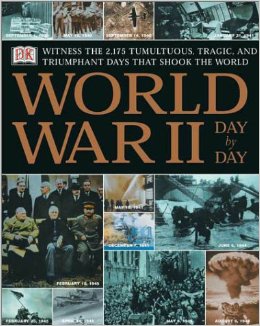
World War II DK PublishingWorld War II Day by Day, published by DK, is a collaborative effort by several former military personnel, researchers, and lecturers. The information is presented as news clippings from the various countries involved with or affected by World War II and the events leading up to it. A small calendar appears on each page and the days and weeks during which the events took place are highlighted. This allows one to isolate a particular event much easier. The book is replete with pictures, maps, and posters from the era. The numerical cross reference, timeline, and Who’s Who section lend ease to fact checking.


Campaigns of World War II

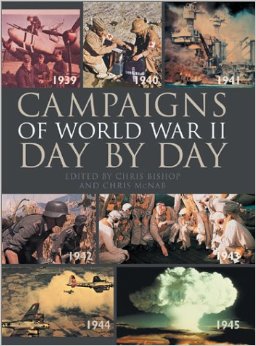
Campaigns of World War II Day by Day, edited by Chris Bishop and Chris McNab, is similar to the above-mentioned book but is laid out slightly different. The various campaigns are broken down into sections depending in which theater they occurred, whether European, Pacific, or African. Within each section, the daily and sometimes hourly timeline is most thorough. There are more maps in this book indicating troop movements as well as a focus on military weaponry, vehicles, and aircraft for the era.


World War II Donald Summerville

World War II Day by Day, written by Donald Summerville, presents many of the features mentioned in the first two books. This book is broken down into yearly sections with daily or monthly events listed within. The country in which each event took place is presented in boldface. The book concludes with a post war section.

I found each book to be extremely interesting, but together they presented a wealth of information I could check and cross check for accuracy. History buffs, reenactors, students, and writers alike will appreciate reading these books whether for enjoyment or research.

Heroes From the Attic by G. Jesse Flynn

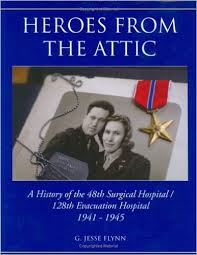
Heroes From the AtticOne of my favorite books, and a feather in the cap of my private library, is Heroes From the Attic by G. Jesse Flynn. I first learned about the book while interviewing participants from the Conneaut D-Day Reenactment this past August. Lisa Merzke, who portrayed a nurse, suggested the book because it explained in detail about the creation of the first MASH unit, the 48th Surgical Hospital, which was later reworked into the 128th Evacuation Hospital.

I obtained an excellent copy of the book and was thrilled to discover the author’s signature in the front cover. Although the inscription isn’t addressed to me, I couldn’t have been more pleased that I owned a signed copy.

Mr. Flynn was prompted to write the history of the 48th/128th upon learning about his parent’s involvement with its formation. Through interviews, letters, diaries, and pictures, Mr. Flynn has constructed a thoroughly detailed accounting that answered my specific questions with such precision that at times I believed the book had been written for me.

As well written as the history is, what truly endeared me to this book were the personal accounts of the members of the 48th/128th. Through the letters of Nurse Lt. Margaret Hornback, the diary of Dr. Leonard Schwade, and individual testimonies of various other members, one gets a true sense of what these brave men and women experienced and how they felt about it.  In an event that, God willing, we never allow to be repeated, members of the 48th/128th often learned on the job but never missed a beat, and they set the high standard of quality by which other units were formed and trained.

I am forever grateful to the doctors, nurses, and enlisted men of the 48th/128thfor their selfless sacrifice. I also thank Mr. Flynn for collecting and recording their amazing history so that it will never be forgotten. Their stories and information helped me to accurately place my protagonist in the European Theater of World War II, and I hope they will graciously indulge my boldness in assigning Dr. John Welles to their most successful and exemplary unit.

To Struggle With Forgiveness

31holocaust-xlarge

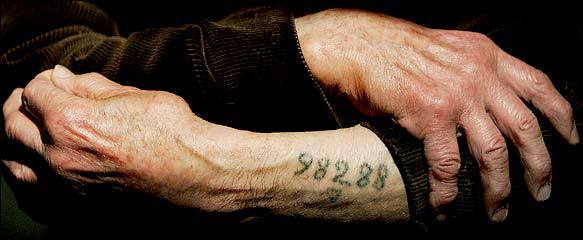
In a previous blog post involving my protagonist, Dr. John Welles, and his two Jewish friends, Reuben and Hannah Wise, I mentioned that the three were divided on the issue of forgiveness as it related to the Holocaust. For reasons that I’ll save for the publication of my novel, The Secrets of Dr. John Welles, each of them comes to the table with a different perspective on how the situation should be handled.

When I first wrote the storyline involving the Wises and Dr. Welles, everyone ended up forgiving everyone else with hugs and smiles all around. I admit that I wrote these scenes fast and furiously for NaNoWriMo without having done my research and because I wasn’t sure what direction I wanted the storyline to take.

Then two of my aunts attended a program on women Holocaust survivors and brought me some information on the subject. After reading the materials they gave me, I knew the scenes I wrote concerning the Wises and Dr. Welles were completely inaccurate, and therefore, unbelievable. I had to step back for a moment to analyze where my perspective of forgiveness came from and examine my knowledge of the Holocaust.

Everything I learned about the Holocaust came during my school years, and I can tell you that for the purposes of writing a novel, the knowledge was slim compared to what I found when I conducted my research. I realized I was too far removed from the facts because I was too young to have experienced it firsthand and didn’t have a relative who either perished or survived the concentration camps. My original scenes were trashed, and I set about rewriting the story.

Once the details of time and place were corrected, I worked on an aspect of my story that took me by surprise: the concept of forgiveness as understood by Jewish people who practice Judaism. My experience with forgiveness as I was taught might have influenced Dr. Welles but would seem ridiculous to Reuben and Hannah Wise. By applying my faith based instruction to the overall story, I denied my Jewish characters a single ounce of reality.

The questions that kept going through my head, those that drove my characters, included 1) Do we forgive but not forget? 2) Can only God truly forgive? 3) Must the perpetrators of the crime repent and ask for forgiveness before it can be bestowed? 4) If the criminals are dead, can forgiveness take place? 5) Should we forgive no matter what for every offense committed against us?

There are many articles on the internet about forgiveness written from many different perspectives. I chose to draw on those based in Christianity and Judaism when writing my novel and peppered the views found there with heavy dashes of my characters’ own attitudes and viewpoints.

The following article, “Can You Forgive Hitler?” written by Stewart Ain, September 22, 2006, for The Jewish Week, is the article that helped me the most when deciding how to have my characters react to the difficult questions and trying situation with which they struggled.

It’s easy to say what I would do until faced with the death of my loved ones at the hands of evil people. Still, I wonder about Holocaust survivors who do forgive and maintain their faith regardless of the hell they endured versus those who refuse to forgive and lose their faith because of the hell they endured. It scares me to know that because of the condition of our world today, many are challenged with these same questions.